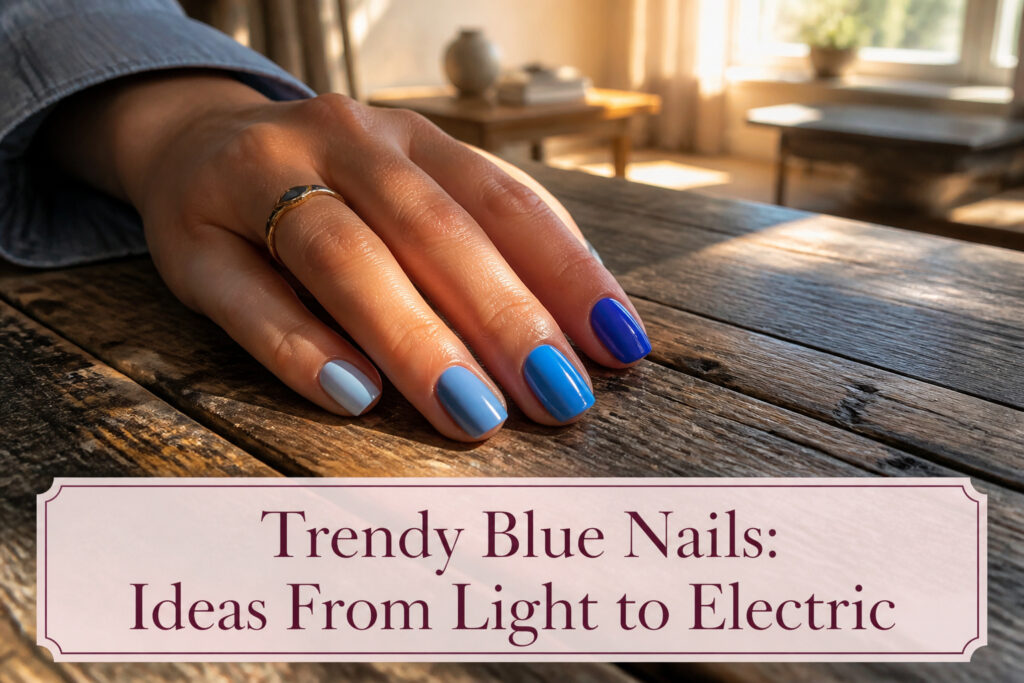
Trendy blue nails are the dominant manicure direction for 2026, spanning a range from barely-there pastels to near-fluorescent cobalt.
The shade that flatters depends almost entirely on your skin’s undertone and the season you’re wearing it in: warm complexions turn chalky in soft pastels but glow against ultramarine, while fair skin pulls off airy mineral blues that would wash out deeper tones.
Fashion Week runways at Acne Studios, Alaïa, Akris, and Burberry all featured blue this year, with cobalt specifically singled out as the tone that functions almost like a neutral once applied.
1. Light Blue
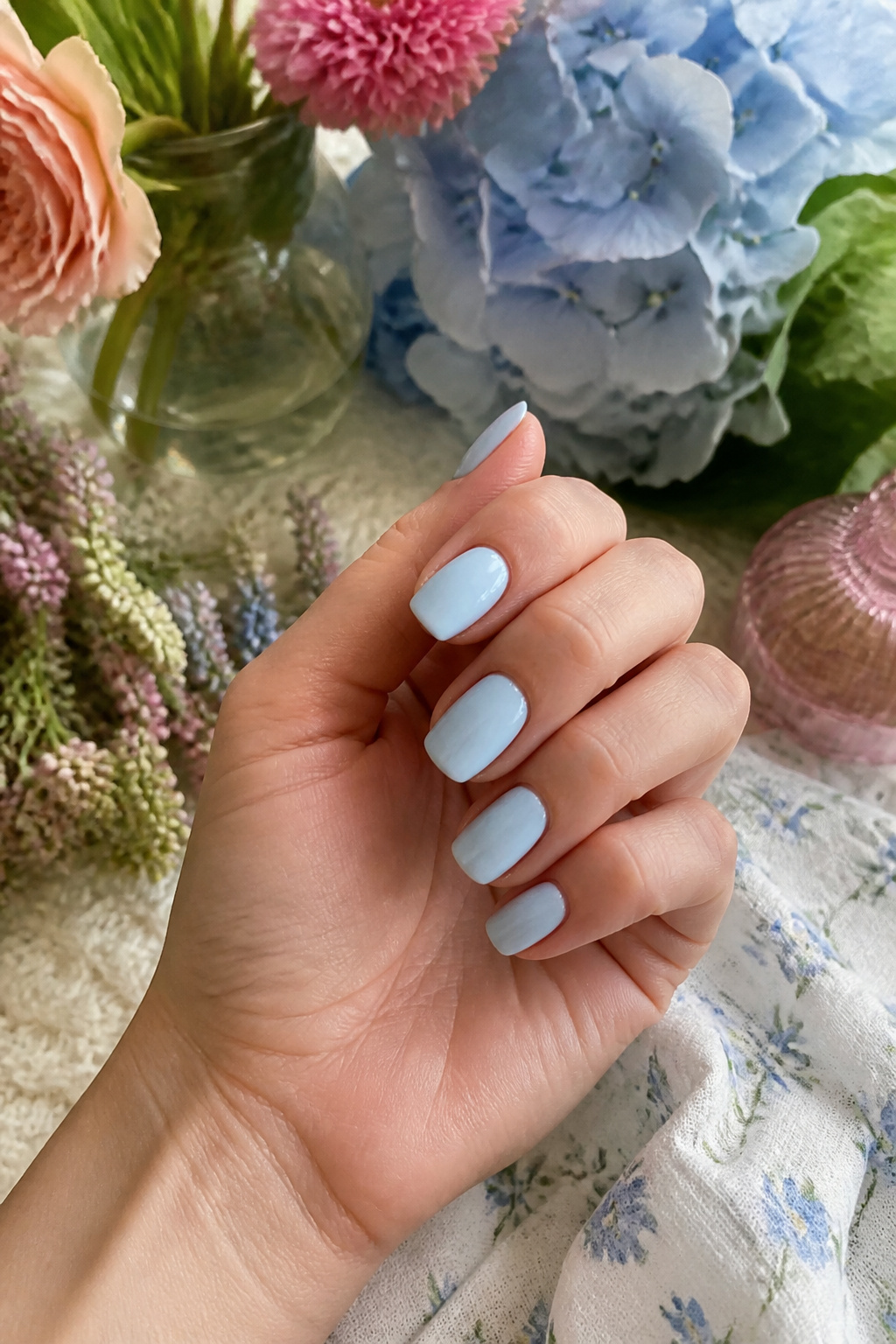
Light blue stepped into its own this spring as the pastel that reads grown-up instead of nursery-room.
The shade carries a creamy softness, more like skimmed milk than chalk, which keeps it fresh on the nail without sliding into babyish territory.
Fair skin tones pull it off especially well; the contrast stays gentle, almost luminous, rather than washing out the complexion.
Pastel blues with that airy, mineral quality sit right in the sweet spot for a romantic spring manicure. A grey-tinged light blue, somewhere between morning mist and Nordic light, pairs cleanly with florals or a soft ombré fade.
The finish matters more than the exact hue here: too sheer and it veers into toddler territory, too opaque and the delicacy flattens out. Two coats of a creamy formula usually lands it.
2. Baby Blue
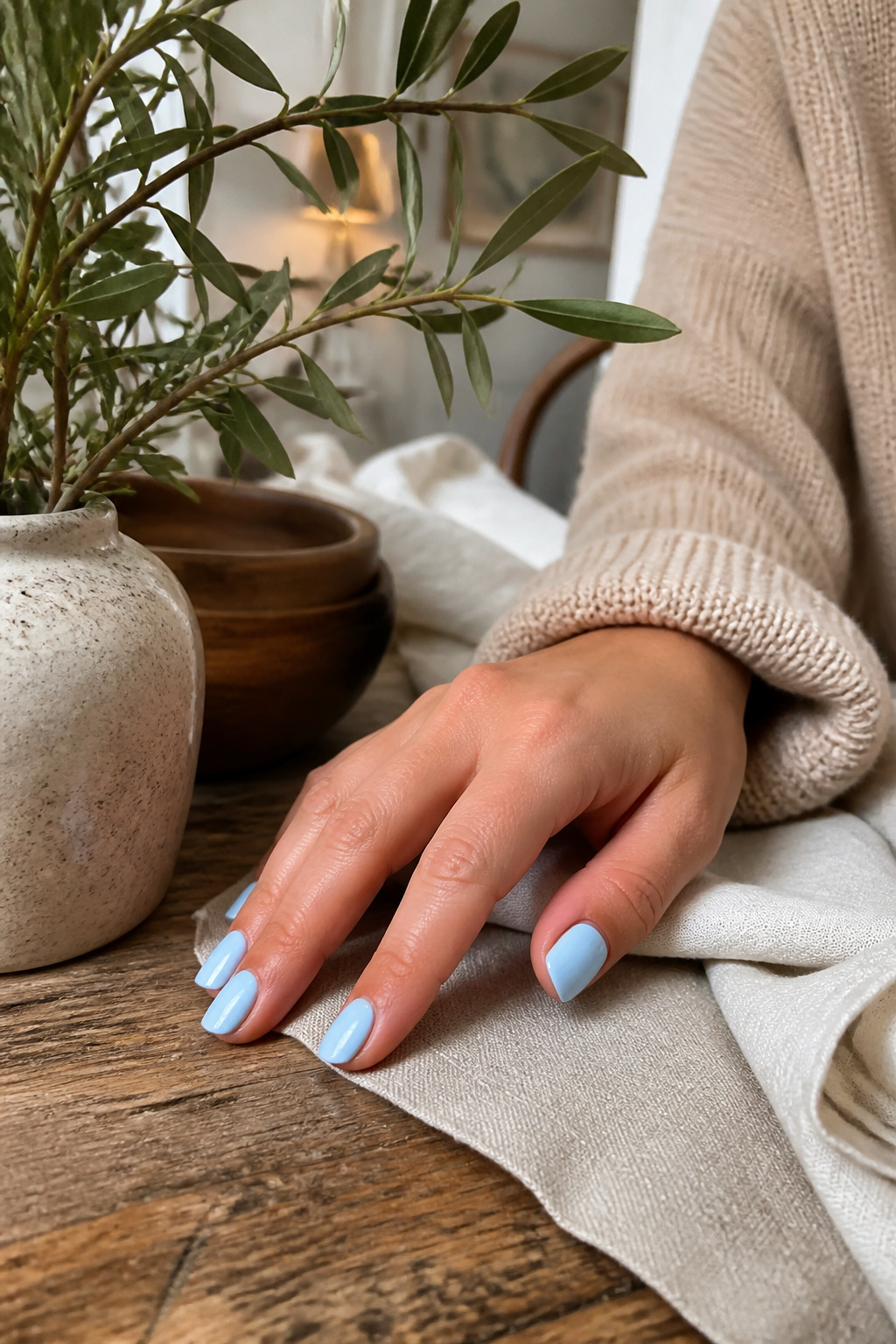
Baby blue carries a milky, opaque quality that stops it from looking like a faded outlier.
Where light blue stays closer to a sky-wash transparency, this shade has enough white mixed in to read as intentional, almost like the inside of a robin’s egg left to settle.
That creaminess makes it forgiving on shorter nails or any nail bed that shows some imperfection; the color sits there rather than floating above it.
The research consistently ranks this as the most widely backed choice across the current cycle, probably because it asks so little of the wearer.
It works against olive and warmer skin tones that can turn cooler blues chalky, and it pairs with the camel coats and soft grays already in most closets.
Two coats of a quality formula usually deliver full coverage without the streaking that plagues paler pastels.
What separates a fresh take from a nursery-room mistake is the finish. A subtle pearl or jelly finish keeps the shade adult; anything too matte or too glittered tips it toward costume.
If you are buying one blue to test the trend against your wardrobe, this is the lowest-risk entry point.
3. Cobalt Blue
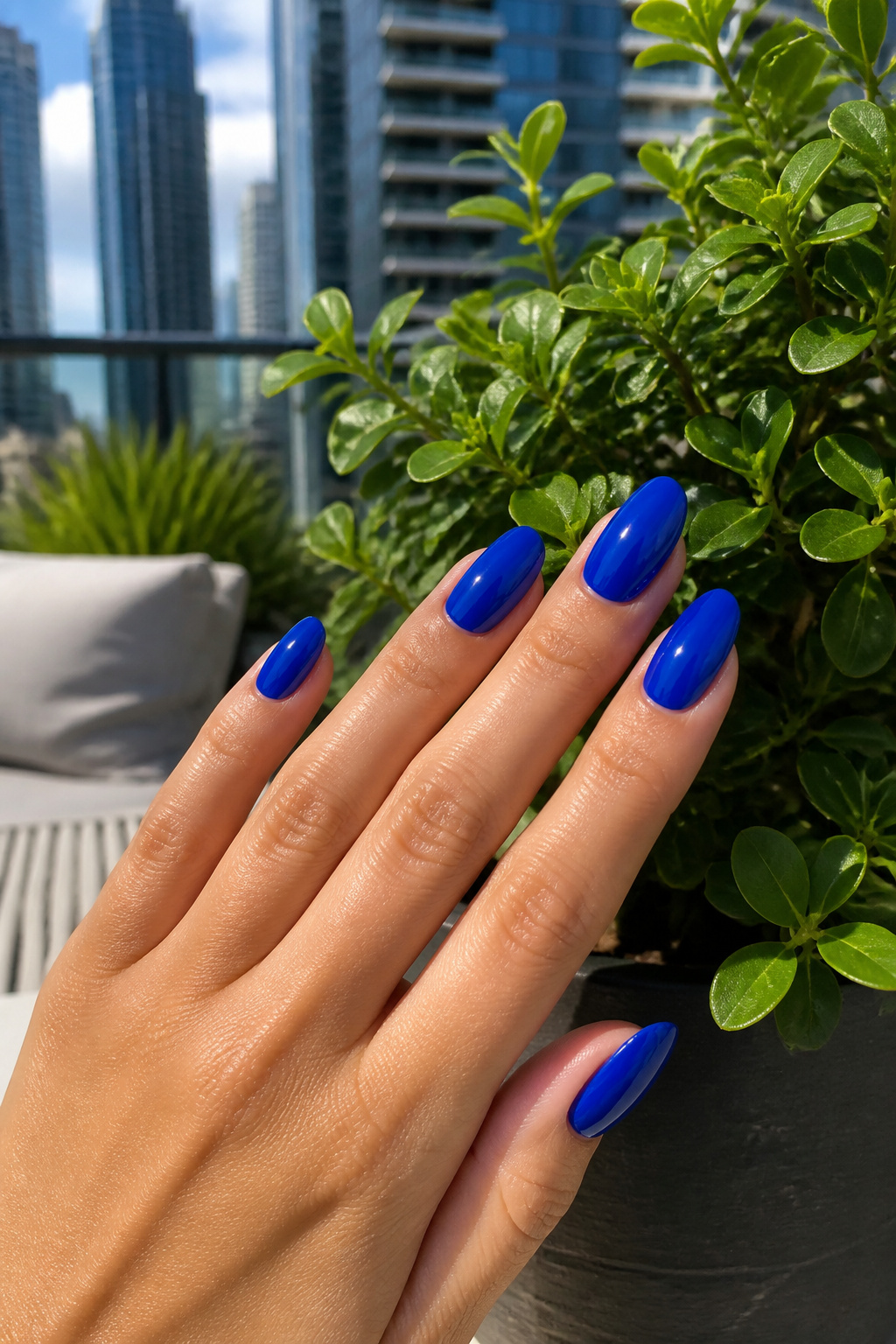
Cobalt blue sits at the far end of the blue spectrum where most nail colors lose their nerve.
The shade carries the same voltage as the ultramarine Yves Klein made famous, and that electric quality is exactly why it reads as optimistic rather than aggressive on nails.
Fashion Week runways at Acne Studios, Alaïa, Akris, and Burberry all featured blue in 2026, but cobalt is the tone that refuses to blend into the background.
What surprised me, reading through the trend reports, is how this intensity functions almost like a neutral once it is on the hand.
Cobalt linen trousers and accessories have flooded influencer feeds this summer, and the nail version works the same way: it anchors an outfit rather than competing with it.
The psychology of bright colors gives the wearer a measurable mood lift, which explains the dopamine-dressing connection and the viral #bluenailtheory claims about drawing attention.
Year-round wear is where cobalt justifies its place in a practical collection. Summer pairs it with white or tan; winter lets it stand against charcoal or black without the seasonal mismatch that kills brighter pastels.
The key move is treating it as your base color, not an accent: one solid coat across all ten nails reads deliberate where a single cobalt feature nail reads random. That consistency is what separates a statement from a distraction.
4. Navy Blue
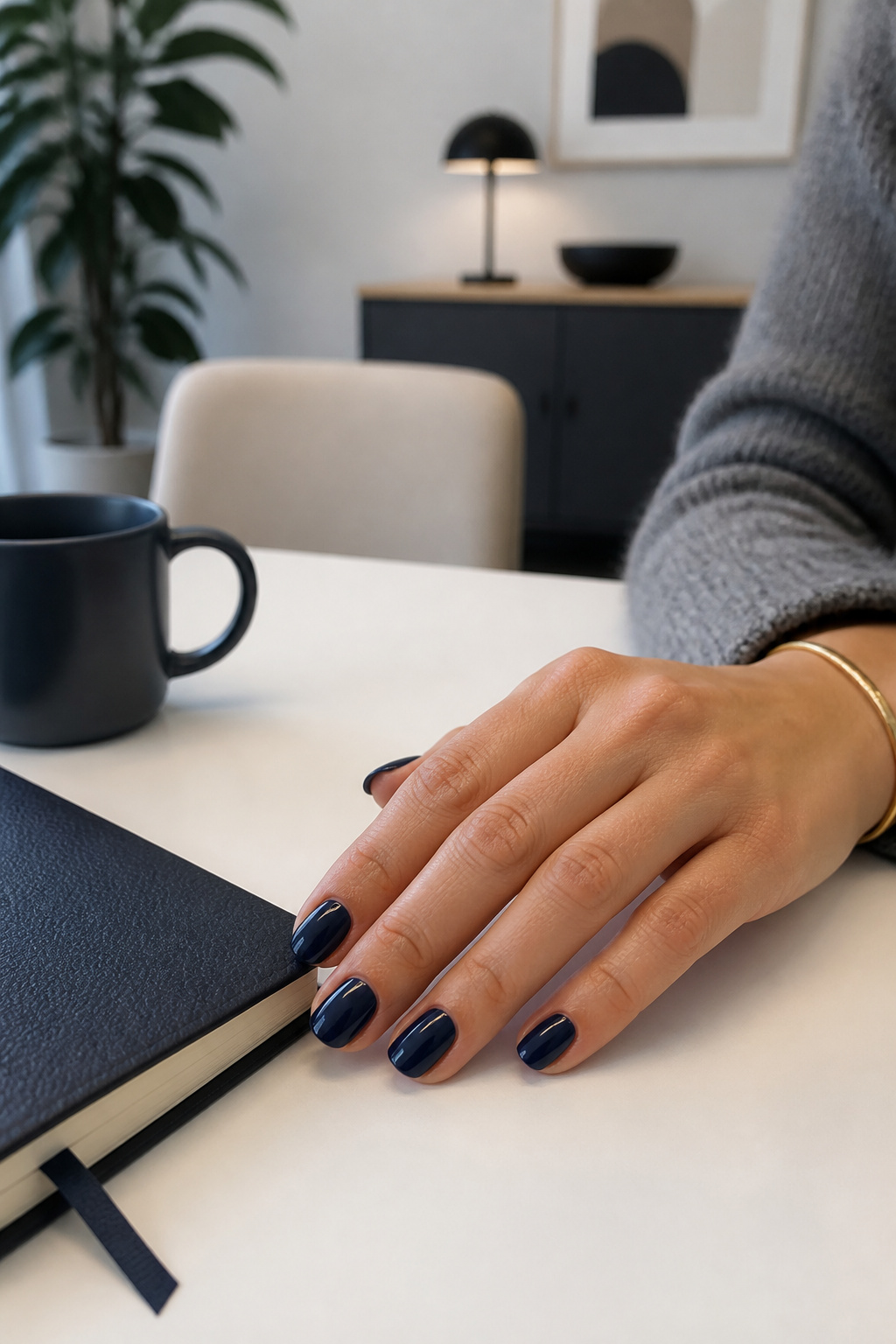
Navy blue sits at the point where trendy blue nails stop reading as a statement and start reading as grooming.
The shade carries enough depth to register as polished in a conservative office, yet it never slips into the dated territory of a standard dark manicure.
What convinced me, reading through a dozen of these roundups, is how consistently the color gets described as the one clients request when they want to look current without explaining their nails to anyone.
The adaptability is what earns it space in rotation year-round. In January it pairs with wool coats without looking seasonally confused; by July the same bottle reads as deliberate contrast against white linen.
Most brands worth buying offer a navy that leans slightly midnight or slightly slate, and the variation matters more than you’d think.
A midnight navy with black undertones photographs almost ink-dark, while slate-based versions show their blue in office fluorescent light. The latter is the safer bet for hands that move between meetings and evening plans.
For conservative settings, navy avoids the playful connotation that sends cobalt or turquoise into weekend-only territory. It also forgrows out better than black, which can look like a chip waiting to happen once the edge shows.
Two coats over a proper base, and the finish holds that expensive-looking saturation for a solid ten days.
5. Dark Blue
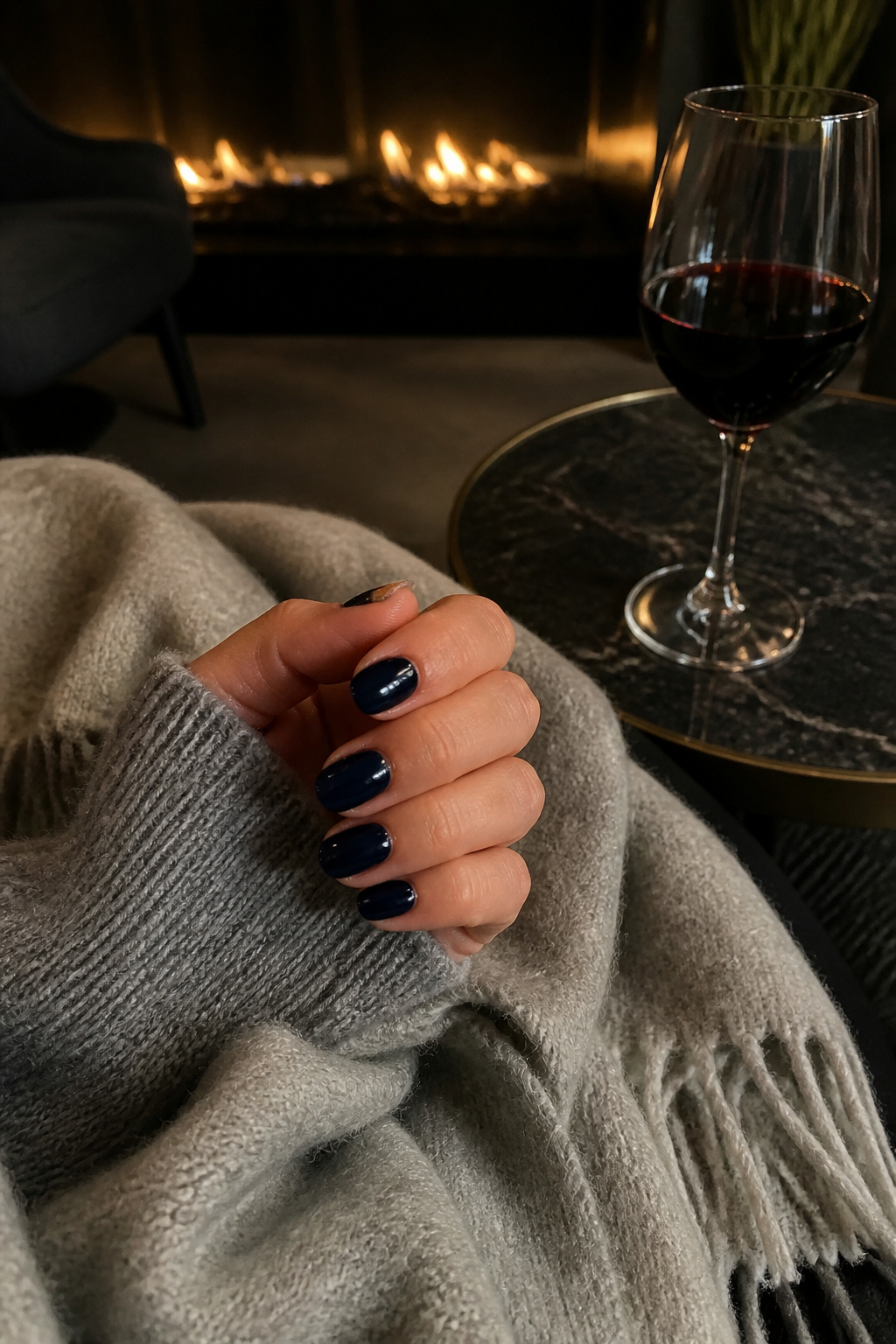
Dark blue polish carries a blacker undertone than navy, which keeps it from reading corporate or preppy. The color sits closer to ink than to uniform, and that slight shift makes it feel moodier on the nail.
I tend to reach for it once the temperature drops, when wool coats and cashmere scarves start appearing in daily rotation. Against those heavier textures, the shade reads intentional rather than severe.
Three separate trend forecasts flagged this inky range as the dominant dark color for winter 2026, and the pairing logic holds up: matte dark blue against ribbed knits, or a glossy version with leather gloves, gives the same tonal weight without the formality of black.
The blacker base is what separates it from navy; navy still wants a gold button or a crisp white shirt to complete the thought, while dark blue polish stands alone against a gray sweater or a camel coat.
If you are building a capsule nail wardrobe for cold months, this is the shade that bridges October through March without looking like you gave up and chose black.
6. Electric Blue
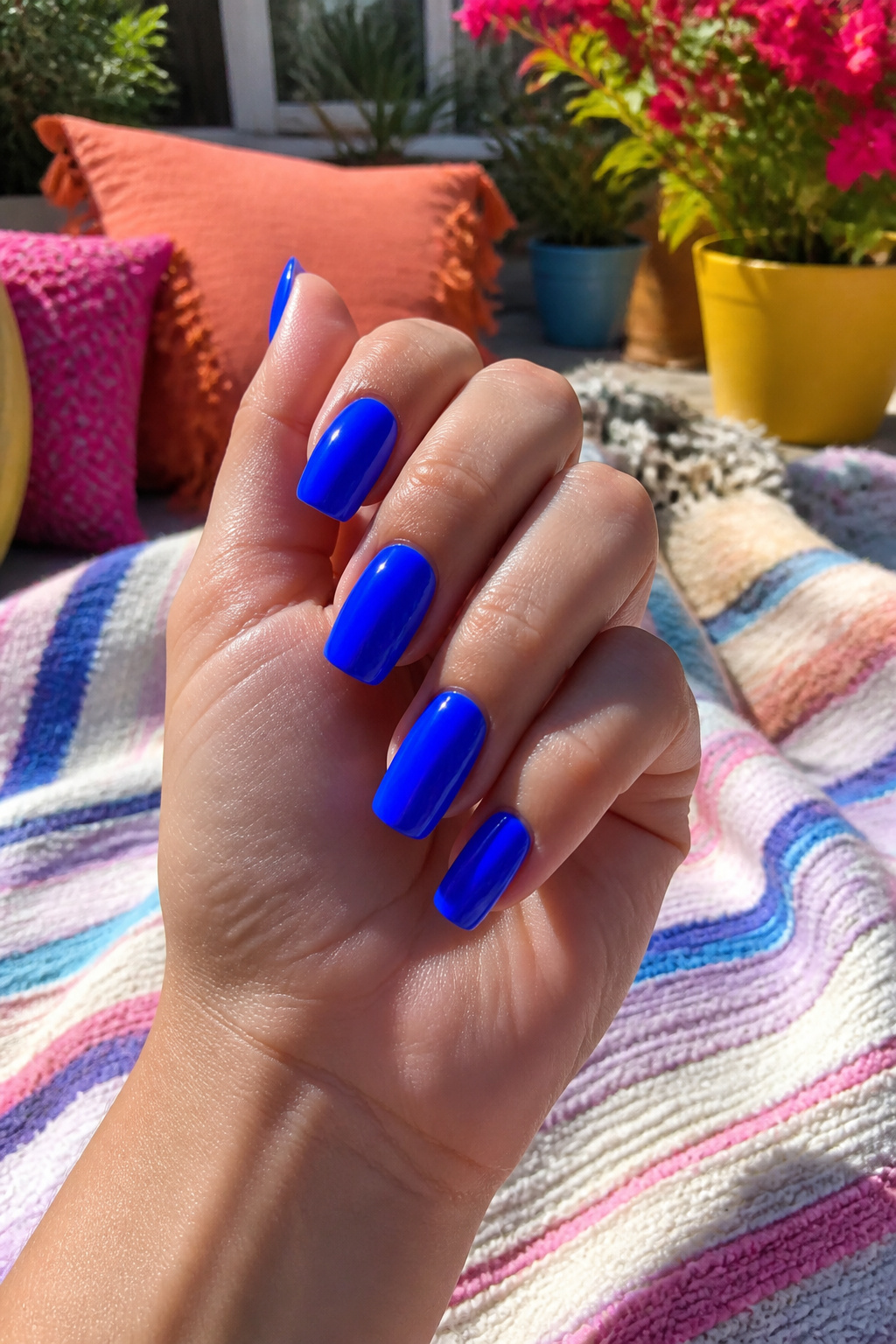
Electric blue carries that near-fluorescent punch that only works when the sun is doing the heavy lifting. In direct light, the shade almost vibrates against the skin, picking up a glow that softer blues flatten into.
The color has dominated style moodboards lately, with influencer feeds flooded by the bright hue this summer through cobalt linen trousers and accessories, and the same energy translates cleanly to a manicure.
Ultramarine captures that vibrant, ultra-modern energy better than a generic neon, sitting right in the electric range without tipping into gimmick.
It is a warm-weather choice for a practical reason: the shorter days of fall and winter steal the sunlight that makes this shade behave. Under gray skies or office fluorescents, electric blue can read harsh against pale winter skin.
Summer gives it the hours of bright, natural light it needs to read as bold rather than brash.
7. Turquoise
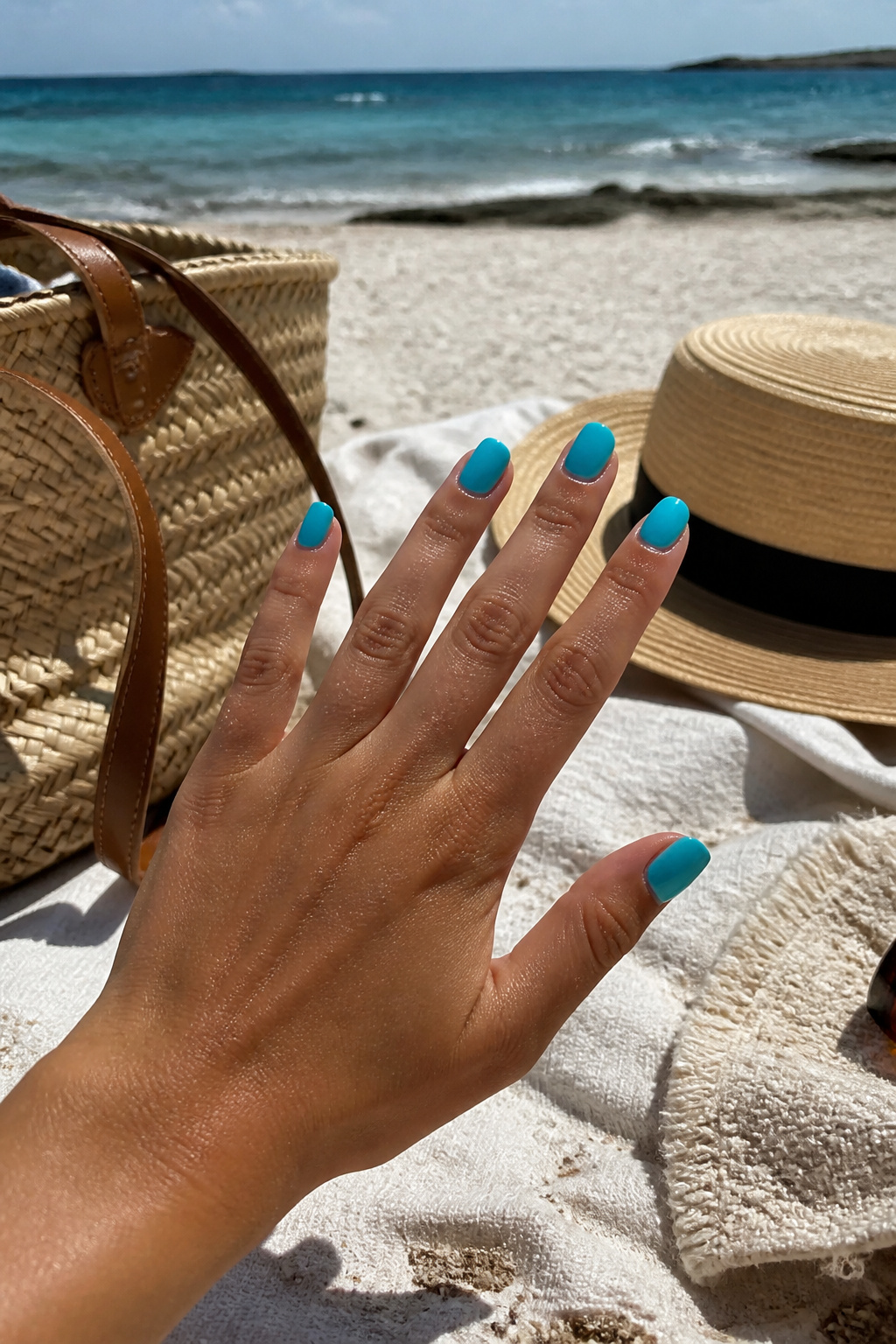
Turquoise carries the unmistakable pull of open water, somewhere between blue and green in a way that makes it the most forgiving bright for summer.
That middle position matters for skin tone pairing: the green undertone warms up olive or tanned complexions rather than fighting them, while the blue keeps it from going muddy on cooler fair skin.
Manucurist’s Riviera shade lands right in this pocket, and their guidance puts turquoise explicitly in the pastel-to-bright zone recommended for fair skin, with the understanding that the green shift broadens its range beyond a straight sky blue.
The vacation association is hard to shake, and that is the point. Alaïa’s Spring-Summer runway went aquatic with intention; this is not a color for January office fluorescent lighting.
Wear it when you want the reminder of sea foam and smooth stones, or pair it with a nude polish for graphic nail art that nods to nautical without full costume.
For the mermaid route, a glittery holographic sheer over turquoise base reads moonlight on calm water rather than full festival mode.
8. Glittery Blue
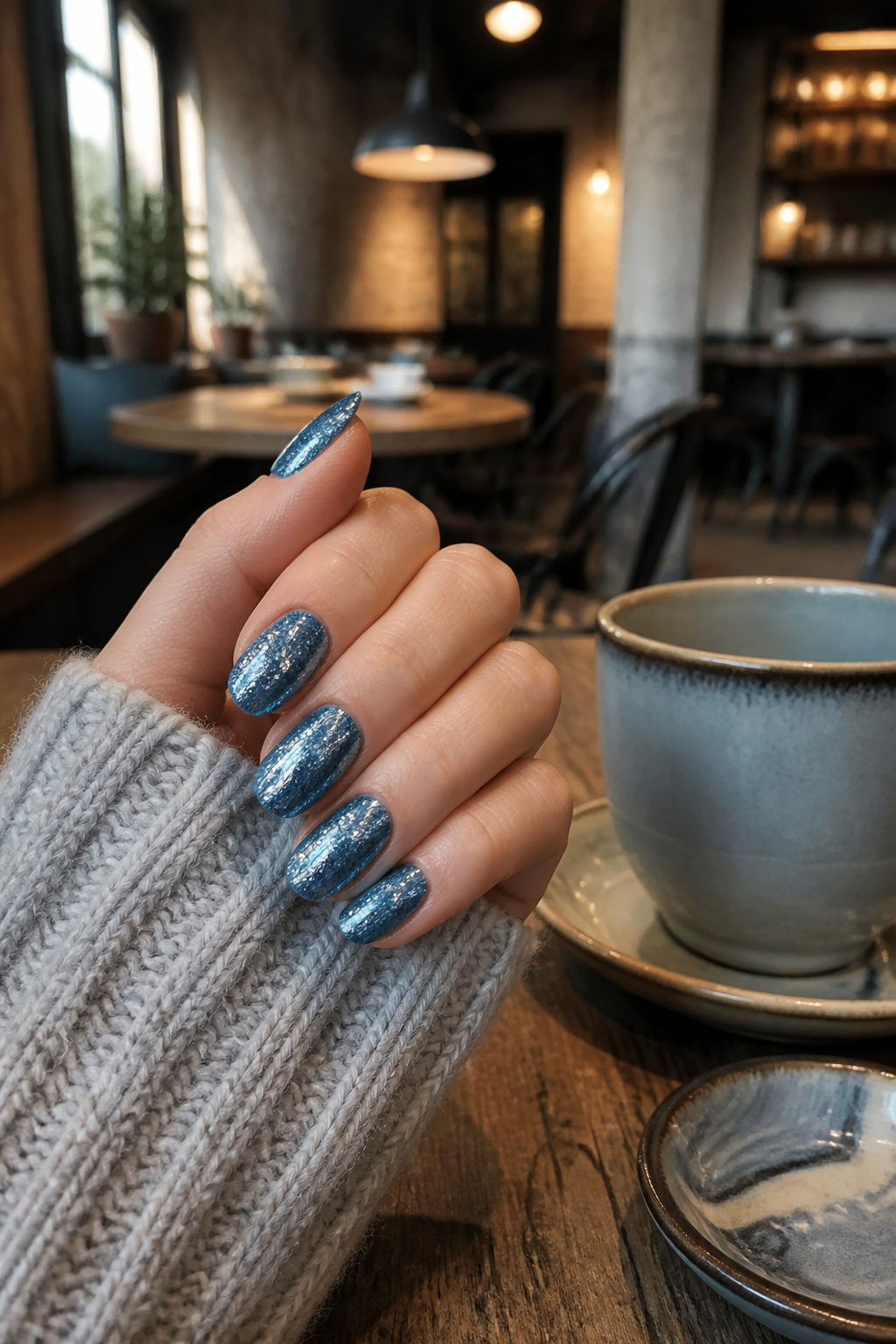
Glittery blue polishes sit right where a flat color starts to feel too quiet.
Manucurist recommends them specifically for fair skin, though the shimmer in a shade like LONDONTOWN’s Blue Diamond reads slightly purple and softens the edge for anyone who finds pure cobalt too loud.
That chrome-like shimmer works as a full nail when the occasion calls for it, but I treat glitter as an accent more often than not.
A single glitter nail on each hand, or a thin stripe at the cuticle line, keeps the sparkle from overwhelming a Monday morning.
"Blue works particularly well with minimalist nail art because the colour itself already makes such a statement."
— Elle
What that means practically: let the blue do the work. Pair a glittery top coat with a matte navy base and the contrast in texture does more than any extra design would.
For shorter nails, Elle’s source points to rounded or softly squared shapes, and I find glitter holds up best there too; the surface area is small enough that full coverage still looks intentional rather than accidental.
Glazed and pearly finishes from that same guidance layer beautifully under or over blue glitter, though I skip the ultra-glossy top coat when I want the dimensional texture to read clearly.
The mistake I keep seeing is glitter packed too densely across every nail; one feature nail, or a micro-French tip in glitter over nude, gives the same festive hit without the pageant feel.
9. Ombre Blue
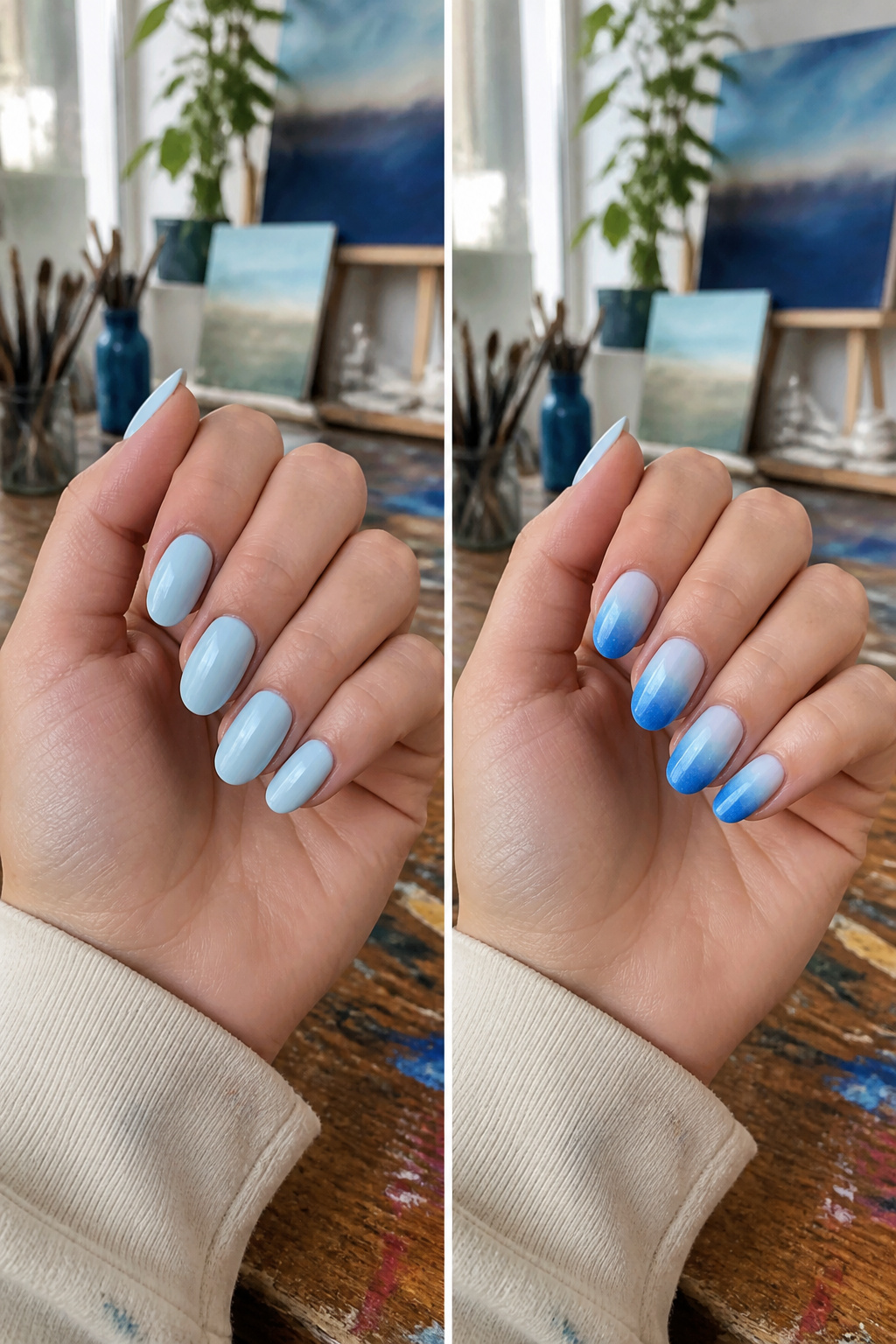
A sponge and two polishes are all it takes to move ombre blue from Pinterest to your own hands.
The gradient works by dabbing a lighter shade, say baby blue, over a nude or milky white base so the color feathers out toward the cuticle rather than stopping in a hard line.
Some nail artists build the effect in reverse, pressing midnight blue down toward a lilac or soft sky tone for something closer to a watercolor wash.
What makes ombre blue worth trying in 2026 is that it reads as nail art without requiring any. The eye fills in the transition even when your own blending is imperfect, and the range of workable pairings is wide.
Baby blue over nude stays subtle for everyday wear, while a cerulean-to-bright tip gives the same gradient logic to a French manicure shape. Either way, a glazed top coat smooths the finish and buys forgiveness for any visible sponge texture.
10. Blue French Manicure
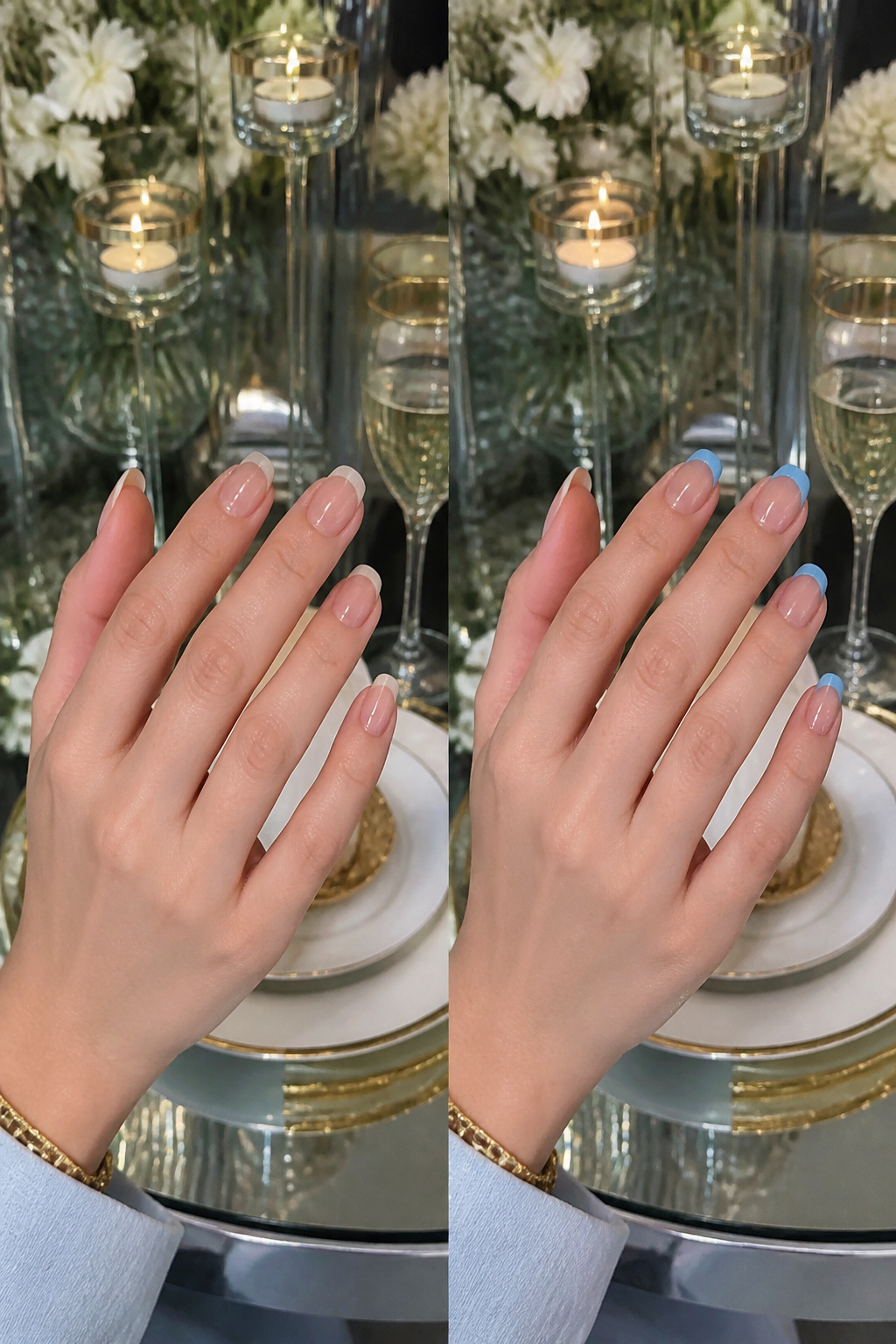
A blue French manicure swaps the classic white smile line for blue, which sounds like a small change until you see how much it modernizes a conservative style.
The shift reads as intentional rather than trendy, the way a navy blazer replaces black without announcing itself.
For the base, sheer or bright neutrals work best: a coat of sheer Hortencia keeps the look office-appropriate, while an Active Bright base turns the same blue edge into something catchier. The tip color carries the weight of the decision.
Riviera blue stays delicate and minimal; Ultramarine pushes toward editorial. Sources describe a gradient version too, running baby blue through cerulean across different nails, though that reads more playful than most 30-something wardrobes need.
Matte navy offers the opposite approach. A velvety navy base with glossy navy tips builds dimension without adding a second color, and the finish contrast feels cooler than either alone.
The sources disagree on whether blue French tips should whisper or speak: soft blue reads as the safe minimalist choice, while matte navy goes deliberately bold. Two ways to play this.
Keep the line fine if your hands see a professional setting; go darker and wider if the manicure is the most dressed-up part of your outfit.
What Season Changes
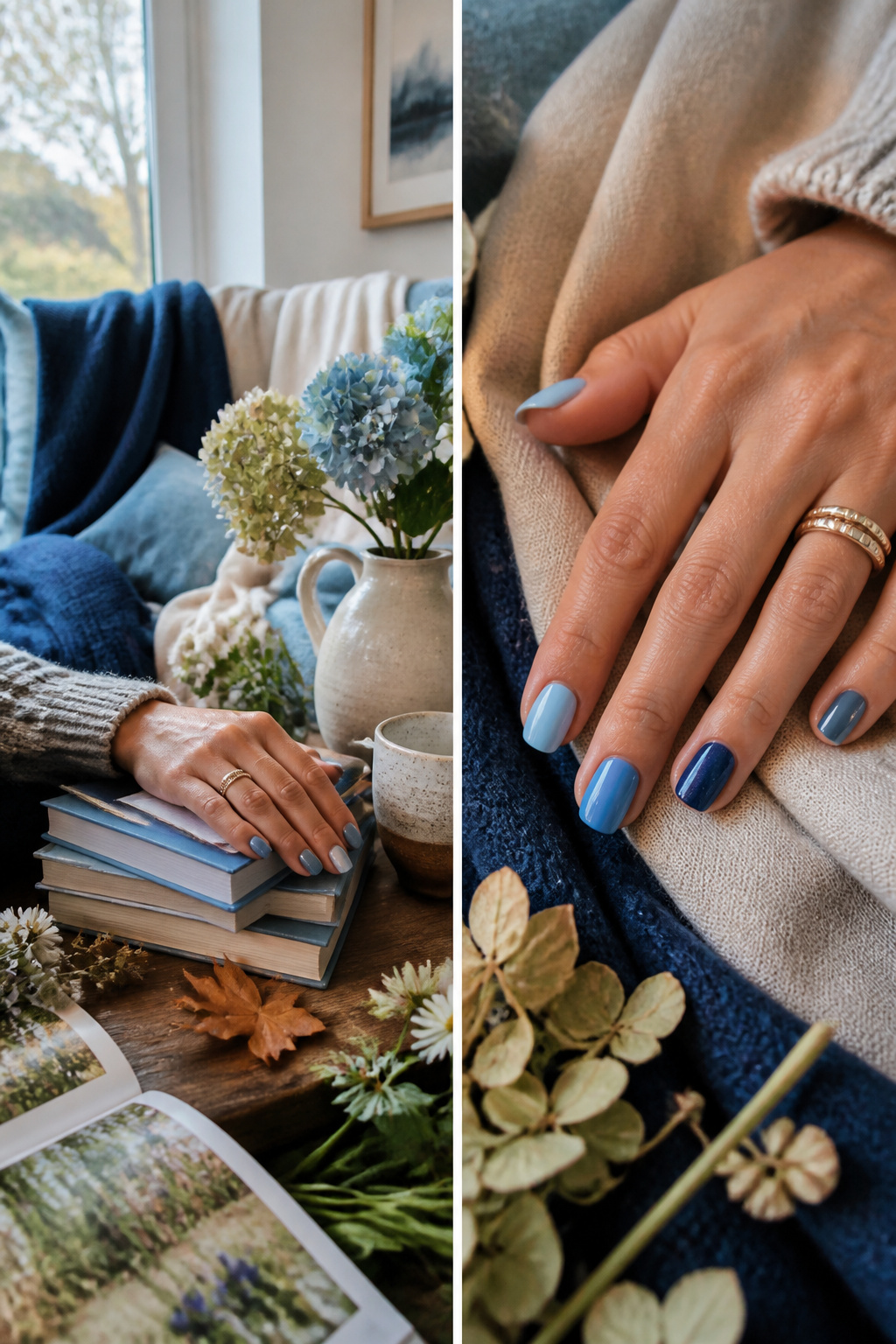
Lighter blues own the warmer months for a reason that has nothing to do with rules and everything to do with what you already own.
A baby blue or powder tone against tanned skin and white linen reads intentional; the same shade against October wool looks like you forgot to switch polishes.
Cobalt and electric blues hit hardest in summer too, when bare arms and bright light give them something to bounce off. Poolside Dreams by Lakur was the shade that converted me after years of thinking blue belonged to cooler weather.
The deeper end of the spectrum, navy through midnight sapphire, works the opposite way.
Those colors need fabric weight to feel balanced: a navy mani with a camel coat in November makes sense because both elements carry the same visual weight.
Darker blues also stain more aggressively, so the base coat habit sources keep calling non-negotiable matters more in fall and winter when you’re reaching for those tones repeatedly.
Breaking the season rule works when you mismatch deliberately. A bright cobalt in January against slate gray knits reads as optimism, not error.
A sheered-out navy in July, especially with a mirrored or glazed finish, can look cooler than the expected pastels.
The only real mistake is defaulting to navy for fall because you think you should, when your actual wardrobe that season runs to pale neutrals and the lighter blue would harmonize better.
Nail Art That Actually Works
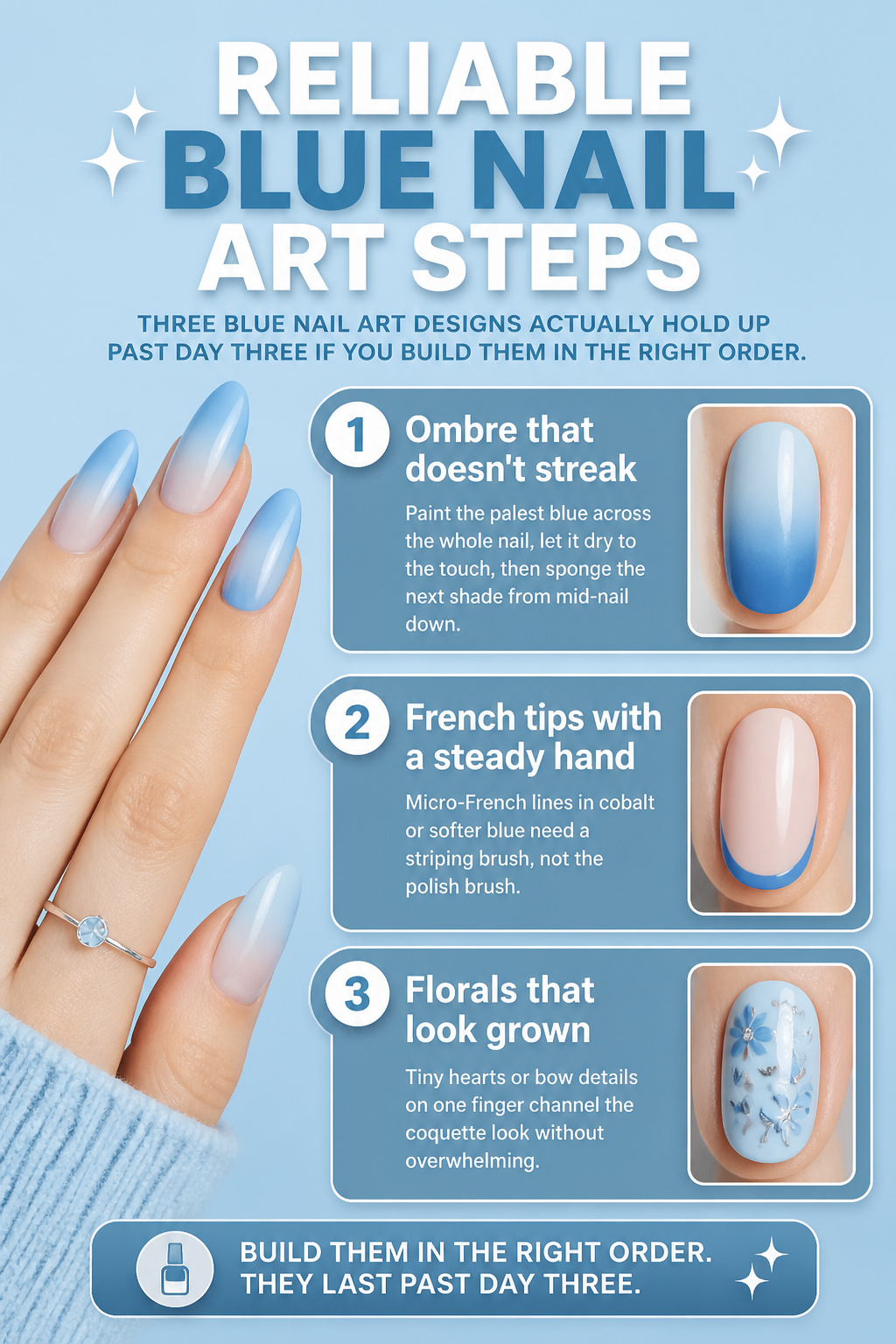
Three blue nail art designs actually hold up past day three if you build them in the right order.
1. Ombre that doesn’t streak
The gradient fails when layers are too wet. Paint the palest blue across the whole nail, let it dry to the touch, then sponge the next shade from mid-nail down.
Sky blue into white works; cobalt into nude looks muddy if the overlap sits more than a quarter inch. Two thin passes beat one thick one every time.
2. French tips with a steady hand
Micro-French lines in cobalt or softer blue need a striping brush, not the polish brush. Rest your pinky on the table.
Paint one side smile line, the other, then connect the center. The classic white base with blue tips still reads minimalist; reverse it (nude nail, blue tip) and the wear shows faster at the free edge.
3. Florals that look grown, not stamped
Tiny hearts or bow details on one finger channel the coquette look without overwhelming. Use a dotting tool for centers, then pull a thin brush outward for petals.
Baby blue backgrounds keep it soft; electric blue backgrounds need white or silver details for contrast. Skip the shimmery top coat on art itself, or the lines bleed slightly by morning two.
Skin Tone Pairings
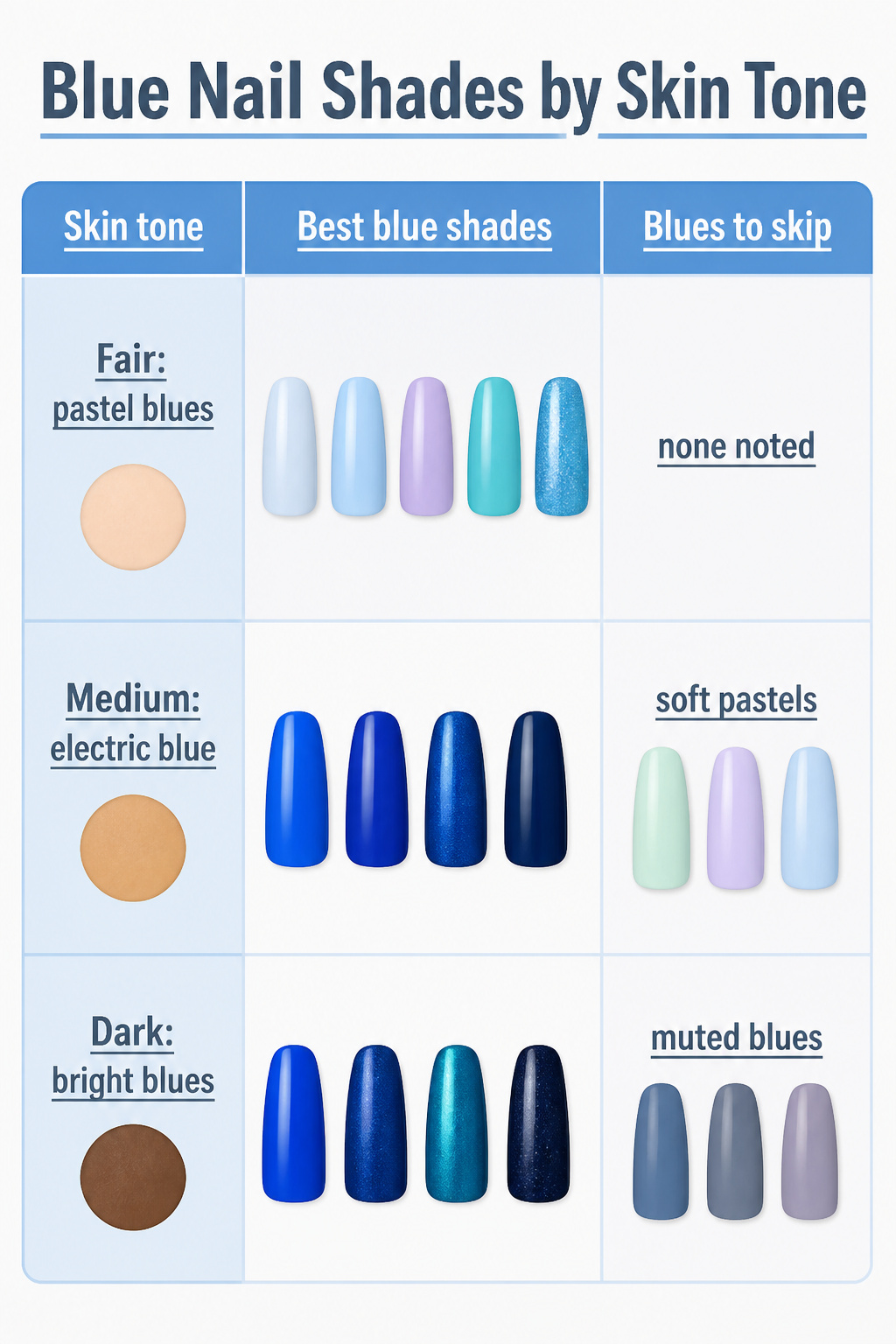
The undertone of your skin matters more than its depth when choosing a blue that flatters. Warm undertones, which read golden or peachy, tend to clash with blues that carry too much green or gray.
Cool undertones, with their pink or blue cast, can handle most of the spectrum but risk looking washed out in the palest pastels.
| Skin tone | Best blue shades | Blues to skip |
|---|---|---|
| Fair | pastel blues, light blue, lilac-leaning blues, turquoise, glittery blues | none noted |
| Medium or olive | electric blue, ultramarine, midnight blue, shimmering blues | soft pastels that read too cool |
| Dark | bright intense blues, sapphire, mermaid, dark night | muted or dusty blues that dull against the skin |
Light blue gets called out as the exception that works across every skin tone, though on very warm complexions it reads best with a creamy, milky base rather than a stark powder.
The electric end of the spectrum, ultramarine and cobalt, draws the eye regardless of depth; the question is whether you want that contrast or prefer something that blends in.
My own leaning is toward midnight and navy for olive skin, since the near-black depth avoids the chalky middle ground where some mid-tone blues sit.
Making It Last
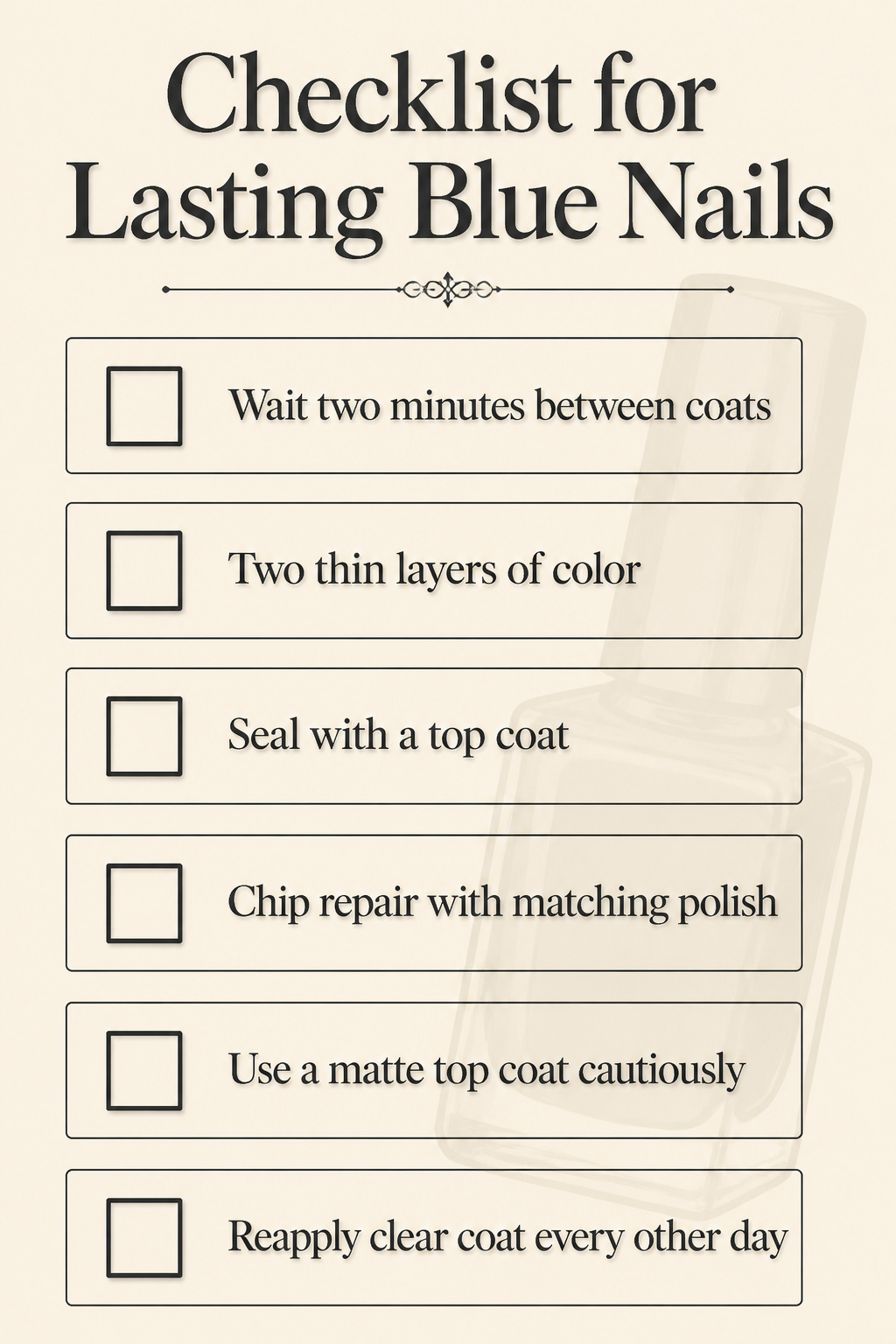
A base coat is the difference between a blue manicure that holds for days and one that chips by Tuesday. The color shows more evenly, too, especially on the lighter shades where streaking tends to show first.
- Wait the full two minutes between coats, including base coat, color, and top coat. Rushing this is the fastest way to trap solvent underneath and watch the whole surface wrinkle.
- Two thin layers of color beat one thick layer every time. Thick polish stays tacky for hours and dents under the slightest pressure.
- Seal with a top coat matched to your formula. The sources split on this: a standard manicure wants a standard top coat, while gel or hybrid systems need their own compatible sealant. Mixing types wastes both products.
- For chip repair, a tiny dab of matching polish on the bare spot, followed by a fresh layer of top coat over the whole nail, buys another two to three days without starting over.
A matte top coat over electric or cobalt blue reads modern, but it sacrifices the protective layer that gloss finishes provide. Reapply a thin clear coat every other day if you go that route.
Frequently Asked Questions
What are the best blue nail colors for summer?
Electric blue, cobalt, and turquoise own the warmer months because they need bright, natural light to read bold rather than brash.
Lighter pastels like baby blue also work against tanned skin and white linen, where the same shade would look misplaced against fall wool. Poolside tones hit hardest when bare arms and long daylight give them something to bounce off.
How can I make my blue manicure last longer?
A base coat is non-negotiable, especially for darker blues that stain aggressively. Wait a full two minutes between every coat, keep color layers thin rather than thick, and match your top coat to your formula type.
For chip repair, dab matching polish on the bare spot and seal the whole nail with fresh top coat to buy two to three more days.
What nail art designs can I create with blue polish?
Ombre needs a sponge and two polishes with dry time between layers so colors do not streak. Micro-French lines call for a striping brush, not the polish brush, with your pinky anchored on the table for steadiness.
For florals, use a dotting tool for centers and pull a thin brush outward for petals; baby blue backgrounds keep the look soft, while electric blue needs white or silver details for contrast.