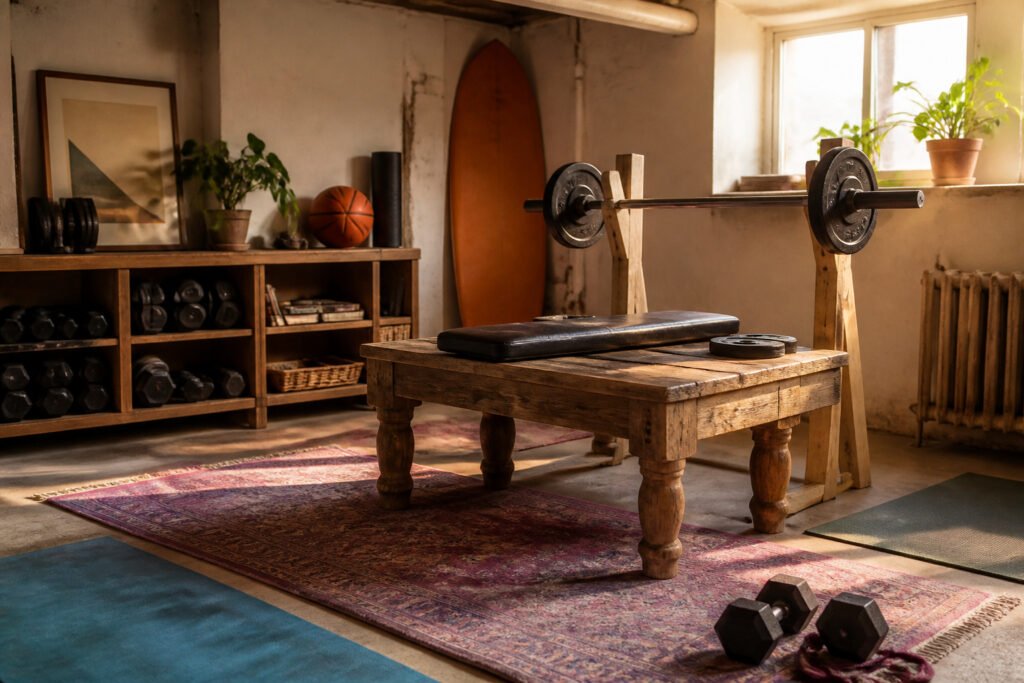
The right home gym idea depends more on what the room already holds than how much you plan to spend. A basement corner full of storage tubs becomes workable once you measure the ceiling beam that will crack your knuckles on overhead presses, and one reader proved the point by outfitting hers entirely with moved furniture and a $100 budget. The trick is treating the space as a room that deserves decoration, not a corner that accepts whatever failed elsewhere.
1. Reuse Old Decor
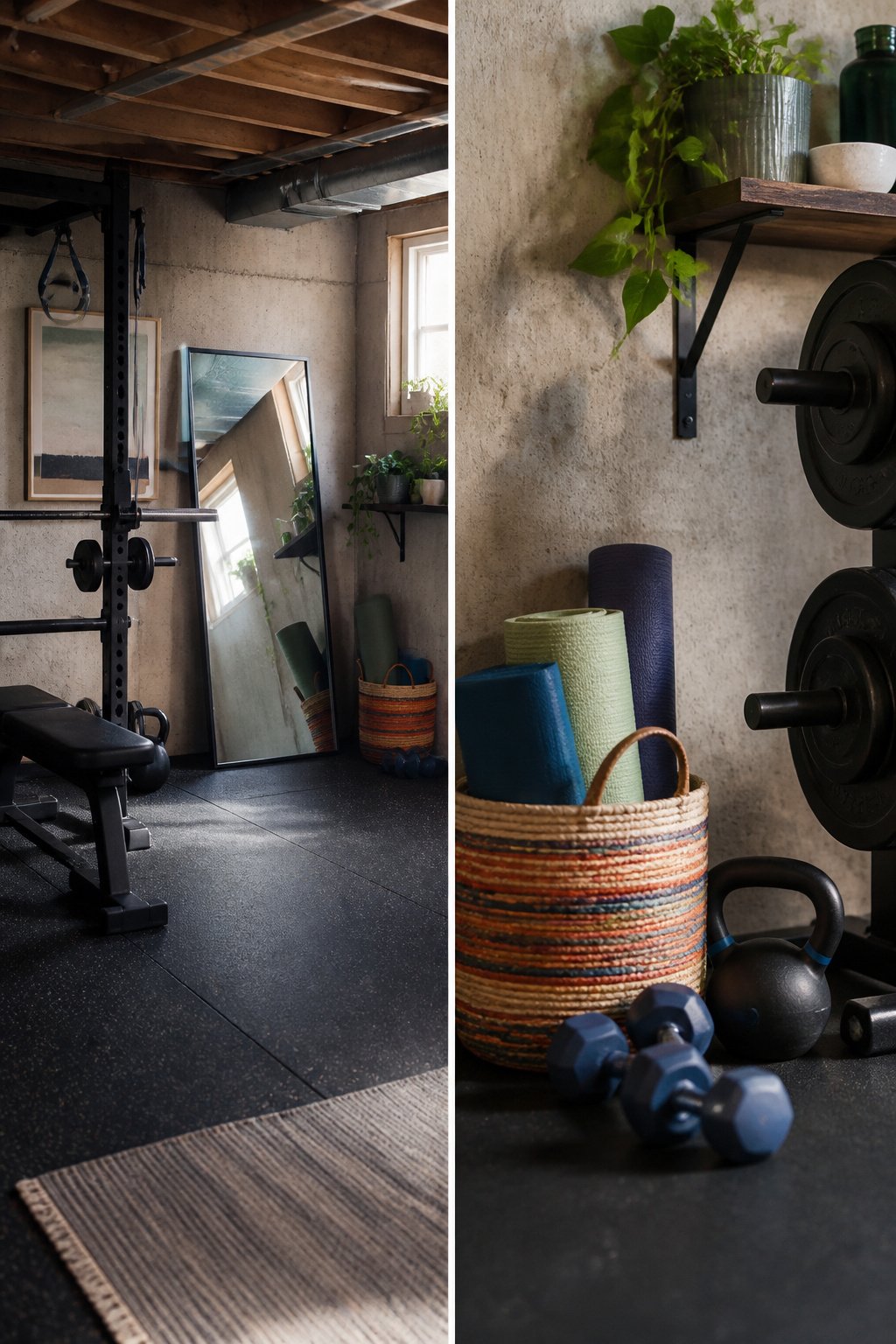
A basement nook that still holds last winter’s storage tubs is probably closer to a gym than it looks. The first move is usually clearing the floor, but the second, cheaper one is what you hang on the walls once the equipment is in place. That print you stopped noticing above the sofa, the mirror leaning behind a door, the basket that never fit the bathroom: these shift to a workout space without the pressure to match a living room’s polish. One reader spent about $100 total on her basement gym by pulling only what she already owned, and the result felt intentional rather than leftover.
Plants do the same work of softening concrete and exposed insulation, though they need a spot with enough light to survive the humidity. A bookshelf left over from a reorganized office becomes storage for mats, small weights, and the same hooks and bins that corralled craft supplies elsewhere. The trick is treating the gym as a room that deserves decoration, not a corner that accepts whatever failed elsewhere. A piece you have grown tired of in one space often reads as fresh against rubber flooring and steel frames, and the swap costs nothing but the effort of carrying it downstairs.
2. Combine Home Office and Gym
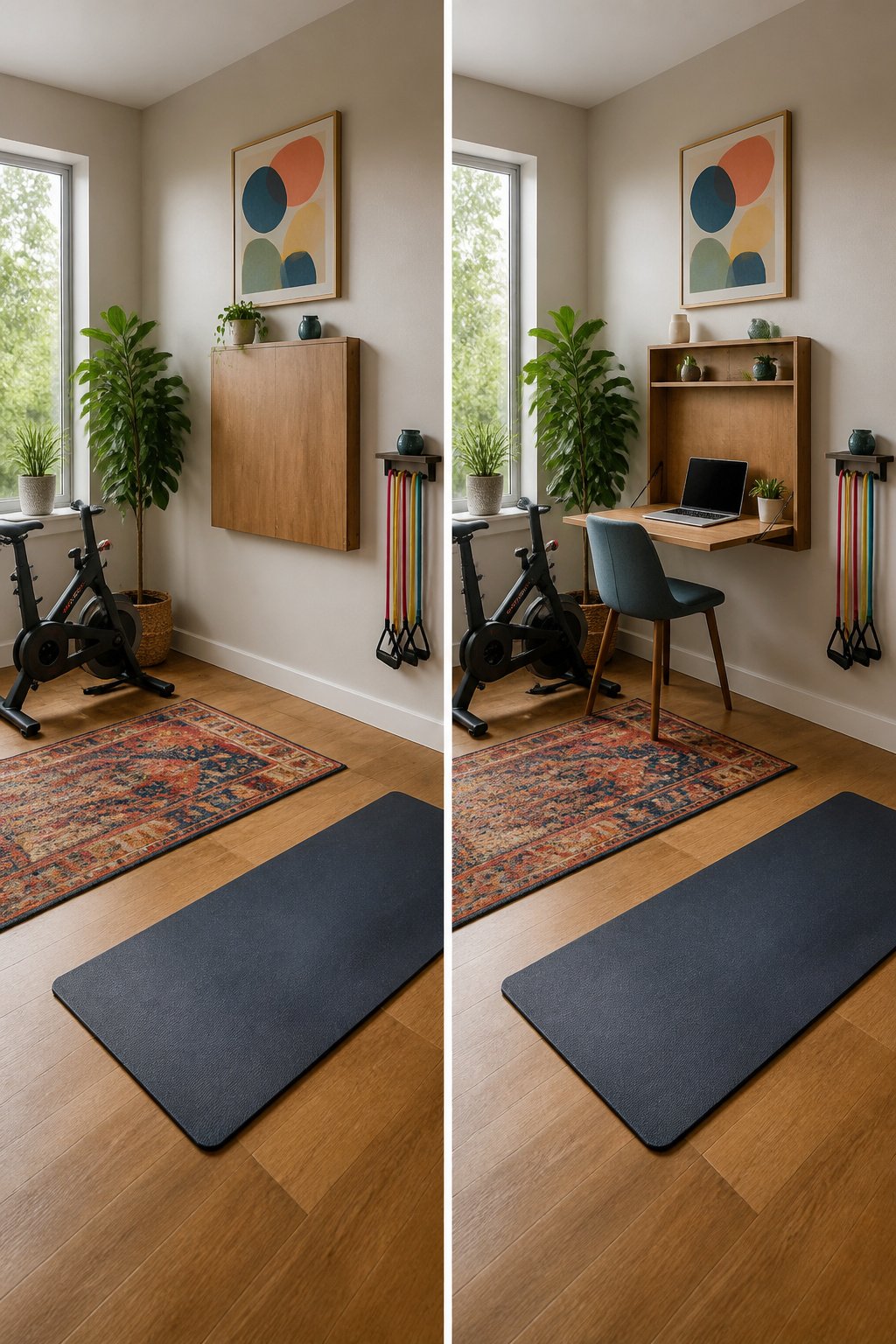
A desk that folds flat against the wall or slides over a stationary bike turns one corner into two rooms. Wall-mounted desks and Murphy-style work surfaces leave the floor open for a yoga mat or a set of weights when the laptop closes. One reader, stuck in quarantine with cut hours, built exactly this: her office-gym nook started with nothing but 2-pound weights, a foam roller, and a yoga mat, then grew piece by piece as she found what she actually used. She spent around $1,000 total, mostly on an indoor rower, and repurposed old art and decor from elsewhere in her house to make the basement space feel intentional rather than improvised. The lesson there is to shop your own rooms first. A mirror that bounces light for Zoom calls also checks form during squats. Storage that hides resistance bands behind a monitor keeps clutter from swallowing the room. The risk is letting both functions bleed together until neither works: keep the bike and the desk on opposite walls, and store work papers where sweat cannot reach them.
3. Keep It Simple and Light
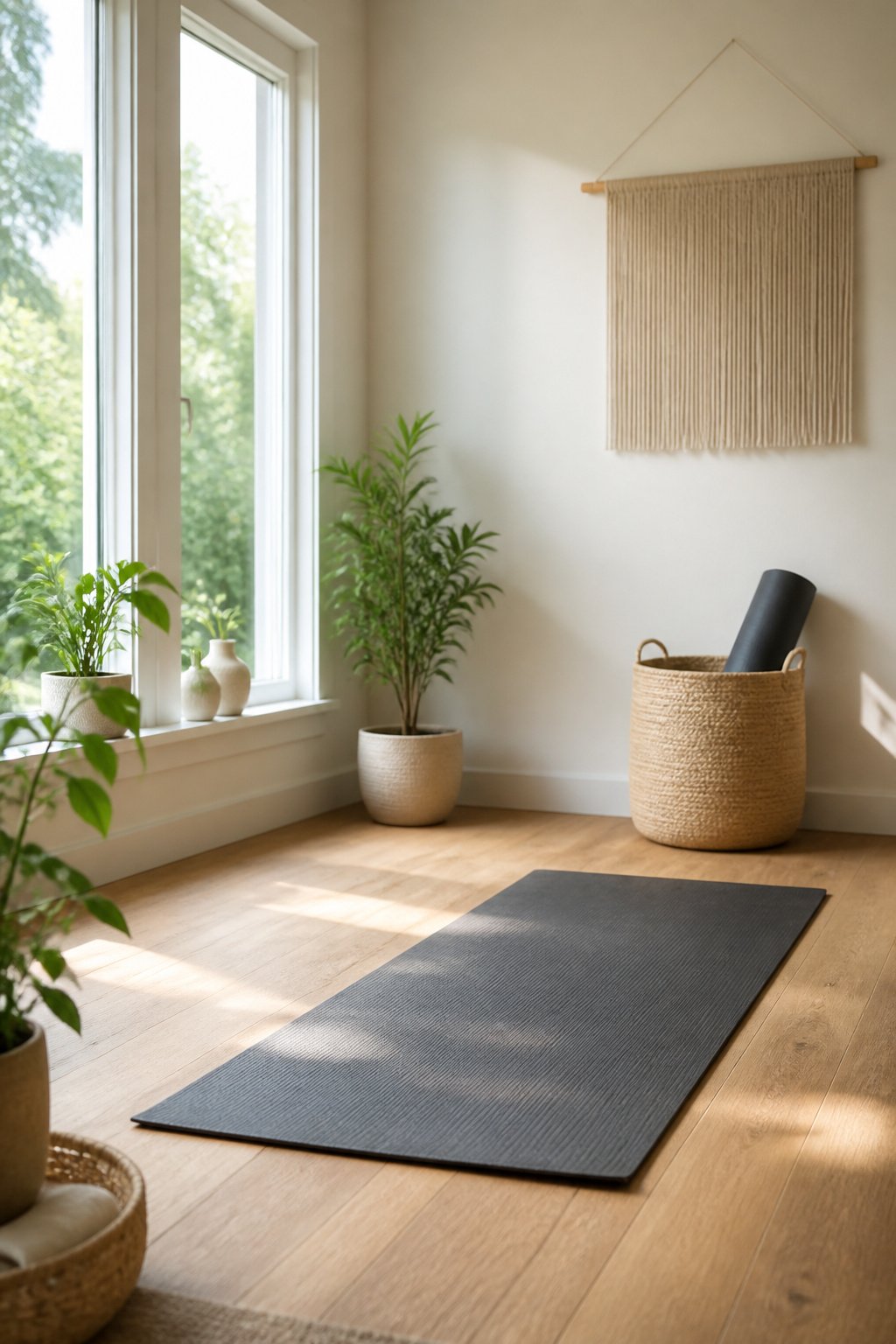
A corner with morning light and a single yoga mat can feel like more of a retreat than half the studios I have stepped into. The trick is refusing to let the space become a storage closet for every abandoned fitness trend. One homeowner I came across calls hers a "studio" rather than a gym, and that shift in language matters: stretching or meditation counts as enough reason to walk in, no sweaty workout required.
Paint the walls a warm white and leave the floor bare if it is already wood or low-pile carpet. A 4′ x 6′ horse stall mat from Tractor Supply runs cheaper than marketed gym flooring and gives the cushion you actually need for joint work. Store the mat in a basket when you are done, or lean it behind a door; visible clutter undoes the calm faster than any skipped session. Natural light does the heavy lifting here, so face the long side of the mat toward the window and skip the mirror unless the room is truly dim.
4. Utilize Vertical Wall Space
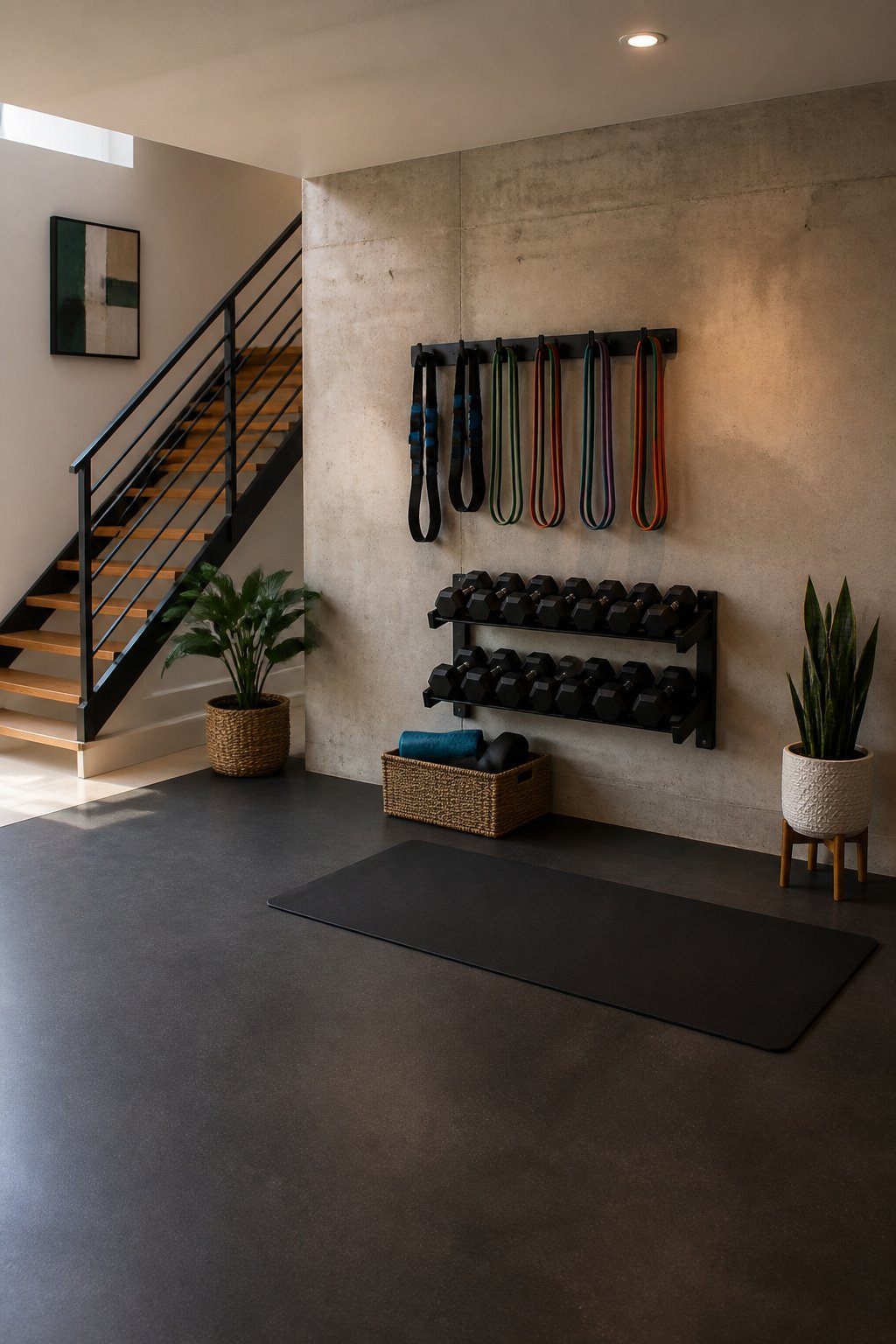
Wall-mounted storage turns the square footage you already have into usable gym space without eating up the floor. A dumbbell rack mounted to the wall keeps weights off the ground and leaves room for a yoga mat or a bench underneath. For smaller items, a simple basket corrals yoga mats, foam rollers, and barbell pads in one grab-and-go spot. Resistance bands, straps, and TRX suspension trainers hang neatly on a wall organizer so nothing ends up in a tangled pile behind the door. Medicine balls store vertically on PRX Fitness racks, which also happen to sit at laptop height if you need a quick stand for following along with video workouts. Concrete walls call for TapCon anchors and a hammer drill, but the hardware is straightforward once you have the right bit. The whole setup takes an afternoon and costs less than the floor-standing alternatives, with the added benefit that you can still park a car or roll out a guest bed in the same room when the weights are done for the day.
5. Split a Room into Zones
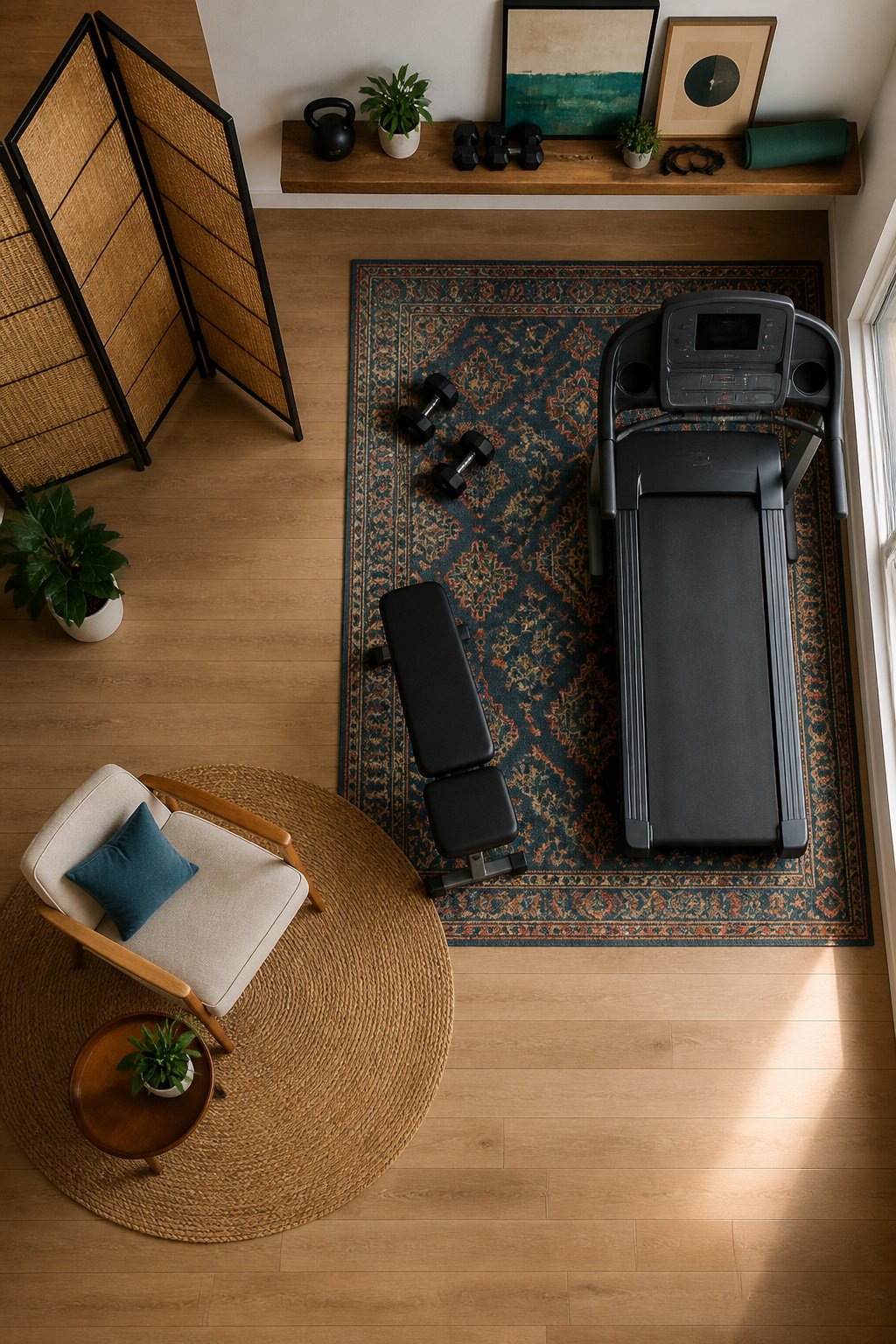
A single open-plan room can serve both purposes if you give each one a visual boundary. A rug placed under the equipment does the separating without walls, and facing seating toward a window rather than the treadmill keeps the relaxation zone from feeling like a waiting area at a gym. In one setup I read about, the homeowner used the rug and chair placement to split an upstairs room into two clear territories; the workout half got used heavily because it did not bleed into the rest of the house. Physical dividers work too, but they cost space you may not have. A folding screen or a tall bookshelf can create the same break if you need to hide the bike from view when guests come over. The choice depends on whether the room is a pass-through or a destination.
6. Add Lots of Color
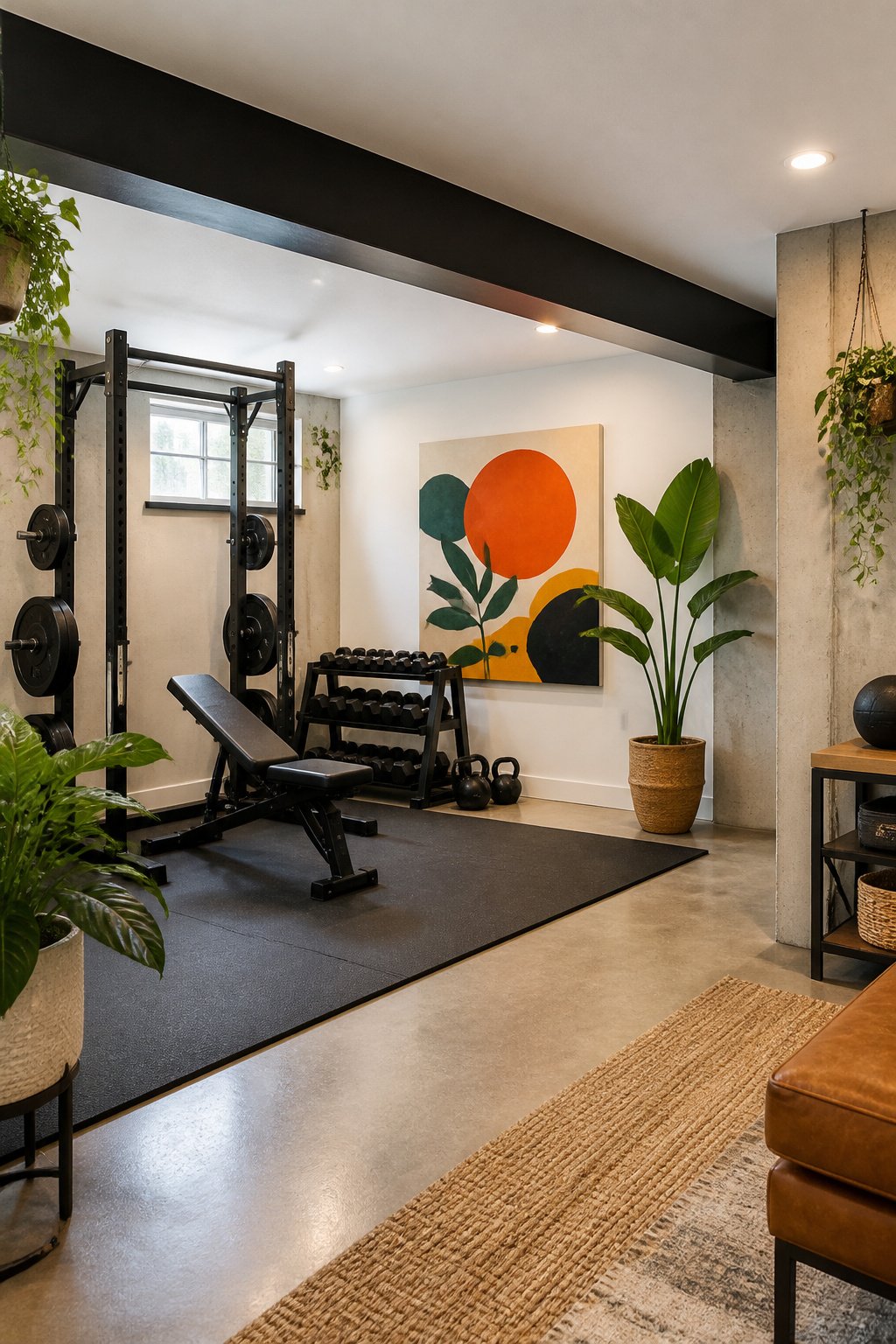
A coat of paint does more for a basement gym than almost any piece of equipment. I learned this watching a reader turn an unfinished corner into somewhere she actually wanted to be: she chose Behr Marquee Cameo White for the walls and suddenly the concrete felt like a room. The same overhead beam that looked like rusted infrastructure went dark gray, and the whole space picked up an industrial identity without trying too hard.
Color here works the way it does in any room you avoid: pale walls bounce whatever light you have, and one darker element keeps the eye from floating. She spent roughly $100 on the decor part of the project, pulling art and plants from elsewhere in the house that had gone stale. A gym, unlike a living room, does not punish you for bold choices. That print you grew tired of above the sofa reads fresh when your alternative is staring at a treadmill console.
7. Transform an Extra Bedroom
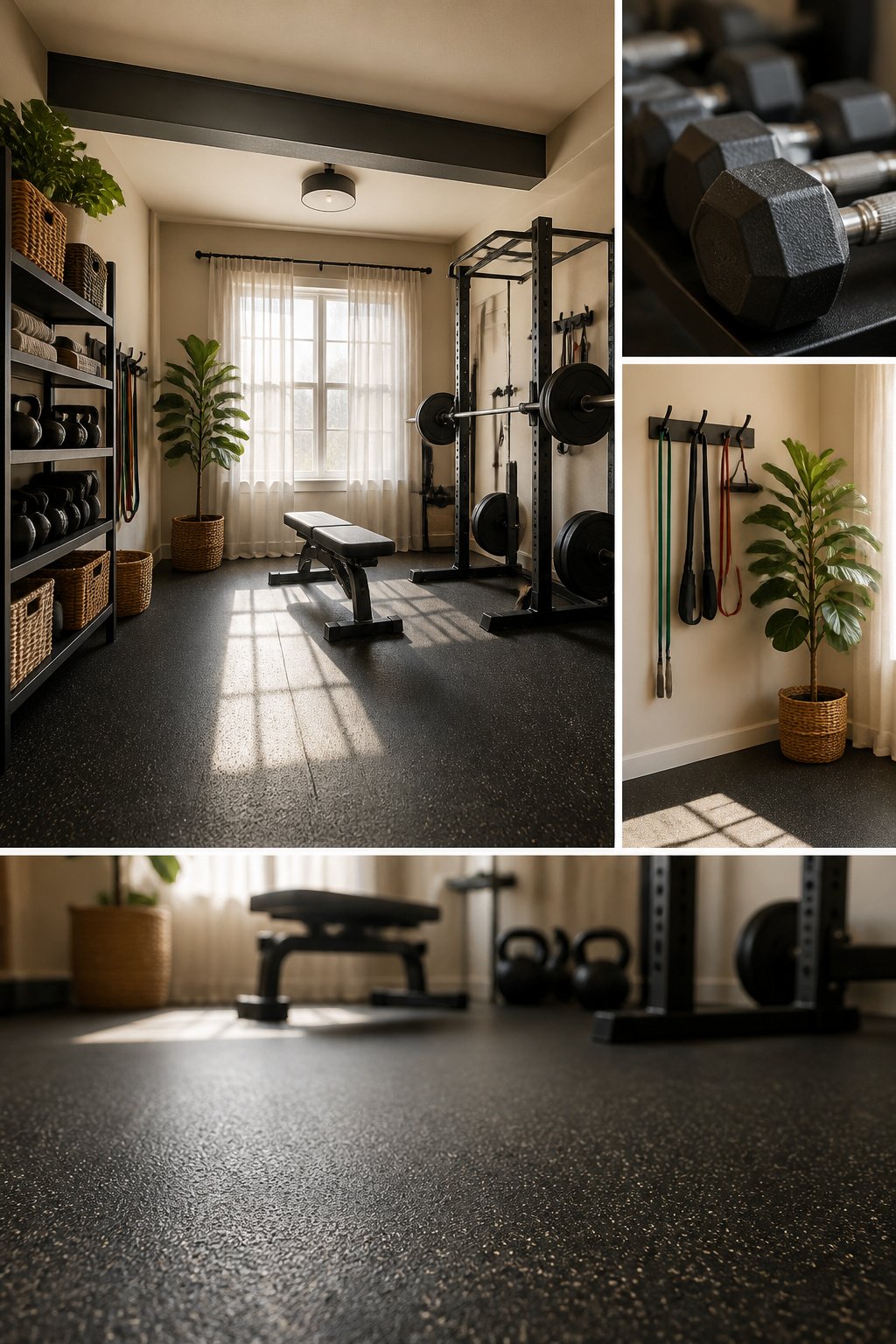
A seldom-used bedroom has roughly the same footprint as a boutique studio class, so the conversion is mostly about protecting what is already there and adding what is missing. The first thing to address is the floor. Carpet will compress and tear under a loaded barbell, and hardwood dents. 4′ x 6′ horse stall mats from Tractor Supply solve this without the markup attached to mats marketed specifically for home gyms. They are the same rubber, just sold for barns instead of basements, and they hold up better than the foam tiles that ship in interlocking squares.
Wall color matters more than equipment color. A bedroom usually has decent natural light, but gym time tends to be early or late. Painting the walls a light, warm white keeps the room from feeling like a cave after the bed is gone. If the room has an overhead beam or odd trim, a darker gray on that single element gives the space some visual weight without closing it in.
Storage is what keeps a bedroom gym from becoming a junk pile. A simple bookshelf along one wall, fitted with baskets and a few hooks, handles bands, small weights, and the clutter that otherwise ends up on the floor. The bed was hiding a lot of square footage; once it is gone, the temptation is to fill the center with gear. Resist that. Leave enough open floor for a yoga mat’s length plus a foot on each side, and the room stays usable for bodyweight work, stretching, and whatever program you actually follow.
8. Organized Basement Gym
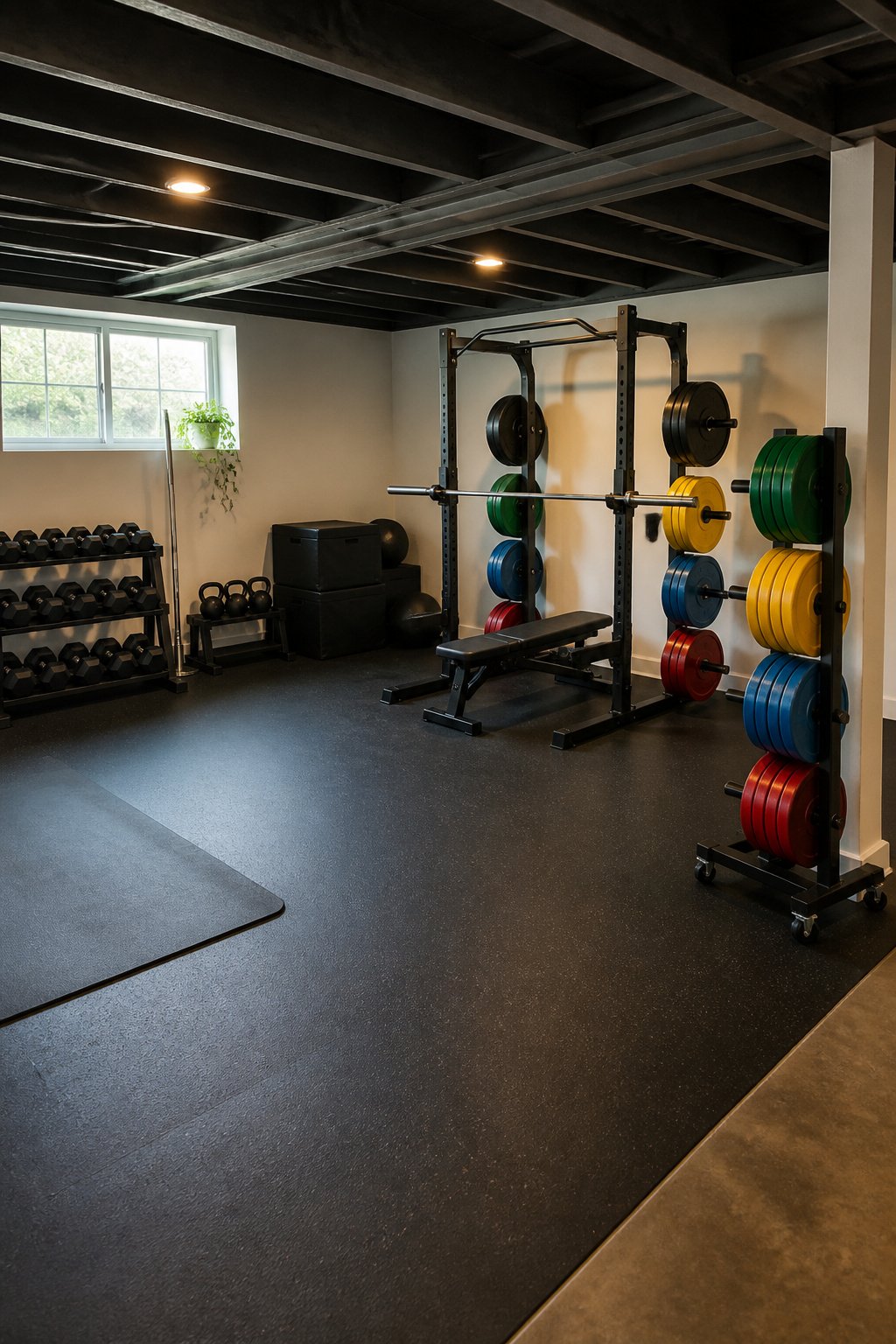
A basement gym lives or dies on whether you can put your hands on the right weight without tripping over the wrong one. The plate tree on wheels solves that: roll it aside when you need the floor space, lock it back when you don’t. My own preference runs to the Rogue MIL Spec Echo Bumper Plates, a mid-range set that holds up without the premium price jump. The 45s, 25s, and 10s cover most loading needs; I skip the 35-pound plates and fill gaps with 5s, 2.5s, and fractional plates for micro-progression.
For the rack, the Monster RM-4 from Rogue Fitness anchors the room without swallowing it. Pair it with their adjustable bench and you have a squat station that converts to flat or incline pressing in about thirty seconds.
Plyo work lands on padded plyo boxes from Titan Fitness, not the wooden kind that punishes missed jumps. The padding saves shins and removes the hesitation that keeps you from full effort. Stack them to whatever height the day’s program calls for, then slide them under a stair nook or against the wall when you’re done.
Equipment That Earns Its Square Footage
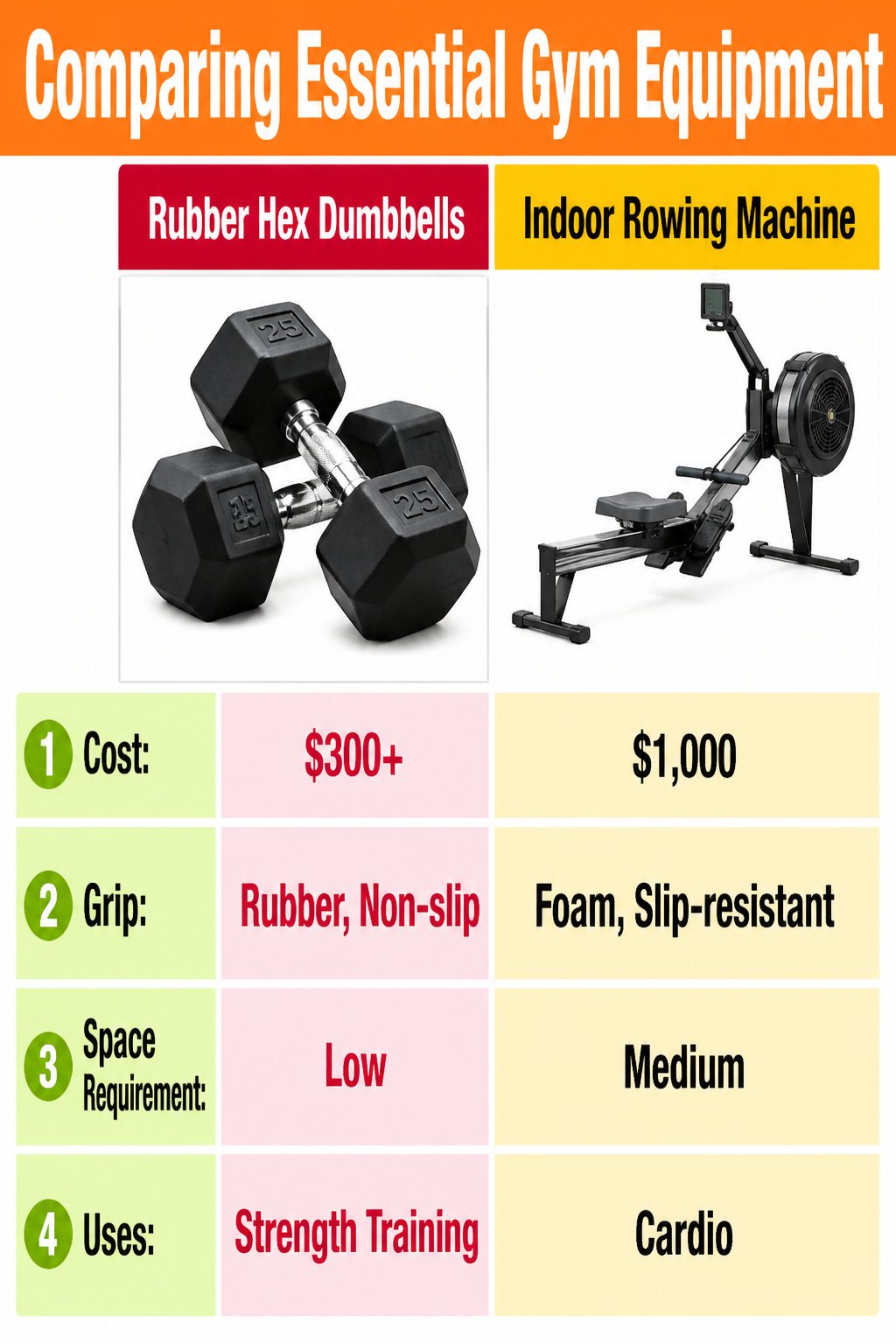
Rubber coated hex dumbbells from REP Fitness keep showing up in basement setups for a reason. The rubber grips handle sweat better than bare metal, and the hex shape stops them from rolling underfoot when you drop them between sets. A full rack runs more than adjustable dumbbells upfront, but the matching set stays neat forever and never needs reconfiguring.
A yoga mat is the cheapest square footage in the room. Even a corner studio built around meditation still keeps one on hand for morning stretches that never turn into a full workout.
Cardio machines are where the budget splits hard. An indoor rowing machine runs approximately $1,000, which buys a lot of dumbbell pairs before you commit to one big footprint. Treadmills and bikes take the same space and more cash; the rower at least folds vertical when you need the floor back.
Measuring and Fitting Your Space
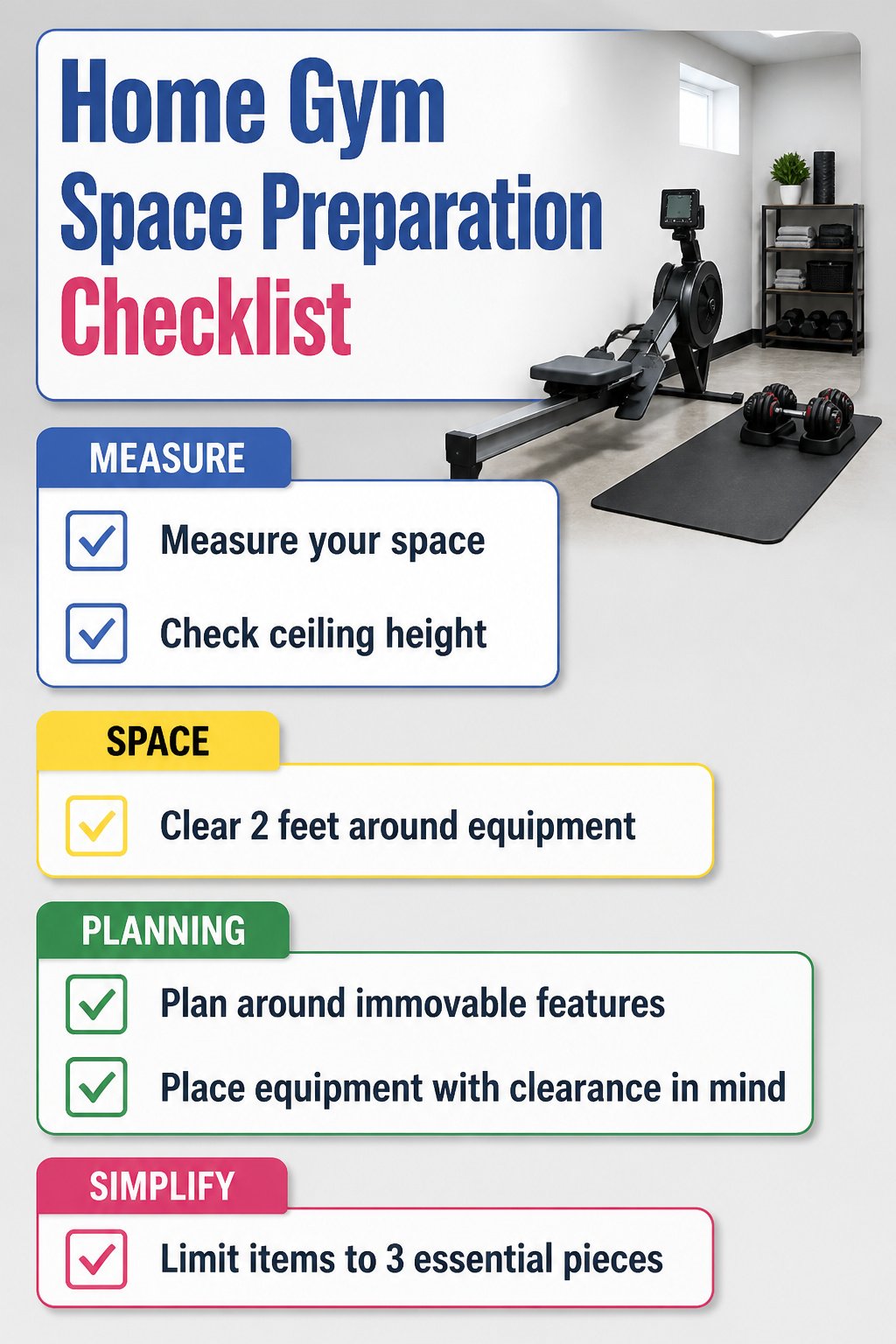
The tape measure is where most home gym ideas stall or succeed. I started by pulling everything out of a basement corner that had collected storage tubs and spare furniture for two years, which let me see exactly what the walls and floor actually offered. The nook turned out to be eight feet deep with a low ceiling beam I would have cracked my knuckles on during overhead presses if I had not checked standing reach first.
Leave two feet of clear floor on every side of your equipment, even if that means fewer pieces total. A rower needs that clearance for the seat rail; a bench needs it so you are not shimmying sideways with a loaded barbell. Immovable features, the beam, a support column, a sump pit, become the anchors you plan around rather than fight. I placed the rower parallel to the beam so the sliding seat stopped short of it, which also put the display screen in sight line from the doorway.
Overcrowding sneaks in when every item looks essential in the store. The basement gym that stayed usable had exactly three things: the rower, a mat, and adjustable dumbbells. The storage shelves moved to another wall, the extra furniture left the house entirely, and the breathing room that replaced them turned out to be the most used part of the space.
Frequently Asked Questions
What are some home gym ideas?
You can combine a home office with a gym using a wall-mounted or Murphy-style desk that folds away for workouts. Reusing old decor from other rooms costs almost nothing and keeps the space from feeling like an afterthought. For tight footprints, vertical wall storage and horse stall mats from Tractor Supply cover the basics without eating up floor space.
How do I organize my home gym?
Mount a dumbbell rack to the wall and keep smaller items in baskets or on organizers so nothing tangles behind a door. A plate tree on wheels lets you roll weights aside when you need the floor back. Leave two feet of clear space around every piece of equipment, even if that means owning fewer things.
What equipment do I need for a home gym?
Start with rubber-coated hex dumbbells, a yoga mat, and horse stall mats for floor protection. A rowing machine folds vertical when not in use and costs around $1,000, which buys a lot of free-weight pairs before you commit to one big footprint. Add plyo boxes, an adjustable bench, and a power rack only after you know what you actually use.