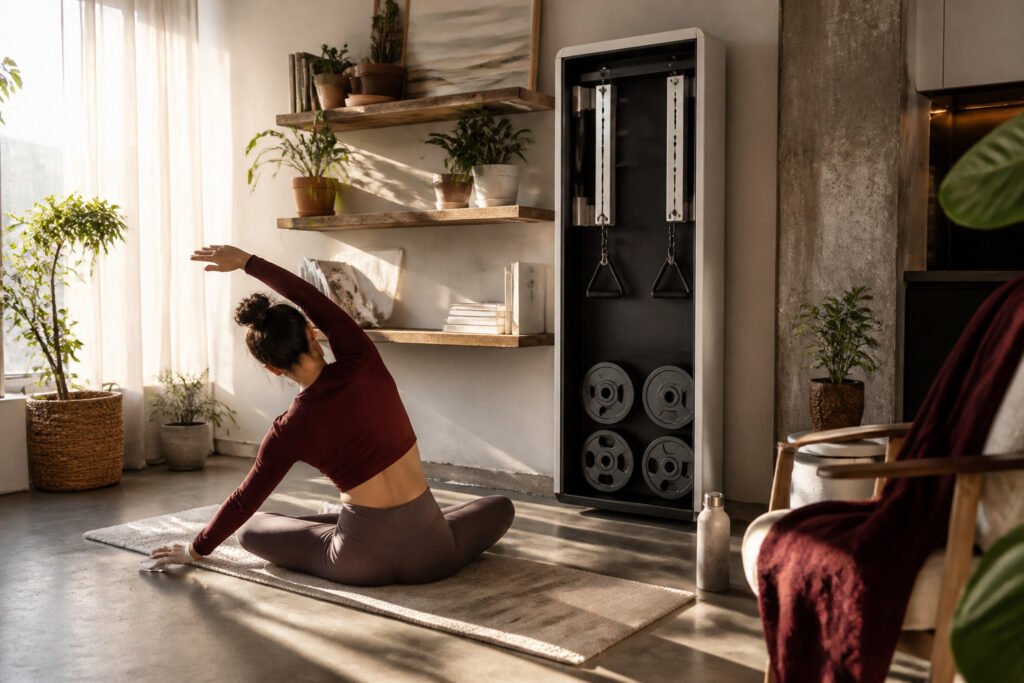
A small home gym is a workout setup built into the space you already live in, not a room you add on. The catch is that every machine makes you choose between what it can do and how much floor it takes. The Tempo Move handles up to 150 pounds of real weight inside a cabinet that looks like furniture, while the Bowflex Xtreme 2 SE gives you full leg workouts only if you have a garage to hide it in.
Tempo Move
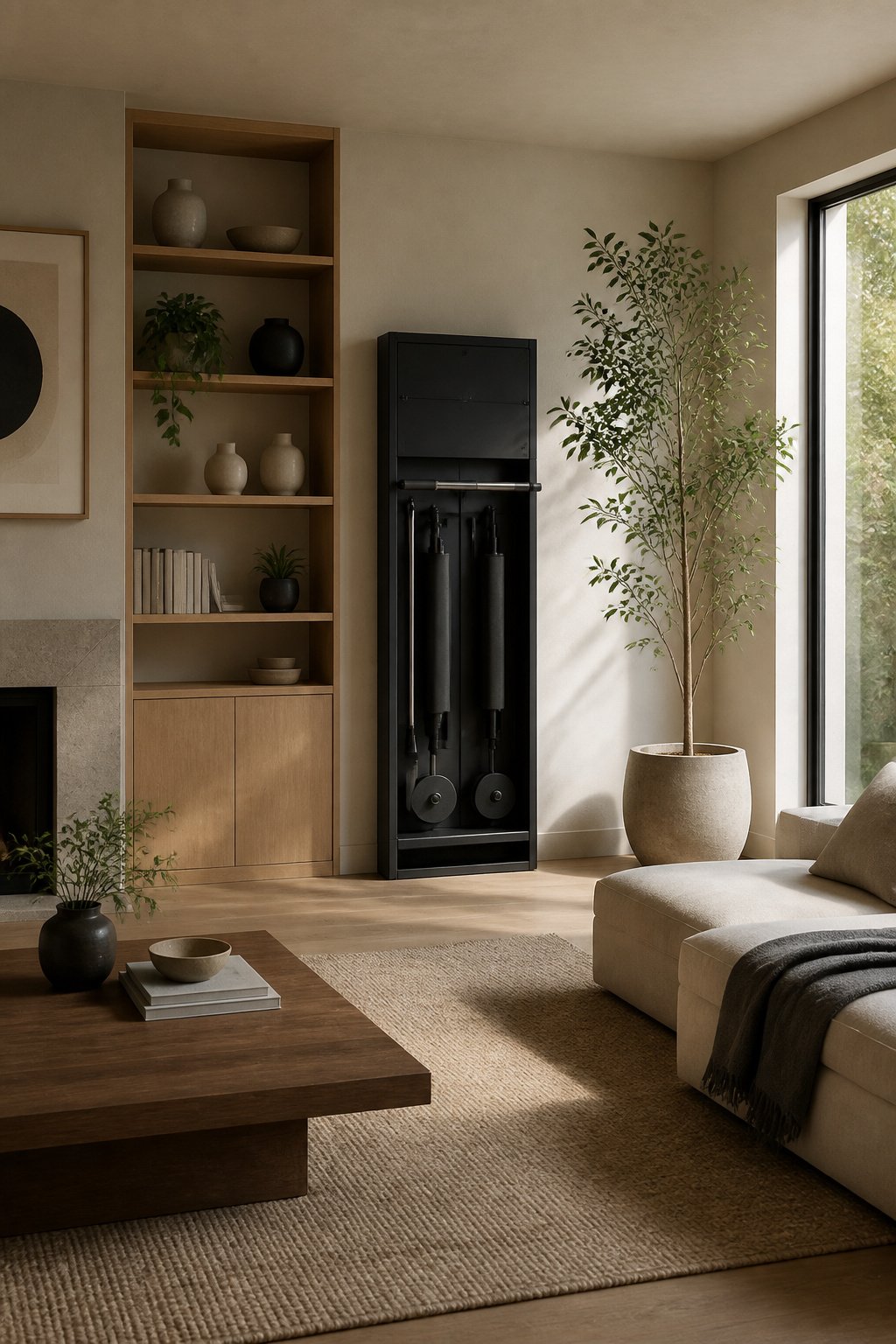
The Tempo Move is the best-looking piece of workout equipment I have seen, and that matters when your living room doubles as your gym. The cabinet-style finish reads more Crate & Barrel than cardio, which is the kind of detail that keeps a small apartment feeling like home rather than a storage closet.
What sold me on reading through the reviews was the combination of real weights and AI coaching in one footprint. The Tempo Move Pro handles up to 150 pounds on the bar, enough to max out most lifts without a rack eating half your floor space. The camera tracks your form and the app builds progressive overload automatically, suggesting more weight or reps based on whatever you logged yesterday. Your goals, a body-scan baseline if you want one, and a daily Readiness score pulled from sleep and heart-rate data all feed into what the machine assigns you that morning.
My wife added her profile to the same plan at no extra cost, getting the same personalized programming without a second subscription. That kind of multi-user setup is rare in compact systems, and it is worth weighing if you are splitting both the rent and the workout space.
lululemon MIRROR
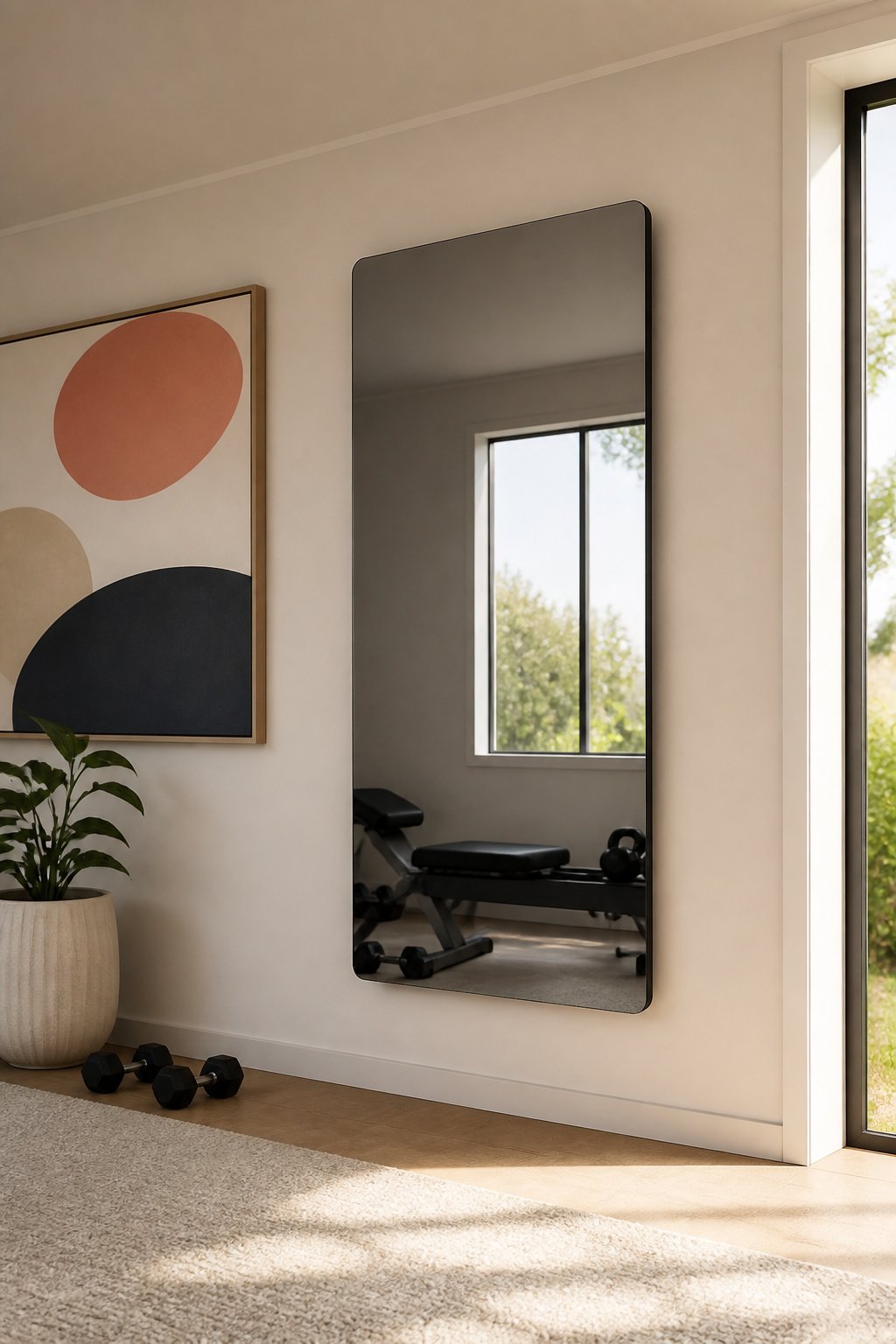
The lululemon MIRROR is the option that hides in plain sight. Mounted on the wall, it reads as ordinary decor until you turn it on and the screen comes through clearly behind the glass. That design choice matters in a small home gym where every inch competes with living space.
The workouts lean heavily toward cardio, mobility, stretching, and HIIT rather than strength training. You can kickbox, flow through yoga, or squeeze in a 30-minute session before a Zoom call, but the lack of built-in weights is a real gap. A dumbbell bundle exists, yet it does not approach the depth of a dedicated strength system. For someone who prioritizes lifting, this is the wrong machine. For the person who needs a "gym partner" to stay on track through bodyweight and movement-based classes, the MIRROR fills that role without demanding floor space.
TRX Home2 System
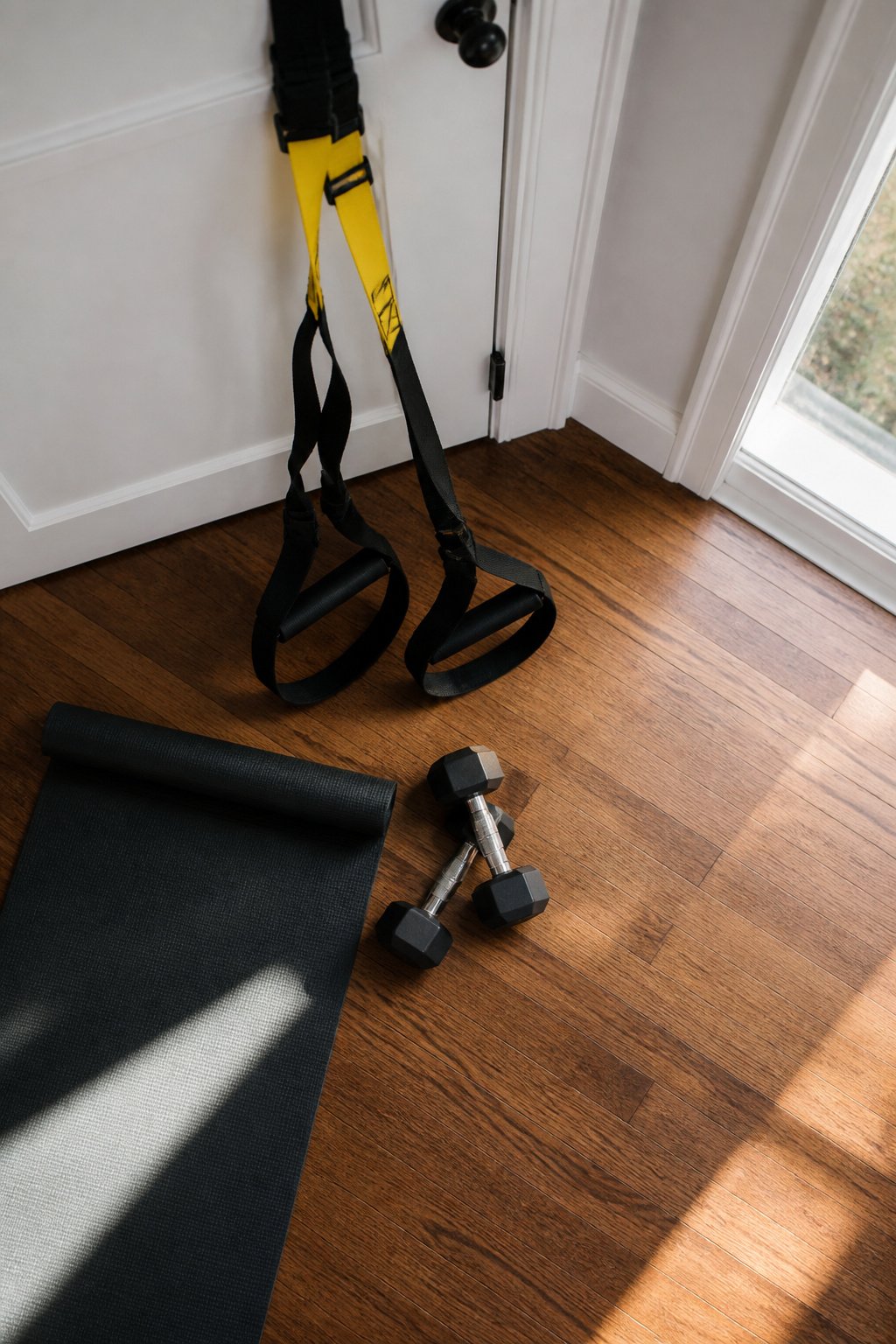
The TRX Home2 System hangs on any door with those black straps and yellow bands you have probably seen in hotel gyms or studios. Packing it away takes about thirty seconds, which makes it the easiest small home gym to hide when guests come over or to toss in a suitcase. The tradeoff is real: upper body and core work are where this thing earns its keep, but leg days feel like an afterthought. Squats and lunges with straps never load the lower half the way a barbell or even heavy dumbbells can, so someone building serious leg strength will hit a ceiling fast. Renters in tight apartments, travelers who want consistency between trips, or anyone who already runs or cycles for legs and just needs a pull and press option at home, this is probably the fit. The price lands lower than most systems with screens or weights attached, and the simplicity means nothing breaks that you cannot replace with a trip to the hardware store.
Tonal
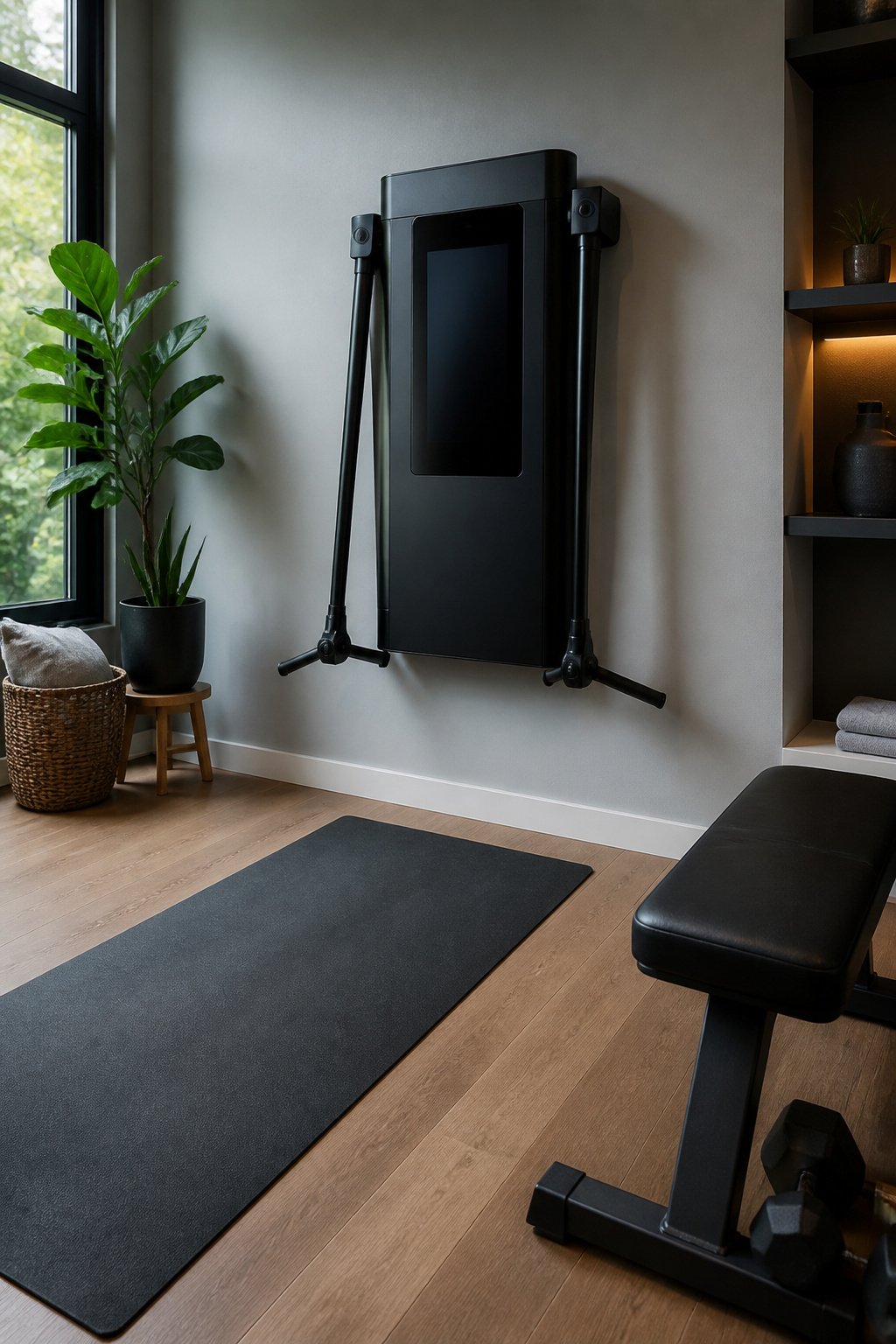
Tonal hangs on your wall like a flat-screen TV, which makes it one of the few strength systems that genuinely disappears into a small home gym. The electromagnetic resistance goes up to 200 pounds per arm, and the machine adjusts the weight automatically mid-rep when it senses you struggling. That part feels almost eerie the first time it happens.
The wall-mounted unit runs $3,545, and that number stings even before the subscription kicks in. You pay $50 a month to unlock the full class library and the personalized workout programming; without it, the machine loses most of what justifies the space it takes. Over four years, you are looking at roughly the same spend as a $100 monthly gym membership with a trainer thrown in.
Tempo Move delivers a similar smart-class experience for significantly less money, so the Tonal only wins if the zero-footprint design is non-negotiable in your space. For apartments where a rack or bench would mean giving up the dining area, the trade might still make sense. For everyone else, the math is hard to love.
Bowflex Xtreme 2 SE
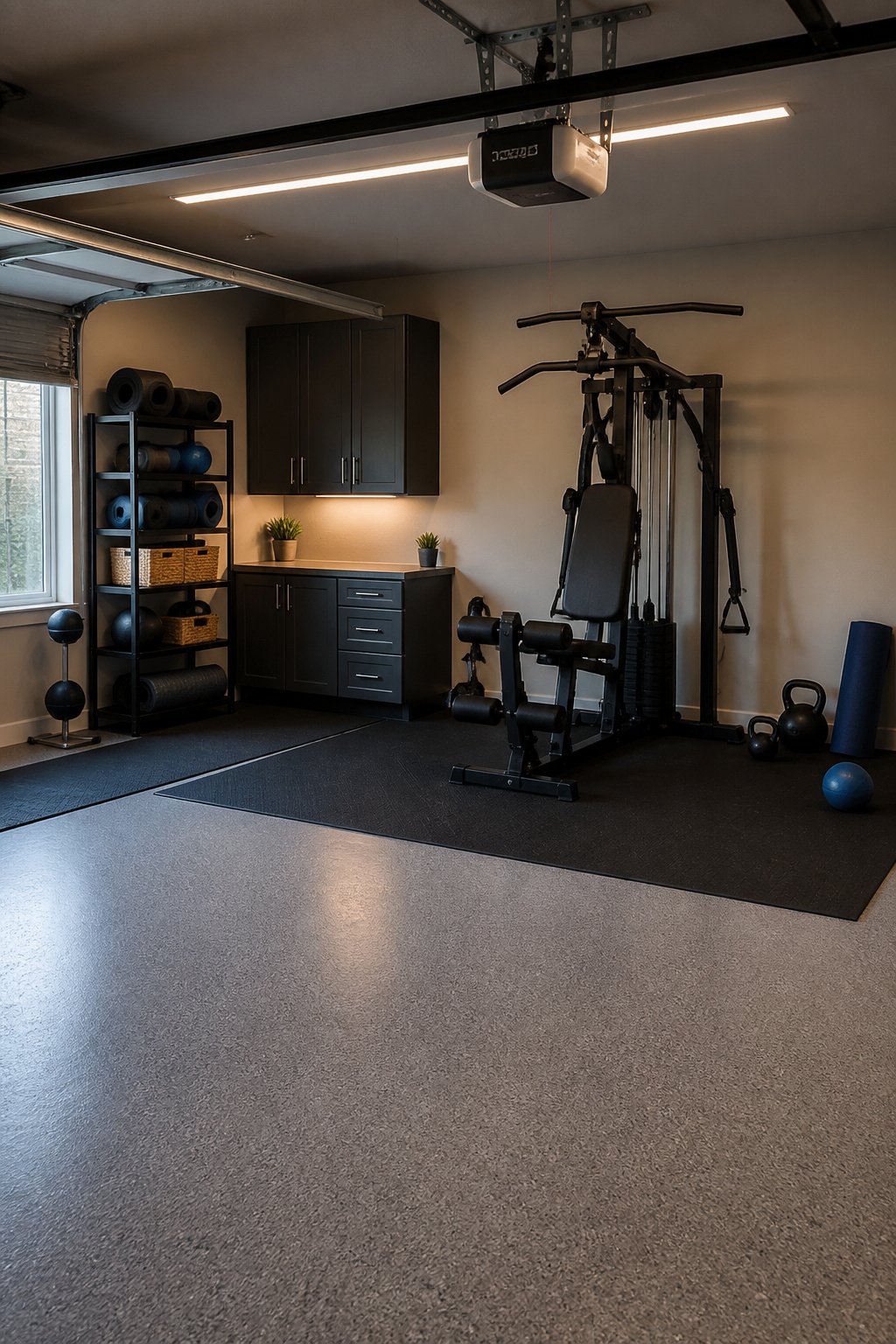
The Bowflex Xtreme 2 SE belongs in a garage or dedicated room, not a living room corner. It is massive and ugly, a tradeoff that buys you something most compact home gyms simply do not offer: traditional lifts like lat pulldowns and quad extensions. Those exercises need the footprint this machine takes up, and there is no way around it. You also get room to expand later with add-ons for more isolated work, which keeps the setup from going stale after six months. No subscription here, just the upfront cost and the square footage. For someone with the space to hide it, the variety is hard to match. For anyone measuring their gym in inches rather than rooms, that bulk is the dealbreaker.
BodyBoss Home Gym 2.0
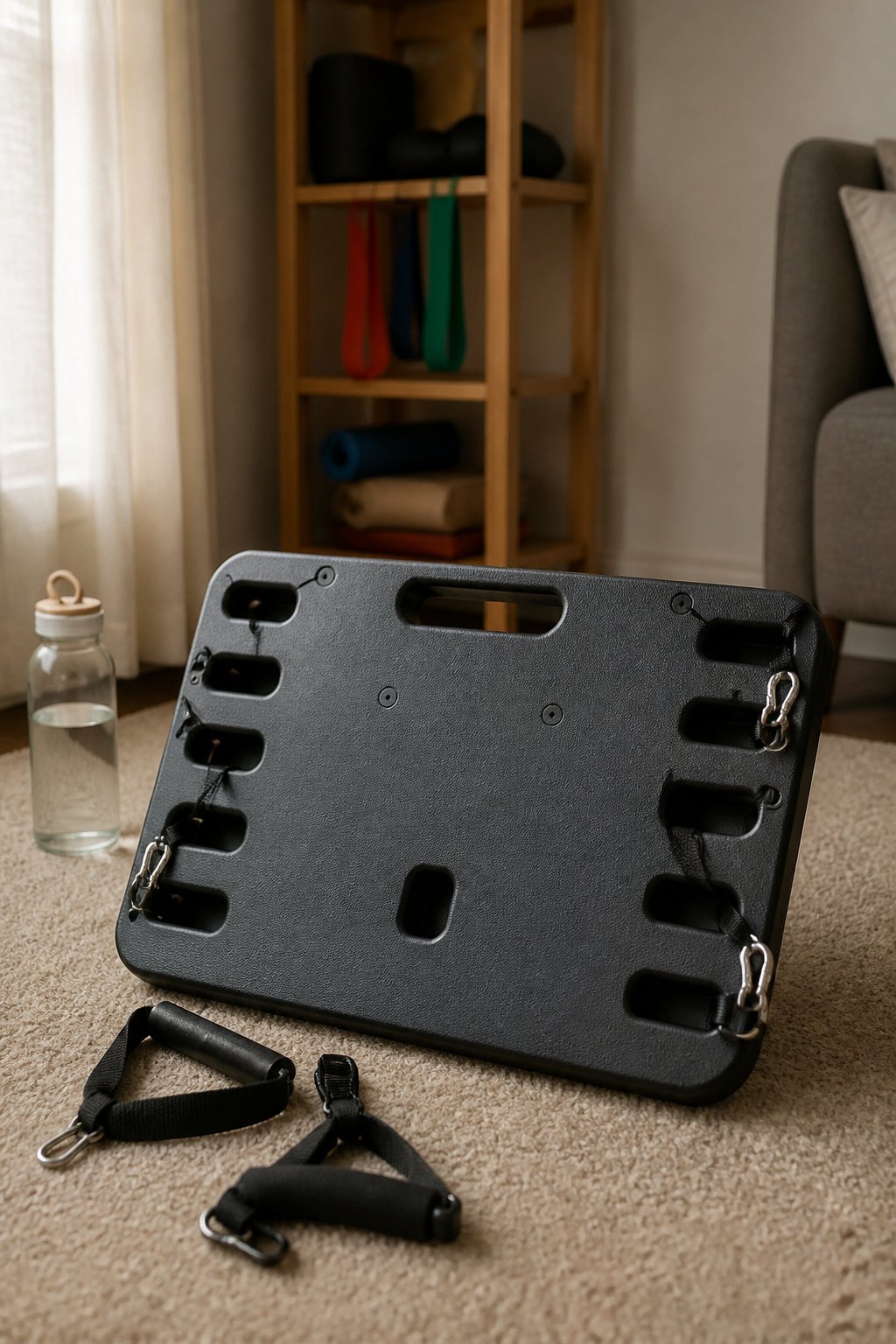
The BodyBoss Home Gym 2.0 runs under $100 and still manages to put real resistance on your legs, which is the usual weak point of anything this compact. It is basically a board with reinforced steel loops; you clip in the included heavy resistance band and press or squat against it.
That band system has a ceiling. Progressive overload, the steady increase in weight that builds strength over months, is hard to manage here because the bands come in fixed resistances and there is no plate to swap in. You can add reps or move faster, but at some point the stimulus plateaus.
So this suits two kinds of people: someone who already runs or does bodyweight work and just needs leg resistance to round out the week, or a beginner who wants to test whether home training sticks before spending more. It will not replace a rack and plates, and it does not try to. For the price, it is a clever stopgap, not a long-term gym.
How Much Space Each One Takes
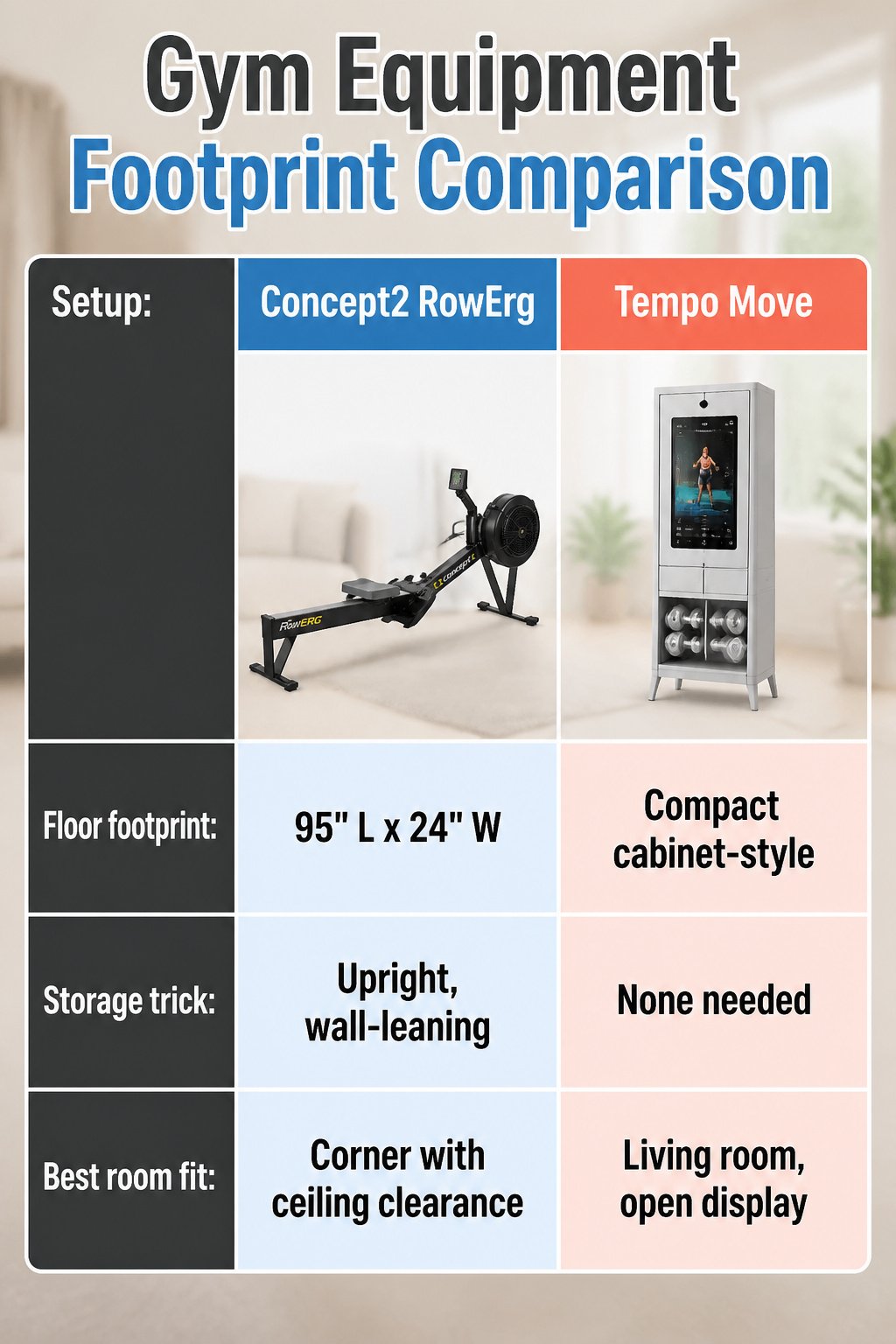
A small home gym only works if you know the real footprint before it arrives. The Concept2 RowErg runs 95 inches long by 24 inches wide, but it stores upright and the weight drops to nothing once you tip it against a wall. That makes it livable in a living room if you have ceiling height; otherwise it dominates the floor all day. The Tempo Move takes a different approach, built like a cabinet rather than exercise equipment, so it sits in plain sight without the visual noise a Bowflex would add to the same corner. Where you put it matters as much as the square footage. A dedicated corner can hide almost anything; the living room demands something you want to look at.
| Setup | Floor footprint | Storage trick | Best room fit |
|---|---|---|---|
| Concept2 RowErg | 95" L x 24" W | Upright, wall-leaning | Corner with ceiling clearance |
| Tempo Move | Compact cabinet-style | None needed; stays put | Living room, open display |
What You Can Actually Do With Each
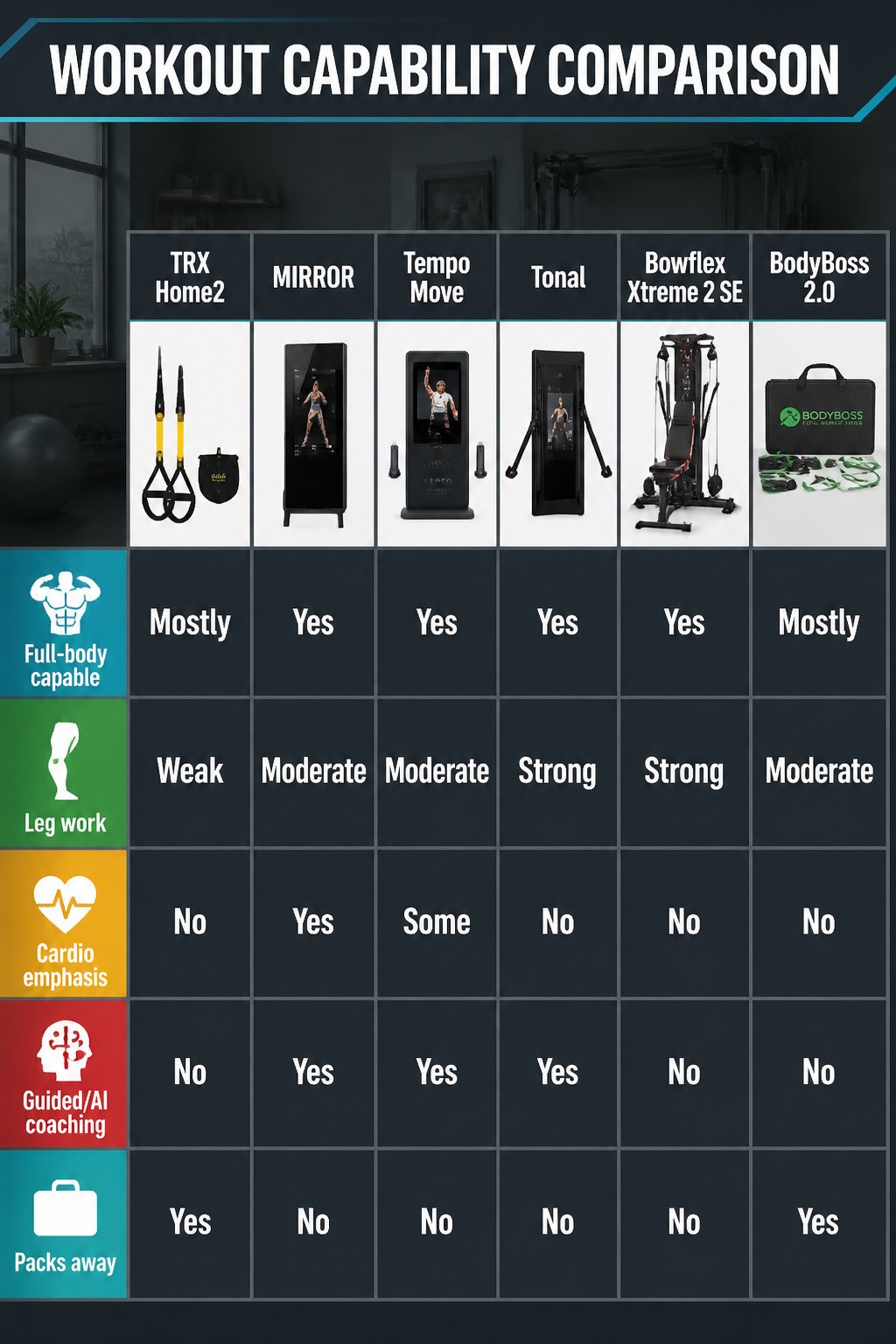
Bodyweight systems like the TRX Home2 pack down to nothing and still cover most of what you need, though the leg work stays limited no matter how creative you get with angles. That gap matters if you want balanced strength without adding equipment. The MIRROR leans cardio and guided classes, while Tempo Move layers AI form tracking onto a similar footprint. Bowflex Xtreme 2 SE goes the other direction, full weightlifting with a cable system that hits legs properly. Tonal does the same with digital resistance, and the BodyBoss bands try to bridge the gap on a budget.
| Full-body capable | Leg work | Cardio emphasis | Guided/AI coaching | Packs away | |
|---|---|---|---|---|---|
| TRX Home2 | Mostly | Weak | No | No | Yes |
| MIRROR | Yes | Moderate | Yes | Yes | No |
| Tempo Move | Yes | Moderate | Some | Yes | No |
| Tonal | Yes | Strong | No | Yes | No |
| Bowflex Xtreme 2 SE | Yes | Strong | No | No | No |
| BodyBoss 2.0 | Mostly | Moderate | No | No | Yes |
If you rent or shift furniture often, the TRX and BodyBoss keep your options open. For leg day without compromise, Bowflex or Tonal are the ones that actually deliver.
What Each One Costs Up Front and Over Time
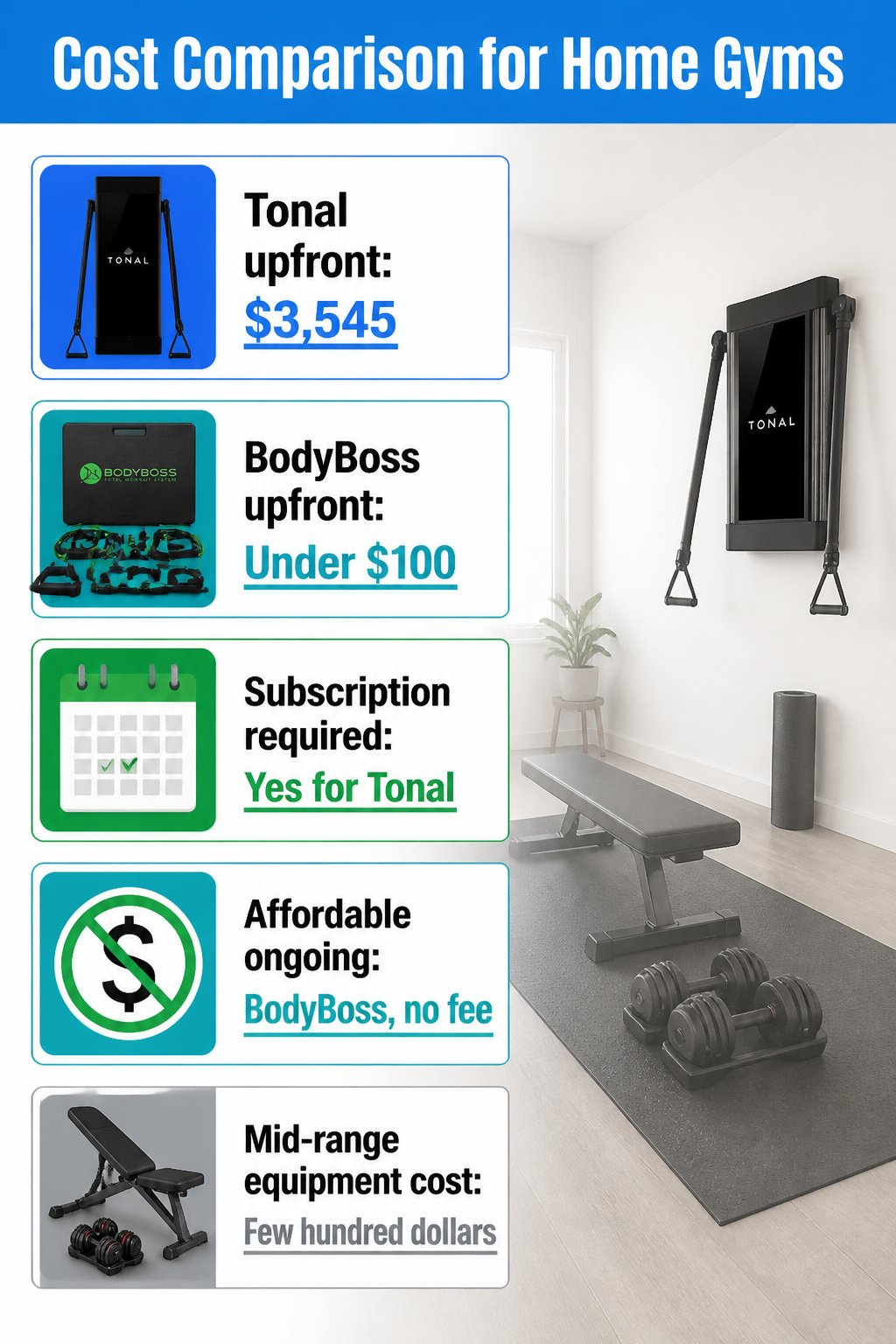
Tonal sits at the premium end at $3,545 upfront, and that number does not include the required subscription that keeps its digital coaching running. Budget alternatives like the BodyBoss system come in under $100 with no recurring bill, though the resistance is bands and your body weight rather than automated load adjustment.
The spread between these two poles matters more than the sticker prices suggest. A mid-range adjustable dumbbell setup with a bench and some floor space lands somewhere in the middle, typically a few hundred dollars, and the only ongoing cost is replacement if you drop them wrong. Tonal’s subscription, by contrast, turns a one-time purchase into a monthly habit that can outrun the hardware cost within a couple of years if you keep it.
What separates a good buy from a money pit is how long the equipment stays useful as strength builds. Bands max out. Smart systems scale with you, but only while you pay. For someone renting a studio apartment who might move in twelve months, the BodyBoss folds flat and travels free. For a homeowner with a dedicated wall, Tonal’s footprint is smaller than a bookshelf and stays relevant longer, provided the subscription still feels worthwhile in 2028.
What Users Actually Say
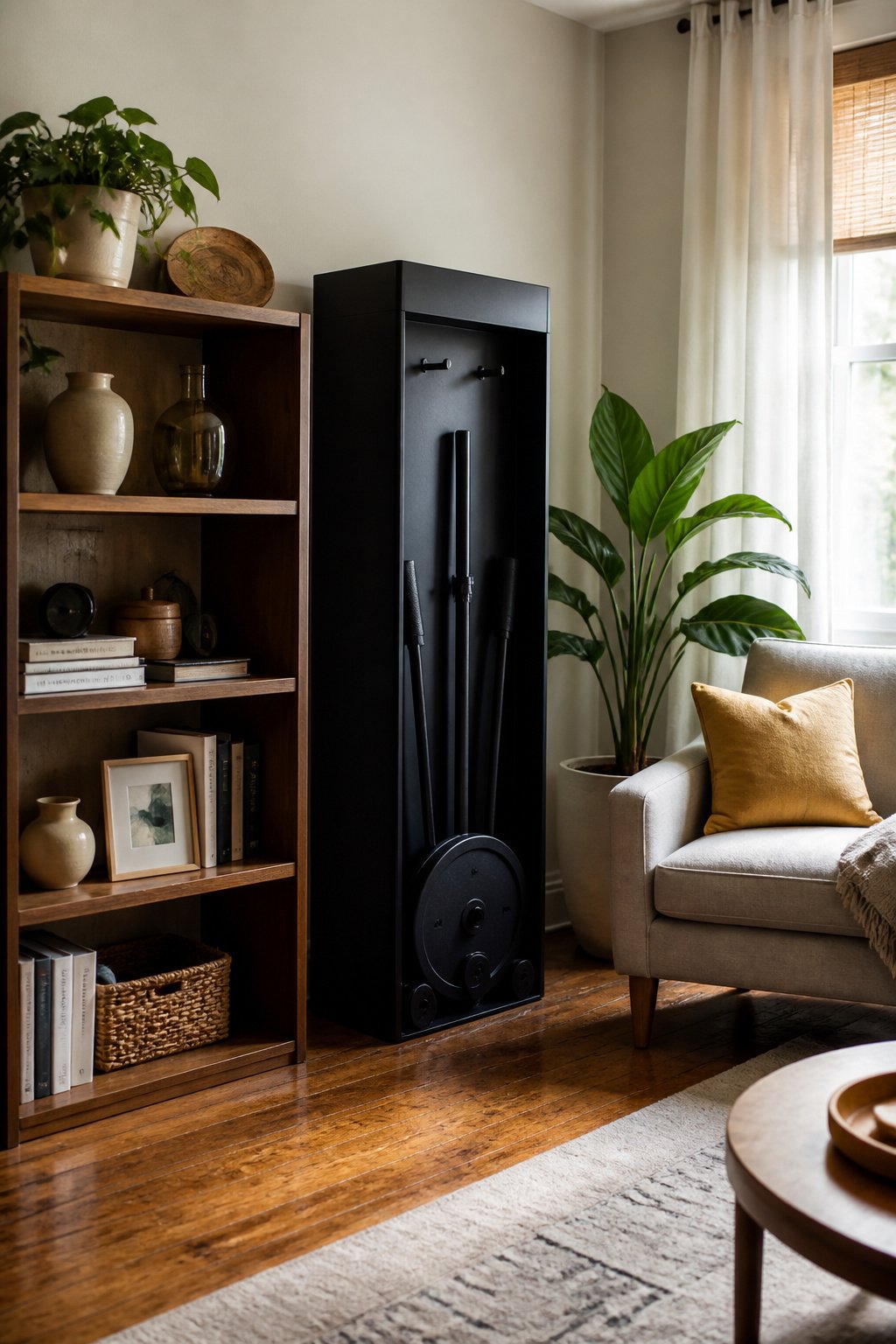
The Tempo Move gets more praise for how it looks in a living room than for how it performs under load. Users mention the cabinet-style finish and the small footprint, which sits quietly beside a bookshelf without screaming "gym equipment." That matters when the small home gym shares space with actual living. Functionality reviews split: some find the rep counting accurate enough for casual training, while others note the weight plates top out low enough that progression stalls within a year. What struck me, reading through accounts, was how many sources spent paragraphs on camera resolution and processor specs rather than on whether someone built noticeable strength over six months. The hardware details are easy to list; the lived experience of sticking with the program is harder to find and more useful when you do.
The Subscription Trap
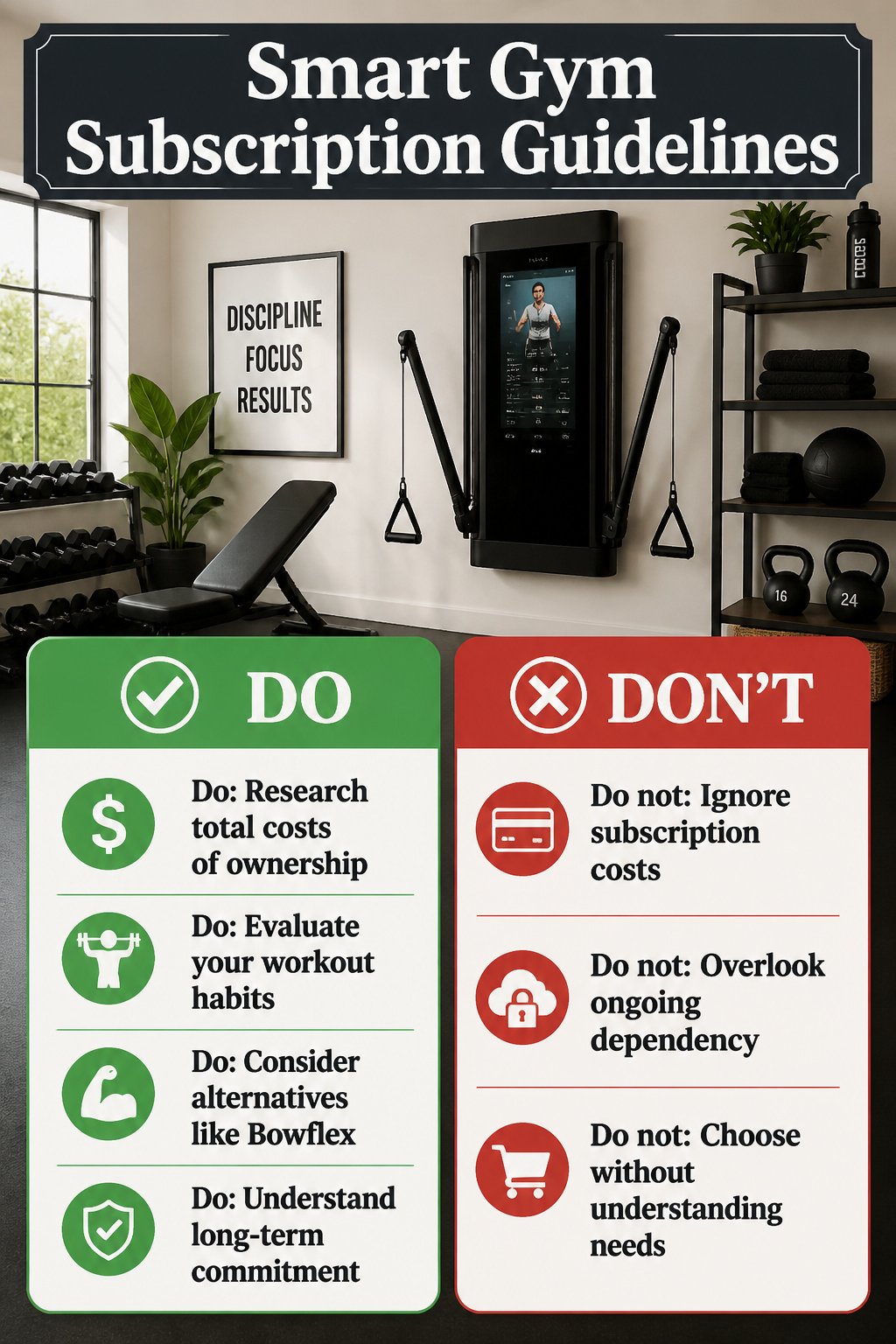
Smart home gyms like Tonal run $3,545 up front, but that number hides the real bill. Full feature access, the AI form feedback and automated progressive overload that justify the purchase, locks behind a monthly membership. Only a couple of reviews I read even flagged this, which surprised me since it changes the math completely.
You are not buying a $3,500 machine. You are buying a $3,500 machine plus a subscription that never ends, or you are buying a very expensive wall-mounted weight rack with a screen. The Bowflex route, old-school adjustable resistance with no cloud dependency, starts looking less like a compromise and more like a deliberate escape hatch. Both approaches work. The mistake is choosing the sleek one without knowing which kind of user you actually are.
Frequently Asked Questions
What is the best home gym for a small space?
The Tempo Move is the best pick for a small home gym that still needs real weights. It handles up to 150 pounds in a cabinet-style footprint that blends into living room decor, and the AI coaching builds progressive overload automatically without extra equipment spreading across the floor.
Can a home gym replace your need for a gym membership?
Yes, systems like the Tempo Move can replace both the gym and a personal trainer. The AI form feedback, automatic progressive overload, and personalized daily programming based on sleep and heart-rate data cover what most people pay a trainer and membership for. Over four years, Tonal costs roughly the same as a $100 monthly gym membership with a trainer included, so the math works either way depending on which equipment fits your space.
What is the best workout for a small apartment?
The Tempo Move is built specifically for small apartments, designed to look like Crate & Barrel furniture rather than gym equipment. It needs no breaking down or wall mounting, stays put in a corner, and handles multi-user profiles at no extra cost, which matters when two people share both the rent and the workout space.