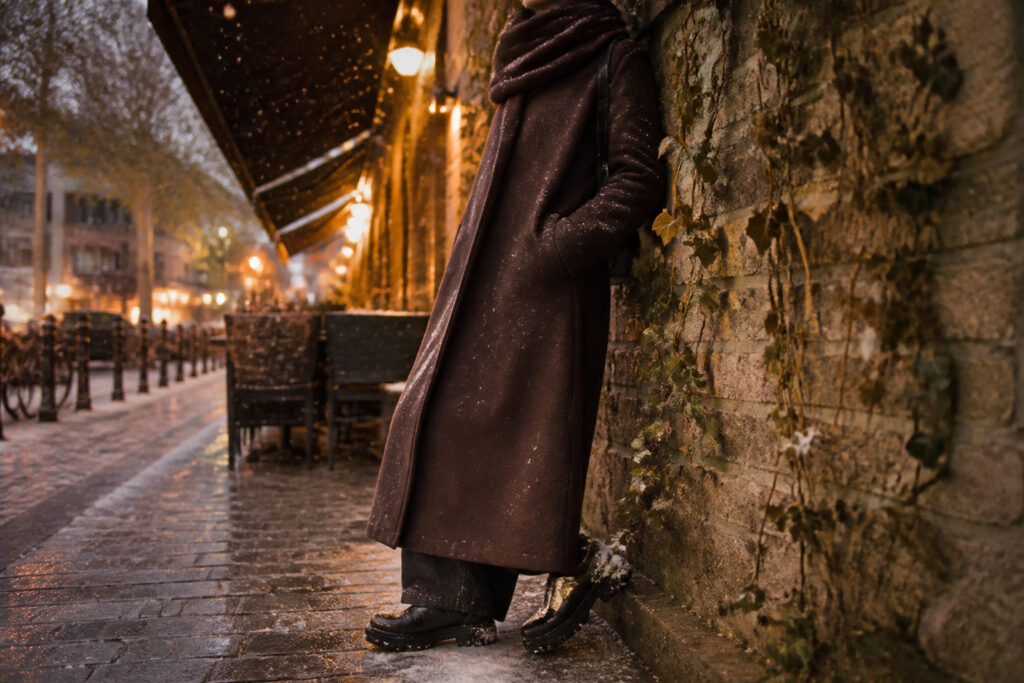
Winter fashion trends for 2026 are the practical answer to cold-weather dressing that still reads as intentional, not thrown on in the dark.
The catch is that most of these styles turn sloppy the moment you layer them wrong, a funnel-neck jacket collapses into bulk if the shoulder seam slips past your actual shoulder, and a chunky knit under the wrong coat adds ten pounds visually.
What separates the workable pieces from the aspirational ones this season is built-in structure: scarf coats with integrated necklines that cannot be left on the bus, faux suede that survives a rainy commute, and platform soles that keep you above slush without the ankle-sprain risk of stilettos.
The Madewell Alonzo in chocolate already sold out once, which tells you where the demand is heading.
1. Funnel-Neck Jackets
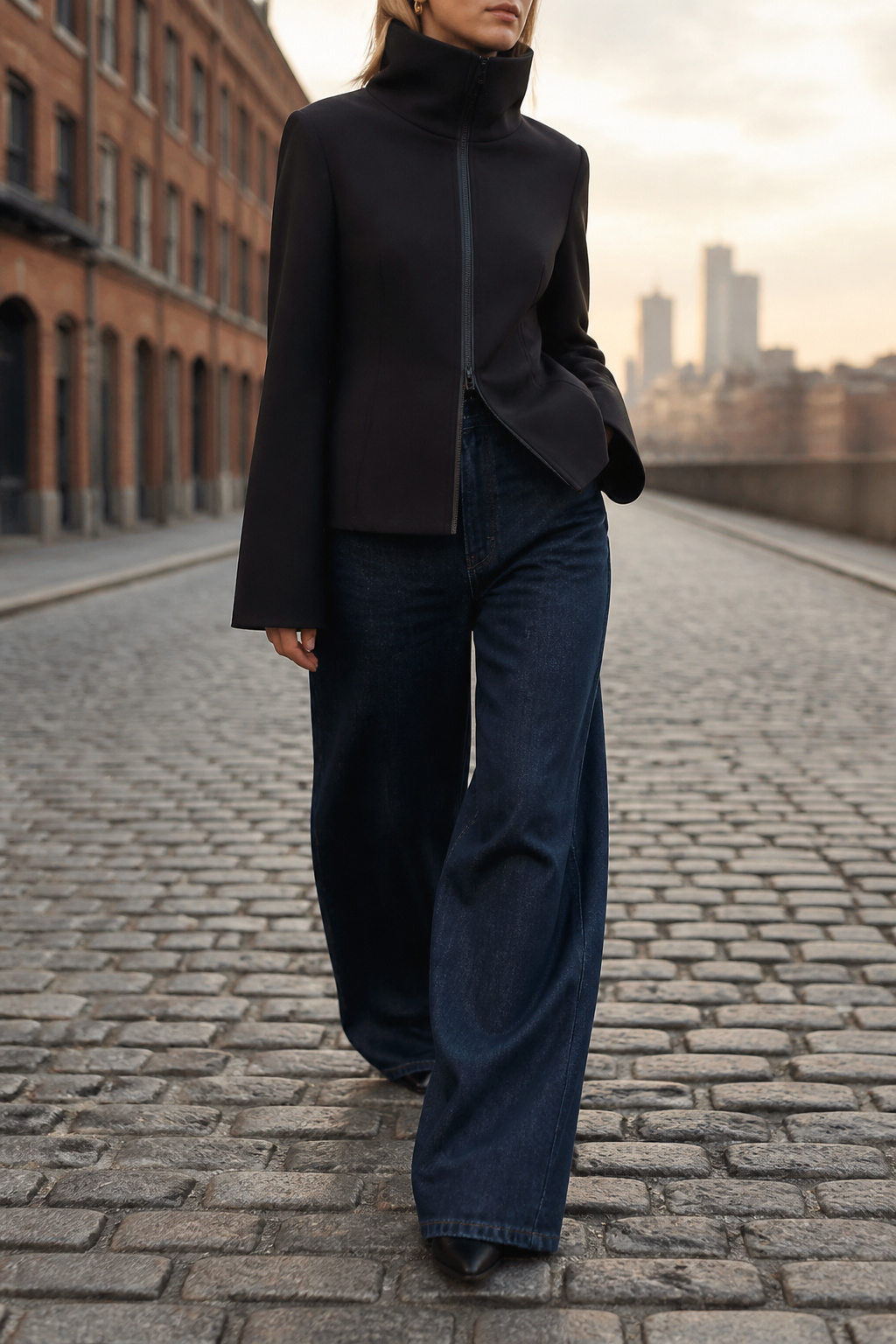
The funnel-neck jacket has become the silhouette to watch this winter, and the reason sits right at the collar.
That high, structured band wraps the neck without folding down, so the line draws upward toward the face rather than spreading across the shoulders the way a standard notch collar does.
For anyone who feels swallowed by wide lapels, this is the alternative that keeps the framing tight.
The sleek cut through the body is what makes the shape so adaptable.
Zip it to the neck and the jacket reads as a column; that same column pairs cleanly with wide-leg denim or tailored pants without the bulk you get from a puffer.
Leave it open over a baby tee and cargo pants, and the collar still holds its architecture so the outfit does not collapse into slouch.
Color direction splits two ways. Brown, charcoal, or black keep the jacket working across years, not just the season.
If you want the piece to do more of the talking, the vibrant check prints hitting shelves now, like the pink-check Vannessa, add the pop without requiring a second statement layer underneath.
2. Faux Suede
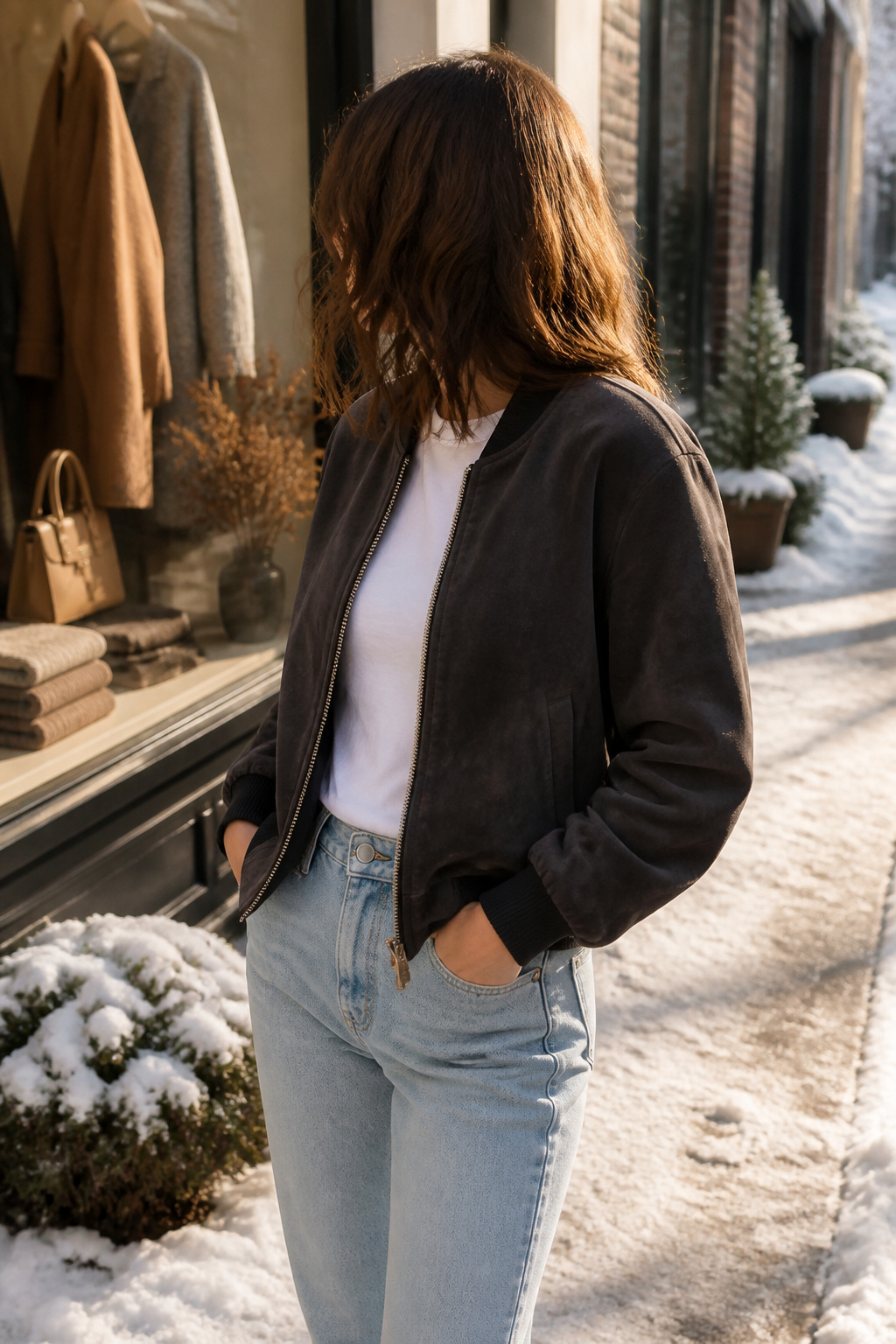
Faux suede is shaping up as one of the most wearable winter fashion trends this season because it gives the warmth and expensive look of real suede without the dry-cleaning bills and water stains.
The fabric turns up in coats, skirts, and smaller accessories, so you can test it at whatever scale fits your closet.
Earthy neutrals are the shades to look for: camel, tan, chocolate, and soft grey.
A faux suede bomber in charcoal layers over a white tee and light-wash denim without looking like costume, and the same jacket works with slouchy tailoring for evening.
Belts, shoes, and bags in matching tones pull a whole outfit together without demanding a full suede wardrobe.
Fringe or faux-fur trim pushes the look toward a subtle 70s revival, but the pieces themselves read as current rather than vintage.
The care is simple enough that you will actually wear these items, which is where real suede often fails: one rainy commute and the investment piece lives in the back of the closet. Faux suede lets you use it.
3. Bold Stripes
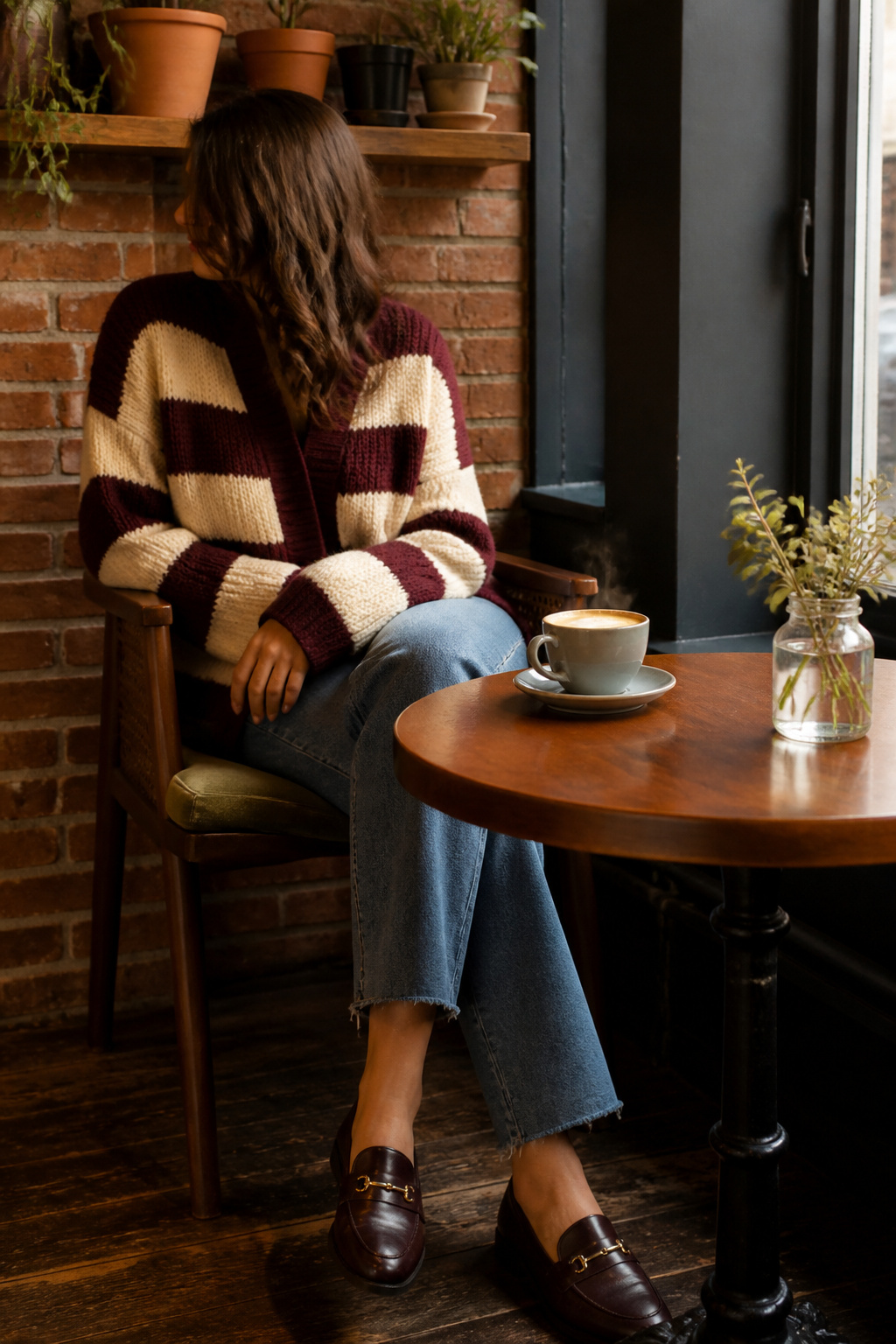
Stripes are back for winter 2026, but the scale and direction have shifted enough that last year’s Breton tees look like a different pattern entirely.
Vertical and diagonal bands in burgundy and cream, or brown and blue, are the combinations worth hunting down; the baby yellow and baby blue pairings read softer and work best on knits you layer under solid outerwear rather than wear as the statement themselves.
On outerwear, the stripe is widening. Pinstripes still hold for suiting if you want something that carries past March, though black and white in that narrow spacing now functions as a neutral rather than a trend piece.
Where the look gets interesting is in the matching sets and oversized cardigans: the stripe runs horizontal there, deliberately, and the proportion only works because the gauge is thick enough to hold its own shape.
For styling, denim underneath still grounds it, and loafers keep the silhouette from going too casual.
The mistake I watched play out online was pairing wide horizontal stripes with wide-leg jeans in similar scale; the two patterns compete and flatten the shape. One stripe, one solid, and the eye knows where to rest.
4. Argyle
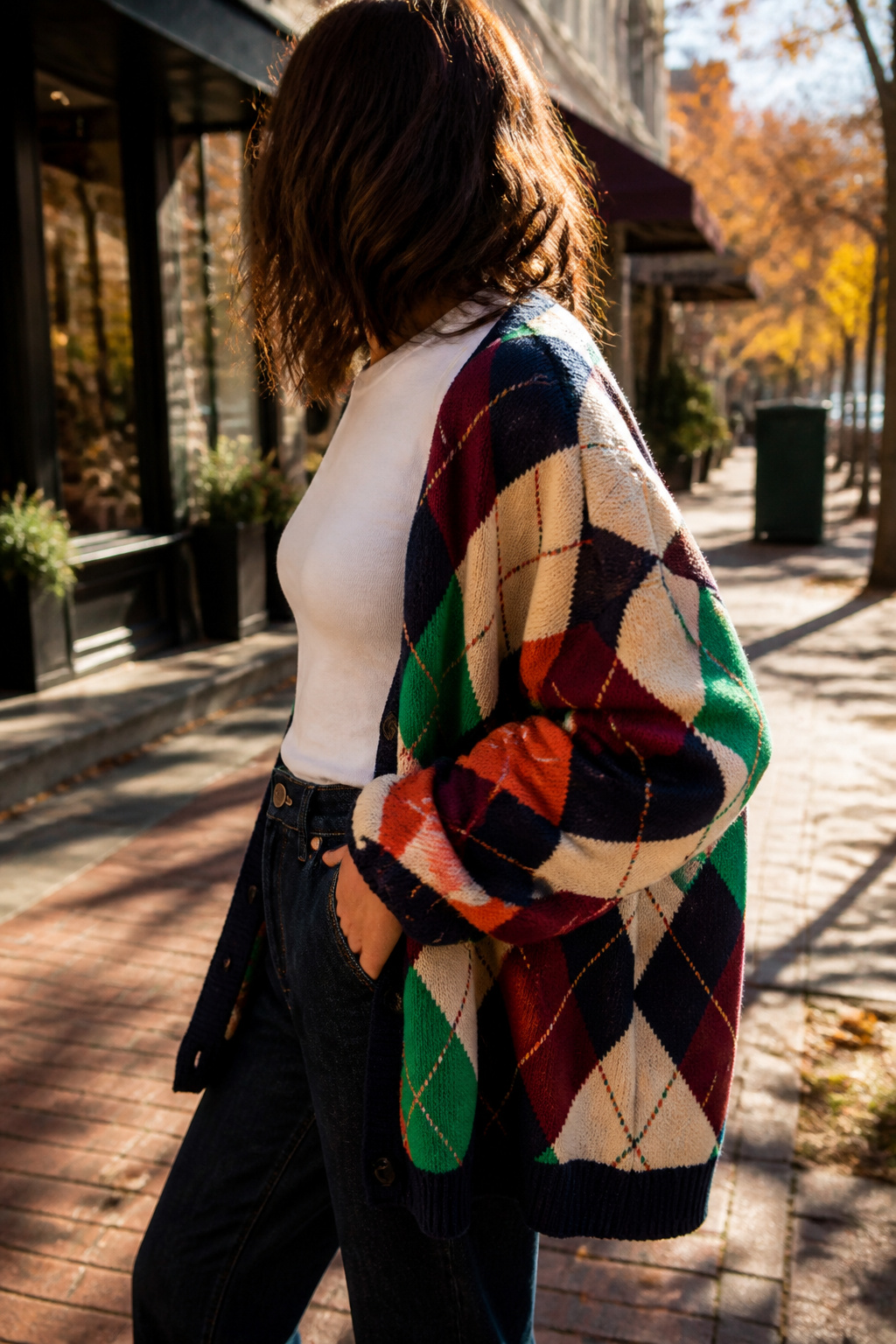
Argyle this winter reads cooler than the preppy cliche it used to be, mostly because the colorways have shifted.
The diamond pattern still carries that nostalgic weight, but designers are running it in combinations that feel less country club and more street-level intentional.
What convinced me, paging through the early drops, was how the pattern works when you treat it as the statement and strip everything else back.
Layer an argyle cardigan over a white tee and dark denim and the pattern does the work without the outfit feeling like costume. The matching sets, cardigan plus micro shorts in the same knit, are the riskier play.
They work for the academia aesthetic if you add loafers and keep the glasses small and sleek, but that full-set look is harder to pull off past college age or outside a very particular social setting.
For most mornings, the single argyle piece layered down is the more usable move.
5. Slouchy Tailoring

Relaxed shoulders and dropped waists are showing up everywhere for winter 2026, but the pieces that work keep some structure in the cut rather than drowning in fabric.
The difference between slouchy and sloppy comes down to where the garment holds its shape: a blazer that eases through the torso but still sits right at the shoulder, trousers with a soft drape that taper cleanly at the ankle.
I look for cinched or draped details that keep the silhouette feminine rather than boxy, and I always anchor a slouchy piece with something sharper underneath or below.
An oversized knit works because tailored pants or a fitted midi skirt underneath give the eye a line to follow. Off-shoulder designs in heavier winter fabrics hit the same note, effortless but intentional.
The studded details and hardware showing up alongside this trend help too, a little weight or edge keeps the look styled rather than accidental.
For my own closet, this means one slouchy piece per outfit, never head to toe, and I check the shoulder seam first, if it hangs past where my actual shoulder ends, the cut needs to be deliberate enough to read as design.
6. Faux Fur
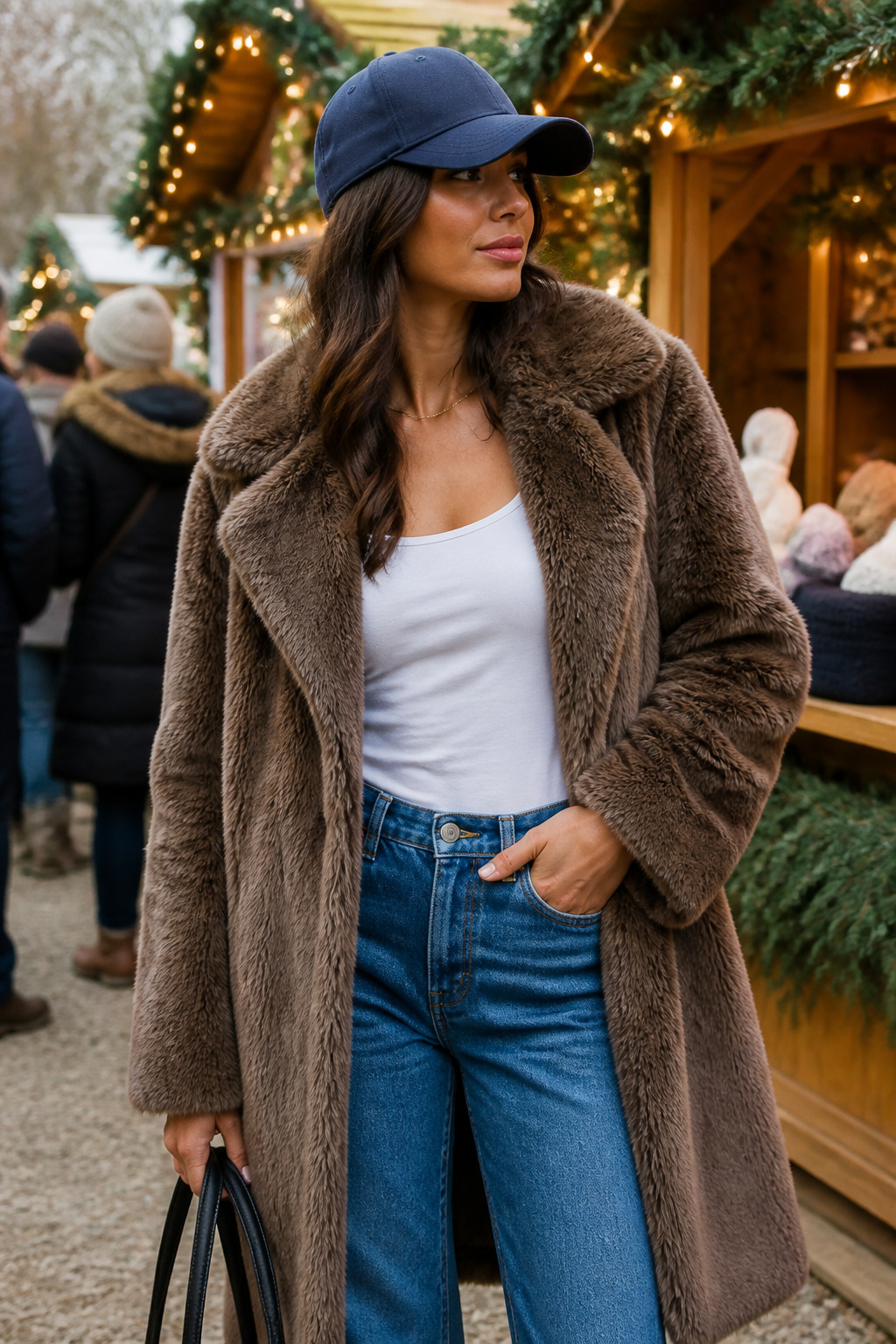
Faux fur is still the fastest way to make a winter outfit feel expensive, and for 2026 the texture has gotten noticeably better.
The new generation of faux fur coats sheds less, moves more like the real thing, and comes in lengths that work for actual life rather than just the sidewalk outside a party.
A full faux fur coat in a cropped or hip-length cut keeps the drama manageable; wear it over a basic tank and jeans with a baseball cap and it reads as off-duty rather than costume.
Trim is the quieter entry point. Fur-trimmed jackets, fluffy hats, and fuzzy bags add the same luxe hit without the commitment of a full coat.
If you do go longline, the beige tone that has been moving this season helps the piece blend into everyday rotation rather than shouting for attention.
The material itself is the statement, so the rest of the outfit stays simple: silky mini dress underneath for evening, or the tank-and-denim combination for day.
Two ways to misplay this: buying too much volume in a loud color and looking like you are wearing a mascot head, or adding fur trim to every layer at once and losing the effect entirely.
One piece per outfit is the limit that actually works.
7. Brown Tones
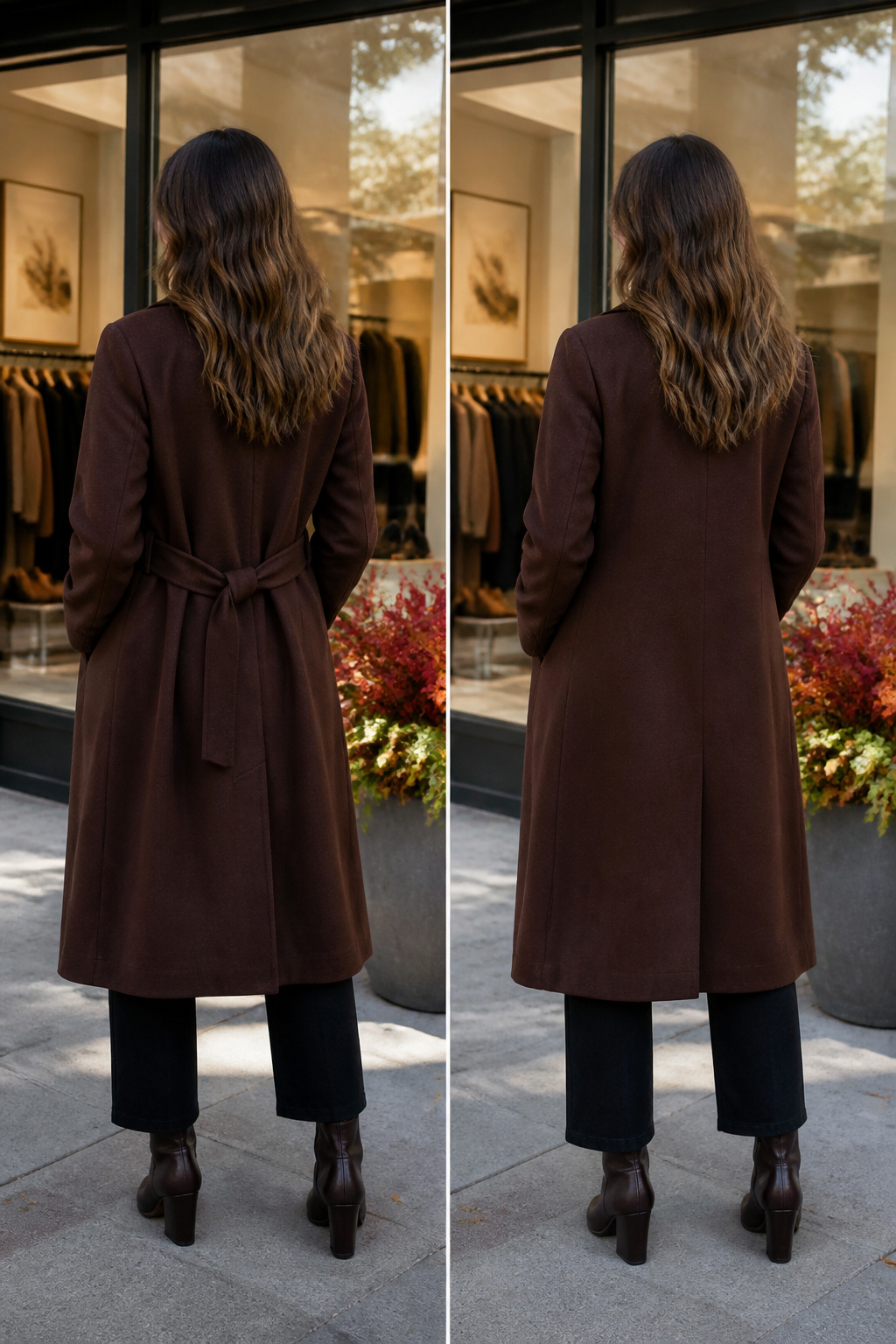
Chocolate and espresso browns have settled in as the new backbone neutrals for winter 2026, pushing past the usual rotation of black and camel.
These deeper cocoa tones read as warm without the stiffness of a true neutral, and they do the heavy lifting that black used to do: grounding a print, sharpening denim, or making winter white feel intentional rather than accidental.
The wearability is what sells it. A chocolate coat pulls together an outfit of pieces you already own, and the shade forgives the kind of mixing that camel never quite managed.
Layer it over grey, pair it with soft pink if that trend caught your eye last season, or wear it head-to-toe with caramel accessories for tonal depth without the matchy risk of all-black.
Espresso in particular works as a near-neutral: close enough to black that your existing black boots and belts still hold, but soft enough that the whole look does not read as uniform.
If you are buying one coat this winter, make it one of these browns. The Madewell Alonzo in chocolate sold out fast once word spread, which tells you where the demand is heading.
8. Sheer Hosiery
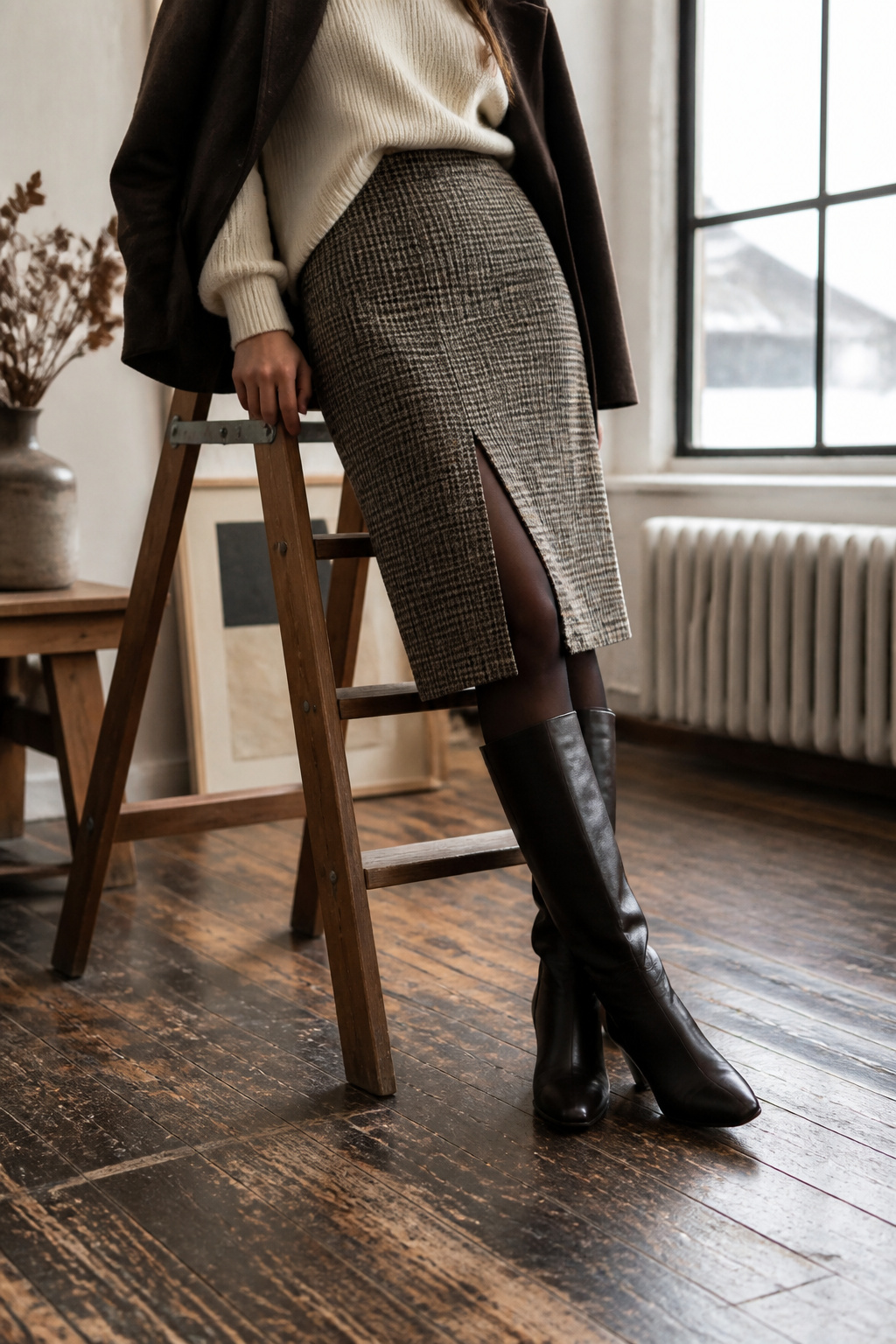
Sheer hosiery has returned as a quieter alternative to the heavy black tights that dominated winter dressing for years. A classic sheer black adds polish without the visual weight, and the newer matte finishes look elevated rather than shiny.
A 15–20 denier range gives you that sheer effect while still reading as winter-appropriate; save the barely-there 5–10 denier for transitional weather.
Brands worth the investment include Spanx, Wolford, and Falke, which hold up better than drugstore pairs that ladder after two wears. For nude shades that actually match deeper skin tones, Heist carries a wider range than most legacy hosiery lines.
The warmth question is real: sheer hose will not insulate the way 80-denier opaques do, so they work best with midi skirts and boots that cover the calf, or layered under longer coats in climates that stay above freezing.
Skip them with short hemlines and bare ankles unless you are commuting by car.
9. Platform Shoes
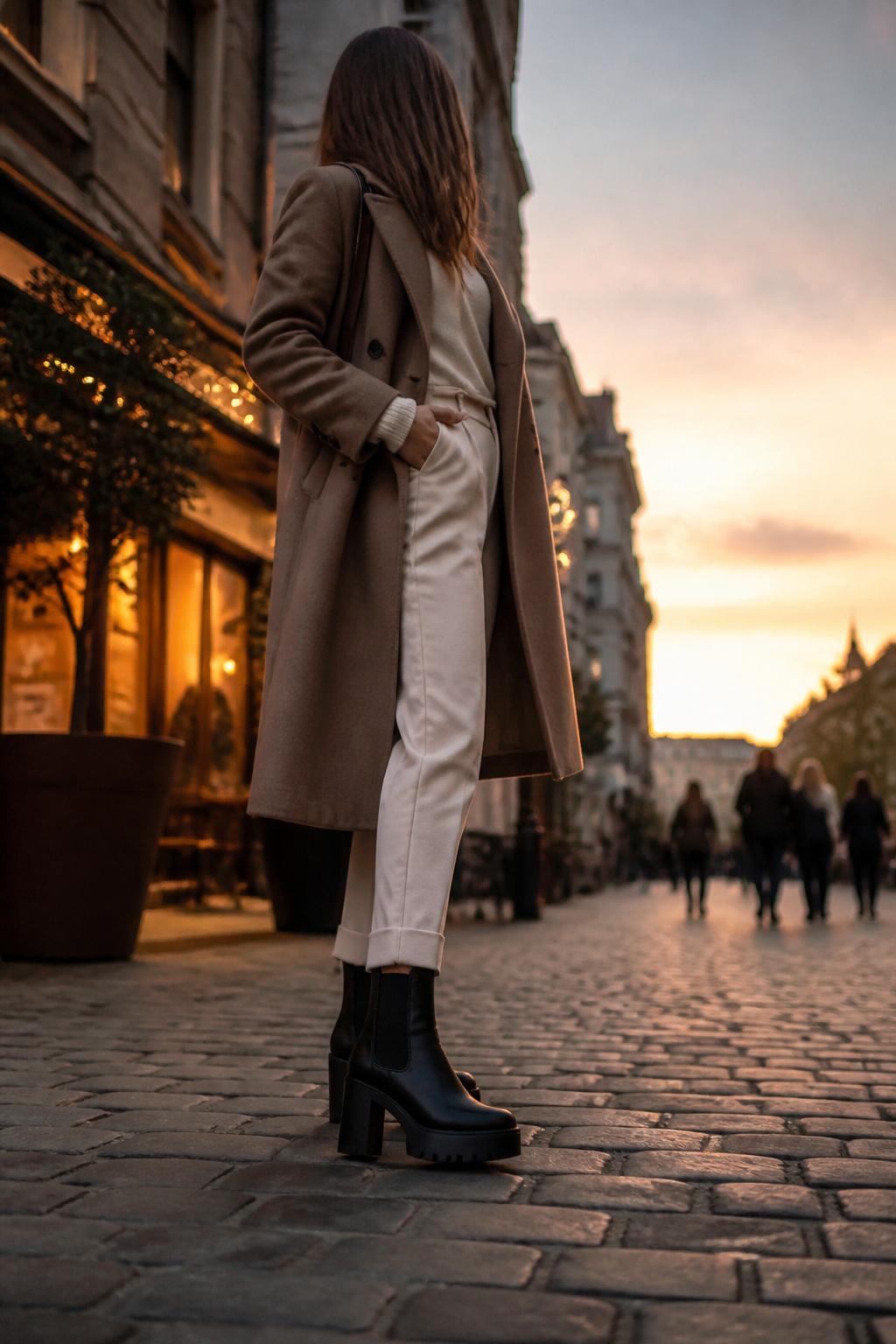
Platform soles give winter dressing a practical edge that stilettos never could. The extra height sits evenly across the foot, so ice patches and uneven sidewalk grates feel less like an ankle sprain waiting to happen.
That thick sole also creates a buffer against cold, wet pavement; your foot sits higher, and the platform itself adds a layer of insulation standard flats or thin heels do not provide.
This season’s platform boots, loafers, and sneakers each handle different occasions. A platform boot with some tread carries you through slush without the bulk of past years’ exaggerated styles.
Platform loafers work for days when you need polish but still want that lift. Sneakers with elevated soles bridge casual errands and cleaner silhouettes.
One note of tension worth watching: some trend lines are pushing toward slimmer boot profiles with low or block heels and cleaner lines, moving away from the thick, heavy platforms of recent seasons.
The smarter buy is probably a moderate platform, not the most extreme silhouette, since that middle ground still gives you the height and insulation without looking dated if the pendulum keeps swinging toward refinement.
10. Après-Ski Style
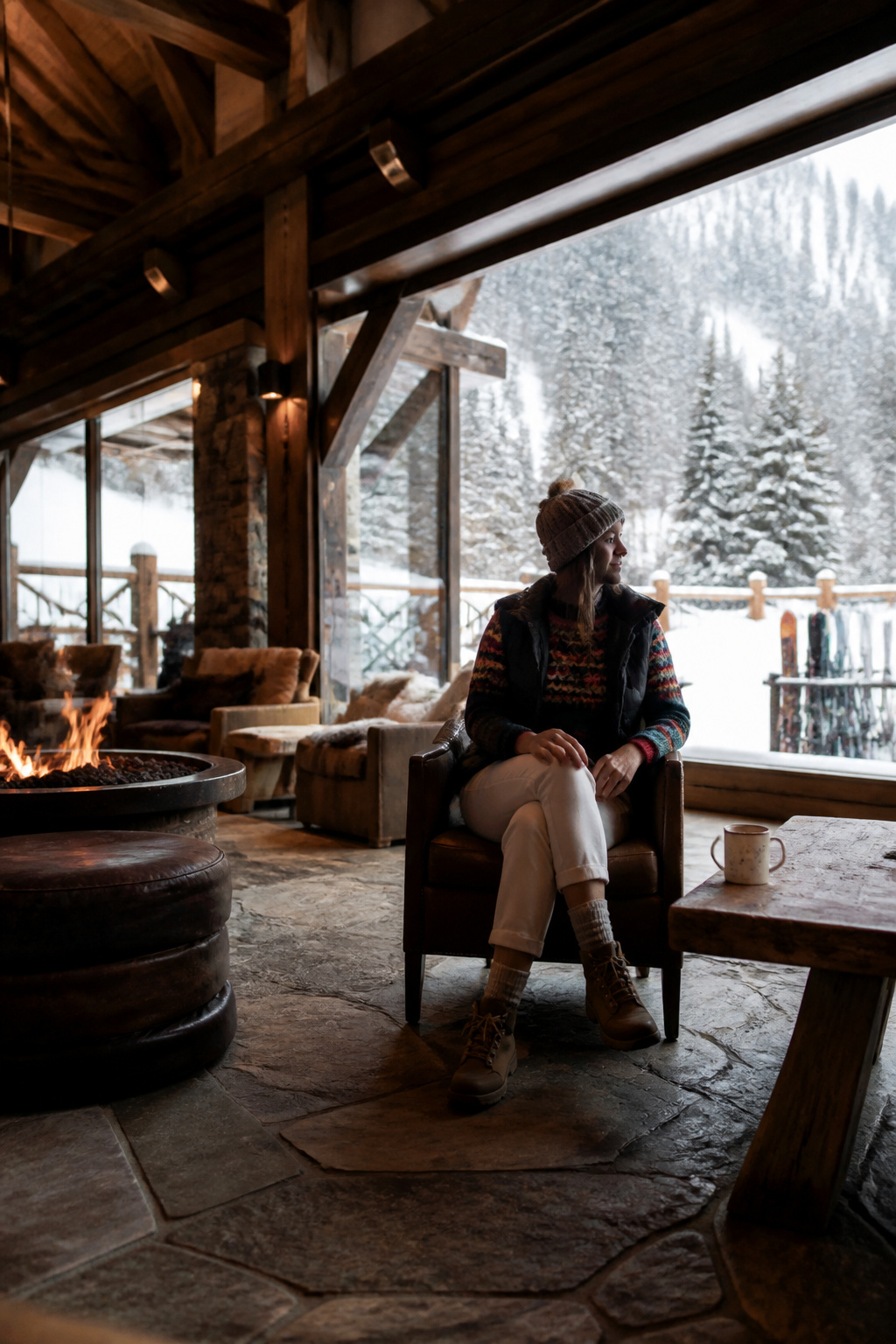
Quilted textures and cable knits have slipped off the slopes and into everyday rotation, and the shift makes more sense than I expected.
Fair Isle patterns, once reserved for lodge sweaters, now turn up on city commutes layered under simpler coats where only the collar and cuffs show.
The look works because it borrows the actual priorities of après-ski dressing: warmth first, then the suggestion that you might have just come from somewhere interesting.
Puffer vests are the easiest entry point. Worn over a slim turtleneck or under a wool coat, they add bulk where it reads as cozy rather than sloppy.
For boots, the silhouette has narrowed from the heavy platforms of recent seasons.
Cleaner lines, almond toes, and low block heels now dominate both ankle and knee-high styles, which makes them easier to tuck under denim or pair with sheer hosiery and skirts.
The taller ankle shaft is particularly useful; it bridges the gap between pant hem and boot top without the bunching that shorter cuts create.
The comfort-meets-style balance hinges on limiting the ski-lodge pieces to one per outfit. A Fair Isle sweater with quilted vest and chunky snow boots reads costume.
Swap one element for something streamlined, a sleek boot or a plain cashmere crewneck, and the same pieces feel intentional for grocery runs or office heating that never quite kicks in.
11. Statement Jewelry
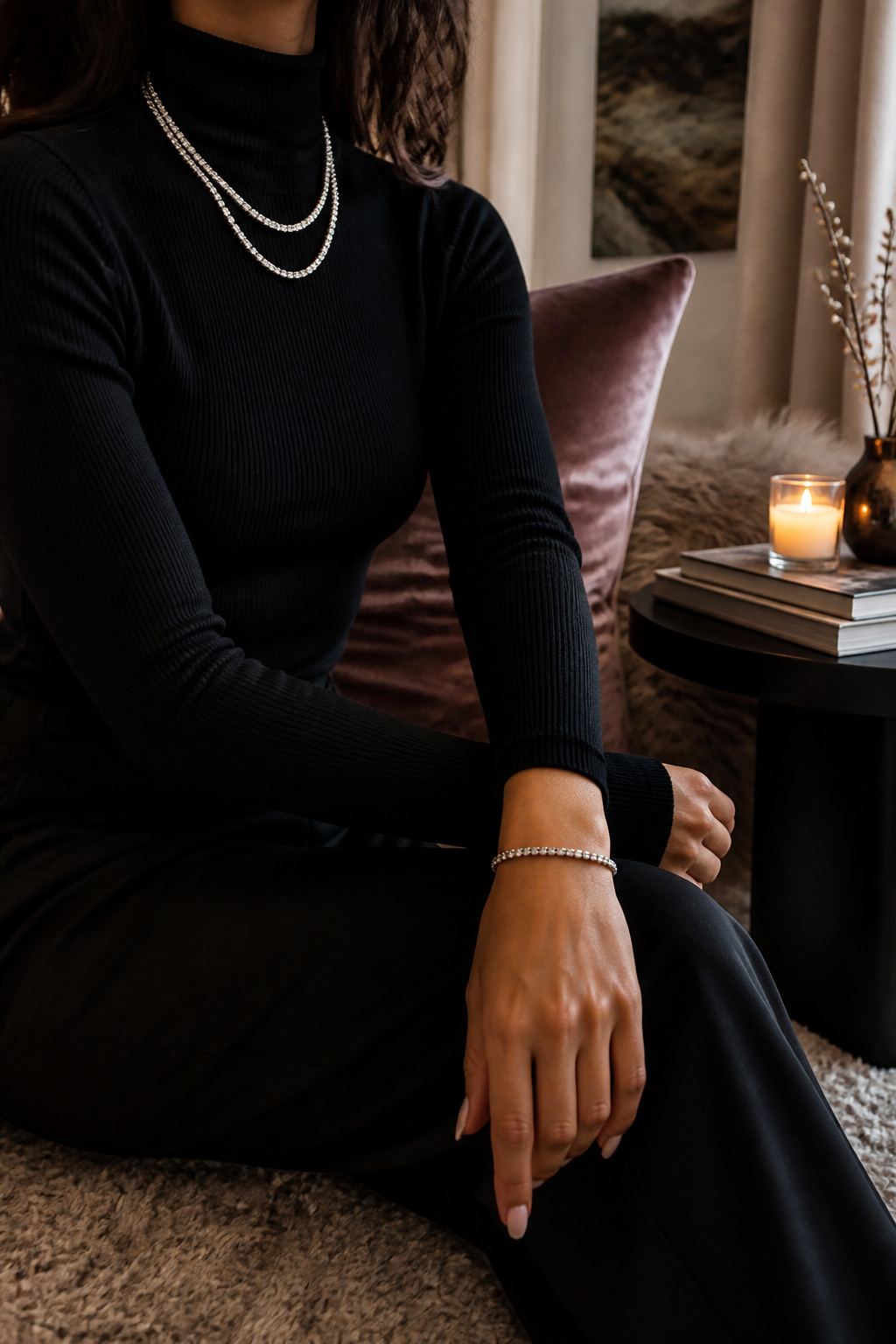
Tennis jewelry is having a major moment this winter, and the way it is being worn feels genuinely fresh for 2026. The modern approach is all about layering different lengths, widths, and textures rather than letting a single piece stand alone.
A tennis necklace looks especially current stacked with a delicate gold chain, a simple pendant, or even a shorter choker-style piece.
For bracelets, pairing a tennis bracelet with a slim gold chain, a classic bangle, or an everyday watch keeps the look intentional without trying too hard.
If you want to push the trend further, stacking two tennis pieces in different sizes is another chic route.
The real key is variety: combining sparkle with smooth metal so each layer stands out without overwhelming the whole look.
Metallic elements like these brighten the dark palettes that dominate winter dressing, and the mix of fine and bold pieces mirrors how knitwear and tailoring are being layered this season.
Tennis jewelry has always been timeless, but this layered styling makes it feel suddenly modern again against heavy winter fabrics.
12. Long Coats
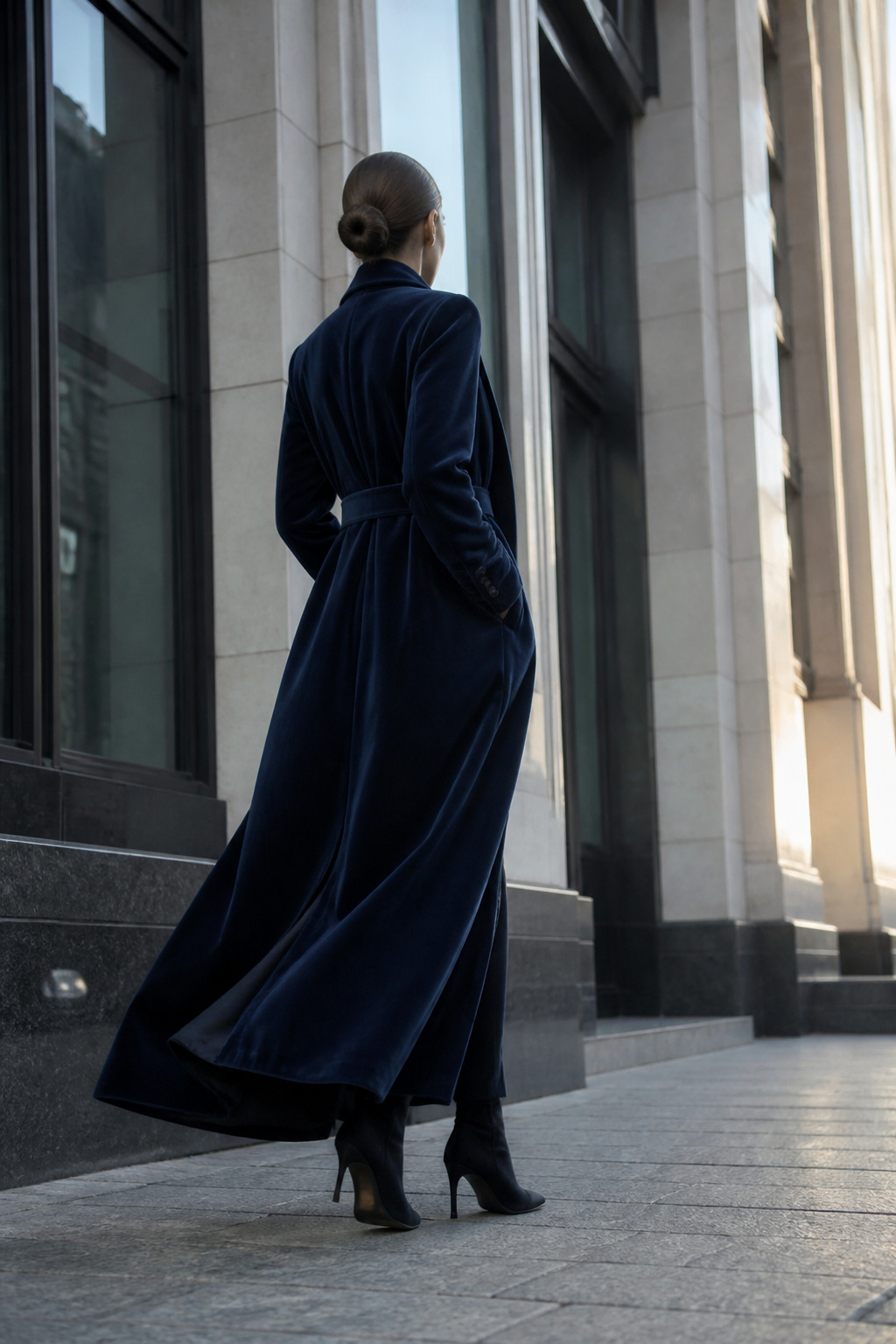
Full-length and midi coats are the proportion shift worth building around this winter. A coat that hits at the ankle or mid-calf changes the silhouette entirely, creating one long vertical line that reads as polished even over leggings and sneakers.
The tradeoff is real movement: anything past the knee demands a vent or a generous slit if you plan to walk more than a block, and getting into a car means gathering fabric or accepting that the hem will pool on the seat.
A midi length with a side vent solves both problems, giving you the drama of length without the choreography.
Layering underneath works better here than with cropped styles; a funnel-neck jacket or chunky knit fits comfortably inside without bunching at the waist.
The sources point to faux fur, shearling, velvet, classic wovens, and luxe leather as the materials to look for, so the texture can carry the outfit even when the coat comes off indoors.
If you are buying one piece to update what you already own, this is the shape that does the most work.
13. Chunky Knits
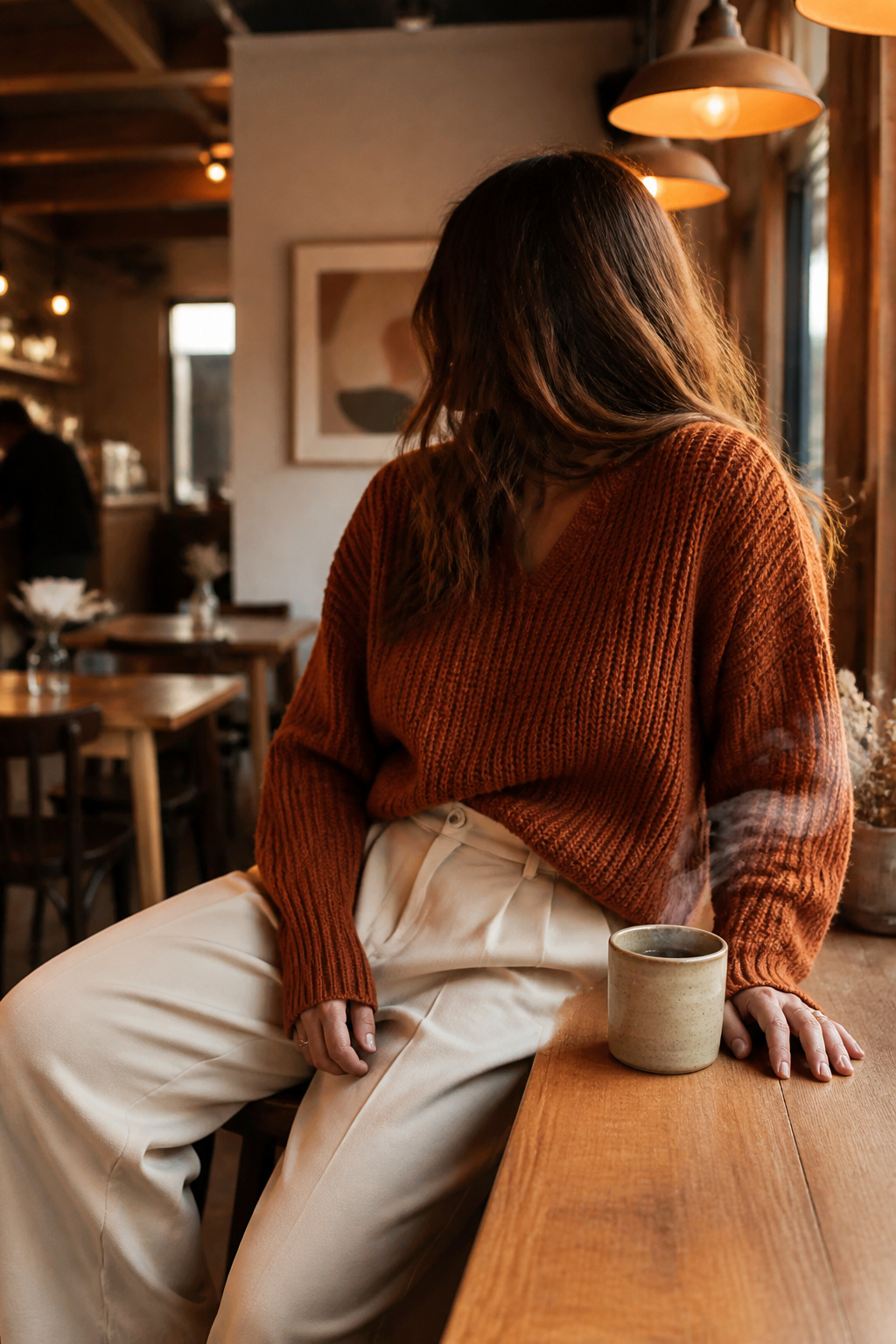
Chunky knits are having a real moment this winter, but the difference between looking put-together and looking swallowed whole comes down to gauge and placement.
A lower gauge, meaning fewer stitches per inch, gives you that thick, tactile texture that reads as luxury rather than hand-me-down.
I look for yarns labeled heavy or bulky weight, which hold their structure under a coat instead of compressing into a lumpy layer.
The styling trick that changed how I wear these: tuck just the front hem into high-waisted trousers and let the back drape. It defines your waist without sacrificing the volume that makes the knit interesting.
Sleeves should end at the wrist bone, not the knuckle; anything longer and you get bunching that adds ten pounds visually.
Under a long coat, which this season’s trends keep pushing, the knit becomes your interior architecture. The coat’s clean line needs something with body underneath or the whole silhouette collapses into sad flatness.
I learned that the hard way wearing a thin merino under a structured wool coat and wondering why I looked like I was playing dress-up.
A chunky knit fills that space properly, but keep the coat’s shoulder seam sitting where it should; if the knit pushes it outward, size up the coat or size down the yarn weight.
14. Knee-Length Skirts
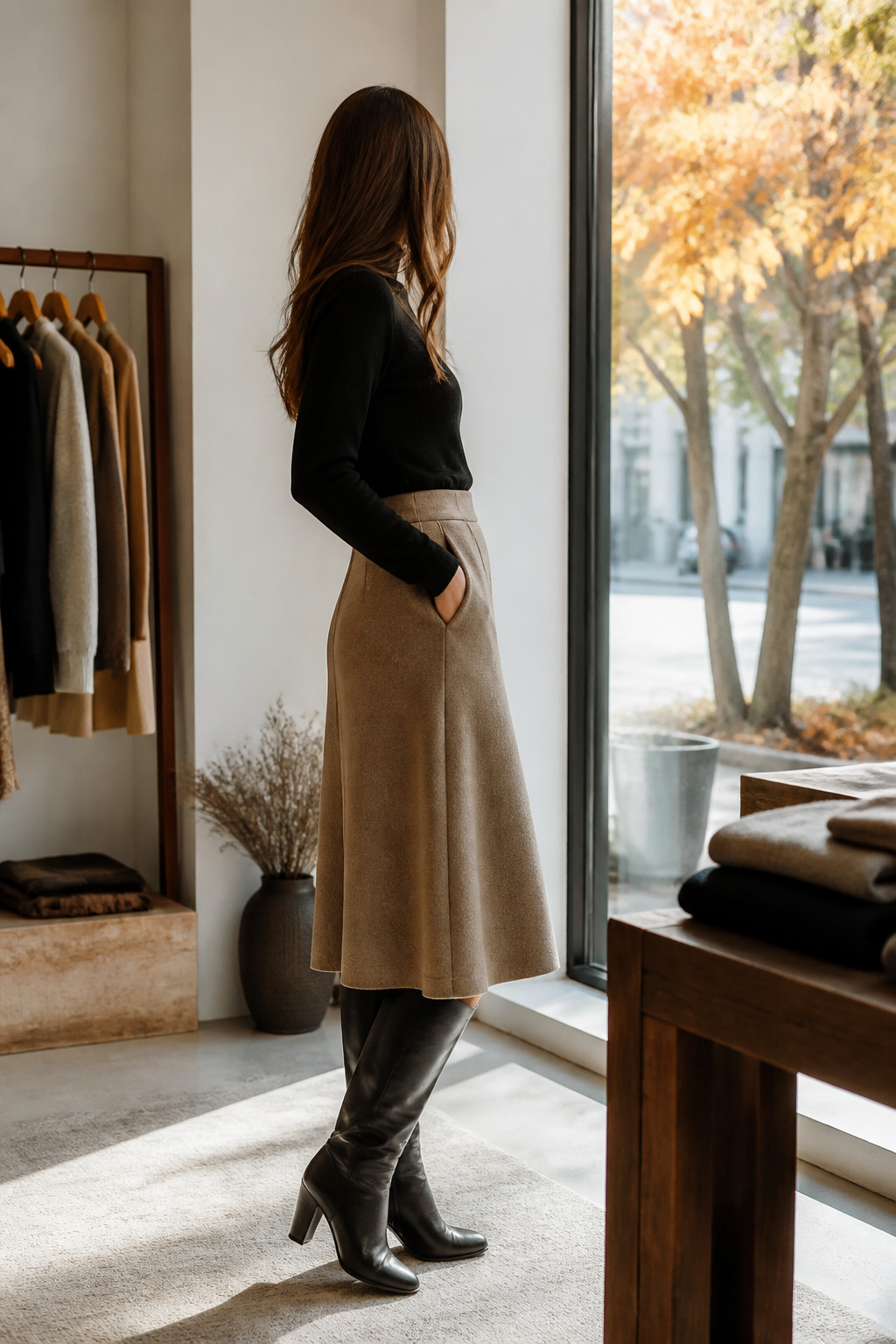
Knee-length skirts are showing up this winter as a quieter alternative to the mini and maxi lengths that have dominated the last few seasons.
The mid-calf hemline sounds tricky for cold weather, but heavy wool crepe or double-faced fabrics add enough structure to keep the shape from collapsing against tights and boots.
I have watched this silhouette flatten the hip line in a way that shorter skirts do not, which matters if you are trying to make a tucked-in sweater read as intentional rather than bulky.
Pairing them with knee-high boots creates a continuous line that elongates the leg; ankle boots work too, but only if the tights match the boot color exactly, otherwise the eye stops at every break.
Sheer or patterned hosiery underneath risks looking like you dressed for the wrong season, so solid opaque tights in a tone close to the skirt usually win.
The proportion effect is the real reason to try this trend: the narrow hem opening against a fuller coat or chunky knit above it creates a shape that feels pulled-together without reading as office-bound.
15. Scarf Coats and Built-In Details
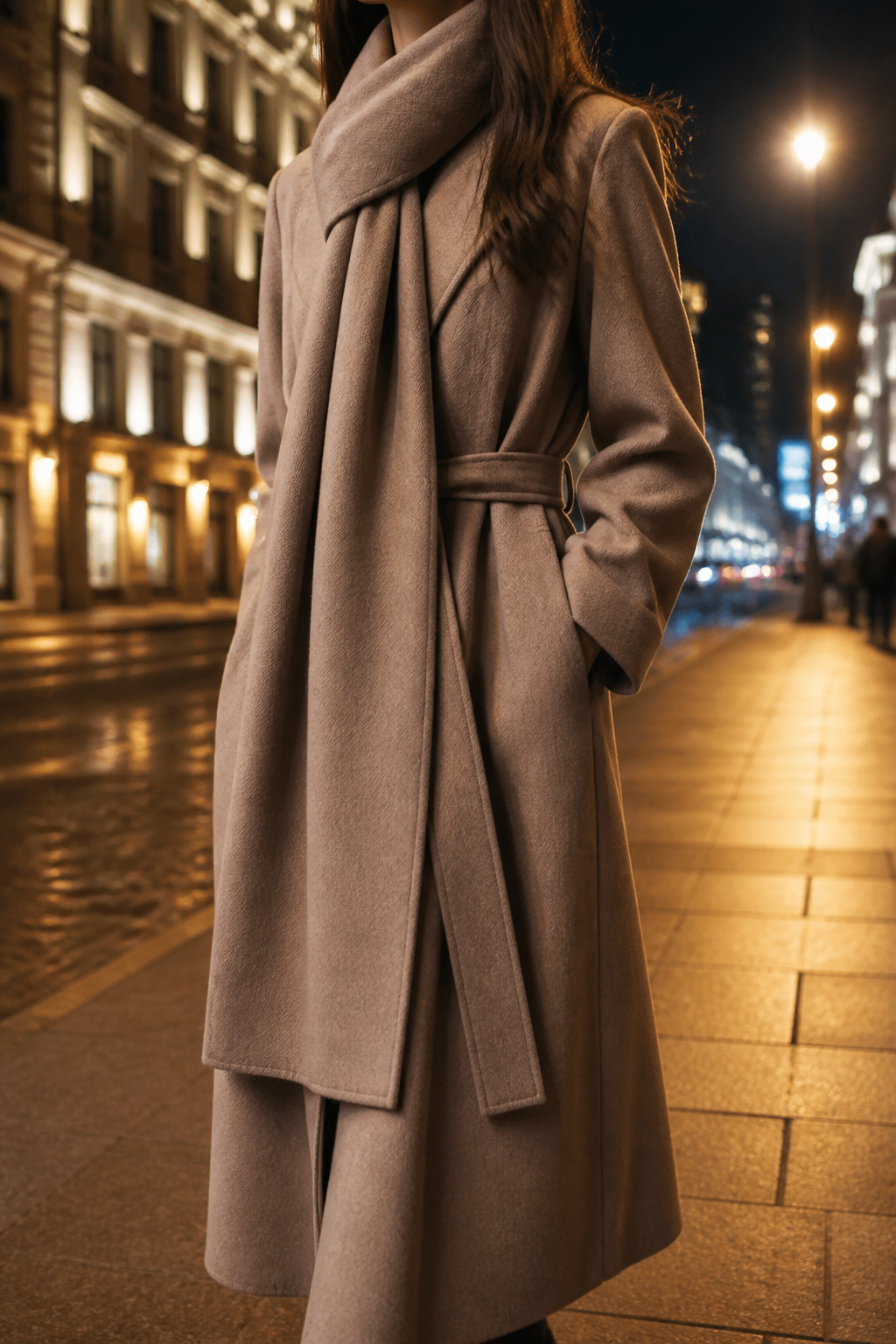
Scarf coats solve the accessory problem I never fully admitted I had.
The scarf is sewn directly into the collar or lapel, which means it cannot be left on the bus, stuffed into a glove compartment, or discovered at 7:47 a.m. tangled in the coat closet with three others exactly like it.
A built-in scarf reads as intentional, not forgotten, and the silhouette stays consistent from the first wear through March.
Integrated details are spreading beyond scarves. Funnel-neck jackets raise the collar into a built-in wind guard.
Some woven coats extend the facing into a wrap panel that buttons across the chest like a built-in stole. The effect is the same: the outfit arrives complete without the 30-second pat-down for the missing piece.
For anyone who has bought a beautiful coat and never worn it because the right scarf was always elsewhere, this is the practical trend that justifies itself on the first freezing morning.
The cost runs roughly comparable to buying a coat and a mid-weight scarf separately, but the value is in the mornings you do not have to think.
How to Layer These Trends
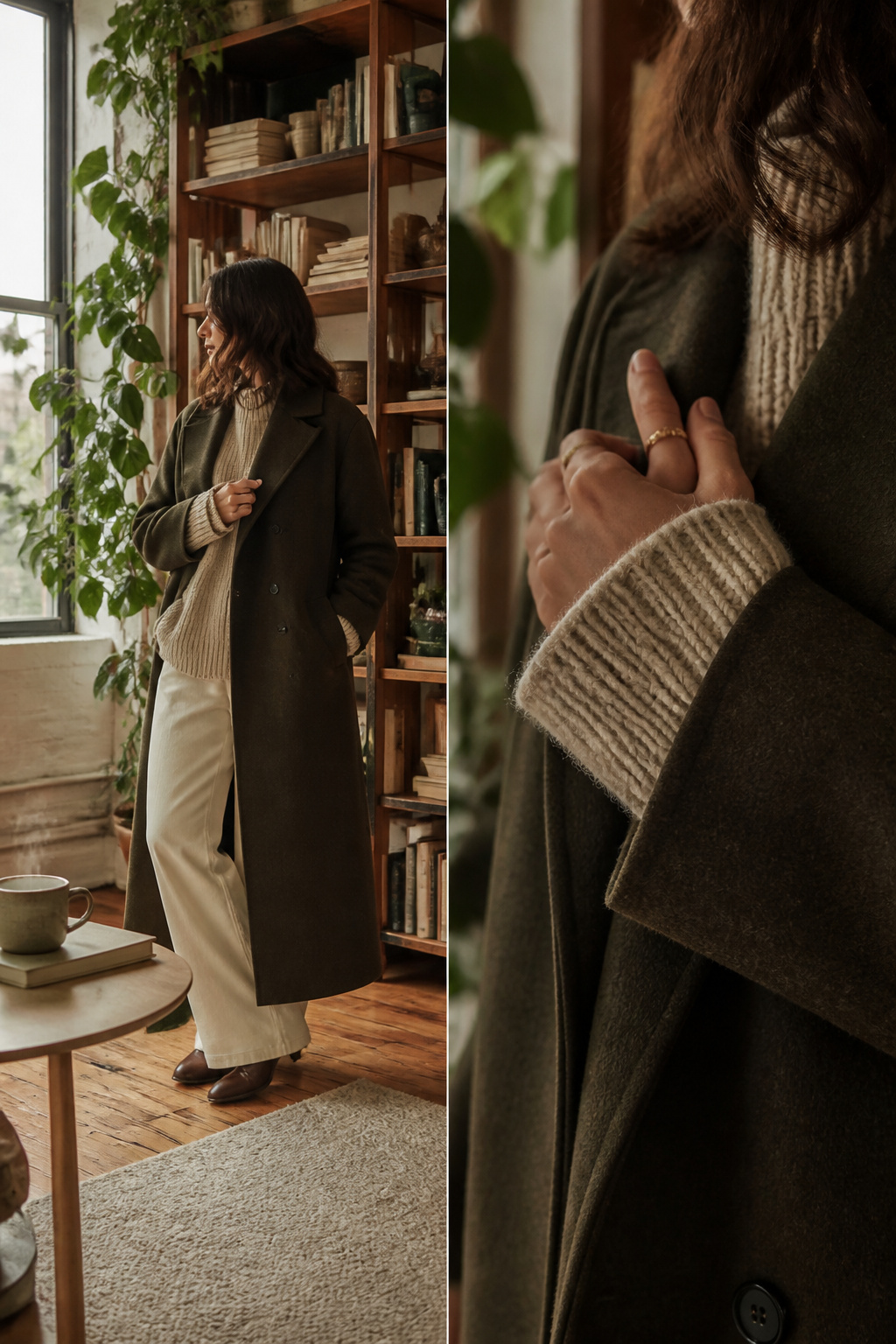
Long coats over chunky knits is the pairing that keeps showing up in every lineup this season, and the logic holds up once you try it.
The bulk of a cable or ribbed sweater needs the clean vertical line of a coat that hits at least mid-calf; anything shorter and the silhouette turns boxy instead of intentional.
Aim for two inches of sleeve showing past the coat cuff so the texture reads as deliberate, not like you grabbed the wrong jacket.
Faux fur and shearling outerwear works the same way against smoother base layers. The contrast is what makes the outfit feel styled rather than just warm.
I like a velvet or silk blouse underneath for that shift between matte and shine, though a simple fine-gauge turtleneck does the job if you already own one.
Leather coats play the opposite role: their relative sleekness lets you pile on the texture underneath without looking overdone. A funnel-neck jacket under a woven wool coat, both in the same color family, reads as depth rather than clutter.
The rule I keep coming back to is one statement texture per layer, not per piece. If the coat is shearling, the sweater should be plain knit; if the coat is plain woven, the sweater can carry the pattern.
Two competing textures at the same visual weight cancel each other out.
Footwear Shifts for Winter 2026
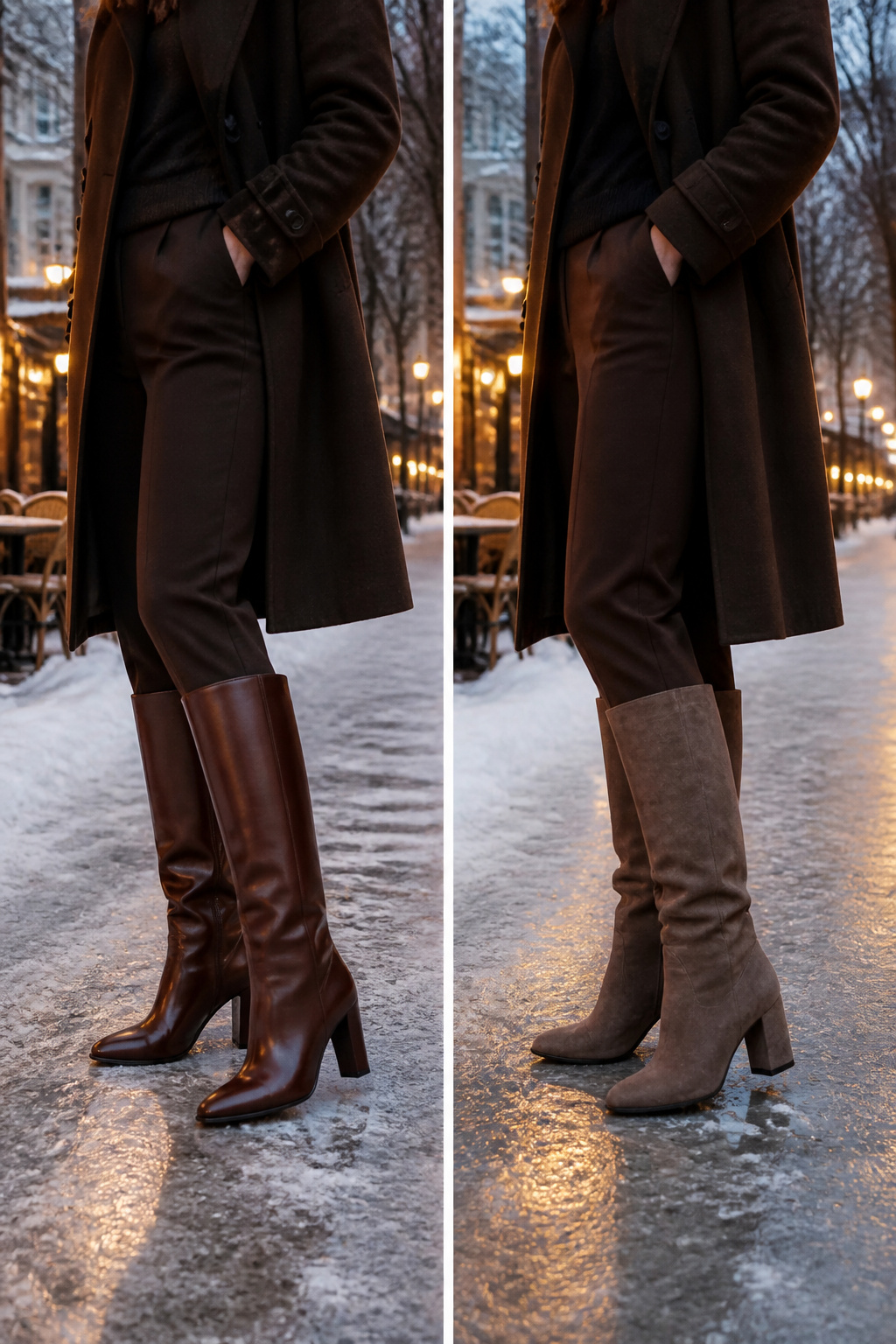
Boots this season are trading bulk for balance.
The thick soles and heavy block heels that dominated the past few years are giving way to cleaner lines, lower or block heels, and almond toes that read as polished rather than utilitarian.
Ankle boots now sit higher on the shaft, which means they slide cleanly under every denim hem without the bunching that shorter cuts create.
With skirts or dresses, knee-high boots feel current again, particularly when the line stays simple, no decorative buckles or cutouts to interrupt the shape.
Platform boots and loafers are still in the mix, though they serve a different purpose. The extra height helps with traction on wet pavement, and the sole buys you literal distance from street slush.
They also carry past winter into spring, so the cost-per-wear improves if you are buying fewer pieces overall.
Tabi-style split-toe shoes are the wild card here. They read bold, and they are not for every office or every sidewalk, but they do the same work of breaking up the expected silhouette.
Pair them with cropped pants or a midi skirt where the hem and the shoe have space to talk to each other rather than compete.
The rule this year is let the footwear finish the line, not fight it: sleek boots with longer hems, platforms or tabis where the break between pant and shoe is intentional.
Accessories That Finish the Look

A slouchy bag changes the whole proportion of a winter coat, and the scale relationship is what most people miss.
A slim puffer or fitted wool coat needs something with body and drop to it, a hobo or soft shoulder bag that hangs low and wide.
Throw a tiny crossbody against a bulky down parka and the coat suddenly looks like it is wearing you; the eye has nowhere to rest.
The same rule runs through hats, gloves, and even eyewear. A wide-brim felt hat or an oversized faux-fur muff carries the visual weight that balances a long coat’s vertical line.
Without that counterweight, winter dressing feels like a uniform rather than an outfit, especially once you are buried in layers from neck to knee.
What convinced me, reading through the season’s styling, is that the bag should be roughly one-third the visual width of your coat at the hip.
Smaller and you look packed for a flight you are not taking; larger and you are carrying luggage. Leather that softens and collapses with wear beats anything stiff, because the slouch is the point.
The accessory finishes the look only when it looks like it has been lived in.
Comfort Without Sacrificing Shape
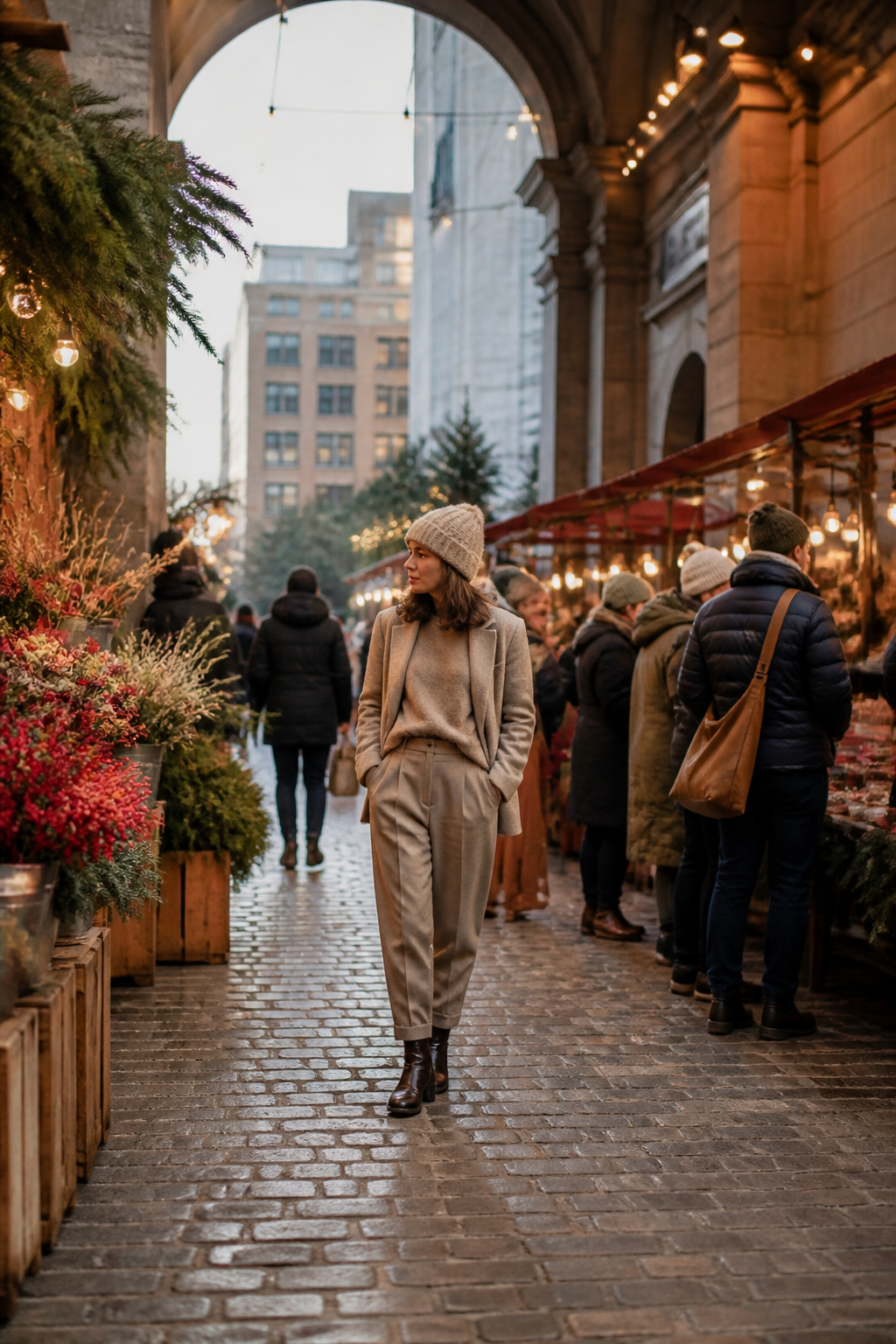
The tension between looking pulled-together and staying warm enough to function is what makes winter dressing hard, not the cold itself. This season’s answer is slouchy tailoring: jackets and trousers that relax the silhouette without letting it collapse into shapelessness.
Think of a blazer that sits slightly off the shoulder, paired with pants that pool just enough at the ankle to suggest movement rather than sloppiness. The proportion is intentional, not accidental.
Après-ski styling works the same way. Chunky Fair Isle sweaters, puffer vests, and plush accessories read as comfort pieces, but the look holds together because the layers stay in deliberate relation to each other.
A thick knit half-tucked into wide-leg wool trousers keeps the waist defined even when everything else is soft.
Footwear follows the same logic, though the sources split on how. One direction stays sleek: low block heels, almond toes, clean uppers that streamline the ankle.
The other goes heavier, with platform soles adding height without the instability of a stiletto on ice. Both maintain a clear line from hip to ground.
The platform reads as architecture; the slim boot reads as refinement. Your morning commute probably decides which one wins.
Dark Denim and Tabi Shoes
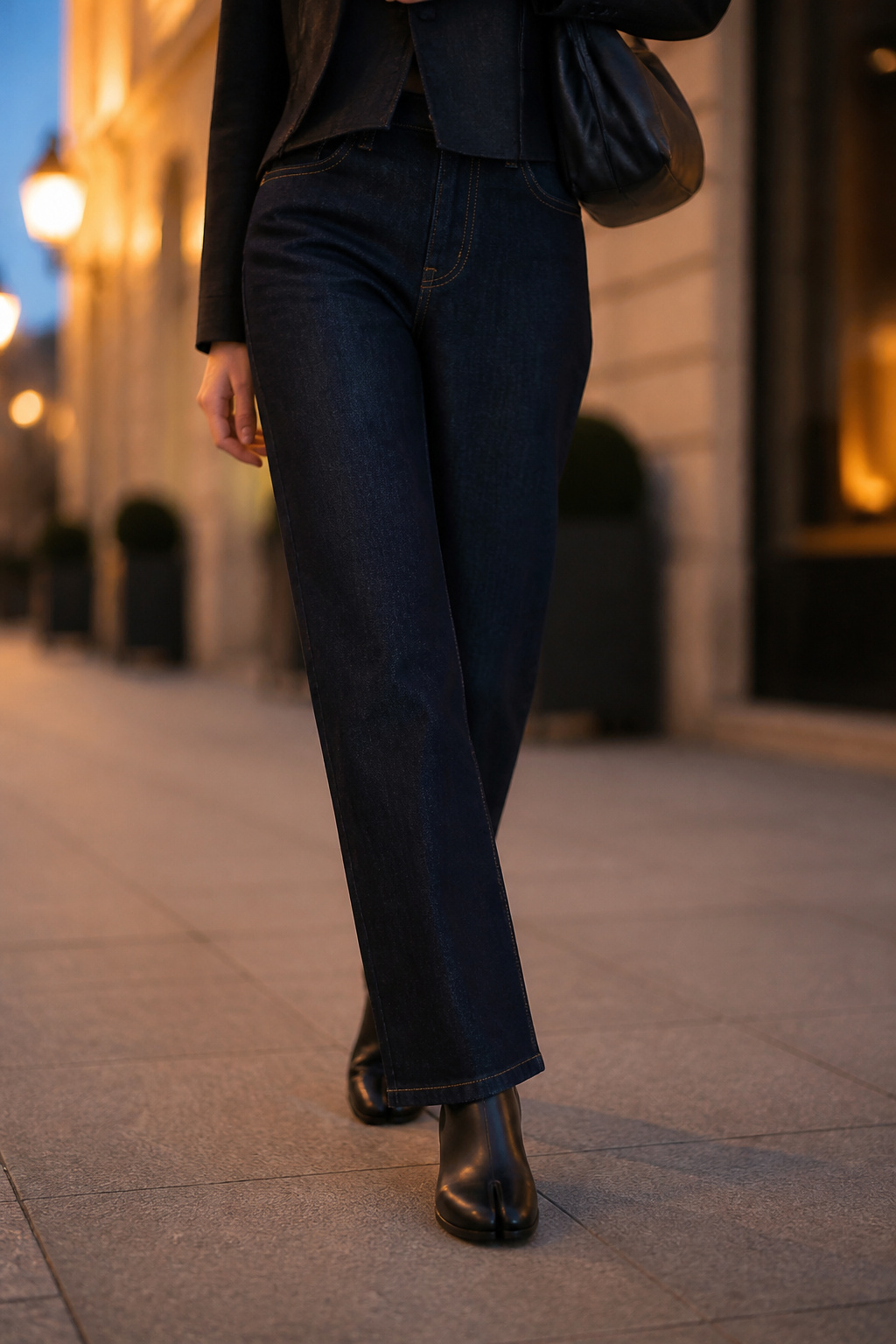
Dark denim holds up better in winter than the faded washes that dominate summer racks.
The deeper color reads as intentional after sunset, which now happens before most people leave the office, and the heavier weight most brands use for these rinses actually blocks wind better than light-wash counterparts.
Buffalo Exchange styled it as a full monochrome stack, but a single dark jean with a solid sweater is the safer entry point if you are not sure about triple denim.
Tabi shoes are still a directional bet, not a mainstream one. The split-toe silhouette shows up in editorial spreads and on a few bold dressers, though you will not find them at every mall retailer yet.
Champagne and Savings treated them as a statement piece for the already confident, which feels accurate.
If you are curious, start with a flat or low heel rather than the runway height; the shape is strange enough without adding balance trials to your morning commute.
Frequently Asked Questions
What are the biggest winter fashion trends for 2026?
The biggest winter fashion trends include funnel-neck jackets, faux suede, bold stripes, argyle, slouchy tailoring, and faux fur.
These styles are showing up across coats, knits, and accessories, with funnel-neck jackets leading as the silhouette to watch because the high collar draws the eye upward and pairs cleanly with everything from wide-leg denim to cargo pants.
How do you style argyle this winter?
Layer an argyle cardigan over a white tee and dark denim and let the pattern carry the outfit without extra accessories.
Matching cardigan-and-micro-short sets work for an academia aesthetic with loafers and small glasses, though the single layered piece is more usable for most mornings.
Are sheer hose back in style?
Yes, sheer hosiery has returned as a softer alternative to heavy opaque tights.
A 15–20 denier range reads as winter-appropriate; brands like Spanx, Wolford, and Falke hold up better than drugstore pairs, and Heist offers a wider range of nude shades for deeper skin tones.
They work best with midi skirts and boots that cover the calf, or layered under longer coats in climates that stay above freezing.