
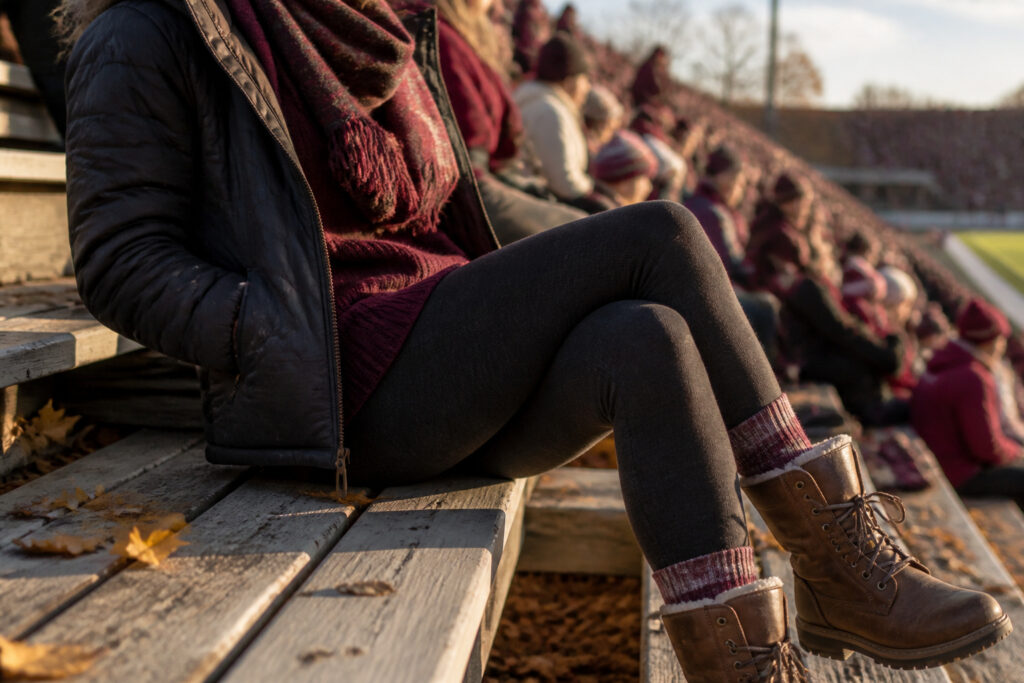
A cold football game outfit is a layered system built to trap body heat while moving sweat outward, not a single heavy coat. The trap most people miss is cotton: it holds dampness against your skin, so by halftime you’re shivering in fabric that never dries. Merino wool or synthetic base layers fix this, and the difference shows up fast once the wind picks up in the third quarter.
Base Layers That Actually Keep You Dry
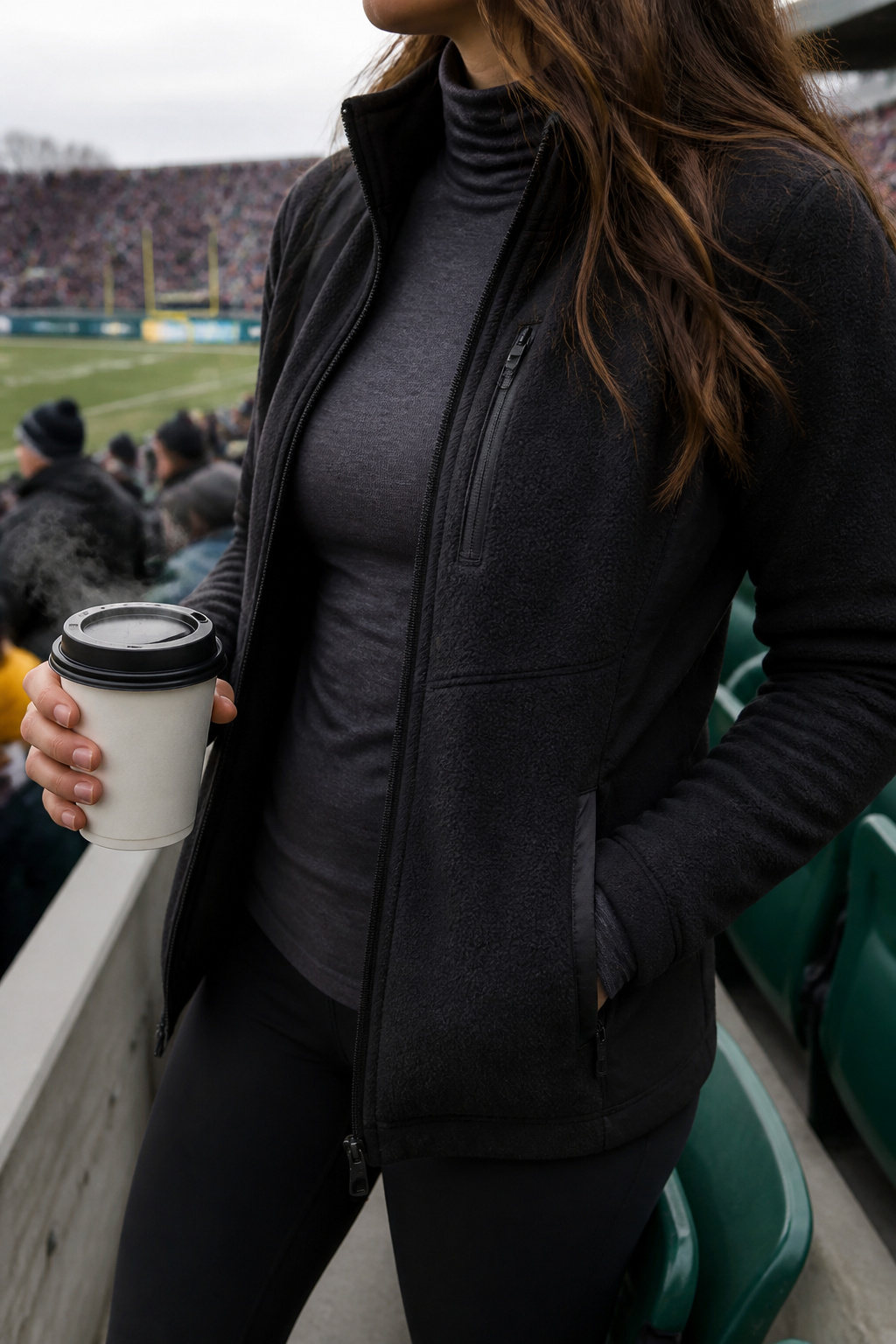
The first thing I check before any cold football game outfit is whether my base layer moves sweat off my skin, not how thick it is. Cotton long johns left me shivering at a November game years ago because they held dampness against me; the material matters more than the weight.
Keeping sweat off your skin matters more than thickness because evaporative cooling works against you in the stands. Merino wool or synthetic blends pull moisture outward so it can escape, which keeps your body heat where it belongs.
ColdGear®, the line Under Armour built for exactly this, uses a brushed interior that traps warmth while the synthetic face pushes vapor out. I reach for it when temperatures drop below 40 degrees and I know I’ll be sitting for three hours.
For a low-bulk option that still adds real warmth, Uniqlo’s Heattech crew neck functions as invisible armor under a sweater or jersey. The fabric generates heat from body moisture with almost no added volume, which keeps the outfit from turning puffy. The long-sleeve version slides under team gear without showing at the collar or cuffs.
The Middle Layer Trap I Fell Into
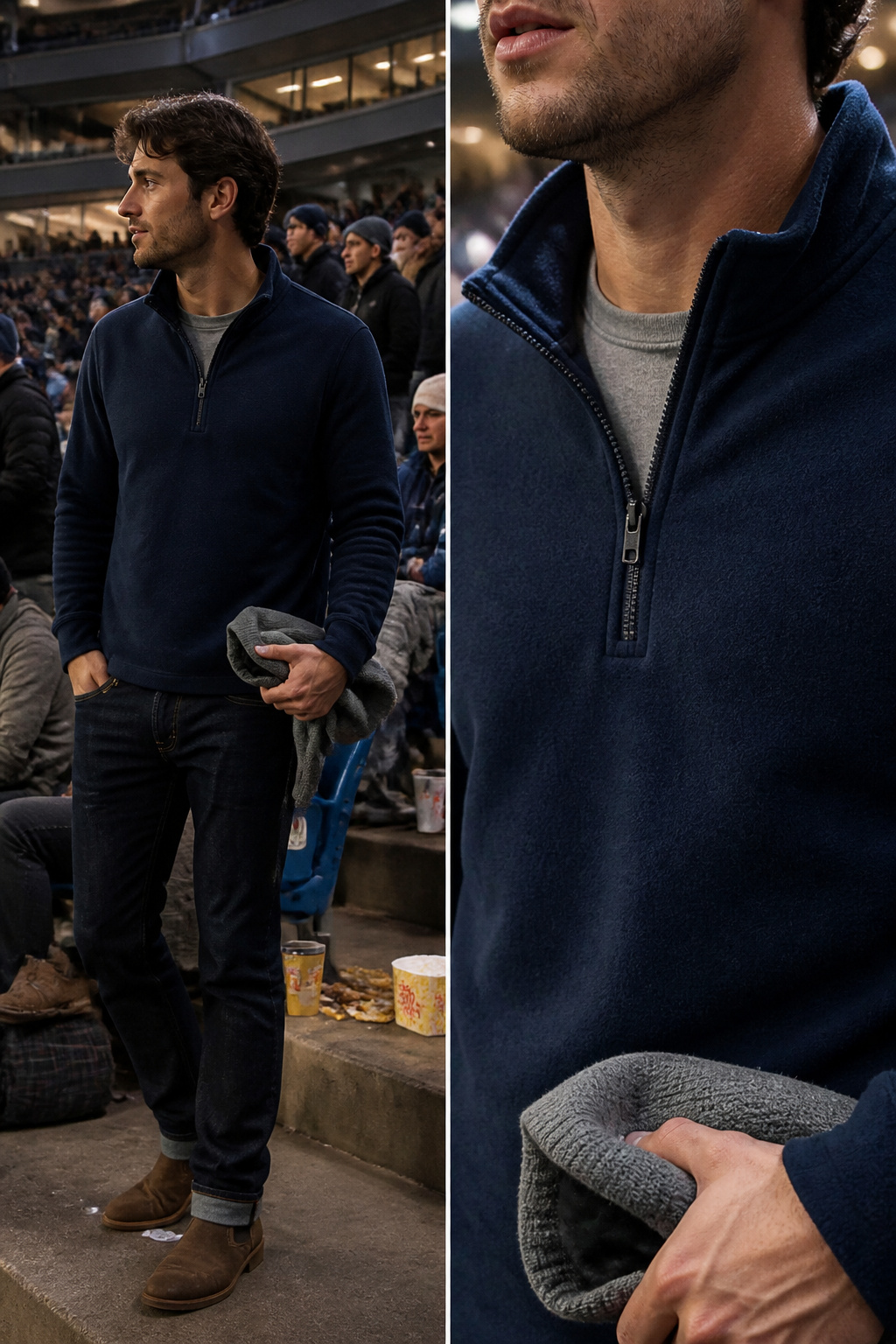
The middle layer does the actual work of keeping you warm, and it needs to trap air without sealing sweat against your skin. A cotton sweatshirt fails this test the moment you climb the stadium stairs; it soaks through and stays wet. I learned that the hard way at a November game in Green Bay, where I wore a thick hoodie over a base layer and spent the second half shivering in damp fabric that never dried.
Fleece and lightweight wool handle this better. They hold heat while letting moisture pass through, which is the combination that matters. Hoodies work if the fabric is technical rather than standard cotton, though the hood itself becomes bulk you may not want under a jacket.
Under a skirt, fleece-lined tights solve a problem few people think about. They add real insulation without changing the silhouette the way thick leggings would, and they layer cleanly under boots without bunching. I skipped them once, wore regular tights instead, and felt the cold metal seat through thin nylon for three hours. The tights cost maybe fifteen dollars more than standard ones. That was the cheapest lesson in the whole outfit.
Jeans and the Wind That Cuts Through Them
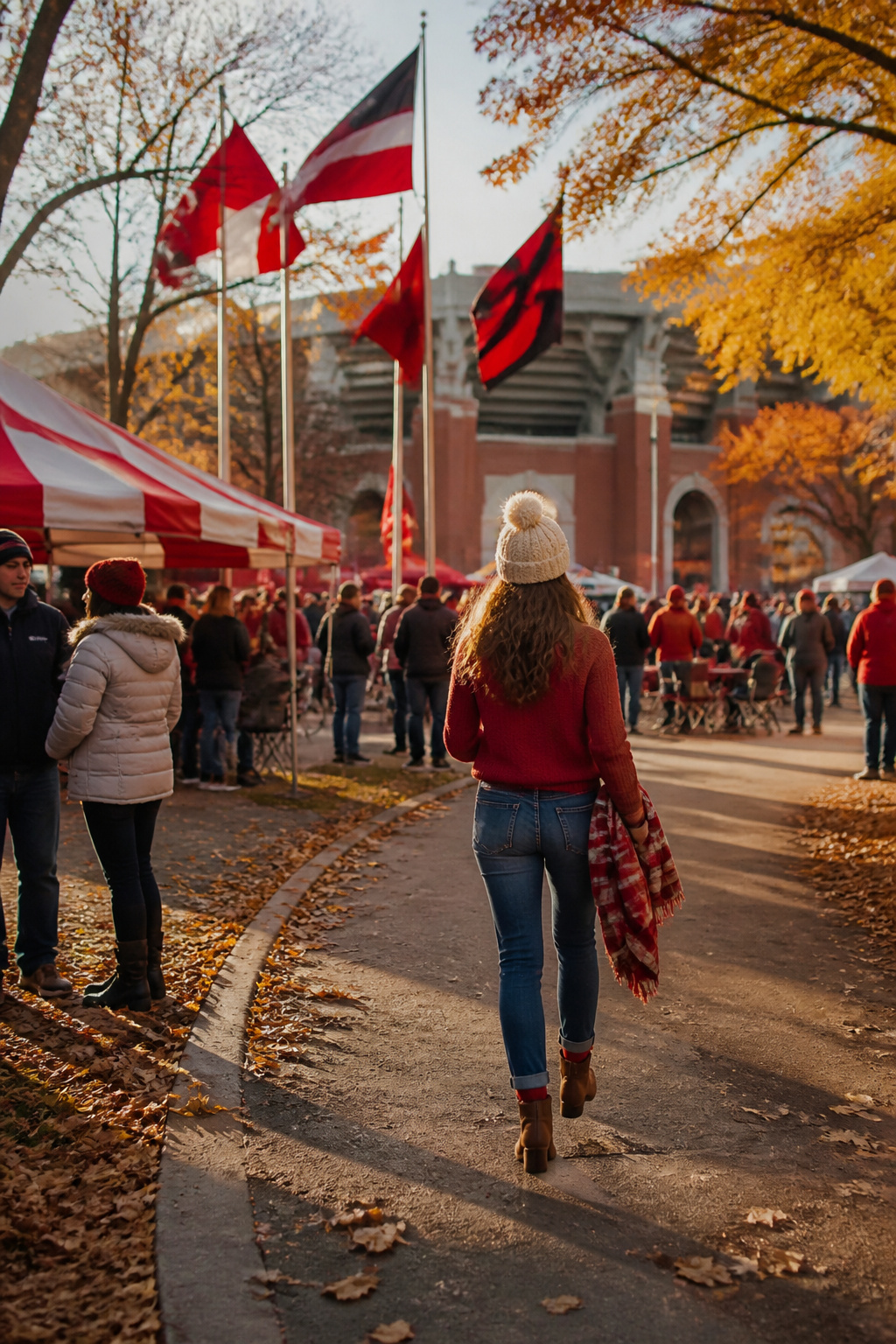
Denim has limits that show up fast once the temperature drops and the wind picks up. Cotton holds moisture, and a stiff pair of jeans against cold, damp skin turns miserable in a hurry. The fix that actually works is leggings underneath, preferably a thermal pair like Uniqlo’s Heattech Ultra Warm line. Straight-leg or wide-leg denim has enough room to hide them; skinny jeans do not, so skip those for this job. If rain is in the forecast, denim becomes a genuine mistake. It soaks through, chafes, and stays wet for hours. A lightweight, water-resistant pant layered over your regular pair keeps the lower half dry without the bulk. Dry skin stays warmer than insulated wet skin, so the layer that blocks moisture matters more than the one that looks rugged.
Outerwear That Blocks More Than It Bulks
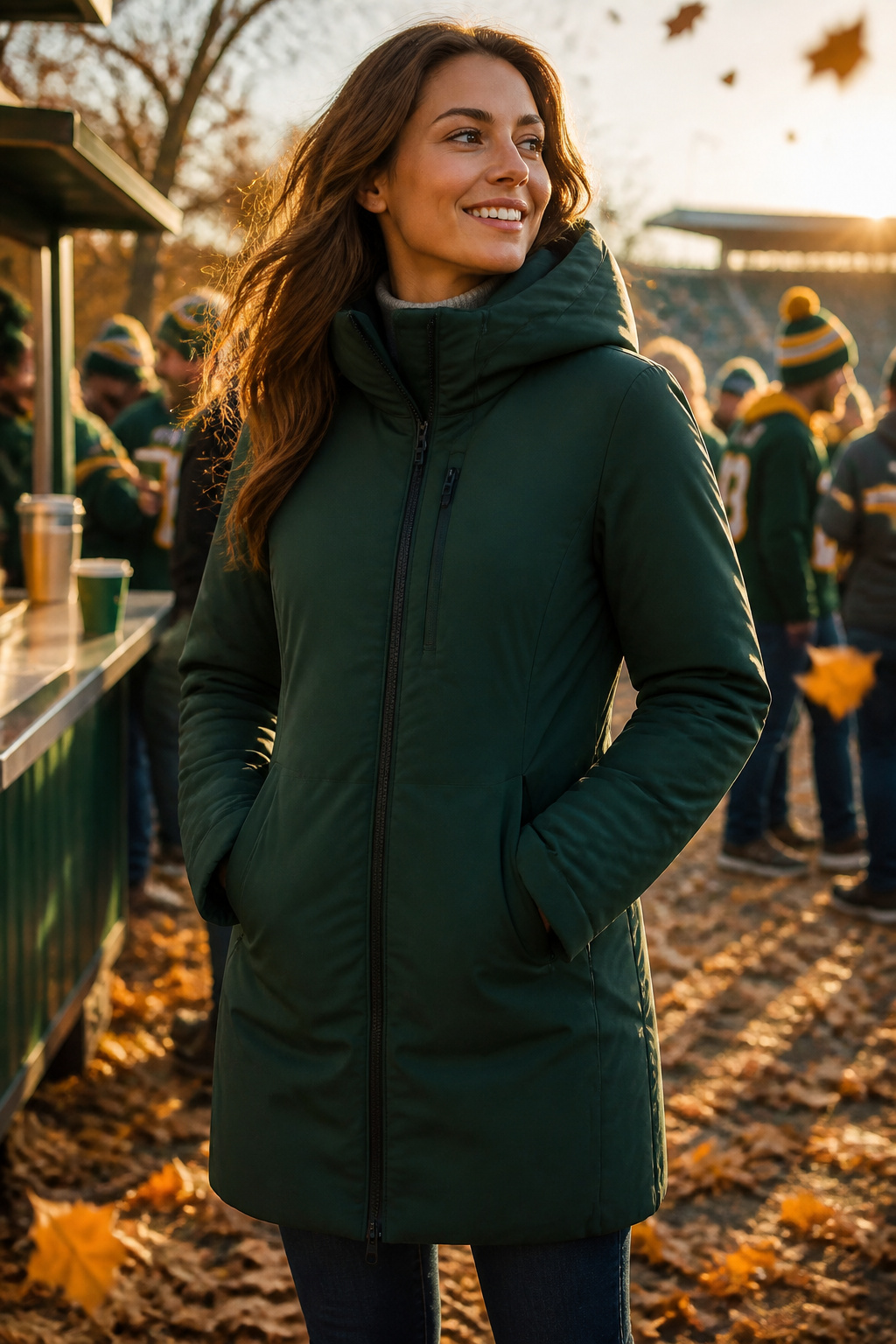
Windproofing matters more than raw warmth for a cold football game outfit. A stiff breeze will cut through a puffy jacket that lacks a shell, leaving whatever insulation sits inside doing half the work it should. The shell is what lets your base and mid layers actually trap heat instead of watching it blow away.
Parkas with a wind-blocking membrane solve this outright. The best ones have a hood that cinches, sealed cuffs, and a hem that does not ride up when you stand to cheer. Team-branded options exist at most stadium shops now, and the better ones use the same shell fabrics as outdoor brands rather than printing logos on thin nylon that flaps like a flag. A 3-in-1 parka with a removable liner gives you the shell for game day and the puffer alone for errands, which is the only way most of us justify the price.
Insulated jackets without that windproof face fabric fail the parking-lot test. You feel it the moment you step out of the car: the cold does not creep, it arrives all at once. I have watched people in fleece-lined softshells shiver while someone in a thinner but truly windproof coat stays still and warm. The difference is the barrier, not the bulk.
Team Gear Without the Freeze
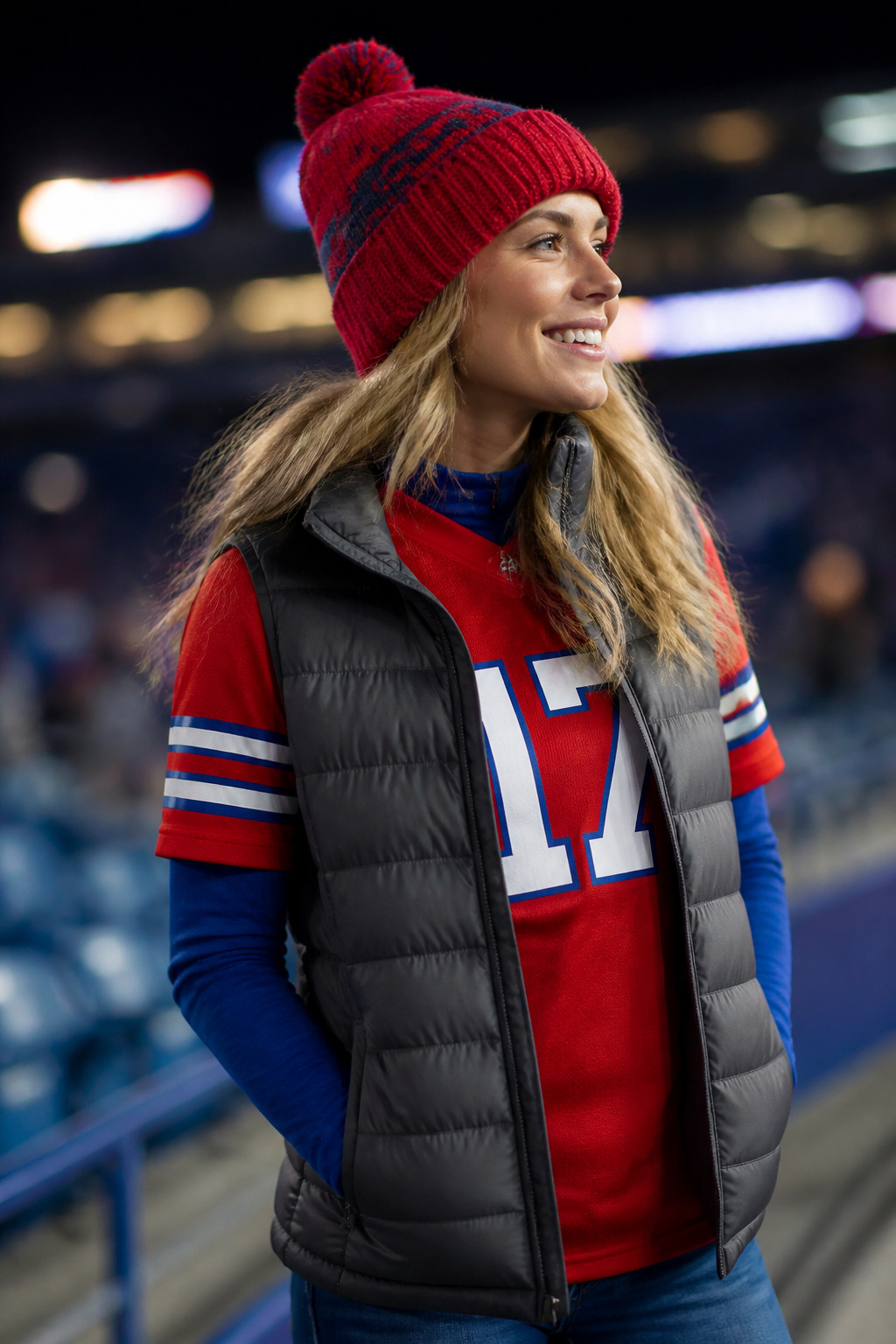
A paper-thin fan jersey as your only top is where most cold football game outfits fall apart. Long-sleeved jersey options exist now, and they change the math entirely. The added sleeve length keeps your arms covered while the fabric pulls moisture away from your skin, which matters more than you’d think when you’re sweating under a puffer vest in 40-degree air.
Layering team colors without relying on the jersey itself as insulation is the smarter play. A neutral long sleeve tee or lightweight base layer in your team’s palette, with the jersey over it, gives you actual warmth and keeps the logo visible. A puffer vest layered on top traps heat without hiding the jersey underneath, and it works for the walk from the lot to the gate better than a full coat you have to strip off once you’re packed in tight.
Hats finish the look without needing to be technical gear. A standard team knit cap does the job; the heat you lose through your head is heat you’re not getting back once the sun drops behind the stands. If your jersey is moisture-wicking, check that whatever sits directly against your skin underneath is too, or you’ll carry damp fabric against your chest for three quarters.
Gloves, Hats, and the Scarf I Stopped Wearing

Gloves, scarves, hats, and warm socks are where a cold football game outfit lives or dies. Your core can be layered to perfection, but numb fingers or ears that ache will send you to the concourse by halftime.
I learned this the hard way with a scarf I stopped wearing. It was a thick knitted piece in team colors, bought because it looked right, but the wool was scratchy and the length kept snagging on stadium seats. Every adjustment let cold air in at the neck. Now I reach for something softer and shorter, or skip the scarf entirely in favor of a higher collar on my middle layer.
Touchscreen-compatible gloves solve the phone problem without the bare-hand penalty, and team-themed gloves, beanies, or a snapback with a warm liner let you show loyalty without giving up function. A thick knit pom-pom hat covers more skin than a cap, which matters more than most people expect. Warm socks belong in this same conversation; cold feet turn a close game into a countdown to the exit.
The extremities have no muscle mass to generate heat. Once they go, your whole body follows.
Boots That Handle the Parking Lot and the Stairs
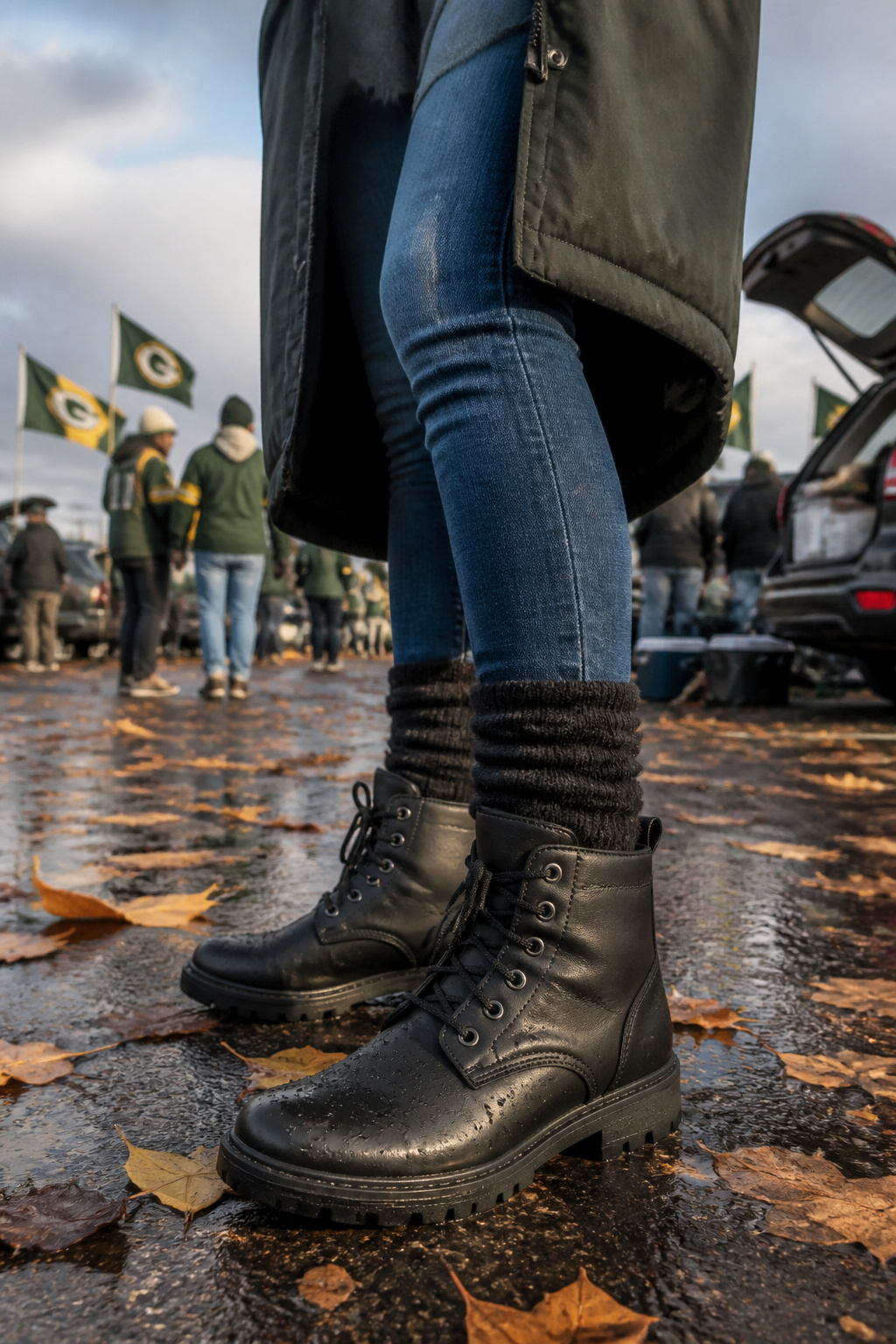
Insulated boots rated for cold weather do the heavy lifting in a cold football game outfit, but the label on the box only tells part of the story. Waterproof means a sealed membrane that blocks liquid water entirely; water-resistant leather or treated fabric will bead light rain for a while, then soak through in a sustained downpour or slushy parking lot. That distinction matters when you are standing on concrete for two hours.
Sole stiffness is the detail that separates boots you can tailgate in from boots you can actually walk in. A lugged rubber outsole grips slick pavement, but if the midsole does not flex, stadium stairs become a calf workout and standing room gets miserable fast. I look for ankle support without the full mountaineering rigidity; enough to roll with uneven ground, not so much that each step fights back.
Heel height is another place where practical gets overlooked. A flat sole keeps your center of gravity low on icy asphalt, but a one-inch heel or wedge can improve drainage geometry and reduce the puddle splash that soaks the cuff. The sweet spot for me has been a low block heel with a gusseted tongue, so snow and grit stay outside where they belong.
The Clear Bag Rule Nobody Warned Me About
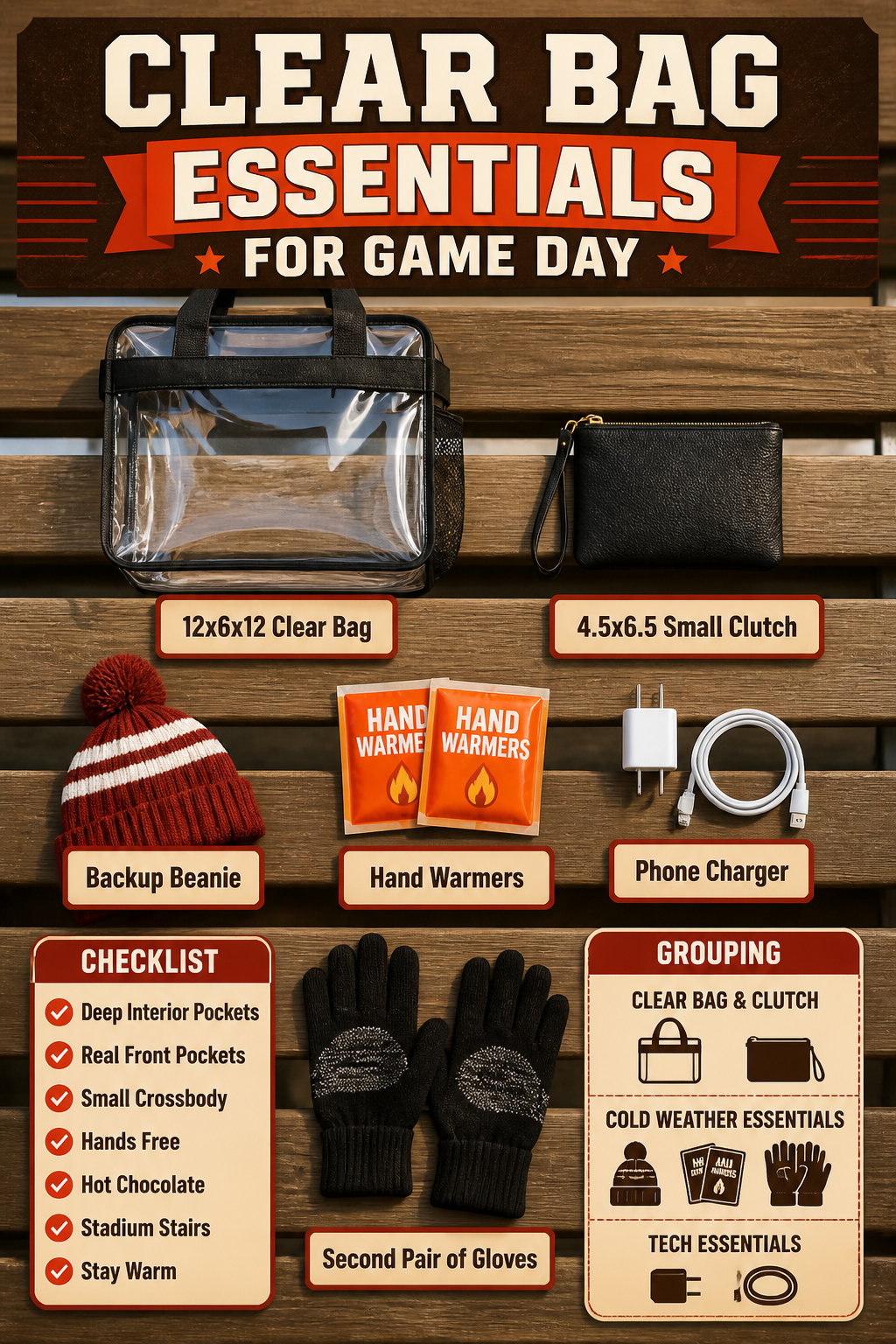
The clear bag rule changes what a cold football game outfit needs to handle. Most stadiums limit you to a 12 inch by 6 inch by 12 inch clear bag or Ziplock-style bag, plus a small clutch no bigger than 4.5 inches by 6.5 inches. That leaves almost no room for the extras you would normally stash in a purse: a backup beanie, hand warmers, a phone charger, a second pair of gloves.
Pockets become the real storage. A coat with deep interior pockets beats one that is warmer but bare inside. Same for jeans with actual front pockets, not the decorative kind, so you can split essentials between coat and pants and still get through security without juggling three pouches. A small crossbody that meets the rule keeps your hands free for hot chocolate and stadium stairs, which matters more than you would think when you are already managing bulky layers.
What I Wore to the Coldest Game I Sat Through
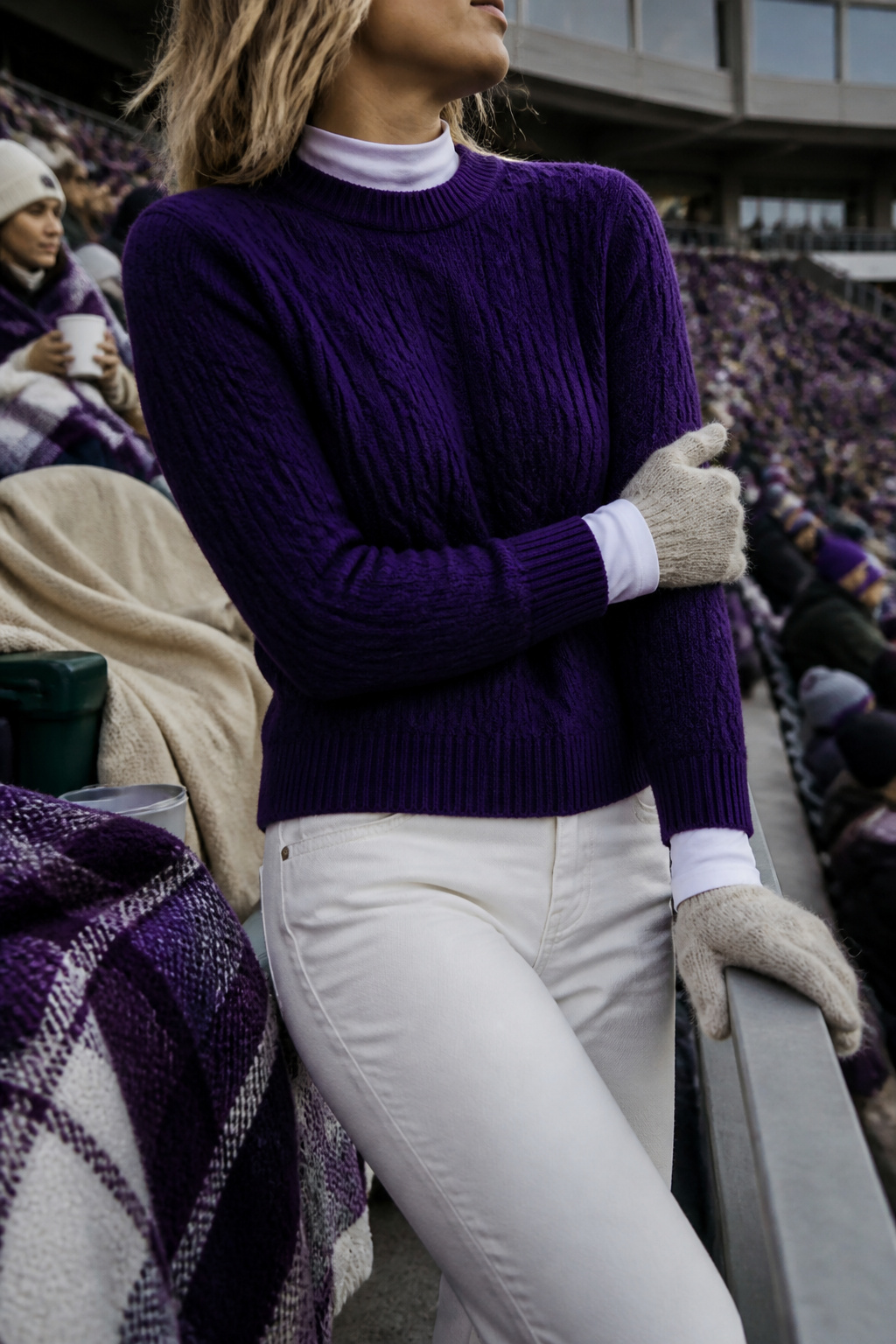
The coldest game I sat through was a late November kickoff in Green Bay, 17°F with wind that pulled the real feel down to single digits. I started with a long-sleeve t-shirt as my base layer, sized up slightly so it would not ride up when I moved. Over that, a thin merino sweater I already owned, then a down vest I had grabbed because it matched the team colors. That vest was the first mistake: the wind cut straight through the quilting on the back, and by the end of the first quarter I could feel the cold settling between my shoulder blades.
At halftime I walked back to the car and added a scarf, thick and knitted, looped twice around my neck. I had left it in the back seat thinking I would not need it. The gloves I was wearing were touchscreen-compatible, which mattered for checking scores, but they were not insulated enough for that temperature; my fingertips went numb during the third-quarter field goal. Hand warmers would have changed the afternoon entirely, slipped inside each glove and probably one in each boot. I saw a woman two rows down with rechargeable ones that lasted the full four quarters, and that is what I bought before the next game.
The knit pom-pom hat worked, mostly because it covered my ears. The team-logo snapback my husband wore did not; he spent the second half with his hood up, blocking his own view. By the fourth quarter I had abandoned the vest under my stadium seat and wore only the sweater under my coat, which trapped heat better than three uneven layers fighting each other.
Three Layering Mistakes I See in the Stands
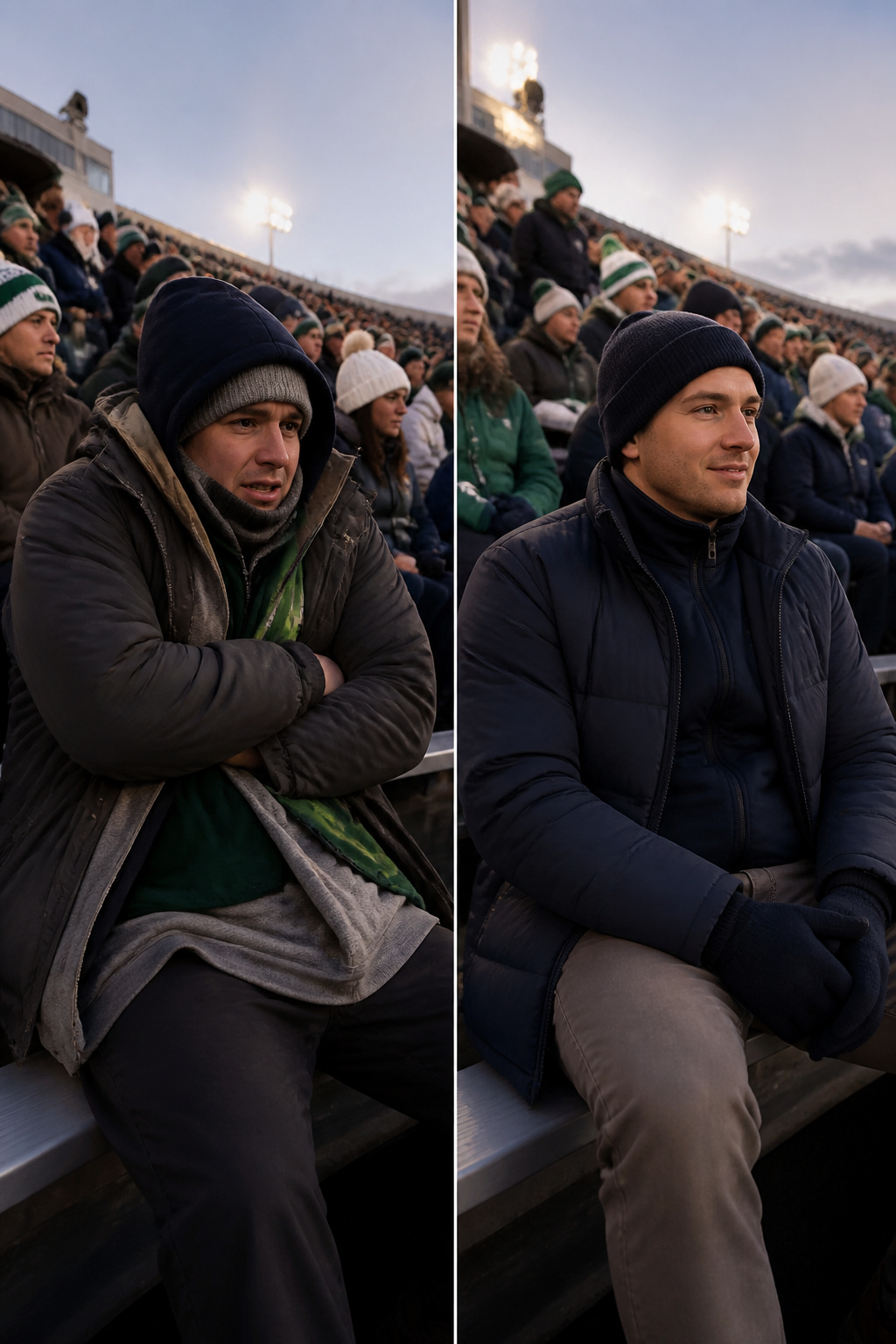
Cotton base layers are everywhere in the stands, and they fail exactly the way you’d expect. The fabric holds sweat against your skin, so by halftime you’re damp and chilled no matter how heavy your coat is. I watch people peel off one thick parka and realize there’s nothing underneath that actually wicks moisture away. A fitted long-sleeve in merino wool or a synthetic blend pulls sweat off your skin; without that first layer doing its job, the rest of the stack is just dead weight.
The single-coat approach creates the same problem at the other extreme. One bulky jacket traps heat until you’re sweating, then leaves you no option when the wind picks up in the third quarter. Layering lets you open or shed as the temperature shifts; a middle layer like a sports hoodie or pullover gives you actual control.
Feet and hands get ignored because they’re out of sight under the blanket. Thin socks in sneakers, unlined gloves pulled from the car: I’ve sat near enough shivering fans to recognize the pattern. Touchscreen-compatible gloves with real insulation, and a thick knit hat or a team-logo cap with a warm liner, keep the extremities that lose heat fastest from ruining the whole afternoon.
Frequently Asked Questions
What should I wear to a cold football game?
Start with a moisture-wicking base layer like merino wool or a synthetic blend, add an insulating middle layer such as fleece or a lightweight wool sweater, and finish with a windproof outer shell. A 3-in-1 parka works well because the shell blocks wind that would otherwise steal body heat, while removable liners let you adjust as temperatures shift.
How do I stay warm at a football game?
Layering gives you control: you can open or shed pieces as the temperature changes. Prioritize windproofing over bulk at the outer layer, since a stiff breeze cuts through unprotected insulation. Do not forget extremities; touchscreen-compatible gloves with real insulation, a thick knit hat that covers ears, and warm socks keep heat from escaping where you have no muscle mass to generate more.
What are the best materials for cold weather outfits?
Merino wool and synthetic blends pull sweat away from skin so evaporative cooling cannot work against you; this matters more than thickness for base layers. Fleece and lightweight wool handle the middle layer better than cotton because they trap air while letting moisture pass through. A wind-blocking membrane on your outer layer is what lets those inner layers actually retain heat.