

A Chelsea boots outfit works when the boot shaft meets the pant hem at exactly the right point. Get that junction wrong and the silhouette breaks: skinny jeans bunch above the elastic goring, wide-legs swallow the boot entirely, and flares hover like a visual stub. The Victorian-era construction, first built for Queen Victoria’s shoemaker in 1837, still demands the same precision today. The elastic side panel that made them easy to pull on then is the same detail that makes the ankle line so unforgiving now.
Chelsea boots with skinny jeans

Skinny jeans and Chelsea boots live or die at the ankle. The hem has to sit right at the top of the boot shaft, tight enough that no fabric bunches or folds over. Anything looser and you get a bulky ridge where the elastic side panel grips, which breaks the clean line these boots are built for.
The question of whether jeans go over or under has a clear answer here: the boot wears over the jean. Tucking skinny jeans into Chelsea boots reads sloppy, and trying to cuff them adds unnecessary bulk at exactly the spot where the silhouette needs to stay narrow. The jean should skim the boot’s edge and stop.
A thin sock, something without texture, keeps the ankle from widening inside the shaft. Wool blends or anything with a rib will fight the boot’s close fit and push the hem out of place. I learned that the hard way after a morning of adjusting my cuffs every twenty minutes, though the lesson stuck: the sock matters more than you’d expect when the whole point is that uninterrupted line from knee to toe.
For the rest of the outfit, an oversized sweater keeps the proportions relaxed, or a blazer with a tucked-in top and belt sharpens the whole thing into something deliberate rather than dated.
Chelsea boots with straight-leg jeans

Straight-leg jeans and Chelsea boots live or die by a single measurement: the hem should graze the top of the boot shaft, not hover above it and not bunch on top. This "kissing" point matters because any gap exposes ankle and breaks the line, while excess fabric pools into a sloppy ridge that swallows the boot’s clean shape. The jean needs to taper gently toward the ankle so it can skim the leather without gripping like a skinny cut would.
Getting there usually means choosing a cropped length or rolling a full-length hem once, maybe twice. The cuff should land flush; you want to see the full boot, not bury it. Sock choice becomes visible in that narrow zone, so a thin crew in a tone that matches either the jean or the boot keeps the eye moving instead of stopping on a bright stripe. A structured blazer or leather jacket on top finishes the outfit, since the precision at the ankle calls for something equally intentional above.
Chelsea boots with wide-leg jeans
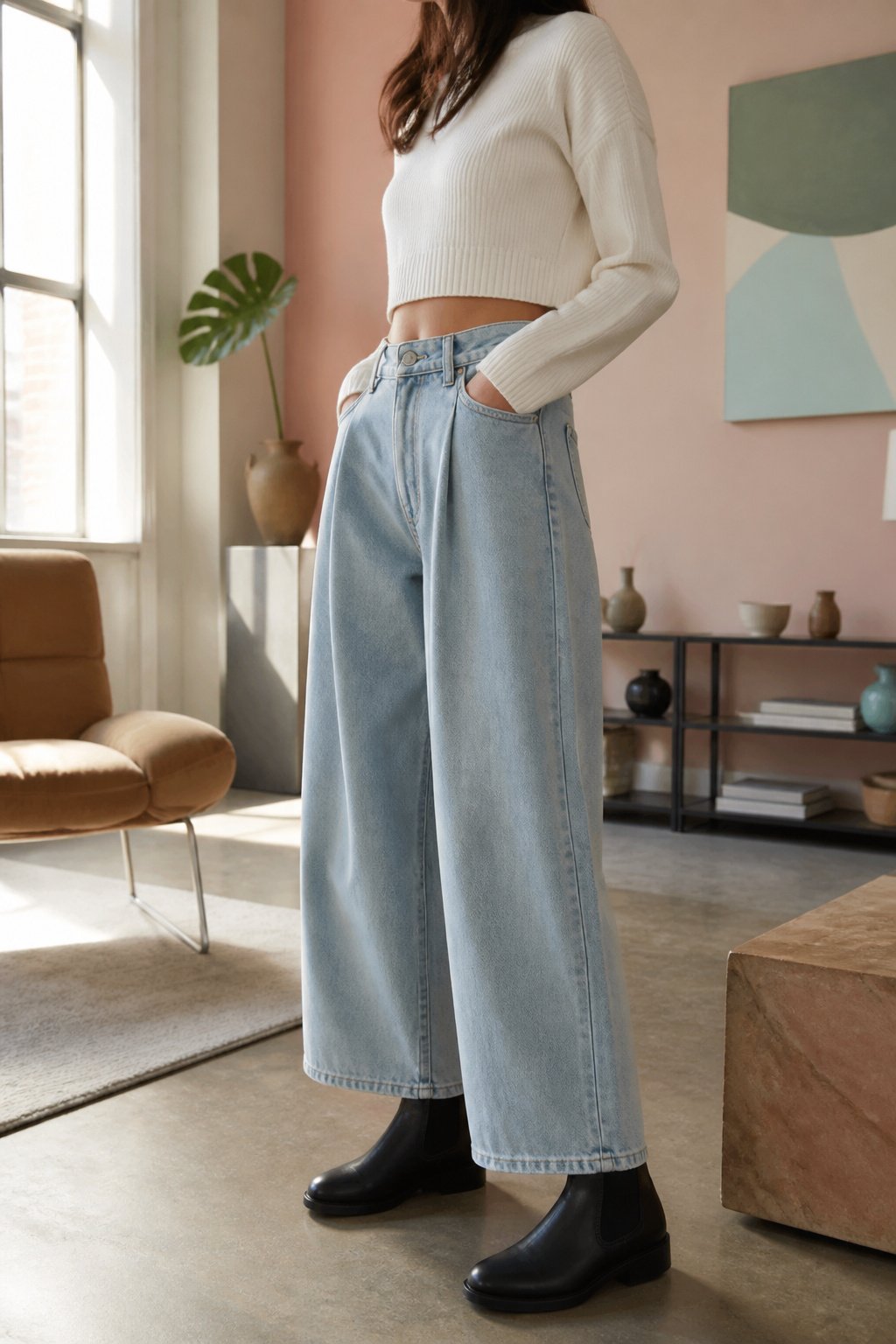
Wide-leg jeans fall straight from the hip and the hem pools or floats above the boot top rather than tucking inside, which creates a completely different proportion than you’d get with skinnier cuts. The slim shaft of a Chelsea boot acts almost like a punctuation mark under all that volume, and the contrast is what makes the pairing work.
The balance lives or dies at the ankle. Too short and you get an awkward strip of skin or sock that breaks the line; too long and the fabric drags or bunches above the elastic goring and the boot disappears entirely. What you’re after is a hem that skims the top of the boot or stops just high enough to let a sliver peek through, nothing more. A slight crop works, but a full break does not.
With this much volume below, the top half needs to anchor the look. A tucked-in shirt, a cropped sweater, or at minimum a jacket that hits at the natural waist keeps the silhouette from reading as all pant and no person. A structured blazer or cropped jacket finishes the shape and gives the outfit a deliberate edge rather than a swallowed-by-denim effect.
Chelsea boots with flared jeans
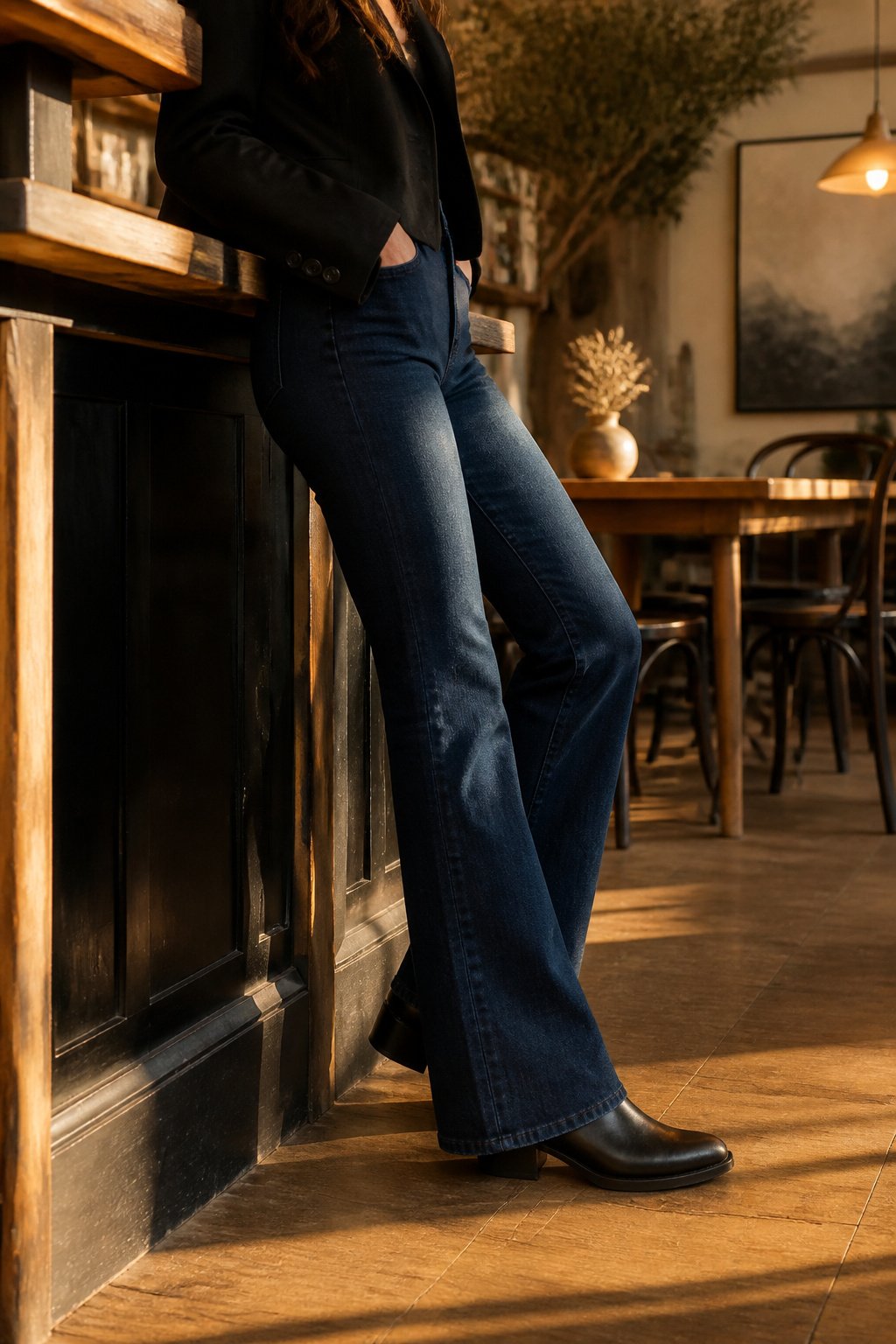
Flared jeans with Chelsea boots create a proportion puzzle that straight and wide-leg cuts simply don’t. The flare begins its widening below the knee, which means the hem must graze the floor while you’re wearing the boots, not hover above them. Any gap and the eye catches the boot shaft like a visual stub, breaking the long line the flare is meant to draw.
Straight jeans sit cleanly above the ankle; wide-legs fall with enough volume to float past the boot top without clinging. Flares, though, narrow through the calf then kick out precisely where the Chelsea boot ends. That overlap zone is where the pairing lives or dies. A cropped flare avoids the question entirely and channels something the 1960s mods would have recognized, but full-length flares demand that floor-skimming hem to keep the silhouette continuous.
The boot itself reads more casual than a heeled riding boot, so the top half should follow suit. A jacket with some structure helps balance the width at the bottom without fighting the boots’ understated lines. I have seen this combination work best when the jean fabric has enough weight to fall straight from the knee rather than bell aggressively; a stiff denim holds the intended line, while a limp one collapses into the boot and looks accidental.
Chelsea boots with leggings
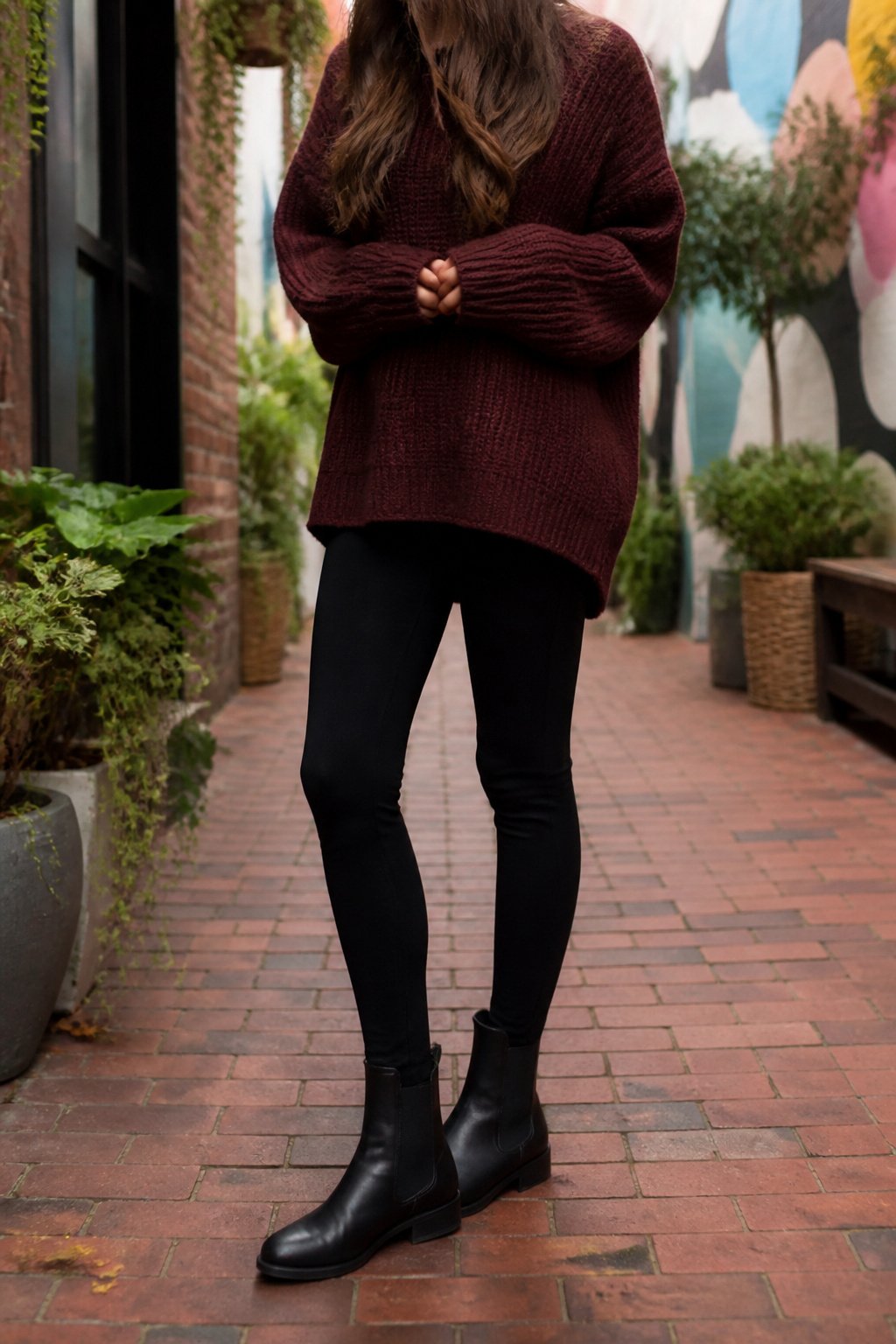
Leggings with Chelsea boots only work when the fabric disappears into the shaft. The legging must go into the boot, never stop above it. Anything else breaks the leg line at exactly the wrong spot and turns a sleek shape into a visual stump.
Black leather Chelsea boots against black leggings handle this most cleanly. The boot and the legging read as one continuous column, which is why that pairing gets worn so often. For warmth, a thin sock in merino or a fine cotton blend sits inside the boot without adding circumference. Ruffled or textured socks can peek just above the elastic panel if you want that break, but the bulk has to stay minimal or the boot gapes. An oversized sweater or a long coat balances the weight at the bottom. A cropped puffer works too, though the proportions need watching.
Chelsea boots with skirts
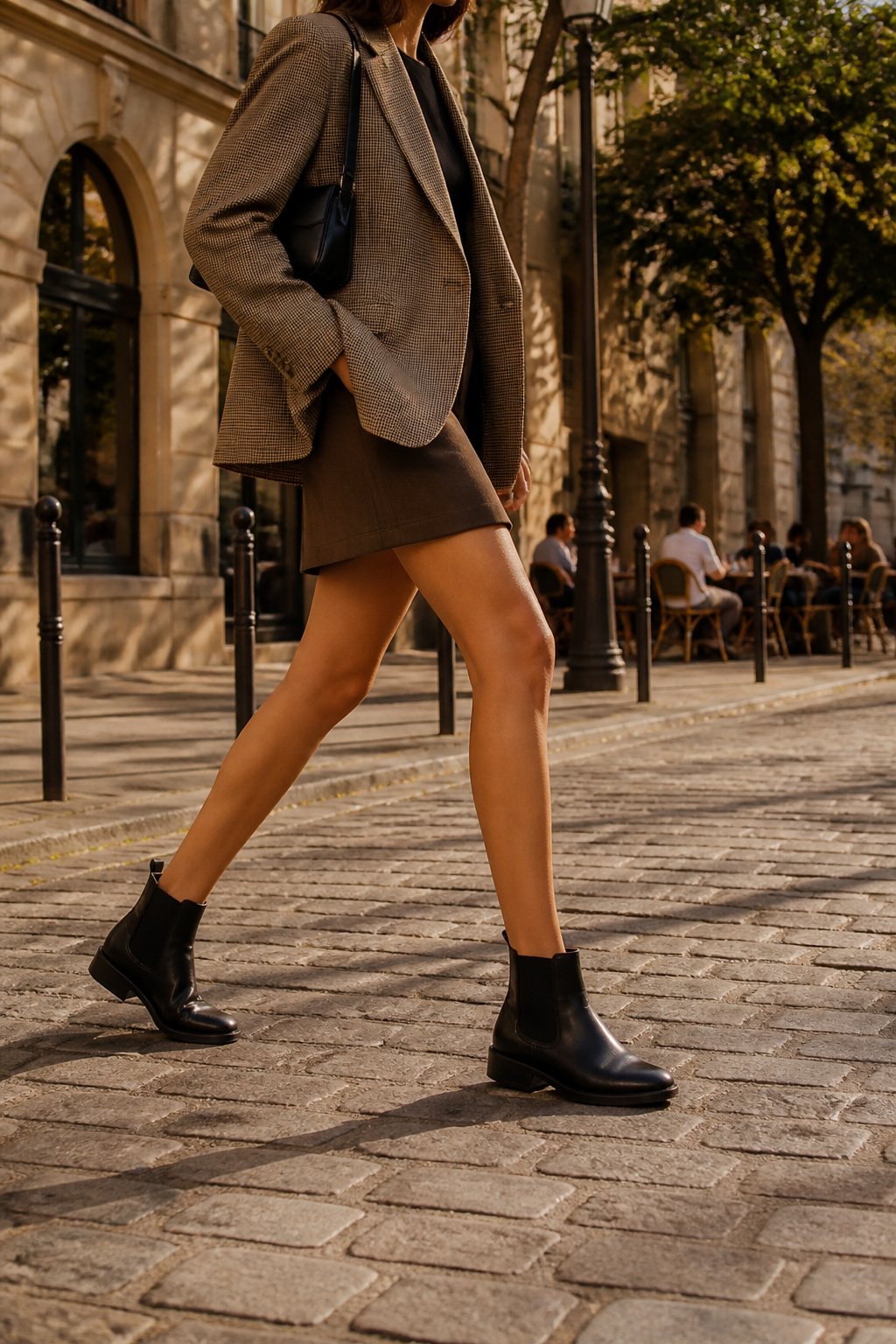
Chelsea boots with skirts live or die at the hemline. A mini or true midi clears the top of the boot cleanly; anything hovering at mid-calf breaks the leg line where the boot already sits, leaving a stubby gap that flatters almost nobody. I learned this the hard way with a wool skirt that hit exactly at the boot shaft, and the mirror showed what the sources describe: the silhouette gets cut off at its thinnest point, the ankle, with no visual escape route.
For minis, heavier fabrics like tweed or wool hold their own against the boot’s weight. Bare legs work in warmer months; tights keep the look leg-lengthening once temperatures drop. With longer skirts, flow needs structure somewhere else, a heavier jacket or cardigan, so the boots do not look like an anchor dragging down something too delicate.
Socks matter more here than with pants. A chunky sock that peeks above the boot shaft balances the shoe’s heft and draws the eye up, or tights in a similar tone to the boot keep the line continuous. I reach for ribbed wool socks in winter, sheer black tights in fall. The seasonal switch is less about the skirt itself than about how much leg you want to expose to the elements, and how much visual weight the whole outfit can carry.
Chelsea boots with dresses

Dresses and Chelsea boots are an under-documented pairing compared to jeans and trousers, which is a shame because the combination works when the proportions are deliberate. The boot’s clean, ankle-hugging shaft sits best with hemlines that either fall well above the knee or drop to the mid-calf or lower. Mid-calf hemlines that stop right at the boot shaft should be avoided; that intersection visually truncates the leg at its widest point and breaks the line of the outfit completely.
A fitted mini or a shift dress keeps the silhouette open, while a maxi or midi with some flow creates contrast against the boot’s structure. The boot’s masculine lines can overpower a very feminine shape, so balance matters: a voluminous floral dress benefits from a heavier knit layer or a structured jacket on top, and a visible chunky sock in a tonal color bridges the gap between delicate fabric and solid leather. Tights in a matching shade to the boot will elongate what the ankle shaft shortens.
The beauty of the Chelsea boot lies in its versatility… They can look polished with ankle-length tailored trousers; cheeky with shorts, dresses, and skirts; smart with jeans and a button-down shirt.
— Vogue
That "cheeky" pairing with dresses is the point: the boot adds gravity to something light, and the tension between the two is what makes the outfit interesting rather than pretty in a single register.
Chelsea boots with chinos

Chinos sit in that useful gap between denim and dress trousers, and Chelsea boots pull them further toward the polished side without crossing into formal territory. The fabric has enough structure to hold a clean line at the ankle, which matters because the boot shaft needs something definite to meet. A slim or straight cut works best here; too much fabric pooled at the top and the boot disappears, too little and the line looks forced.
A slight break or a neat cuff both work, though the cuff gives you more control over exactly where the fabric hits the boot. One to two rolls, about an inch wide, tends to land right at the shaft’s elastic panel. That small strip of ankle between the chino hem and the boot top is where the outfit reads as intentional rather than accidental.
Color moves the same outfit across contexts. Navy chinos with brown leather Chelseas and a navy t-shirt reads pulled-together for a casual office; the same boots with olive chinos and a plaid shirt shifts toward weekend. Black boots need darker-washed chinos to avoid a harsh contrast, while tan boots against beige or khaki keep everything in a softer register that still has definition. The pairing handles a blazer or stands alone with a sweater, which is the point: one boot, one trouser, and the rest of the closet fills itself in.
Chelsea boots with blazers

A blazer pulls Chelsea boots into territory they rarely reach on their own. The boots keep their elastic-sided practicality, but the jacket’s structure frames them as intentional rather than fallback footwear. What sits underneath matters less than most people think: a thin knit or a button-down both work, though the collar point should clear the jacket’s lapel line by about half an inch or the whole thing goes slack.
The pant choice is where this combination lives or dies. Slim-cut chinos in navy or beige hit the right midpoint, more dressed up than denim but short of a full suit. Black boots with dark-washed chinos read as polished; brown or tan boots against olive or khaki chinos keep the look approachable. The elastic gusset on the boot is the detail that saves this from costume territory, letting you move through a day that shifts from desk to dinner without the stiffness of a lace-up oxford.
This lands solidly in smart-casual territory, not formal. A watch and belt help, though I would skip the tie unless the blazer is part of an actual suit and the boots are the dress leather kind rather than suede.
Chelsea boots with overcoats

An overcoat changes the whole math of a Chelsea boots outfit because the eye reads from the hem down. A coat that ends at mid-thigh leaves a visible gap between fabric and boot shaft, which breaks the line and can make legs look shorter than they are. A longer coat that hits at or below the knee lets the boots read as a single clean finish without that interruption.
Gray, camel, black, or olive overcoals all work here; the key is keeping the boot in a contrasting tone so it anchors rather than disappears. Black boots with a gray coat, or tan boots against black wool, both do that job. For colder months, this pairing functions because the narrow boot shaft tucks neatly under the coat’s volume, and a lug-sole Chelsea boot adds enough weight to balance a heavy layer without looking clunky. The sources lean toward slim overcoat cuts for this reason; boxy or oversized coats with thick soles risk reading as too much bulk from ankle to shoulder.
Why these boots work with almost anything

Chelsea boots sit in that useful gap between sneakers and oxfords: dressier than rubber soles, more relaxed than traditional dress shoes. The elasticized sides and pull-on loops, first designed in 1837 by Queen Victoria’s shoemaker, Joseph Sparkes Hall, are what let them slip on fast and read as polished without trying too hard. Hall claimed the Queen walked in hers daily, and the low heel, ankle height, and flat sole he built in still define the style today.
Designers tweak the silhouette each season, maybe a chunky lug sole or metallic leather, but the core shape stays the same. That consistency is why a single pair carries across smart-casual offices, weekend errands, and dinners where you want some polish without formal footwear. Black leather or brown suede reads professional without being stiff; the same pair darkens down with jeans on Saturday.
The Victorian-era construction was built for walking, and the boots still function that way. One investment pair handles what would otherwise take three separate shoes, which is exactly the point for anyone editing their closet toward fewer, better pieces.
Socks that change the whole outfit
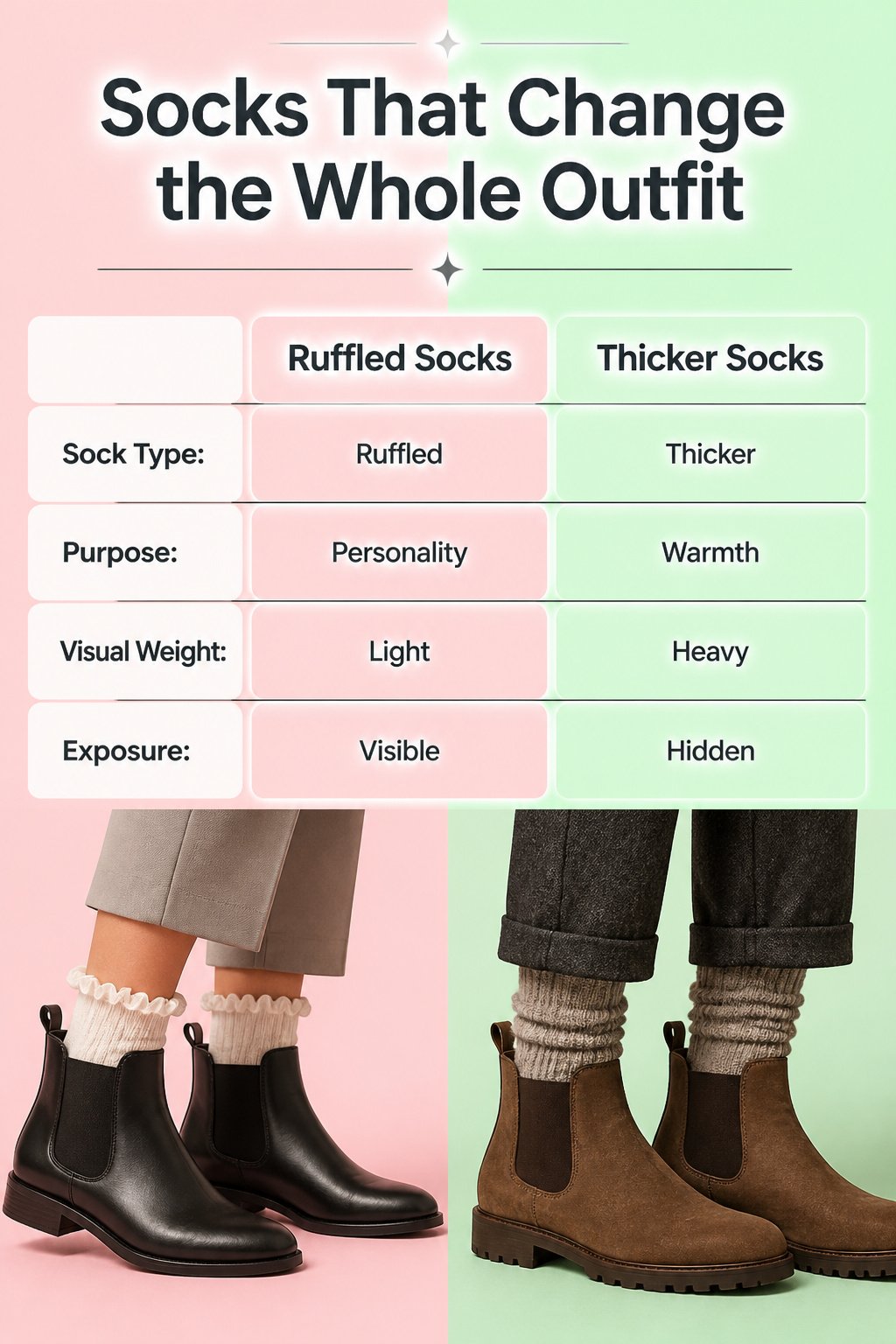
Ruffled socks that peek above the leather edge turn a basic Chelsea boot outfit into something with personality. That little frill against the boot’s clean line reads playful without trying too hard, especially with cropped pants or a midi skirt where the gap is intentional. Thicker socks serve a different purpose entirely: warmth on freezing days, but also a visual weight that balances heavier fabrics like wool trousers or a tweed skirt. The proportion matters. A chunky sock with a slim legging breaks up the silhouette in a way that keeps the look from feeling too slick; hidden socks let the boot stand alone for a longer, uninterrupted leg line. Tailored shorts with a suede Chelsea boot and a visible chunky sock, as seen on recent runways, land fresh because the contrast feels deliberate rather than accidental. The rule is simple: show the sock when it adds something, hide it when it doesn’t.
Getting the proportions right
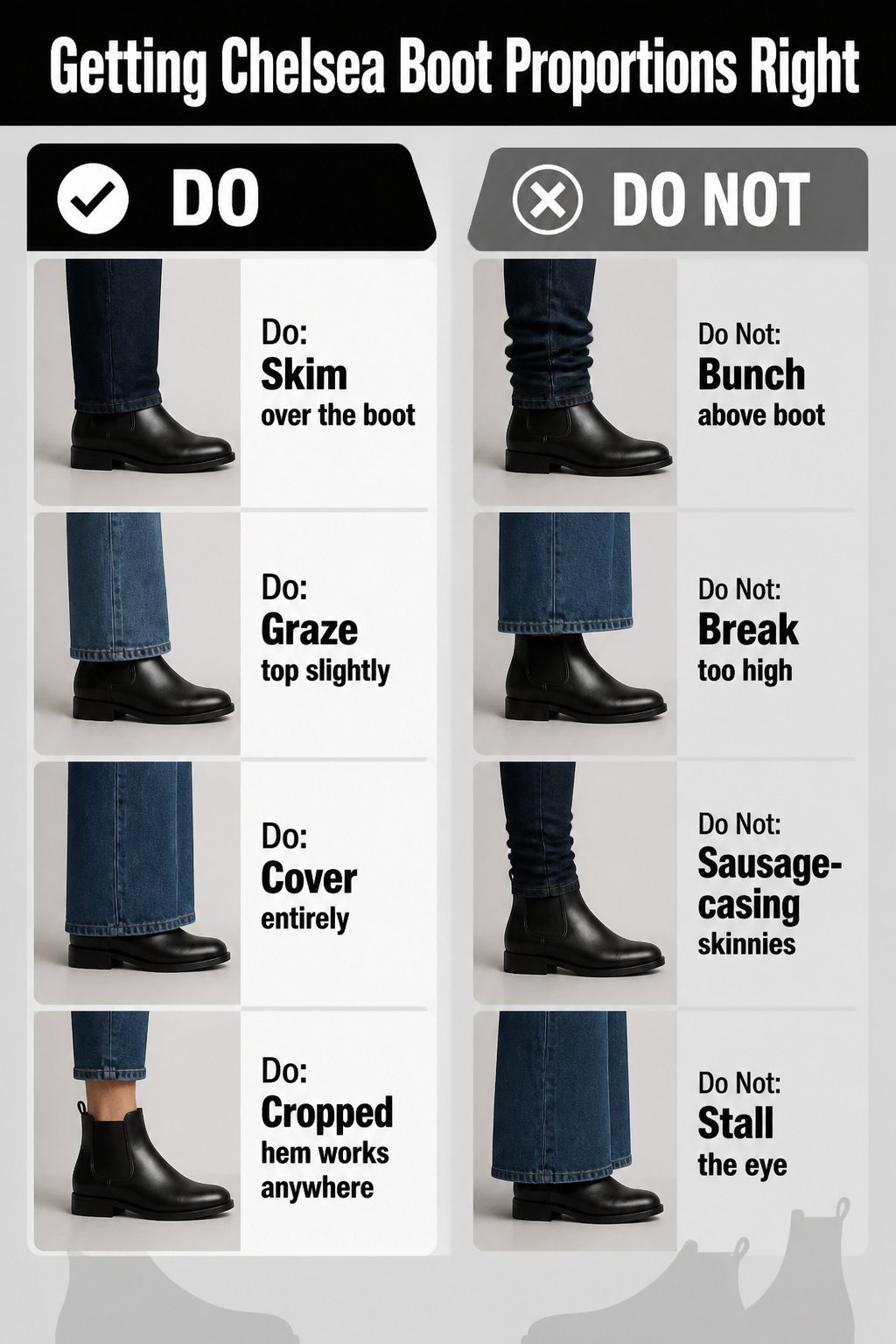
The shaft height of a Chelsea boot, usually landing right at the ankle bone, decides whether your pants skim cleanly or bunch into a rumpled line. Slim or straight-leg jeans taper gently toward the ankle and skim the top of the boot; that is the pairing that avoids both the sausage-casing effect of skinnies trapped above the shaft and the swallowed silhouette of wide-legs that break too high. For straight or kick-out crops, let the hem graze the top of the boot or cover the shaft just slightly, but stop before it touches the top of your foot. Wide-leg and flared jeans need to go over the boot entirely, hitting the top of the foot or even kissing the floor to keep the line flowing. A cropped hem, exposing a sliver of ankle, works across nearly every cut and lets the boot stand alone without the over-or-under question. The common mistake is ignoring where the jean ends: bunching above the boot shaft, or a wide-leg hem that breaks an inch too high and stalls the eye. Trial and error with the jeans already in your closet beats any rule read online, but start by checking the hem against the boot while you are standing straight, not seated.
Frequently Asked Questions
Do Chelsea boots go over or under jeans?
Skinny jeans should go under the boot, with the hem sitting right at the top of the shaft. Straight-leg, wide-leg, and flared jeans should go over the boot instead. A cropped jean that hits at the ankle avoids the question entirely and works with almost every cut.
What kind of pants can you wear with Chelsea boots?
Skinny jeans, straight-leg jeans, wide-leg jeans, flared jeans, leggings, and chinos all pair well with Chelsea boots. The critical factor is the hem length, not just the cut. Each style needs a specific proportion at the ankle to keep the line clean.
What should you not wear with Chelsea boots?
Avoid pants with overly long hems that bunch around the boot shaft, and steer clear of skirts or dresses with mid-calf hemlines that stop right at the boot top. Both break the silhouette at its narrowest point and create a stubby, unflattering line.