
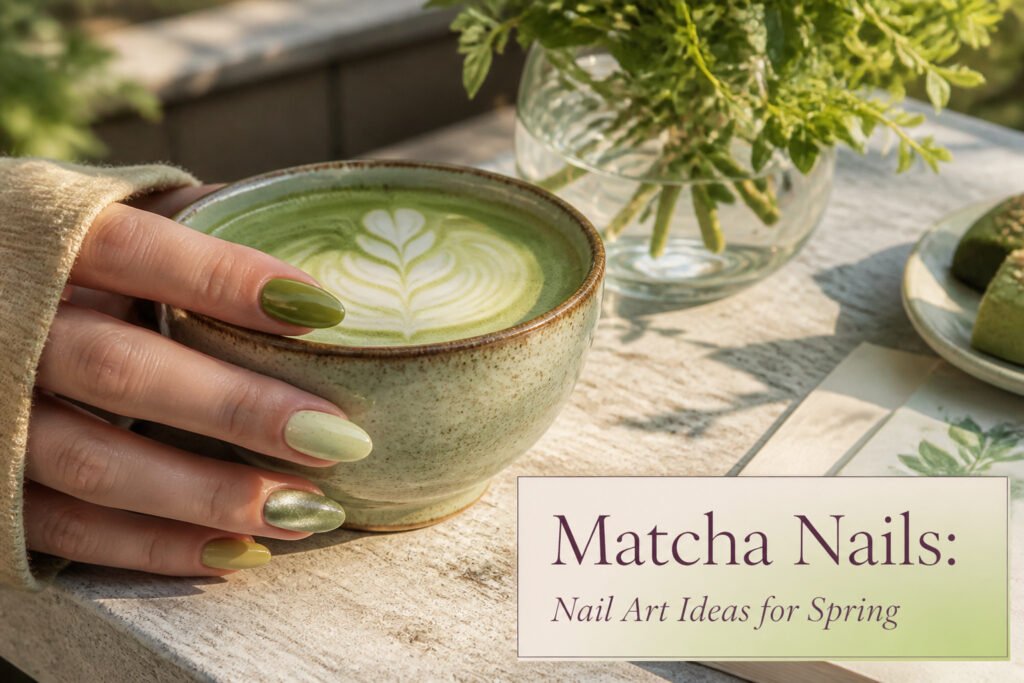
Matcha nails are manicures painted in the dusty, milky green of ground Japanese tea powder, ranging from bright leaf tones to softened latte shades. The catch is that without a thick, high-shine top coat, the color flattens into something chalky and homemade rather than glassy and intentional. A cat eye magnetic finish over pastel green creates the effect of light passing through an actual matcha latte in a clear glass, shifting as you move your hands.
1. Classic Matcha Nails
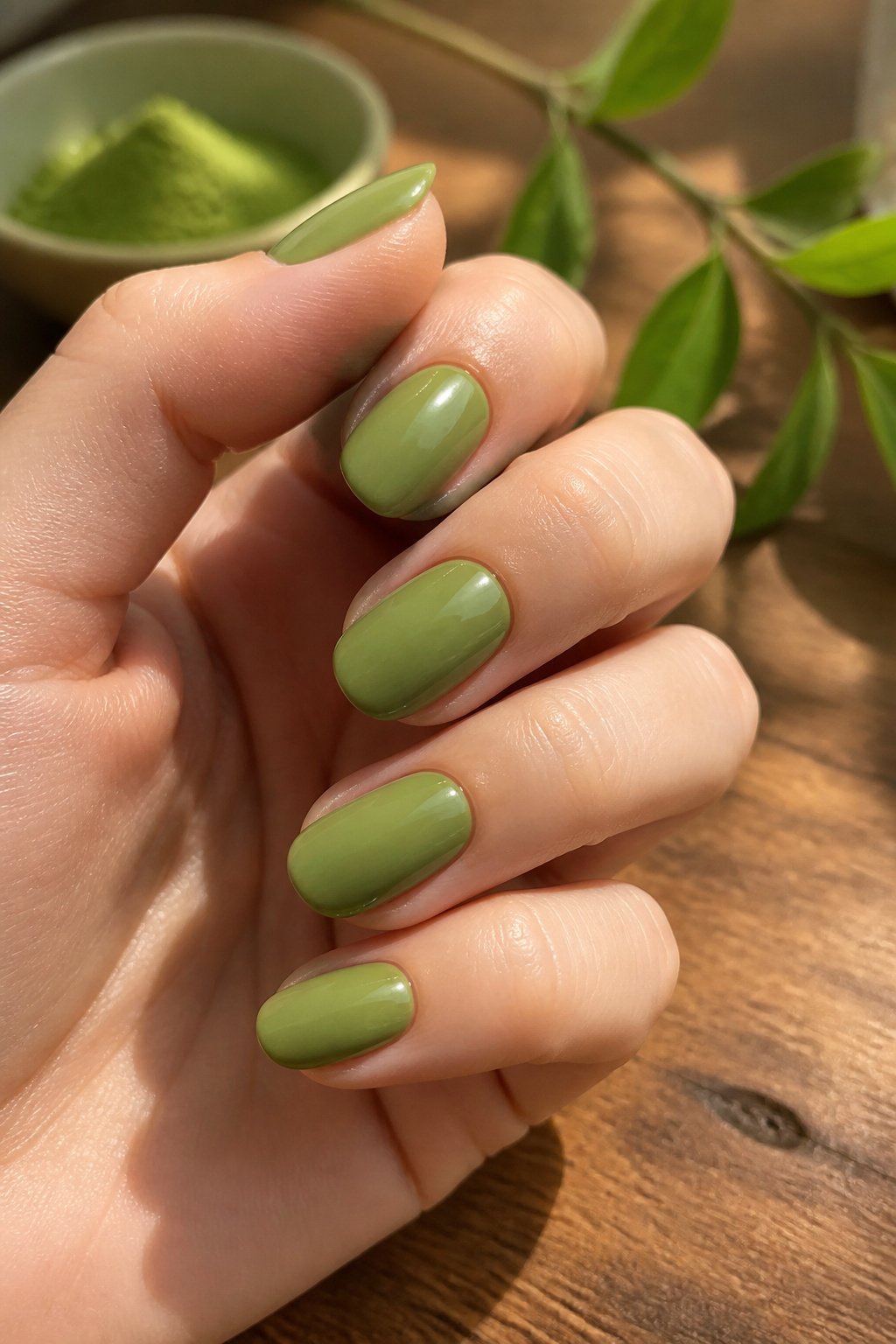
Matcha gets its color from finely ground green tea leaves, which is why the shade carries that dusty vibrancy rather than a flat, artificial green. A solid color-blocked set in one matcha tone is the simplest entry point into the trend. Depending on your preference, you can go for the brighter green of the powder itself or something milkier, closer to a matcha latte. Either way, a high-shine top coat is what pulls the look together, giving the color that glassy, lit-from-within finish that makes the manicure read as intentional rather than just green.
2. Matcha French Tip Nails
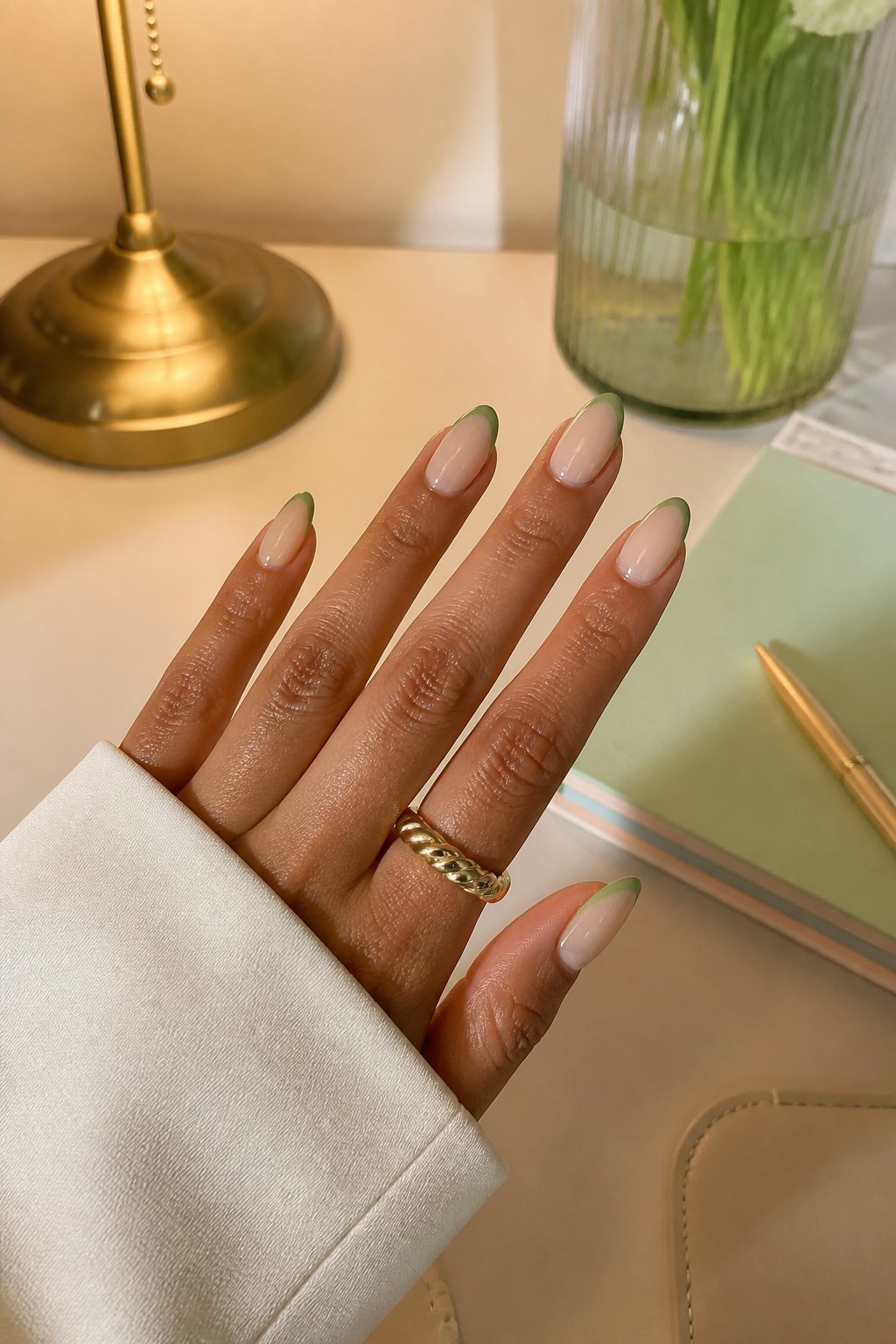
The reverse French tip is where matcha nails start to earn their keep beyond a single green coat. A warm nude base with matcha green replacing the classic white tip reads as intentional rather than novelty; the color shift is subtle enough for a Tuesday meeting but still registers as a deliberate spring choice. What makes or breaks the look is the top coat. A high-shine, glassy finish creates the contrast that separates the two tones cleanly, especially under office fluorescent light where a duller finish would muddy the line between nude and green. The sources all point to the same finish: super thick, high shine, almost lit-from-within. Without it, the design flattens into something that looks like a home experiment rather than a salon decision. For anyone hesitant to abandon the French tip entirely, this is the compromise that keeps the structure intact while moving the color story forward.
3. Strawberry Matcha Nails
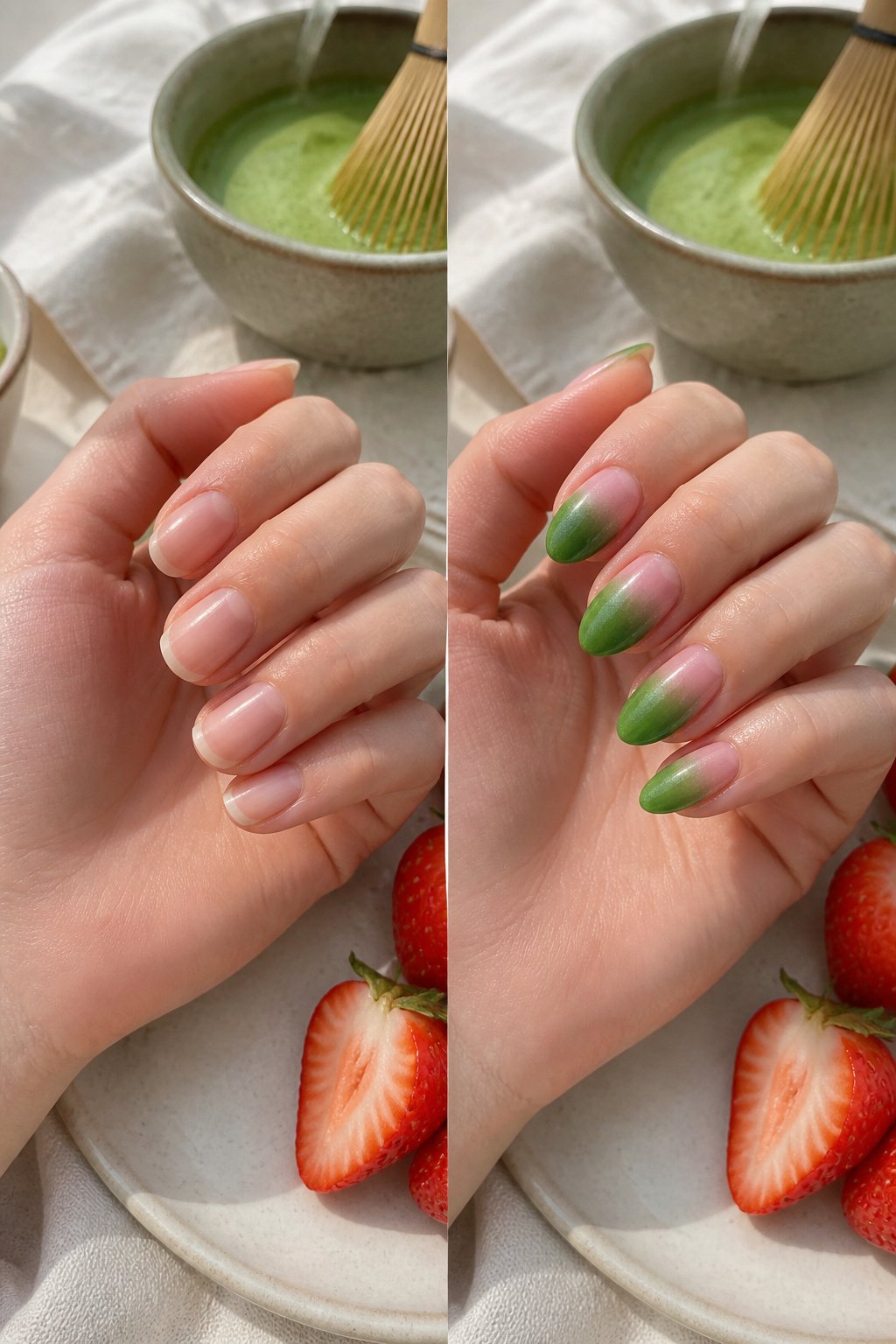
The strawberry matcha pairing works because the two colors sit opposite enough on the wheel to read as deliberate, not accidental. Pink warms up what can feel too vegetal in matcha green, and the green keeps the pink from tipping into bubblegum territory. I have seen this done as a reverse French tip with matcha at the base and pink blooming upward, and the ombre version reads softer than a hard line would. A cat eye finish over the top adds movement without adding a third color, which is useful if you want the design to stay simple. The old rule about pink and green clashing ignores how much these two need each other in practice: one grounds, one brightens, and neither quite works alone the way they do together.
4. Swirly Matcha Nails
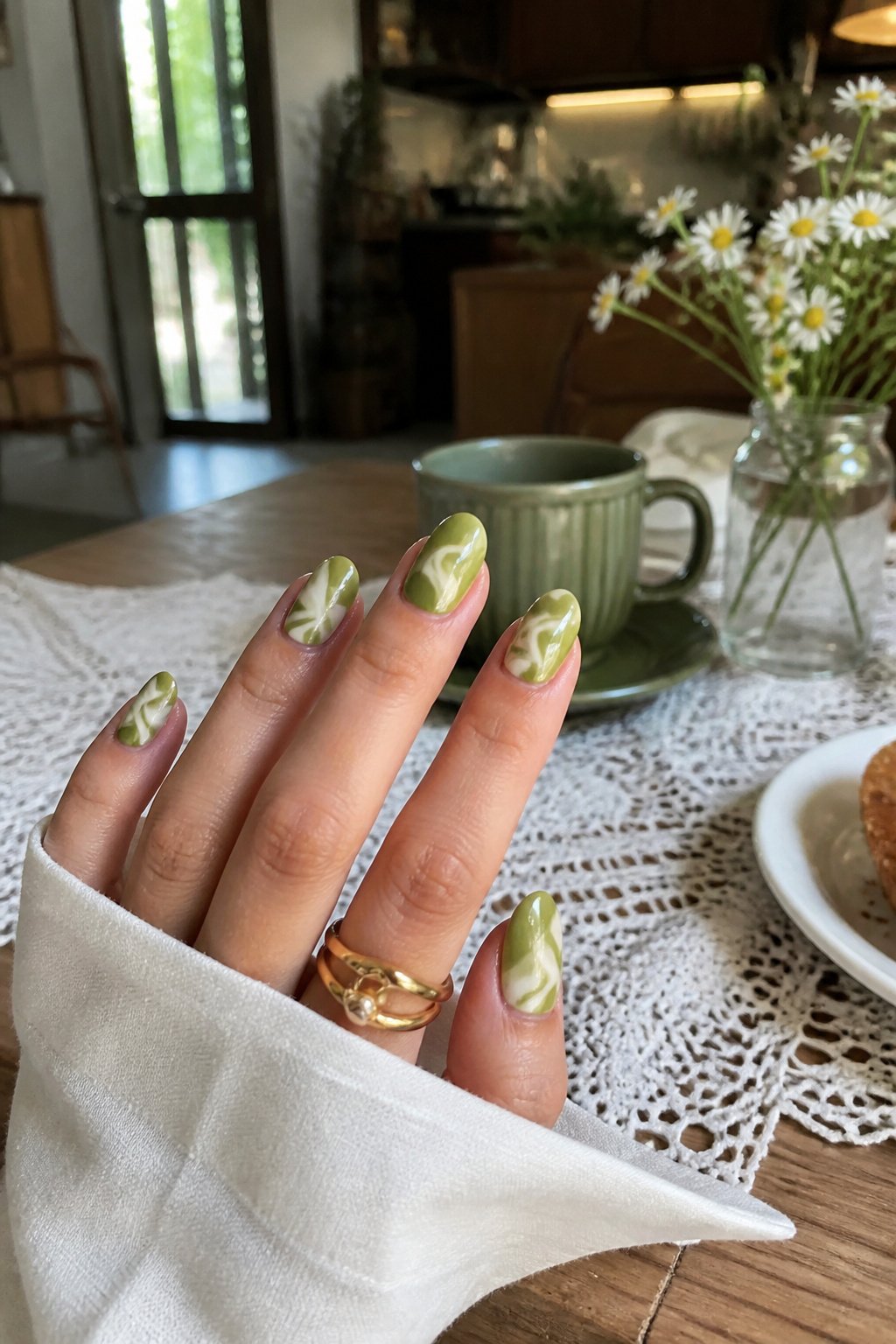
The fluid technique for swirly matcha nails starts with a still-wet base of pale matcha green, layered with drops of white or cream polish before anything cures. A fine liner brush, dragged in loose figure-eights through the uncured color, creates the motion of milk swirling into tea. The trick is timing: work too slowly and the colors marble into a single muddy shade; too fast and you get sharp stripes instead of soft eddies.
I watched maybe thirty tutorials before I understood that the white should stay slightly thicker than the green, so it sits on top and clouds downward. A quick flash-cure of ten seconds locks the movement without freezing it flat, then a full cure and glossy topcoat keeps the depth readable. The finished nail catches light the way a just-poured latte does, with no two fingers matching exactly, which is the point.
5. Matcha Glass Cat Eye Nails
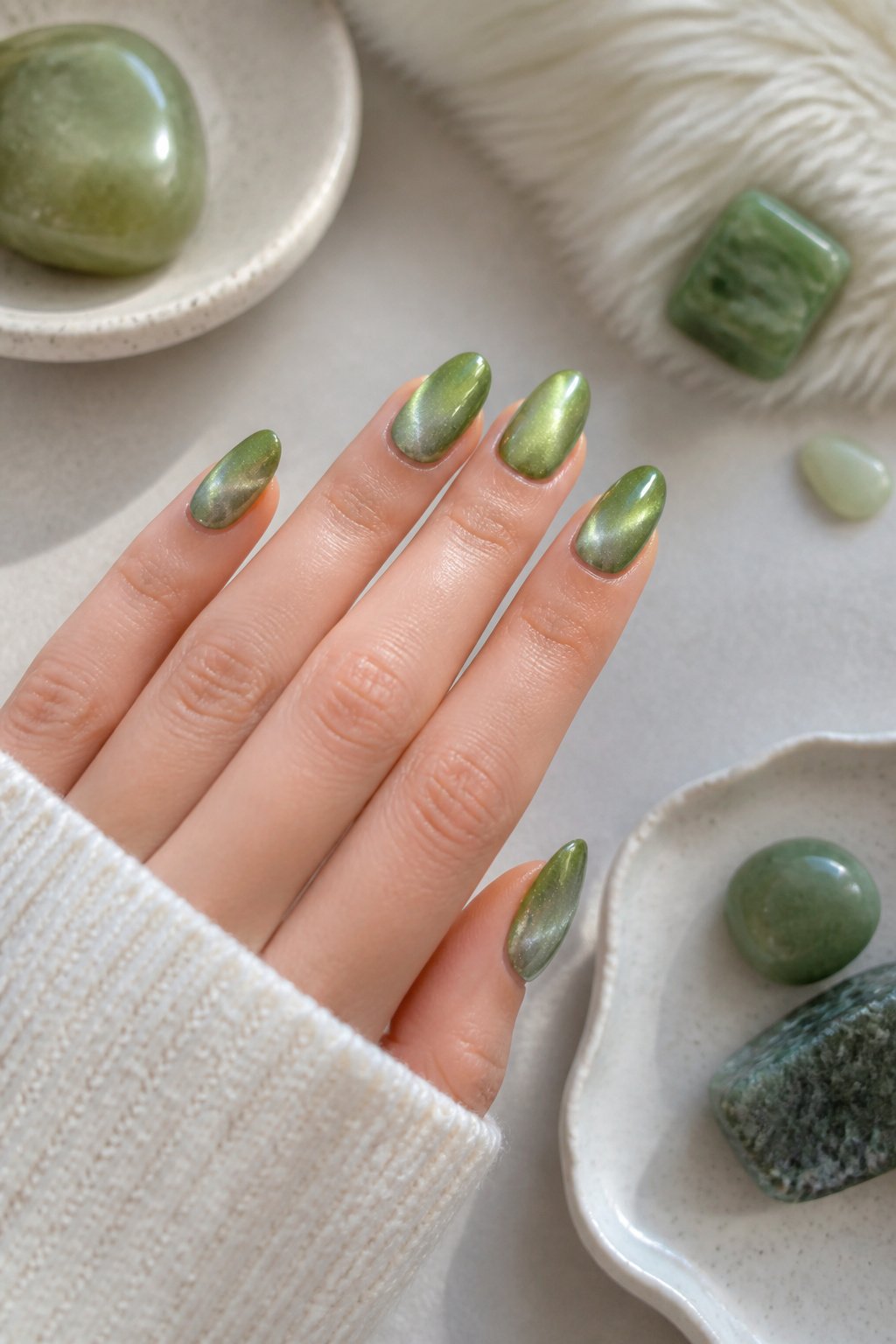
Cat eye polish carries tiny magnetic particles that shift into a narrow, light-catching stripe when you hold a magnet over the wet coat. Layered over a pastel green base, that stripe reads exactly like the pale, milky surface of a matcha latte in a clear glass. The magnetic line runs the length of the nail, so the color underneath stays visible while the reflective band catches window light or phone light and changes as you move your hands. The stripe sits at different depths depending on how long you hold the magnet, which means two nails can look mismatched if you rush one and linger on the next. A pastel green base, not the brighter powder green, gives the most convincing matcha-glass effect; the softer tone lets the metallic streak look like light passing through something creamy rather than sitting on top of a solid color. The finish is dimensional without being loud, which suits the same occasions where you would wear actual matcha tones: clean enough for work, interesting enough that someone across a table notices the shift.
6. Floral Matcha Nails
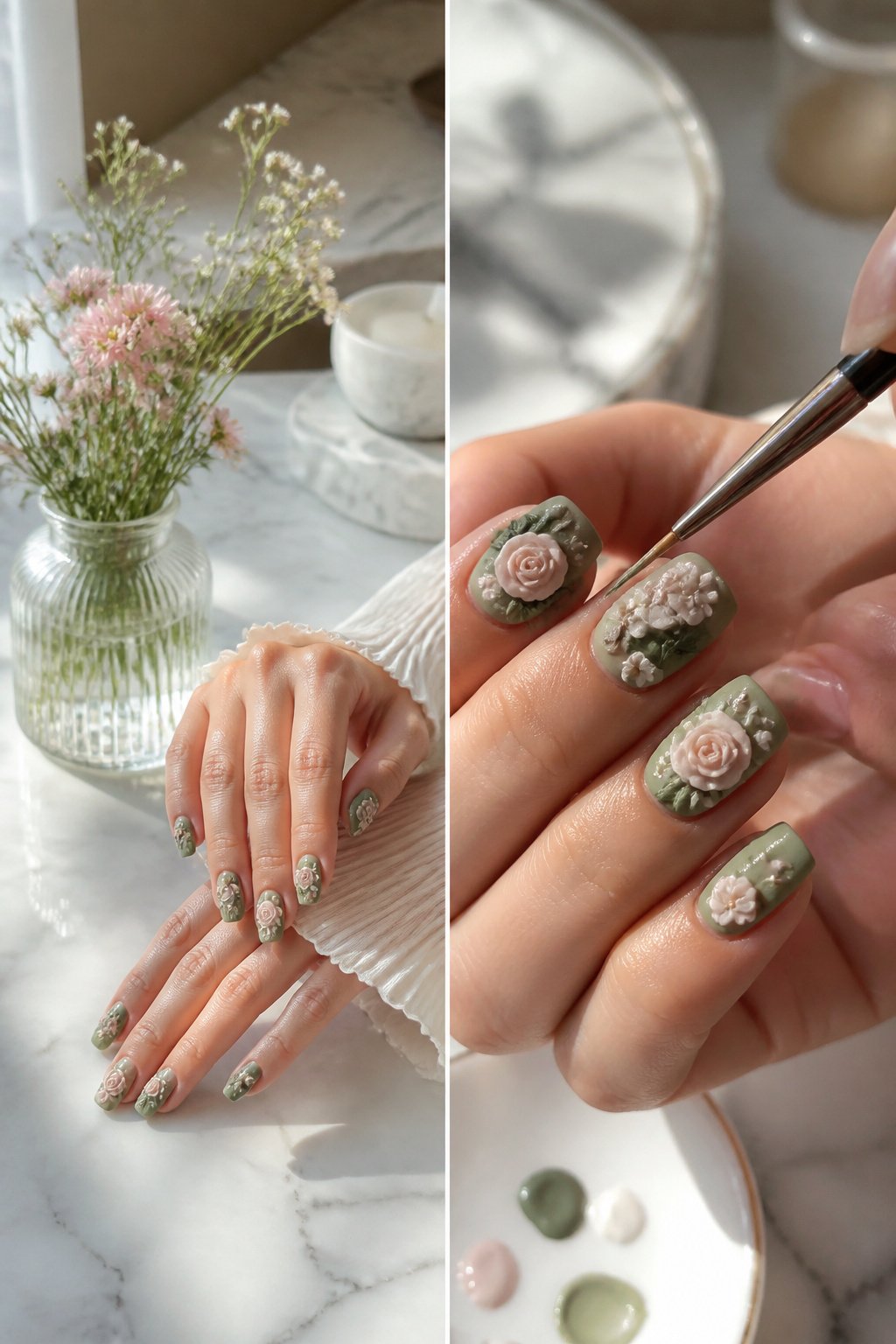
3-D floral matcha nails work best when the green reads as a quiet backdrop rather than the main event. A matte matcha base, something in the dusty sage family, lets white or blush acrylic roses catch the light without the whole design turning into a garden party. The sculptural element sits above the surface, usually two to four flowers per nail, and the height matters for daily wear. Too tall, and the petals snag on sweater knits; too flat, and you lose the shadow play that makes the dimension worth the salon time.
Hand-painting with gel and a fine brush gives softer, more irregular petals, while molded acrylic or polygel flowers look crisper and last longer through dishwashing. The molded route costs more at appointment time but needs fewer repairs. Either way, the matcha tone should be muted enough that the flowers read as the focal point. A brighter green base fights the blossoms for attention and usually loses.
For someone new to 3-D work, two accent nails with a single flower each keeps the look wearable. Full floral coverage on every nail turns functional fast.
7. Stained Glass Matcha Nails
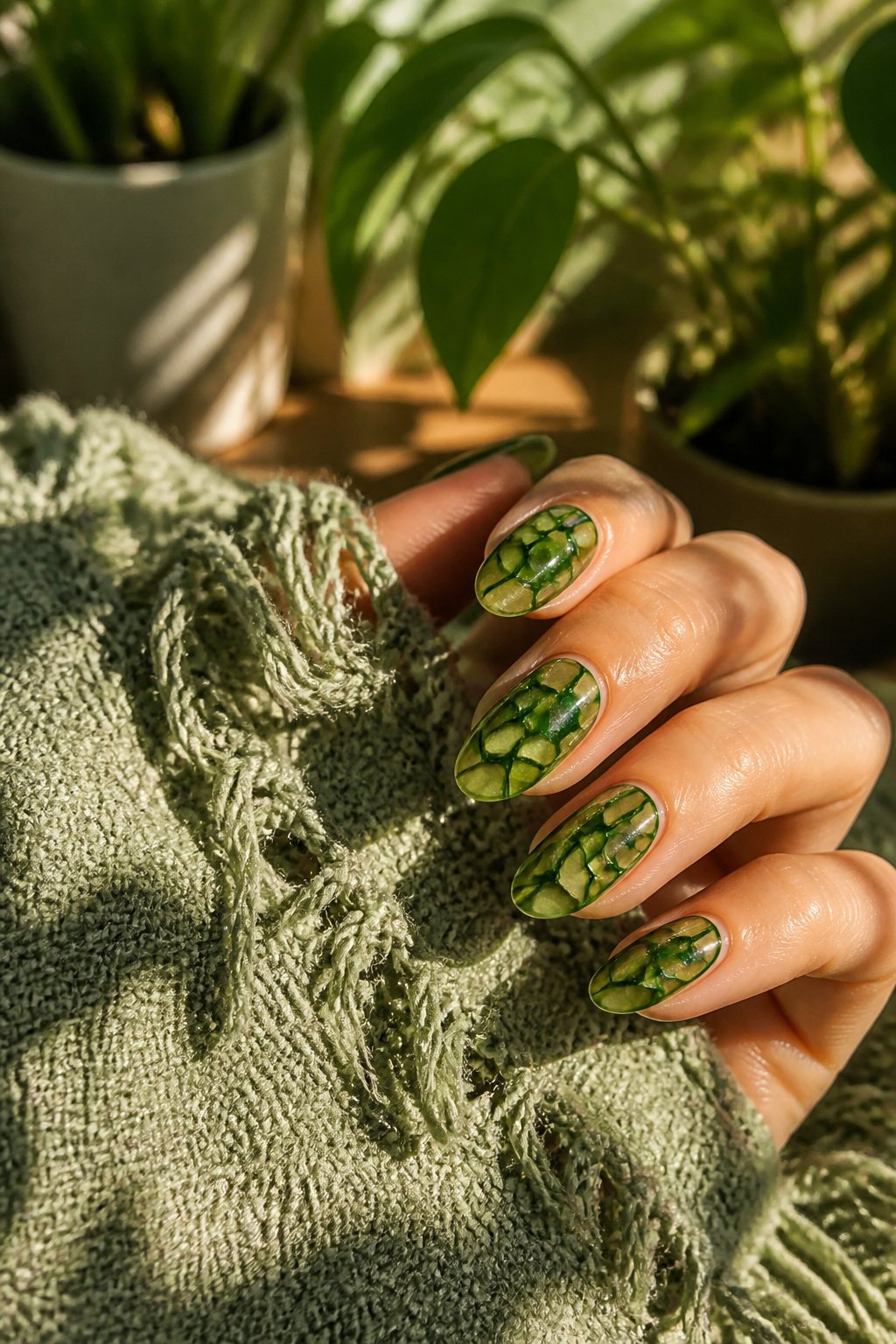
Sheer jelly polish changes everything about how matcha reads on a nail. Three or four whisper-thin coats of translucent green build a depth that opaque color never reaches, each layer catching light differently so the tone seems to shift when you move your hand. The stained glass effect comes from painting thin dark lines between those sheer sections, a deep forest or almost-black green that frames each panel the way lead holds glass. The leading lines need to stay hair-thin; a detail brush and patience beat a striping tape here, because any width turns the look from chapel window to cartoon outline. What sells the whole thing is the negative space left sheer or tinted to barely-there mint, letting your natural nail show through as part of the design rather than something to cover up. It reads expensive at any length, but short to medium oval shapes keep it from tipping into costume territory. The tradeoff is durability, jelly formulas chip faster than cremes, so a glassy top coat reapplied midweek pays off.
8. Mismatched Matcha Nails
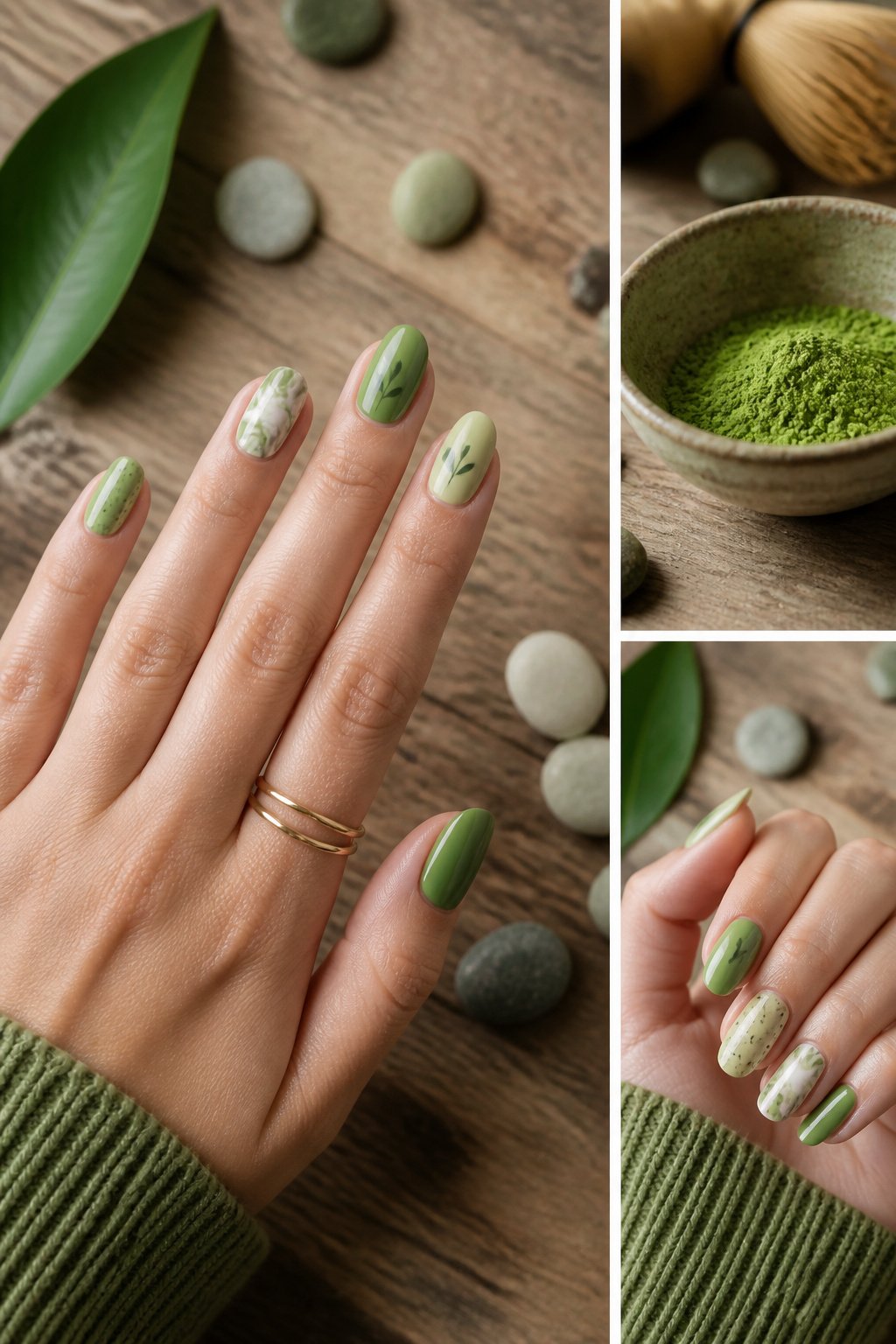
A mismatched matcha manicure lets you skip the hard choice between designs. One finger carries a solid wash of green, another gets a French tip in a lighter shade, a third takes a swirl or a single stamped leaf. The rest of the hand stays quiet, maybe two nails in barely-there sage that read as neutral from a distance.
This approach works because the matcha palette itself ties everything together. You are not matching patterns; you are matching temperature. A cooler, almost-gray green on the ring finger and a warmer, yellow-based tone on the thumb still read as the same idea because they both suggest tea rather than forest or mint.
The real win is how low the stakes are. If one design chips or you tire of it, the others carry the look. A single accent nail with a stained-glass detail (done with thin black lines and sheer tints) sits comfortably beside a plain matte coat because the color family does the work. For anyone who wants the trend without committing a full hand to nail art, this is the entry point: one finger gets the drama, the rest provide the breathing room.
9. Acrylic Matcha Nails
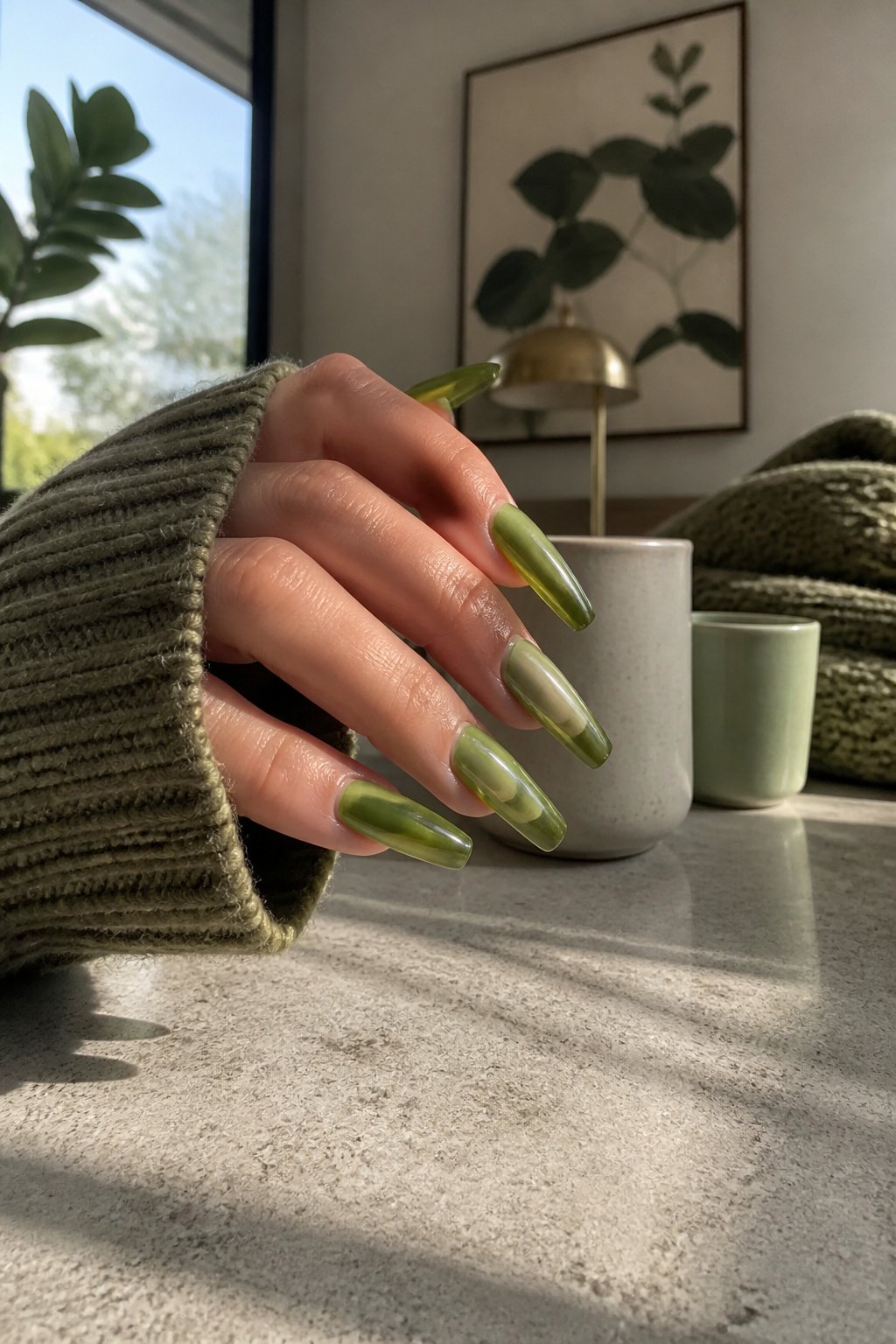
Acrylic matcha nails push the trend into its most dramatic physical form. The oversized, semi-translucent jelly set from nail artist Lola Rude Lou shows how the color works at scale: length and heft plus that sheer, see-through matcha tone rather than a flat opaque coat. The extensions give the green somewhere to live, light passing through layers of acrylic or gel so the shade shifts slightly at the edges. This is where matcha stops reading as a quiet nail color and starts functioning as actual hardware, the kind of presence that changes how you hold a coffee cup or dig through a bag. The jelly texture keeps it from looking heavy, but there is no pretending these are low-maintenance. Fills every two to three weeks, careful opening of cans, the whole routine. For anyone who has already committed to long nails, the matcha tint is a cooler direction than the usual pinks or clears. For everyone else, this is the version to admire on a feed rather than request at a salon unless you are already living that life.
Color Variations and Finishes
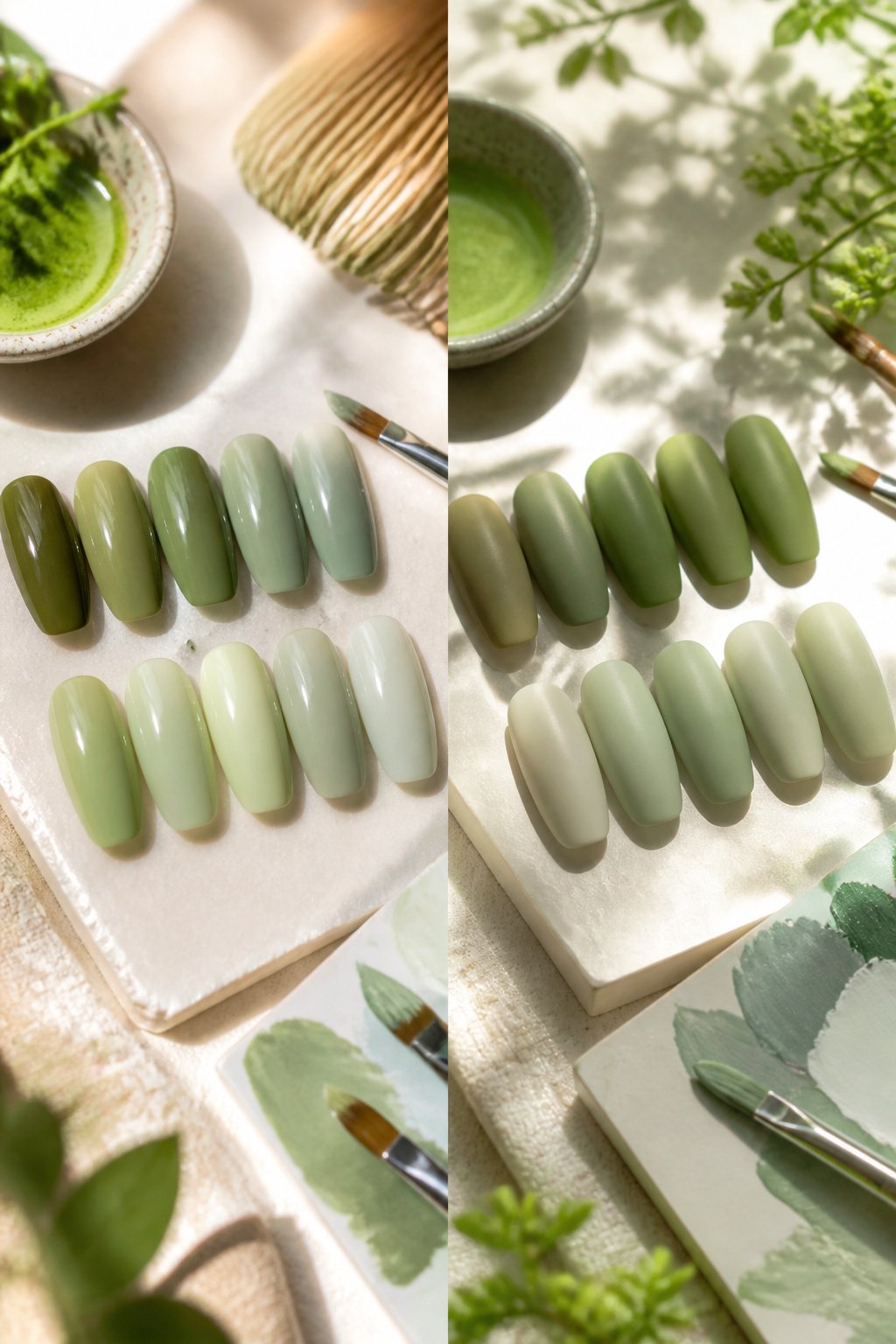
Matcha nails land anywhere from a vivid, powder-bright green to something softer and milkier, closer to a latte shade. The range matters because the same color reads completely different under a high-shine top coat versus matte. Gloss pushes the green forward and gives that glassy, lit-from-within look sources keep pointing to; it catches light and makes the tone feel electric even when you have gone pastel. Matte quiets everything down. A bright matcha under matte suddenly looks like suede or sea glass, and a pale one can almost disappear into a neutral. I tend to book my appointment with two screenshots saved, same shade, different finish, because my nail tech and I will decide once the first coat is down and the skin tone underneath is doing its work. The wrong finish is not a disaster, just a mood you did not mean to commit to for two weeks.
Mixing Your Own Matcha
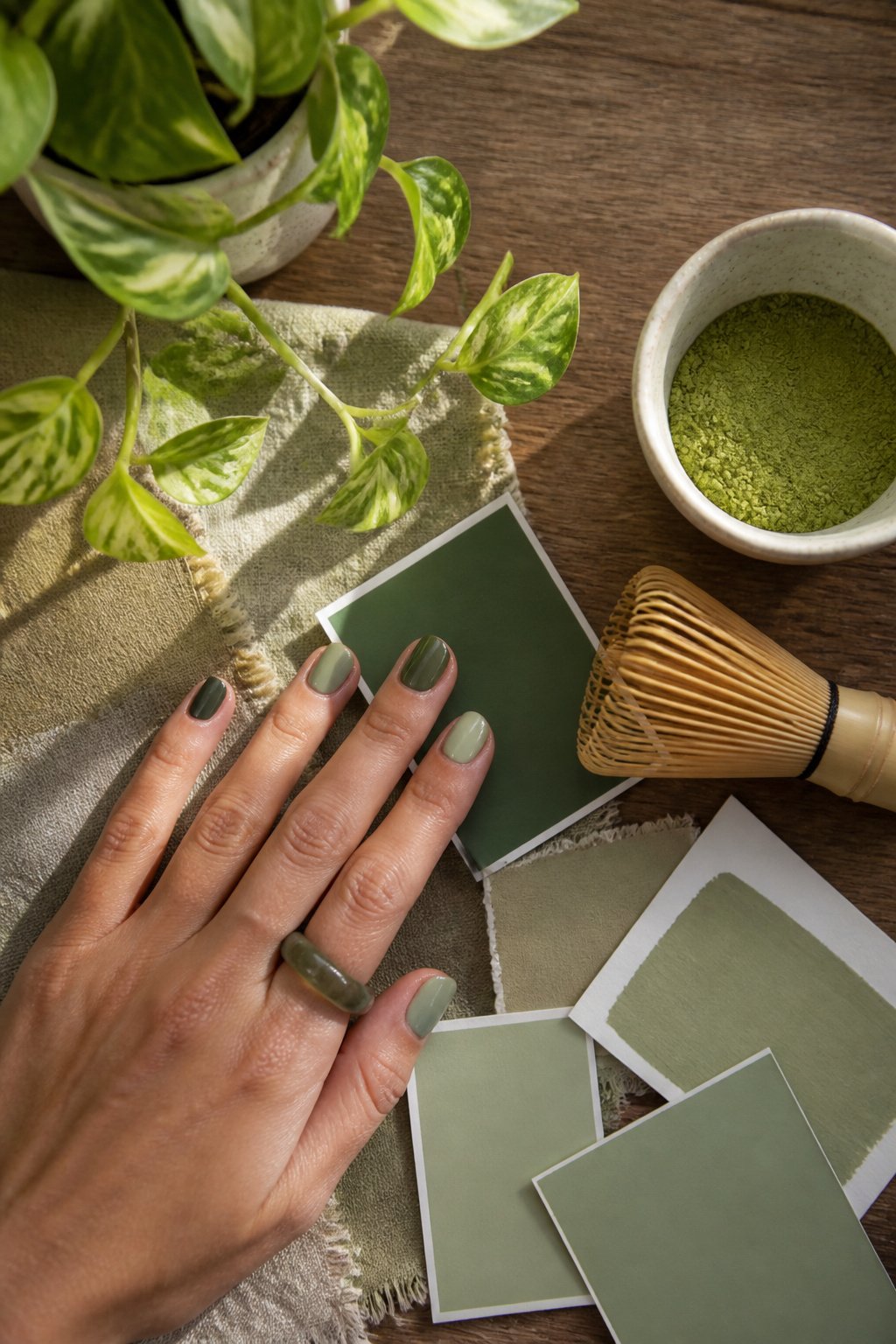
A single accent nail in a darker moss or sage keeps the matcha palette from going flat without demanding attention from every finger. The rest of the hand stays in that soft, milky green, and the contrast reads as intentional rather than accidental.
Mixing green shades works the same way. A thumb in deep olive against four nails of pale matcha gives the eye somewhere to land, but two or three competing greens on one hand starts to look like a color chart instead of a manicure.
The strawberry matcha pairing, pink and green together, needs one color to lead. Let the matcha take up roughly two-thirds of the nail and keep the pink to a French tip, a single stripe, or one accent nail. Reverse that ratio and the pink starts to read as the main event, which is fine if that is the goal, but it stops being a matcha design.
The finish matters for balance too. A thick, high-shine top coat over matte or creamy greens gives that glassy, lit-from-within look that makes the color feel expensive rather than chalky. Without it, even the best shade mixing can look dull.
Frequently Asked Questions
What are matcha nails?
Matcha nails are manicure designs built around green tones drawn from matcha tea, ranging from bright powder green to softer, milkier latte shades. The trend works across solid color blocks, French tips, jelly finishes, and 3-D art, with the dusty vibrancy of the green distinguishing them from flatter artificial shades.
How do you style matcha nails?
The simplest route is a solid color-blocked set in one matcha tone with a high-shine top coat for that glassy, lit-from-within finish. From there, you can move into French tips with matcha replacing the traditional white, swirled milk-into-tea designs, or 3-D floral accents on a muted matte base. A mismatched approach, mixing one or two detailed nails with quieter sage tones, keeps the look wearable without committing the whole hand to nail art.
What colors can be used for matcha nails?
The core palette runs from vivid, powder-bright green to pale, milky matcha latte tones, with undertones shifting warmer or cooler depending on the look. Pink pairs with matcha for strawberry matcha designs, where the two colors balance each other, one grounding and one brightening. A deeper moss or sage on a single accent nail keeps the broader matcha palette from going flat without introducing a new color family.