Effortless summer outfits sit on a spectrum from a thirty-second slip dress to a linen-and-button-down combination that only looks pulled together when the shirt’s hem is tied, not tucked. The difference is whether the pieces do the styling work on their own or need you to step in. What trips most people up is fabric weight: a mid-weight cotton twill keeps capri pants from cutting the calf line, while a 200–230 gsm linen stops white pants from going sheer in sunlight. I learned the hard way that a two-inch jean short inseam turns a basic Saturday look into a constant tug against fabric.
1. Capri Pants, Button-Down, and Mule Sandals
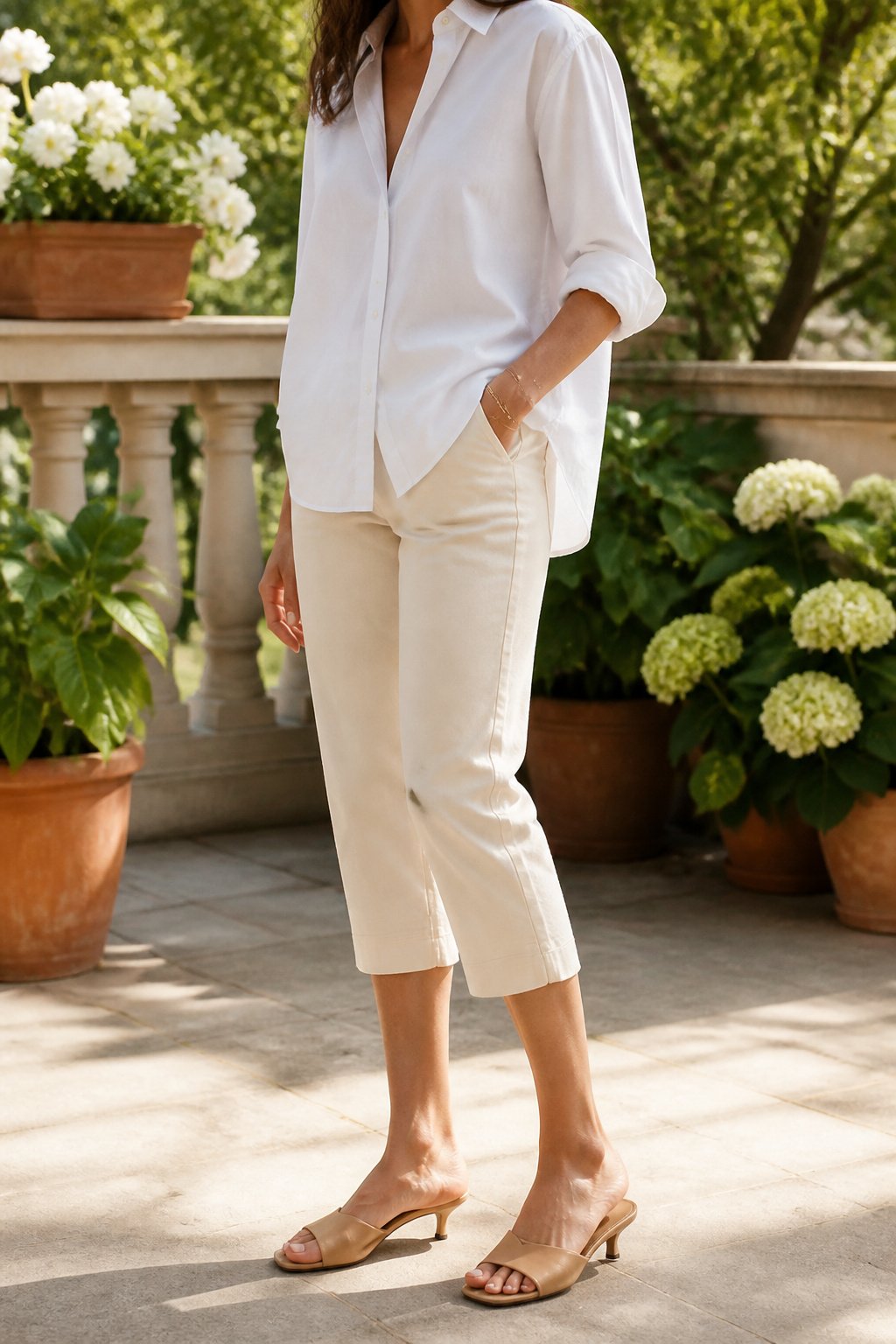
Capri pants hit that awkward length only when the fabric fights you. A clean cotton twill or lightweight denim with a touch of stretch falls right, skimming the calf instead of cutting across it. The sources point to sleek ’90s kitten-heel mules as the shoe that saves the look from feeling frumpy; the slight lift elongates the leg line without the formality of a full heel. An oversize button-down, untucked and sleeves rolled to the forearm, gives the structure this pairing needs. I tried this last June with a pair of capris that sat too low on the waist; the shirt had to be tucked in front to keep the proportions from swallowing me whole. The mules were Clarks, nearly the same height as my work pumps, so the switch from walking to looking polished took about ten seconds at the door.
2. White Tee, Miniskirt, and Ballet Flats
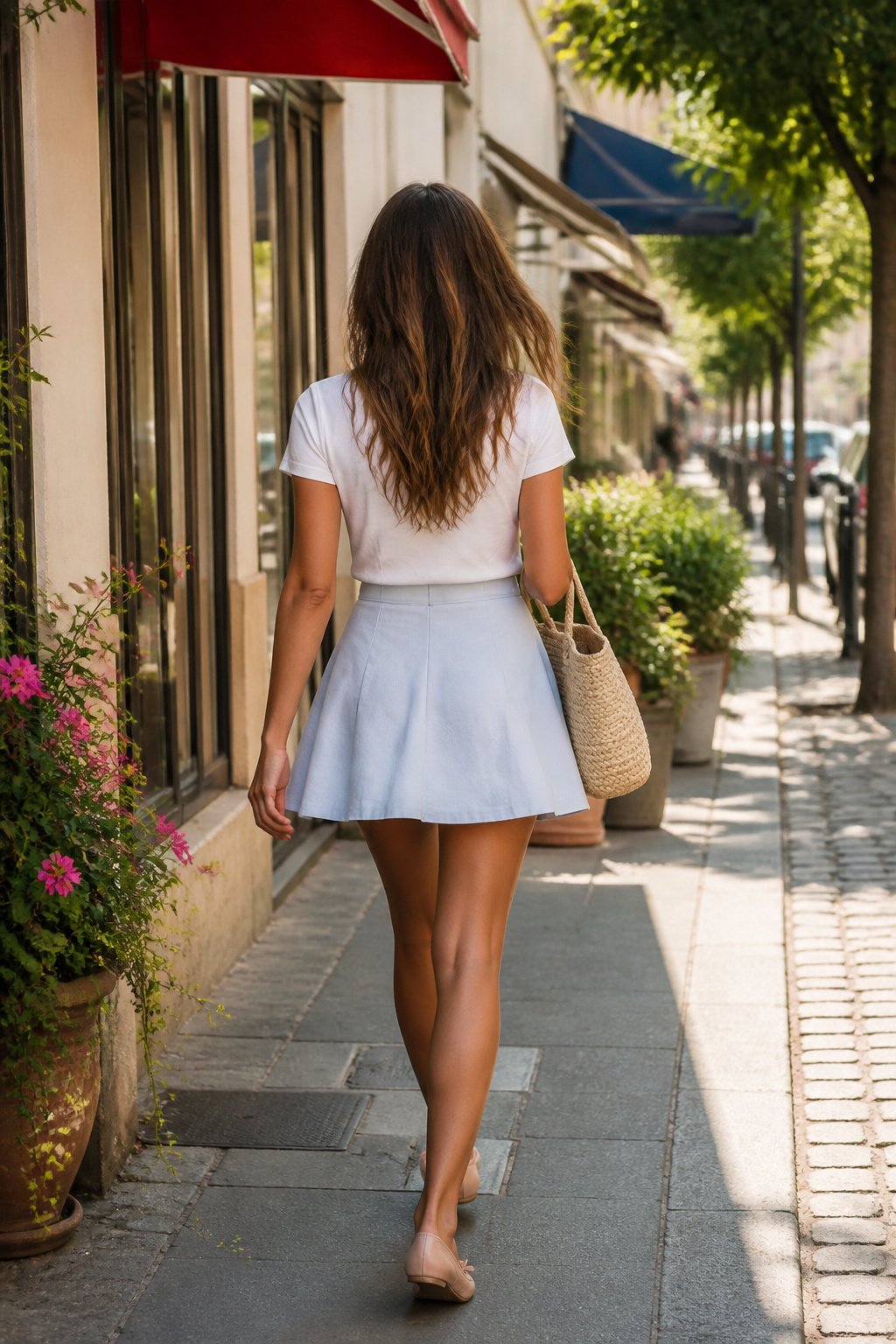
A white tee, miniskirt, and ballet flats is about as uncomplicated as summer dressing gets, which is exactly why it belongs in any warm-weather rotation. The tee handles the heat, the skirt adds shape without weight, and the flats keep you moving through long days without the swap-to-sneakers moment.
What makes this combination work across body types is the adjustability. A miniskirt hits differently depending on where the waistband sits; high-waisted cuts with a tucked tee tend to balance proportions for anyone self-conscious about midsection definition, while a lower rise can lengthen a shorter torso. Length itself is the personal call that changes everything. I draw my line at mid-thigh for errands and city walking; anything shorter and the constant tug of fabric outweighs the breeze. For all-day wear, ballet flats with any padding at all beat the paper-thin versions that fold in your bag and fold your arch with them. The ones that last through afternoon meetings and evening drinks have a structured heel counter and enough sole to block sidewalk heat.
3. White Linen Dress and Thong Sandals
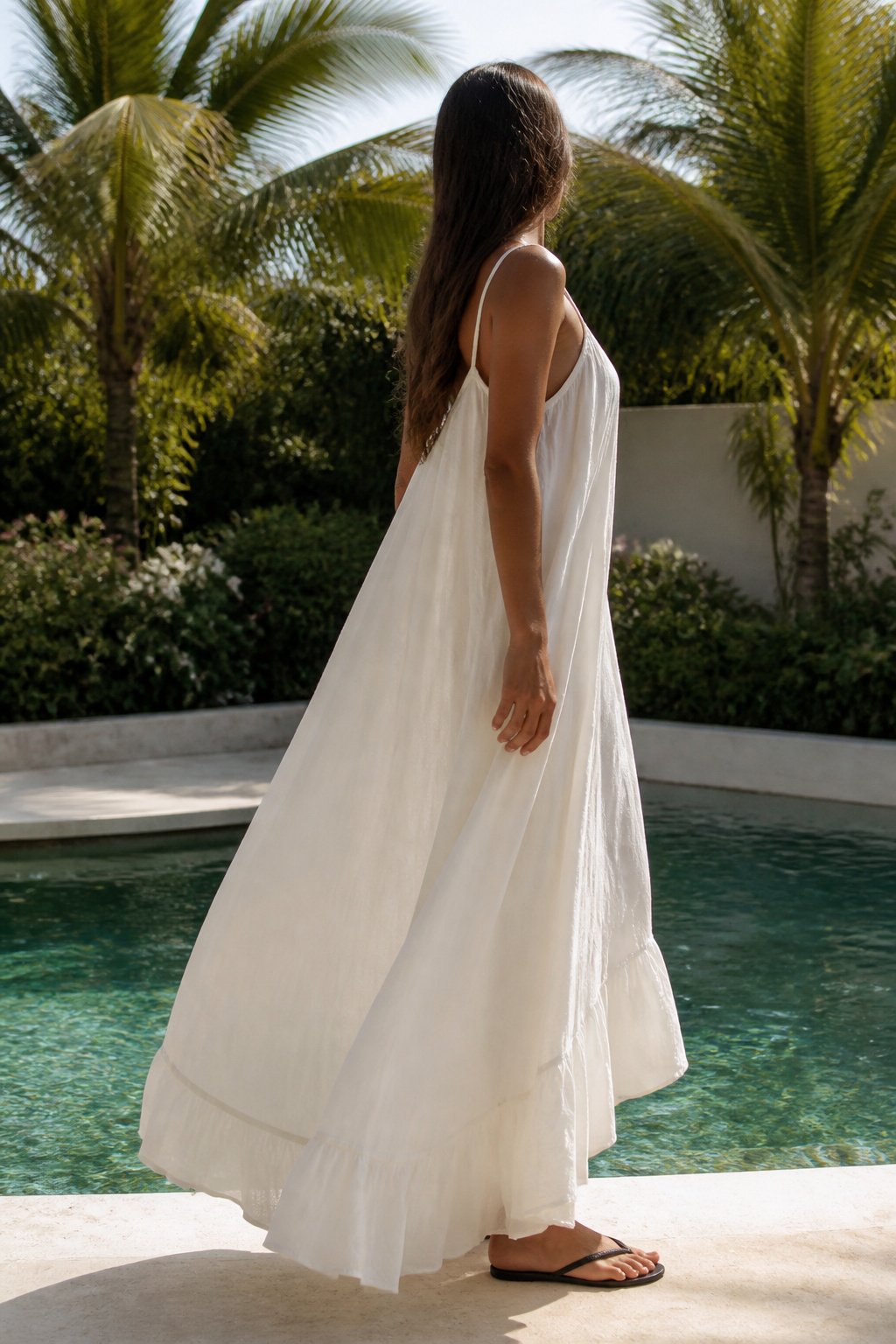
A white linen dress with black thong sandals is the kind of pairing that solves a summer morning in about thirty seconds. The dress does the work of an entire outfit, and linen’s open weave keeps air moving against your skin once the humidity climbs past what a cotton tee can handle.
The wrinkling is real, and it starts the minute you sit down in the car. After a few summers of looking like I slept in my clothes by noon, I started buying linen blended with a small percentage of rayon or cotton. It still breathes, but the creases soften into a rumple rather than a full collapse. For a pure linen piece, hanging it in a steamy bathroom while you shower does more good than an iron ever will.
Under thin white linen, seamless nude underwear in a shade lighter than your skin tone disappears better than white, which tends to show through as a shadow. A slip dress in the same tone worn underneath also smooths the line if the fabric is particularly sheer. The black thong sandals keep the look grounded; the thin strap between the toes reads more refined than a bulky slide, and the color contrast stops the whole thing from feeling too precious for a grocery run or a last-minute dinner outside.
4. White Linen Pants, Tank Top, and Button-Down Shirt
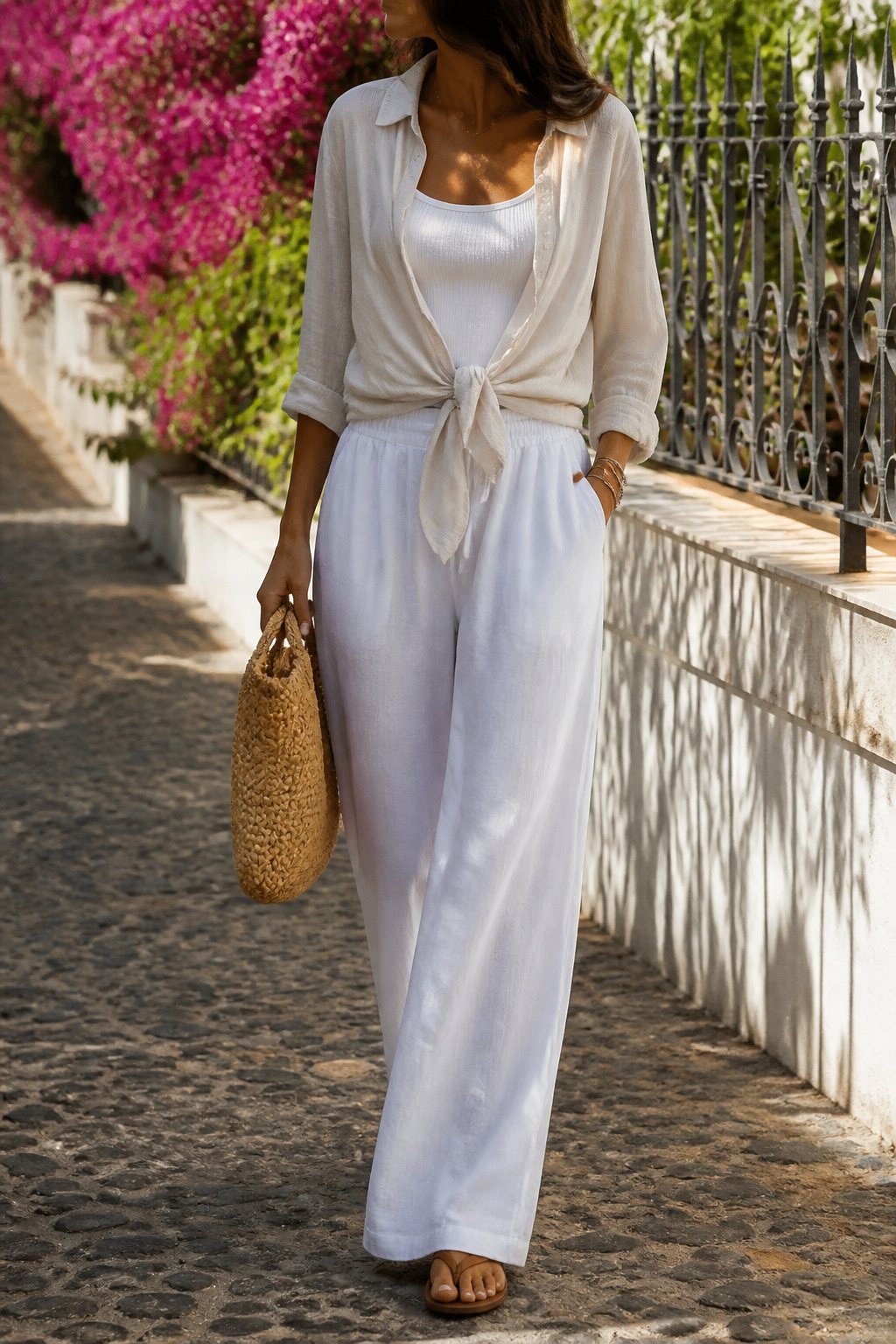
White linen pants carry the whole look, but the fabric asks for a few decisions first. A relaxed cut in a heavier 200–230 gsm linen keeps the pants from going sheer in sunlight, which is the sizing sweet spot I watch for. Anything lighter and the transparency becomes a real issue; anything heavier starts to feel like fall.
A white tank underneath gives you the clean base, and the button-down shirt does the actual styling work. Wearing it open keeps the outfit moving and catches a breeze, while tying it at the waist pulls the shape together for dinner or a meeting. The gauzy weave matters here: too stiff and the open drape looks like you forgot to finish dressing, too soft and the tie collapses into a knot you fight all afternoon.
For accessories, beige slides and a tan crossbody bag keep the palette quiet without going invisible. The whole combination reads as dressed because the three pieces share the same relaxed tension: nothing is trying too hard, but nothing was left to chance either.
5. Black Strappy Top and White Full Skirt
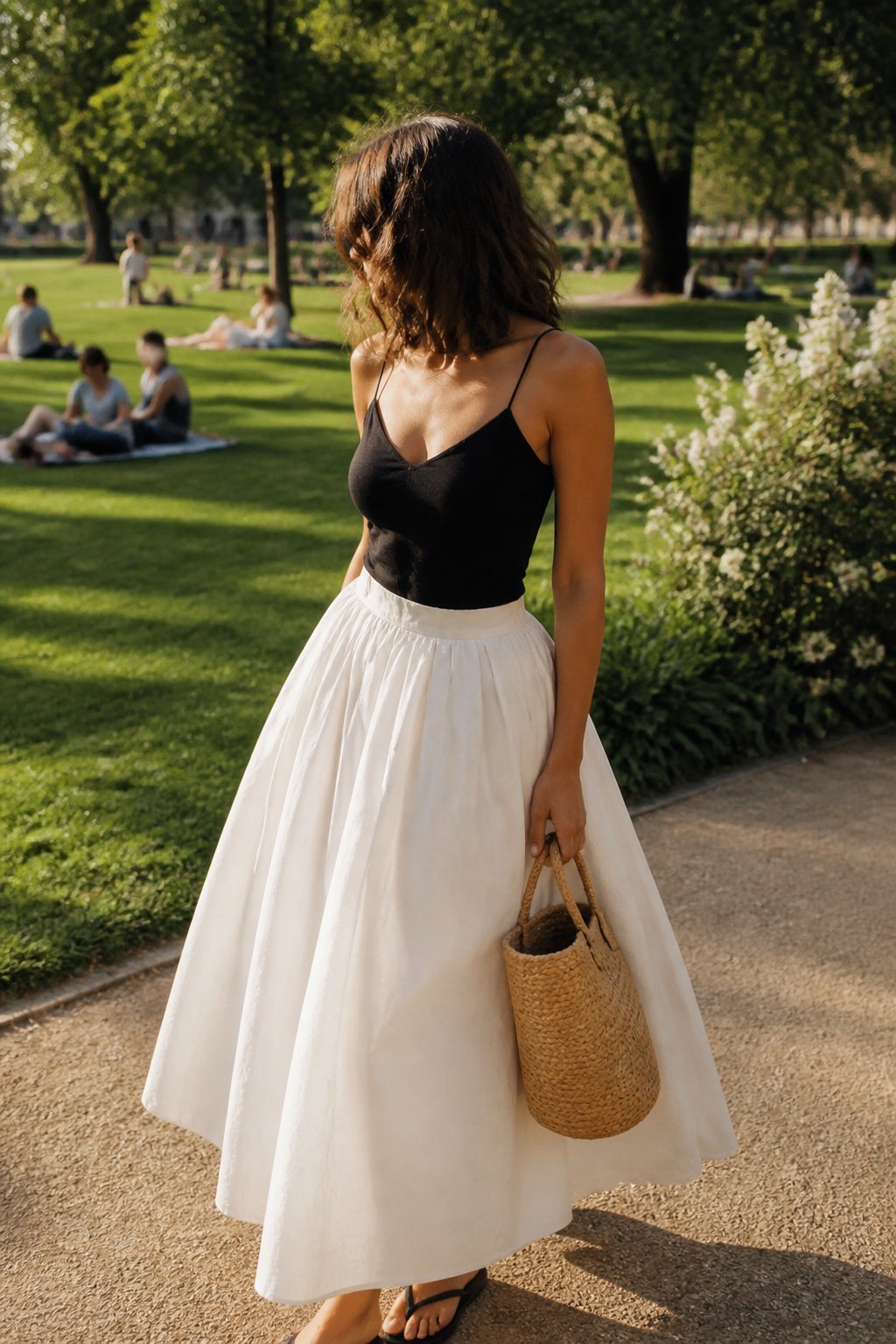
A black strappy top against a white full skirt gives the kind of high-contrast shape that reads as dressed up without any layering. The strappy cut keeps the shoulders open for heat, and the skirt’s volume moves air around the legs rather than trapping it. What makes this pairing work for different bodies is where the structure sits: the top needs enough strap width and back support to hold its shape without a strapless bra, and the skirt’s fullness should start at the natural waist, not the hips, so the silhouette stays defined rather than bulky. A heavier cotton or light poplin for the skirt holds the shape better than something too sheer, which can collapse in humidity and look like an underlayer gone wrong. For anyone broader in the shoulders, the vertical straps draw the eye down; for narrower frames, the skirt’s width adds proportion without padding or structure. I have seen the same outfit read completely different just by whether the top’s straps sit in or out from the shoulder edge, and that half-inch is the difference between effortless and off.
6. White Button-Down, White Jeans, and Ballet Flats
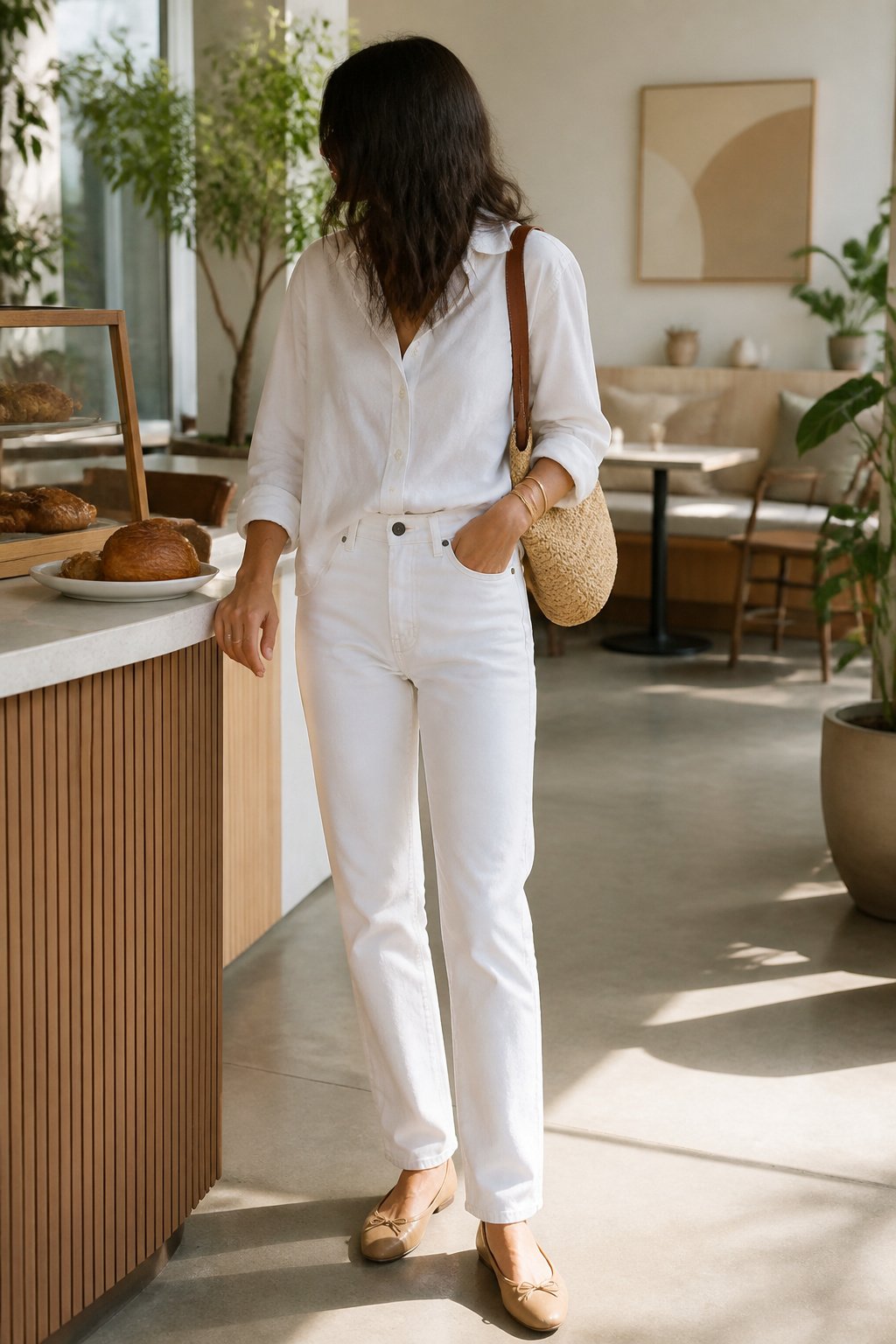
An all-white outfit reads as effortful in exactly the way the word effortless promises to avoid, but the right pieces pull it back. A white button-down in cotton poplin or a light voile keeps the top from going sheer in sun, and the structure balances the casualness of white jeans below. Straight-leg cuts work here; anything too skinny or too wide throws the clean line that makes the combination look intentional rather than like laundry day.
The real risk is fabric weight. A heavy oxford shirt over stiff denim reads winter, while a featherweight blouse with thin jeans can look like underthings. I aim for roughly the same heft top and bottom, which usually means a mid-weight chambray-lined jean and a shirt that still has some snap to the collar.
Stain management is where this outfit lives or dies. I keep a small stain pen in my bag, but the bigger move is watching where I sit. Light-colored car seats, park benches, and metal café chairs are the usual suspects. Ballet flats in a warm neutral, not bright white, ground the look without adding another surface that shows scuff marks before noon.
7. Slip Dress and Thong Sandals
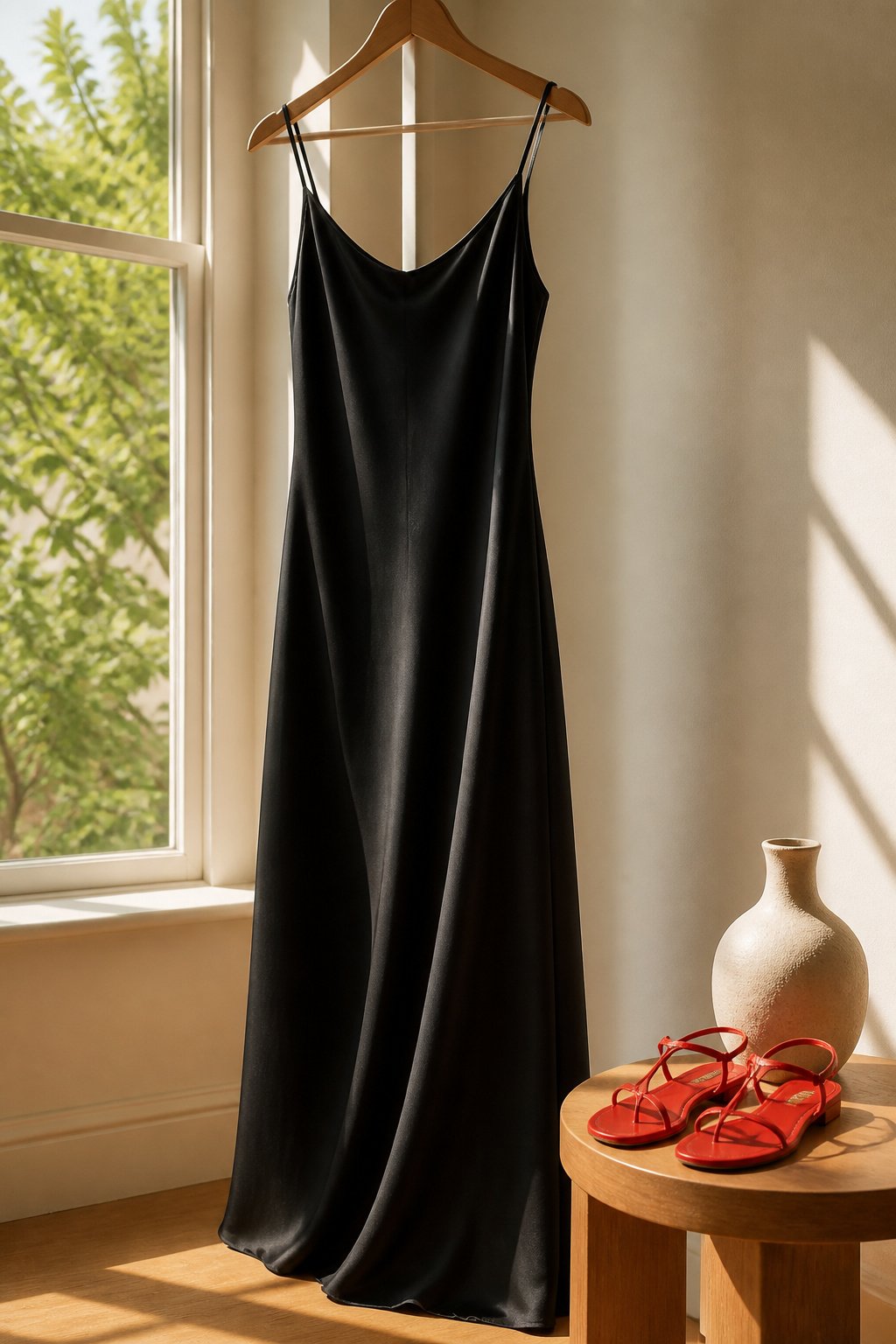
A black slip maxi dress with minimalistic thong sandals in red is about as close to zero-effort dressing as summer gets. The dress does the work; the sandals keep it from looking like you rolled out of bed. I have worn this exact combination to a morning coffee run and, with nothing more than a strap adjustment and a switch from a canvas tote to a smaller bag, to a dinner that same evening.
The length matters more than you might expect. A true maxi that skims the ankle keeps the look intentional rather than like borrowed loungewear. I learned this after buying a slip dress that hit mid-calf, which somehow read as "forgot to finish getting dressed" no matter what shoes I tried. Strap adjustment is the other half of it: most slip dresses come with spaghetti straps that slide or gap, and a single safety pin at the back strap ring, hidden under the fabric, keeps the neckline where it belongs without visible alteration.
For underpinnings, a strapless bra with a wide silicone band along the top edge stays put better than the ones with only side grips. The thong sandal in red gives the black dress a specific point of focus; without that color pop, the whole thing can flatten into a shape rather than an outfit.
8. Vest and Matching Tailored Trousers
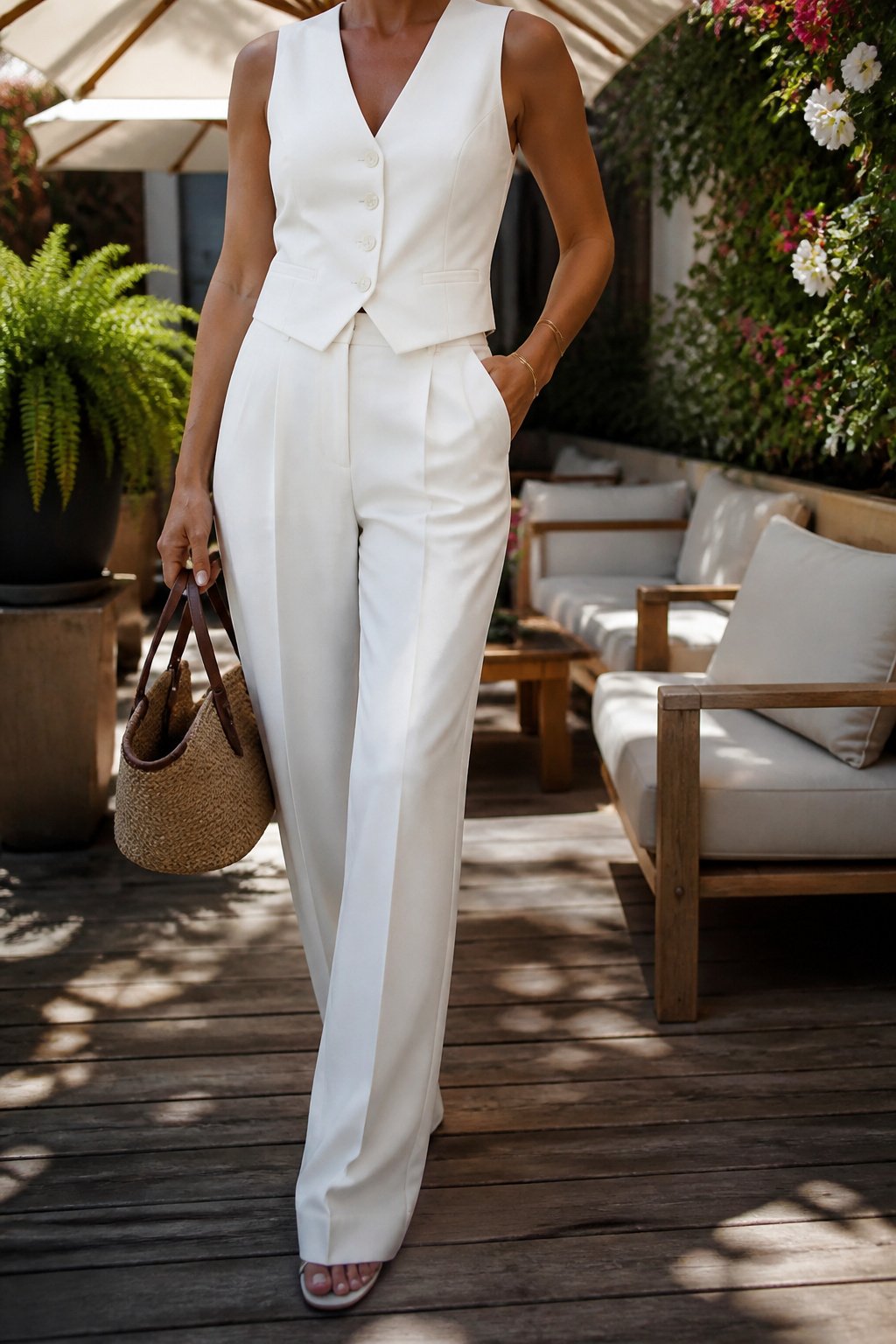
A sleek white vest and matching tailored trousers read as intentional even before you add a single accessory. The monochrome line does the styling work for you, which is exactly what summer heat demands when layering feels impossible.
Fit is where this set becomes personal. Vests with any structure across the bust can gap or pull in ways a blazer forgives; if you are fuller there, look for a slightly relaxed armhole and a fabric with a touch of stretch rather than rigid suiting. The trousers matter just as much. A mid-rise tailored cut sits cleanly at the waist without the constant adjustment that low-rise summer pants seem to require, and the matching weight keeps the silhouette consistent from shoulder to hem.
I have worn this combination to a late meeting that turned into outdoor drinks, and the only change needed was swapping structured flats for something thinner-strapped. The vest breathes more than a full jacket, and the trousers carry the same polish without the extra layer. For an outfit that needs to travel across temperatures and occasions, this is the set I would pack first.
9. Tube Top, Jeans, and Mules
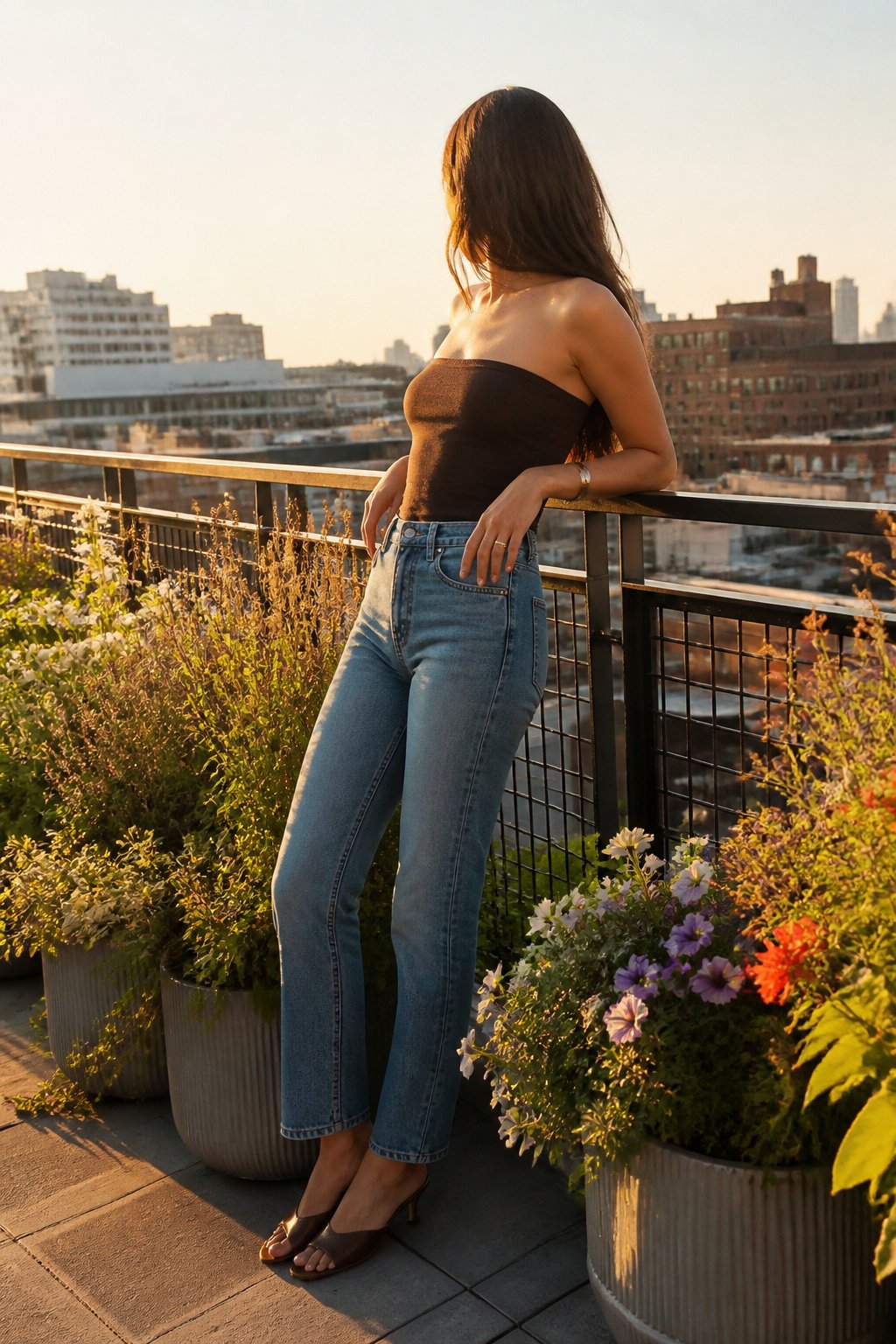
A fitted tube top with straight-leg jeans and backless mules reads casual in theory, but the shoe changes the entire register. The mule adds a deliberate line, a slight heel that straightens posture and keeps the ankle visible, so the look feels chosen rather than leftover.
The sticking point is the tube top itself. In my experience, the band has to sit high enough to anchor under the shoulder blades, not just across the chest, or it creeps with every reach for a coffee cup. A smocked back helps, though it can bulk under a fitted layer if you add one later.
For the jeans, a mid-rise works better here than the low-rise cut that used to pair with this silhouette. The waistband meets the tube top cleanly without a gap, and the mule’s slight lift keeps the leg line from looking cropped. I have passed on this outfit when the jeans sat too low and the whole thing felt like separate pieces rather than one idea.
10. Striped Pajama Pants and Button-Down Shirt
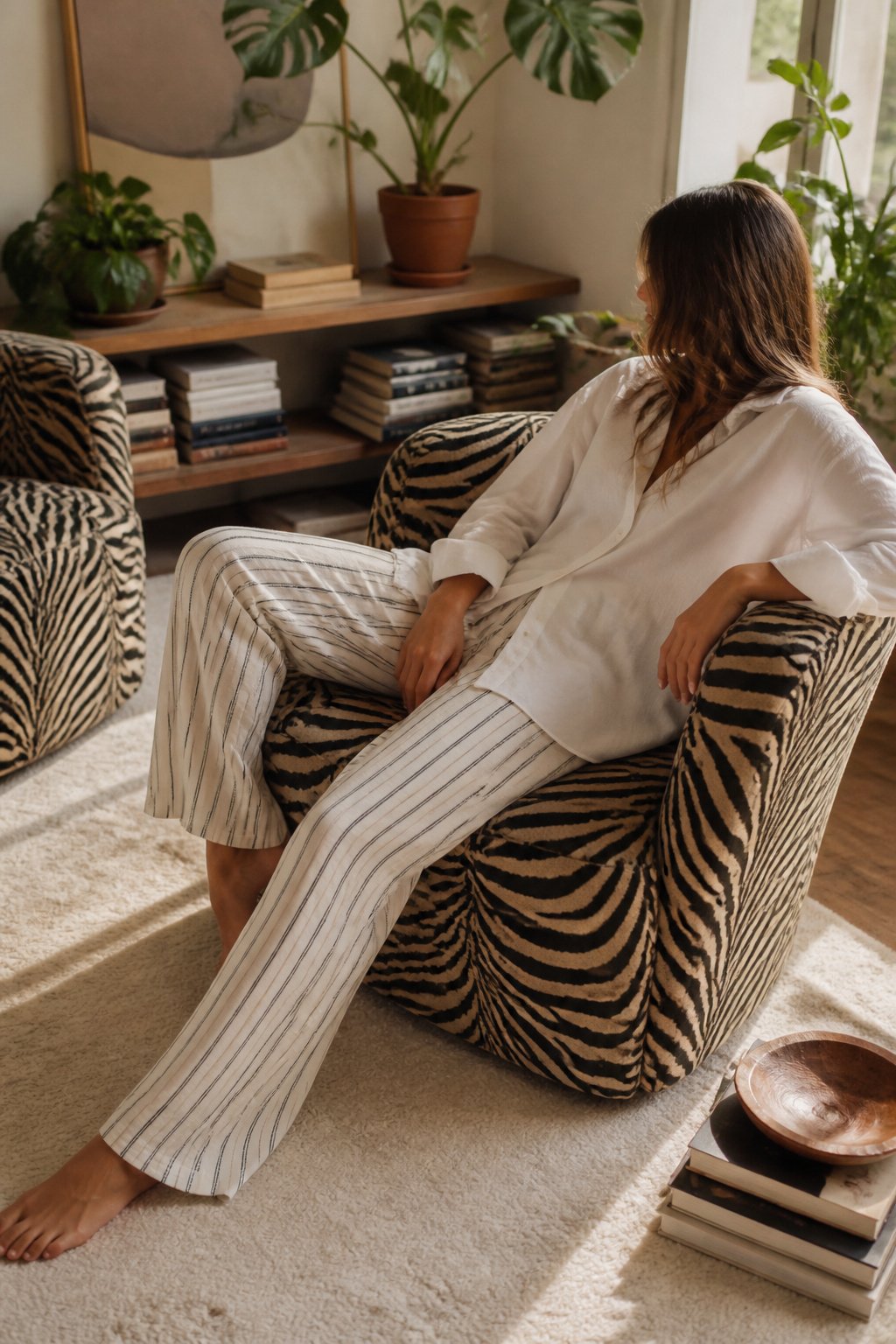
Striped pajama pants only read as effortless summer outfits when the fabric has enough weight to hold a crease and the stripes run vertically enough to look chosen. The cotton-poplin pair I almost bought online last year had a drawstring waist and horizontal bands so wide they looked borrowed from a twin bed; in person, the drape collapsed at the ankle and the whole effect was accidental. What works is a trouser-cut leg in a sateen or light twill with stripes spaced an inch or less apart, paired with an oversized button-down left untucked so the shirttail skims the waistband. Tuck half the front if the shirt runs long, or roll the sleeves twice to break up the sleepwear line. Shoes matter here: a leather slide or low sneaker signals you left the house on purpose, while anything fluffy or padded kills the look entirely.
11. Flowy Maxi Dress
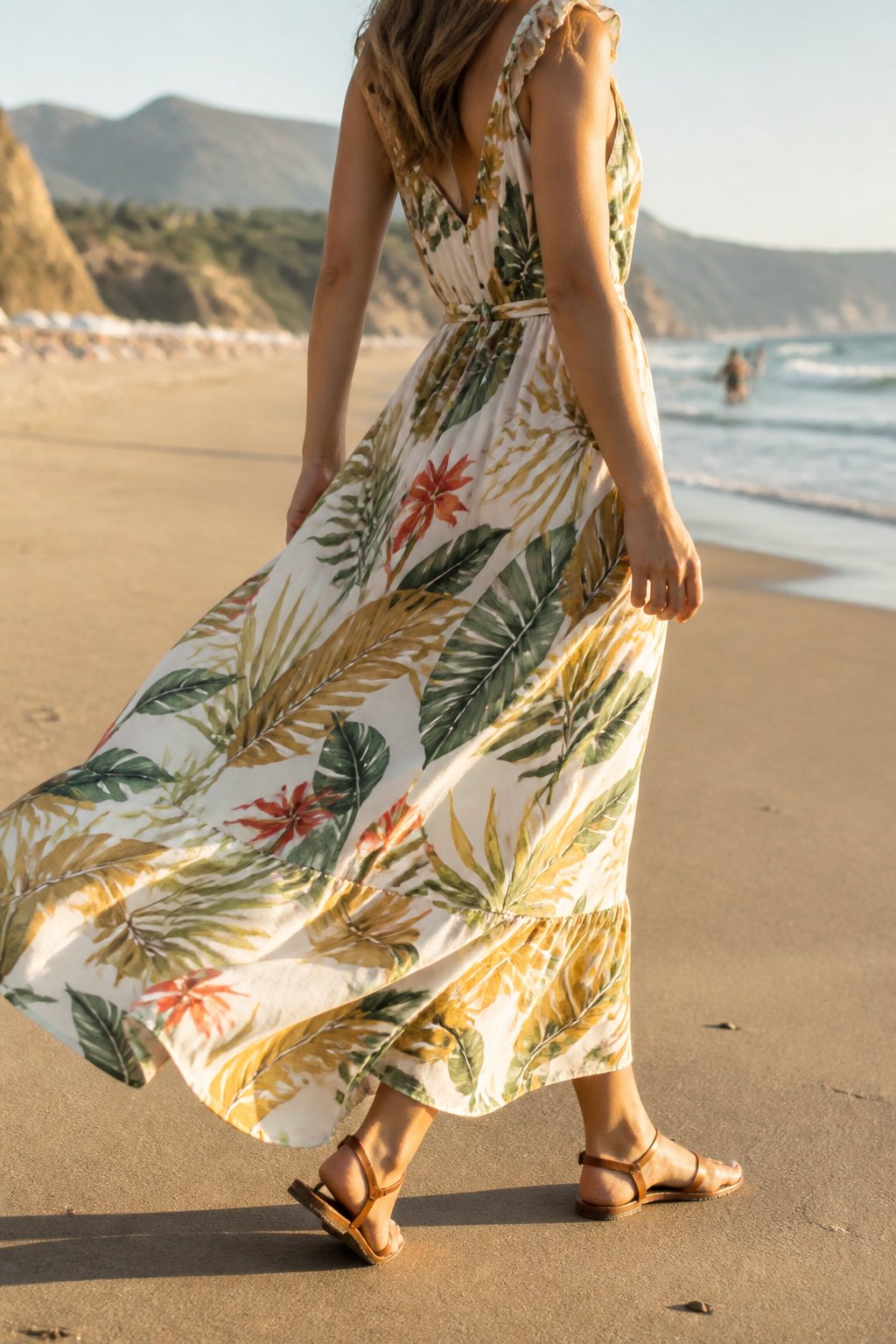
A flowy maxi dress is the closest thing to a complete outfit in one grab. The fabric matters more than the print: something light that moves away from the body when you walk, not a heavy drape that traps heat against your legs. I learned this the hard way after a July afternoon in a lined jersey maxi that felt like wearing a blanket by 3 p.m.
Hem length is where petites and tall frames diverge. At 5’3", an inch above the ankle keeps me from looking swallowed; my taller friends need the skirt to actually sweep the floor or it reads as an accidental flood. The test is standing straight in bare feet, not the height the model wore it at.
Shoes should disappear. A thin-strapped sandal or low wedge keeps the line long; anything bulky at the ankle breaks the silhouette the dress is trying to build. I keep a pair of cognac leather slides by the door for exactly this.
12. Casual Sundress
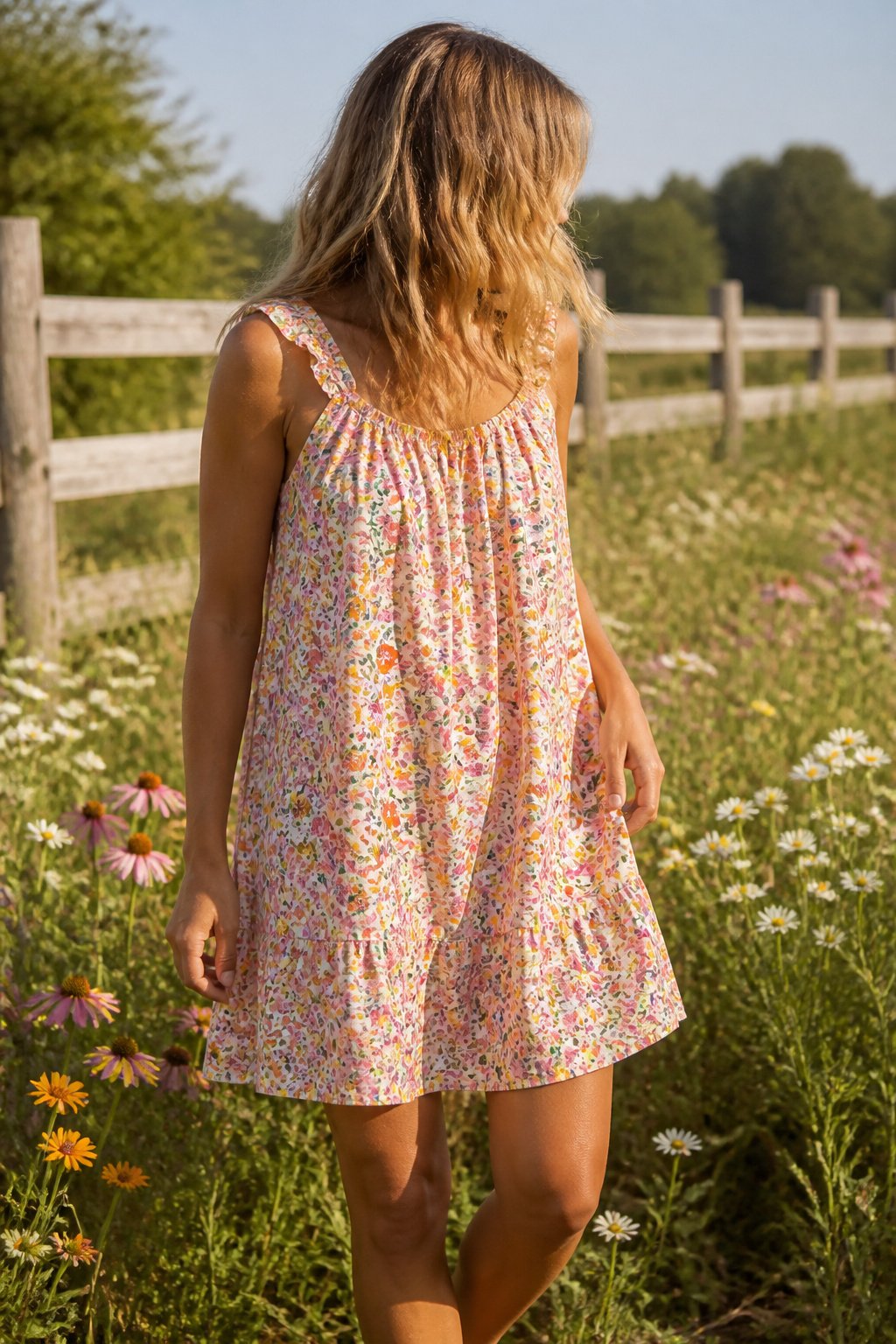
A casual sundress sits somewhere between the floor-grazing drama of a maxi and the slinky minimalism of a slip dress. The hem usually hits mid-thigh to just above the knee, and the fabric reads practical rather than precious: cotton poplin, seersucker, or a washed linen that only gets softer with each wear. That difference in material is what makes the style feel approachable rather than occasion-bound.
The necklines vary enough to matter. A square neck frames collarbones without demanding a special necklace, while a shallow V or simple scoop lets you re-wear the same dress with different sandals and have it read as a separate outfit. Pockets, when present, should lie flat; bulky ones on lightweight fabric can gape and add width where you do not want it. I have learned to check pocket placement in a mirror with hands at my sides, since side-seam pockets set too far forward catch the eye and break the line.
What marks a sundress as truly casual is structure without architecture. No boning, no lining that rustles, no zipper you need help reaching. The best versions pull over your head, skim rather than cinch, and move with you through a Saturday of errands and an impromptu patio dinner. A casual sundress earns its place by being the thing you reach for when you have ten minutes and no plan, and still look like you made one.
13. Jean Shorts and a Basic T-Shirt

Jean shorts and a basic t-shirt only look effortless when the proportions are right. A three-inch inseam is the line between polished and sloppy on most frames; anything shorter starts reading like a costume, and anything longer drags the leg down. The t-shirt matters just as much. A mid-weight cotton, around five to six ounces, holds its shape through humidity instead of clinging or going transparent. I learned the inseam lesson the hard way after buying a two-inch cut that rode up walking the dog. The shirt was a heavier jersey, which saved the outfit from total failure, but the shorts went to the donation pile. Fit is doing the work here, not the combination itself, which is why this pairing still belongs in a summer rotation ten years after you first wore it.
14. Casual Dress as Swim Coverup
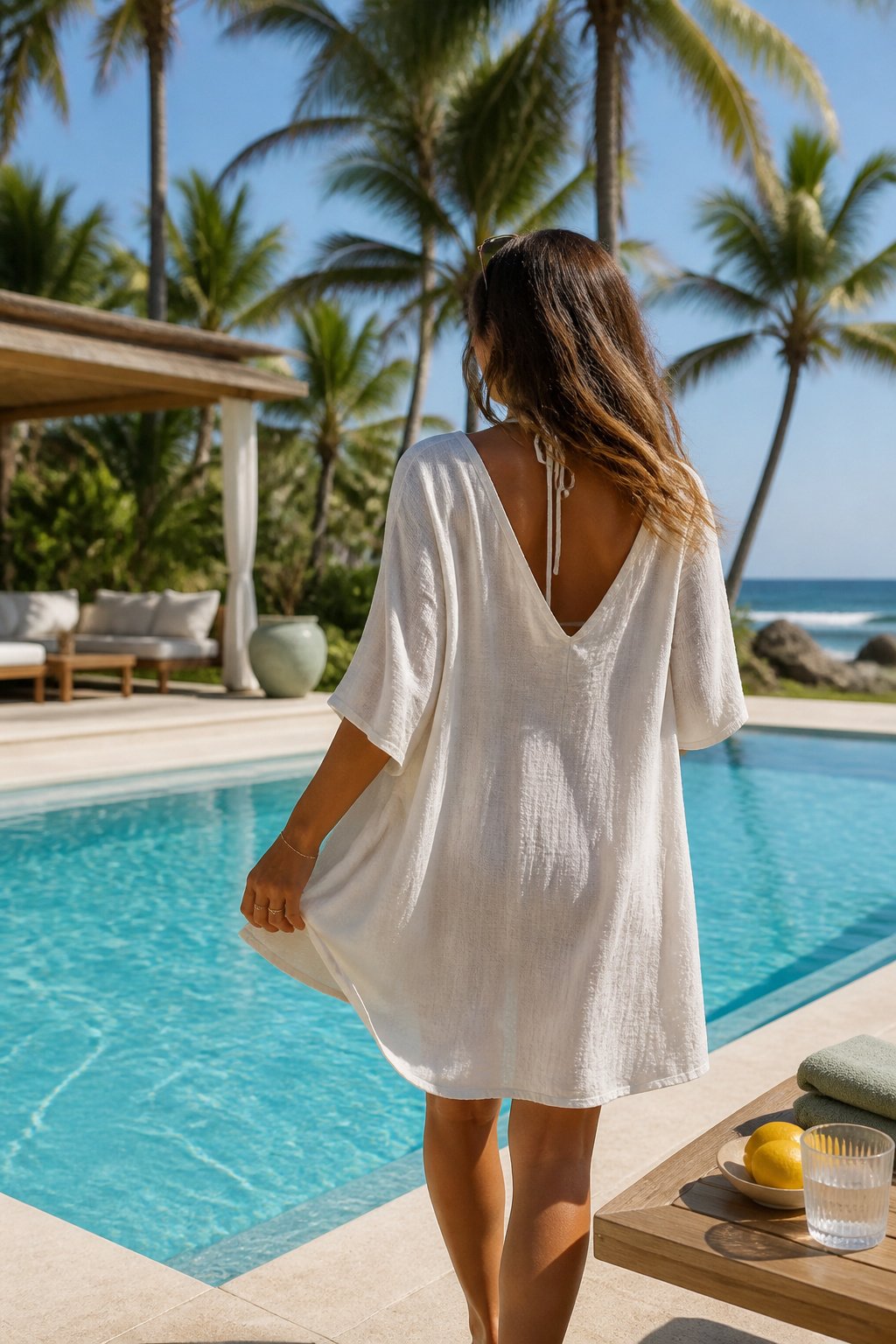
A dress that works over a wet swimsuit needs to dry faster than it soaks through. Lightweight rayon challis or a crinkled cotton gauze both pull water away from the suit underneath rather than sealing it in, and a loose shift or A-line cut keeps the fabric from clinging where you do not want it to. I learned the hard way that a heavier jersey knit will hold dampness against your hips for an hour, and that dark floral prints hide water marks better than solid colors do. My favorite for this purpose was a cheap rayon dress from a beach-town rack that dried in maybe twenty minutes of sun and never showed where the suit had been. A crinkled texture or busy print buys you the freedom to walk straight from water to lunch without carrying a change of clothes. Skip anything lined, anything with spandex content over ten percent, and anything white enough to turn see-through the moment it hits salt water.
15. Linen Maxi Dress
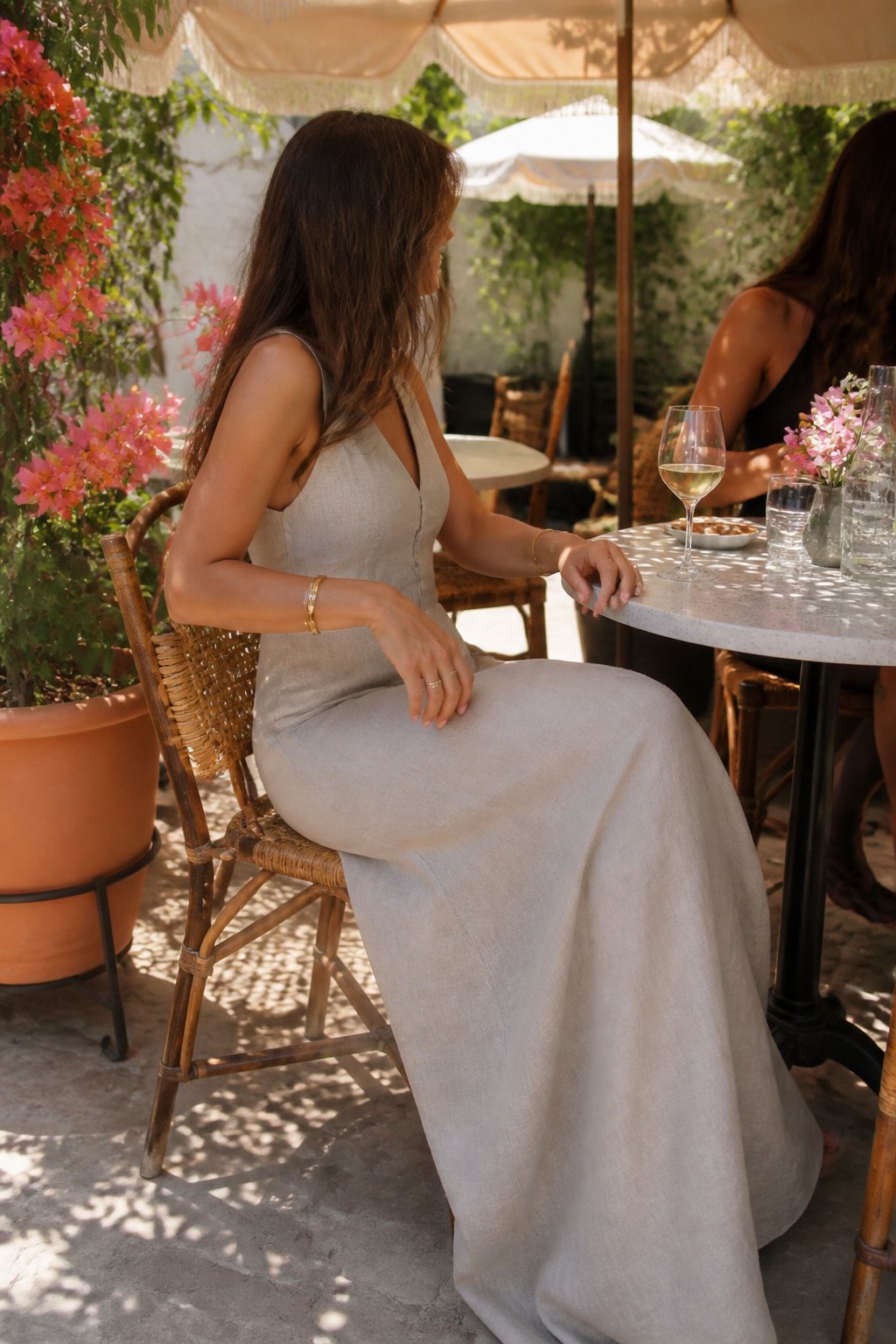
Linen at maxi length behaves differently than it does cut shorter. The extra fabric means more weight pulling the skirt down, which actually helps the drape settle faster after you move. What that same weight does, though, is crease the fabric where you sit. On a 90-degree day, the back of my dress looked like I had napped on a corduroy couch after a single car ride.
The fix is choosing a mid-weight linen, around 5–7 ounces, rather than the featherlight stuff that feels like tissue paper in the hand. Heavier linen still wrinkles, but the folds fall out when you stand. A quick steam in the shower works better than ironing the whole skirt; the humidity relaxes the fibers without flattening the texture that makes linen read as intentional rather than sloppy.
Aim for a dress with some seaming or a subtle tier rather than a straight column. The breaks in the fabric hide creases that would telegraph across a plain panel, and the slight swing keeps the hem from clinging to your legs when the humidity spikes.
16. Shift Dress
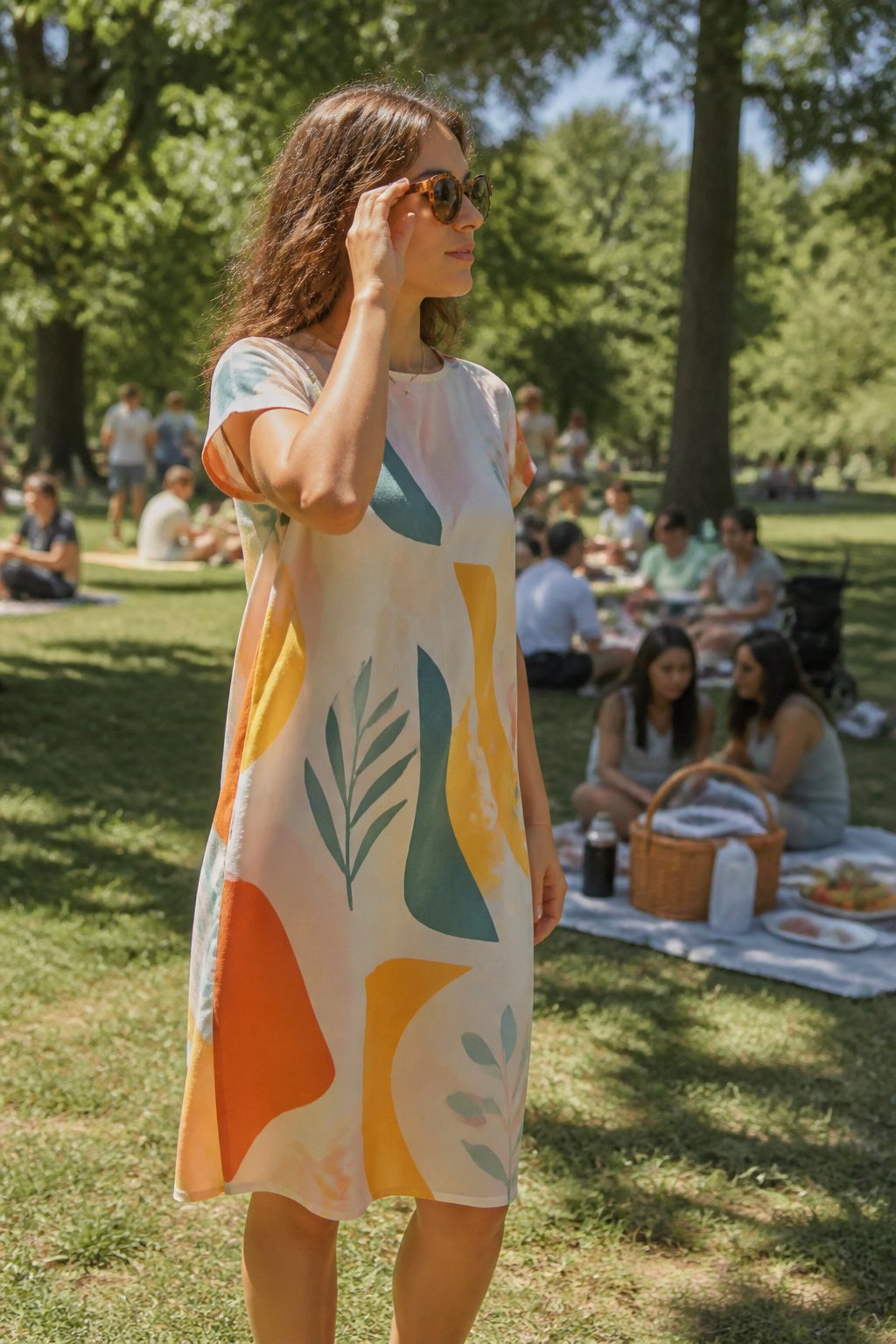
A shift dress hangs straight from the shoulders with no defined waist, which makes it an entirely different animal from the sundress or the slip dress already on this list. Where those cuts either cinch or skim the body with intention, the shift simply drops, and that geometry is what creates the ease.
This cut favors a straighter torso and narrower hips, since volume at the middle can turn the silhouette boxy rather than relaxed. Petite frames often need to watch the hem; a shift that hits mid-calf swallows height, while one landing two inches above the knee keeps proportions intact. I learned this the hard way with a navy cotton shift that looked store-window perfect on the hanger and like a hospital gown on me until I had it shortened.
Sleeve length changes the whole register. Cap sleeves read daytime casual, three-quarter sleeves bridge into early evening, and sleeveless shifts in heavier fabrics can look oddly formal unless the neckline is low enough to relax things. The armhole placement matters more than you’d expect; too high and the dress rides, too low and a regular bra shows.
17. Trousers and Blouse for the Office
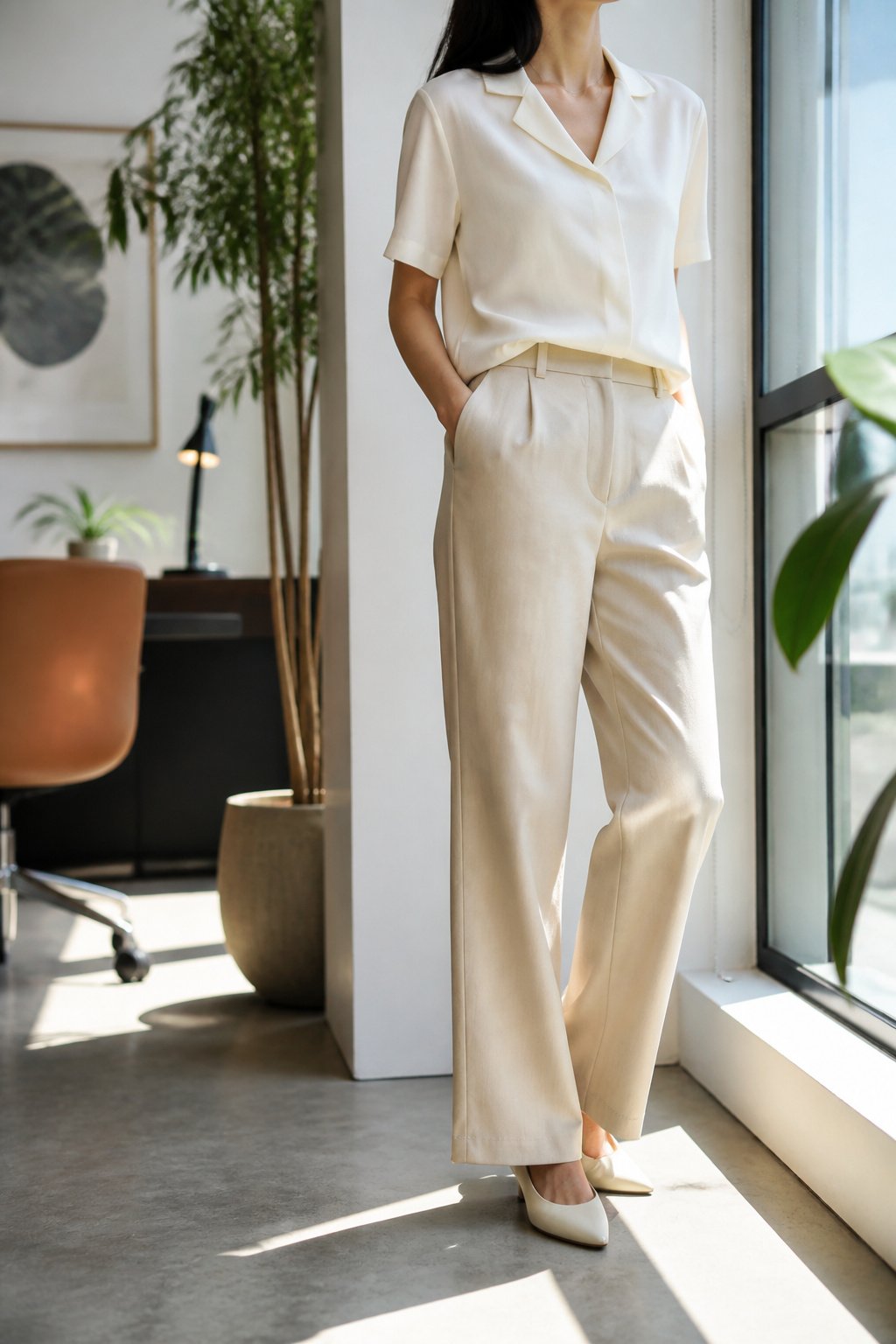
The trick with summer office dressing is keeping the structure without trapping heat. A pair of lightweight trousers in a breathable weave, paired with a blouse that has a neckline with room to move, gives you the polish the dress code demands without the misery of synthetic cling. I learned this the hard way after a July spent in lined polyester that felt like wearing a greenhouse. Now I look for blouses with a camp collar or a soft V-neck in cotton or a cotton-linen blend, something that sits away from the skin just enough to let air pass through. The trousers matter too: a straight-leg cut in a tropical-weight wool or a structured cotton holds its shape through the day and still lets you walk to lunch without arriving damp. The color helps more than people admit. Pale stone, soft navy, or a muted olive reflects what a black suit absorbs, and the difference is noticeable by 2 p.m. when the conference room AC fails. Keep a light cardigan at your desk for the over-cooled mornings, but the core outfit should carry you through the commute and the meeting without needing to change a thing.
18. White Shorts and a Cute Blouse
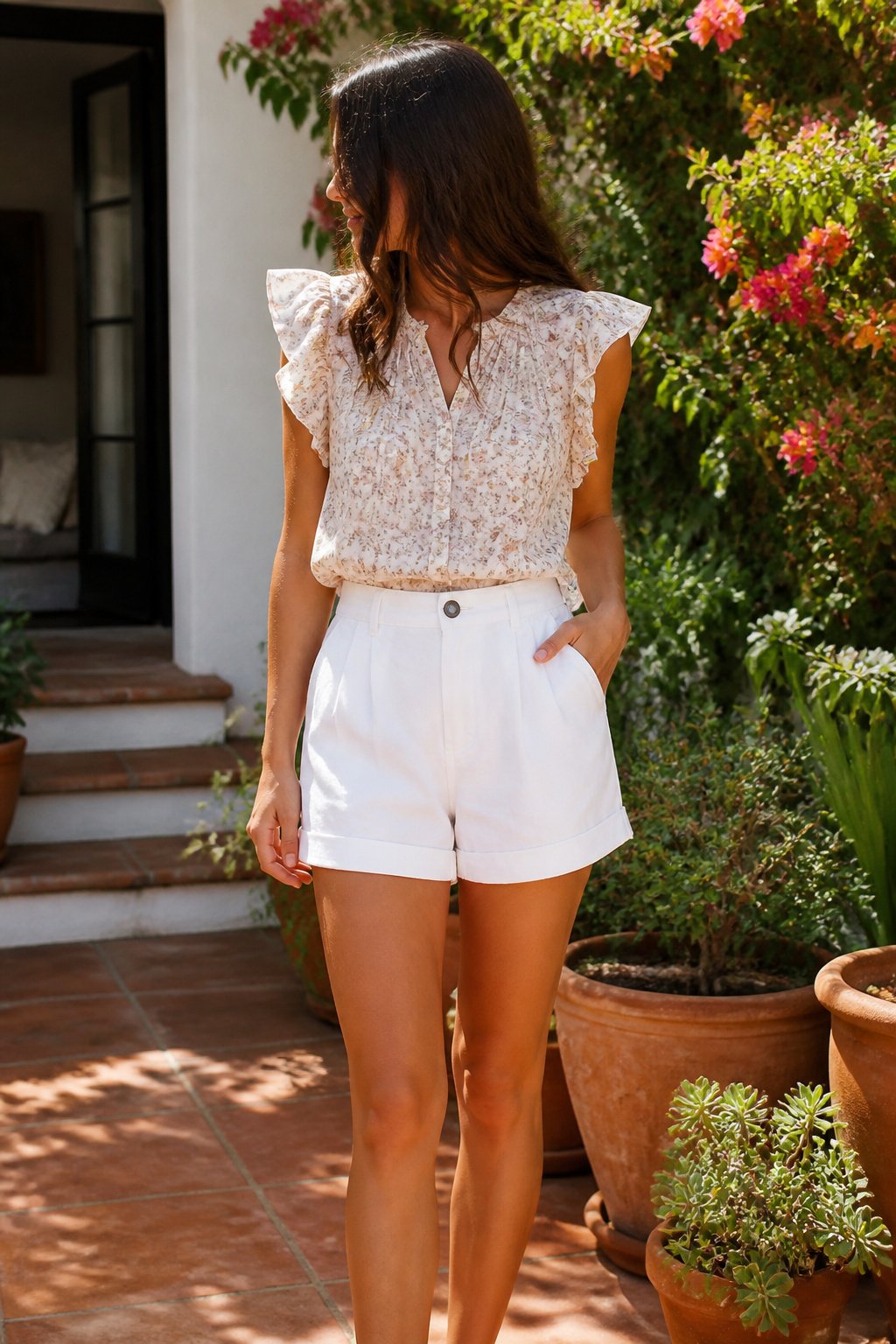
White shorts and a cute blouse sounds like one of those combinations that should just work, and it does, until you sit down and remember why so many people avoid white bottoms past August. The blouse is doing most of the heavy lifting here, so "cute" means something with actual shape: a flutter sleeve, a tie neck, a subtle ruffle at the shoulder, enough detail that the outfit reads intentional rather than like you grabbed two clean things and ran.
The shorts are the variable that breaks this. Length matters more than almost anything else; too short and you spend the day aware of every chair, too long and the proportion turns frumpy against a tucked-in top. I look for an inseam that hits mid-thigh, which on me sits right at the point where my legs narrow, and I always do a three-part sitting test in the dressing room: thighs flat on the seat, legs crossed, one tucked under. If lining shows, or if the fabric pulls tight enough to go translucent, those shorts stay on the rack.
Tucking the blouse changes the whole silhouette. A full tuck into shorts with any stretch at the waistband creates a bulk line I don’t love; a front tuck, just the center few inches, keeps the shape cleaner. The best blouses for this have a hem that is slightly shorter in front, or a fabric light enough that the tuck doesn’t read as a wadded knot against the button.
19. Jean Jacket with White Shorts
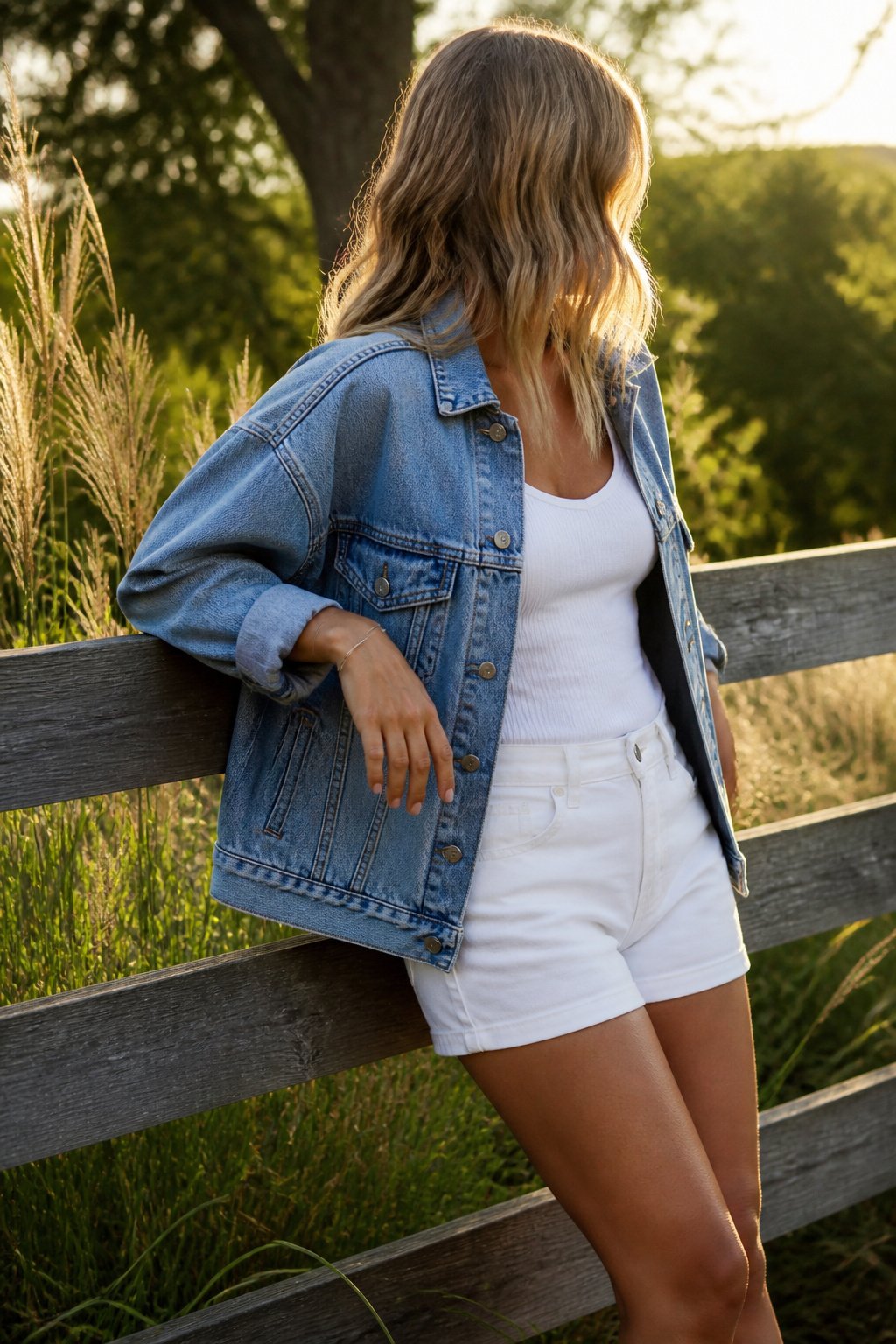
A jean jacket over white shorts sounds like a contradiction until you live somewhere with real summer evenings. The layer gets its use not at noon but after six, when asphalt still radiates heat but the air has dropped ten degrees and restaurants open their patio umbrellas.
The trick is jacket weight. Mine is an old Levi’s trucker style, rigid denim but broken in enough that the sleeves roll without fighting back. I push them to the elbow before I leave the house; unrolling them later looks deliberate, not like I gave up. White shorts underneath stay the warm-weather base, usually a mid-thigh cut that works with the boxy jacket hem hitting at hip level.
This pairing fails if the jacket is too long or too soft. A drapey denim cardigan collapses the structure that makes shorts feel intentional rather than leftover. I skip belts with this combination; the jacket’s center buttons do enough visual work, and a belt buckle catches awkwardly at the hem.
20. Linen Shorts
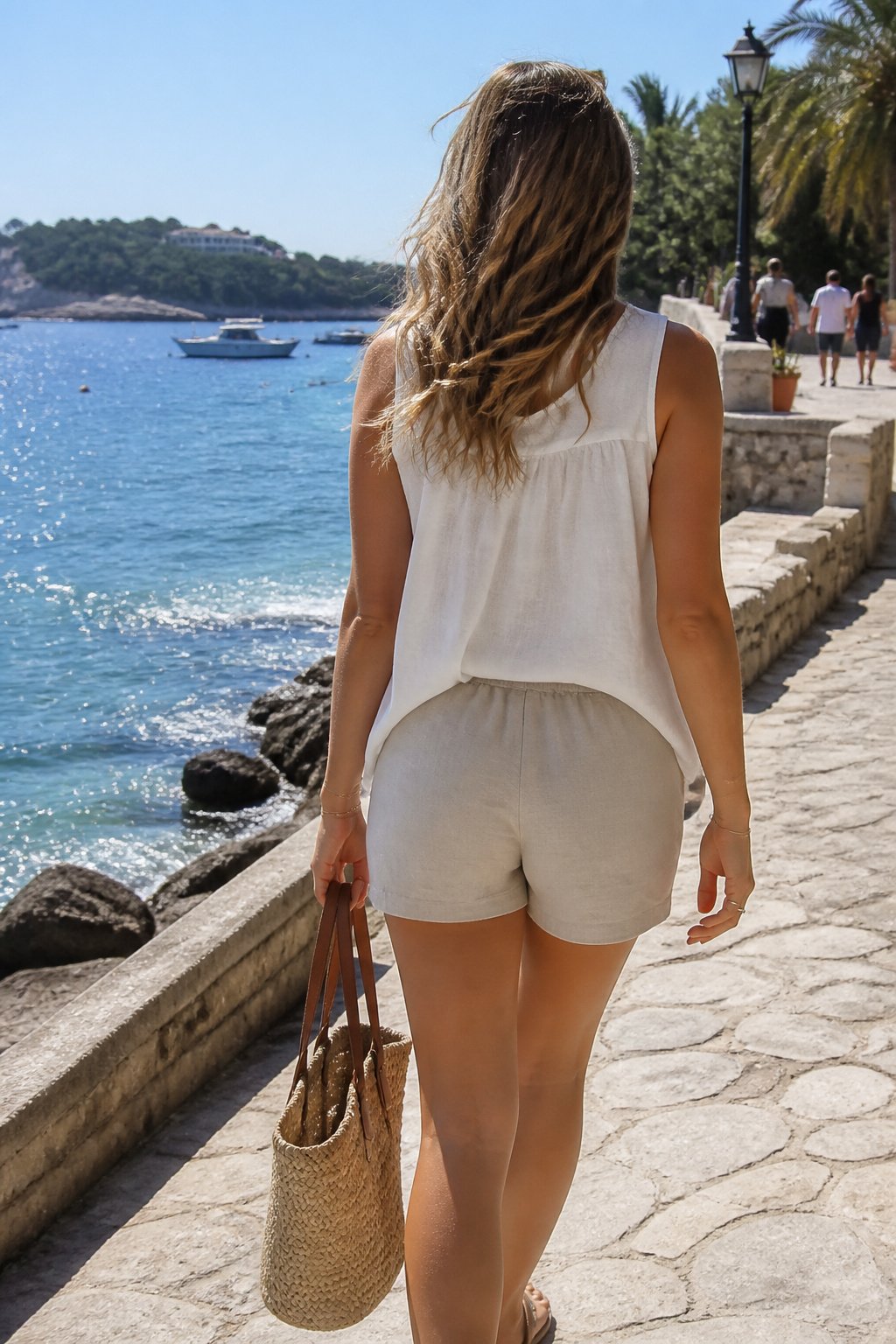
Linen shorts carry a texture that reads as intentional rather than thrown-on, which is the whole point of an effortless summer outfit that still looks like you thought about it. The weave is looser than chambray or denim, so air moves through in a way that matters once the humidity climbs past eighty degrees. That same openness is why they wrinkle the second you sit in a car or on a park bench, and I have stopped fighting it. A quick steam or a damp hang in the bathroom while you shower does enough; anything more and you have turned a five-minute piece into a twenty-minute piece.
The pockets are the real trouble spot. Linen has no stretch to speak of, so if the hip cut is even slightly off, the pocket mouths gape open like small surprised mouths. I check this in a mirror with my thumbs hooked in the waistband, then again with hands at my sides. A mid-rise usually solves it better than low-rise, which pulls the fabric sideways.
For tops, the texture needs something with its own weight or the whole outfit goes limp. A cotton tee works if it is substantial enough to hold a shape, but a thin one clings and looks accidental. A camp-collar shirt in a similar weight, half-tucked, gives the shorts something to push against. Skip anything silky or overly draped; the contrast makes the linen look like you grabbed it from a laundry pile.
21. Sweater Tee
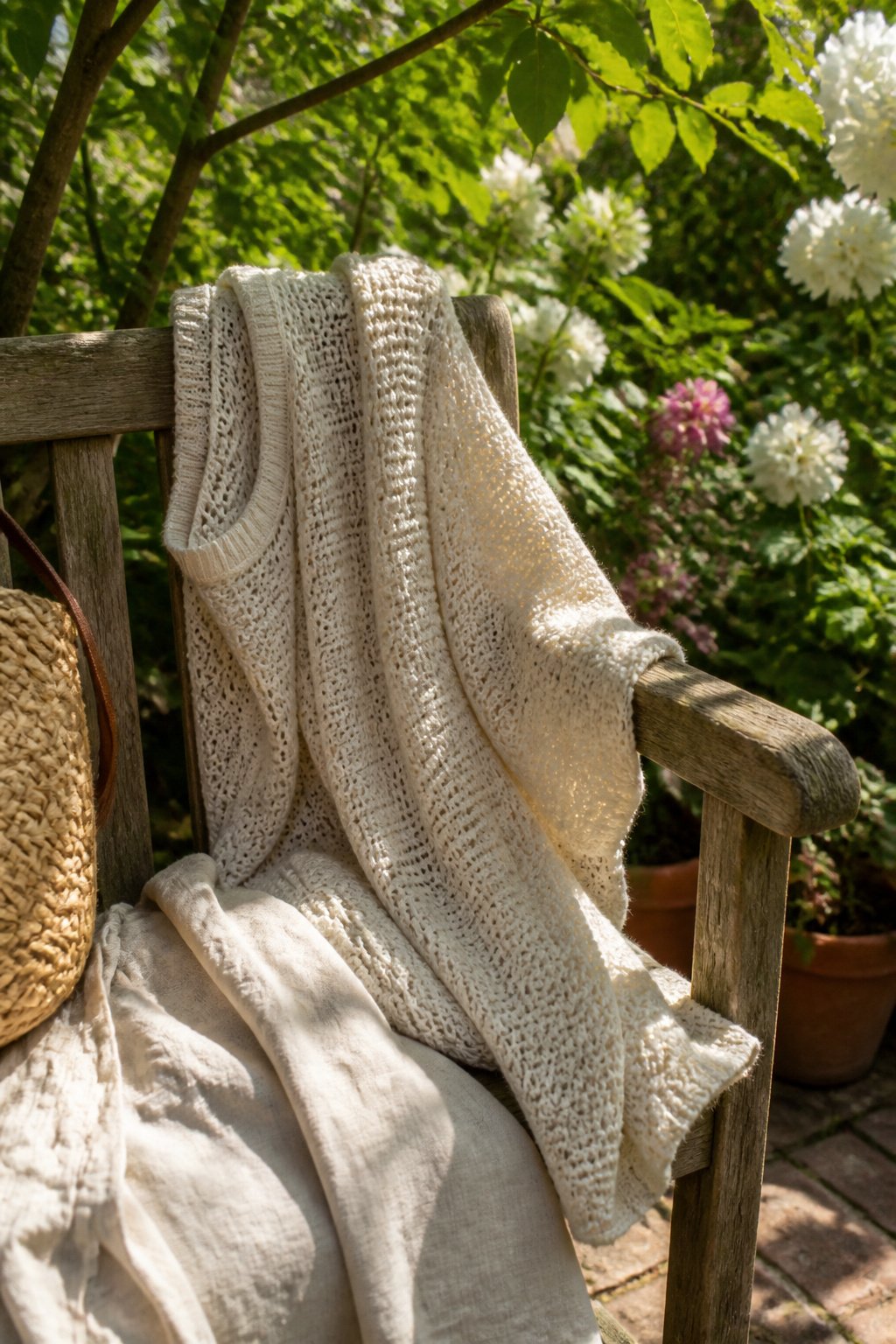
A sweater tee sounds like an oxymoron until you wear one in June. The knit is loose and open, usually cotton or a cotton-linen blend, with the drape of a sweater and the weight of a heavy t-shirt. I bought my first one from a mid-range basics line three summers ago, skeptical that anything with "sweater" in the name belonged in 80-degree weather. It works from about 72 to 85 degrees, assuming you are not standing in direct sun for hours. The open stitch lets air through in a way a standard tee does not, and the texture reads as intentional rather than lazy.
Mine started pilling after four or five washes, which is the trade-off for that soft, brushed surface. Turning it inside out and laying it flat to dry bought me another season before the underarms looked tired. For effortless summer outfits, this piece fills the gap between a polished blouse and a t-shirt you would not wear to dinner. Tucked into high-waisted trousers or left loose over linen shorts, it does the styling work without jewelry or layers.
22. Floral V-Neck Tank and White Jeans
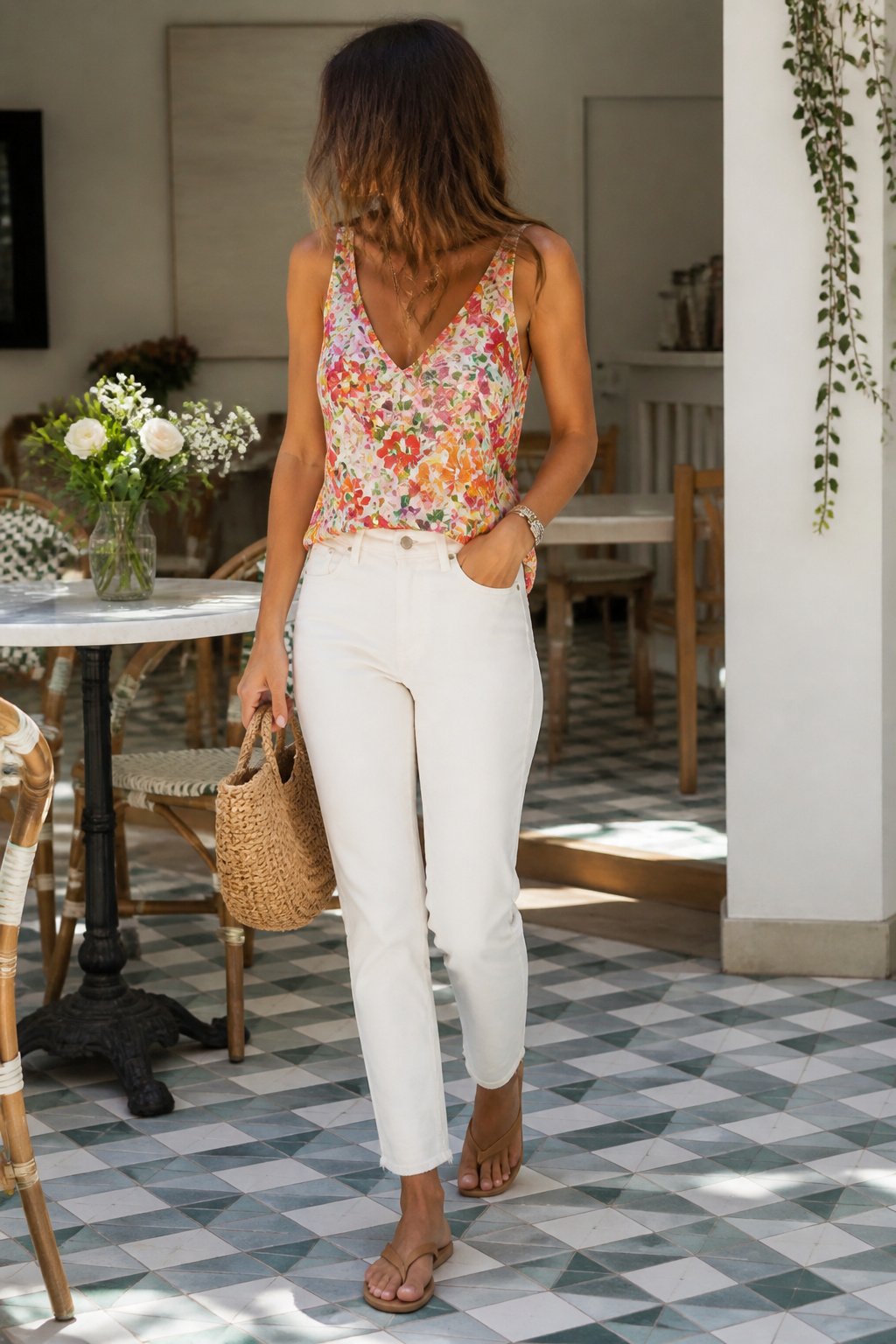
A floral V-neck tank with white jeans is one of those combinations that looks put-together without trying hard, but the details matter more than the formula itself. The V-neck matters because a scoop or crew neck with a busy print sits heavy on the chest; the open neckline breaks up the pattern and draws the eye upward, which is especially useful if the floral runs large. I learned that the hard way after buying a tank with oversized cabbage roses that felt like wearing wallpaper until I swapped it for a smaller-scale print. White jeans keep the look grounded, though the stretch content changes how they wear through a hot day. Anything under two percent elastane bags at the knees by noon; three to four percent holds shape without looking like leggings. For shoes, a leather sandal in tan or cognac works better than white, which competes with the jeans. A block heel adds polish for dinner, but a flat slide keeps it honest for errands.
23. Paisley Swing Dress
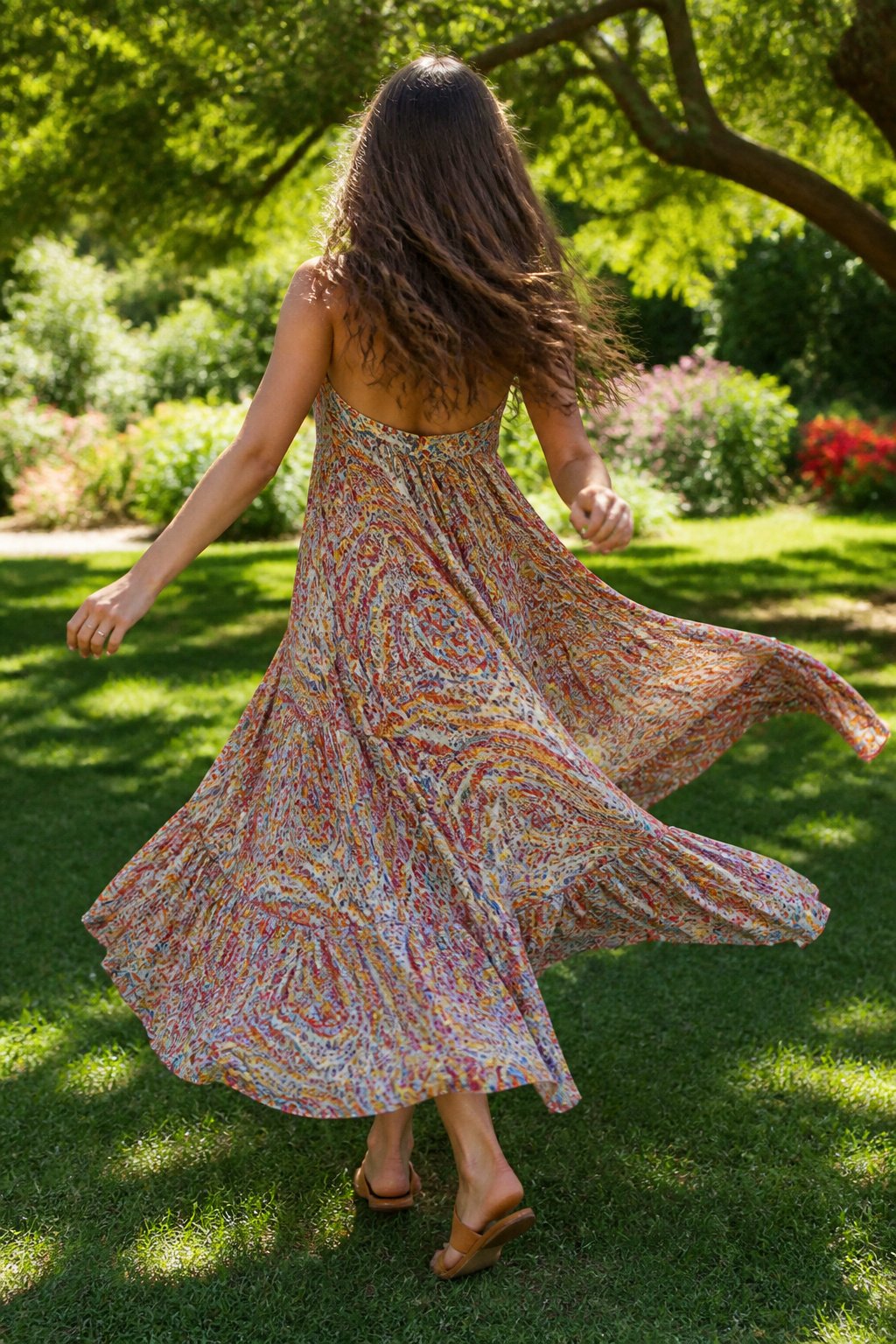
A swing dress hangs from the shoulders and flares out, while a shift falls straight down. That extra movement matters in July heat because fabric that skims the body without clinging actually catches a breeze. Paisley carries summer weight without looking like a costume the way some florals can; the teardrop shape reads bohemian in small scale, almost southwestern when the print grows larger. I learned the hard way that a medium paisley, roughly palm-sized, photographs best and doesn’t turn muddy from a distance. Sleeve length is the real decision point here. Cap sleeves look balanced on a swing cut but can pinch if the armhole sits too high; I’ve passed on otherwise perfect dresses for that reason. Three-quarter sleeves work for outdoor weddings where you’ll want the coverage but still need air. For a daytime cookout, short sleeves or sleeveless with a light cardigan left in the car covers the bases without overthinking it. The print itself does the styling work, so plain leather sandals and small gold hoops are all the effort this outfit needs.
24. Eyelet Shirt Dress
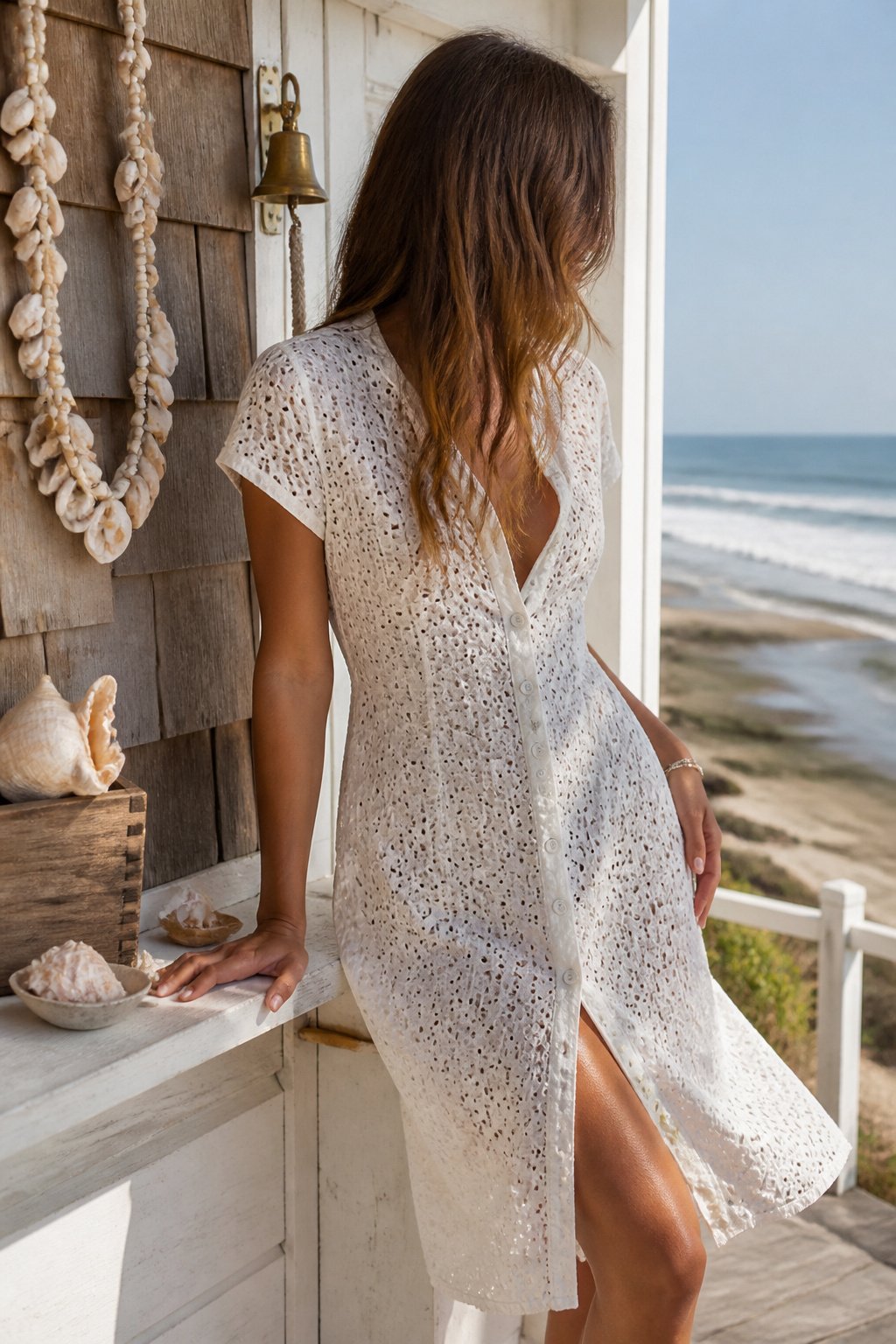
Eyelet looks delicate, but the open weave is what makes it functional in July heat. Air moves straight through the holes, so the fabric sits lighter on the skin than solid cotton of the same weight. The catch is that those holes are exactly where light comes through too, which means lining decisions matter more than with most summer dresses.
A half-lining through the skirt and bodice front usually covers what needs covering without killing the ventilation. Skip it entirely and you are planning your day around which underlayers show; I have seen eyelet so open that even a pale bra reads as a dark shape underneath. Full linings defeat the purpose, leaving you in what amounts to a second dress sewn inside the first.
Washing is where eyelet earns its reputation. The embroidered edges around each hole can fray or curl if the machine agitation is too aggressive. A mesh bag and cold water keep the cutwork neat longer; tumble dry low or line dry, since high heat warps the cotton threads that form the pattern. My eyelet shirt dress has held its shape through three summers, but only because I stopped throwing it in with the regular load after the first wash tightened the fit across the shoulders and loosened the eyelet borders into a wavy trim I had to press flat.
25. Everyday Tank Top
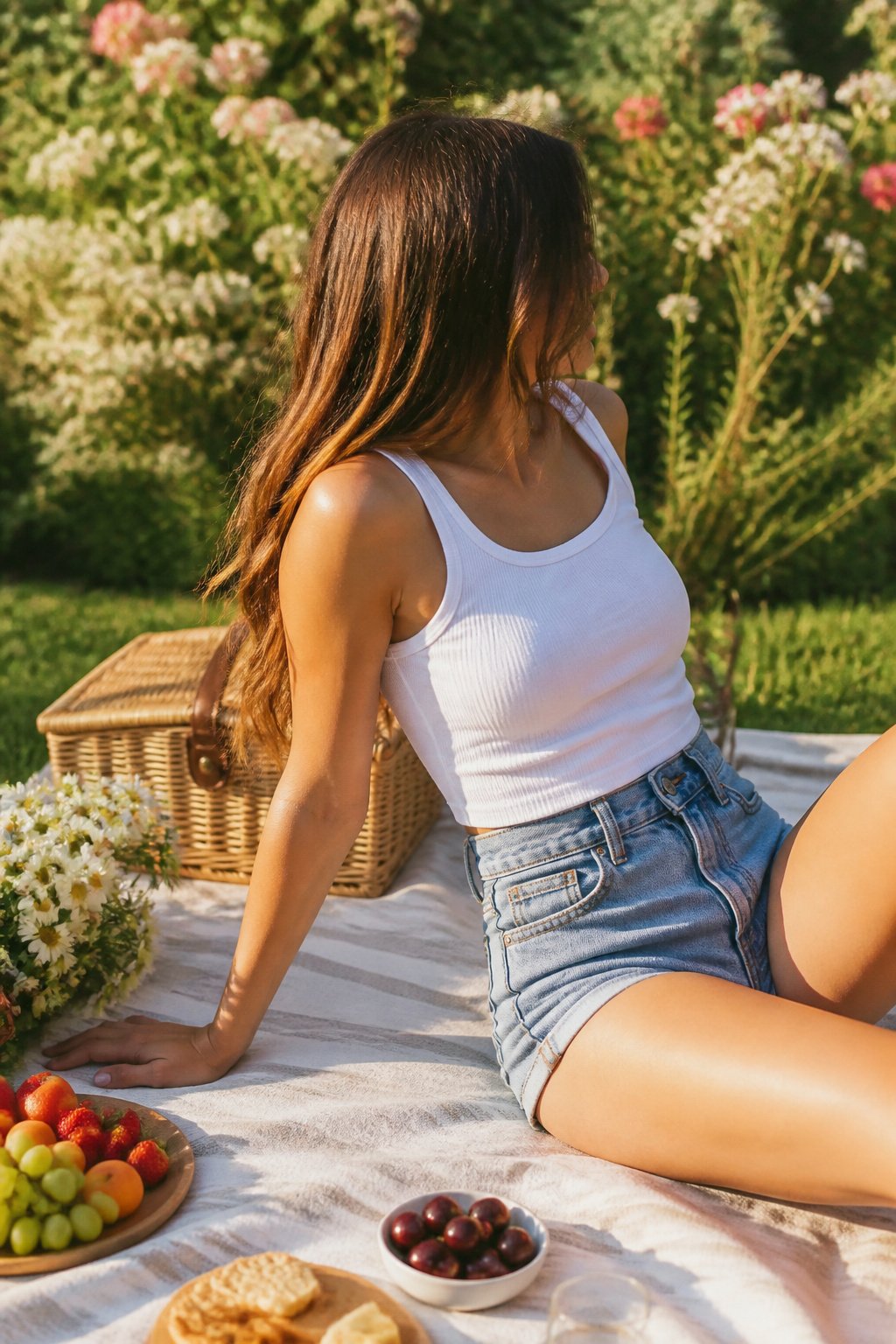
The everyday tank sits lower in the hierarchy than the sweater tee or the V-neck tank, but it covers more actual summer days than both of them combined. A sweater tee reads intentional, almost styled; a V-neck tank leans dressy with that neckline doing the work. The basic tank is what you grab when the morning is already warm and the coffee is still hot.
Strap width makes or breaks whether it reads as underwear or as clothing. My rule is two fingers of strap minimum, anything narrower and I am tugging at it all day or layering a cardigan I did not want to wear. Length matters more than people admit: a tank that skims the hip bone stays put when you reach for something on a high shelf, while the cropped ones ride up and bunch at the waistband.
Fabric opacity is where I have been burned. A tissue-thin cotton in bright sunlight turns into a silhouette show, which means checking the mirror from behind before leaving the house, not just the front. The everyday tank should be thick enough that you cannot read the label of your bra through it, thin enough that you are not sweating through it by ten in the morning. Mine are cotton-modal blends, mostly, with enough body to hold their shape through a wash cycle or two.
26. Lightweight Sweater Tank Top
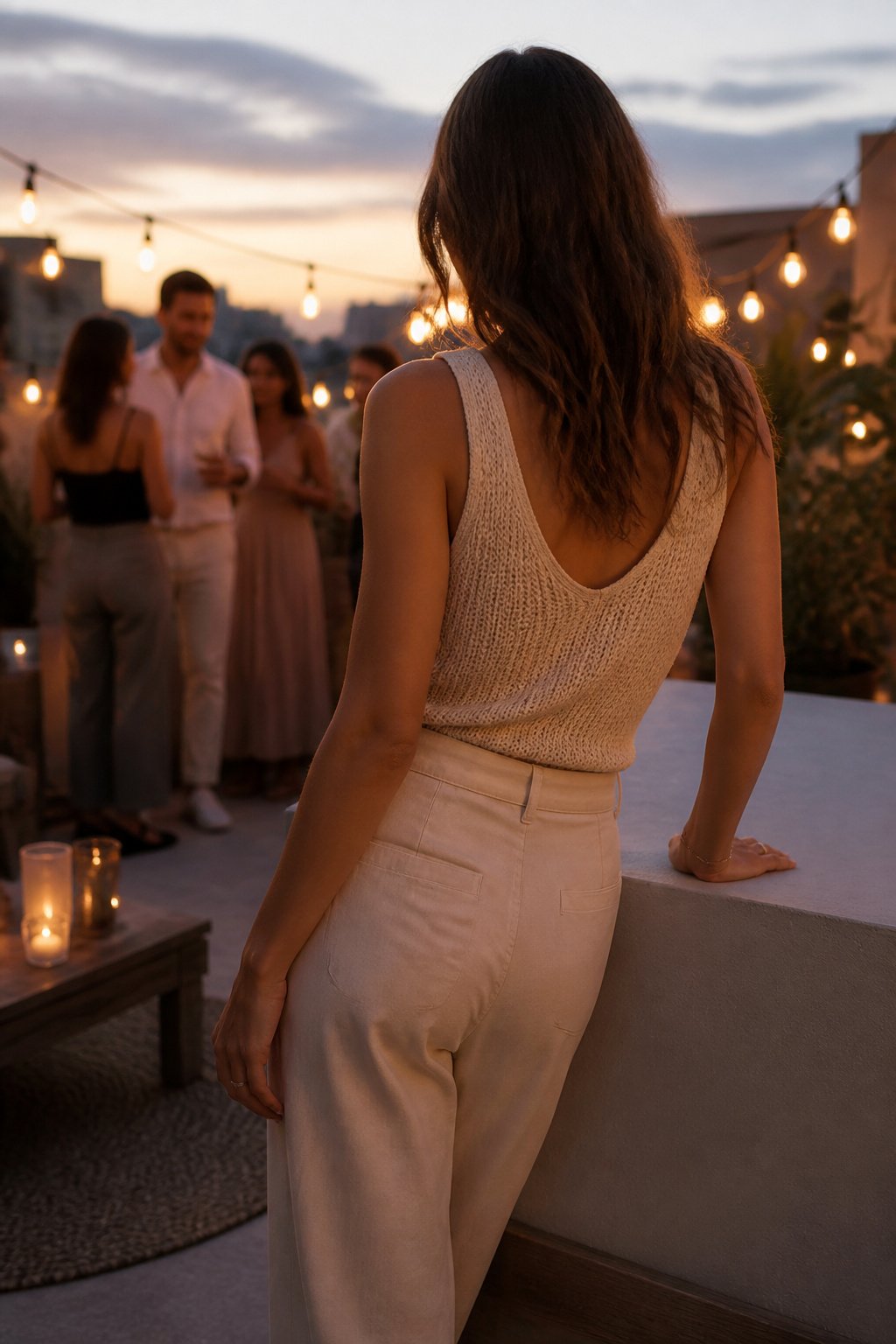
A lightweight sweater tank is the piece that convinced me cotton isn’t always the right call for summer layering. The knit structure, usually a fine gauge in cotton or a cotton-linen blend, creates tiny air pockets that breathe better than a flat woven fabric while still giving you that polished, finished edge along the neckline and armholes. I reach for mine when I need something that won’t bunch or ride up under an open chambray shirt or a lightweight blazer; the slight grip of the knit stays put where a silky tank would slide around by noon.
The drape matters more than the fiber content here. A good lightweight sweater tank falls straight from the bust without clinging to the midsection, which makes it the cleaner choice for tucking into high-waisted trousers or a midi skirt than a jersey knit that pools at the waistband. Warmth is rarely the issue in July; the real advantage is structure without stiffness. In my own closet, the sweater tanks get worn three times as often as my cotton ones once the temperature passes 80 degrees, simply because they look intentional under a layer instead of looking like an undershirt I forgot to change.
27. Halter Sweater Tank Top
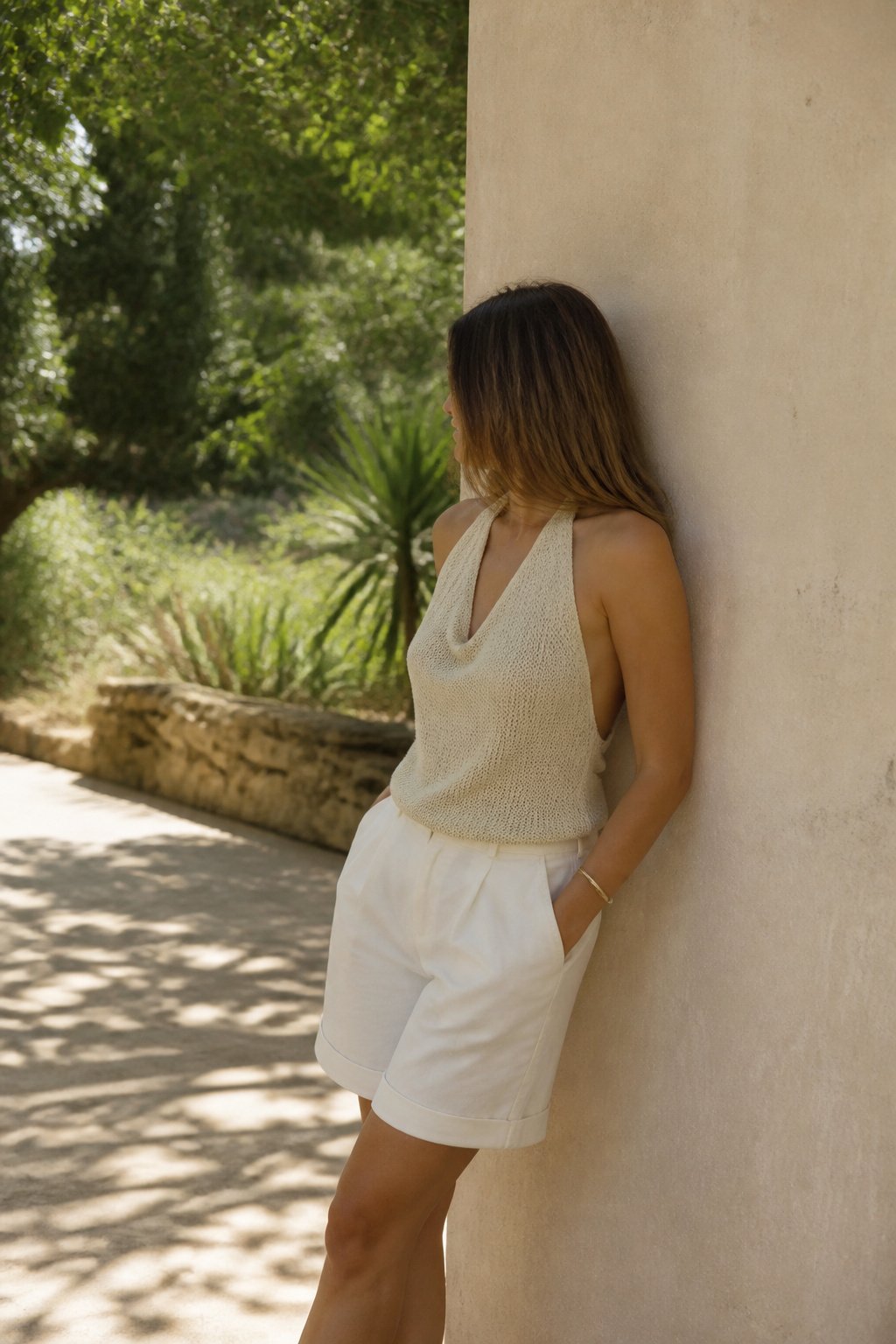
A halter sweater tank top drapes from the neck and leaves the shoulders completely bare, which means the fabric weight settles on one narrow band rather than spreading across two straps. The tie or clasp at the neck carries every ounce of pull, and by hour three that pressure can feel like a dull headache starting at the base of the skull. I learned to check the back closure before committing to a full day out; a wide, flat band distributes weight better than a skinny cord that sawed in.
The open back rules out standard bras entirely. A convertible with a low-back strap extension works in a pinch, though the hardware sometimes peeks below the armscye. Adhesive cups or going without are the usual choices, and the right call depends on whether the knit is dense enough to hide shape. Thicker cotton blends or ribbed constructions offer more coverage than fine-gauge yarns that turn sheer in sunlight.
What sells this variation for summer is the airflow across the shoulders and upper back, the one place a regular tank still traps heat. The trade is mobility: raising your arms high pulls the whole garment upward, so reaching for a train strap or a top shelf means a quick readjustment after. For walking, sitting, and casual standing, though, the cut reads dressed-up without any extra layer.
28. Chambray Tank with White Shorts

Chambray carries the same color story as denim without the weight that drags through July. The fabric runs lighter and softer, which matters when a top sits directly against your back all afternoon.
A sleeveless chambray tank in a true blue wash pairs cleanly with white shorts that hit mid-thigh or just above, not the shorter cuts that skew younger than this combination intends. The tank’s neckline makes the difference between polished and ranch-hand. I avoid anything too plunging or too boxy; a standard crew or a modest scoop keeps the shirt’s workwear roots from taking over.
White shorts ground the blue without competing, but the proportions need attention. A slightly longer short, two to three inches inseam, balances a tank that ends at the hip. Anything cropped or tucked reads deliberate; untucked and oversized slides toward costume.
In my own closet, this combination works for a Saturday farmers market or a casual lunch because the pieces are plain enough to dress up with a leather sandal and a single bracelet. The western question resolves in the styling. Leave off the turquoise, the fringe, the cowboy boot, and the chambray reads as simply a summer blue.
Why Minimalist Dressing Works in Heat
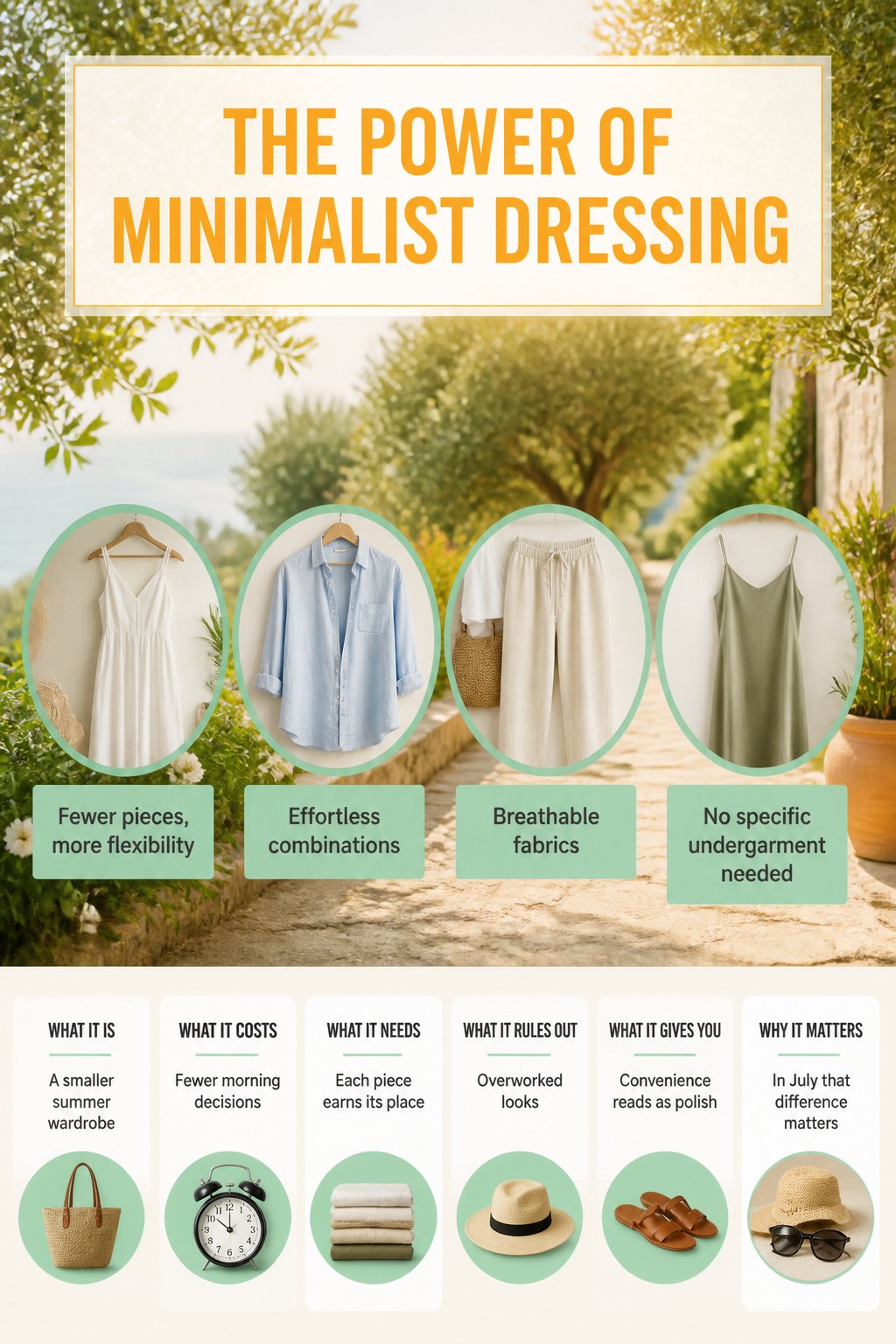
Heat drains the energy you would normally spend deciding what to wear, which is exactly why a smaller summer wardrobe ends up feeling like more. The outfits above share a single logic: each piece earns its place by working across several combinations rather than one. A white linen dress handles grocery runs and dinner reservations without a swap. The same button-down that sits over a tank with linen pants becomes the layer you tie at the waist over a slip dress. Fewer pieces means fewer morning decisions, and in July that difference matters. I keep a short mental list of proven pairings for days when the closet feels overwhelming, and they are always the simplest ones: solid colors, breathable fabrics, shapes that do not require a specific undergarment or shoe to function. The convenience reads as polish because nothing looks overworked when the heat is doing half the styling for you.
Pieces That Carry Multiple Outfits
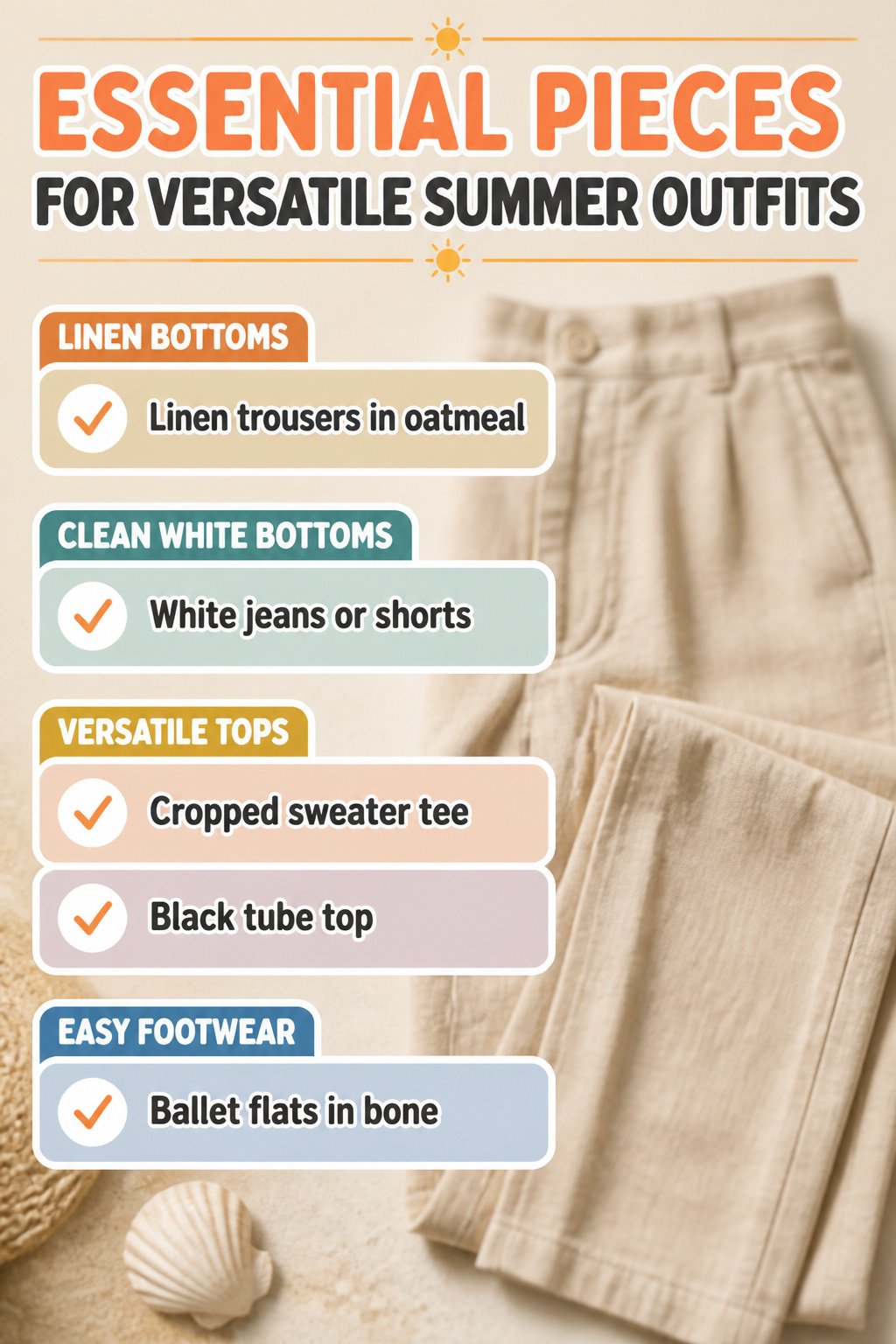
Linen is the workhorse that keeps showing up across every list of effortless summer outfits, and for good reason. A single pair of linen trousers in oatmeal or sand will pair with a white tank, a striped button-down, or a cropped sweater tee without looking like you’re repeating an outfit. The fabric wrinkles, which means nobody clocks that you wore them Tuesday and again Saturday.
White bottoms carry the same load. White jeans, white shorts, white linen pants: they all reset whatever you put on top. A black tube top reads beachy with white shorts and polished with white jeans and a belt. The bottom stays constant; the top changes the register.
Ballet flats pull off the same trick for footwear. They work with miniskirts, with trousers, with sundresses that would look overdone in heels. One pair in bone or soft metallic replaces three shoe changes.
The math is straightforward. Buying for overlap means three bottoms and four tops yield twelve combinations, not twelve separate purchases. The mistake is buying a "complete" outfit as a set: the matching vest and trousers that only look right together, the dress that needs its specific shoes. Those pieces sit in the closet waiting for their one configuration. The better buy is the piece that asks only "what color is going up or down?" and goes.
From Beach to Office in the Same Closet
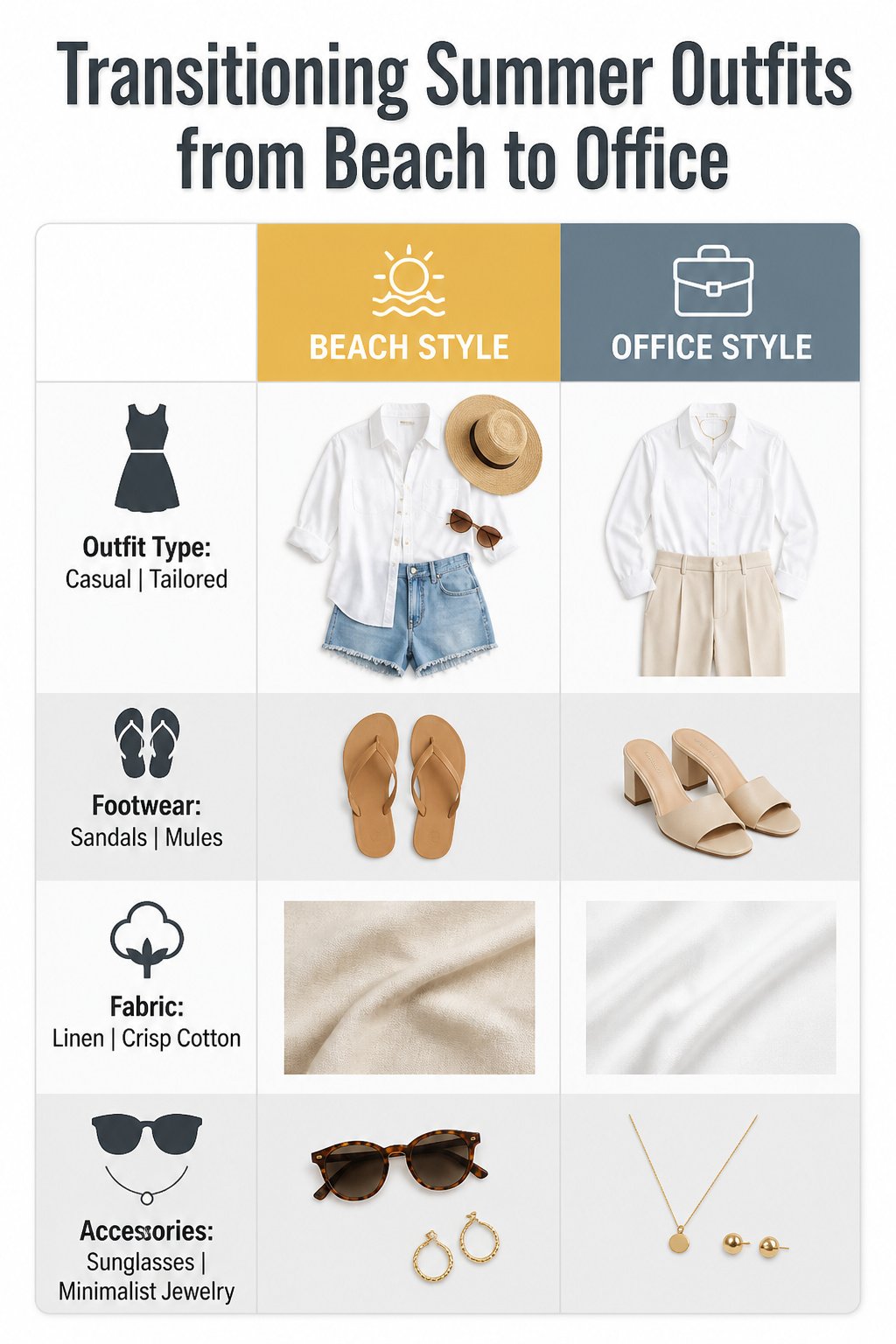
The linen shorts and a basic tee handle a Saturday farmers market without looking like you gave up, and that same tee tucked into trousers with a blouse passes at a casual Friday desk. A single white button-down covers both if you roll the sleeves and leave it loose over jean shorts for the beach, then add the matching tailored trousers and mule sandals for a 9 a.m. meeting. I used to pack a separate "work" bag for summer Fridays until I noticed the eyelet shirt dress I threw on over a swimsuit at noon looked intentional with ballet flats by 2 p.m. The tube top and jeans combo that reads dinner-out cool works under a vest and matching trousers when the office AC is brutal. A lightweight sweater tank top over a slip dress turns poolside into presentation-ready in the time it takes to swap thong sandals for something closed-toe. The trick is fabric weight and cut, not separate wardrobes. Linen, eyelet, and crisp cotton all survive a car seat and a conference room if the silhouette is clean. My rule now: if it needs an iron to look human, it stays home.
Frequently Asked Questions
What are some easy summer outfits?
Capri pants with an oversize button-down and kitten-heel mules, a white tee with a miniskirt and ballet flats, and a white linen dress with black thong sandals all work as simple warm-weather combinations. A tube top with straight-leg jeans and backless mules or a fitted vest with matching tailored trousers also read as intentional without much styling work. The article covers nearly thirty of these pairings that solve a summer morning in under a minute.
How can I style a maxi dress for summer?
A flowy maxi dress needs a true floor-skimming length and shoes that disappear, like a thin-strapped sandal or low wedge. For a black slip maxi specifically, minimalistic thong sandals in red add a focal point that keeps the look from flattening into loungewear. Stand straight in bare feet to check the hem; petites need an inch above the ankle while taller frames need the skirt to actually sweep the floor.
What are the best fabrics for summer outfits?
Linen and cotton are the staples, though each needs the right weight. Linen blended with a small percentage of rayon or cotton wrinkles into a soft rumple rather than collapsing completely. A mid-weight cotton tee around five to six ounces holds its shape through humidity instead of clinging or going transparent. For office trousers, tropical-weight wool or structured cotton balances polish with breathability.