
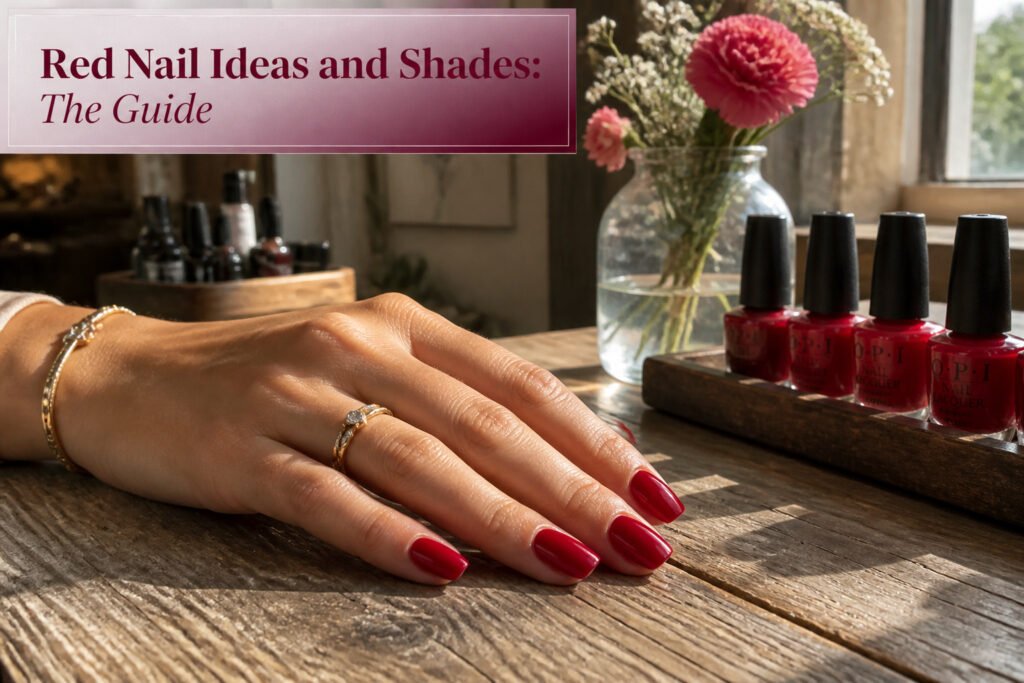
A red nail is a color choice that only works if you understand what the undertone does to your skin and your outfit. Get it wrong and the same shade drains your complexion or clashes with half your wardrobe. The right red, something like OPI’s Big Apple Red with its balanced warm-candy finish, reads intentional from across a room on almost anyone. That balance, not the brightness itself, is what separates a polish you wear once from one you reach for year-round.
Classic Red
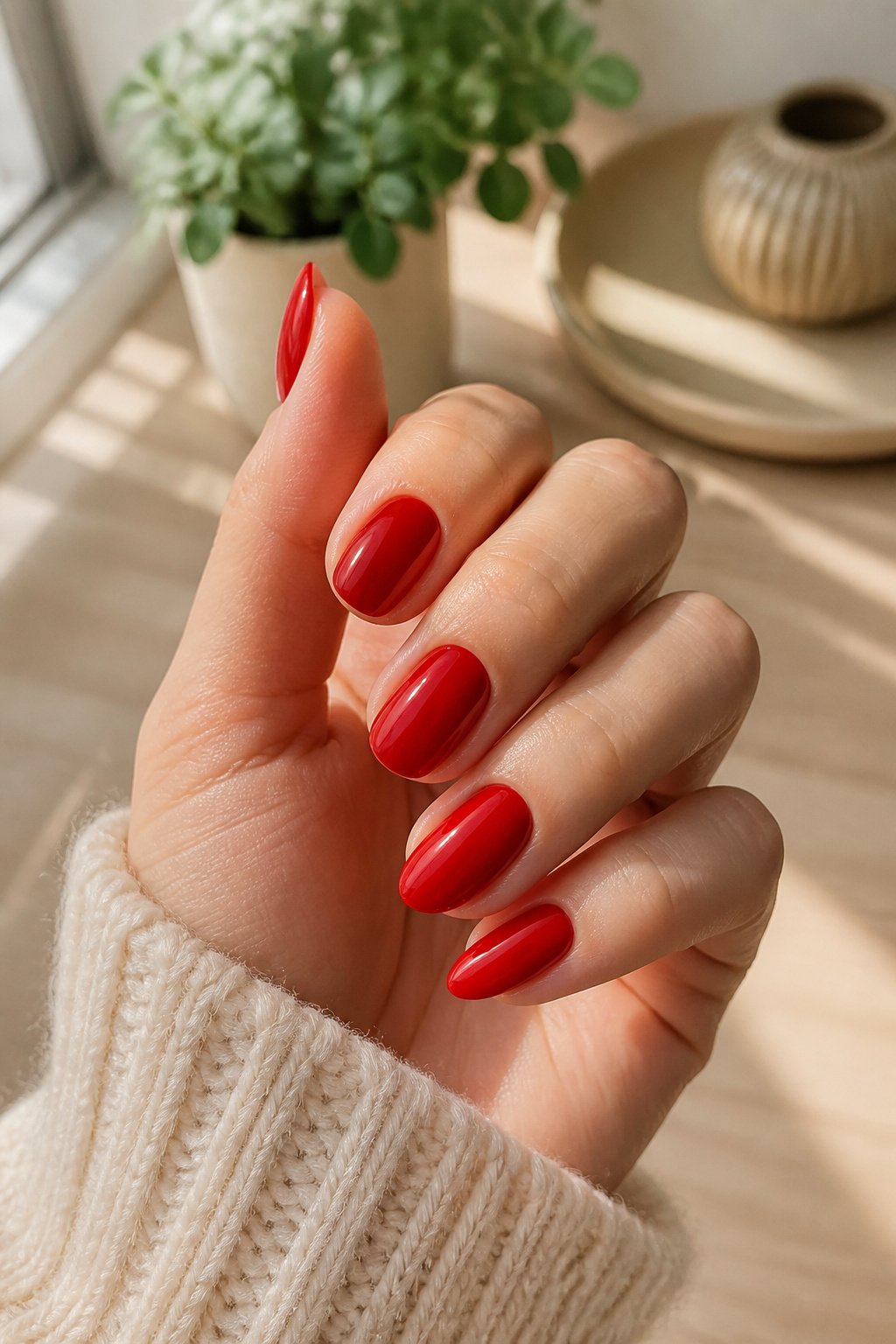
A vibrant cherry red lands in the middle of the color spectrum in a way that flatters every skin tone, from fair to deep. OPI’s Big Apple Red is the shade I point to when someone wants that effect without overthinking: it’s a high-shine, warm bright candy apple red with enough orange in the base to keep it from turning brick or burgundy on cooler complexions. The warmth matters more than most people guess. A blue-red can drain olive or deeper skin, while an orange-red reads garish on very fair tones; this one splits the difference. What convinced me, reading through a dozen of these guides, is how often the universal shades share that balance: not too cool, not too hot, just saturated enough to read as intentional from across a room. Big Apple Red also carries the gloss level that makes short nails look finished and long ones look polished without extra effort. For a single bottle that works year-round, the logic holds up.
Poppy Red
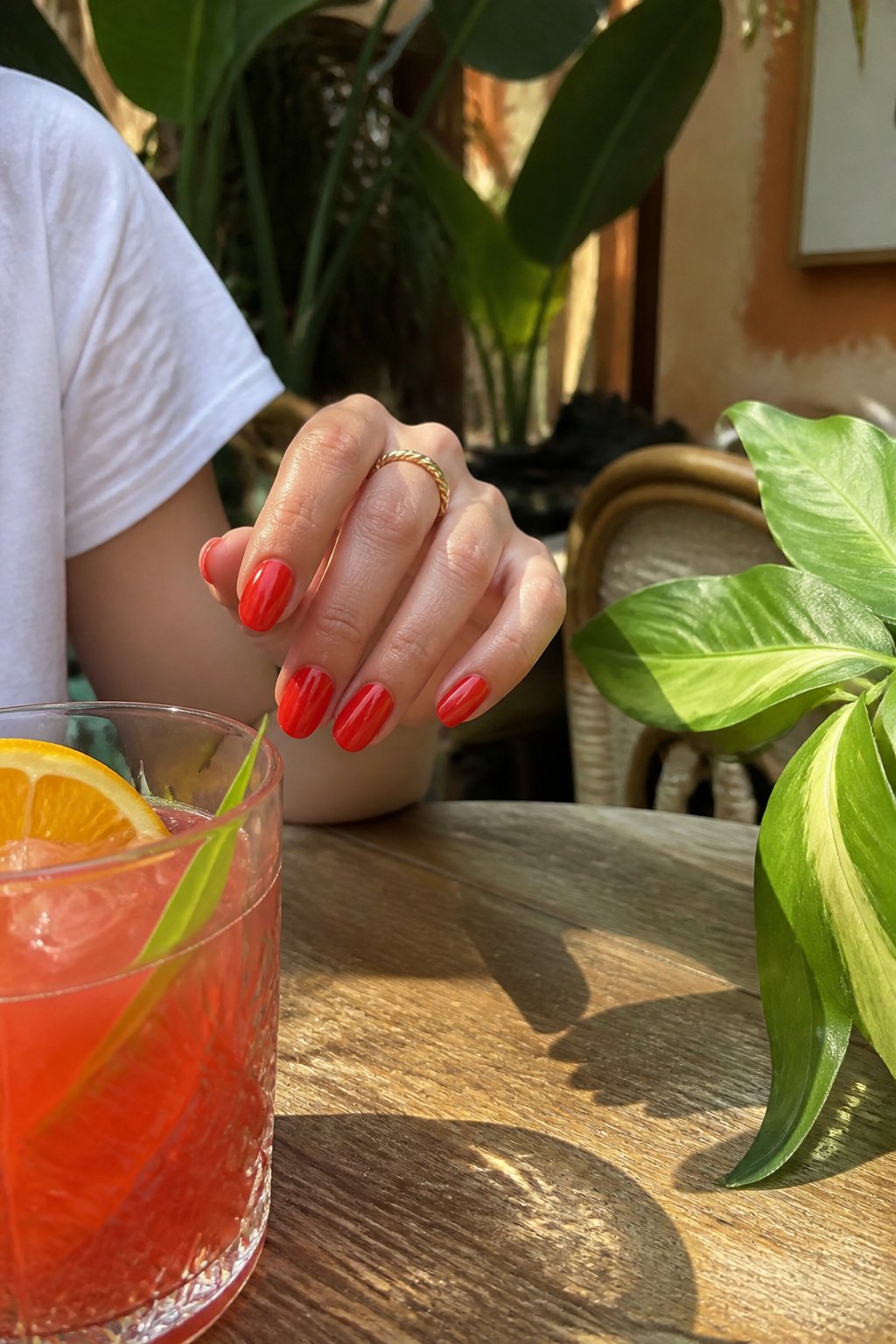
Poppy Red carries an orange undertone that pushes it past classic territory into something sunnier and more immediate. The warmth matters: where a blue-based cherry red reads formal, this vermilion tint feels kinetic, almost kinetic enough to wear with a white tee and denim without looking like you dressed for a meeting you forgot about. Manucurist frames it for sun-kissed summer skin, and that checks out; the orange base catches light rather than absorbing it, so the color seems to move when you do.
The shift from polished to energetic happens in that undertone. I reach for Poppy Red when I want the confidence of red nails without the weight of tradition behind it. It is the shade that says you chose red on purpose, not by default.
Red Velvet
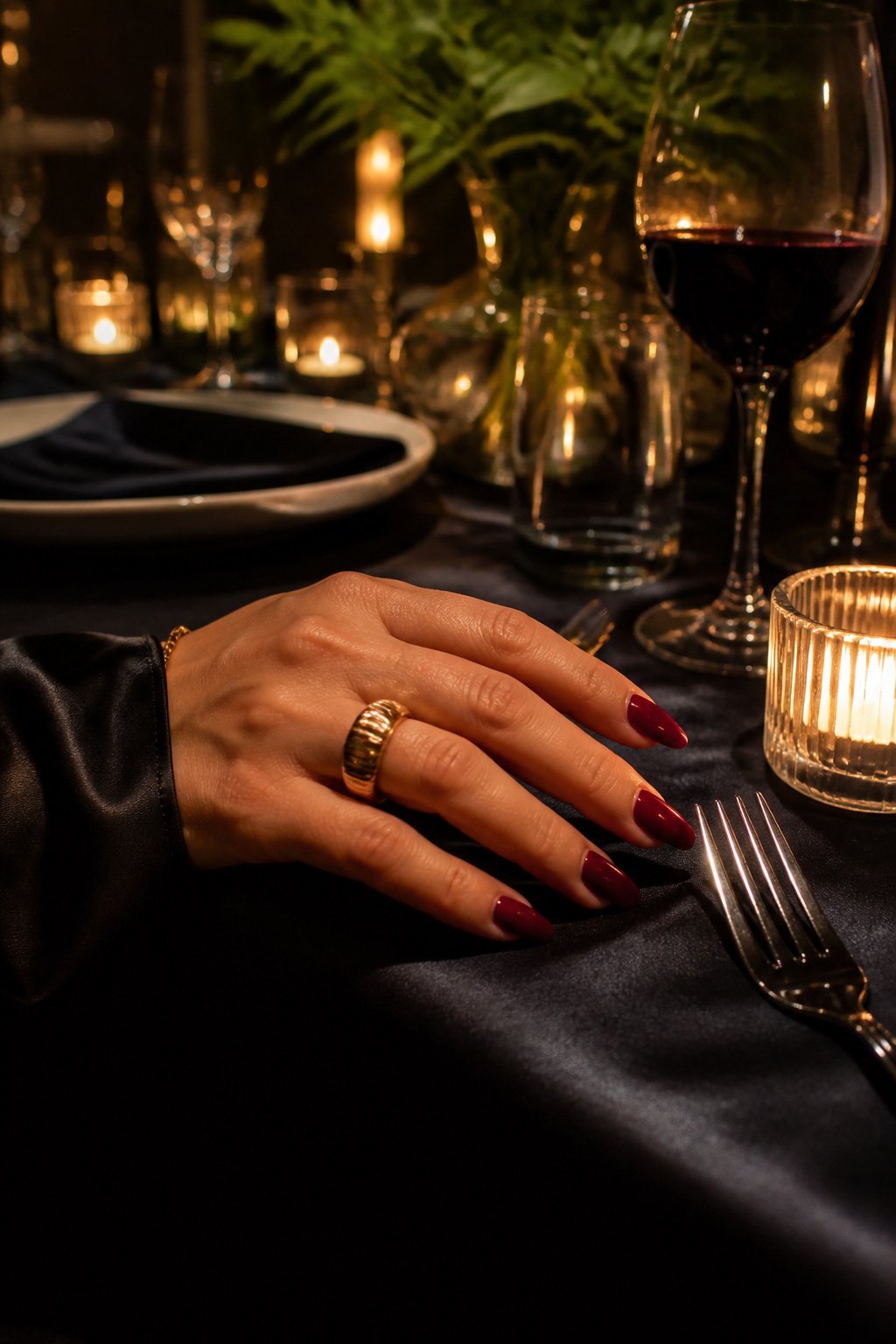
A bright cherry red or poppy vermilion carries the afternoon, but evening asks for depth without crossing into black. Red Velvet sits in that narrow space: dark enough to catch candlelight, still unmistakably red when your hands move. The first time I wore it to a dinner that ran past ten, the shift from day to night happened on my nails, not my outfit.
The trick is reading the undertone. A wine-like burgundy with a velvet twist reads sophisticated; the same depth with brown or purple creeping in turns heavy, almost muddy, under restaurant lighting. On fair skin, the contrast stays crisp. On deeper tones, the richness can flatten unless there’s enough light in the room to let the red still glow.
I keep a bright candy apple like Big Apple Red for mornings and reserve the deeper shade for after six. The swap takes thirty seconds and changes what the same black dress communicates.
Lava
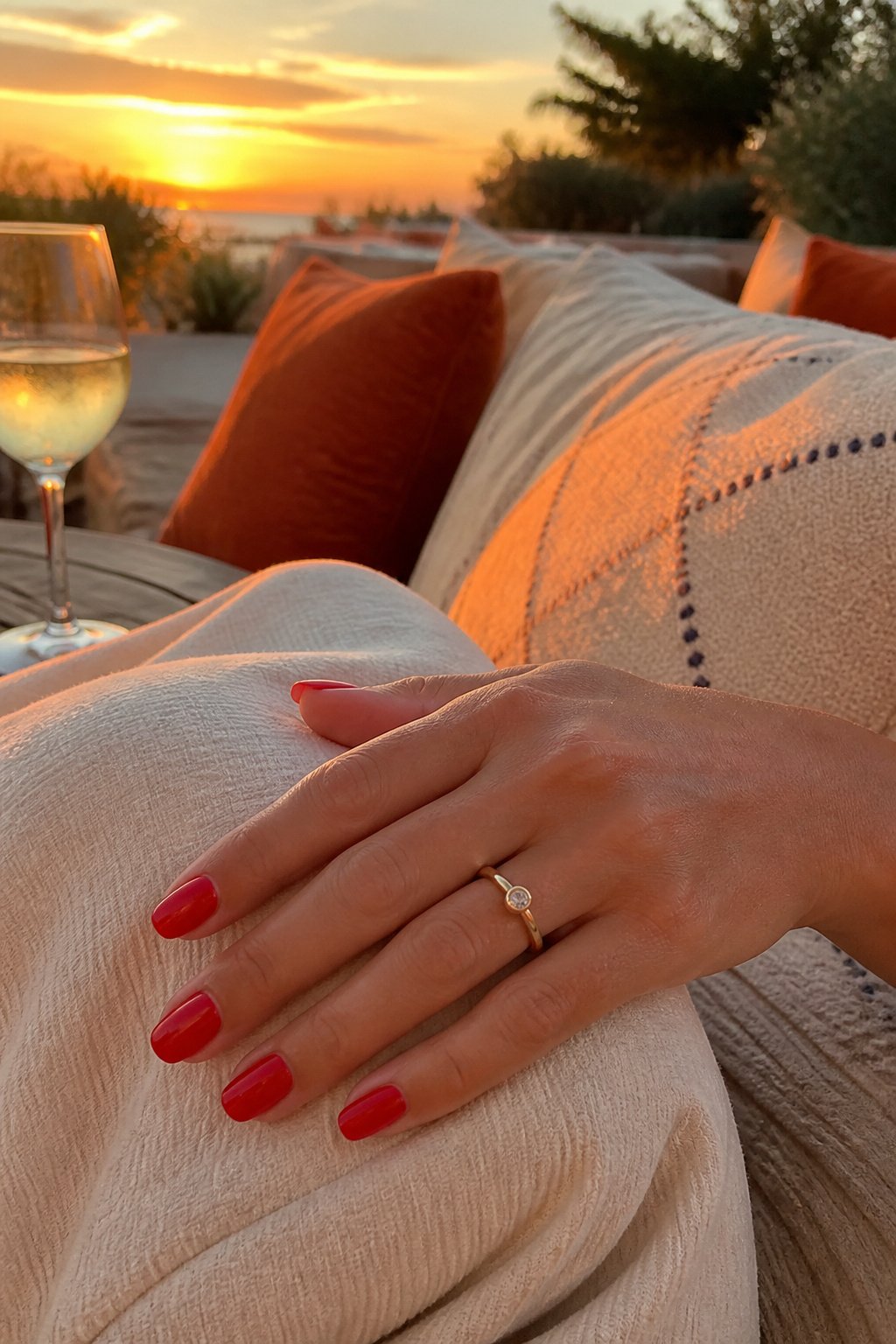
Lava carries orange undertones that push it past a standard cherry or fire-engine red, closer to the glow of a late-July sunset when the sky still hasn’t cooled. Manucurist released it in both Green and Green Flash formulas on June 6, 2025, and that warmth is what separates it from cooler pop reds like Red Coral or the pink-leaning Bougainvillea. On short nails, the orange keeps it from looking severe; on long ones, it reads as deliberate heat rather than default boldness.
The shade works best when you want red to feel seasonal, not just loud. I would reach for it on sun-warmed skin or when the rest of the outfit runs neutral and needs one point of saturation that doesn’t fight summer light. It is not the red for a January boardroom; it is the red for a patio dinner when the evening hasn’t dropped below eighty degrees yet.
Bougainvillea
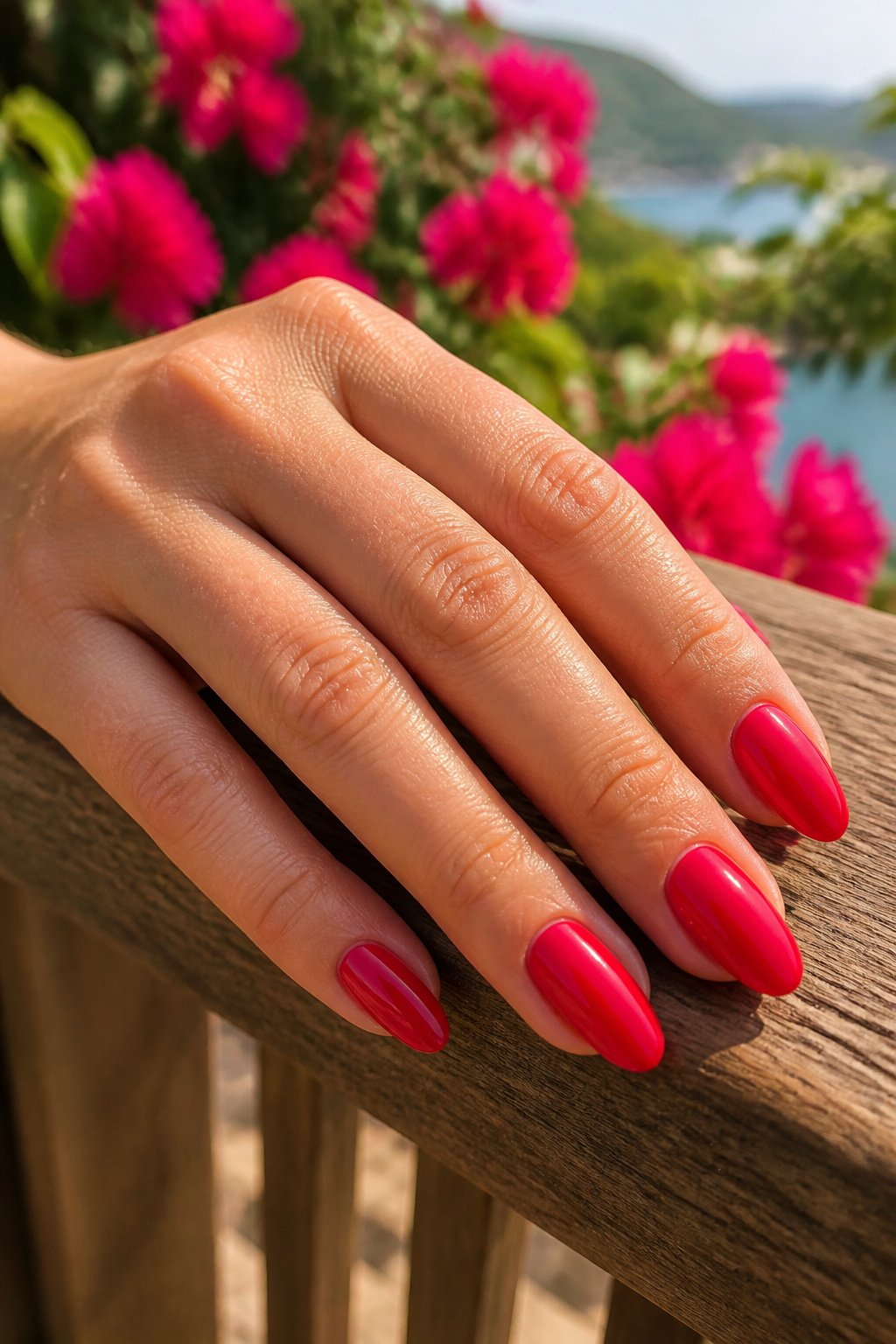
Bougainvillea sits right where hot pink and true red overlap, and that tension is what makes it wearable instead of loud. The pink undertone cools the red just enough to stop short of neon territory, which means it reads as elegant on shorter nails and still holds up on longer ones. In direct light the pink pulls forward; in shade it settles closer to a classic red, so the color does some of the outfit-matching work for you.
This is the shade that flatters olive and deeper skin tones most reliably, since the pink keeps it from turning brick or rusty against warmer complexions. Fair skin can absolutely wear it, but the contrast is sharper; you will notice the nails before you notice the rest of the look. On me, that has meant keeping the shape simple, an almond or soft square, so the color does not compete with whatever else is happening in the outfit. A single coat of high-shine topcoat is enough; anything textured, matte or glitter, tips it straight into vacation souvenir territory.
Dark Pansy
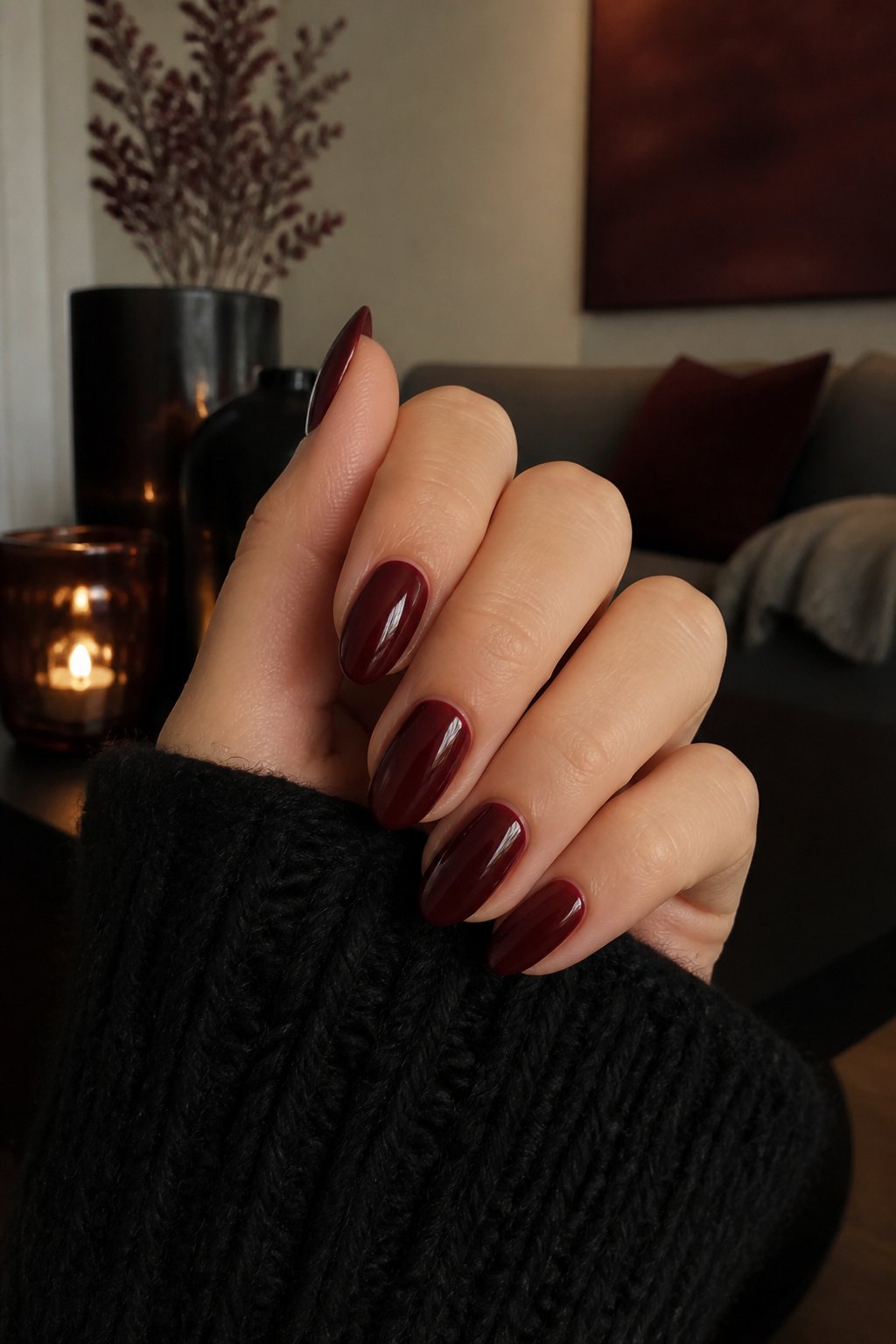
Dark Pansy sits at that useful edge where red stops competing for attention and starts doing something quieter. The depth reads as near-black in low light, then warms to a wine-like burgundy when your hands move. That shift changes what you can wear it with: it handles black, navy, charcoal, and olive without the clash that a brighter red insists on, and it does not need the rest of your look to dress up in response.
The velvet finish matters for how the color behaves. A glossy dark red catches every reflection and can look theatrical; the muted surface keeps the tone grounded. For work or evening, that difference is the line between deliberate and dressed-up.
Skin with cool or neutral undertones carries this shade most naturally, since the blue base in the pigment picks up similar notes in the complexion. Warmer skin can wear it too, but the contrast is sharper; you notice the nails against the hand rather than the color flowing with it. Either effect is valid, though the seamless read is what sells the chicness the name promises.
In the gel range, Dark Pansy cures under LED for long wear, which suits the color: a chipped deep red looks neglected faster than a chipped pale pink. The investment in the cure pays off on a shade this saturated.
Utopia
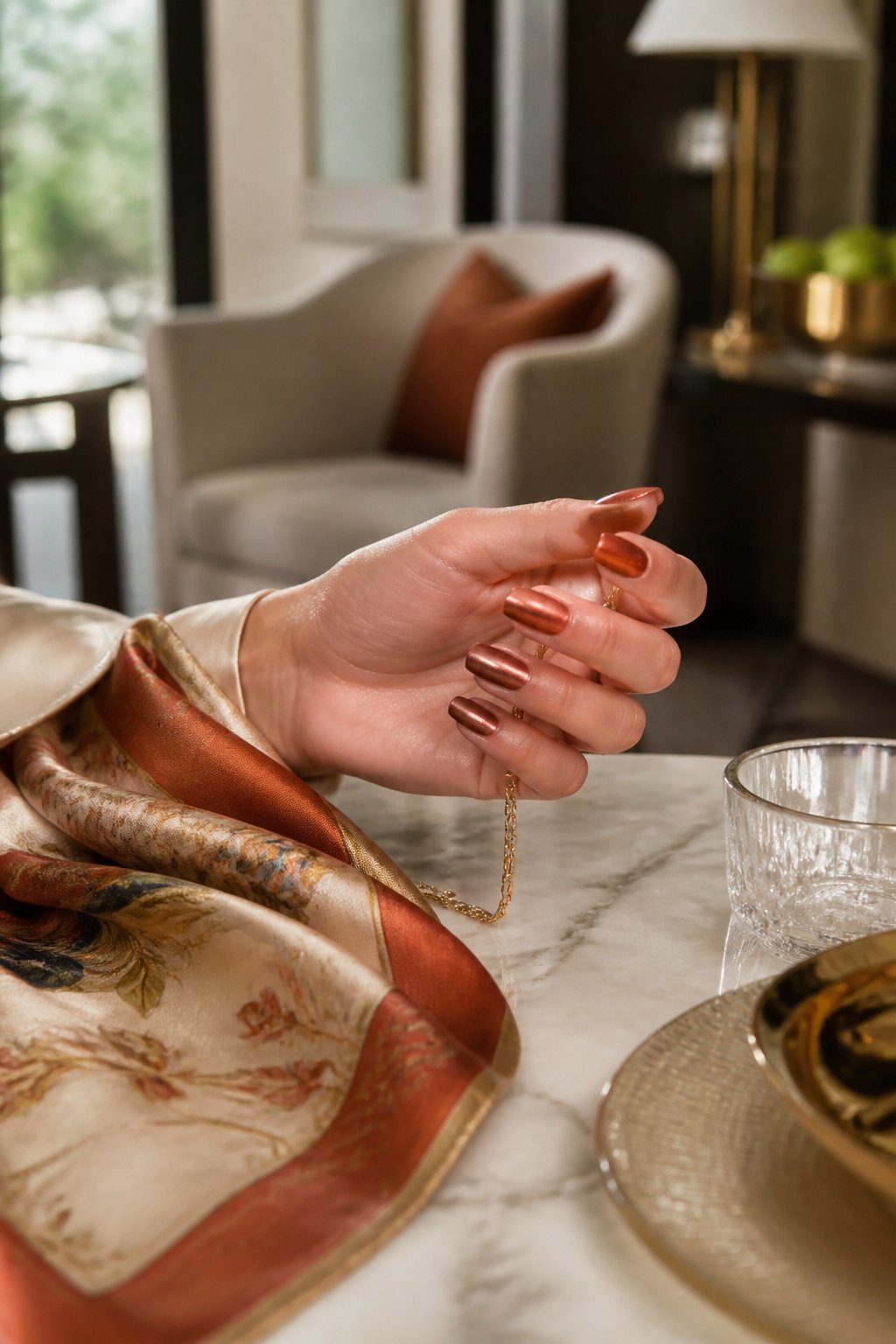
Metallic finishes catch light at a different angle than creams or shimmers, which is why a coppery metallic brown with golden-red highlights reads as red in some lights and bronze in others. Utopia, a shade from Manucurist, sits right in that in-between space. The golden-red flash shows up strongest under direct light or when your hands move, while the coppery base keeps it from looking like holiday tinsel. On medium and deeper skin tones, that warm metallic tends to blend with the undertone rather than sitting on top of it. Fairer skin pulls more of the red forward. Either way, the finish does the work of jewelry, so the rest of your look can stay simple.
Red Hibiscus
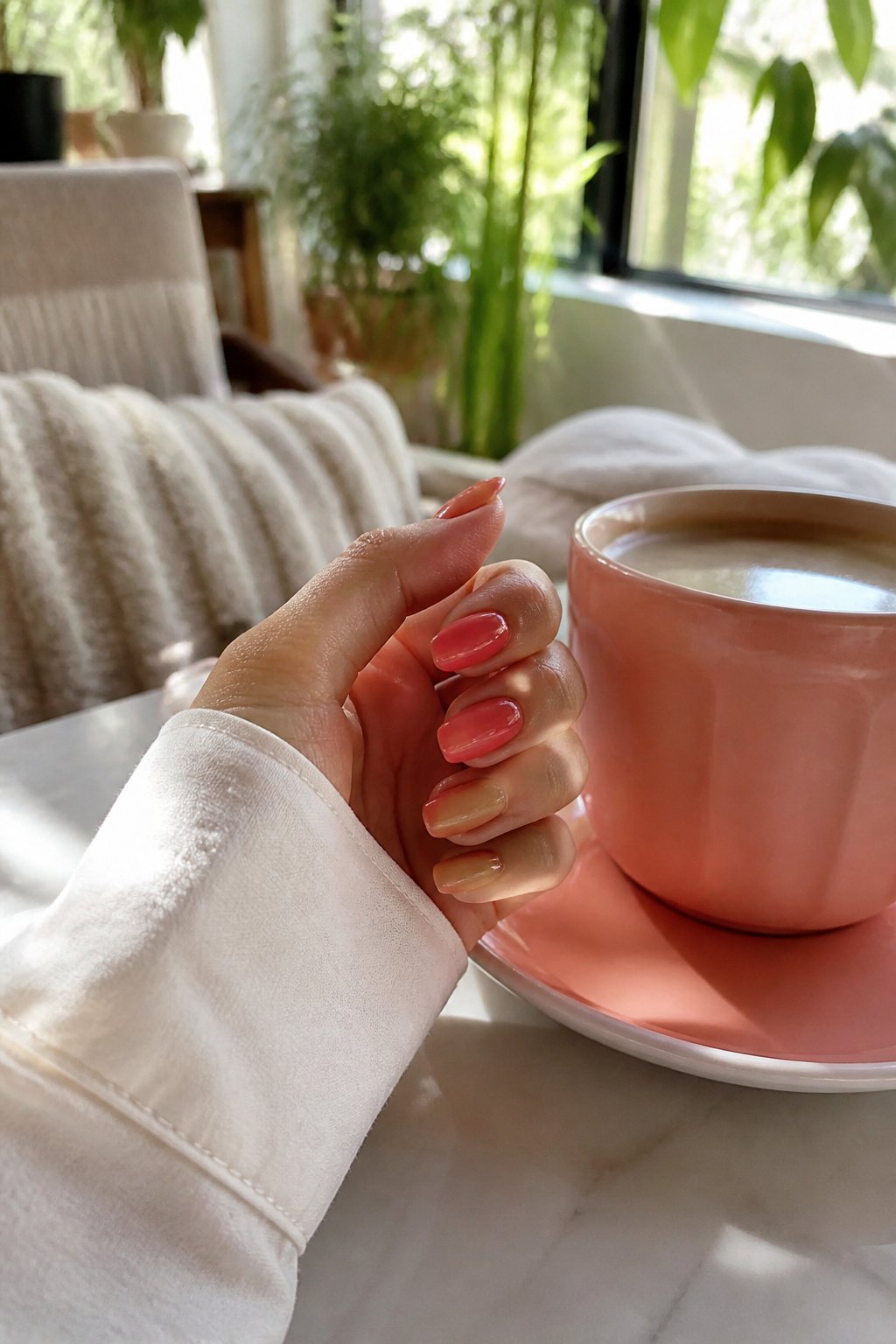
Red Hibiscus carries a pearlescent finish that shifts between pink and coral depending on the light, which makes it read as two entirely different polishes across the course of a day. The base is a silky, medium-bright red, not quite orange enough to call tomato and not deep enough for wine. That pearlescence is what saves it from reading flat under office fluorescents or turning garish in direct sun.
Movement matters with this one. The shimmer catches at typing, at hand gestures, at the ordinary tilt of reaching for a coffee cup. For that reason it suits occasions where your hands will be in motion and seen: dinner out, a presentation, anything where you are not buried in a keyboard for hours straight. The finish is eye-catching enough that I would not pair it with heavy jewelry on the same hand; it competes.
Two coats give the full effect. One leaves the pearl looking scattered and accidental, three starts to look like a special-occasion topcoat rather than a polished manicure. The red-carpet-ready description is not far off, though in practice that means it reads dressed-up even with a white T-shirt.
Earthy Reds
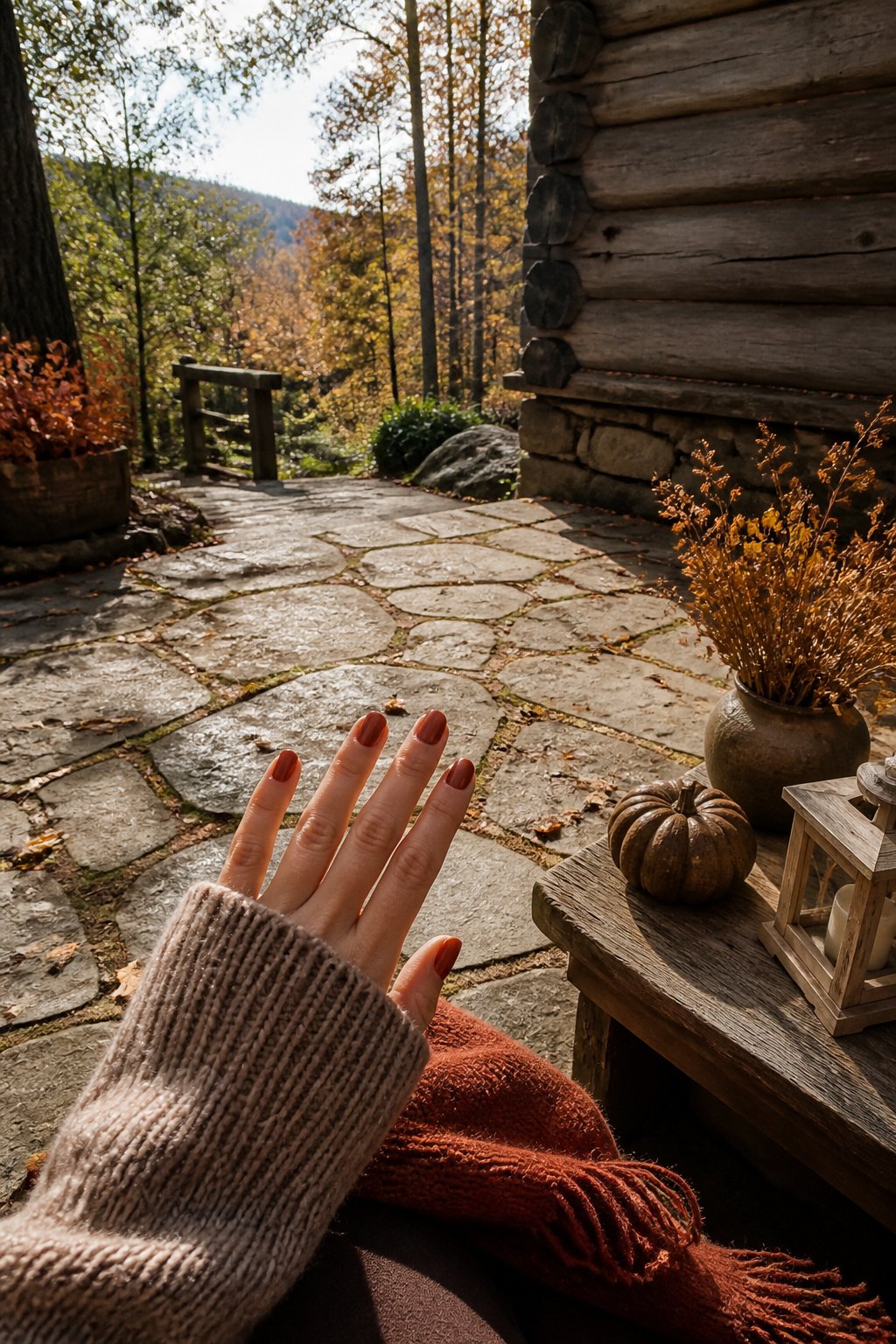
Warm, clay-like reds carry a muted quality that separates them from true red, and that difference matters most when the season shifts. Terracotta reads as burnt earth rather than fire, full of warmth without the punch of a classic scarlet. It works when summer fades into autumn, catching that transitional light the way ochre does in late afternoon.
Brique sits in the same family, though it leans on burnt orange accents that pull toward spice markets and sun-baked walls rather than falling leaves. Both shades enhance medium to deeper skin tones by adding depth rather than contrast, which is the practical reason to reach for them when a true red would shout too loudly against a camel coat or a cream knit.
The seasonal reference makes sense for about eight weeks on either side of the equinox, when the light goes golden and saturated colors start to feel off. Indian Summer, an ochre-toned red, channels that exact window: rich, comforting, and deliberately not the red you’d wear in December. These are not year-round shades, and that limitation is part of their usefulness.
Glittery Reds
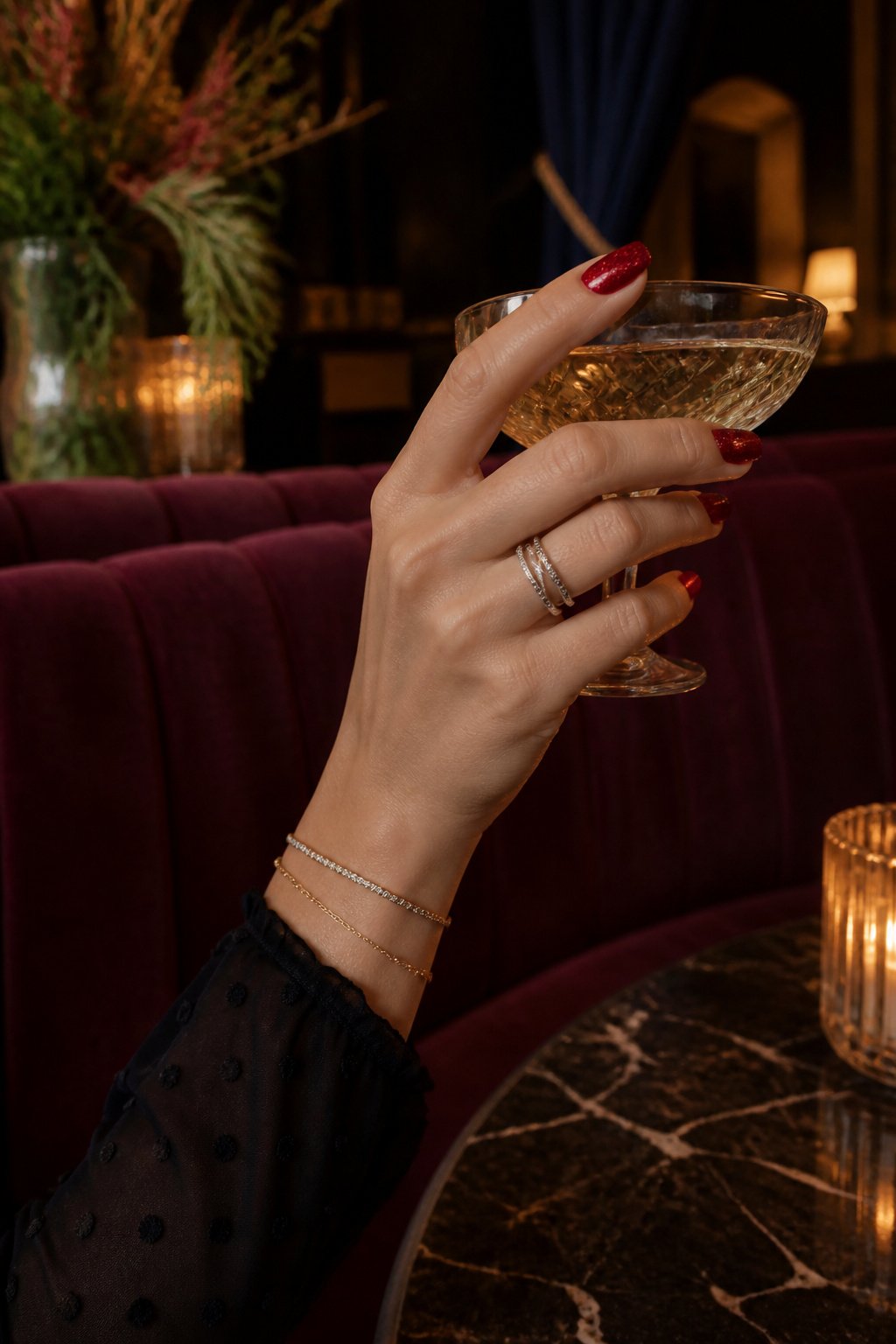
Shimmering red polish walks a narrow line between celebration and costume jewelry. The difference is almost always particle size. Glitter large enough to catch on a sleeve reads juvenile at a work dinner; the same shade in a fine pearlescent dust looks expensive under restaurant lights.
A coppery metallic with golden-red highlights, something like an autumn leaf at sunset, flatters most skin tones because the warmth keeps the red from turning harsh. The luminous quality helps here: it reflects surrounding light rather than shouting for attention. That makes it versatile for holiday parties where you might move from dim cocktail space to flash photography.
Silky reds with a pearlescent finish behave differently. They shift with movement, which reads as luxury rather than novelty, but the effect demands a clean application. Any streak or bump catches the light and announces itself.
For timing, I reach for these only when the event itself supplies the sparkle: a birthday, New Year’s, a wedding where I’m not the one in white. Worn on an ordinary Tuesday, the polish starts to feel like I’m waiting for something that isn’t coming. The manicure should match the occasion’s energy, not try to generate it alone.
Red Nail Art
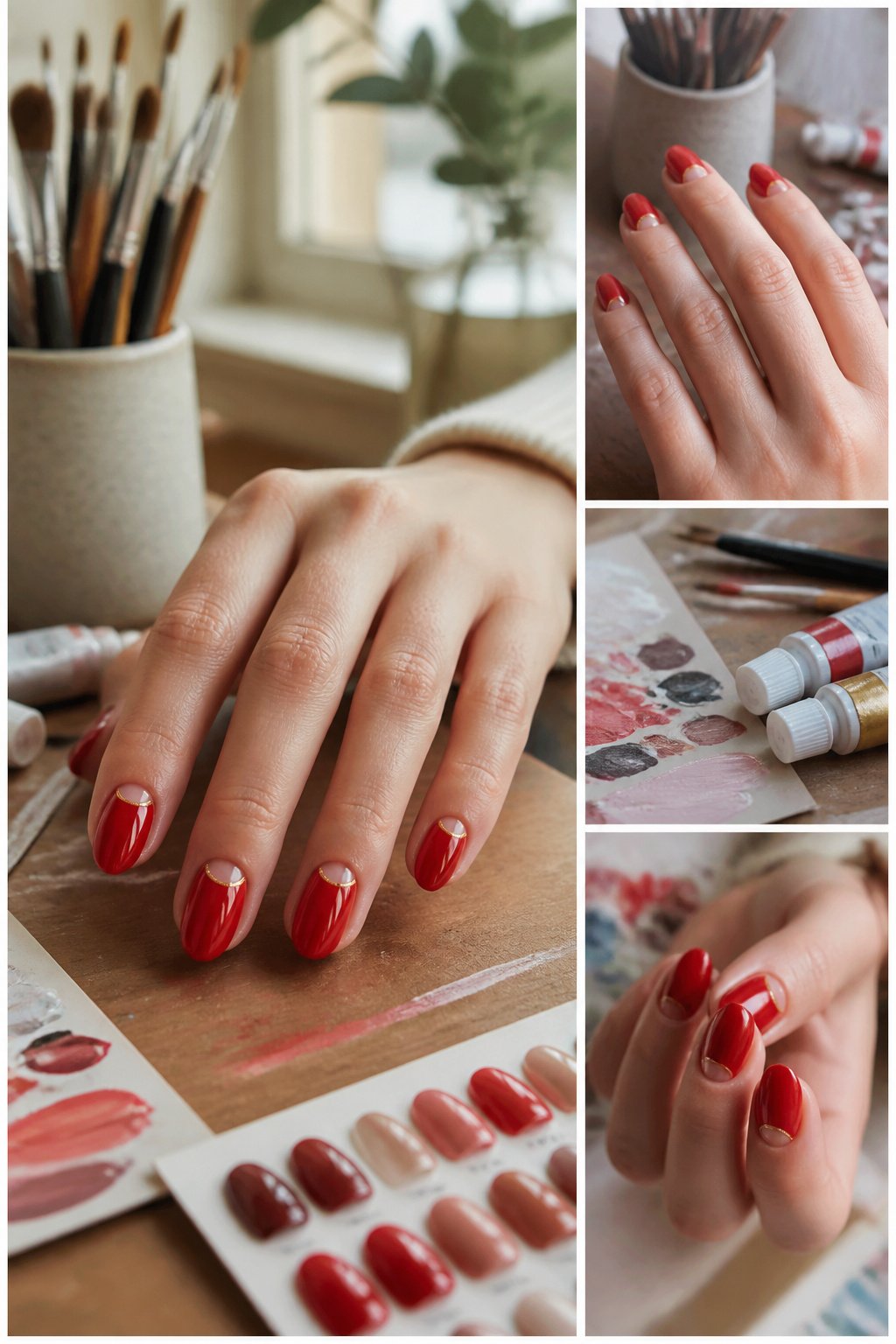
A red base turns even simple accents into something deliberate. I keep coming back to the half-moon look: one coat of cherry red, then a curved strip of nude or gold at the base, set with a reinforcement sticker while the polish is still tacky. The contrast reads expensive without the salon price.
French variations work the same way. A sheer pink or pale pink base with a red tip flips the classic on its head; the trick is letting the base dry completely before you tape the smile line, or the red bleeds and you lose the crisp edge. For something softer, try a red tip over a sheer white base, especially if you want cherry or heart motifs layered on top. A dotting tool handles the tiny details, though the rounded end of a bobby pin will do in a pinch.
Geometric patterns need a steady hand or, better, striping tape. Triangles at the cuticle, a single diagonal slash, or color-blocked squares: red against nude or red against black both hold up. The tape goes down after your base coat is fully dry, polish over it, then peel while the top color is still wet. Wait too long and the line tears.
What Red Nails Do to Mood
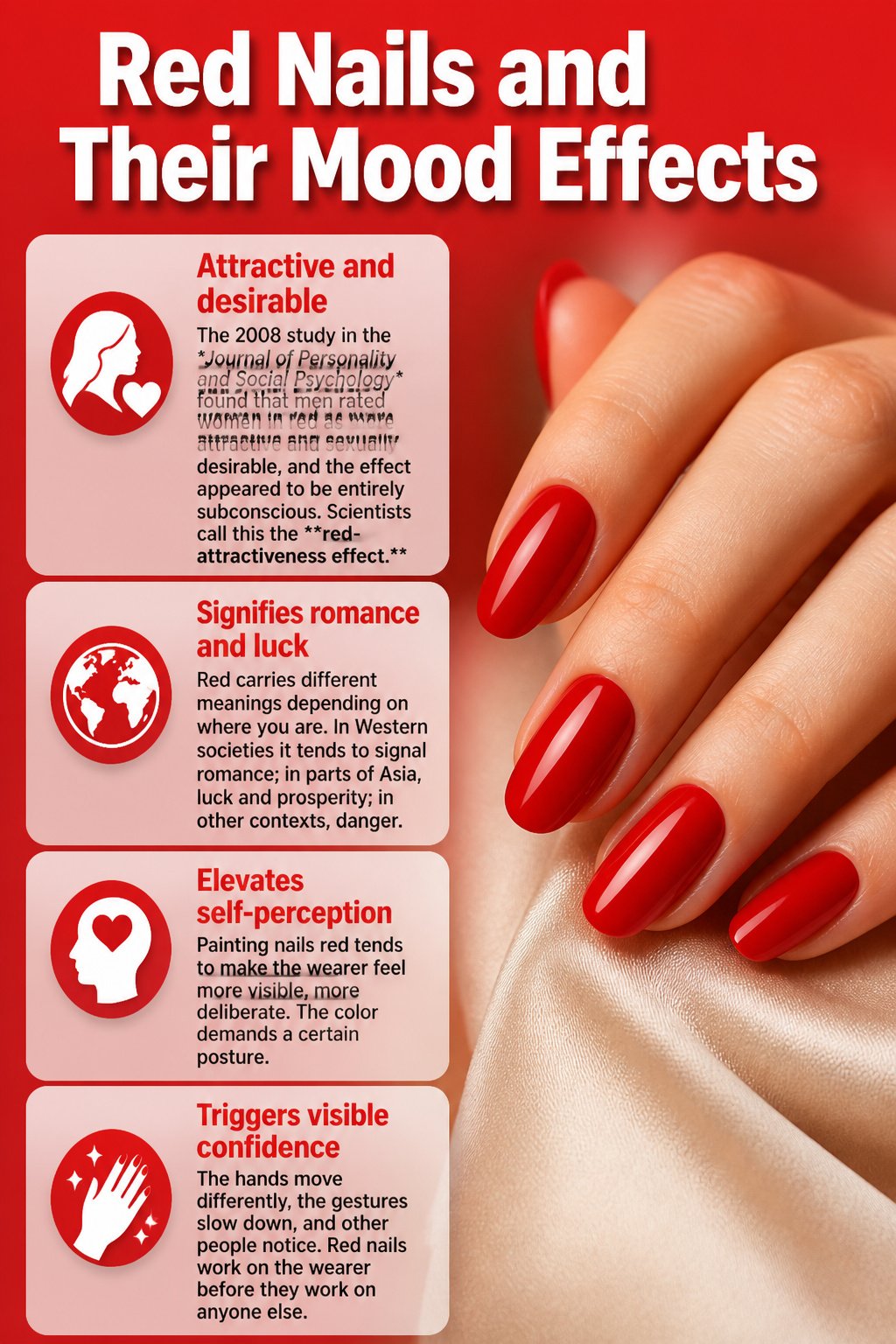
The 2008 study in the Journal of Personality and Social Psychology found that men rated women in red as more attractive and sexually desirable, and the effect appeared to be entirely subconscious. Scientists call this the "red-attractiveness effect." More recent research with Chinese college students in 2024 found the same pattern: people wearing red were consistently rated as more attractive by the opposite sex than those wearing white, which suggests the response is not limited to Western culture.
Red carries different meanings depending on where you are. In Western societies it tends to signal romance; in parts of Asia, luck and prosperity; in other contexts, danger. Yet something about the color seems to operate below culture. Evolutionary psychologists trace it to blood flow and sexual arousal, and red has evolved across species to signal dominance, vitality, and fertility.
On a personal level, the shift is often simpler. Painting nails red tends to make the wearer feel more visible, more deliberate. The color demands a certain posture. Whether the confidence comes first or the color triggers it matters less than the result: the hands move differently, the gestures slow down, and other people notice. The attraction research sits alongside this self-perception effect, not above it. Red nails work on the wearer before they work on anyone else.
The Red Nail Theory
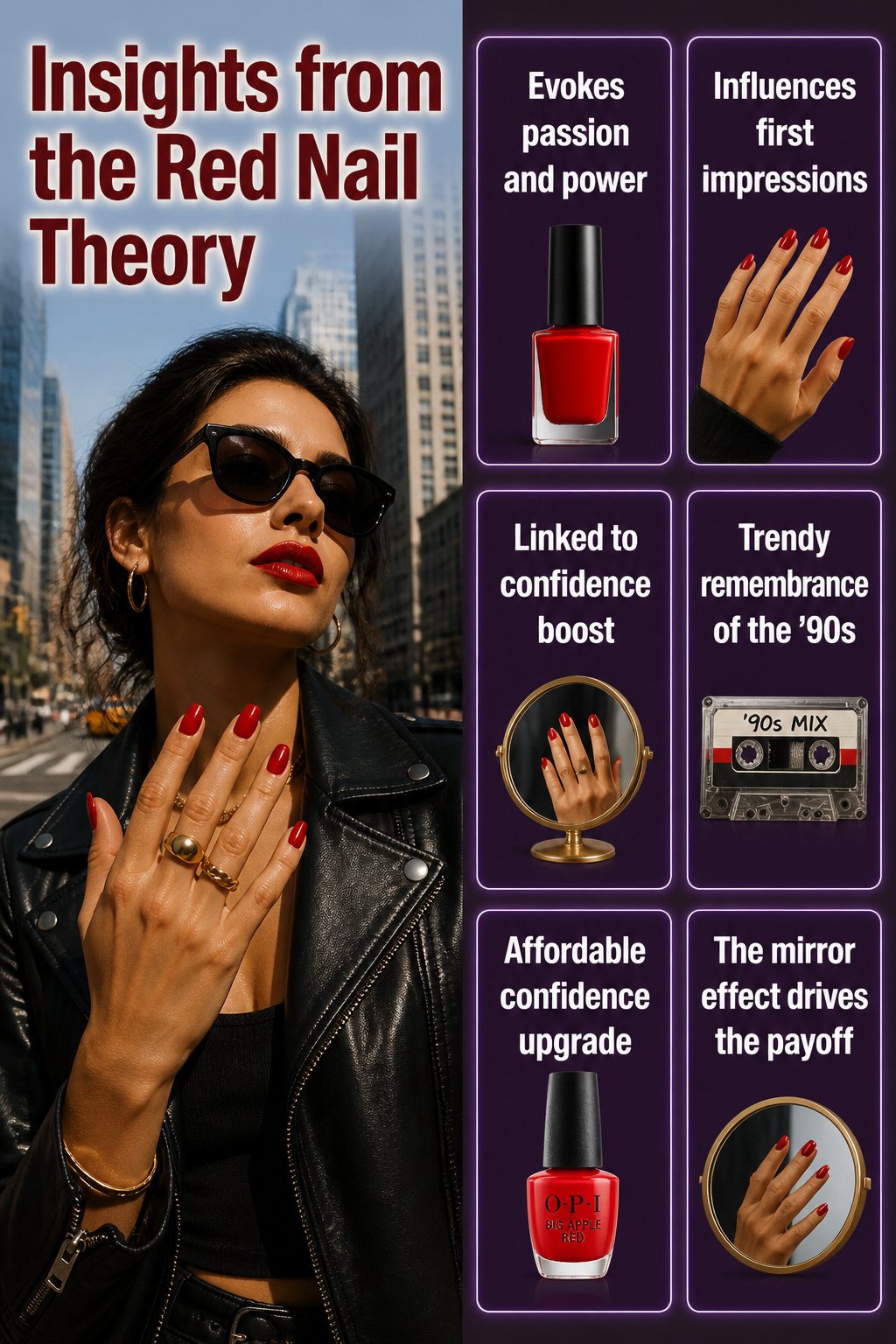
Red carries psychological weight that neutrals simply don’t. It’s been tied to passion, vigor, and power for decades, which means a red nail enters a room before you do. In 2022, a TikTok from Robyn DelMonte (@GirlBossTown) gave that old association a new name: she noticed men commented unfailingly whenever she wore red nails, and theorized it reminded them of their mothers’ manicures from the ’90s. The #rednailtheory hashtag exploded, with users logging more second dates, interview confidence, and compliments.
The beauty industry noticed. Glamnetic’s Fiery Red press-ons sold out, and salons saw appointment requests spike for classic reds.
What actually holds up? The color’s link to confidence and attraction is well documented; wearing it makes people feel more visible, and that visibility changes how they carry themselves. One woman reported using her hands more in conversation, almost presenting the color. Whether the attention comes from the polish or from the posture it creates is harder to separate. The Freudian mom-memory angle reads more like meme than mechanism, and testing it yourself costs the price of a bottle of OPI Big Apple Red. The real payoff is the mirror effect: red nails make the wearer feel bold, and bold reads as attractive. The rest is algorithm.
How I Prep for a Lasting Manicure
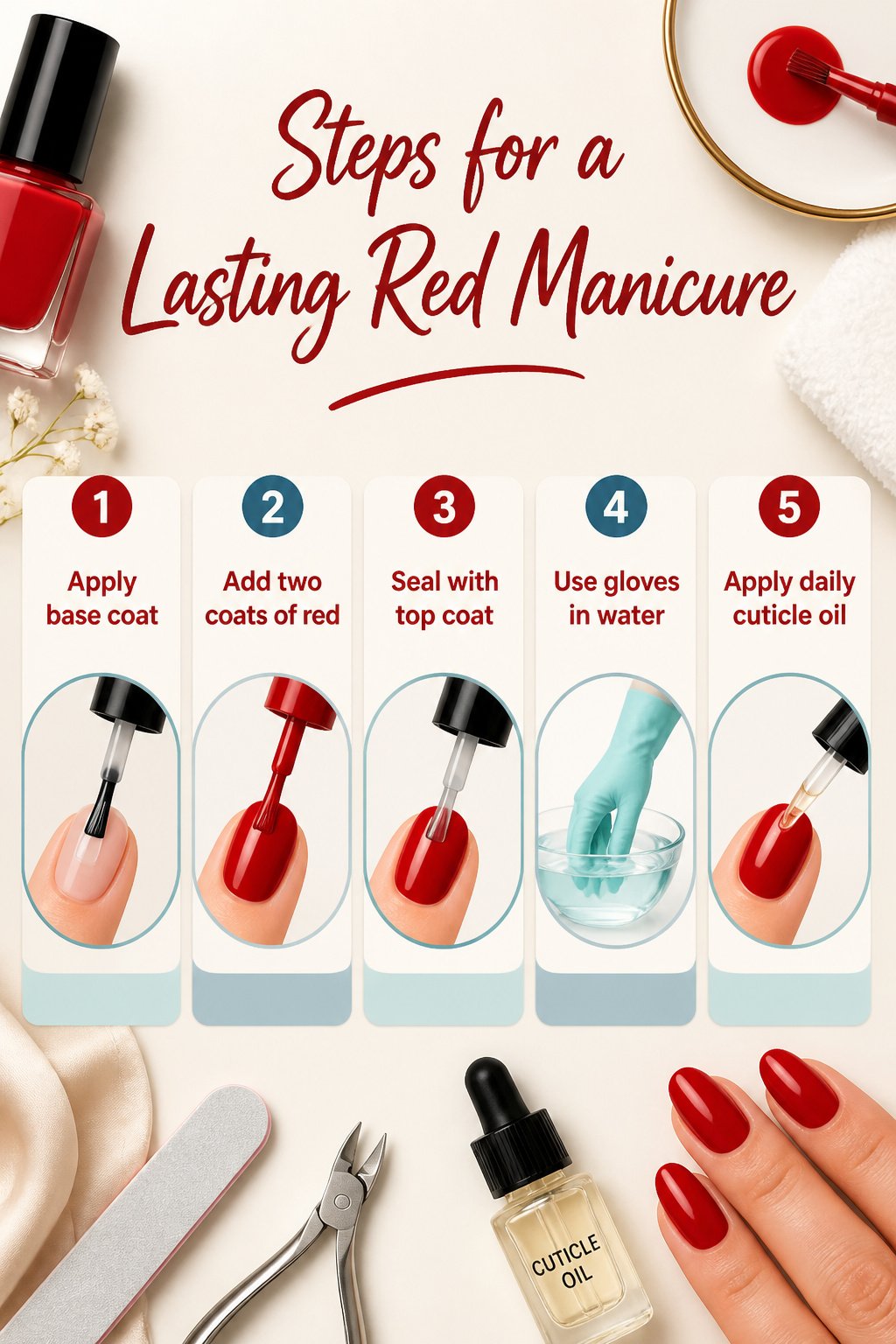
A red manicure chips faster than any other color because pigment that dense has to grip something solid. Base coat is not optional; it gives the polish a smooth, sealed surface and keeps the dye from staining the nail underneath. I learned that the hard way after skipping it once and spending weeks watching a pinkish cast grow out with my natural nail. Top coat locks the color in, and a fresh layer every two days adds another week of wear without a full redo.
Water is the real enemy once the manicure is dry. Hot showers and dishwater soften the polish film enough that it dents or peels at the edges, so gloves help, and lukewarm water is the better choice for the first twelve hours. Daily cuticle oil keeps the surrounding skin from pulling the lacquer up at the sides, which is usually where a red manicure fails first.
Frequently Asked Questions
What is the ‘Red Nail Theory’?
The Red Nail Theory, coined by TikTok creator Robyn DelMonte in 2022, suggests that wearing red nails attracts more attention and compliments, especially from men. The idea went viral after DelMonte noticed men consistently commented when she wore red polish, with some theorizing it triggers subconscious associations with 1990s maternal manicures. What actually holds up is that red’s documented link to confidence and attraction changes how wearers carry themselves; bold posture reads as attractive, whether the polish or the confidence comes first.
Which red nail polish is best for my skin tone?
A balanced cherry red like OPI’s Big Apple Red flatters every skin tone because it sits in the middle of the spectrum with enough orange to avoid turning brick on cooler complexions but not so much that it reads garish on fair skin. Poppy Red and Lava, with their orange undertones, suit sun-warmed or deeper skin especially well. Bougainvillea, where hot pink and red overlap, flatters olive and deeper tones most reliably since the pink prevents a rusty cast against warmer complexions. Dark Pansy, with its blue base, carries most naturally on cool or neutral undertones.
How can I make my red manicure last longer?
Base coat is essential; it seals the nail surface and prevents the dense red pigment from staining the nail underneath. Top coat locks color in, and adding a fresh layer every two days extends wear by about a week. Avoid hot water for the first twelve hours after application, since showers and dishwater soften the polish film enough to dent or peel edges. Daily cuticle oil keeps surrounding skin from pulling lacquer up at the sides, which is where red manicures typically fail first.