
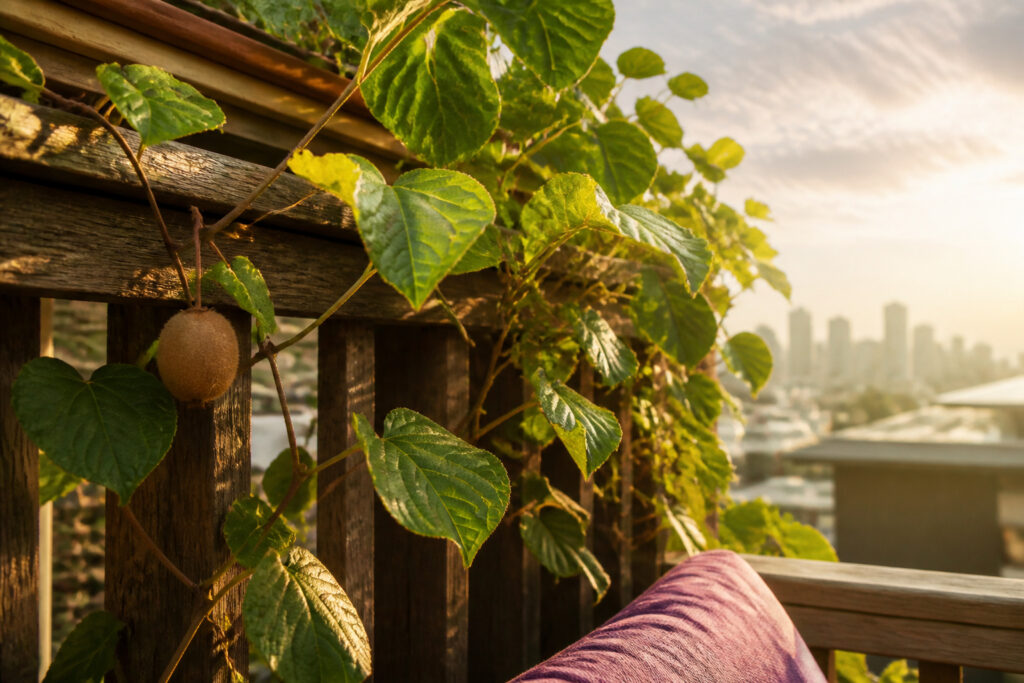
Growing kiwi in pots gives you fruit on a patio or balcony without surrendering a garden bed to a vine that can run 20 feet. The catch is patience: most container plants need three to six years before they bear, and only self-pollinating varieties like Issai will fruit from a single pot. Start with an 18–24 inch container, drainage holes, and a trellis at least 2 meters high, or the vine will tangle into a shaded mess long before harvest.
Why Pots Work for Kiwi
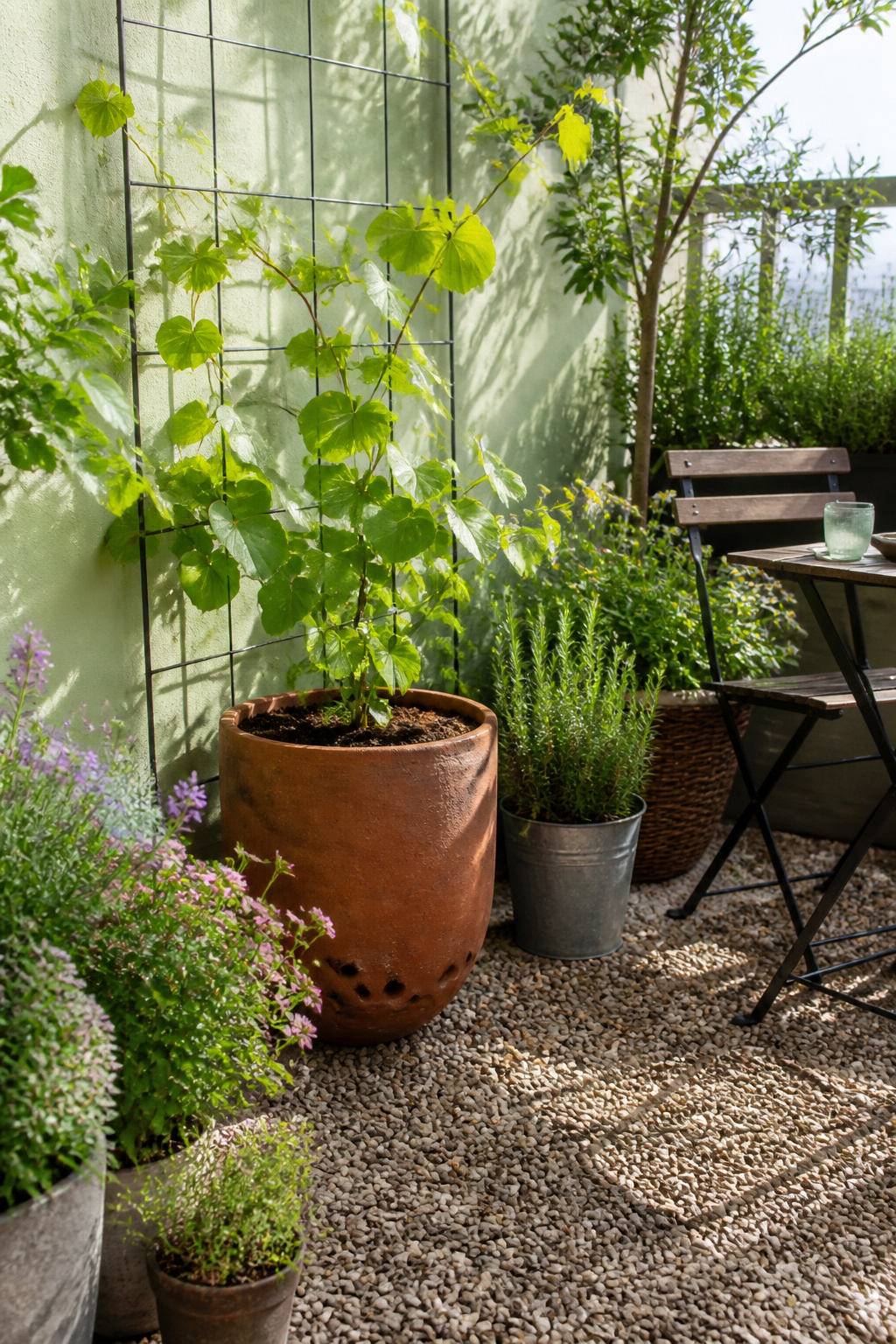
Kiwi vines absolutely grow in pots, and the right setup saves you from the common mistake of treating them like a windowsill herb that stays small. Self-pollinating varieties like Issai are the practical starting point, since you get fruit from one plant instead of waiting for male and female vines to find each other.
The container matters more than the label on the nursery pot. A final size of at least 18–24 inches deep and wide gives the root system room to establish, though sources note that 20 gallons is a safer floor and vigorous fuzzy kiwi types want even more space. Gradual upsizing over several years beats shocking a young plant with a jump from seedling tray to estate planter.
Drainage holes are non-negotiable. Without them, you are building a root rot trap, not a home for fruit. A layer of gravel or broken terracotta at the bottom helps water escape rather than pool, and the potting mix itself should lean toward the larger-particle blends sold for containers rather than dense garden soil that turns to concrete in a confined space.
Pick the Right Variety
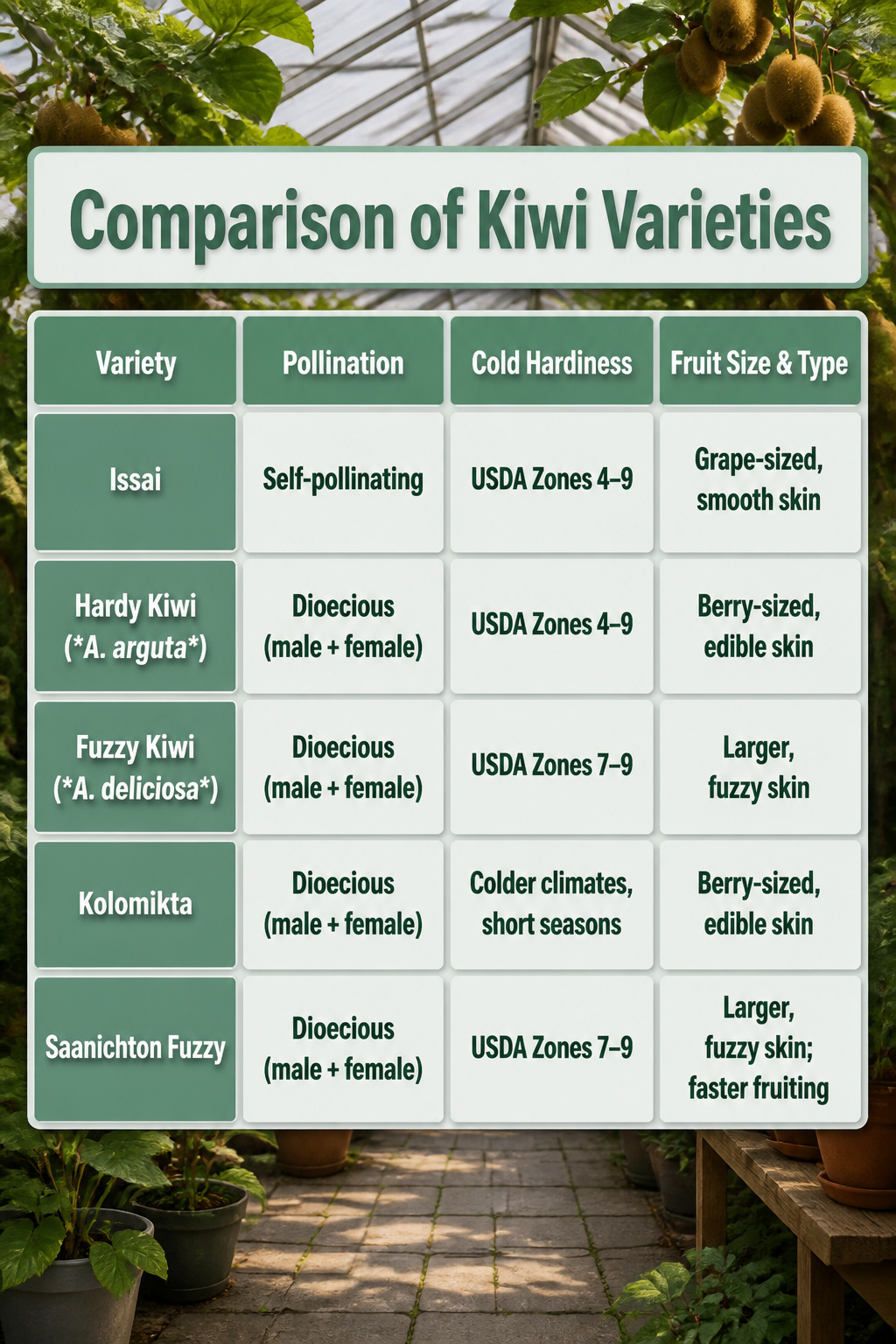
Not every kiwi vine belongs in a container. Issai is the one I would start with: it is self-pollinating, so a single plant sets fruit without a partner, and it stays compact enough for a patio pot. Hardy kiwi, Actinidia arguta, handles cold better than most, down to USDA Zone 4, though you will still need a male vine nearby unless you find another self-fertile selection. Fuzzy kiwi, Actinidia deliciosa, gives you the familiar grocery-store fruit, but the vines run larger and demand both a male and a female plant; the Vincent female paired with a Tomuri male is the combination usually sold. For tight balconies or colder pockets, Kolomikta stays smaller and ripens even in short seasons. Saanichton Fuzzy fruits faster than the standard fuzzy types, which matters when you are already waiting years for a potted plant to produce.
| Variety | Pollination | Cold Hardiness | Fruit Size & Type |
|---|---|---|---|
| Issai | Self-pollinating | USDA Zones 4–9 | Grape-sized, smooth skin |
| Hardy Kiwi (A. arguta) | Dioecious (male + female) | USDA Zones 4–9 | Berry-sized, edible skin |
| Fuzzy Kiwi (A. deliciosa) | Dioecious (male + female) | USDA Zones 7–9 | Larger, fuzzy skin |
| Kolomikta | Dioecious (male + female) | Colder climates, short seasons | Berry-sized, edible skin |
| Saanichton Fuzzy | Dioecious (male + female) | USDA Zones 7–9 | Larger, fuzzy skin; faster fruiting |
If you only have room for one pot, Issai or Kolomikta are your practical choices. Fuzzy kiwi rewards the extra space and the second vine, but plan for it.
Choose the Pot
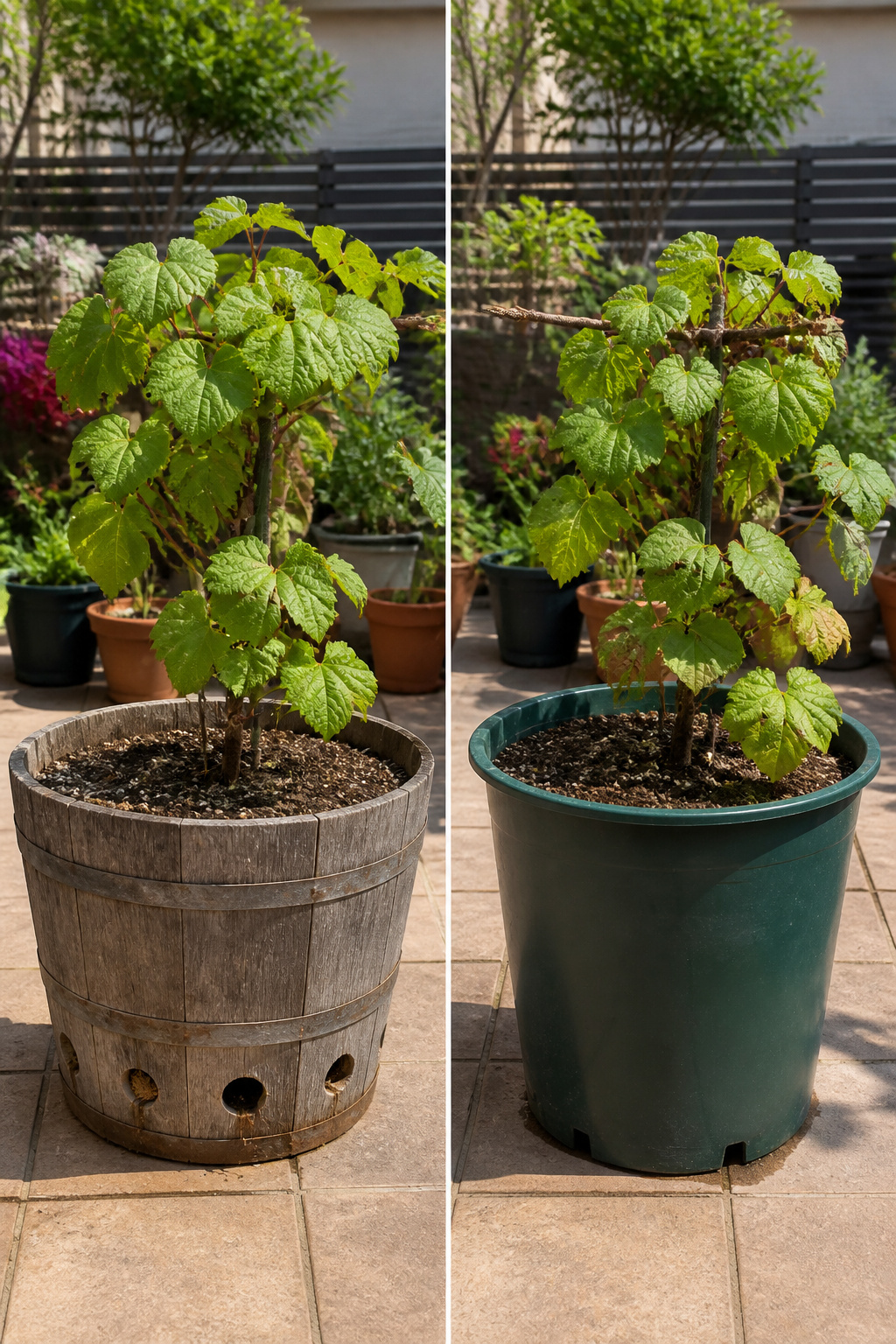
A kiwi vine in a container needs room to build the root system that feeds everything above ground. 18–24 inches deep and wide is the floor, not the sweet spot, and fuzzy kiwi or the more vigorous Actinidia arguta varieties will eventually want something closer to 20 gallons or 30 liters to reach their full size. The jump matters too: moving a young plant straight into a pot at the maximum size stalls root establishment rather than helping it. Better to step up the container over a few growing seasons and let the roots fill each one before they graduate.
Drainage holes are non-negotiable. Kiwis die faster from wet feet than from almost any other mistake, and a layer of gravel or broken terracotta at the bottom buys extra insurance against water pooling where roots sit. Without that escape route, even the right soil mix turns into a slow drowning. For the largest pots, a mix with some larger particles helps water move through instead of hanging around the center where you cannot see it.
Weight becomes a problem you solve now or regret later. A 20-gallon pot filled with damp soil and a mature vine is not something you shift by tipping and hoping. A rolling base, planned from the start, saves your back when the plant needs sun rotation or winter shelter.
Mix the Soil
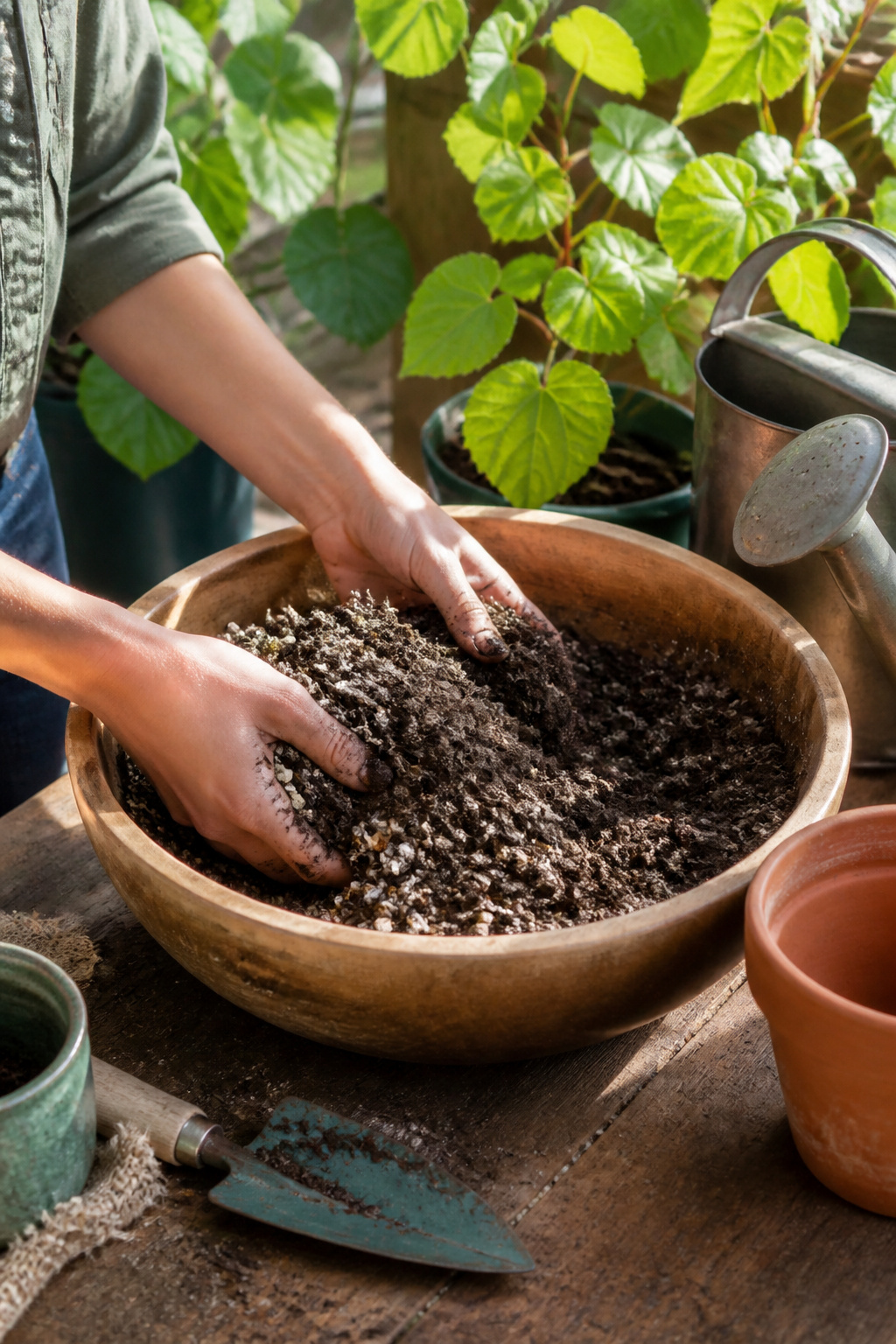
Bagged potting mix is the only soil that belongs in a container kiwi vine. Garden soil compacts in pots, choking roots and trapping water where it cannot drain. A well-draining potting mix blended with compost or organic matter gives the roots the loose structure they need to spread through a confined space.
Kiwi wants its pH slightly acidic to neutral, ideally 5.5–7.0. If you are not sure where your mix falls, a cheap pH meter or a strip test from the garden center takes thirty seconds and removes the guesswork. I have learned to test before planting rather than wonder later why leaves yellow.
The organic matter matters because kiwi are hungry plants. Sources describe them as heavy feeders, and a pot has no surrounding earth to borrow from. Compost in the mix provides the first reserve; you will supplement it later, but starting with depleted soil sets the vine behind from day one.
Plant at the Right Depth
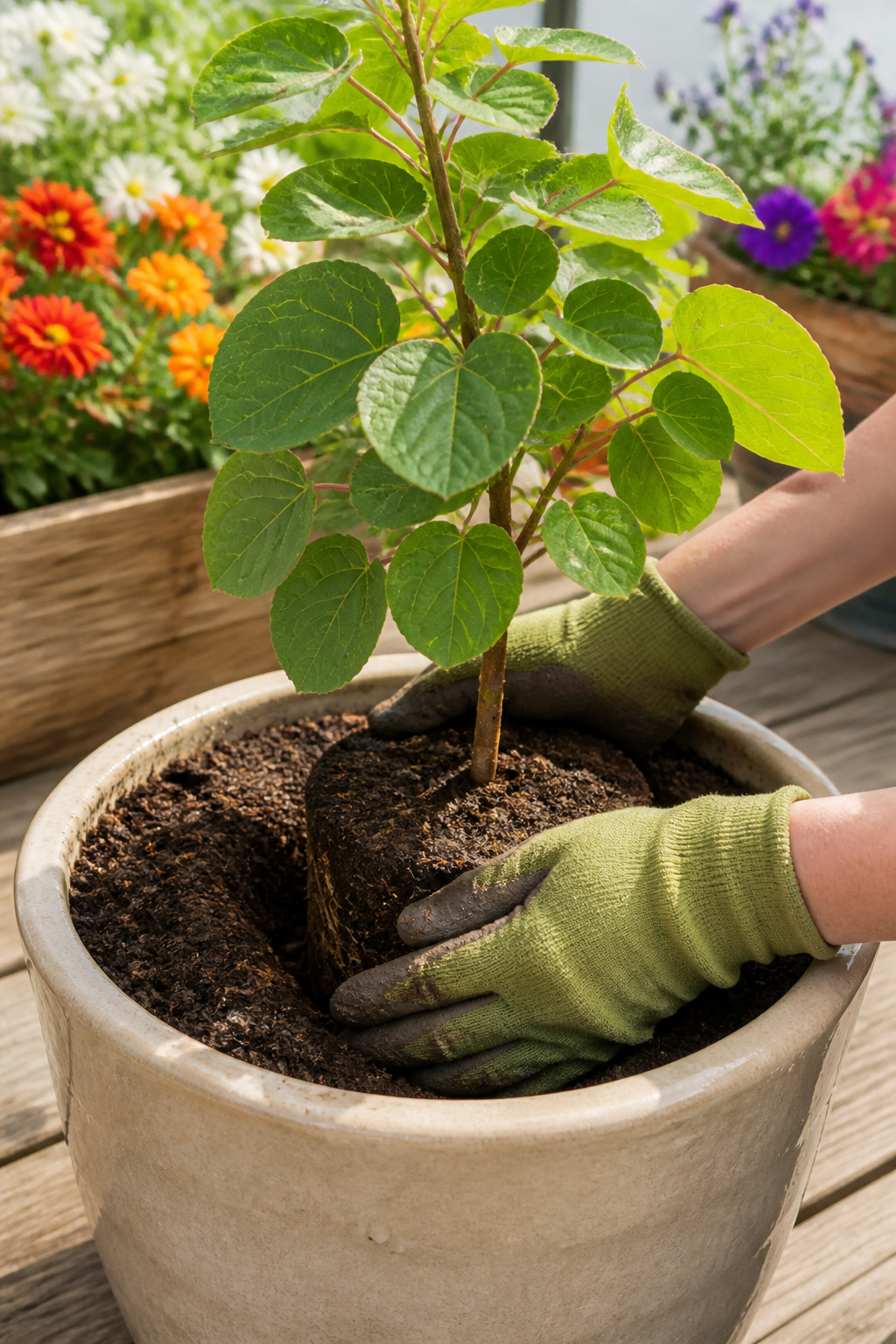
The crown of the root ball should sit level with the surrounding compost, not buried under it and not sticking up above. I learned this the hard way with a potted fig years back, and kiwi behaves the same: too deep and the stem rots where soil meets bark; too shallow and the roots dry out in the air gap left after watering.
Set the plant in its 30l pot, check the depth against the old soil line, then backfill with your peat-free ericaceous mix. Watering settles the compost for you, so skip the urge to press hard with your palms. A gentle press with fingertips removes the biggest pockets without squeezing out the air roots need. Water thoroughly, let it drain, and check again: the surface often drops half an inch once water finds its way through, and a light top-up fixes that before the roots settle into a hollow.
Add a Trellis
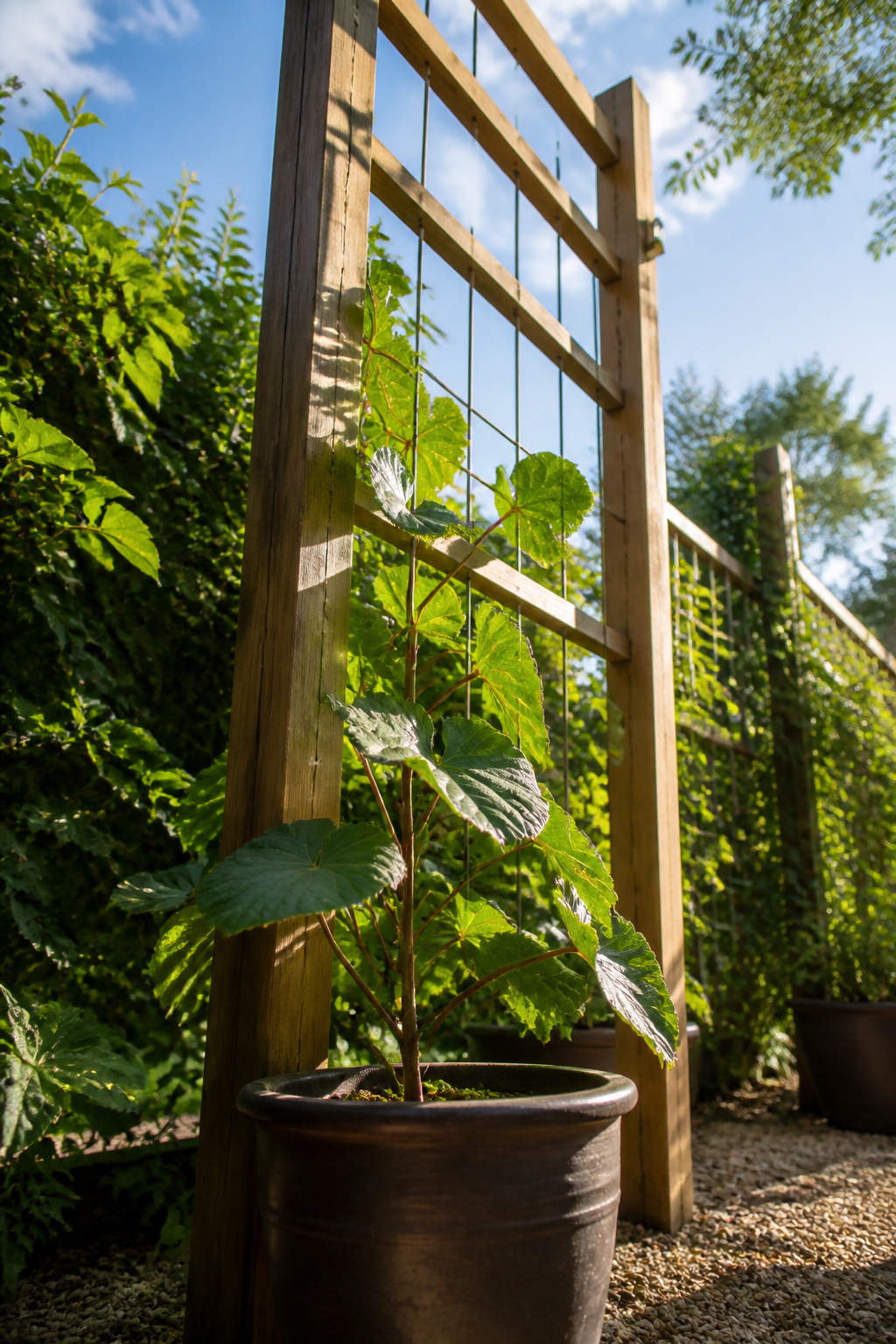
Kiwi vines are not shrubs you can let sprawl. They are woody climbers in the Actinidia genus, and without a support to wrap around, a potted plant will tangle, weaken, and bear little to no fruit. The structure you build is the difference between a manageable container vine and a mess on your balcony.
For potted growing, the minimum height is 2 meters, though the width matters just as much and depends on the variety you chose. Hardy kiwis, Actinidia arguta, are seriously fast growers that can reach 40 feet if you let them, so plan for a trellis roughly 3 to 4 meters wide. The less vigorous Actinidia kolomikta needs about half that spread. Fuzzy kiwi, A. deliciosa, is another beast entirely; sources describe it as tree-like in mature form, but that bulk is just thick woody stems on a vine that can run 20 feet long and needs heavy-duty support.
Materials need to last several years because these plants are perennial and heavy once fruit sets. Poles, ropes, pipes, or battens all work if they are stable. Horizontal supports should stay under 5 centimeters wide so the vine can grip and wind itself around. I would skip anything flimsy or decorative. A wobbly trellis in a pot is worse than none, since the whole thing can tip once the plant fills out.
Water Deeply
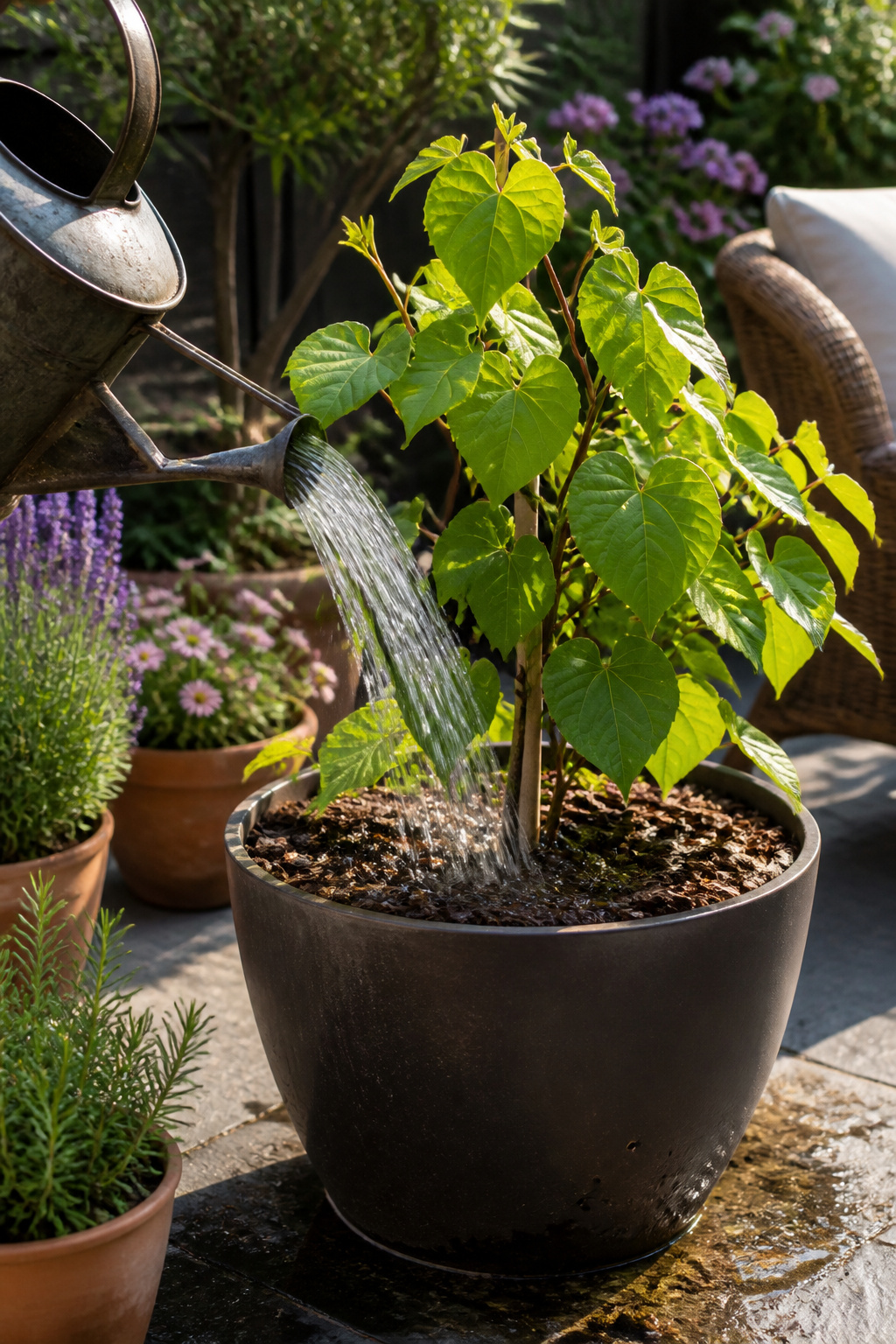
Kiwi vines in pots dry out faster than plants in the ground, and the first two growing seasons are when this matters most. During that window, the root system is still filling the container and finding its rhythm, so water deeply whenever the top inch of soil feels dry. Light daily spritzes leave the surface wet while the roots below stay parched; instead, soak until water runs from the drainage holes, then let the pot lighten noticeably before the next round.
A soggy pot is the other danger. Roots prone to rotting will turn leaves yellow and limp just as surely as drought does, so "evenly moist" means checking with your finger, not trusting the calendar. In hotter months, a straw or bark mulch over the surface buys you a day or two of buffer. Once the vine is well established, you can ease back and water mainly through dry spells, but those first summers are not the time to get casual about it.
Feed Monthly
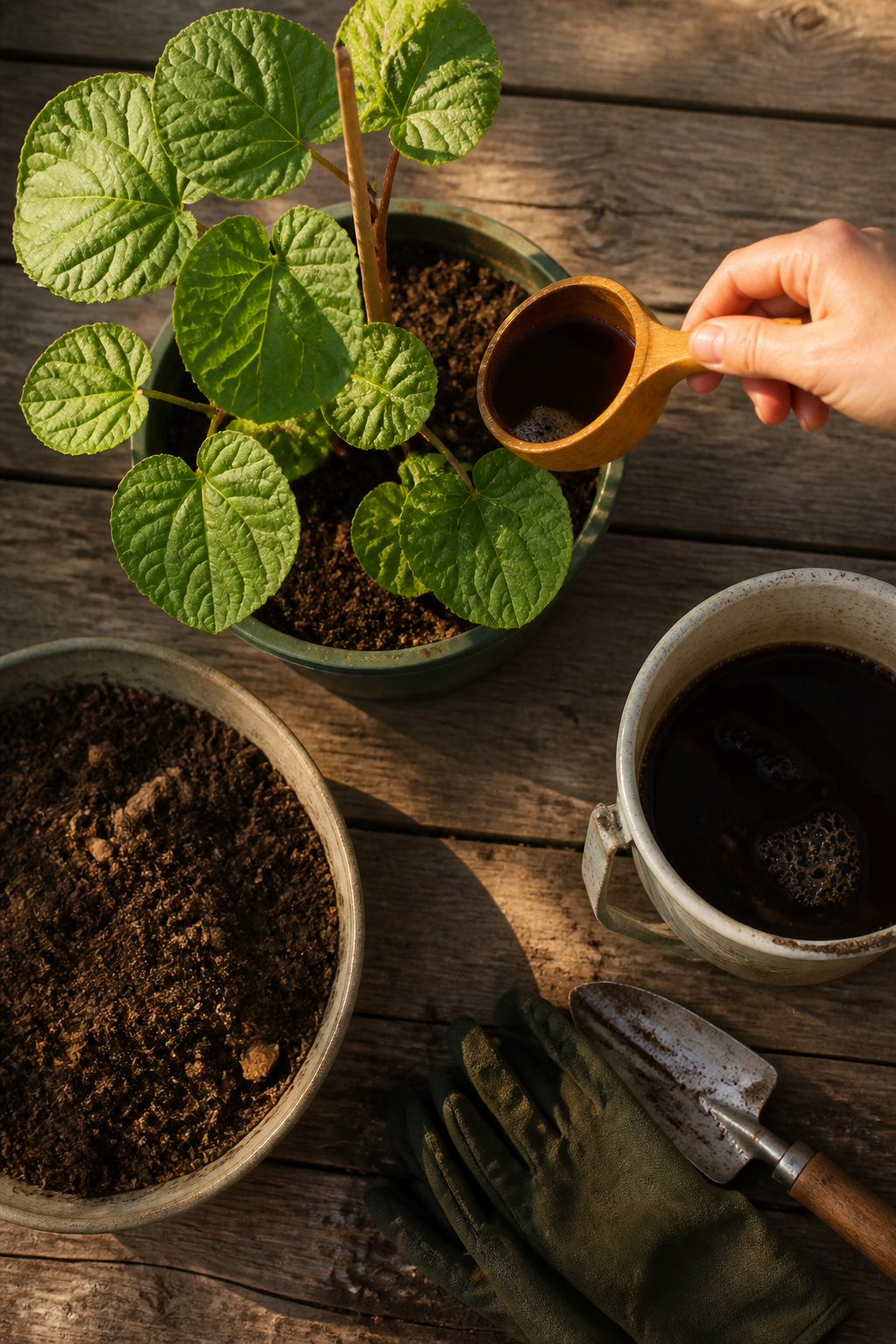
A balanced fertilizer, something in the 10-10-10 range, keeps container kiwi from stalling out once the initial soil nutrients fade. I feed monthly through the growing season, from spring bud break until late summer, and I lean toward organic options: compost worked into the top inch of soil, vermicompost tucked into a shallow trench around the base, or a compost tea poured slowly so it soaks rather than runs off the pot’s sides. Synthetic blends can push too fast and burn the fine roots that pots already constrain.
Stop feeding about eight weeks before your first expected frost. The vine needs to harden off and slip into dormancy without soft, nitrogen-heavy growth that cold will blacken. Over-fertilization shows up as leaf tip burn, wilting despite moist soil, or a sudden flush of leggy stems that outrun the trellis. When that happens, flush the pot with several volumes of plain water and skip the next two feedings. Less has always been more with kiwi in pots; a slightly hungry vine fruits harder than one stuffed with nutrients it cannot use.
Prune in Late Winter
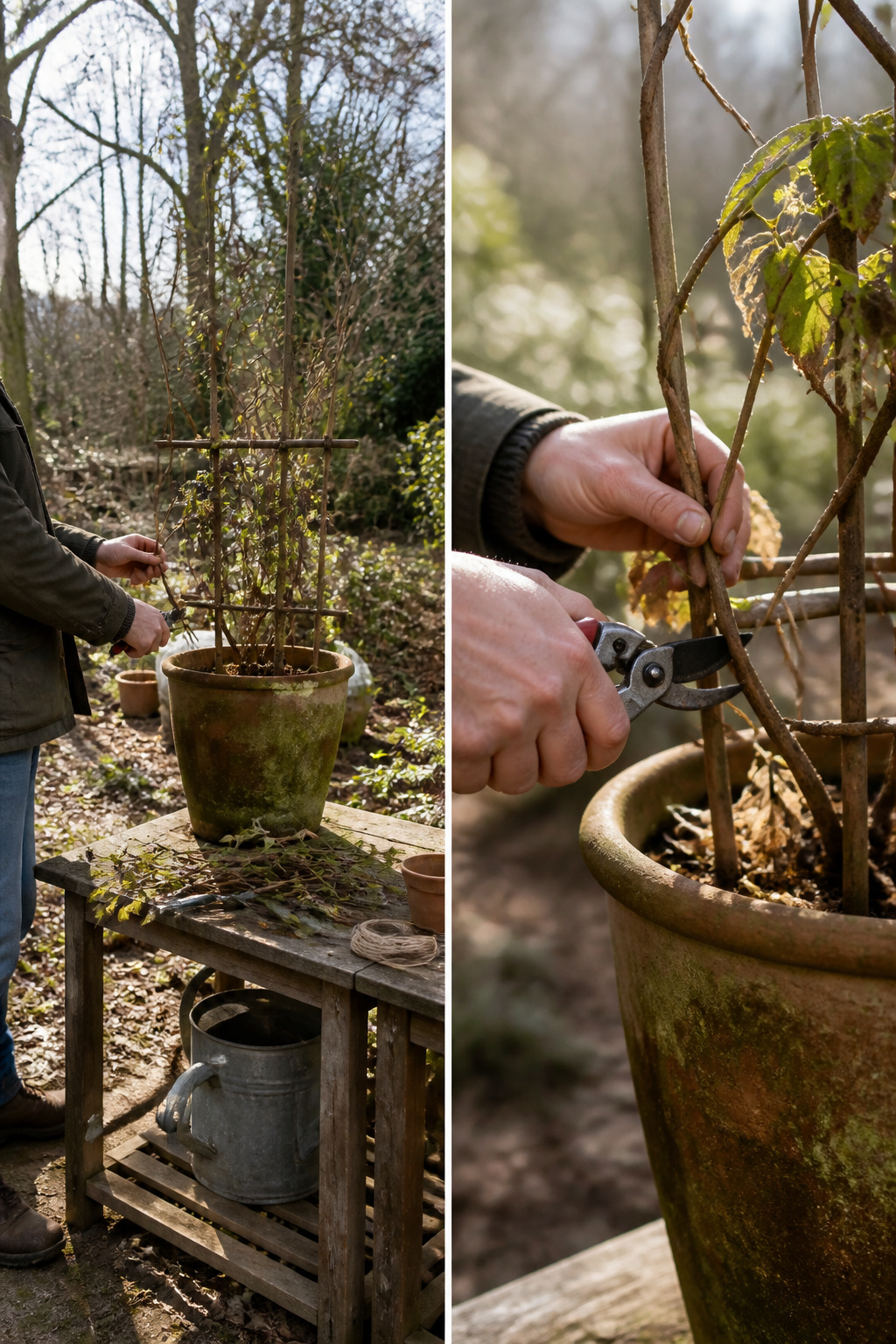
Late winter pruning keeps a potted kiwi manageable without sacrificing the wood that actually fruits. The vines must be cut while fully dormant, before buds begin to swell and sap starts running. In a container, the root restriction already limits how much energy the plant can push upward, so the goal is to work with that constraint rather than fight it.
Cut out any branch that bore fruit last season, along with dead wood and anything crossing or crowded. Those one-year-old branches are what matter; they produce the most fruit. Trim them back to about the eighth node from the base, counting the little nubs along the stem. Those nodes will push new fruiting spurs once spring arrives.
Summer brings a second round of lighter trimming: long arching vines that overshoot the fruit, plus any non-flowering growth wandering off the trellis. In the ground, a kiwi can run 20 to 30 feet and still recover from lazy pruning. In a pot, unchecked growth starves the roots and shades out next year’s crop. The container itself becomes the discipline.
Winter the Pots
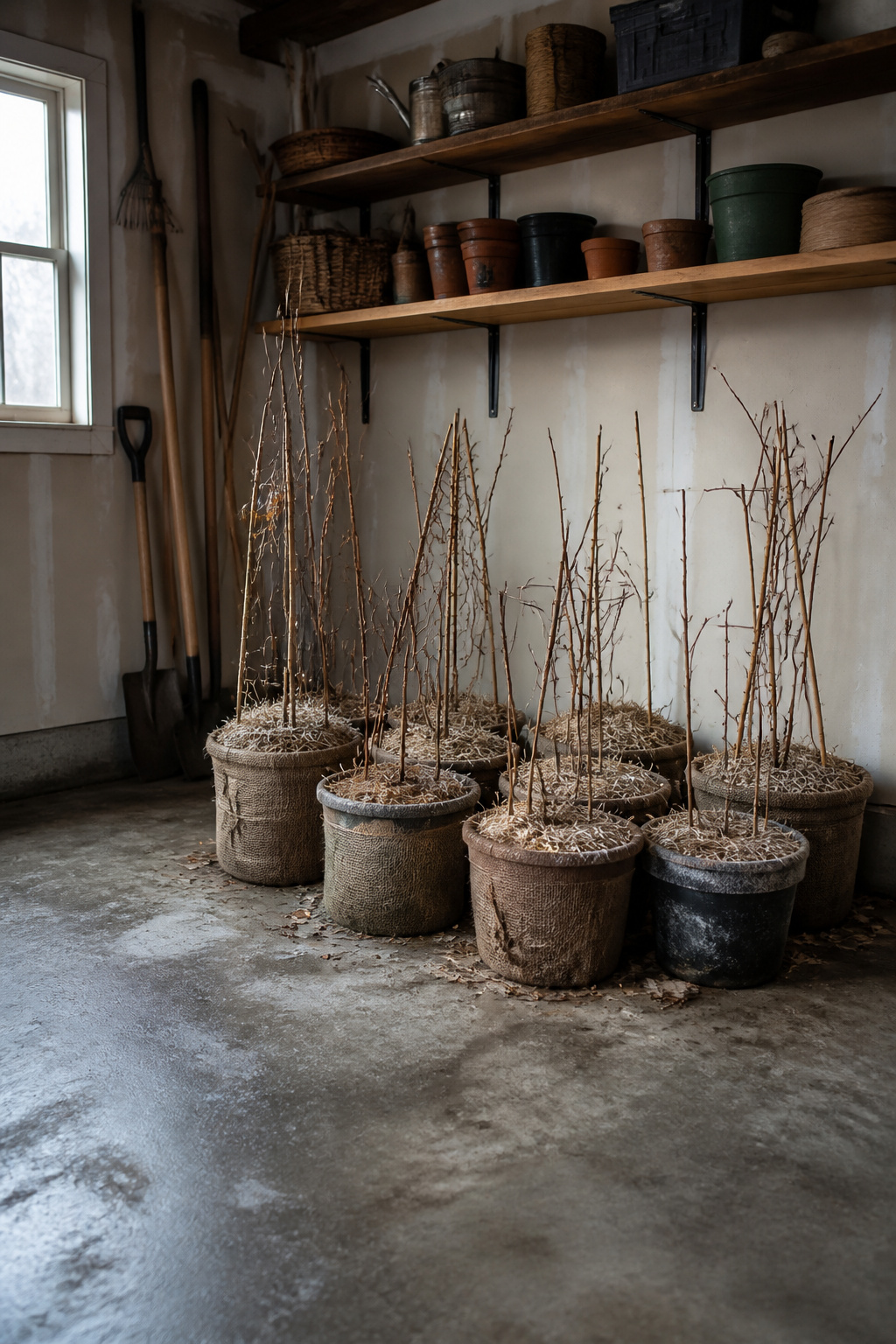
Hard frost arrives before the plant gives you any dramatic signal, so the calendar matters less than the thermometer. In Zones 6 and below, bring pots into a garage, shed, or sunroom before the first hard freeze; the garage works fine since dormancy does not need light. You will know dormancy has started when growth stops entirely and leaves yellow and drop. Watering should drop to barely enough to keep the root ball from desiccating; a dormant kiwi in a cool garage needs only occasional moisture, not a schedule. If indoor space is impossible, the pot can stay outside with the root zone insulated under burlap or a thick straw mulch, though this is riskier than moving it under cover. The trigger is the hard frost itself, not a specific date, so tracking your local first-frost average buys you a week or two of warning.
How Long Until Fruit
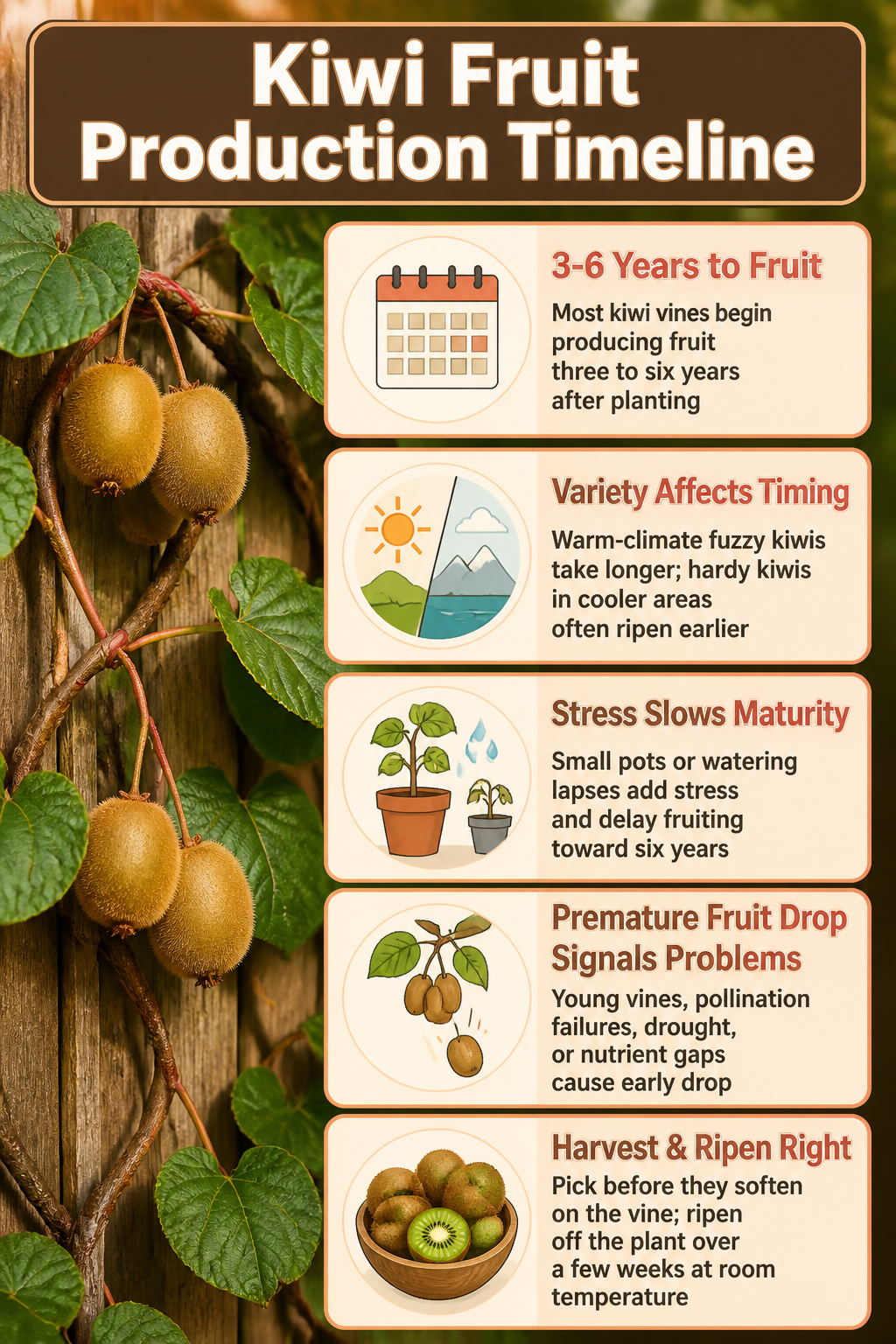
Most kiwi vines begin producing fruit three to six years after planting, though the exact wait depends on variety and growing conditions. Fuzzy kiwi types grown in warmer climates with longer seasons tend toward the longer end of that range, while hardy kiwi varieties in cooler maritime areas often ripen earlier and may fruit sooner. Container growing can add stress that slows maturity if the pot is too small or watering lapses, so the six-year mark is more likely for potted plants that struggle than for those kept consistently healthy.
Premature fruit drop usually signals a problem rather than a timeline issue. Young vines sometimes set a few fruits before their root systems can support them, and those drop early. Pollination failures, drought stress, or nutrient gaps in container soil do the same. The fruits that hold and size up need picking before they soften on the vine; they finish ripening off the plant over a few weeks at room temperature.
Kiwi vines take up to four years to produce fruit, so they’re a long-term investment. But, from its first fruiting, kiwi plants should produce a good crop year after year, as long as they are growing in rich soil and are watered during dry spells.
That year-after-year reliability is what makes the initial wait tolerable, though container growers should plan on the upper half of the range and not panic if year four passes quietly.
Cold Tolerance by Variety
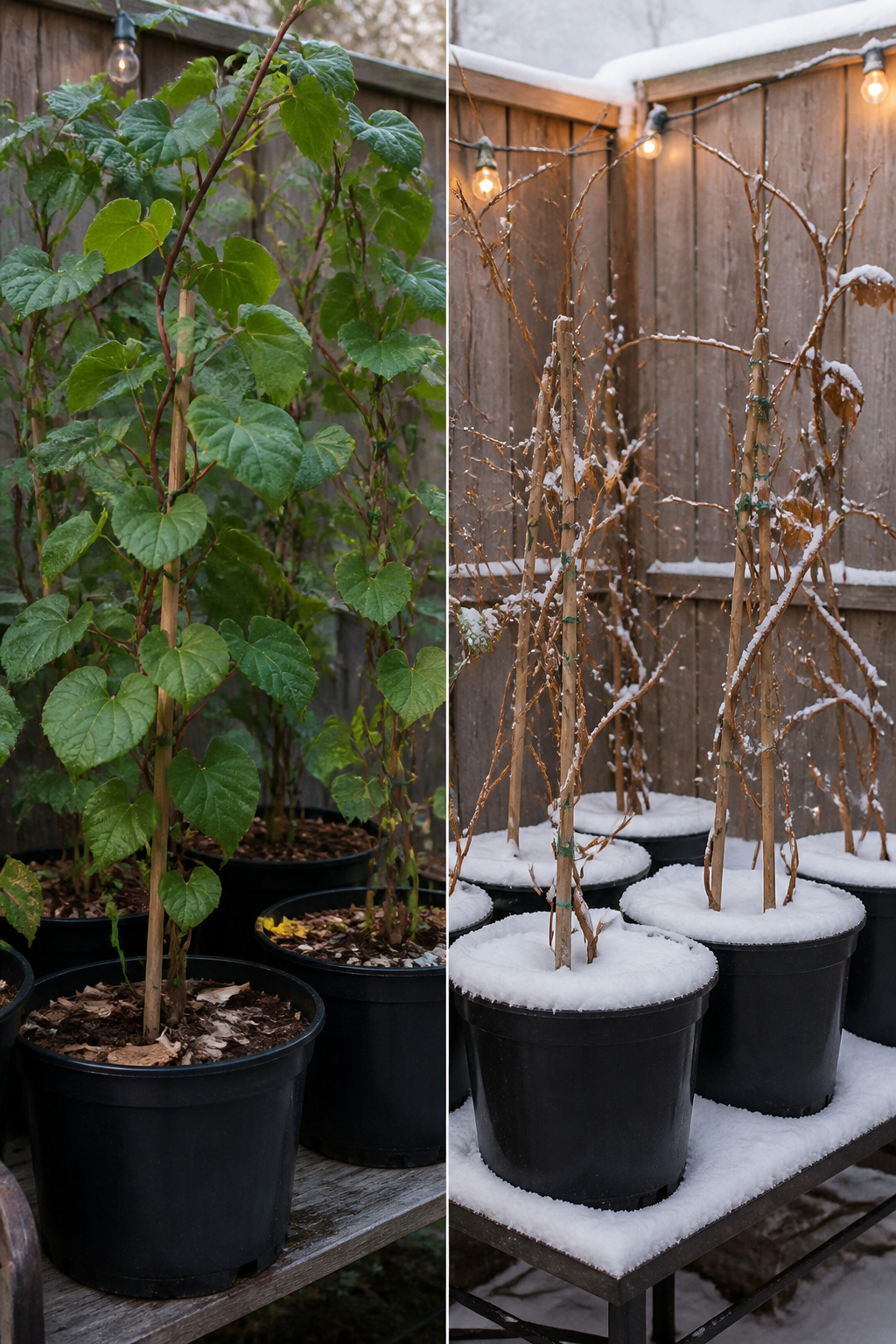
Cold-hardy kiwi varieties can survive winters down to about 10 degrees, and a few Russian selections push even further. ‘Natasha’, ‘Tatyana’, and ‘Ananasnaja’ are rated hardy to -35 degrees F, which covers most of the continental US outside the coldest pockets of the upper Midwest. For growers in zones 5-9, ‘Anna’, ‘Meader’, ‘Michigan State’, and ‘Ken’s Red’ are the usual recommendations, with ‘Michigan State’ carrying notably larger fruit and ‘Ken’s Red’ running sweeter with that reddish-plum skin.
Container growing changes the math on hardiness. A pot lets you drag the plant into an unheated garage or against a south wall when a polar vortex drops below what your variety tolerates in open ground. That mobility matters because even a variety rated to -35 degrees F can suffer root damage in a container where the soil mass freezes solid and thaws erratically. The Issai variety, popular for patio growing, handles cooler northern climates partly because growers can move it. If you are choosing between a marginal variety and a safer one, the pot itself is not enough protection without the option to relocate it.
When to Harvest
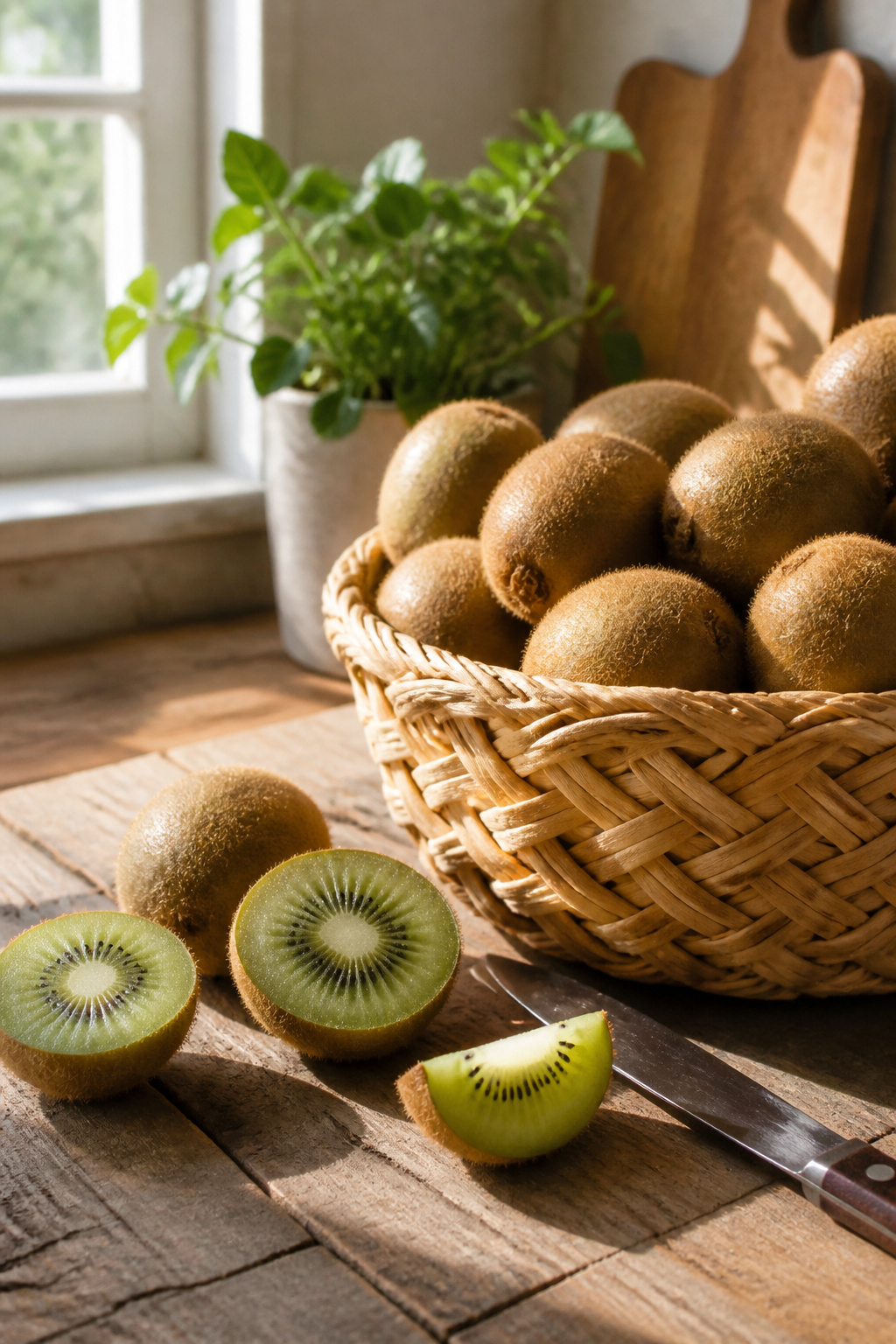
Kiwis in pots hit their window in September to October, though the exact week depends more on feel than on the calendar. The fruit ripens off the vine, which is the detail that changes everything about timing. Pick it while the skin is still firm and the seeds inside have turned black, then let it soften on the kitchen counter for a couple of days. Waiting for it to yield on the vine invites wasps and late-season beetles that find the sugar before you do.
The sugar-starch test is the fallback for anyone second-guessing a borderline fruit. Slice one open, check the seed color, and taste for sweetness; if the starch still overpowers the sugar, the rest of the crop needs another week. Early frost can force your hand before that point. When temperatures drop, harvest everything firm and move the ripening indoors; properly refrigerated, those last fruits keep for up to six weeks. The flavor loss from picking too early is permanent, though. A kiwi pulled green never develops the full balance of tart and honey it would have gained in that final stretch on the counter.
Frequently Asked Questions
How long does it take for a kiwi plant to bear fruit?
Most kiwi vines begin producing fruit three to six years after planting. Container-grown plants often lean toward the longer end of that range if the pot is too small or care lapses, while hardy kiwi varieties in cooler maritime areas sometimes fruit sooner. Premature fruit drop usually means the young vine’s roots cannot support the crop yet, or pollination, drought, or nutrients fell short.
Can you grow kiwi in cold areas?
Yes. Cold-hardy varieties can survive winters down to about 10 degrees, and Russian selections like Natasha, Tatyana, and Ananasnaja are rated hardy to -35 degrees F. Container growing adds protection because you can move the pot into an unheated garage or against a south wall when extreme cold hits, though the soil mass in a pot freezes and thaws more erratically than ground soil.
What month do you harvest kiwi fruit?
Kiwis in pots typically harvest in September to October. Pick while the skin is still firm and the seeds inside have turned black, then let the fruit soften at room temperature for a few days. Waiting for it to yield on the vine invites wasps and beetles, and early frost can force you to harvest everything firm and finish ripening indoors.
Do kiwis need a male and female plant?
Most kiwi varieties require both male and female plants for fruit production, since the plants are dioecious. A common guideline is one male for every six to eight female vines, and the varieties must bloom at the same time to be compatible. Self-pollinating cultivars like Issai are the exception, producing fruit from a single plant without a partner.