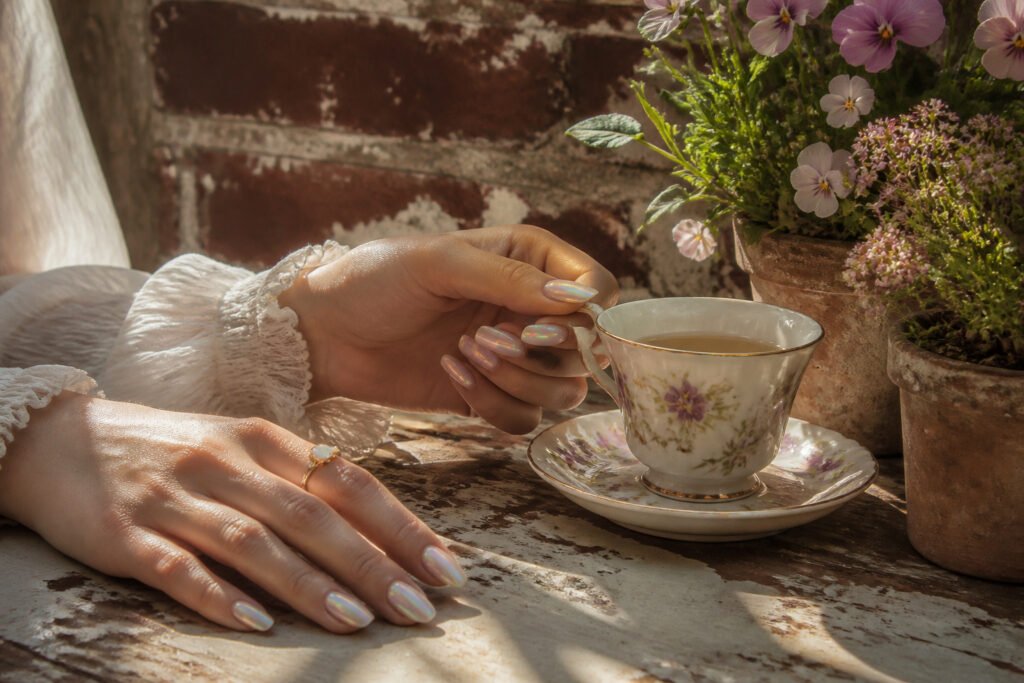
Opal nails are a manicure built from a milky, near-nude base that throws off quiet flashes of blue, pink, violet, and gold, the same color play found in the silica-formed gemstone itself. The effect only works if the iridescence stays subtle; loud shifts read as costume rather than wearable. A salon build uses chrome powder buffed over holographic glitter and sealed with translucent milky-white polish, while a drugstore frost polish and top coat gets you close at home for a fraction of the price.
What Opal Nails Are
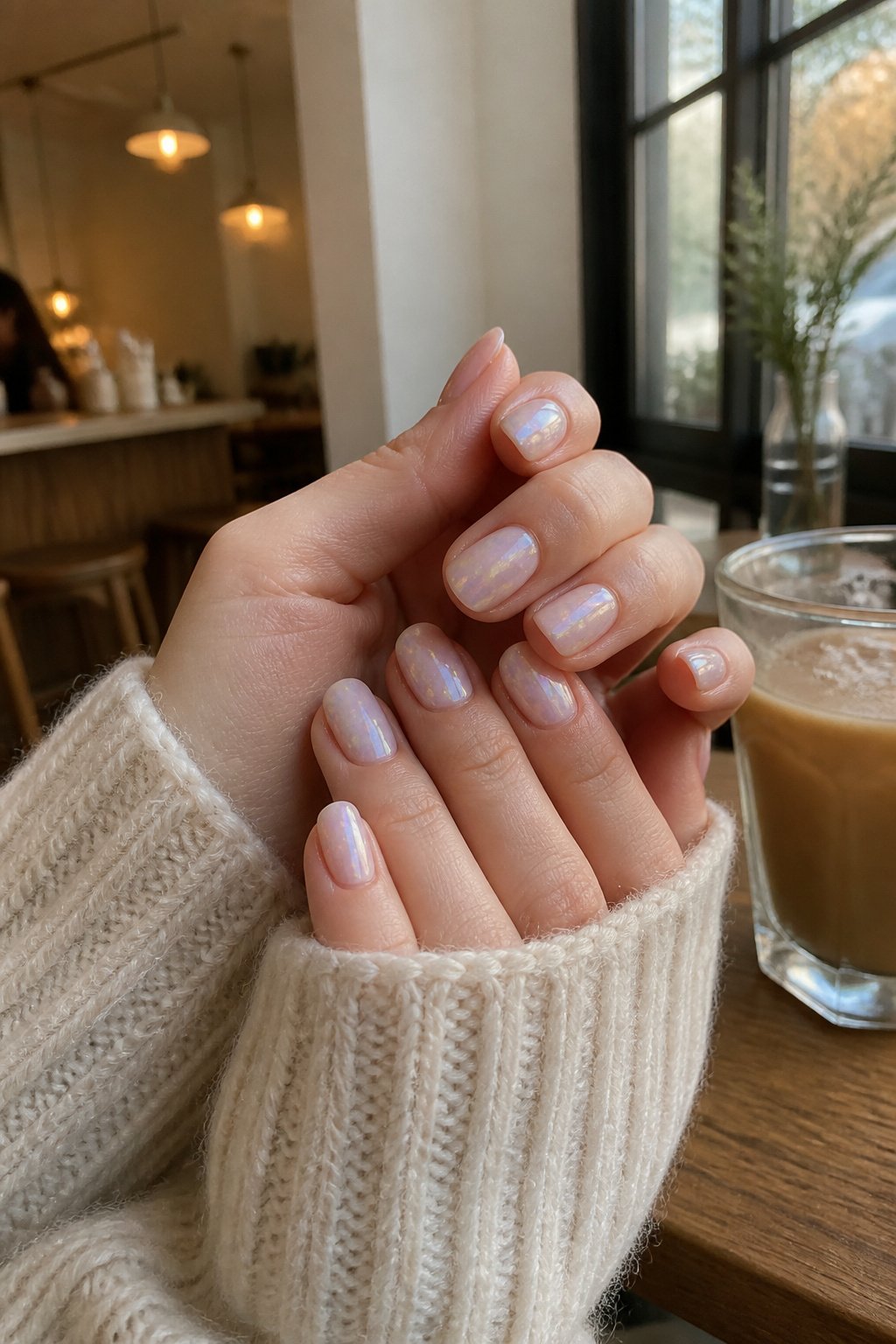
Opal nails take their name from the gemstone formed over millennia by marine organisms or silica-rich water settling into silica deposits. That slow accumulation creates the same play of color you see on the nail: a milky, near-nude base that throws off flashes of blue, pink, violet, and gold without ever reading as loud. The shade sits somewhere between warm white and light blue, sometimes tipping toward ochre, purple, green, or deeper pink depending on the light and the angle. What keeps the look wearable is that iridescence stays subtle up close. From across a room it reads as a soft, glazed sheen; under direct light the color shift turns eye-catching. The effect lands whimsical rather than trendy, which is why it works as well on short, practical nails as on longer shapes.
What Color Opal Nails Run
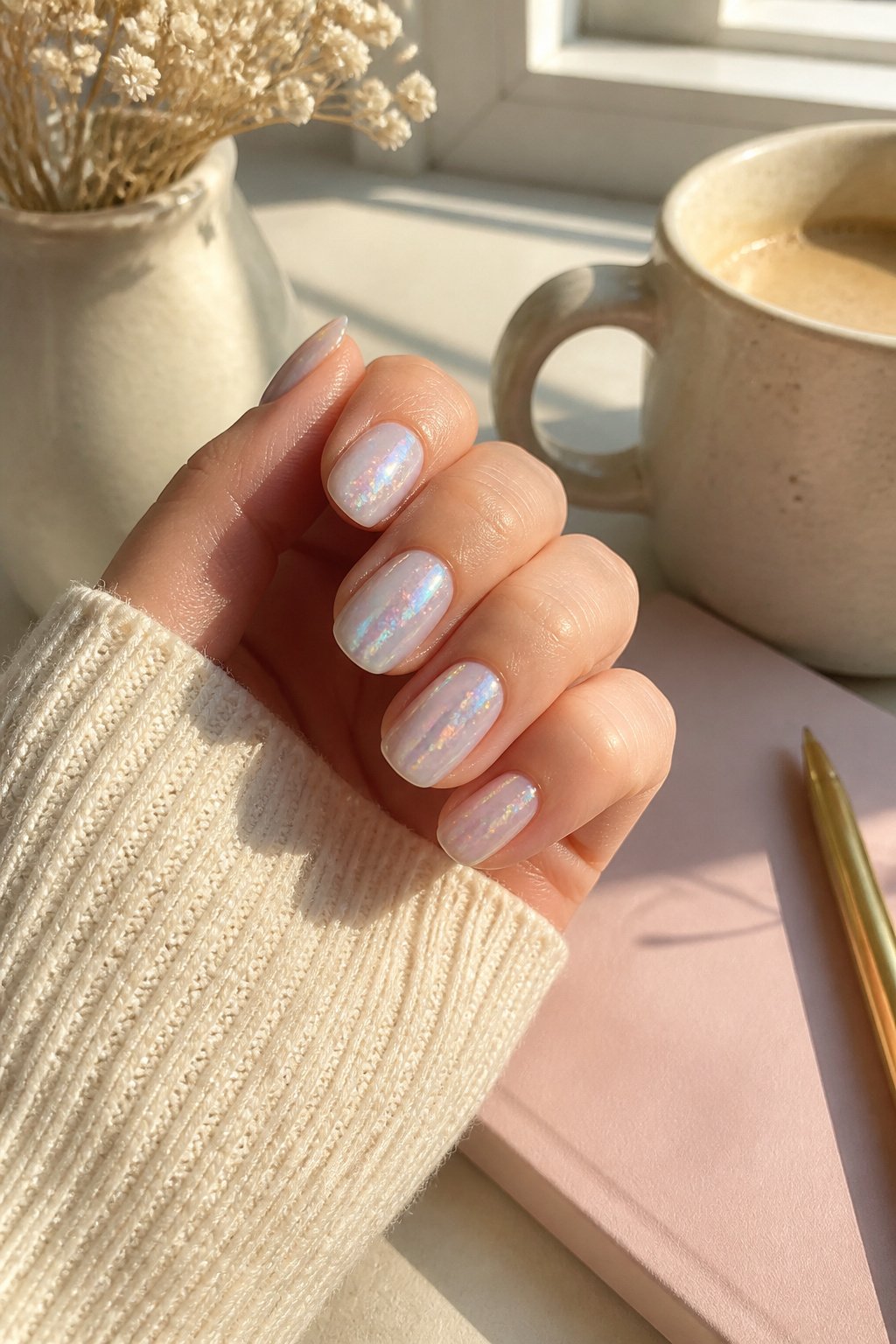
The warm white base of opal nails carries blue, pink, violet, and golden hues that surface differently depending on the light hitting them. That shifting quality comes straight from the stone itself: opal formed from silica-rich water or accumulated marine organisms, and the resulting structure bends light into those sudden flashes of color.
The full range runs from white to light blue, ochre to purple, green to pink. In direct sun, the milky near-nude base might read almost pearlescent; under indoor lighting, the same nail can flash violet or drift toward a soft golden ochre. The effect is closer to a glazed donut mani or a chrome finish than to straight glitter, because the colors stay integrated rather than sitting on top.
What makes the trend workable for everyday wear is that the kaleidoscope stays quiet. The hues turn up and vanish as you move your hands, so the manicure never reads as one flat color or as outright rainbow. A client at my last salon visit held her hands under three different lights before committing, and each time the nails showed her something else: cool blue at the window, warmer pink near the lamp, then a muted green-gold in the shadow of her purse. That unpredictability is the point.
How to Apply Opal Nails
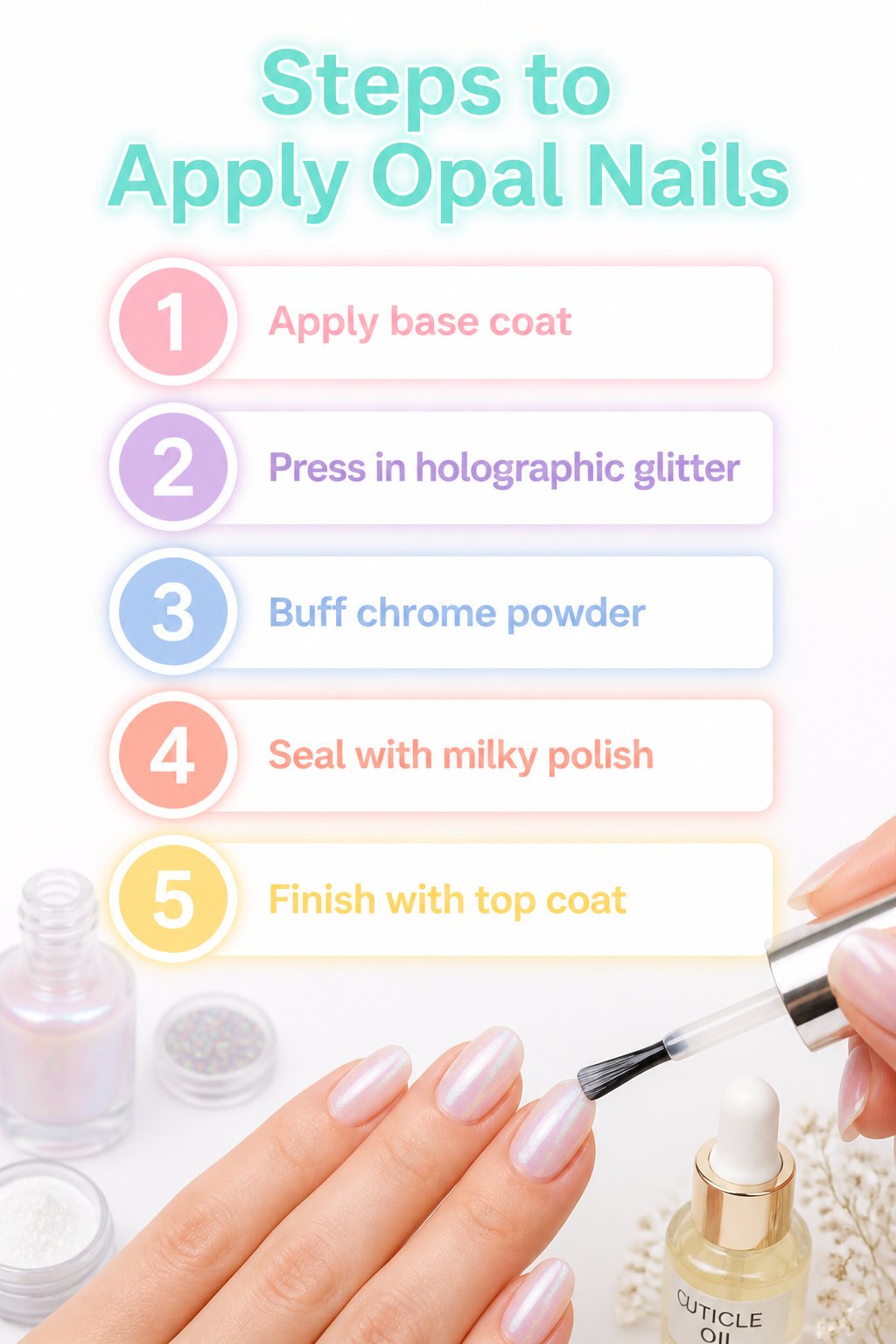
A salon build starts with a clear base coat, then fine holographic glitter or sequins pressed in while the layer is still tacky. Chrome powder comes next, buffed over the surface for that reflective, color-shifting flash. A translucent, milky-white polish seals the layers without burying them, and a glossy top coat with cuticle oil finishes the job.
At home, the shortcut holds up surprisingly well. A shimmery or frosty white polish, two thin coats, plus a high-shine top coat gives you the glassy, opalescent effect without the powder and lamp. I have watched the salon version last three weeks on a friend who types all day; my DIY attempt with a drugstore frost started showing wear at day ten, which felt fair for the price difference.
Where to Get Them Done
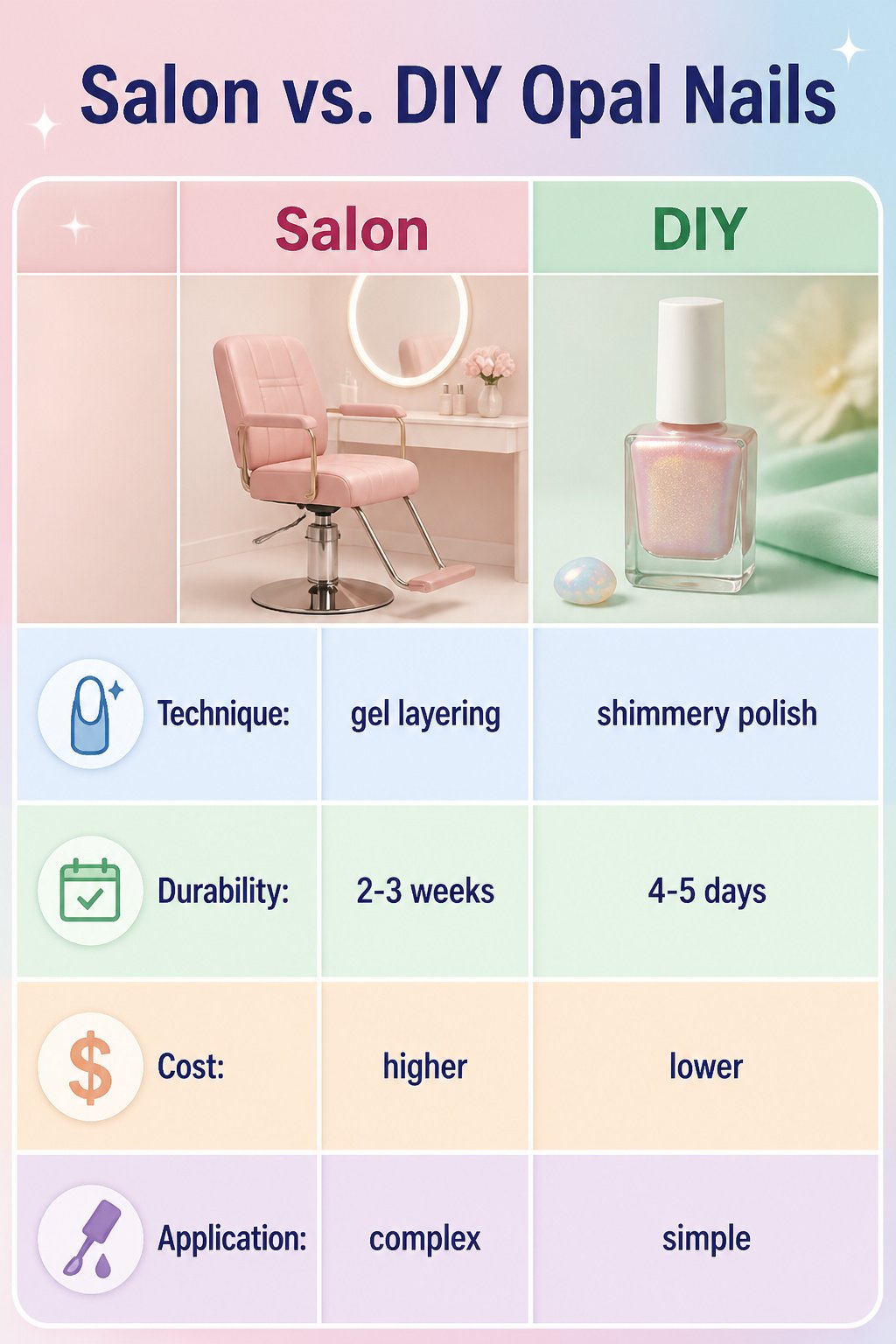
A salon appointment makes sense for opal nails whenever chrome powder and gel layering enter the picture. The technique demands a steady hand with a sponge applicator to burnish that mirror-finish pigment over a no-wipe top coat, then seal it without trapping air bubbles that kill the milky depth. Nail techs who do this weekly know how thin to keep each layer so the final look shifts color under light instead of reading as flat glitter. The appointment runs longer than a standard mani and costs more accordingly, but the chrome step is hard to undo cleanly once you commit.
Doing opal nails at home stays practical if you are working with shimmery polish or sheer jelly formulas that mimic the same glow without the powder step. Drugstore options with iridescent micro-flake suspend in the bottle; two or three coats over a pale pink base gets you close to the salon version in normal room light. The tradeoff is durability. Gel chrome from a pro lasts two to three weeks chip-free, while the polish route shows tip wear in four or five days if you type or wash dishes ungloved. For a weekend event or a trial run to see whether the color flatters your skin tone, the bottle on your bathroom shelf is probably enough.
Best Nail Shapes for the Look
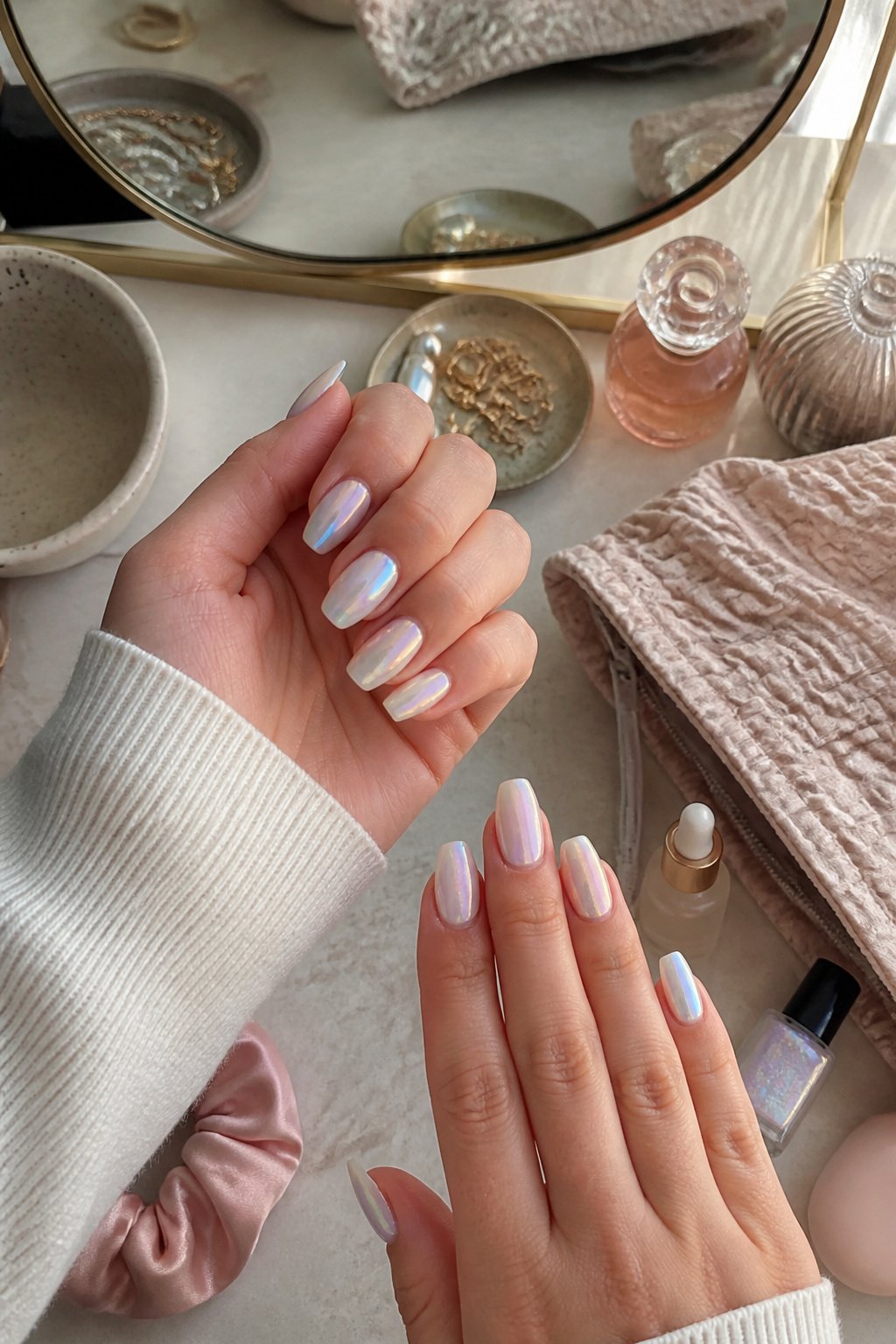
Short to medium-length nails with a squoval or almond shape catch the opal effect at its best. The softer edges give the iridescent finish room to shift and flash as your hands move, rather than boxing the color into a flat plane. Squoval nails keep enough width for the milky base to read as opal rather than sheer, while almond tapers the tip so the pink and violet flashes concentrate where the light hits first.
A glossy top coat is what actually sells the look on these shapes. The curved surfaces of shorter, rounded nails bounce light back in layers, so the blue and golden undertones do not sink into a single frosty wash. I have seen the same polish read as plain white on long, square nails and then turn into something alive once the length comes down and the corners soften.
If your nails tend toward the longer side, almond still works, but the shift happens closer to the free edge where the nail thins. Squoval distributes it more evenly across the whole nail bed. Either way, the chrome powder and holographic glitter that build the opal effect need that gentle geometry to do their job.
Products That Deliver the Effect
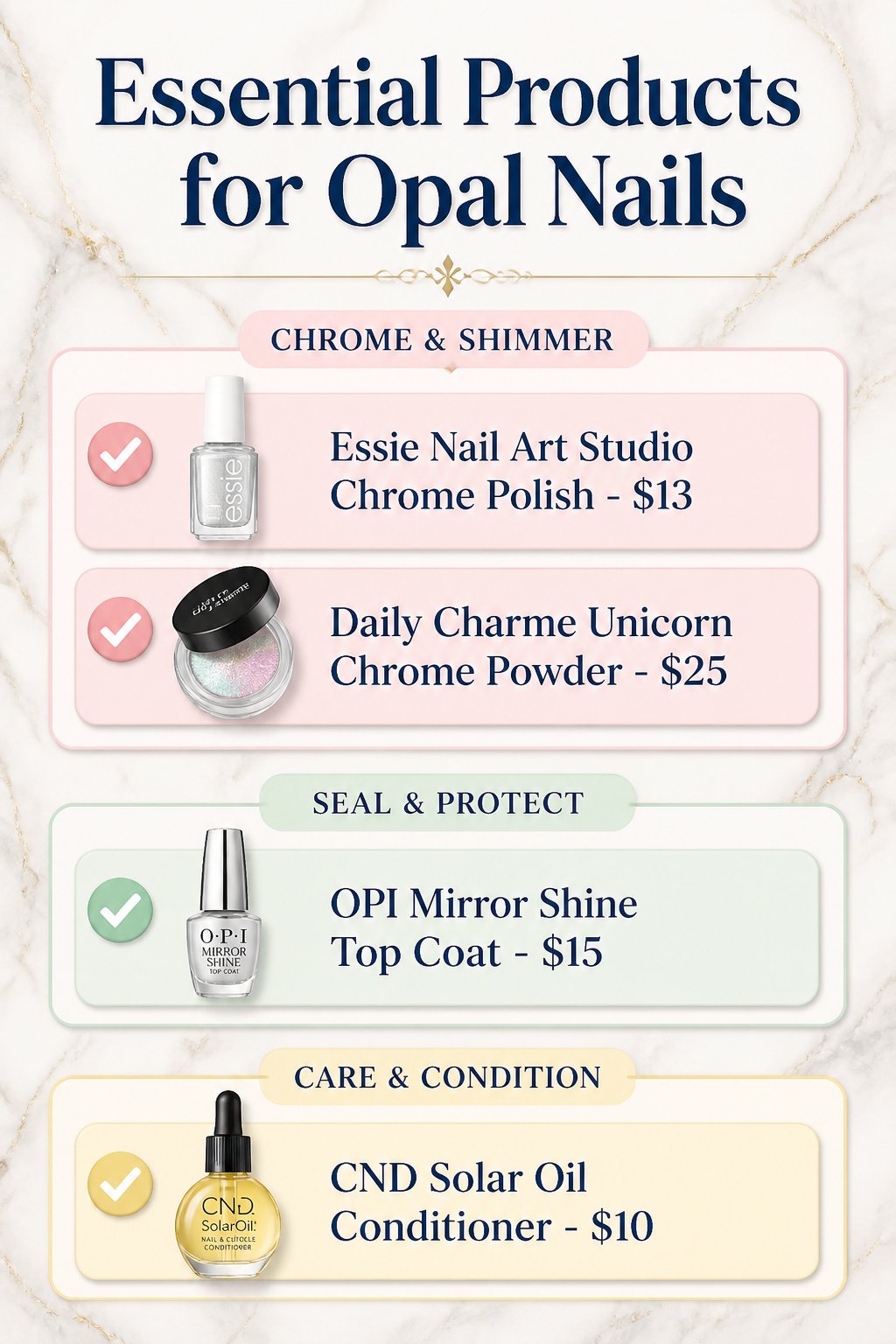
A handful of products cover most of what you need for opal nails at home, and the spending stacks up fast if you grab everything.
- Essie Nail Art Studio Special Effects Chrome Polish runs about $13 and gives the base shimmer that shifts under light. I would start here if you want one product to test the look before committing further.
- Daily Charme Aurora Unicorn Nail Chrome Powder costs roughly $25 and does the heavy lifting for that milky, color-flip finish. The powder gets buffed over a no-wipe gel top coat, so you need a lamp setup already or this stays in the cart.
- OPI Mirror Shine Top Coat, around $15, seals the chrome layer without dulling it. Some regular top coats drag the shimmer right back to flat; this one reportedly keeps the effect intact.
- CND Solar Oil Nail and Cuticle Conditioner at about $10 is the step most skip. Chrome powders and gel layers strip moisture hard, and dry nails lift or peel inside a week. A drop of this at the cuticle line each night buys you the full wear time.
Five Styles to Try
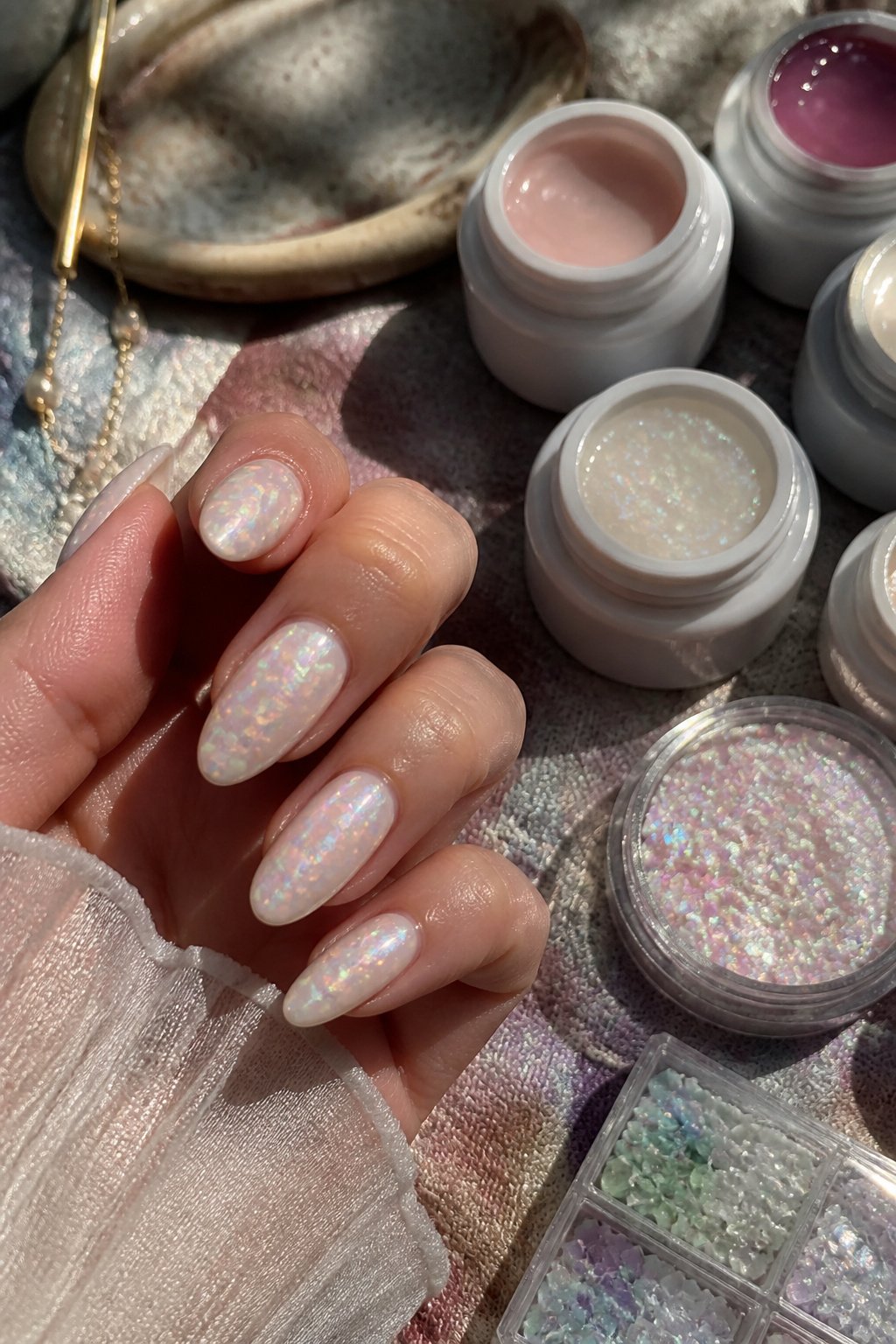
Five styles currently dominate opal nail interpretations, each handling the gemstone’s play-of-color differently.
- Pastel opal keeps the base warm white and lets blue, pink, violet, and golden hues shift quietly across the surface, similar to a glazed donut or pearlescent finish. The effect stays soft enough for everyday wear without reading as costume.
- Iridescent nail art pushes the color shift harder, amplifying that kaleidoscope quality until the nails catch light like oil on water. Summer settings, sun and ocean included, tend to show it off best.
- Marbled opal layers translucent milky whites with thin veins of brighter pigment, mimicking the natural veining found in raw opal stone rather than its polished face.
- Cellophane opal relies on sheer, crinkled film overlays that fragment light into scattered prismatic patches; the texture adds dimension but demands smooth underlying application.
- Gemstone nail art goes literal, setting small opal cabochons or crystal accents onto the nail with adhesive, treating the fingertip as a mounting rather than a canvas.
Glamour’s summer 2025 coverage put the trend in context:
Opal nail polish captures light and transforms it into a kaleidoscope of colors, making it perfectly whimsical for spending days in the sun and ocean all season long.
— Glamour
That kaleidoscope quality is the throughline; which style you choose depends on whether you want it whispered, announced, or built in three dimensions.
What Opal Has Meant
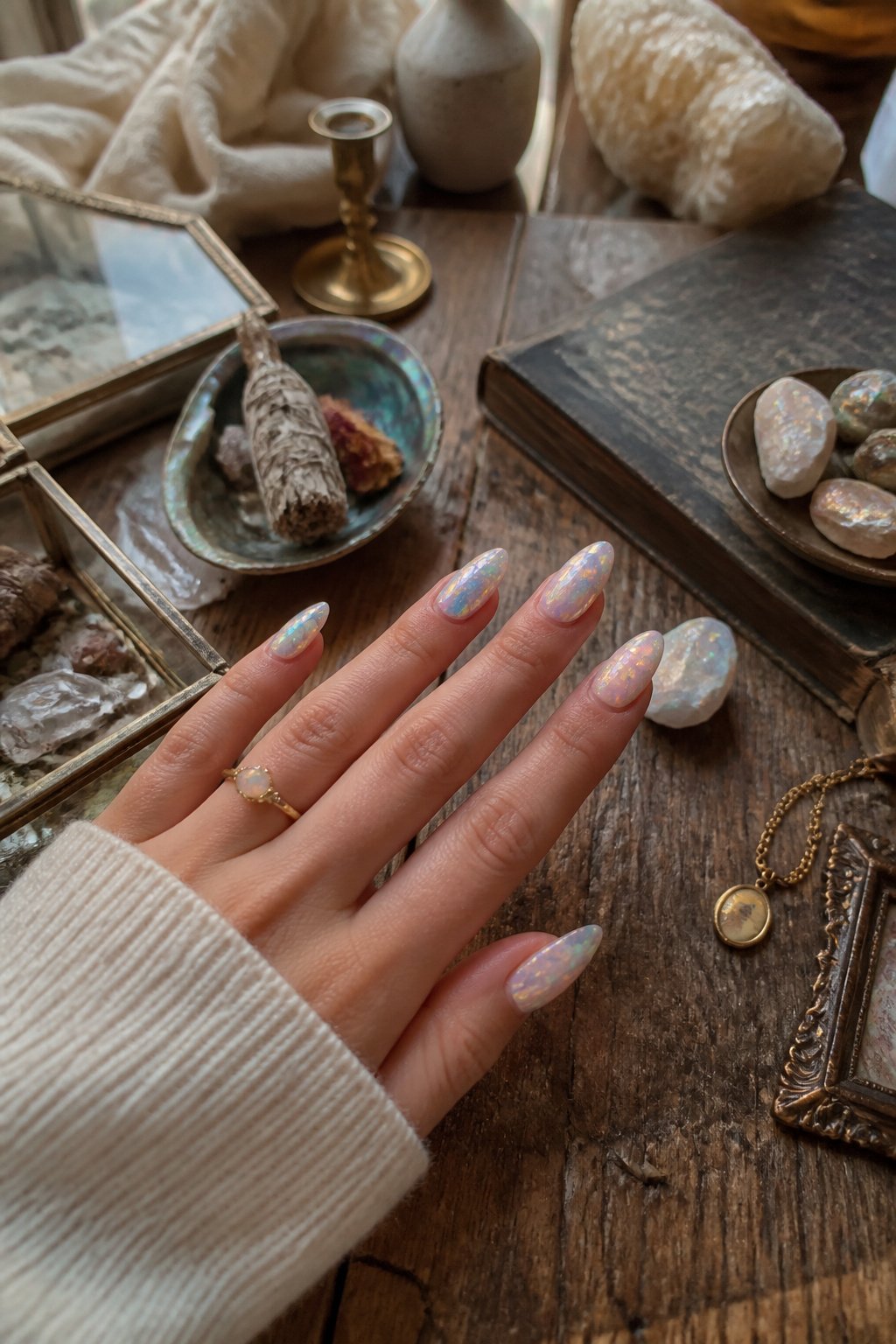
Ancient Greeks believed opal carried prophecies, a stone that let its wearer glimpse what was coming. Other traditions tied it to hope and purity, qualities that feel almost too weighty for something you wear on your fingertips. Yet that is exactly why the stone translates so well into a beauty trend: the look promises something slightly otherworldly without demanding to be taken seriously.
A nail trend built on prophecy and light sits at the perfect intersection for someone who wants her manicure to say more than "well-groomed," but less than "trying too hard." Opal nails borrow the stone’s shifting colors and its softer mythology. You are not claiming to foretell the future. You are wearing the suggestion of it, which is a different thing entirely and, to my eye, a more interesting one.
Frequently Asked Questions
What are opal nails?
Opal nails are a gemstone-inspired manicure with a milky, near-nude base that flashes blue, pink, violet, and gold under light. The iridescence stays subtle up close, reading as a soft, glazed sheen from across a room and turning eye-catching under direct light. The effect lands whimsical rather than trendy, working equally well on short practical nails or longer shapes.
What color are opal nails?
Opal nails run from warm white to light blue, with flashes of blue, pink, violet, golden ochre, green, and deeper pink depending on the light and angle. In direct sun the base reads almost pearlescent; under indoor lighting the same nail can flash violet or drift toward soft golden ochre. The colors stay integrated into the finish rather than sitting on top like glitter.
How to apply opal nail polish?
At a salon, the build starts with a clear base coat, then fine holographic glitter pressed in while tacky, followed by chrome powder buffed for a reflective flash, sealed with a translucent milky-white polish and glossy top coat. At home, two thin coats of a shimmery or frosty white polish plus a high-shine top coat gives a glassy, opalescent effect without the powder and lamp. The salon version lasts about three weeks; a DIY drugstore frost typically shows wear around day ten.