
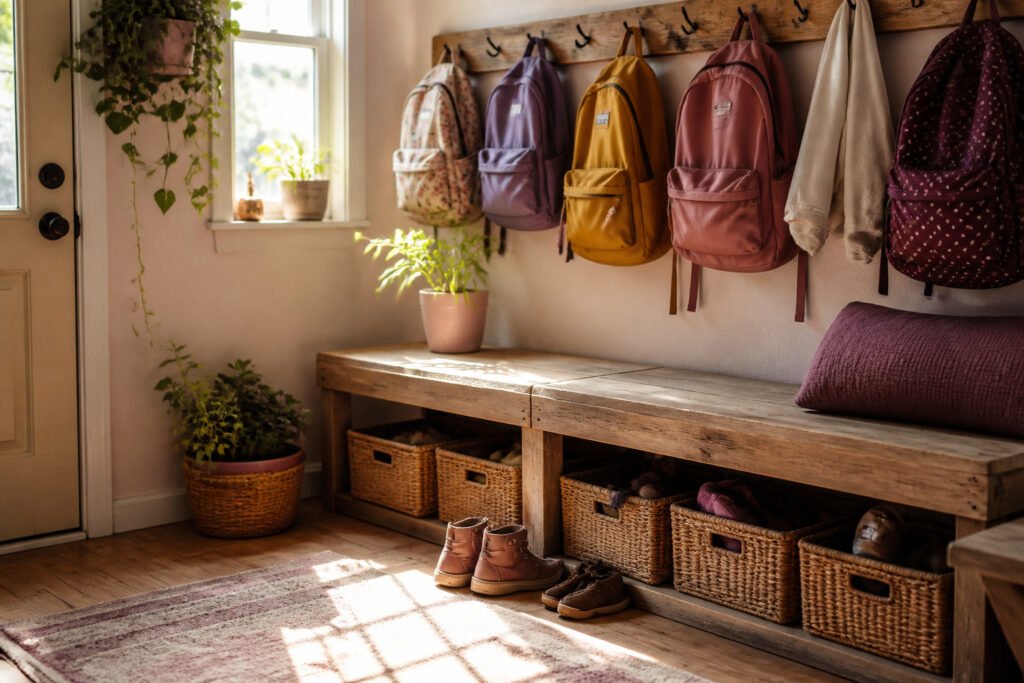
Mudroom organization runs from a single tray by the door to full ceiling-height cabinets, and the deciding factor is which door your family actually uses. Most families enter through the garage or side entrance they paid to landscape around, not the front door, so the command center belongs on that path or the mail still hits the washing machine. One family solved their morning scramble by storing toothbrushes and hair supplies inside their kids’ lockers, which only works if the locker sits where traffic already stops.
1. Hooks
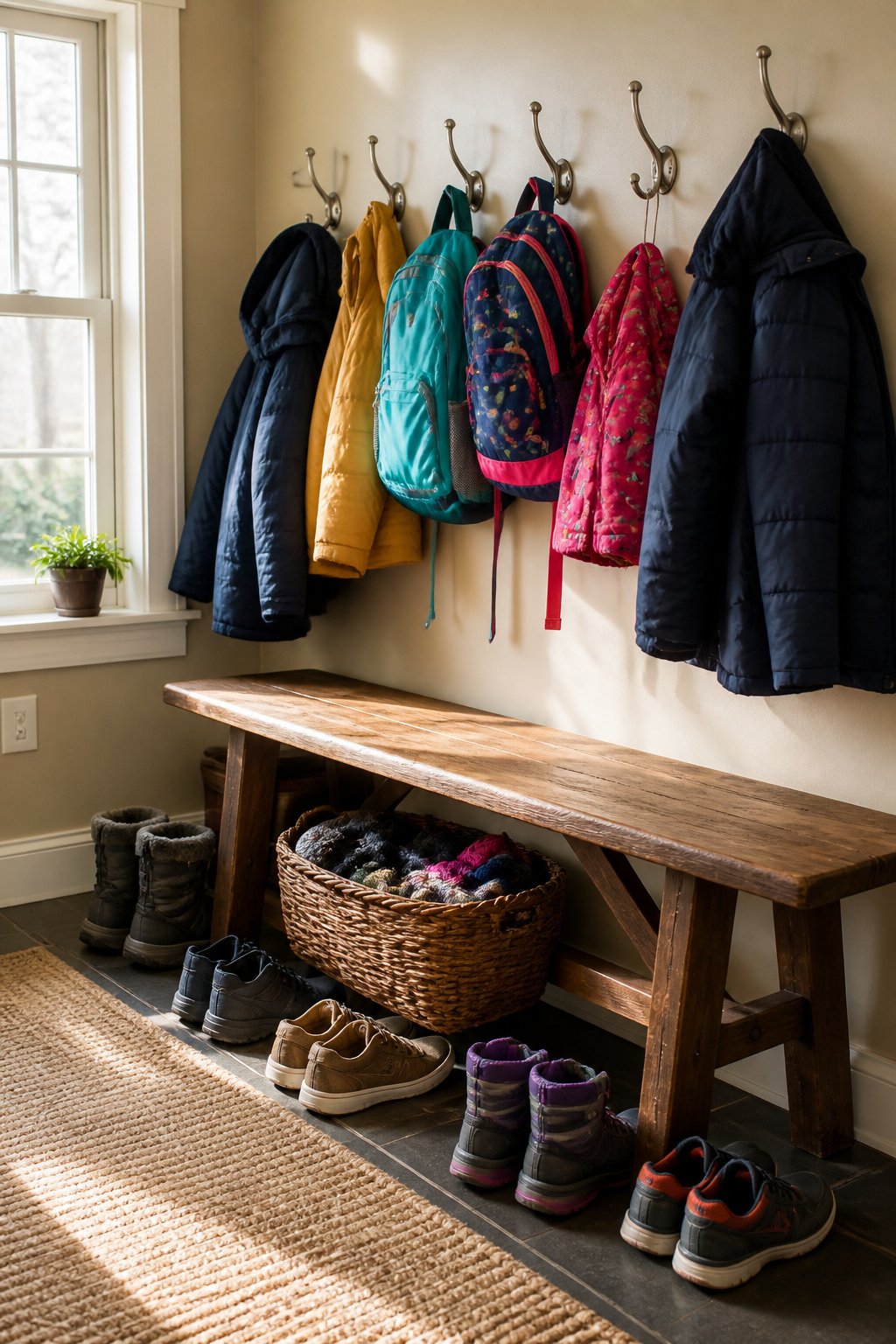
Wall-mounted hooks are the first thing that keeps a mudroom from becoming a floor-dump for bags and coats. Large, sturdy hooks handle the weight of heavy winter coats and loaded backpacks without pulling out of the drywall. Decorative options have come far enough that you do not have to choose between looking good and holding fifty pounds; some of the prettier ones I have seen in finished mudrooms manage both.
Placement splits by who uses it. Adults need hooks at standard shoulder height, roughly where you would hang a coat in a closet. For kids, the hook needs to sit low enough that they can reach it without climbing, or the climbing becomes the routine and the mudroom stops working. One family I read about built their coat racks low enough that even the youngest could step onto the bench and hang his own jacket. That bench step turned out to be the trick that got him to actually do it.
I keep daily-use coats in the closet and let the hooks take the immediate rotation: the bag coming in now, the jacket that will go back out in an hour. The hooks stay clear enough to function, and the floor stays clear enough to walk across.
2. Baskets
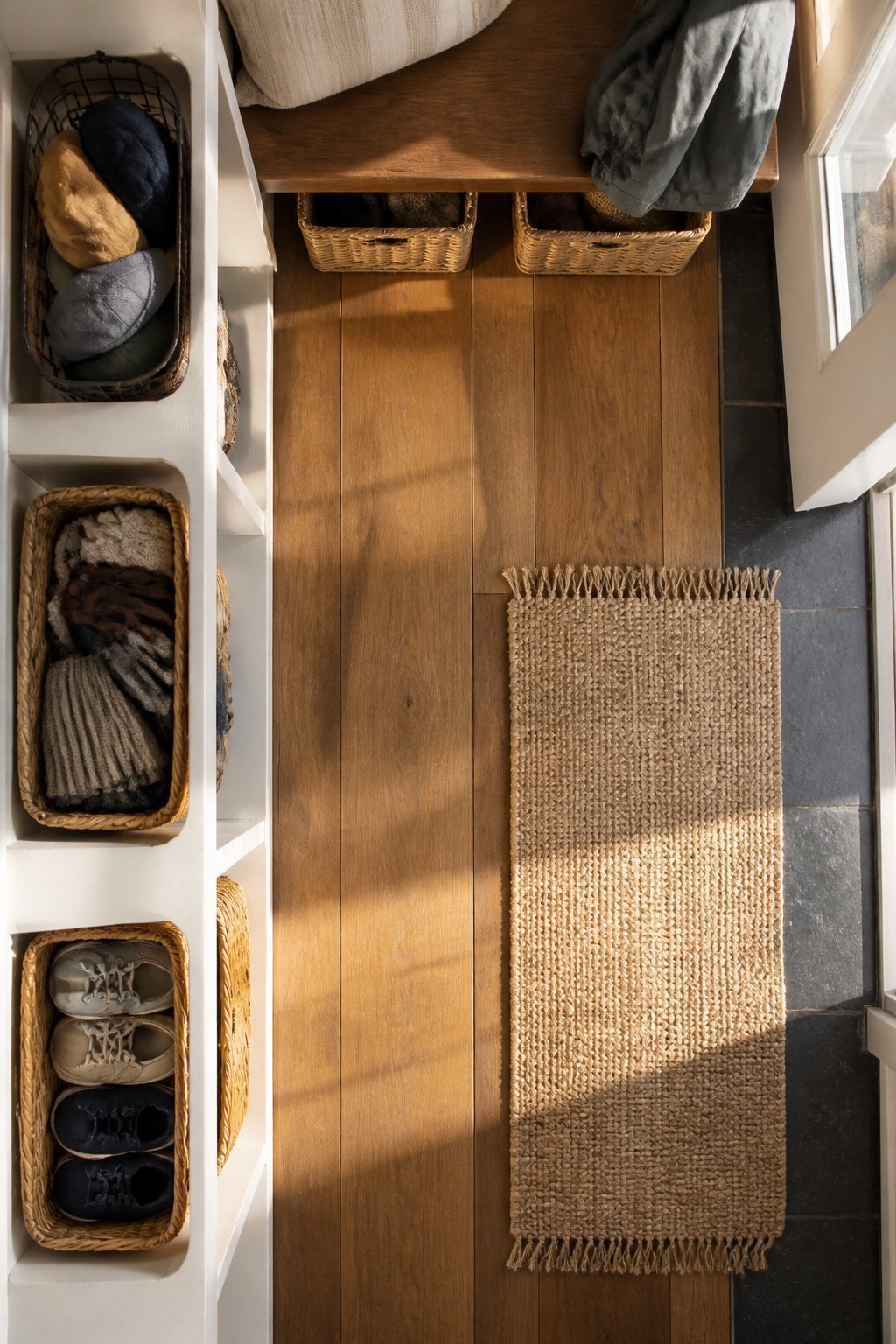
Open storage with baskets keeps the things you grab every day visible and within arm’s reach. Hats, gloves, and shoes that get daily wear do not belong behind a door you have to open; they belong in a bin you can reach into with one hand while holding keys in the other.
For cubbies, IKEA’s KVARNVIK boxes sit flush on standard shelves and hide the visual noise of gloves and beanies without adding a lid to fight. Measure your cubby depth and width before you buy, because a box that sticks out past the front edge turns tidy into cluttered. One source built their upper cubbies specifically to fit these boxes, which tells you the sizing matters enough to plan around.
Under a bench, low rectangular baskets work better than lidded bins for shoes. Wire or woven styles let wet soles breathe, and assigning one basket per person cuts the morning hunt. If you shop in person, bring a tape measure and the exact opening dimensions; a basket that gaps on all sides wastes space, and one that wedges in tight will scrape the finish every time you pull it out.
3. Shelves
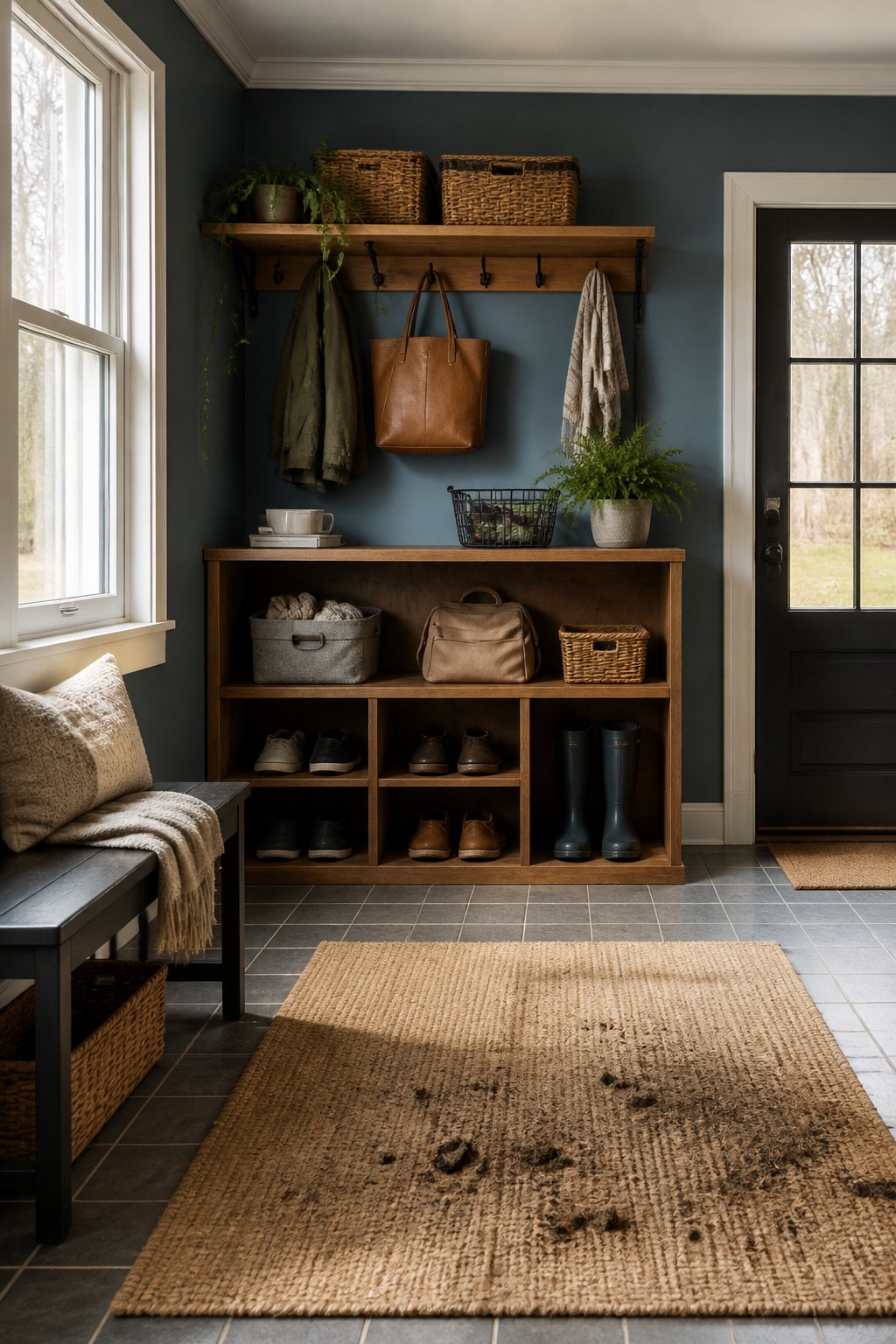
Open shelving near the door acts as a landing pad for coats, bags, and shoes you need to grab or drop in a hurry. The flexibility matters more than you’d expect: a wide shelf can hold bulky items one season, then get divided by bins the next. Closed cabinets above or beside that zone hide the visual clutter of gloves, hats, and off-season gear.
Upper shelves work best at 10–15 inches deep. That shallow depth keeps you from knocking your head when you reach for coffee on the way out, and it leaves room for door-mounted storage behind if you want it. Vertical space up to tall ceilings gives you more storage than you’d think, and carrying cabinets all the way up keeps the wall from looking chopped off.
Shelves and baskets need to talk to each other. A shelf with no lip sends bins sliding; one with a rail or a slightly recessed top keeps rectangular baskets aligned. I leave a little breathing room in each drawer and on each shelf on purpose. The space fills itself soon enough, and starting tight means you’re rearranging by month three.
4. Benches
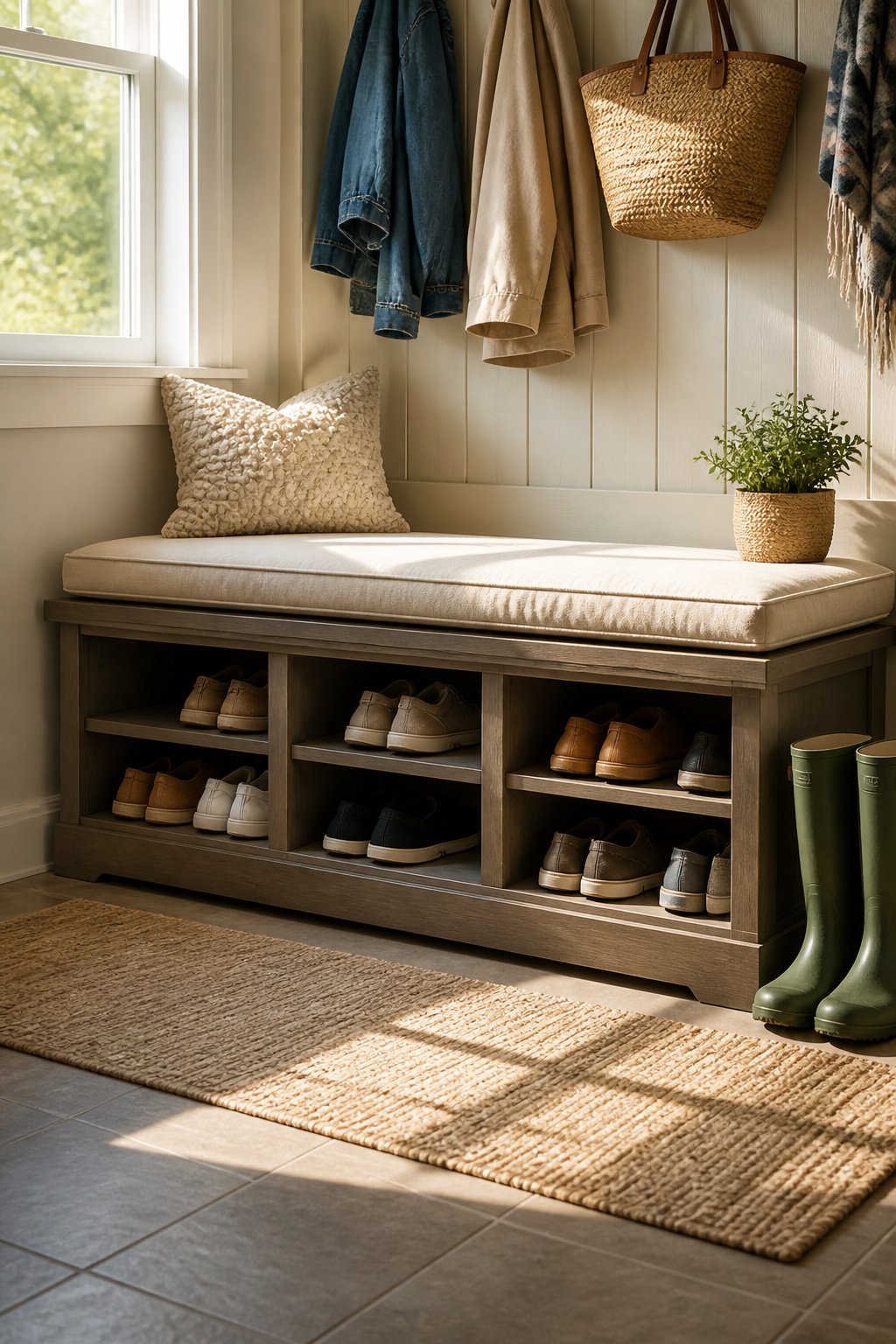
A bench in the mudroom earns its keep only if you actually sit on it, and that means getting the height right. 53 inches wide, 21 inches deep, and 22 inches high is the combination that worked for one build, cushion included. Taller than standard dining seating, that 22-inch height keeps you from sinking too low while wrestling off boots.
Where the shoes go underneath matters as much as the seat itself. Open shelves let everyone pull footwear straight out without shifting sideways to clear a drawer face; in a busy entryway, that smooth motion keeps traffic moving. Drawers with waterproof liners, though, hide the mess entirely and catch melted snow or mud in something you wipe clean rather than sweep. Adult boots often need to lie on their sides in drawer storage, which is a small compromise for the tidier look.
Lift-top benches add another concealed option, though the hinge hardware eats into interior height. For families with small children, the open cubby or shelf wins on speed; for a cleaner sightline into the house, the closed drawer or lift-top pays back its slight awkwardness.
5. Cubbies and Lockers
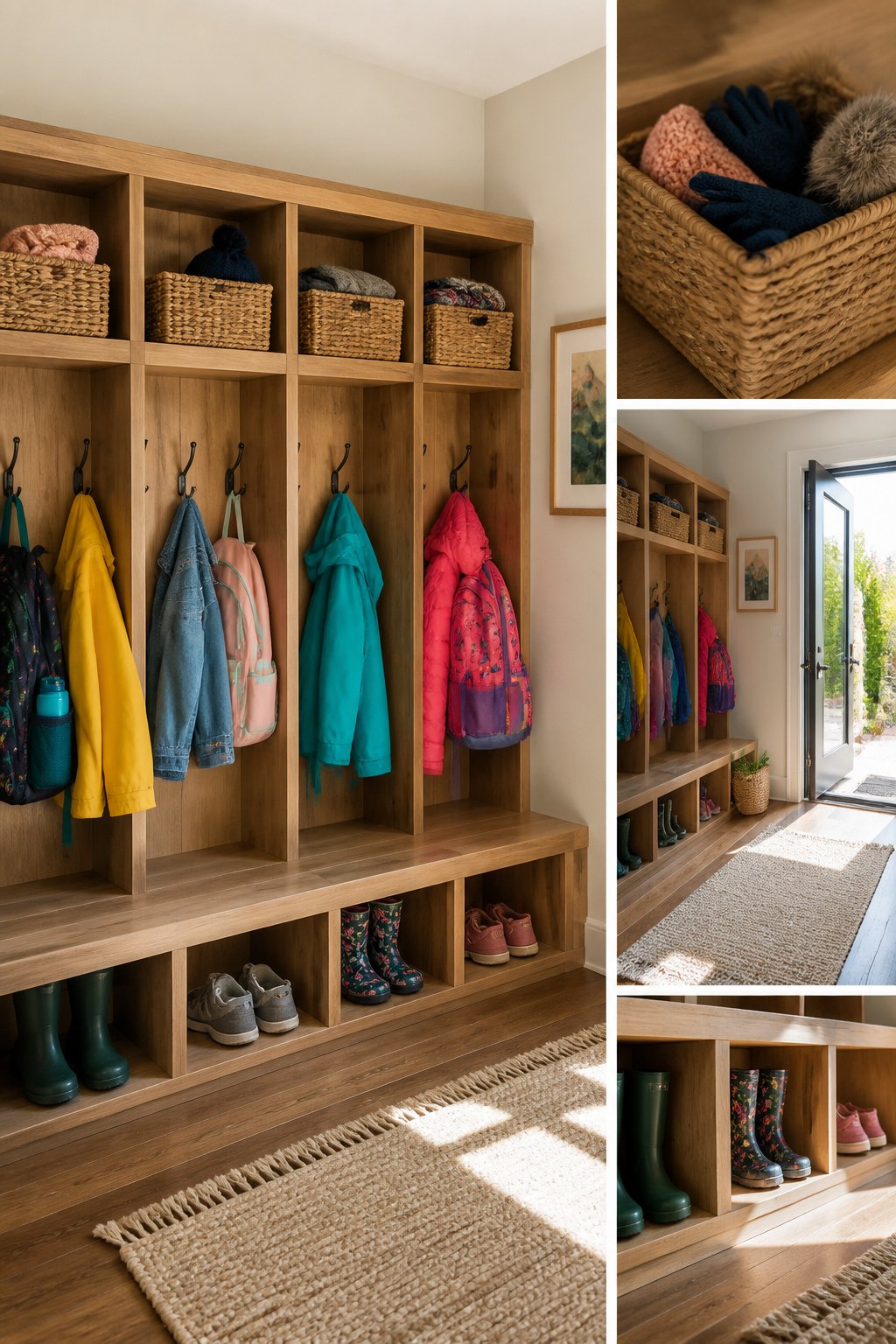
Open cubbies work best when the goal is speed, not secrecy. Kids can see their own jacket at a glance and hang it on a hook low enough for them to reach without climbing, which means the coat actually lands there instead of the floor. Closed lockers, on the other hand, hide the mess of backpacks, papers, and whatever else gets dumped after school. One family I read about solved the morning scramble by storing toothbrushes and hair supplies inside their kids’ lockers, which sounds odd until you picture a Tuesday at 7:23 a.m.
The smartest units combine both approaches in one wall. Hooks at child height handle daily coats and bags. A shelf above takes a basket for hats and gloves, or a clear bin for school papers that get sorted weekly instead of colonizing the kitchen counter. A bench with cubbies or wire baskets underneath corrals shoes before they track mud through the house. The key is assigning each family member a specific column of space, open or closed, so ownership replaces the daily argument about whose stuff is whose.
6. Command Center
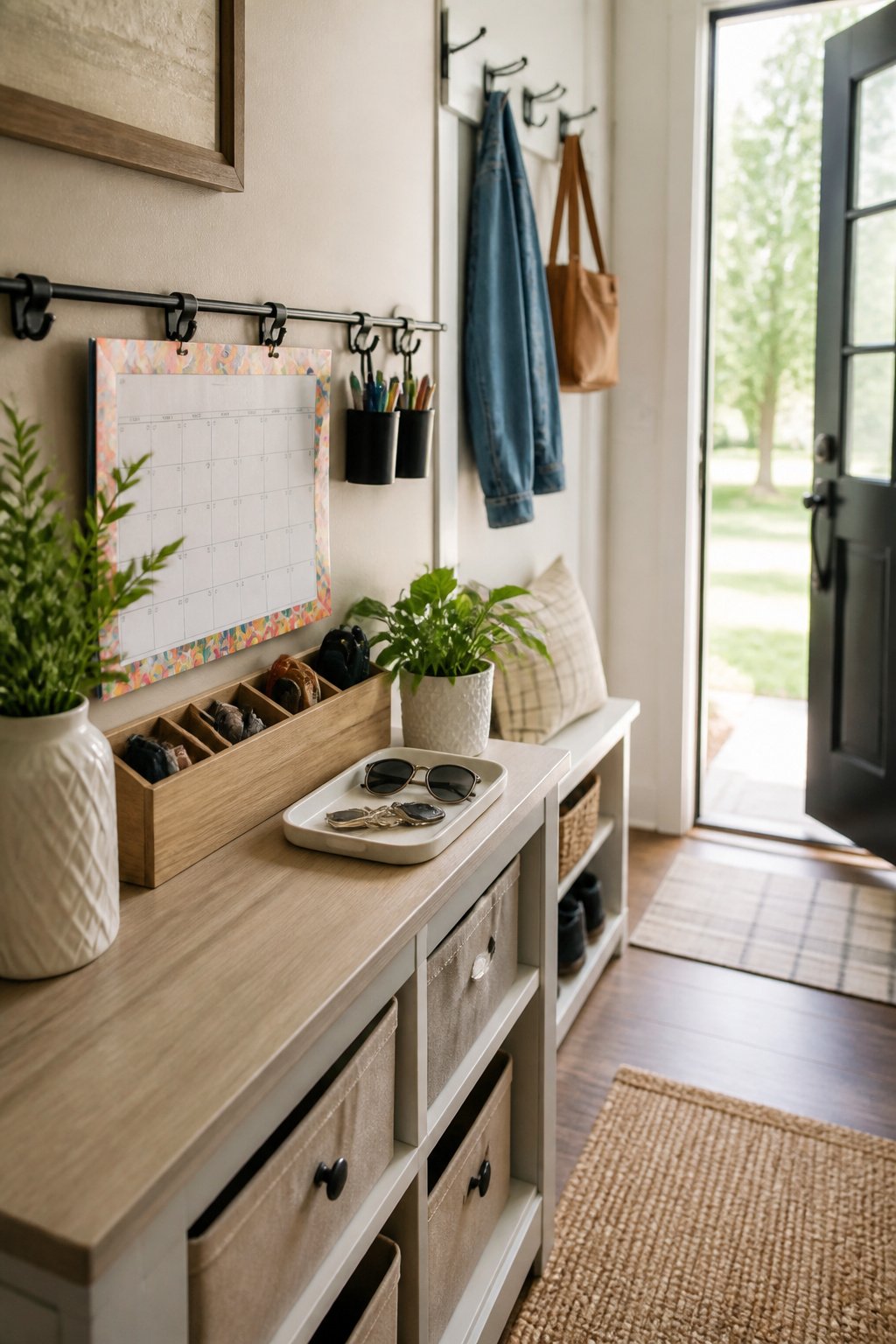
Most families blow past the door they paid to have landscaped, running in and out through the garage or side entrance instead. That back-door traffic is exactly where a command center earns its keep. A tray no larger than a letter sheet, set on the first flat surface inside, catches keys, sunglasses, and outgoing mail before they hit the kitchen counter. Wall-mounted rails or shallow shelves above the tray hold a calendar, a charging block, or the leash you grab twice a day. The spot only works if it sits within one step of the door you actually use; two steps away and the mail lands on the washing machine anyway. Drawer compartments underneath, kept intentionally light, give the setup room to grow without turning into a junk graveyard by March.
7. Labeling Systems
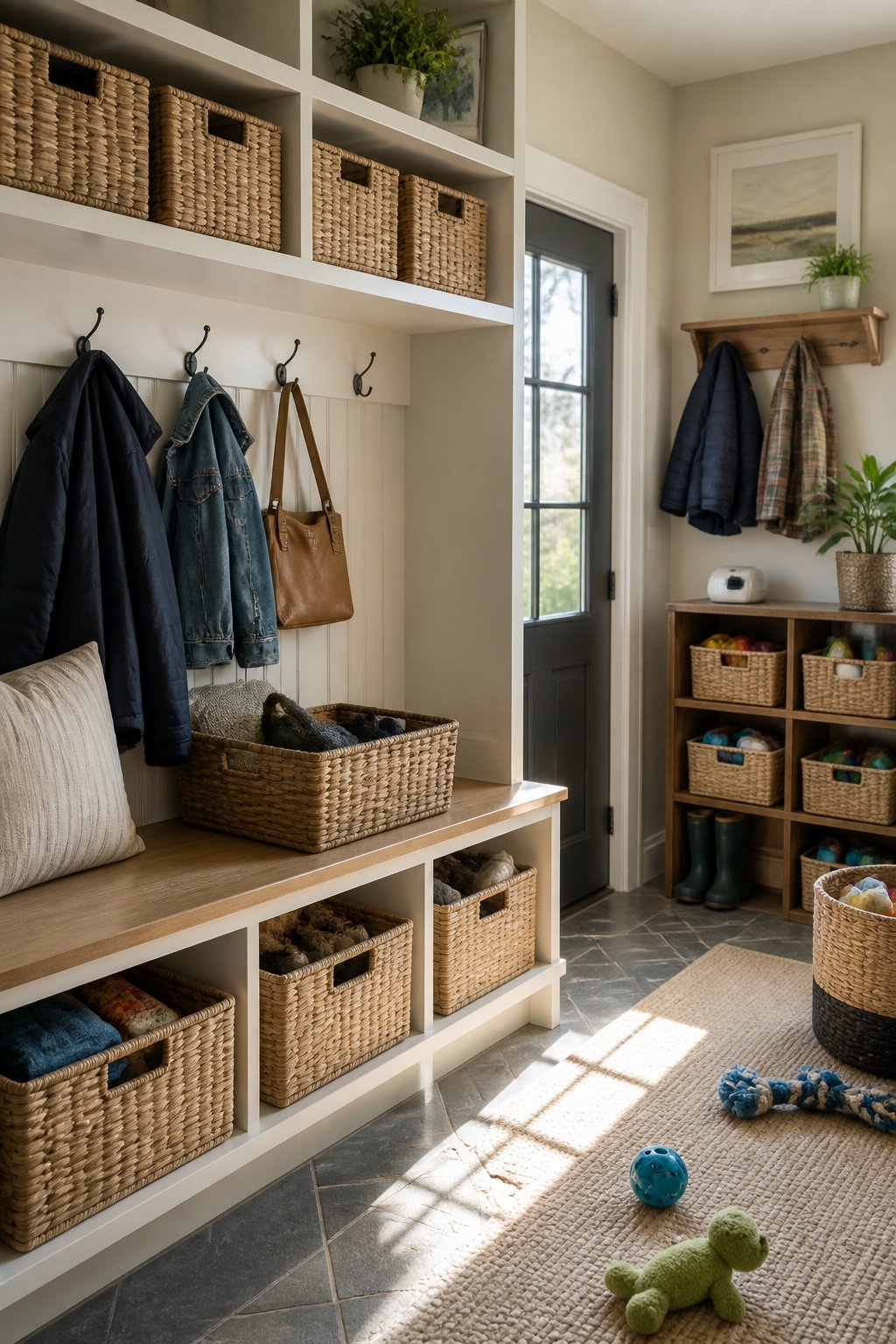
Labels turn a tidy mudroom back into a tidy mudroom three weeks later. Without them, the basket that held hats in January becomes the basket that holds everything by March. A label maker is the tool that keeps categories honest, and it earns its drawer space fast. I run tape for basket fronts, cubby edges, and shelf lips, spots where a glance does the work of opening three containers. Wooden tags work if you want the look, but adhesive bin labels survive the humidity of wet boots better in my experience. One labeled basket per person for winter accessories, another for shared gear like pet supplies or tools, and the system starts to hold because everyone sees where their hand should go. The real test is not day one. It is whether you reprint a label when a category shifts, or let the tape peel and pretend you still know what lives inside.
Design for Your Traffic Pattern
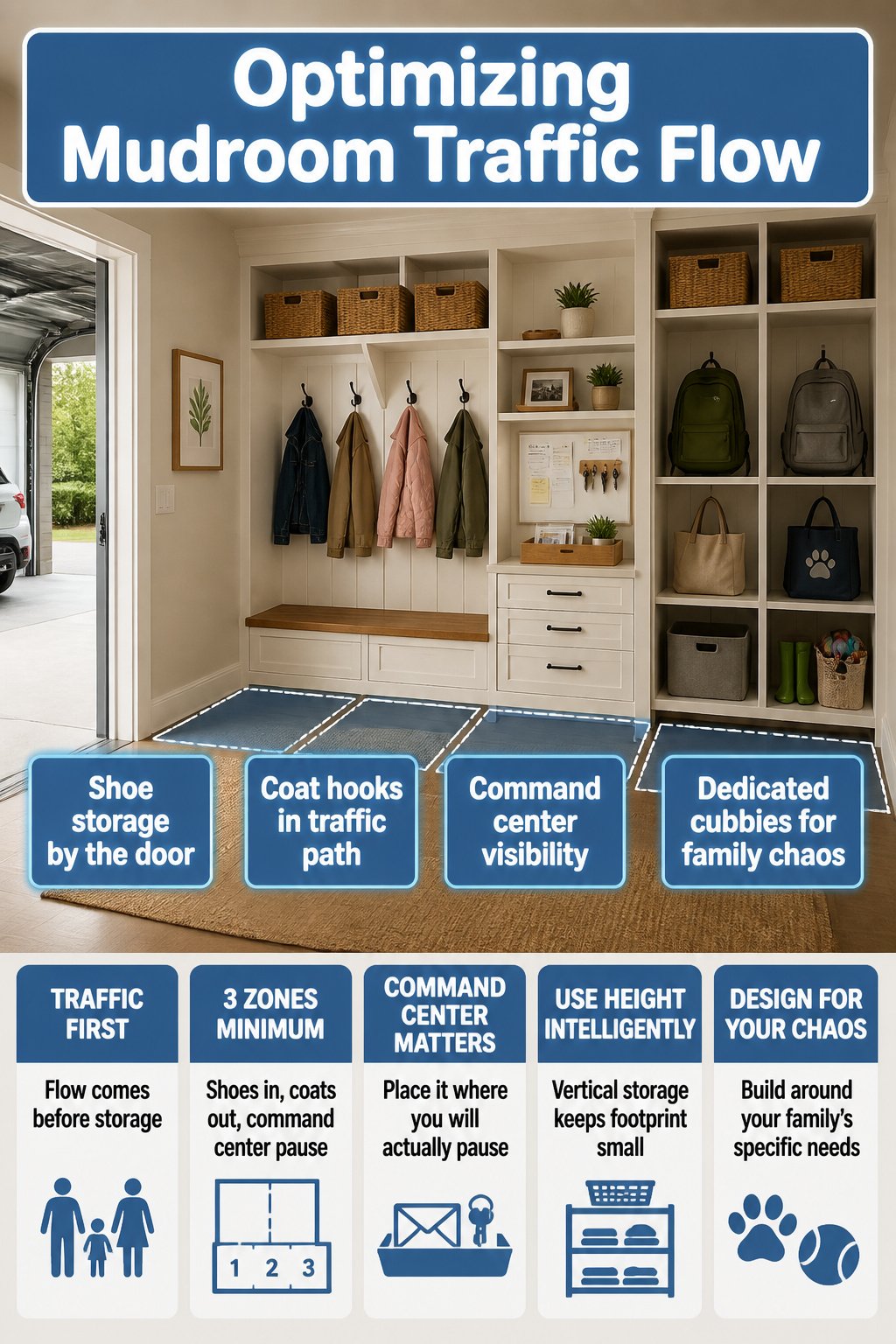
The mudroom that actually works starts with watching how people move through it. In my house, the garage door dumps everyone into a narrow hallway, so the old layout had coats piled on the bench because the hooks sat two steps past where anyone stopped. Traffic pattern comes before storage type every time.
Most families need three zones: shoe storage near the door you enter, coat hanging in the path of the door you exit, and a command center for keys, mail, and whatever else leaves the house with you. The command center belongs where you will actually pause, not where it photographs well. A tray on a shelf by the garage door beats a wall-mounted system ten feet away that nobody touches.
Design around the specific chaos your family produces. One household might need a cubby dedicated to pet gear, outdoor toys, and treats. Another might need the coat hooks set low enough that a five-year-old can climb onto the bench to reach them. Vertical storage above the hanging area, using boxes or baskets for hats and gloves, keeps the footprint small while the ceiling height does the work.
If you are still carrying mail to the kitchen island every afternoon, your drop zone is in the wrong place. Move it to where the mail already lands, then build storage there.
Use the Full Height
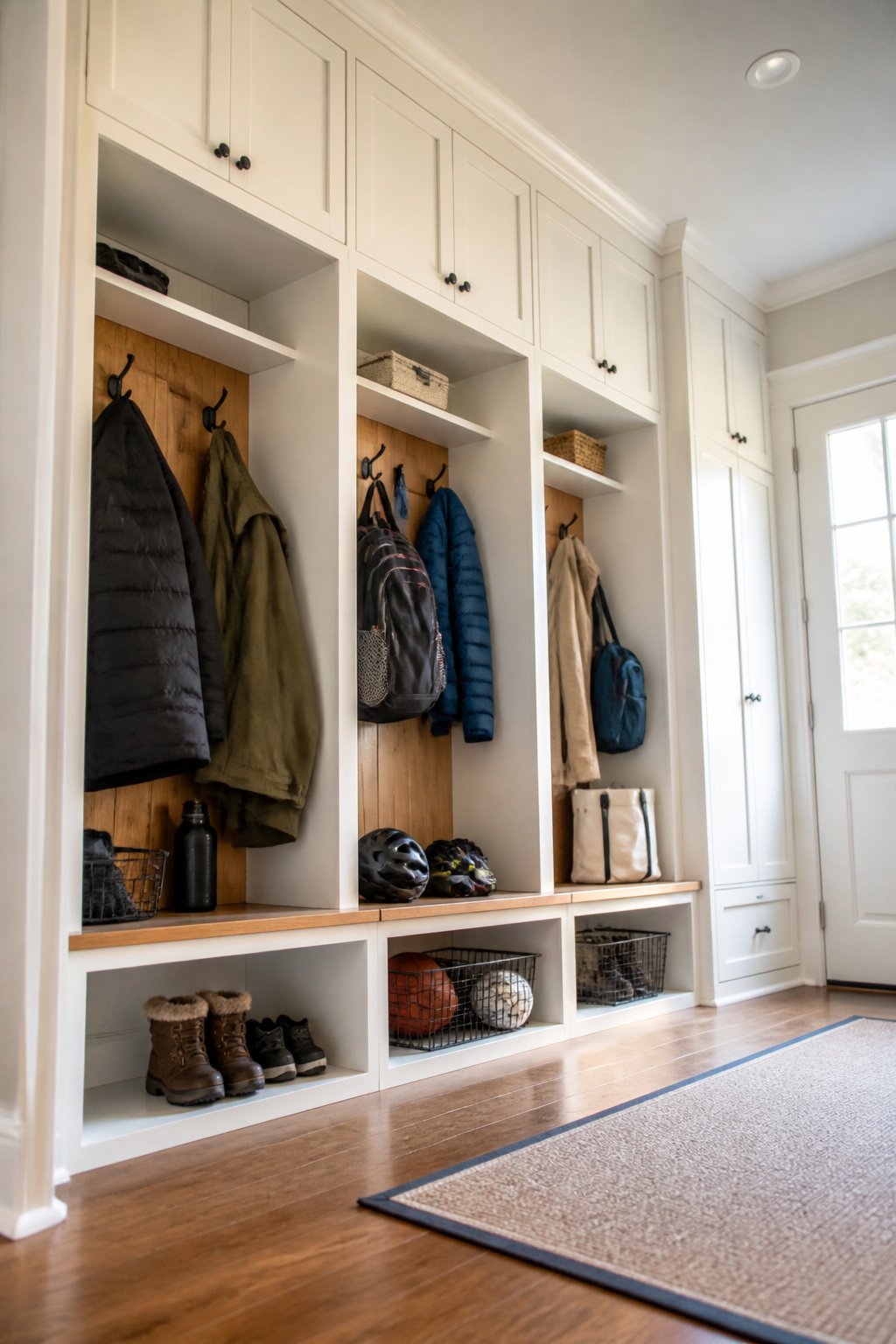
The floor in a mudroom disappears faster than anywhere else in the house. Shoes, sports bags, and the dog’s leash all end up horizontal because that’s where the open space is. Taking storage to the ceiling fixes this by moving the clutter upward and keeping the ground clear for traffic.
Tall cabinets change what stores where by reach, not by value. Daily items, the coats and backpacks, belong at eye level and below. The upper third of a 9-foot cabinet run is where seasonal gear goes, the bulky stuff you need but not every morning. One family I read about keeps their upper cabinets mostly empty on purpose, treating that height as reserve space for large items they haven’t acquired yet.
Ceiling-height shelving works the same way. Shallow uppers, around 10 to 15 inches deep, keep you from knocking your head when you reach for coffee on the way out. Behind closed doors, vertical space gets more functional: hooks mounted inside tall cabinets hold brooms and dusters off the floor, while a caddy of cleaning supplies sits ready to grab. The closed front matters here. Open shelving to the ceiling looks airy, but mudrooms collect ugly, useful things. Doors hide the visual noise and let you use every inch of height without the room feeling like a storage unit.
Rotate With the Season
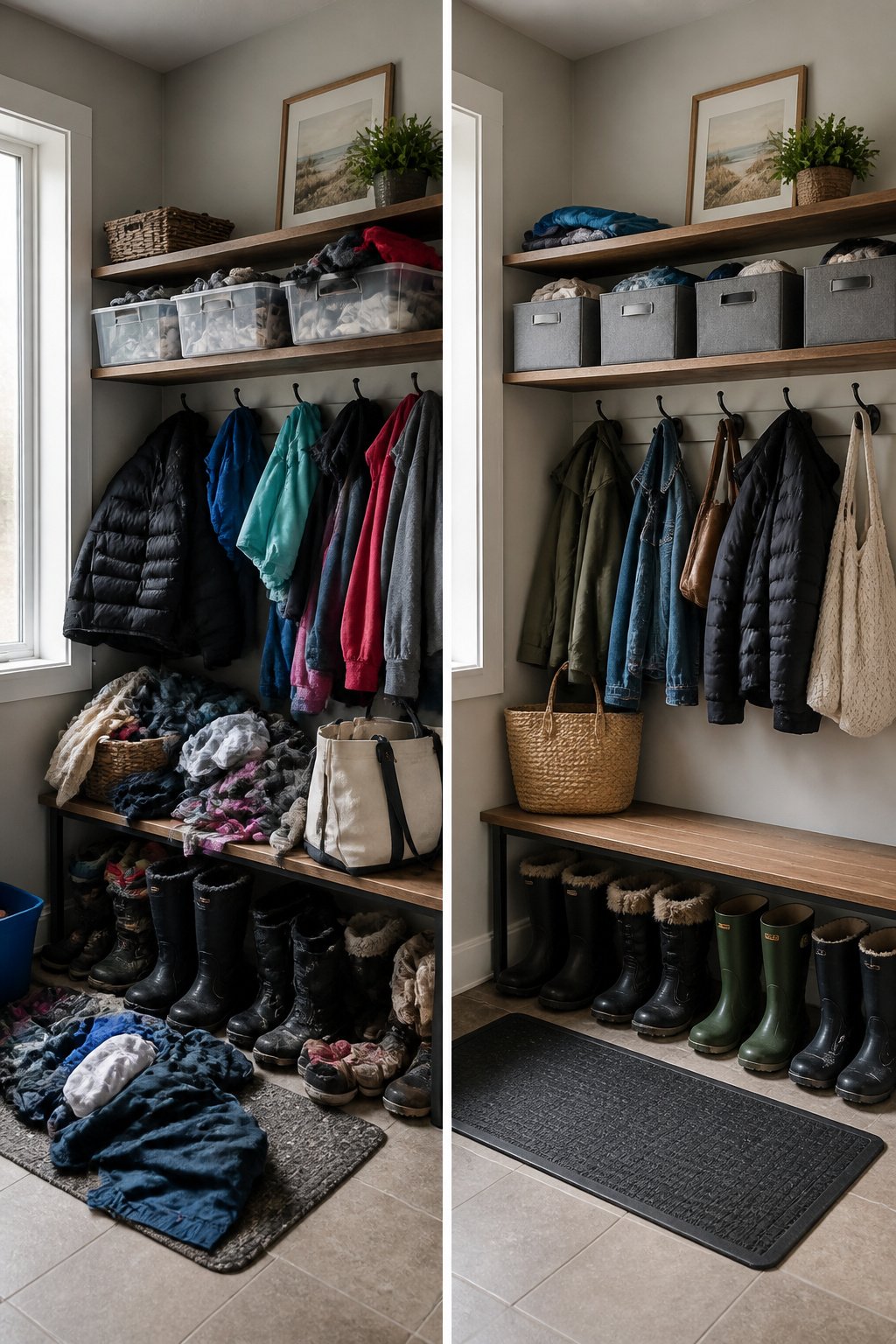
The mudroom that works in January is a disaster by June unless you plan for the swap. I learned this after one too many August afternoons tripping over snow boots still parked by the door.
Store what you are actually wearing between hip and eye level, where you can grab it without a step stool or a yoga stretch. Off-season gear goes up top, into the garage rafters, or under a bed if the mudroom ceiling is low. The bin system matters less than the rule: nothing stays in prime real estate once the temperature shifts.
Winter boots and summer sports equipment fight for the same square footage if you let them. My move is a twice-yearly rotation, Memorial Day and Columbus Day, that takes about twenty minutes because the shelf slots never change. The beach bag occupies the boot cubby come May; the boots reclaim it in October. No rethinking, no measuring, no argument about where things belong.
The catch is committing to the calendar date even when the weather lies. A seventy-degree October week will tempt you to leave the sandals out. Don’t. The cold snap always arrives, and then you are digging behind the camping chairs at six in the morning.
Reset Every Few Months
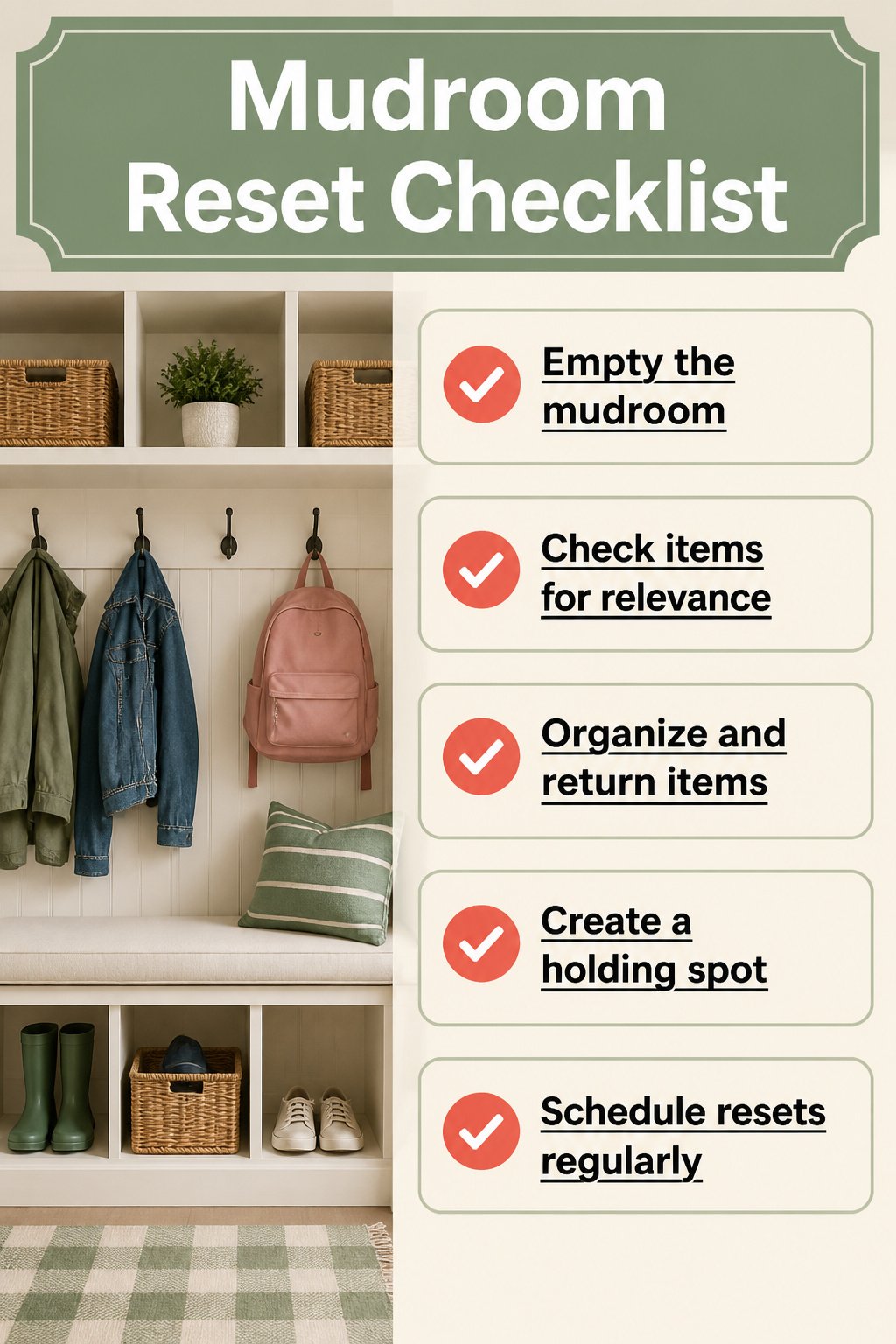
A full reset of the mudroom means pulling everything out, checking what still belongs there, and walking each item back to its assigned spot. Empty cubbies or shelves left in the process aren’t wasted space; they’re breathing room that fills naturally as family needs shift. A full reset a couple of times a year keeps the system from drifting into chaos. The calendar moments that make sense are before school starts, after winter, and any time clutter starts creeping back in. Between those resets, a holding spot for returns, borrowed items, or temporary school gear keeps the oddball stuff from migrating all over the house. The reset itself is the discipline that makes the rest of the year low-effort.
Frequently Asked Questions
How do I organize my mudroom?
Start by emptying everything out, then sort items into clear categories: shoes, jackets and coats, bags and accessories, seasonal gear, and small items like keys and mail. For each category, decide whether it belongs in the mudroom, has a better home elsewhere, or should be donated or tossed. Assign each family member a specific column or zone so ownership replaces daily arguments about whose stuff is whose.
What should I store in my mudroom?
Store everyday items you need on your way out the door: coats, shoes, bags, hats, gloves, umbrellas, keys, sunglasses, and mail. Some families also keep pet gear, outdoor toys, sports equipment, or even toothbrushes and hair supplies in kids’ lockers to speed up busy mornings. Seasonal gear should rotate in and out so only what you are actually wearing sits between hip and eye level.
How can I maximize space in my mudroom?
Take storage all the way to the ceiling to free up floor space for traffic. Tall cabinets and shelving put daily items at eye level and below while seasonal gear occupies the upper third. Shallow upper shelves, around 10 to 15 inches deep, keep you from knocking your head. Multi-functional pieces like benches with open cubbies or drawers underneath corral shoes without adding footprint.