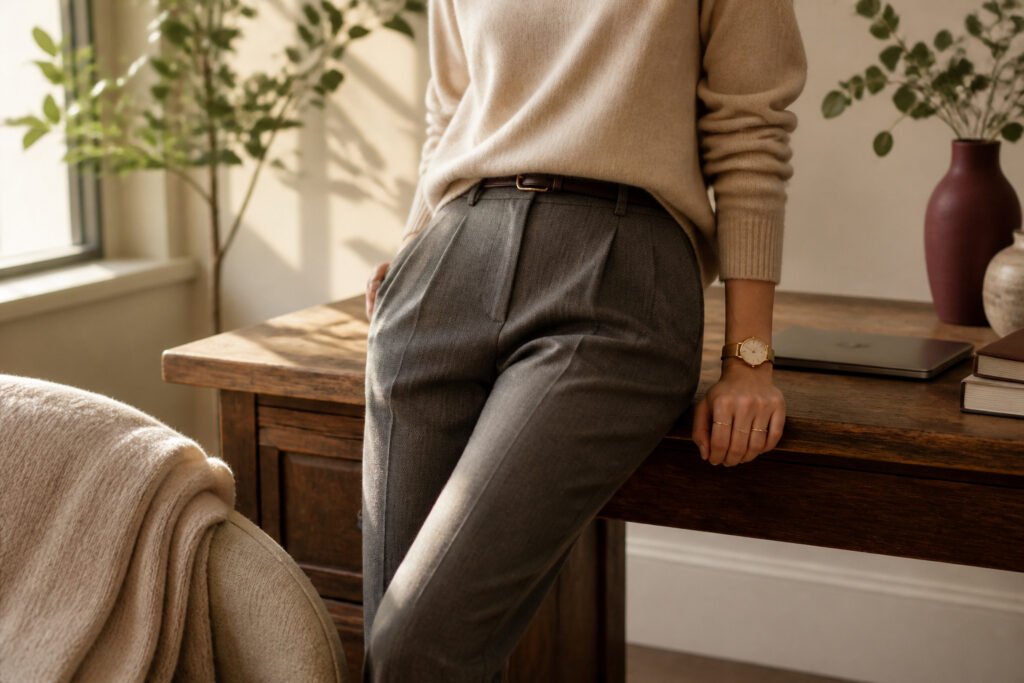
Business casual outfits for women sit in the gap between formal suiting and everyday wear, and that gap is where most people get it wrong. The code changes based on your office, your industry, and whether a client is walking through the door. A wool-blend trouser with a pressed crease reads intentional; the same cut in thin jersey slides straight to weekend wear.
Slacks and Business Dress Pants
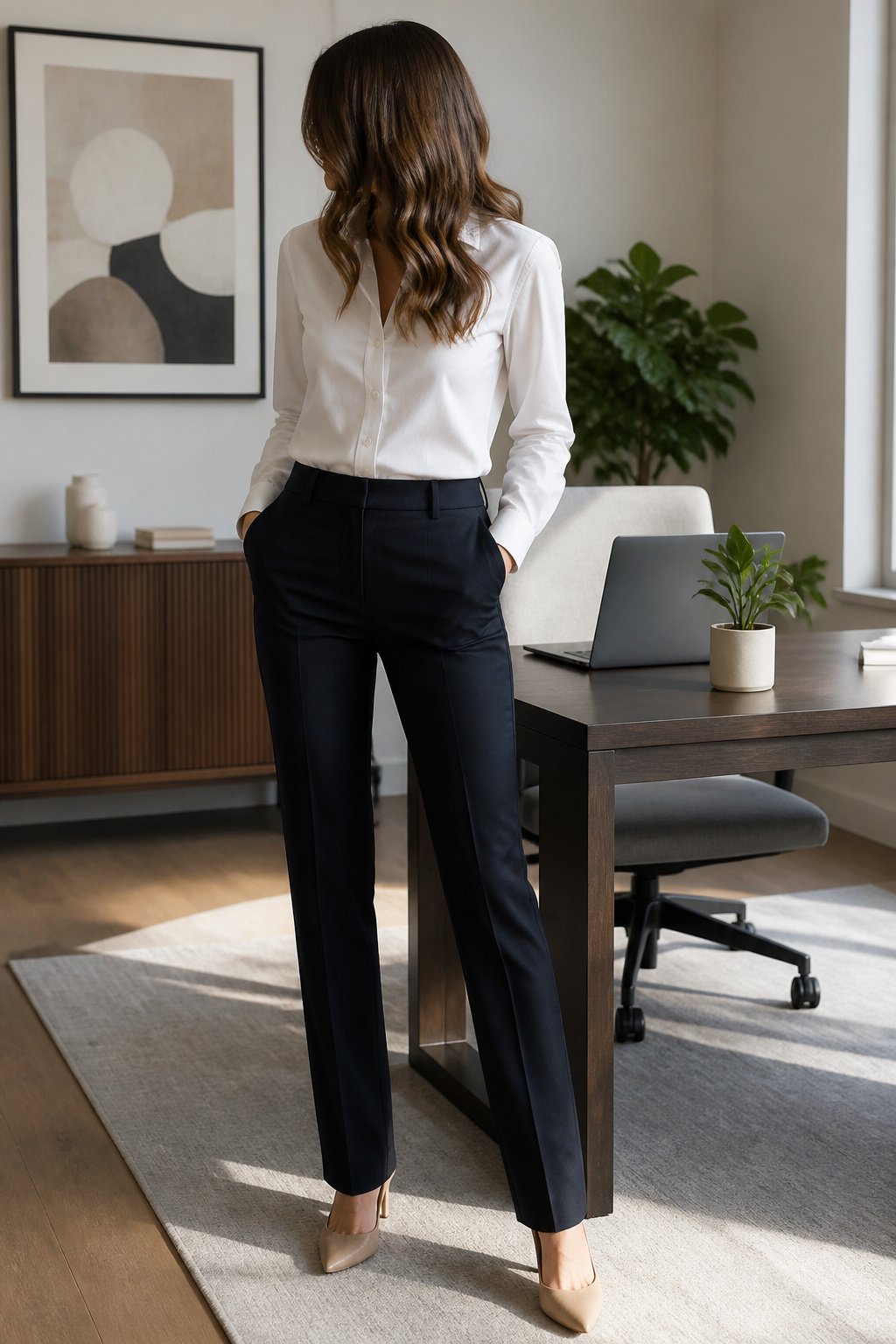
Tailored trousers and ankle pants form the backbone of most business casual outfits worth wearing more than once. The difference between looking put-together and looking like you grabbed whatever was clean usually comes down to fit and fabric. A trouser that actually follows your hip without pulling, in a wool blend or substantial synthetic that holds a crease, reads as intentional. The same cut in a thin, clingy jersey immediately slides toward weekend wear.
Dark navy, charcoal, and black carry more authority than lighter shades, and a pressed crease sharpens the line even without a matching jacket. I have watched the same pair of ankle pants shift from nearly formal to borderline casual based solely on whether they were steamed or pulled straight from the dryer.
These bottoms pair cleanly with button-downs, sweaters, or blouses, which gives you room to calibrate the rest of the outfit to your office. A silk blouse and creased trouser handle a client lunch; swap in a fine-gauge sweater and the same pant works for a desk-heavy Wednesday. The trouser does the heavy lifting either way.
Khakis and Chinos
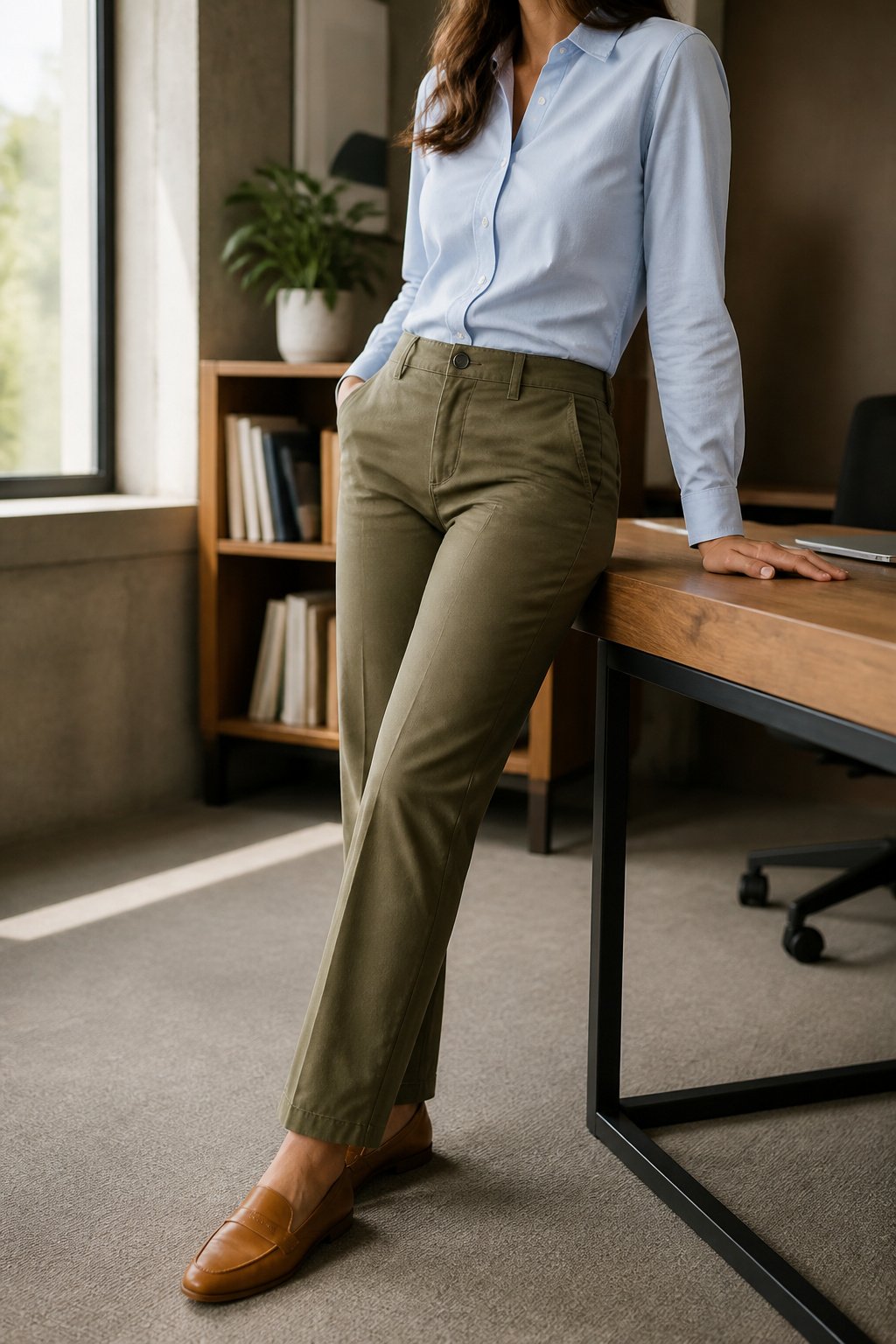
Khakis and chinos sit one notch below slacks in formality, which makes them the workhorse of offices with relaxed dress codes or days when no client walks through the door. The fabric weight matters more than most people notice; a heavier cotton twill holds a crease and looks intentional, while something too thin reads like weekend wear that wandered into the wrong building. A pair in navy, olive, or charcoal does twice the work of standard beige because the darker ground lets you pair them with a blazer without looking like you grabbed the wrong pants.
What you put on top decides whether the outfit rises or sinks. A crisp button-down and leather belt pull khakis toward proper business casual; a soft Henley or untucked knit tips them into territory where someone might ask if you’re working from home later. In my own closet, the chinos that see the most office use are the ones with a straighter leg and no cargo pockets, since anything bellowing or pocket-heavy fights against the clean line that makes these pants passable at all.
Knee-Length Skirts
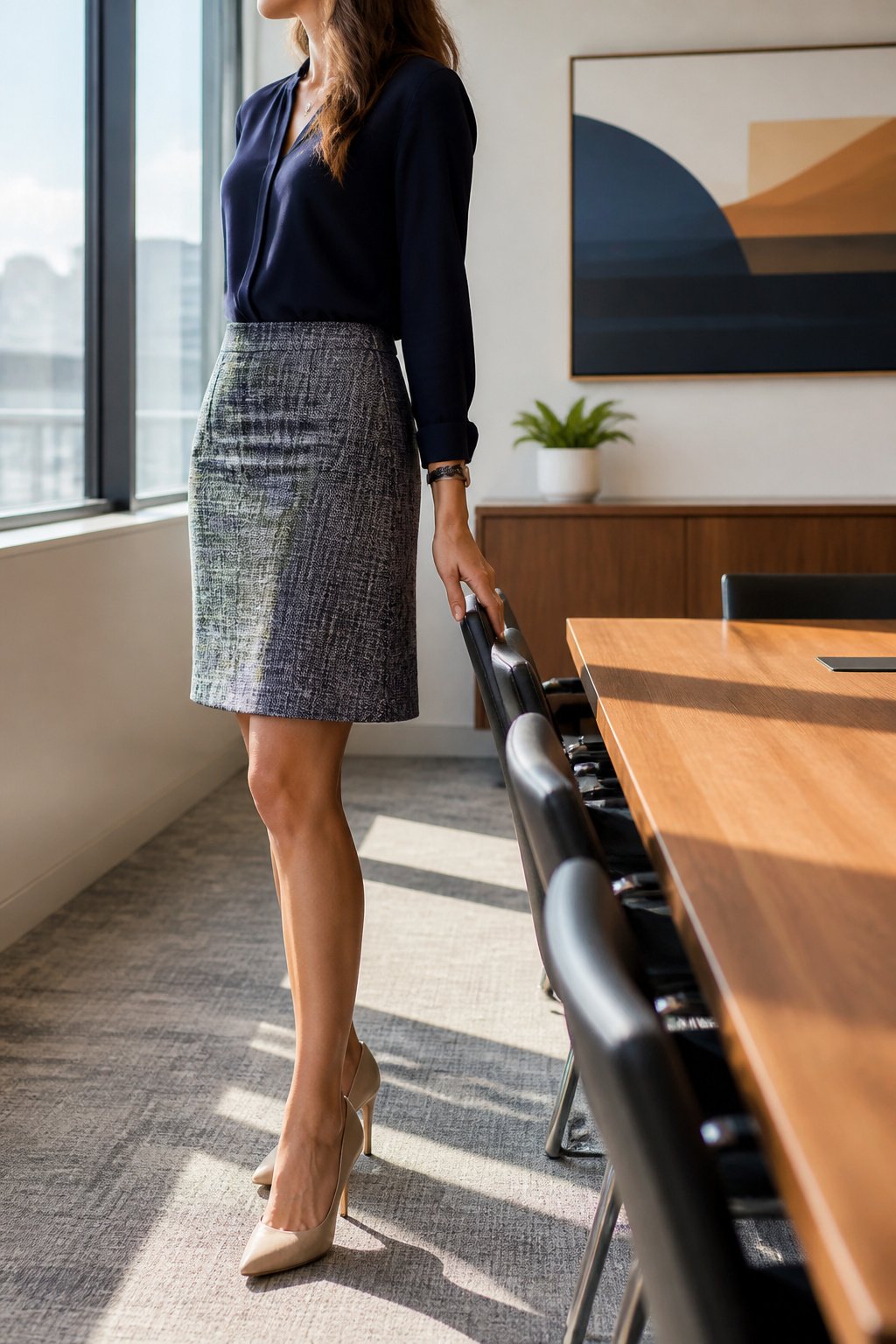
The hem should hit right at the top of the kneecap to keep a skirt inside business casual territory; anything more than an inch or two above starts reading as social, and anything below mid-calf starts reading as formal or dowdy. Pencil skirts and A-line shapes are the two reliable shapes here, with the pencil reading sharper and the A-line reading a little more approachable on the same body.
Too short is the more common mistake in offices that have relaxed, and too long is the one that makes an outfit feel like a costume from another decade. Hosiery in 2024 is optional in most workplaces, though bare legs still look unfinished to some people in conservative industries. When I do wear something, it is usually a sheer black or nude tight rather than a statement pattern; the point is to not have the hosiery be the thing someone remembers about the outfit.
Dark Jeans Without Holes

Dark wash, zero holes, and a cut that actually fits through the seat and thigh: those are the only jeans that have any shot at reading business casual. I learned this the hard way after showing up to a client meeting in what I thought was a "nice" pair, only to catch myself in the lobby mirror and see whiskering across the thighs that looked like I’d been sitting in them for three years straight. The color had faded to something closer to slate than indigo, and the slight stretch meant they’d bagged at the knees by 10 a.m.
The wrong jeans sink an outfit before you add a single layer on top. Distressing of any kind, even a small abrasion near the pocket, reads as weekend wear in almost every office. Light washes and trendy silhouettes like wide-leg or cropped flares can work for social settings, but they pull an otherwise polished look toward casual fast.
Before leaving the house, check three things in daylight: the wash reads as near-black or deep indigo with no fading, the hem hits clean at your ankle or shoe with no bunching, and the fabric has enough structure that it doesn’t cling. These rules relax only in creative agencies, tech offices with explicitly casual codes, or some education settings where the culture leans informal. Finance, medical, and most corporate environments leave no room for denim at all. When the dress code is unclear, slacks are the safer call; jeans in a conservative office signal that you either missed the memo or chose to ignore it.
Button-Down Shirts

A cotton or silk button-down in a solid navy, white, or soft stripe is the most reliable top in a business casual wardrobe. Tuck shirts that fall below mid-hip; leave untucked only when the hem hits at high-hip and the fabric is substantial enough to hold its shape over trousers. Wrinkles are the main enemy here, especially with cotton. A quick steam in the morning works, but hanging the shirt in the bathroom during a shower usually does enough if the weave is decent quality.
Gaping between buttons at the bust is a fit issue worth fixing rather than hiding. A well-placed snap or a strip of fashion tape solves it for the day; longer term, sizing up and having the waist taken in costs less than replacing shirts that never sit right. Silk blouses drape differently and gap less, though they show oil from skin more readily at the collar, so an undershirt or camisole underneath saves dry-cleaning bills.
Patterns should stay small. A narrow pencil stripe or micro-dot reads as solid from across a conference table; anything larger starts to fight with the rest of the outfit. For bottom pairings, a tucked shirt with mid-rise trousers needs a belt to finish the line, while an untucked shirt over slim pants looks intentional only if the shirt is tailored through the sides rather than boxy.
Sweaters and Blouses
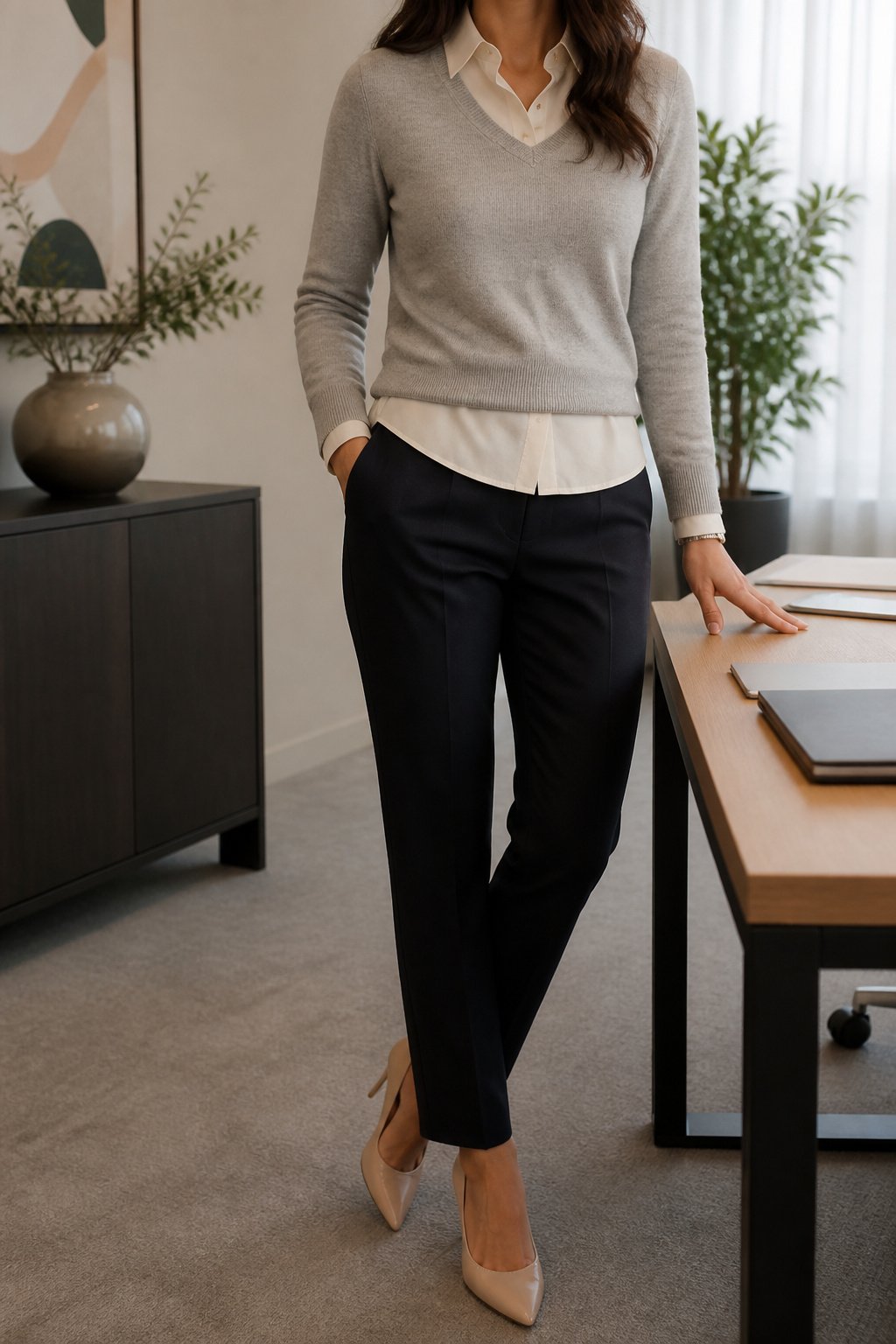
A fine-gauge merino or silk-blend knit reads as deliberate office wear, while a chunky cable knit still carries Saturday morning energy even in a sober color. The difference is fabric weight: anything much thicker than a lightweight sweater layer under a blazer without bulking at the shoulders, and anything too thin risks going sheer by afternoon.
Neckline depth is the detail that separates a blouse you reach for from one you avoid. A V-neck that shows no hint of collarbone shadow when you bend to pick up a dropped pen is generally the workable limit for most offices; anything lower demands a camisole underneath, which adds heat and bulk most of us do not need between nine and five. Crewnecks and shallow boatnecks sidestep the question entirely.
Woven blouses without buttons, think pullover styles or those with concealed zippers, solve the gaping problem that plagues button-downs across a bustline. They also tend to drape better under a cardigan because there is no center-front placket creating a ridge. The tradeoff is less adjustability: a half-tuck to define a waist becomes the whole maneuver, since you cannot open the bottom two buttons to make it sit right.
What signals intention rather than afterthought is structure. A blouse with a defined shoulder seam, a back yoke, or a banded collar looks chosen. A soft jersey top with a scoop neck and no finishing details looks like what you threw on to walk the dog. Fabric with a little body, even in a knit, holds its shape through a day of desk-to-meeting movement and still looks like itself at six o’clock.
Henleys and Polo Shirts

Henleys and polo shirts sit right on the casual edge of business casual, and whether they belong in your rotation depends almost entirely on where you work. In tech offices and creative agencies, a clean polo passes without comment; in finance or law, it reads as too relaxed even on a Friday. The line is industry, not imagination.
Fabric quality is the detail that decides it. A pique cotton polo with a collar that stays flat reads intentional; a jersey knit that pills after two washes looks like you grabbed gym clothes. The same rule applies to henleys: a fine-gauge merino or structured cotton blend holds its shape under a blazer, while a slubby thermal belongs strictly off-duty. If you are unsure about your office, pair either with chinos and loafers rather than dark jeans; the combination leans polished without overreaching. Err on the side of dressing more conservatively when the dress code is unclear, and ask HR for guidelines rather than guessing.
Knee-Length and Maxi Dresses
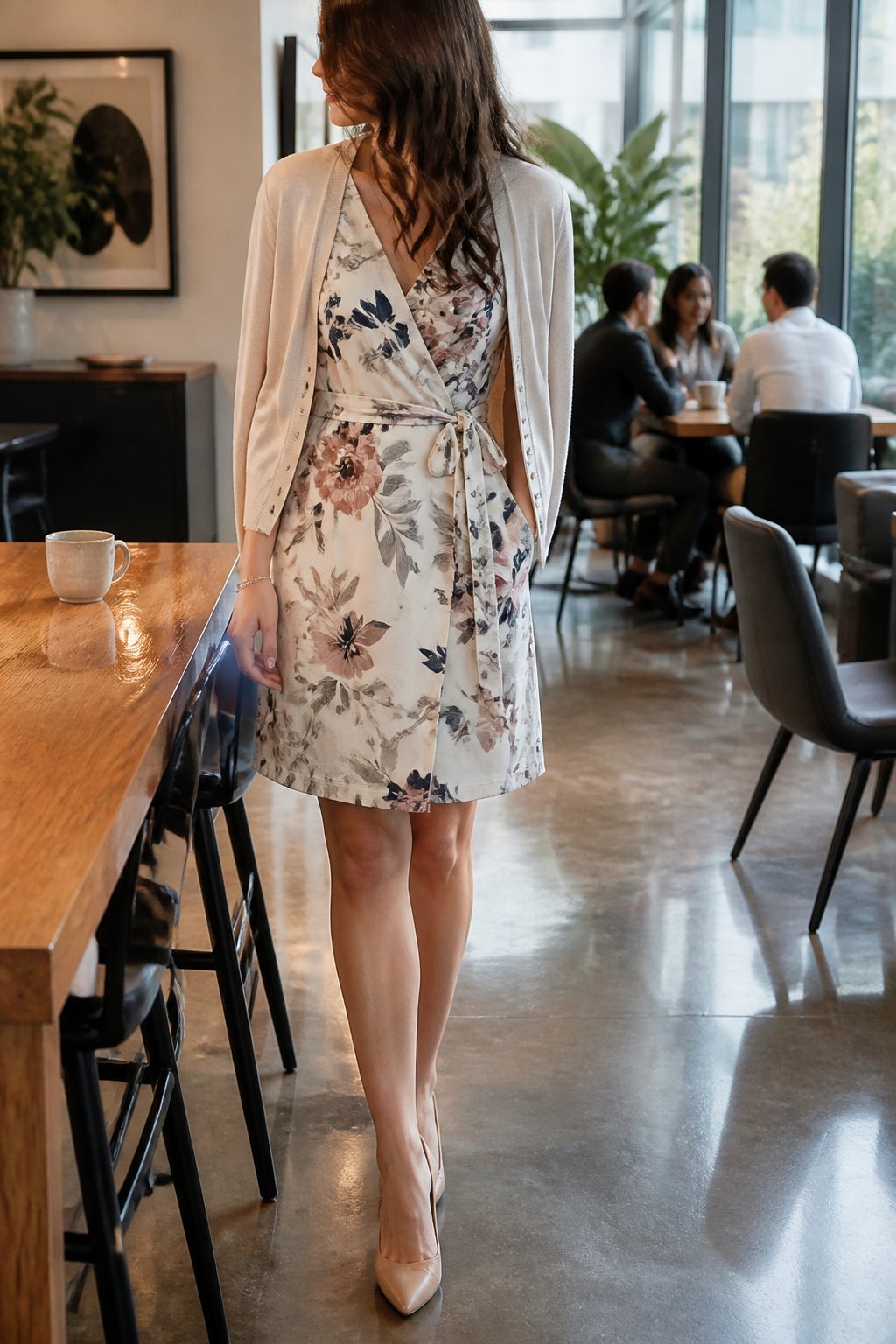
A dress removes the morning question of what matches what, but the same length rules apply: knee-length or just below, never shorter than where your fingertips land at your sides. Sleeveless styles read casual on their own; a three-quarter or long sleeve carries the formality further without needing a layer.
Fabric structure matters more than print. A lined cotton sheath holds its shape through a day of sitting and standing, while an unlined rayon midi pools and wrinkles by lunch. Flowy fabrics can work, but they need weight to them, something that drops straight rather than clings.
The dress itself is only half the outfit. Bare arms and open toes will undercut even the most tailored wrap dress. A cropped cardigan or structured blazer bridges the gap, and closed-toe flats or low heels finish the message. Without that finishing, the same dress works for weekend brunch but fails the office door.
Cardigans, Blazers, and Sport Coats
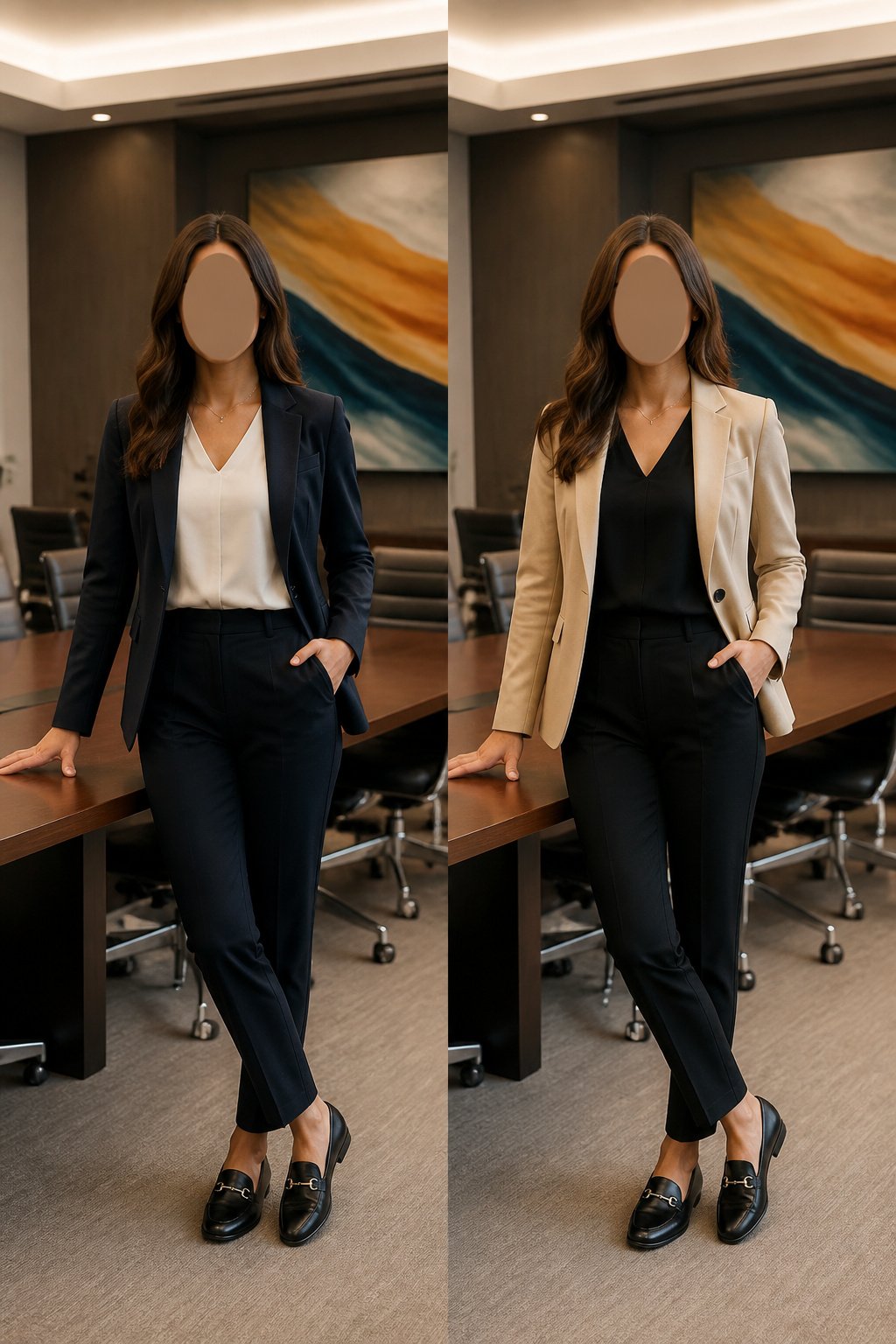
The finishing layer is what stops a blouse and slacks from looking like you got dressed in the dark. A cardigan in fine-gauge cotton or lightweight wool adds softness and warmth without the stiffness of tailoring, which makes it the safest default in offices that run casual or in buildings that over-air-condition every conference room. The drape matters more than the color; a cardigan that buckles at the hips ruins the line you built with the pants underneath.
Blazers give structure where cardigans only give coverage. Even an unlined cotton blazer with the sleeves pushed up reads as intentional in a way a sweater never quite manages. The shoulders do the work here, so the fit across that seam is the detail worth checking in a mirror before you buy.
Sport coats sit between the two in formality but add what the others cannot: texture and pattern that let a plain shirt and neutral pants feel like an outfit someone planned. A hopsack weave or subtle herringbone reads as approachable in tech or creative settings where a sharp navy blazer would look like you are interviewing somewhere else at lunch. These three pieces bridge industry differences more than any single bottom or top could. A cardigan over a shell works in education, publishing, most nonprofits. The same shell with a blazer passes in finance, law, consulting. The sport coat covers the wide middle where no one is quite sure what the dress code means, which in 2024 is a lot of offices.
Closed-Toe Shoes
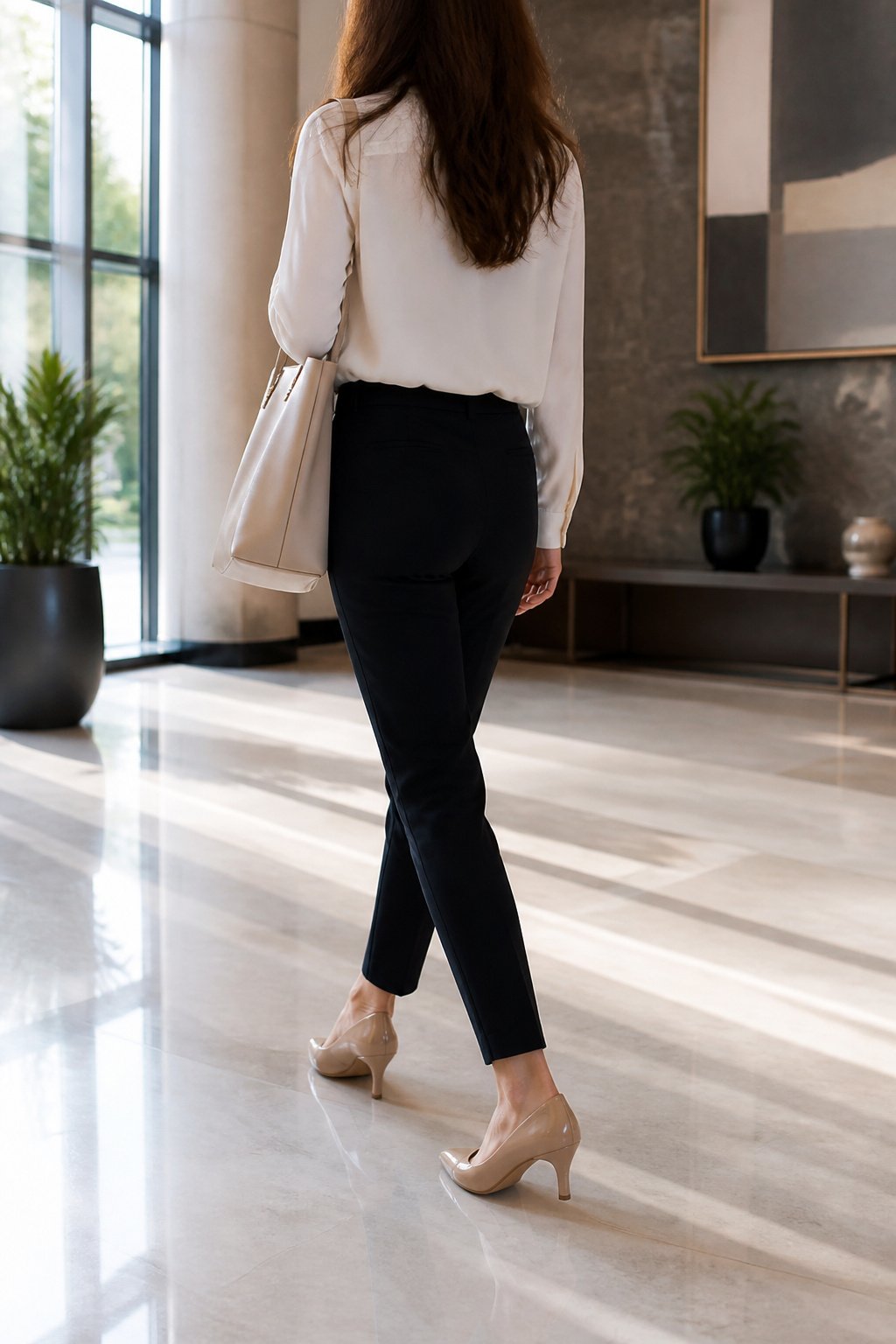
Loafers, Oxfords, boots, pumps, and flats form the backbone of any business casual shoe wardrobe. These styles keep the foot covered, which signals a level of polish that open-toe sandals rarely achieve in most offices. The same goes for athletic sneakers, even clean ones: they read as weekend wear, not workwear, in nearly every industry outside tech.
Heel height and material matter more than people expect. A leather or suede pump in a two-to-three-inch range looks intentional; the same shape in patent vinyl with a four-inch stiletto starts to read as evening instead of office. Flat loafers in polished leather bridge the gap neatly, especially for educators or anyone in the service industry who spends hours on their feet. Teaching, retail, and hospitality all reward the switch to a comfortable flat that still looks finished.
Boots work year-round if the shaft hits at or below mid-calf; anything taller starts competing with the outfit rather than completing it. Oxfords with a slim profile and minimal broguing pair cleanly with trousers or knee-length skirts without adding visual weight.
The mistake most women make is treating shoes as an afterthought when they carry more visual weight than jewelry or a belt. One scuffed or overly casual pair undermines an otherwise careful outfit.
Simple Professional Accessories
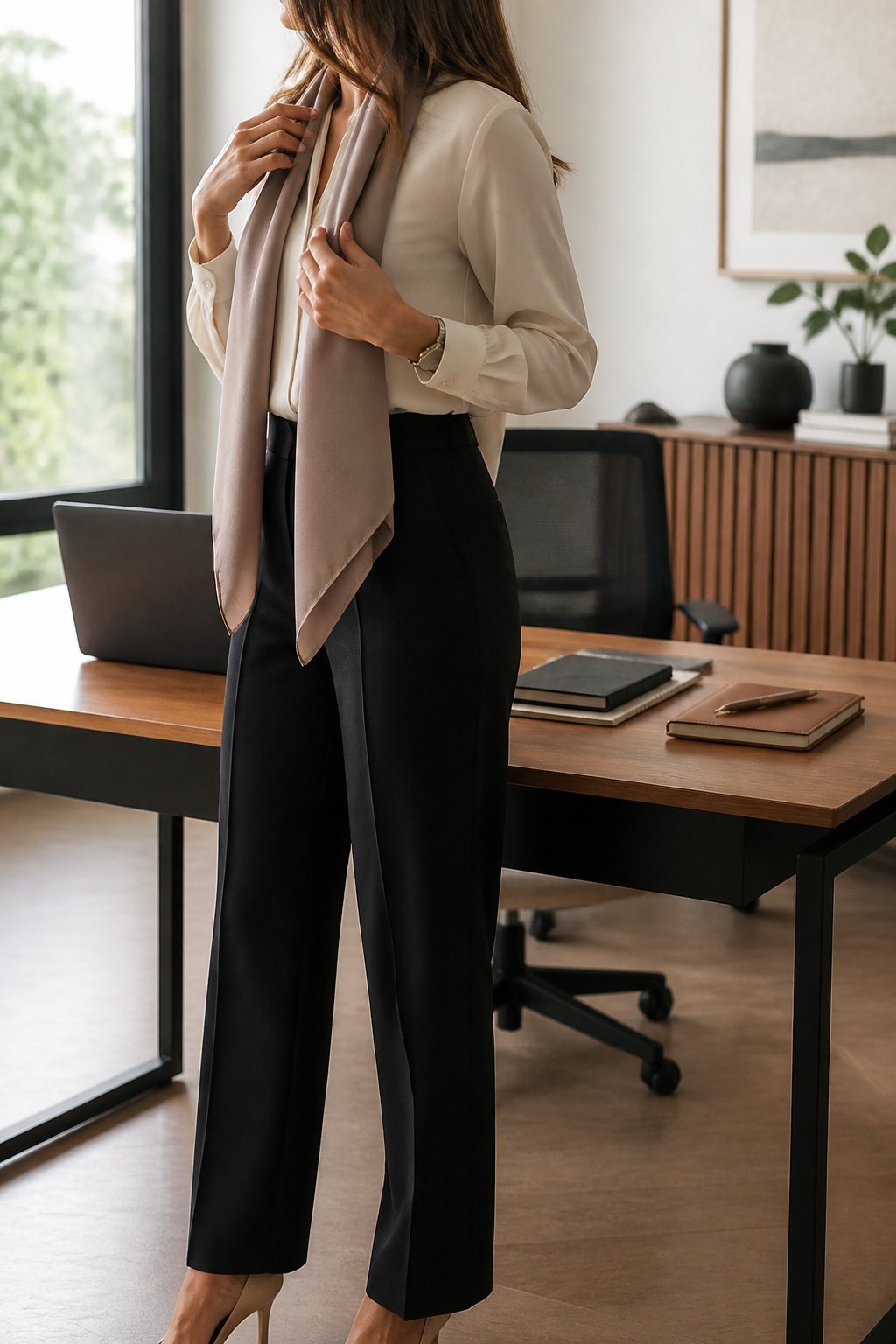
A thin silk scarf in a solid color does more to pull a business casual outfit together than a armful of bangles ever will. The line between polished and distracting sits at about the one-inch mark: anything that jingles, flashes, or shifts with every keystroke belongs in your after-hours collection, not under fluorescent office lights.
One statement piece solves problems; three competing ones create them. A single wide leather belt that actually fits your waistband will rescue a slightly loose pair of slacks, but add a chunky necklace and printed scarf to the same look and the eye has nowhere to rest. In finance or more conservative settings, a classic watch and small stud earrings carry the full load without comment. Creative agencies allow that bolder accessory, though even there the bolder choice works best when everything else goes quiet.
Scarves, belts, and jewelry fall under the same rule: the service industry keeps them to a minimum for practical reasons, and the rest of business casual only loosens that slightly. If your piece draws a compliment in the first thirty seconds of a conversation, it is doing too much of the talking.
When to Wear Business Casual
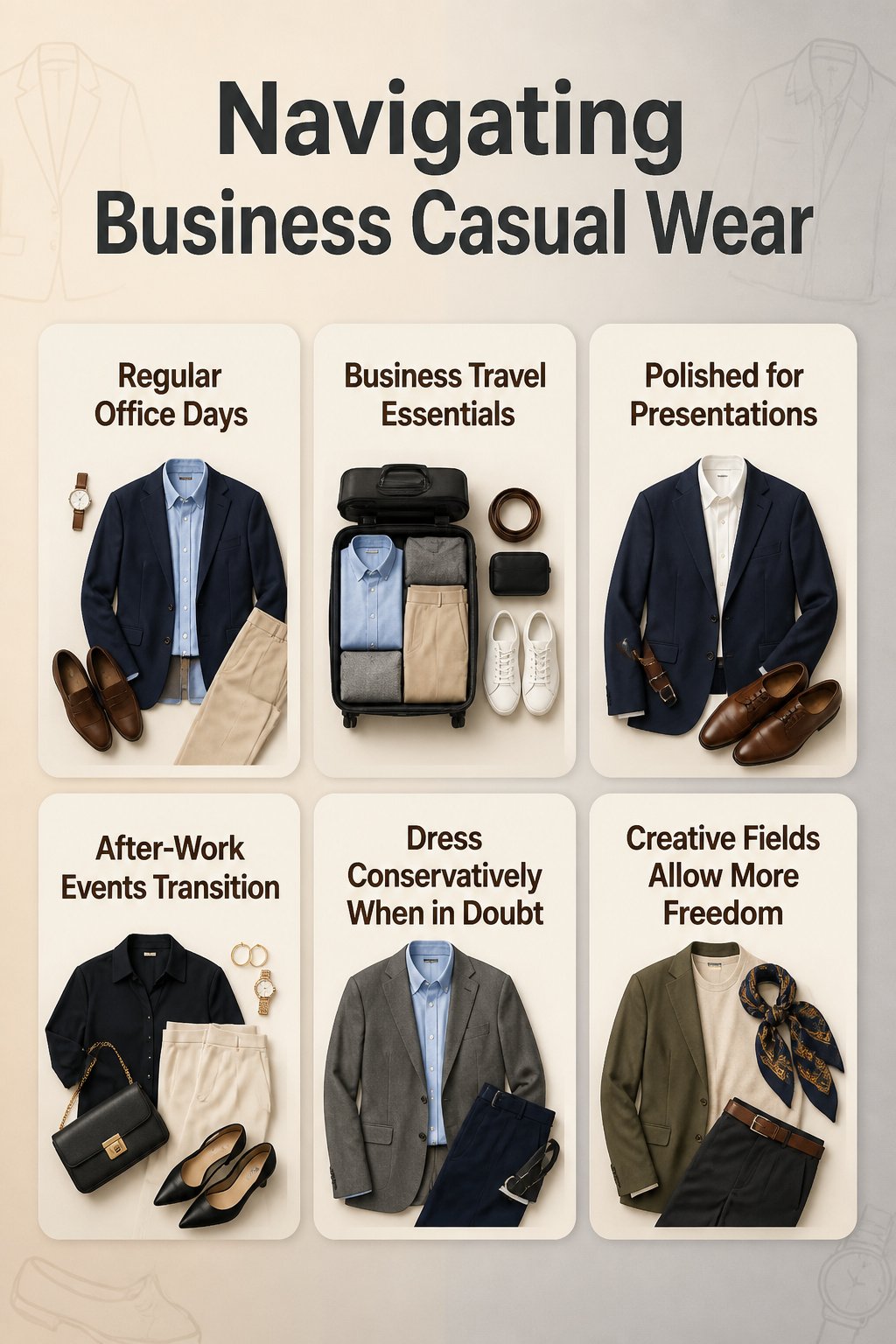
Regular office days are the backbone of business casual outfits, but the same look gets you through a surprising range of situations if you read the room correctly. Wrinkle-resistant fabrics and mix-and-match separates matter most for business travel, where one carry-on has to cover three days of client meetings. Presentations call for the most polished version of what you already own, not a separate wardrobe: the blazer that lives on your office chair, the shoes you swap in from under the desk. After-work events are where a change of accessories or footwear does the actual work of transitioning your outfit from day to evening.
Reading an invitation or office culture for cues is a skill that compounds over time. Err on the side of dressing more conservatively when in doubt — the tech industry may run casual, but showing up in actual jeans to a team you have not met yet is a guess that rarely pays off. Creative agencies, education, and entertainment settings allow more room for personal expression, while finance and more traditional offices still lean toward classic accessories and restrained color. Guessing wrong toward too formal reads as respectful; guessing wrong toward too casual reads as unaware, and that impression lingers longer than the clothes themselves.
How Industry Changes the Rules
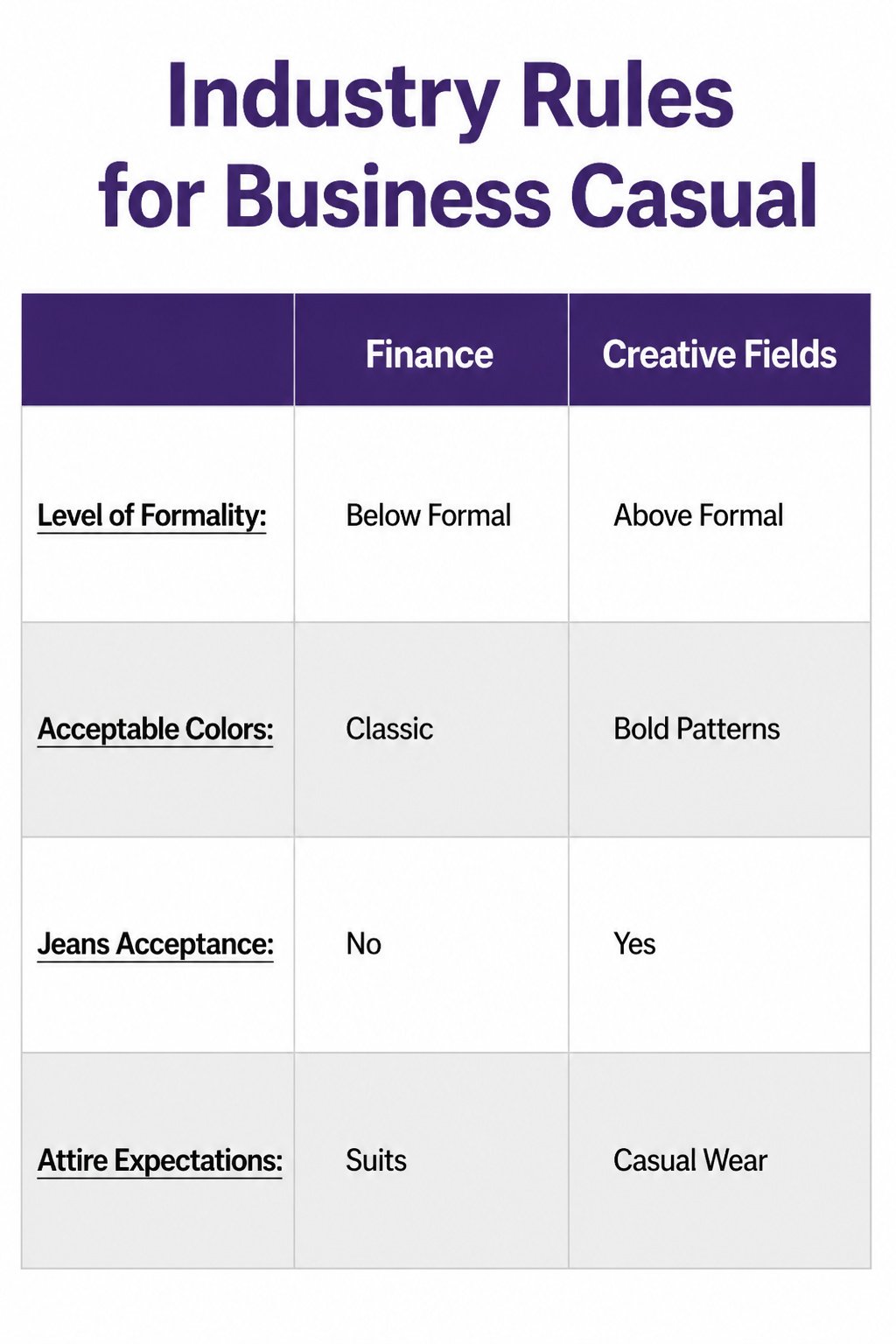
Finance and education offices still treat business casual as a notch below formal, meaning the same navy blazer that reads polished in a classroom looks almost sloppy against a trading floor’s suits. I learned this the hard way interviewing at a brokerage in what I thought was a safe outfit: dress pants, a silk blouse, and that blazer. The hiring manager wore a full suit. I did not get the callback.
Creative fields flip the equation. A patterned button-down or a pop of color in an advertising agency signals engagement rather than rebellion; the same shirt at the brokerage would have raised eyebrows. Tech drifts further still, sometimes past business casual into territory that looks like weekend wear. Human resources there may have to clarify where the line sits, and when in doubt, dressing more conservatively covers you.
The same dark non-ripped jeans that work for an educator with a nice shirt and flats would need swapping for khakis or dress pants in finance. Medical settings prioritize function over the code entirely: lab coats or scrubs, comfortable shoes for hours on your feet. Service industry workers often wear uniforms, so the only business casual decision left is accessories and whether those flats can survive a double shift.
Why the Right Workwear Matters

The right work clothes do more than signal professionalism. They give you confidence and flexibility, two things that matter when your day runs from a morning presentation to an after-work dinner without a stop at home. Quality fabrics are what make that possible. A blouse that holds its shape through three meetings and a car ride, or pants with a cut that still falls cleanly at 6 p.m., means you are not thinking about your outfit when you should be thinking about your work.
Better construction also lasts longer and travels better. Wrinkle-resistant fabrics and mix-and-match separates make packing for business travel simple, and pieces that transition from office to evening with just a shoe change mean you buy fewer items overall. Quality over quantity is not a slogan here; it is the practical result of choosing construction that does not need replacing every season. For women moving away from fast-fashion hauls toward a smaller, harder-working wardrobe, the math is straightforward: spend more per piece, own fewer pieces, replace them less often.
Frequently Asked Questions
What is business casual attire?
Business casual attire blends traditional business wear with a more relaxed style that fits an office environment. For women, this typically means tailored slacks or khakis, button-down shirts or blouses, knee-length skirts or dresses, and closed-toe shoes. The exact standard shifts by industry; finance runs more formal while tech and creative fields allow more room.
When should I wear business casual clothing?
Wear business casual on regular office days, during business travel, for presentations and meetings, and at after-work events. For travel, pick wrinkle-resistant fabrics and pieces that mix and match from a single carry-on. Presentations call for the most polished version of what you already own, not a separate wardrobe.
What should I wear for business casual?
Build your outfit around slacks or business dress pants, khakis, chinos, or a knee-length skirt on the bottom. On top, choose button-down shirts, sweaters, blouses, or a clean polo depending on your office. Finish with closed-toe shoes like loafers, Oxfords, boots, pumps, or flats, and add a cardigan or blazer when you need structure or warmth.