
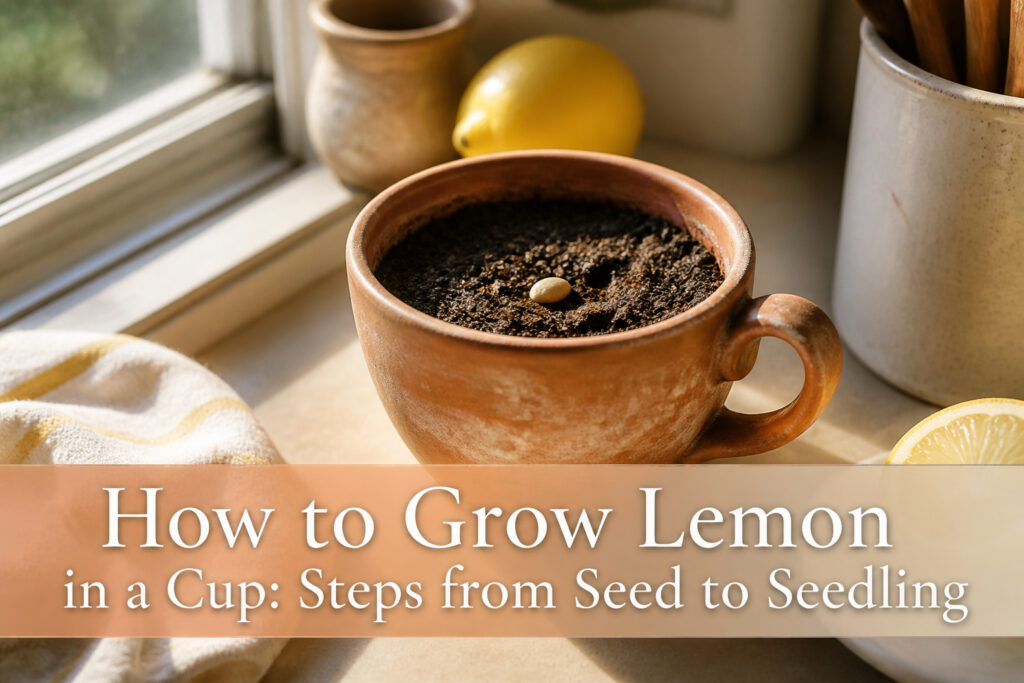
A lemon tree grown from a cup will fruit, but the wait runs four to ten years. That timeline surprises most people who start this project, and it is the first thing to weigh before cutting into the fruit.
The stage that trips growers up is not the planting; it is the cup itself. A container with no drainage hole drowns the seed before it ever wakes up. One small hole in the bottom is the minimum, and the soil must be a loose blend of peat moss, perlite, and vermiculite so new roots can push through instead of circling in a brick.
1. Prepare the Cup
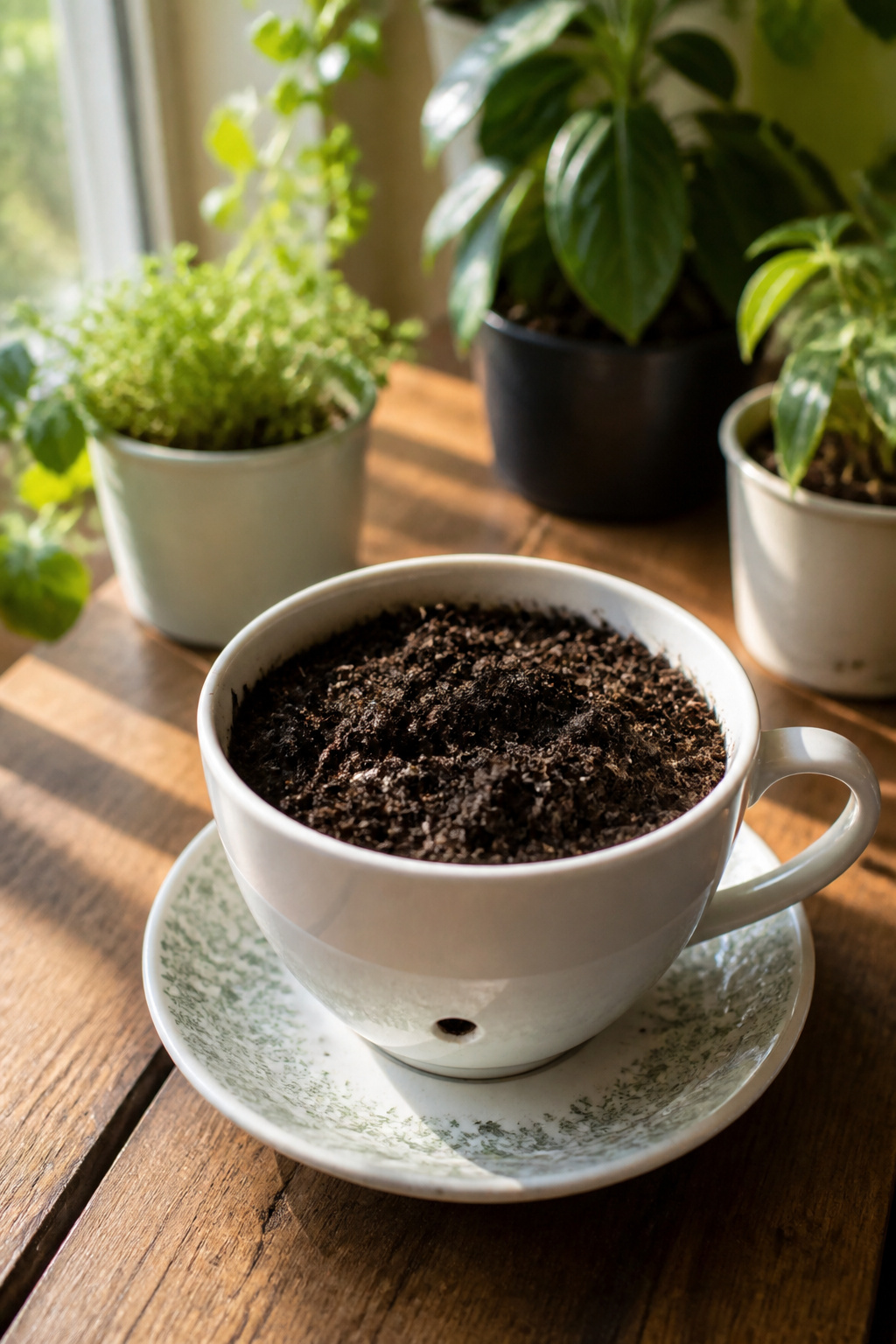
A cup with no drainage hole will drown the seed before it wakes up. One small hole in the bottom is the minimum, though a few are better; set the cup on a saucer if you are worried about the windowsill.
Fill to within one inch of the rim with organic potting soil, and look for a mix that runs equal parts peat moss, perlite, and vermiculite. That blend stays loose enough for new roots to push through instead of circling in a hard-packed brick. Moisten the soil until it feels damp through the center, not soaked; tip out any water that pools in the saucer. Citrus wants slightly acidic ground, so check that the mix sits between 6.0 and 6.5 on the pH scale. Most bagged mixes meant for vegetables land in that range, but a cheap test strip takes thirty seconds and saves a month of wondering why nothing sprouted.
2. Extract the Seeds
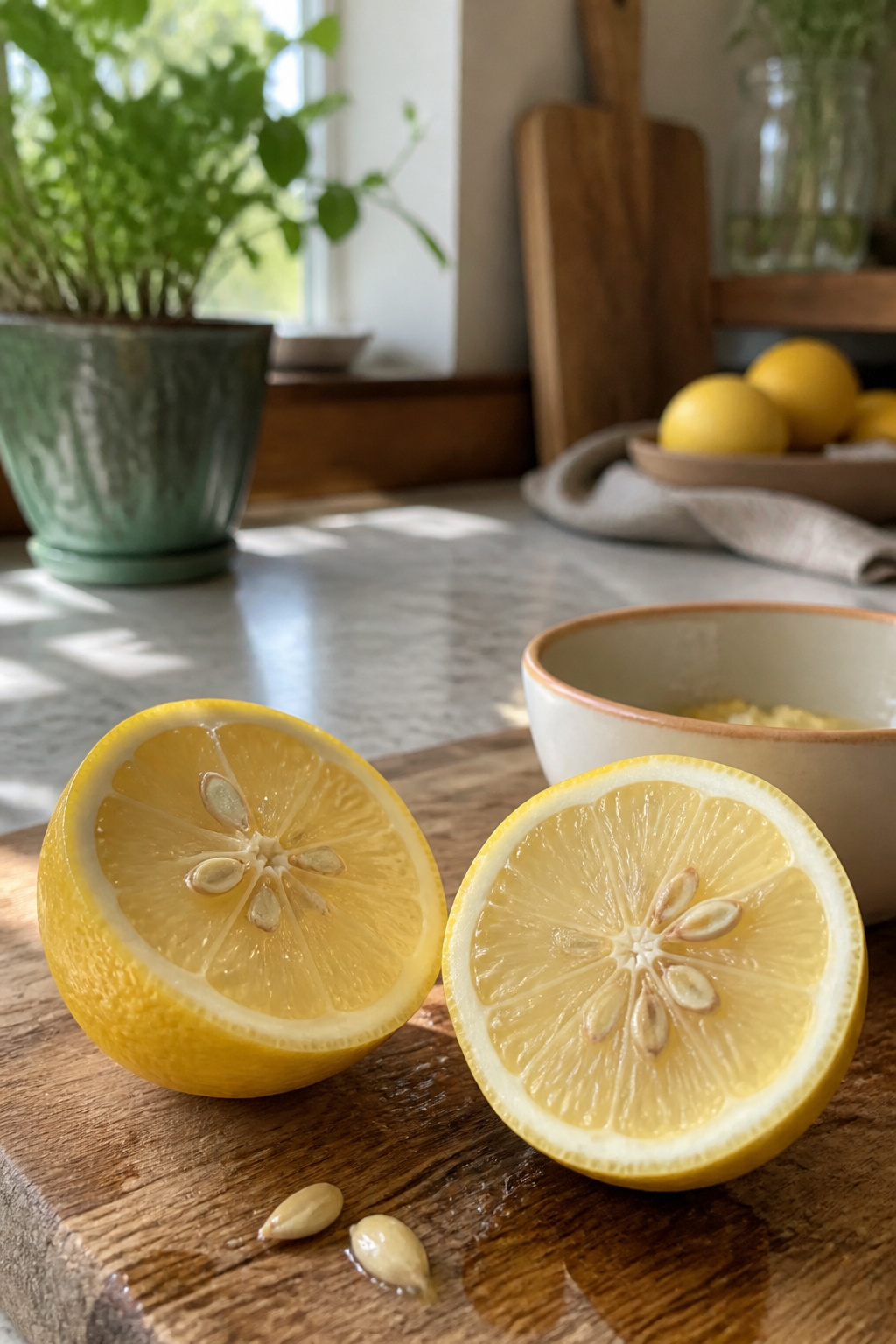
A lemon heavy for its size usually carries plump, viable seeds inside. I look for organic fruit, and not just for the clean-label appeal. Non-organic lemons are often treated with post-harvest fungicides and growth regulators that can leave conventional seeds unable to germinate at all. Organic ones skip those treatments, so the odds of actually getting a seedling jump considerably.
Cut carefully down the middle so the blade misses the seeds clustered in the center. Pick them out with your fingers, five to ten in total, and rinse every trace of pulp and sugar away under cool running water. That residue feeds soil fungus later, and fungus is what rots lemon seeds before they can sprout.
Plant them while they are still wet, ideally within an hour of pulling them from the fruit. Lemon seeds do not keep once they dry out, unlike the packeted garden seeds that sit in a drawer for years. If planting immediately is not possible, drop the rinsed seeds into a glass of water and refrigerate overnight, but get them into soil the next day at the latest.
3. Plant the Seeds
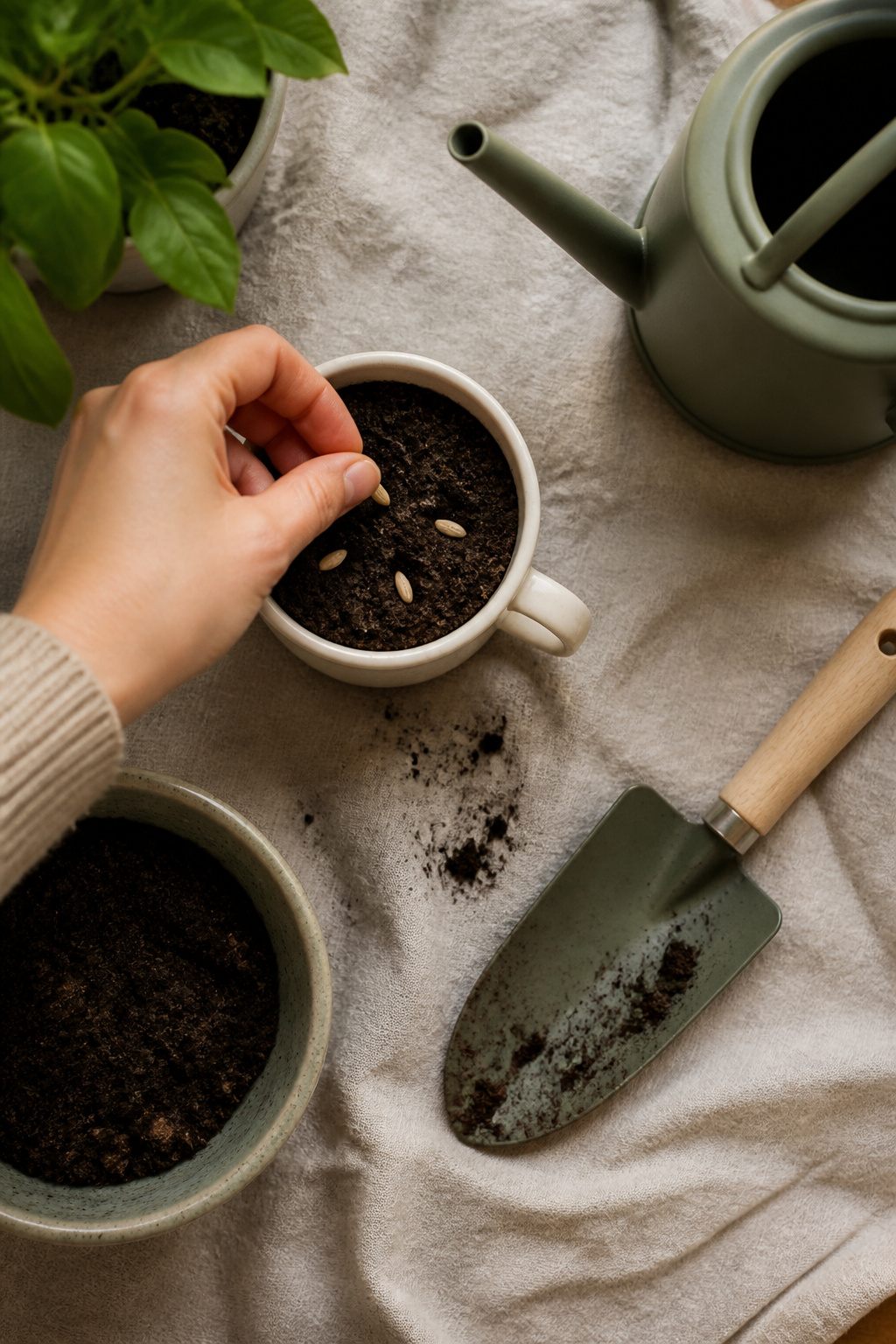
The pointy end of a lemon seed is not decorative. Plant it facing down, because that narrow tip is where the root will push out first, and burying it upside down costs the seedling days of energy it cannot spare.
A half inch of soil over the top is enough to block light and hold moisture without asking the sprout to climb through half a cup of deadweight. I press the soil down just enough that the seed does not shift when I water, then leave the surface level rather than mounded. Mounded soil dries faster at the edges and stays soggy in the center, which is the wrong kind of inconsistency for something this small.
4. Cover for Humidity
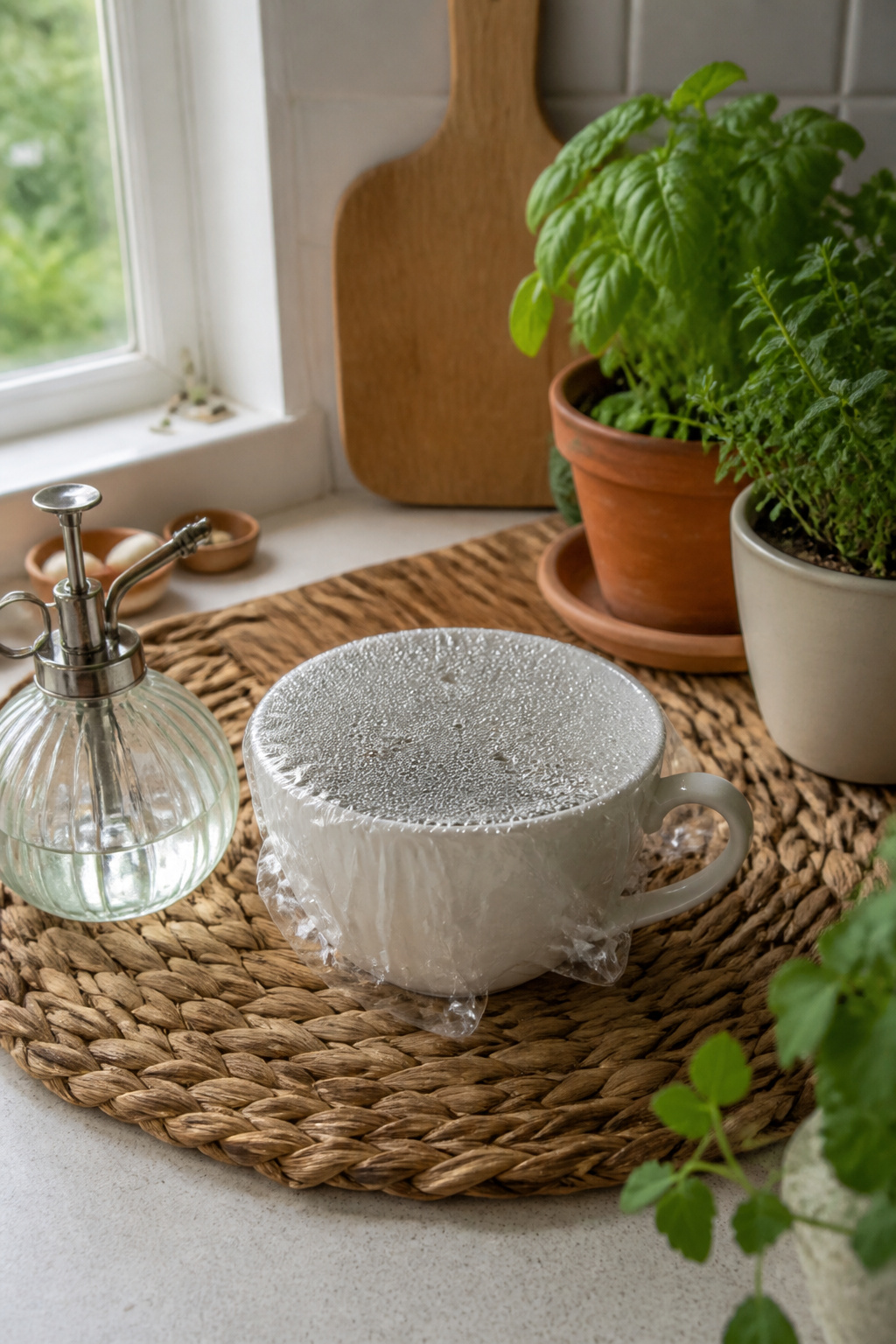
A layer of transparent plastic film over the cup keeps the air around the seed heavy with moisture, which softens the shell and coaxes the root out faster than dry soil alone. Seal the edges so the wrap sits close to the rim without gaps, then use a toothpick to poke a few small holes across the top. The holes matter more than most people expect: without them, the trapped air turns stale and the surface can grow mold before the seed ever splits. That exchange, humid inside and fresh outside, is what makes the setup work.
If the soil starts to look dusty under the wrap, lift the edge and mist the top lightly rather than pouring water through. The plastic does most of the watering for you by recycling what evaporates, so overwatering becomes the bigger risk once the cover is on.
5. Warmth and Light
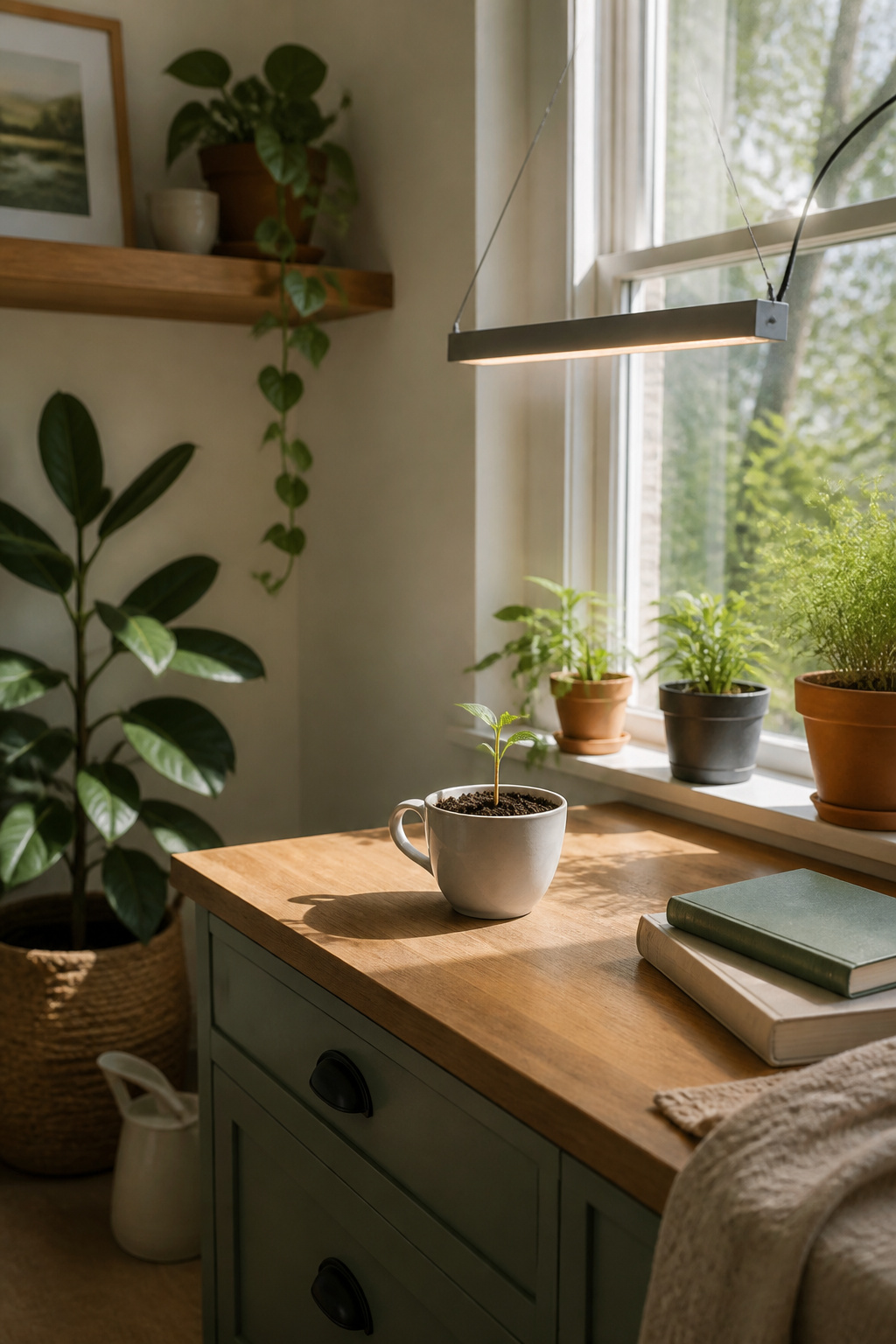
A south-facing window gives your cup-bound lemon seedling the 6 to 8 hours of direct sun it needs to push past the fragile sprout stage. That orientation matters more than brightness alone; the sun’s arc through a southern exposure delivers steadier, more penetrating light than east or west alternatives, especially in winter when the angle drops low enough to skim northern walls almost entirely.
If your apartment faces another direction, or if neighboring buildings block the light, a basic grow light hung twelve to eighteen inches above the cup will carry the seedling through. I have watched enough windowsill projects stall out in dim corners to know that "bright indirect light" is a phrase written for pothos, not fruiting trees.
Temperature sits in the same narrow band. Lemon trees take hold fastest between 70 and 100 degrees Fahrenheit, which sounds like summer weather but is really the ambient warmth of a room above a radiator or near a kitchen stove. Below that range they do not die, they simply wait, and a seedling with its first two leaves has no stored energy for waiting.
Lemon trees thrive at temperatures between 70 and 100 degrees Fahrenheit.
That upper limit is worth noting: your seedling will not protest ninety-degree afternoons the way a lettuce flat would. Keep the soil moist and the cup will handle the heat.
6. Water and Monitor
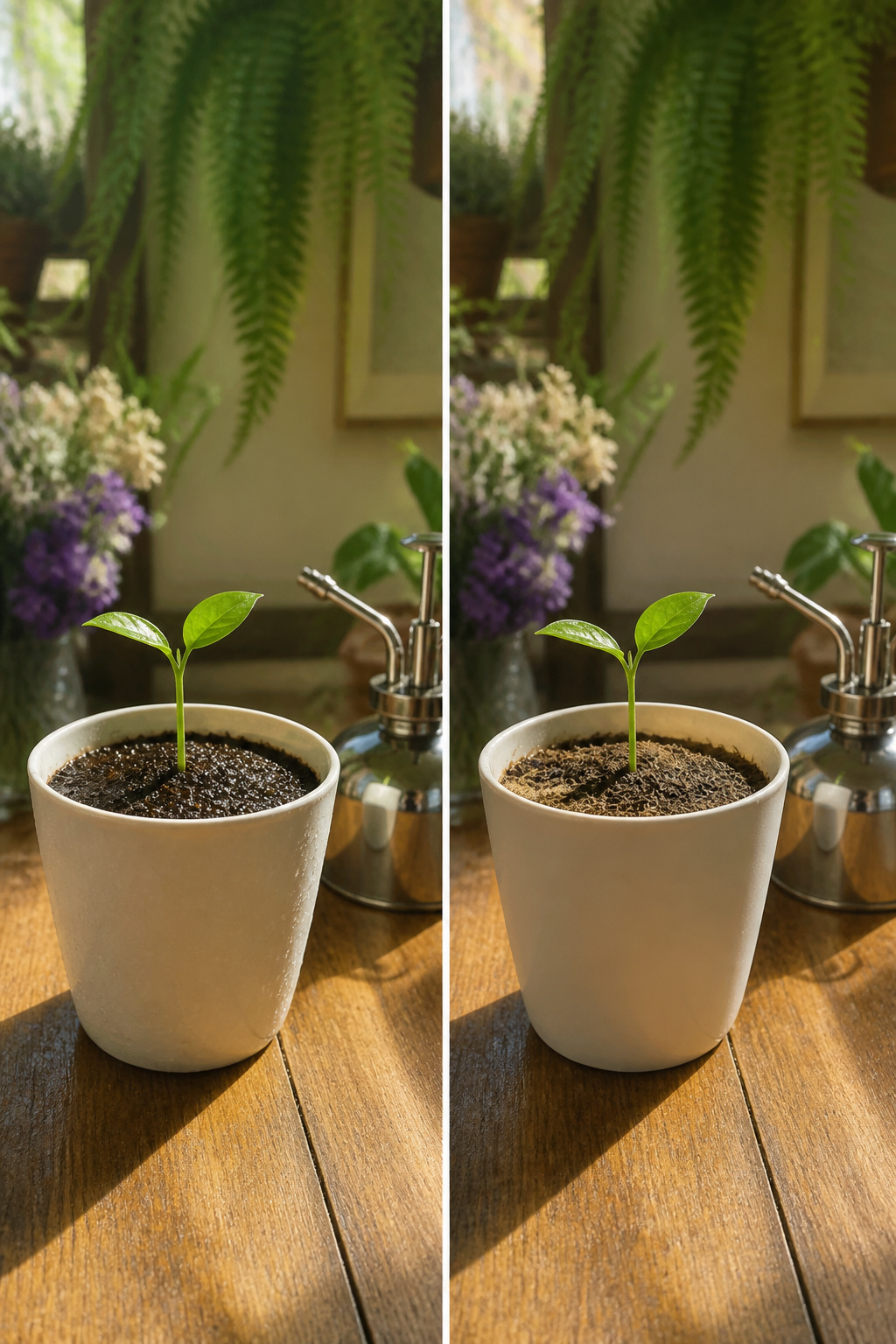
The plastic wrap comes off the moment you see green. Germination lands somewhere between one and three weeks, though the exact day depends on how warm and bright the spot is. Until then, check the soil every morning. If the surface looks dry, lift the edge of the wrap and mist lightly, but let the top inch of soil dry between waterings once the seedling is up. Soggy soil rots the seed before it ever sprouts.
A cup has no drainage holes to save you from your own enthusiasm, so underwatering is safer than the alternative. The same dampness that seedlings love also invites fungus gnats, those tiny black flies that rise out of wet soil every time you water. Keeping the top inch dry is the single best prevention. Yellowing leaves with wet soil means you have already gone too far; pull back and let the cup sit in a warmer spot before you add another drop.
7. Transplant Seedlings
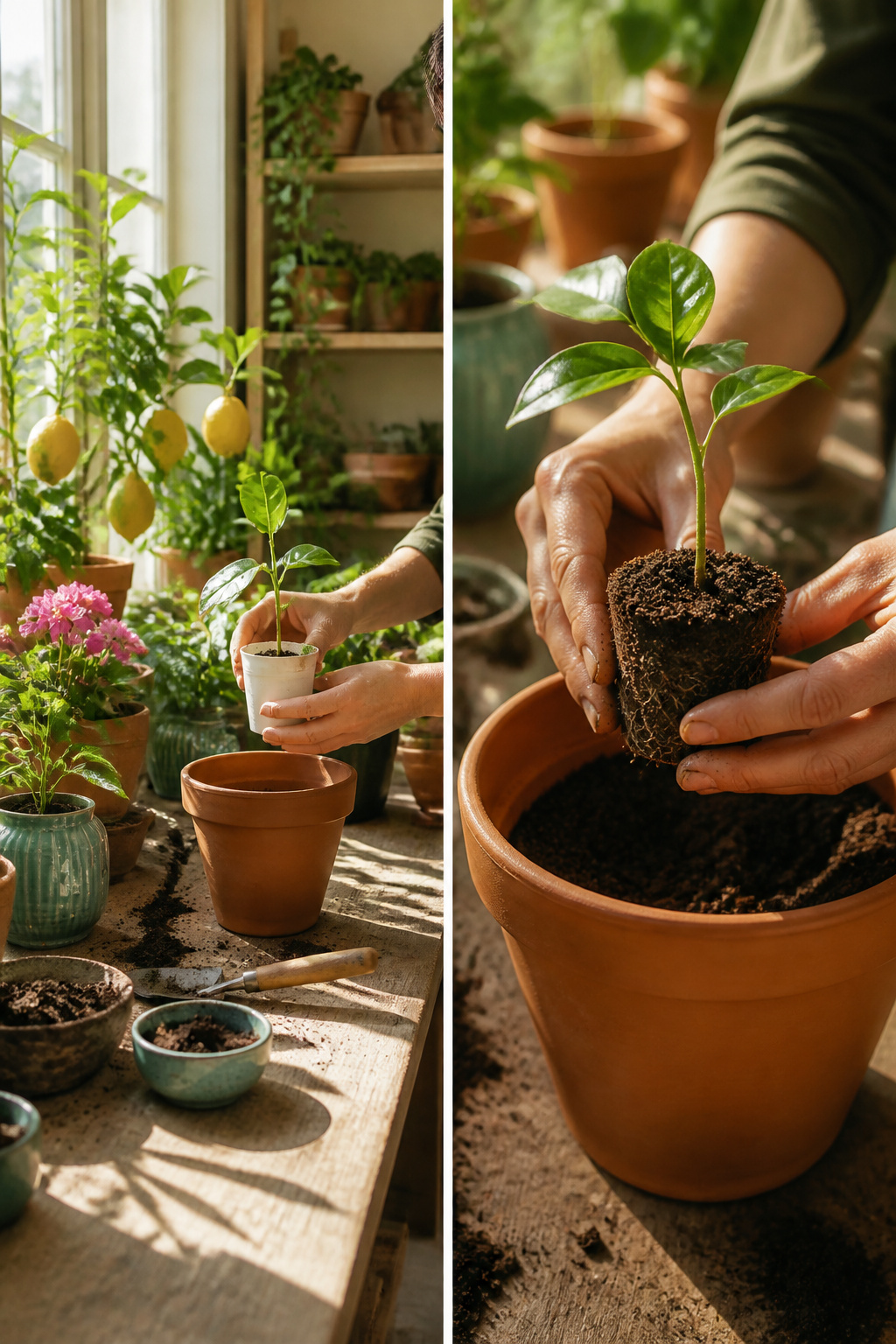
A seedling with three or four true leaves has outgrown its cup, and the next move decides whether it becomes a tree or a stunted experiment. The pot you choose needs to be at least 12–15 inches deep, with drainage holes that actually let water out. Terra-cotta works well here because the walls breathe, which matters more for citrus roots than for most houseplants.
The shift from cup to proper pot is where a lot of home growers lose the thread. I have watched friends yank seedlings by the stem and wonder why the leaves wilted that same afternoon. The roots are still fragile, and the soil ball needs to stay intact. Water the cup an hour before so the mix holds together, then tip it sideways and let the whole root mass slide out in one piece. Tease the roots apart with your fingers if multiple seedlings share the space, keeping as much soil clinging to each one as you can manage. Some root damage is normal. The seedling will recover if the bulk of the system is still surrounded by the medium it knows.
This is not the final home. A young lemon tree will want repotting every year or two, moving up one or two sizes each time until it eventually settles into something in the five- to ten-gallon range. The cup was the proof of concept. The 12–15 inch pot is where the real timeline starts.
What You Need
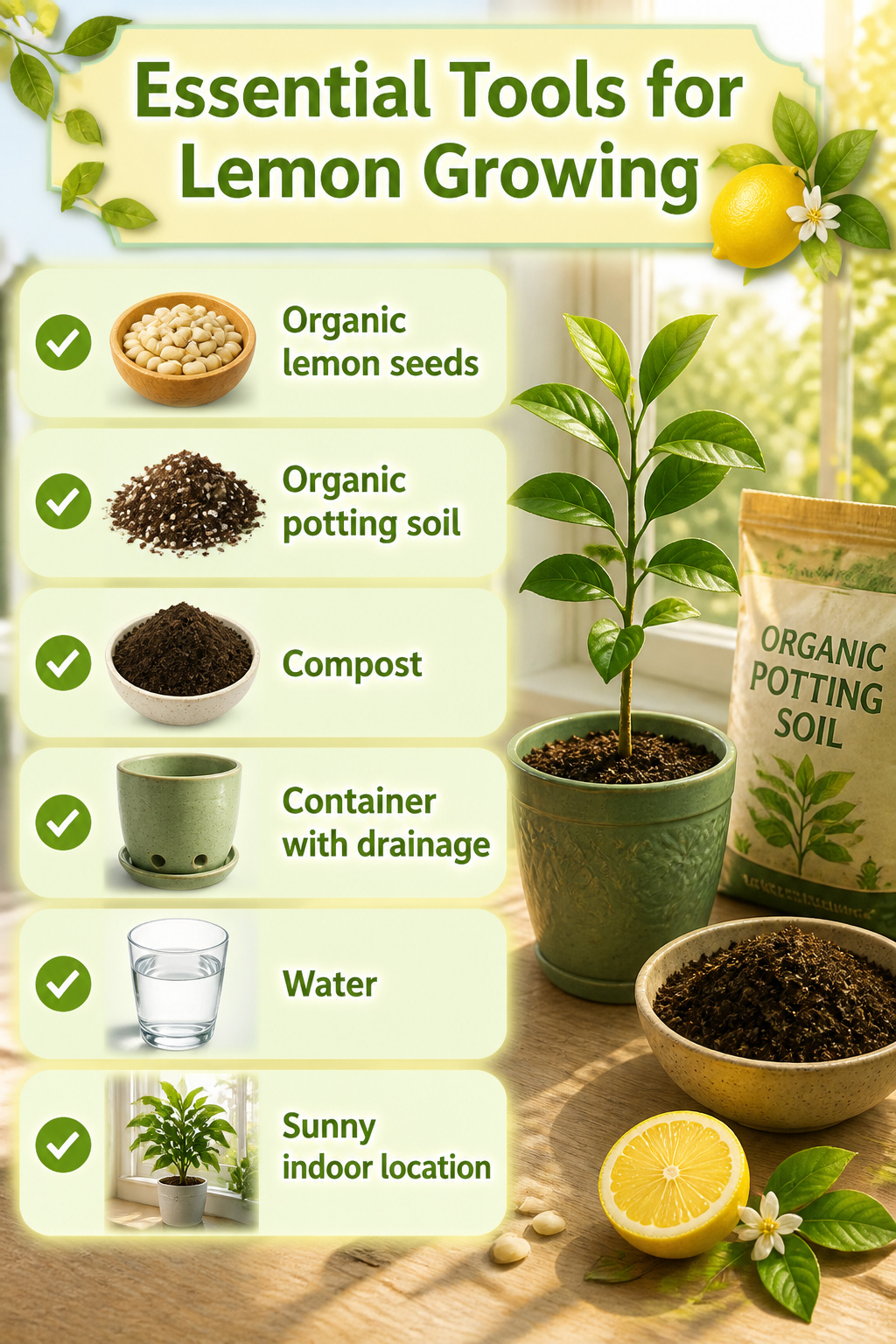
You do not need much to start a lemon tree from seed, but the few things you do need matter. Most of what goes wrong at this stage comes from grabbing garden soil from outside or seeds from a conventionally grown lemon, so the list below leans on the organic and the bagged.
- Organic lemon seeds. Non-organic fruit often carries seeds that fail to sprout at all, so this is the place to spend the extra dollar.
- Organic potting soil. Look for a mix of peat moss, perlite, and vermiculite in roughly equal parts; commercially bagged potting soil is heat-treated to kill fungal spores and weed seeds, which garden soil is not.
- Compost. You will need this to feed the seedling once it gets going.
- A cup or small container with drainage. No holes means water sits and rots the seed.
- Water.
- A sunny indoor location. After germination, the seedling wants light more than warmth.
Organic vs. Regular Seeds
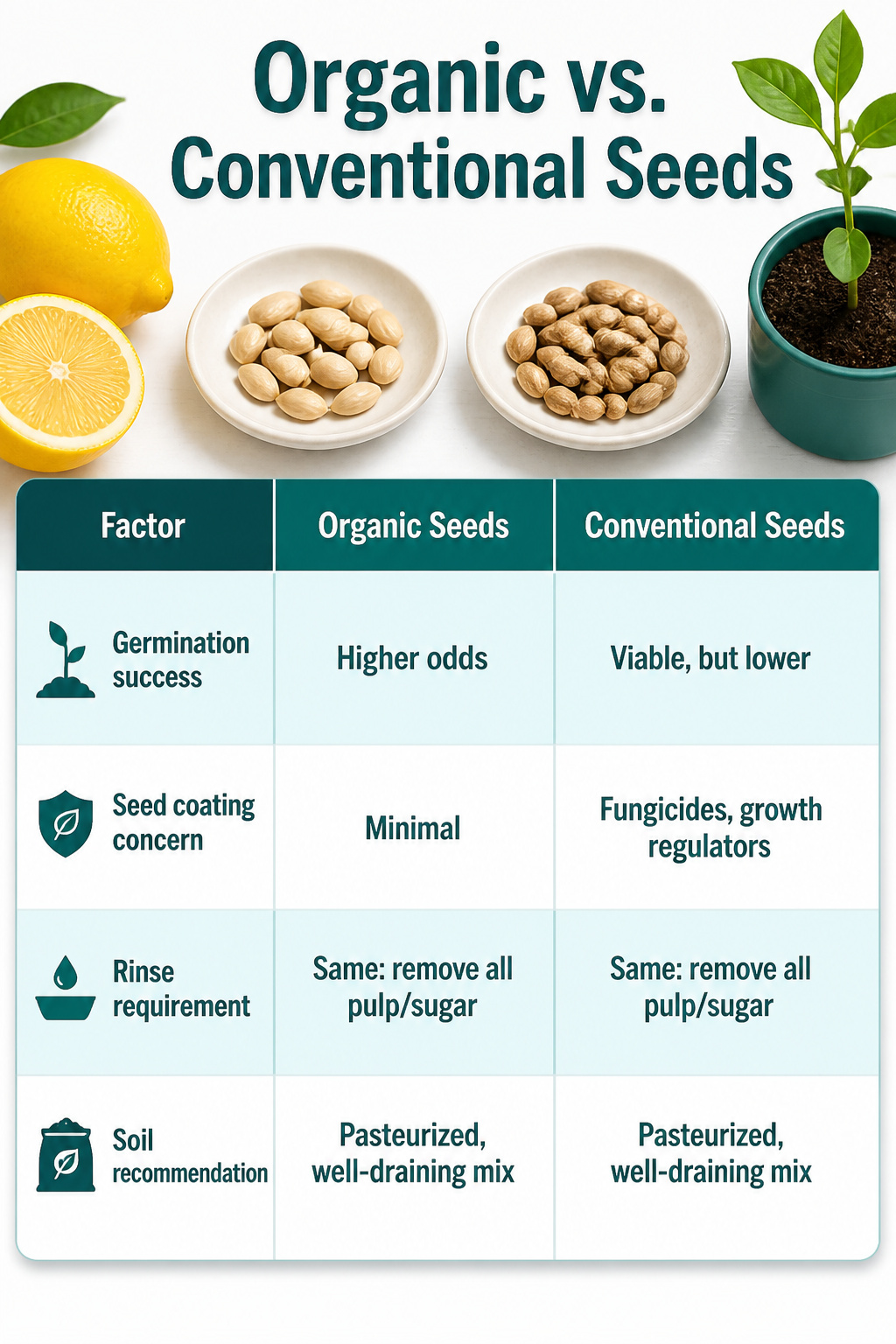
Organic seeds improve your odds, though conventional supermarket lemons can still produce viable seedlings. The real issue is what coats the seed: post-harvest fungicides and growth regulators cling to non-organic fruit, and any residual pulp or sugar left during rinsing feeds soil fungus, the main cause of seed rot. I plant seeds while they are still wet from rinsing, within an hour if possible.
Potting soil matters as much as the seed source. Pasteurized, commercially bagged mix is heat-treated to kill fungal spores and weed seeds; garden soil from outside carries pathogens that attack tender seedlings. A citrus-specific or well-draining mix with sand or perlite added keeps pH slightly acidic, around 6.0–6.5.
| Factor | Organic Seeds | Conventional Seeds |
|---|---|---|
| Germination success | Higher odds | Viable, but lower |
| Seed coating concern | Minimal | Fungicides, growth regulators |
| Rinse requirement | Same: remove all pulp/sugar | Same: remove all pulp/sugar |
| Soil recommendation | Pasteurized, well-draining mix | Pasteurized, well-draining mix |
A seed-grown lemon tree needs 4 to 10 years to fruit. Grafted nursery stock fruits in two to three years, which is why most growers buy a tree rather than start from a cup. The cup project is still worth doing for the experiment, but patience is the hidden cost.
Feed and Fertilize
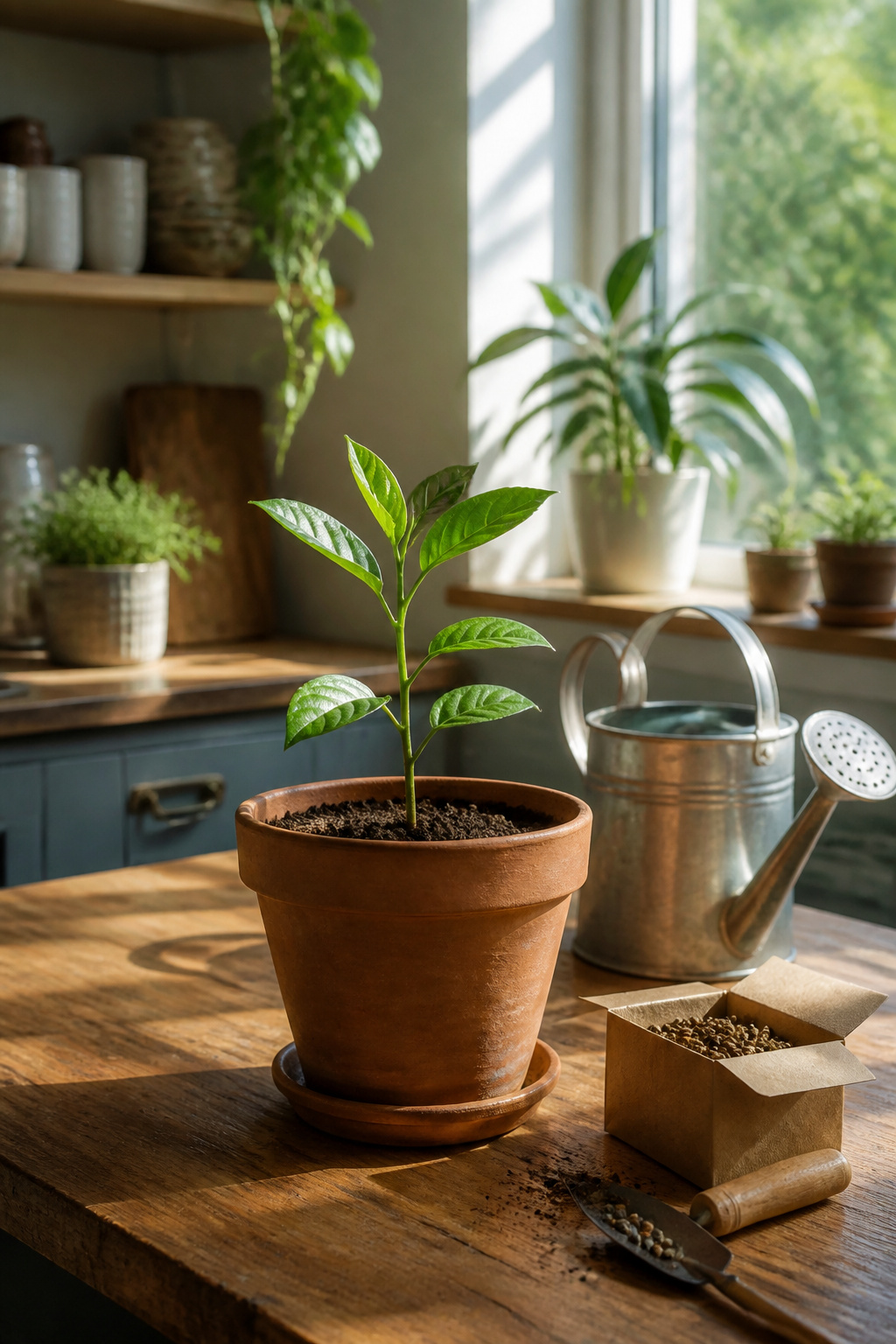
A lemon seedling pushed into a cup of soil is hungry work, and the plant will want feeding once those first true leaves unfurl. Water-soluble fertilizer high in potassium, fed every two to four weeks from early spring through early fall, matches the pace of that growth. Citrus-specific blends carry extra magnesium and trace minerals that keep the foliage that deep green you are aiming for; follow the dilution rate printed on the package rather than eyeballing it.
The temptation hits in January, when leaves start dropping and the instinct is to feed more. That leaf drop is usually dormancy talking, not a deficiency. Cut the water back and stop fertilizing entirely until the days lengthen again. The tree is resting, not starving, and it will pick up once spring returns.
Common Problems
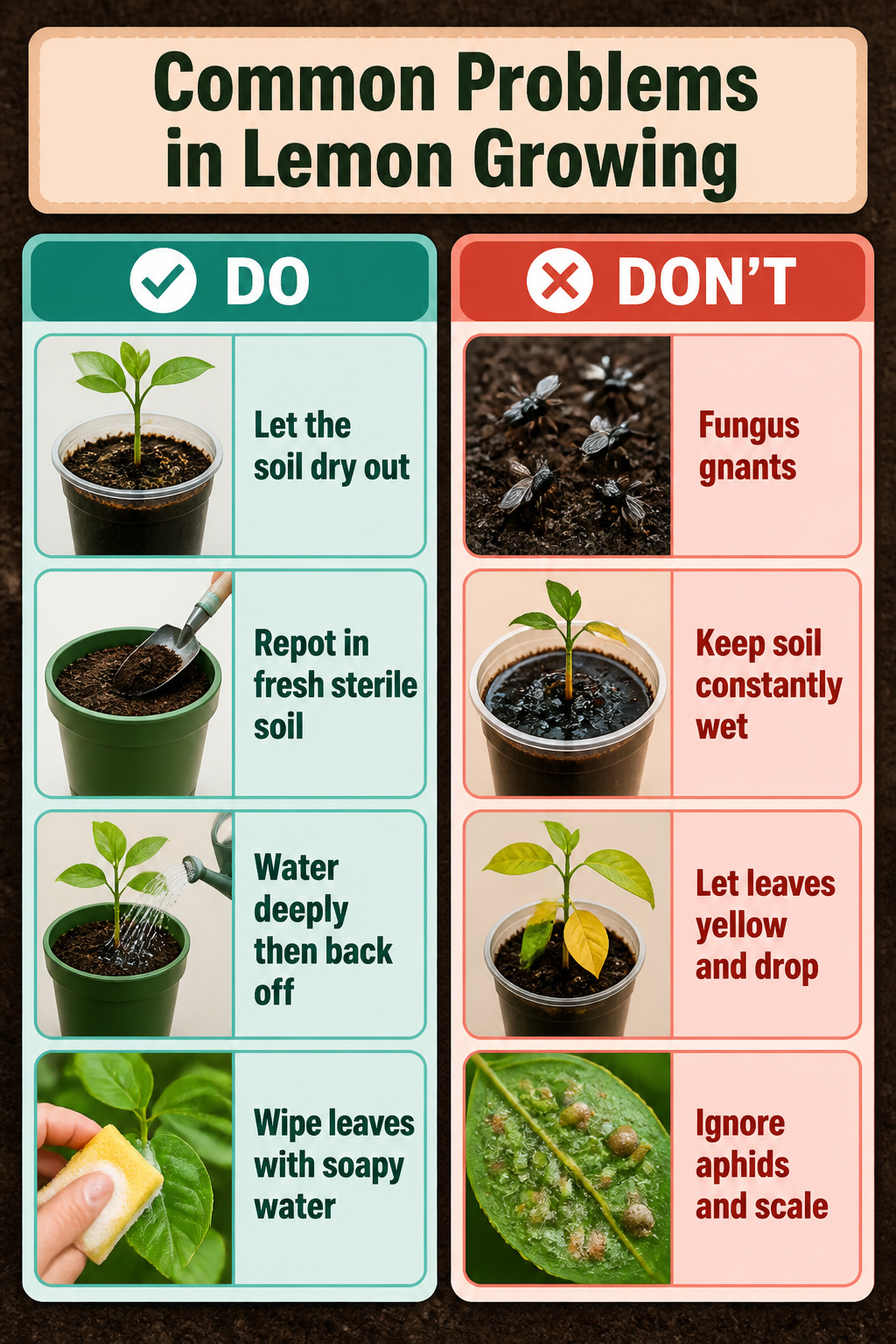
Fungus gnats are the first sign that a cup-grown lemon seedling is sitting in soil that stays too wet. Those tiny black flies live in damp potting mix and multiply fast in a small container. Let the top inch or two of soil dry out between waterings before you add more, and if the gnats keep appearing, repot in fresh sterile soil.
Leaf drop on a young lemon plant usually tracks back to the same problem: roots sitting wet. Yellowing leaves that fall with soggy soil mean overwatering; yellowing with dry soil points to a different issue. In a cup, the line between enough water and too much is narrow. Water deeply when you do water, then back off and let the surface dry.
Aphids and scale can show up once the seedling is established, especially on tender new growth. Wipe the leaves with soapy water every few weeks, or use insecticidal soap or neem oil as a preventative. Check the undersides of leaves for sticky residue or small bumps; catching pests early keeps a cup-sized plant from becoming a nursery for insects that will spread to whatever else is on your windowsill.
Fruit from Seed
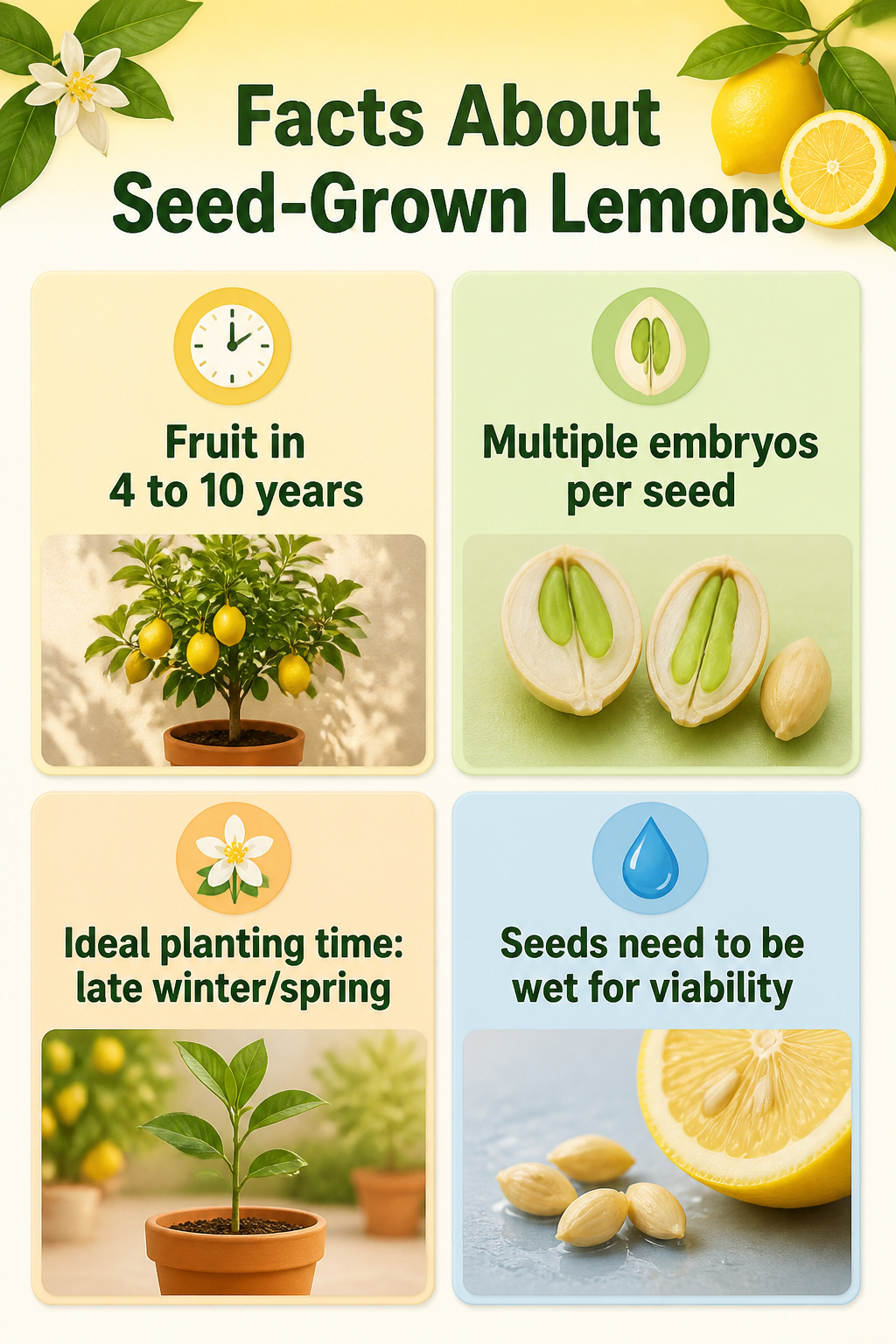
A lemon tree grown from seed will produce fruit, but the wait runs four to ten years. That timeline surprised me when I first looked into it. Grafted nursery trees skip the juvenile phase and fruit in two to three years instead, so the seed route only makes sense if you want the growing process itself or a long-term houseplant that eventually turns productive.
Most lemon varieties are polyembryonic, meaning each seed can carry multiple embryos with one cloning the mother tree. That is why seed-grown citrus tends to come true to type, unlike apples or many other fruits.
Late winter or early spring is the ideal window for planting, since seedlings then get the longest stretch of active growth before any slowdown. The seeds also need to go into soil while still wet from the fruit; dried lemon seeds lose viability quickly and germination rates drop hard.
Frequently Asked Questions
Will a lemon tree grown from seed actually produce fruit?
Yes, but you will wait four to ten years before the first fruit appears. Most lemon varieties are polyembryonic, so seed-grown trees usually come true to type and match the parent fruit. Grafted nursery trees skip the juvenile phase and fruit in two to three years instead, which is why growers who want fast harvests buy established stock.
What time of year should I plant lemon seeds?
Late winter or early spring gives seedlings the longest stretch of active growth before any slowdown. The seeds must go into soil while still wet from the fruit, since dried lemon seeds lose viability quickly and germination rates drop hard. That timing rule matters more than the calendar month.
How long does it take for lemon seeds to germinate?
Germination lands somewhere between one and three weeks, with the exact day depending on how warm and bright the spot is. Temperatures between 70 and 100 degrees Fahrenheit speed things up; below that range the seed does not die, it simply waits. The plastic wrap comes off the moment you see green.