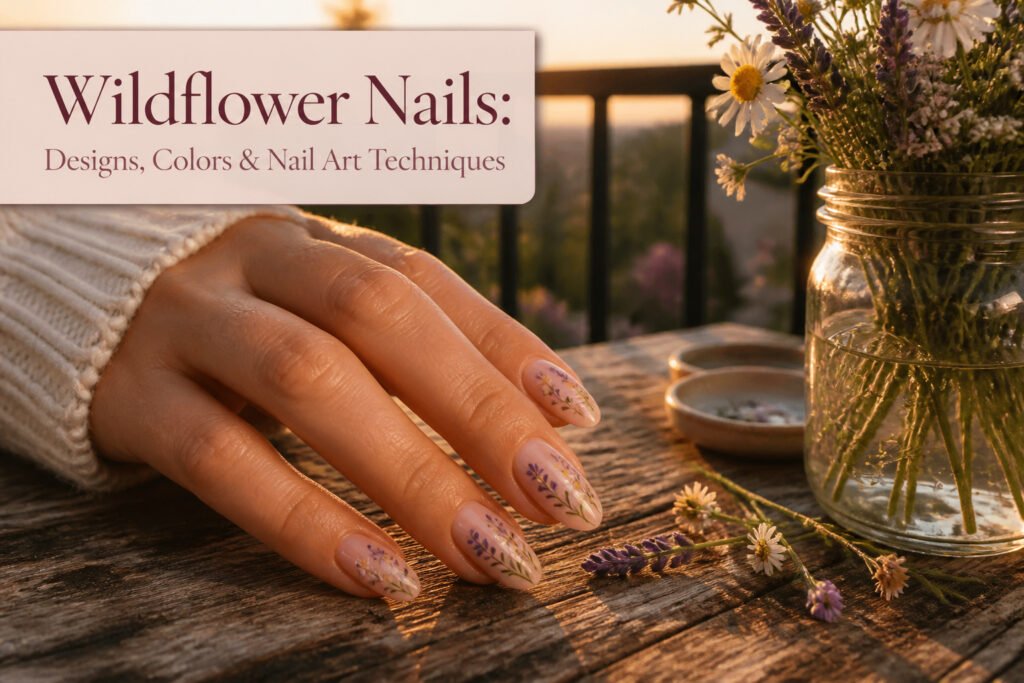
Wildflower nails are manicures that use tiny, loosely arranged floral details rather than formal rose patterns or dense tropical prints. The look only works when the base stays quiet, a nude, blush, or clear polish that lets the miniature blooms read as accidental meadow growth rather than sticker-sheet clutter. SoNailicious makes Midsummer Wildflower stickers that achieve the pressed-flower effect in about ten minutes, though hand-painting with a fine brush takes practice and a steady hand.
Dainty White Daisies on Nude
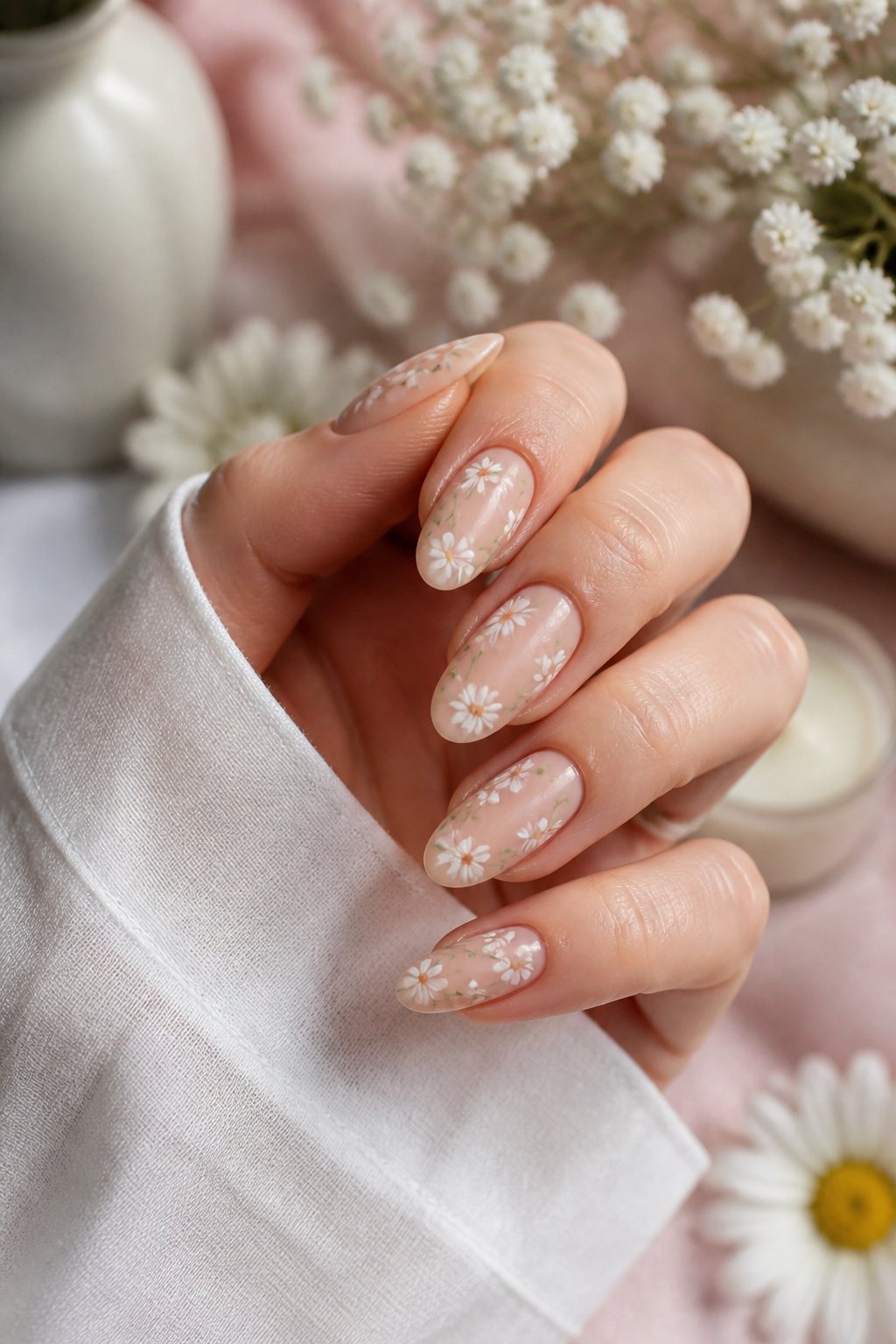
A calm matte nude base with tiny white daisies is the wildflower nail look that tends to show up in every spring feed for a reason. The neutral ground keeps the design from reading too busy, while the miniature petals add just enough detail to feel intentional rather than accidental. Each bloom sits lightly on the nail, giving the whole manicure an airy quality that works as well for a Tuesday morning meeting as it does for a weekend brunch.
Almond or coffin shapes serve this design better than short squares. The longer canvas gives the tiny flowers room to breathe and lets the eye travel across the nail without crowding. A rounded almond edge softens the overall effect; coffin adds a little structure that keeps the daisies from looking too precious.
Hand-painting the petals with a fine brush takes practice, and the results vary with your steadiness. SoNailicious makes Midsummer Wildflower stickers that achieve nearly the same look in about ten minutes: press them over the dried nude polish, smooth with a silicone tool, and seal with matte top coat. Either route, the matte finish matters here. Gloss catches light and competes with the petals; matte lets the tiny white blooms stay the quiet focal point.
Wildflower French Tips
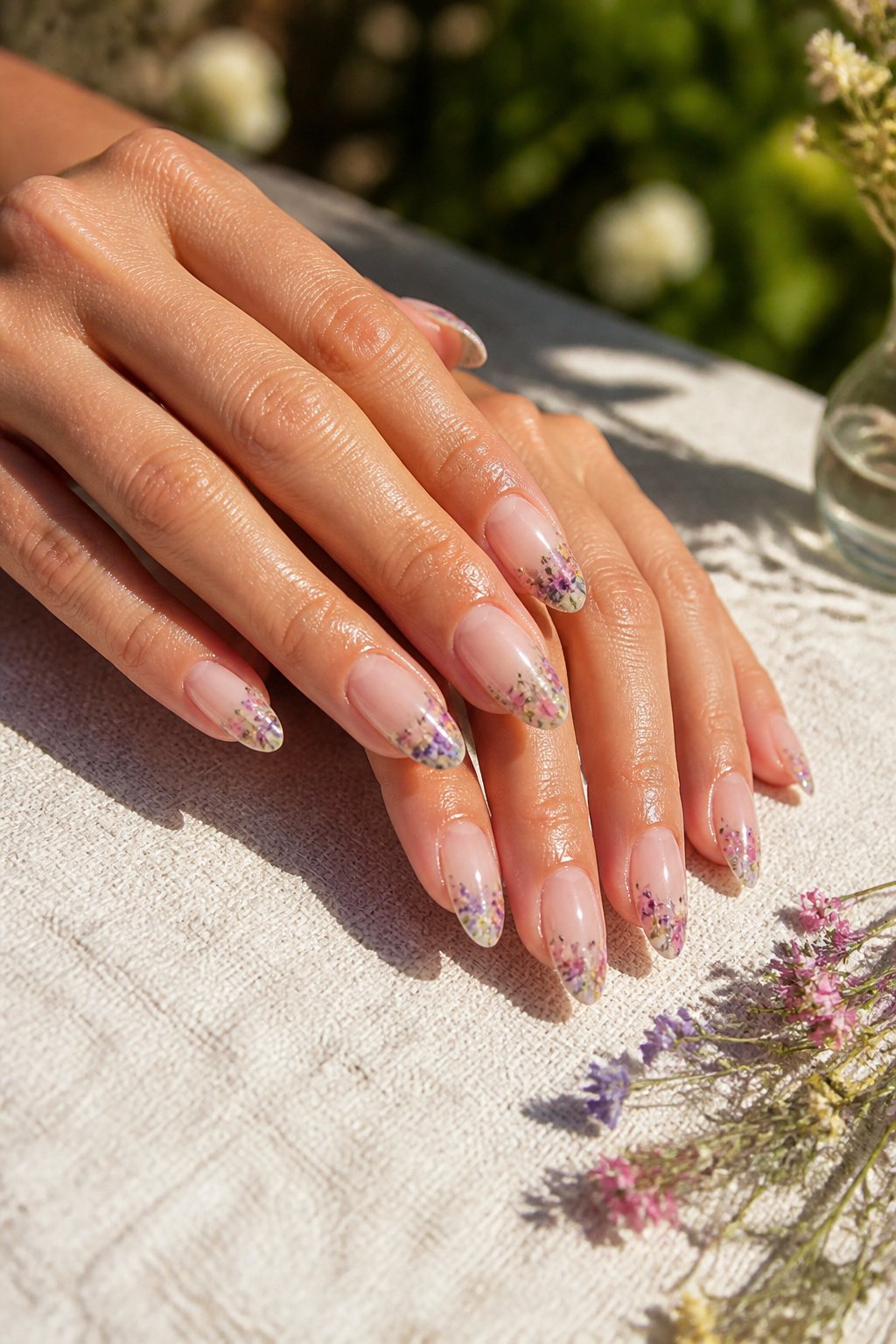
Replacing the white stripe of a French manicure with tiny wildflowers along the free edge turns a formal staple into something that feels hand-painted and personal. Soft clusters in pink, yellow, and lavender read as a blooming border rather than a hard line, especially when the base stays clear or blush-toned so the flowers aren’t fighting for attention.
Longer almond shapes give the design room to breathe; the curved tip lets the flowers flow naturally without looking crowded. A glossy gel finish, in my view, is what keeps the look polished instead of crafty. It deepens the pastels just enough that they feel romantic rather than washed-out.
The tones that soften the whole thing are the muted ones: lavender, baby blue, pale yellow, earthy pinks. Skip anything saturated or neon. Those shades belong on a different nail entirely, not on a French tip where the point is restraint.
Pressed Wildflowers in Gel
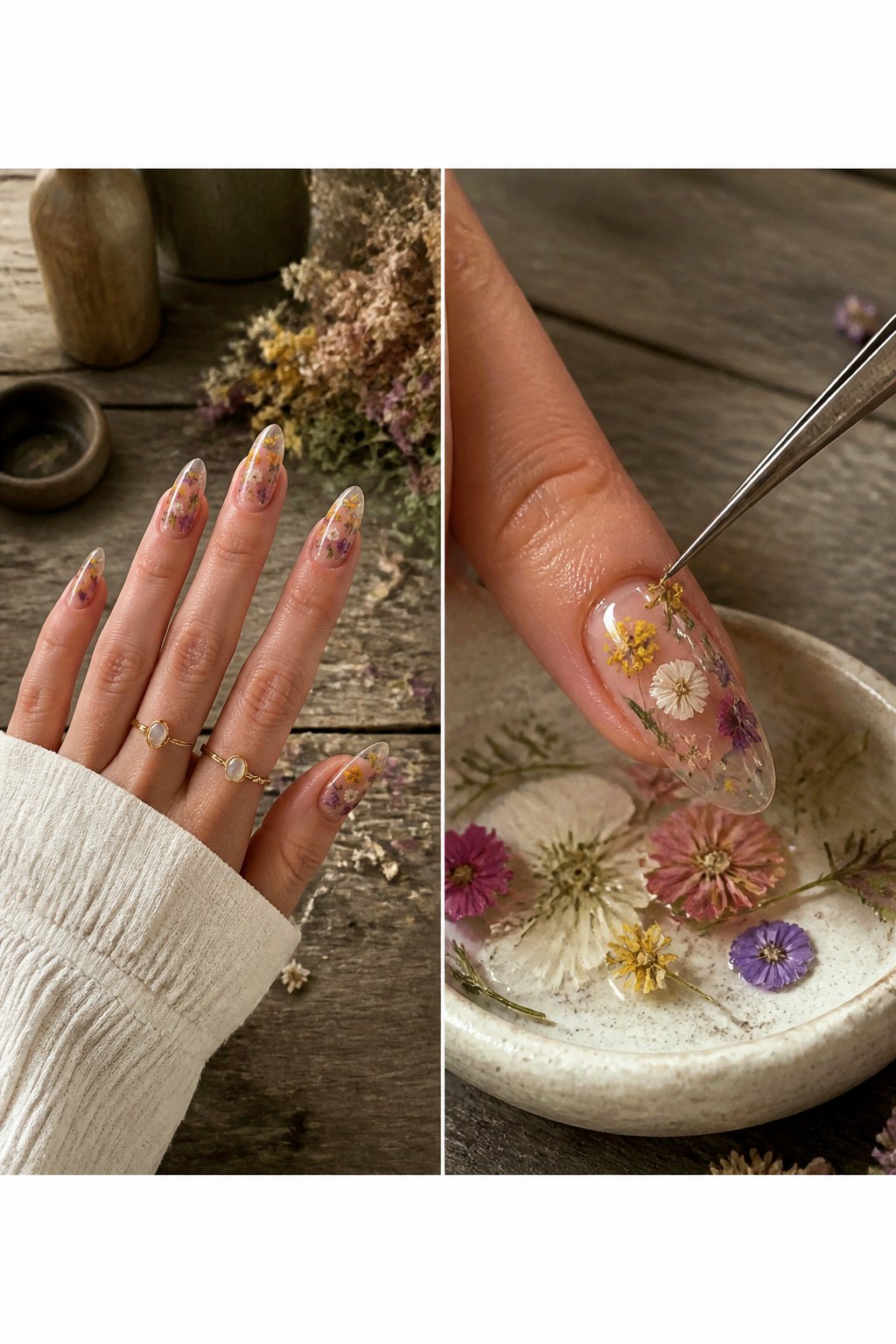
Real pressed flowers sealed inside clear gel polish create a manicure that feels almost like wearable art. The delicate petals appear suspended within the glossy layers, giving each nail a dimensional effect that no hand-painted design quite matches. Every flower looks slightly different, which adds to the natural charm and makes every nail feel uniquely inspired by nature.
Clear or milky bases work best with this technique because they let the pressed florals remain the focal point. Longer almond or coffin shapes showcase the details especially well, since they provide enough surface area to let the petals read as actual botanicals rather than blurry specks. The glossy finish adds a glass-like shine that enhances the soft textures of the petals, creating a design that feels elegant, organic, and effortlessly romantic.
Lavender Sprig Accent Nails
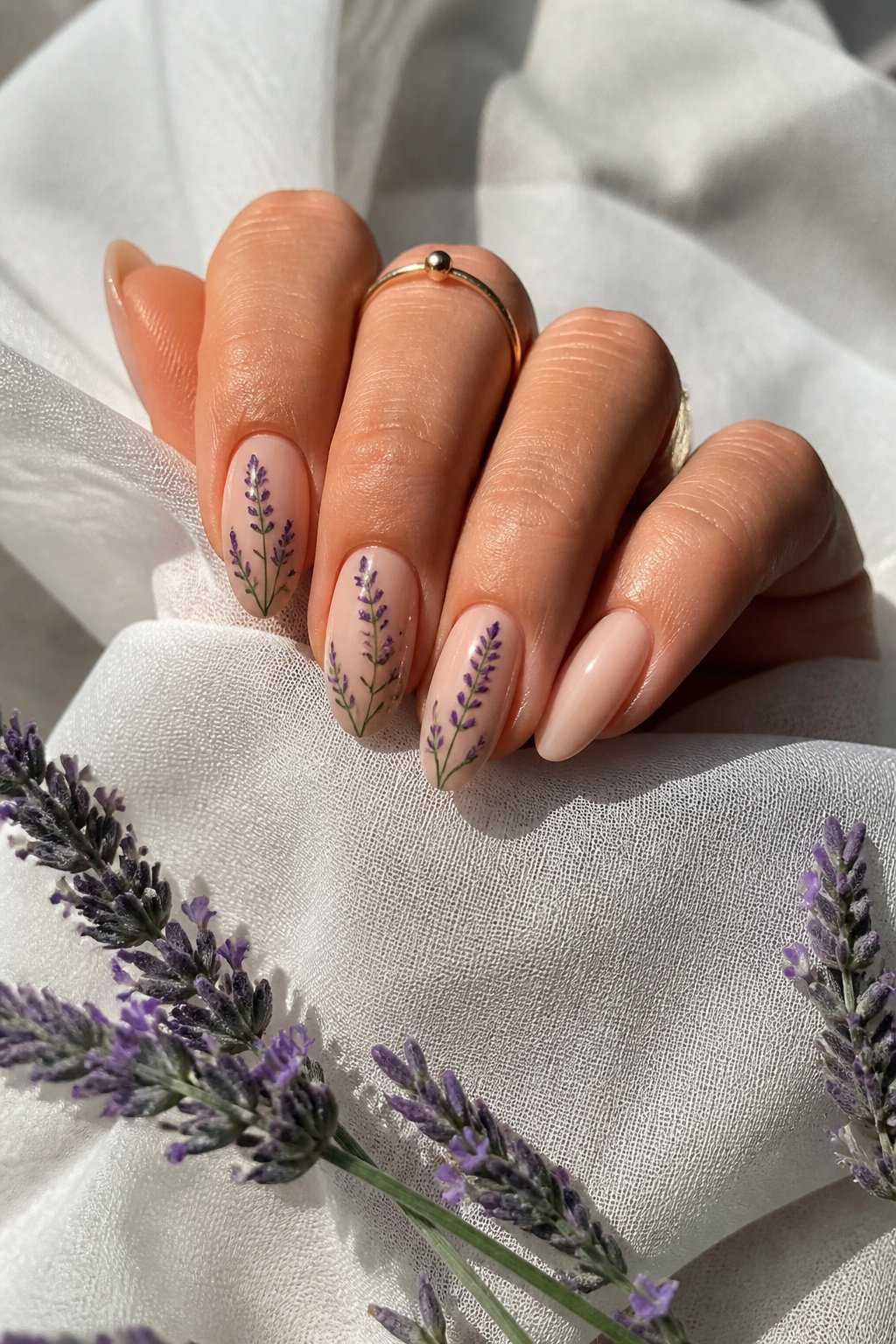
Tiny lavender sprigs painted across a neutral base create a manicure that feels calming and minimal. The small purple buds arranged along thin green stems mimic the natural shape of real lavender branches, and a blush or milky base helps the lavender colors stay soft rather than turning bold.
Glossy finishes enhance the delicate brushwork, making those small details stand out under light. This style works best as accent nails paired with plain polished nails, creating a balanced manicure that feels elegant yet quietly artistic. For pastel pairings, a pale lilac or soft sage green on the remaining nails keeps the palette cohesive without competing with the botanical detail.
Tiny Colorful Buds on Clear Base
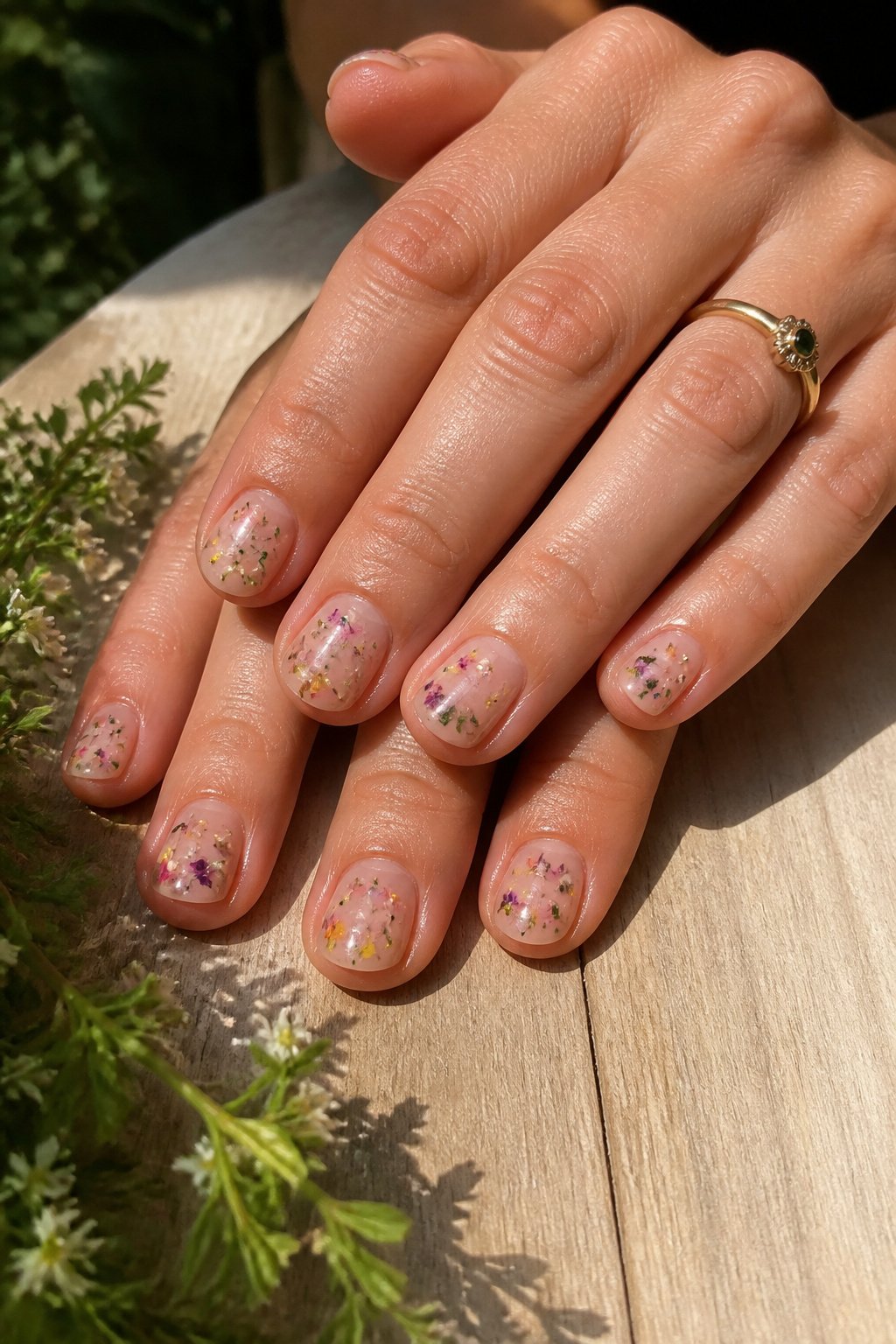
A clear base with tiny colorful buds scattered across it reads as meadow-like because the nail underneath stays visible, which keeps the whole effect from feeling like a sticker sheet. The flowers look accidental, almost like petals that landed where they did, and that spontaneity is hard to fake with full-coverage designs where every stem and leaf has been planned edge to edge. Short rounded nails carry this best, since the small surface turns the scattered buds into a believable sprinkle rather than a crowded garden.
The maintenance difference matters more than the look. Full floral coverage grows out badly; the bare root zone at the cuticle breaks the picture. A clear base hides growth for an extra week or two because the transition is already transparent. A glossy top coat keeps the glassy finish intact and bounces light through the base so the colors read brighter than they would against opaque nude or white. The manicure stays lighthearted without tipping into juvenile, which is the usual risk with bright florals.
Wildflower Field Art Nails
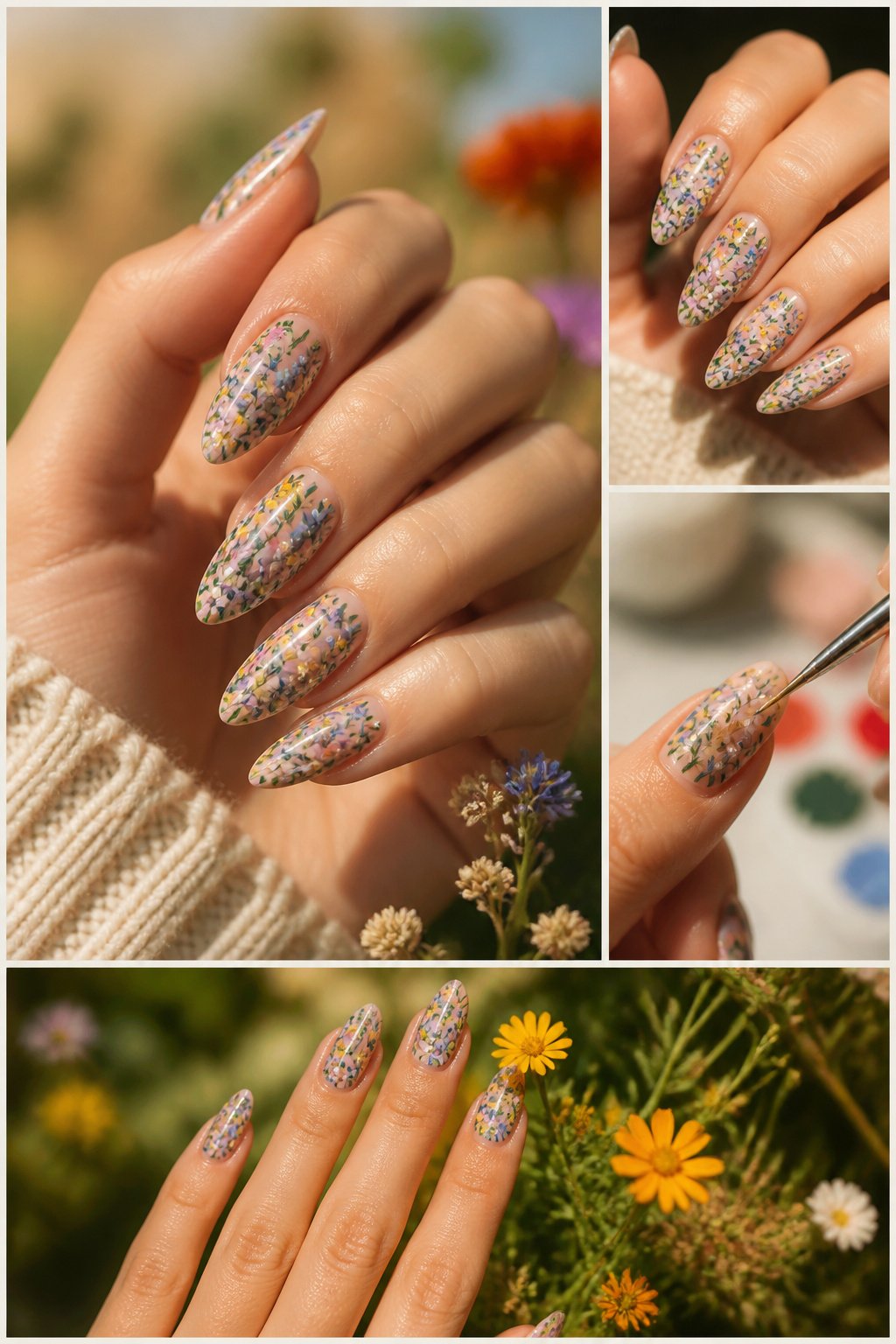
Wildflower field art nails spread the meadow across your whole hand instead of parking one bloom on a single accent nail. Tiny clusters of multicolored flowers get arranged across each nail so the manicure reads as one continuous scene, not five separate decisions. The density matters: each nail becomes its own miniature garden, but the colors stay soft enough that the overall effect stays harmonious rather than loud.
A soft pink or nude base keeps the tiny brushwork from turning garish, and a glossy finish adds the depth that makes those miniature petals catch light. Longer nail shapes help here. The extra canvas space lets the detailing breathe so the whole hand looks like a single painted meadow rather than a sticker sheet. Single-flower accents can sit on any length and still read clearly; field art needs room or the flowers crowd into noise.
Meadow Skittle Nails
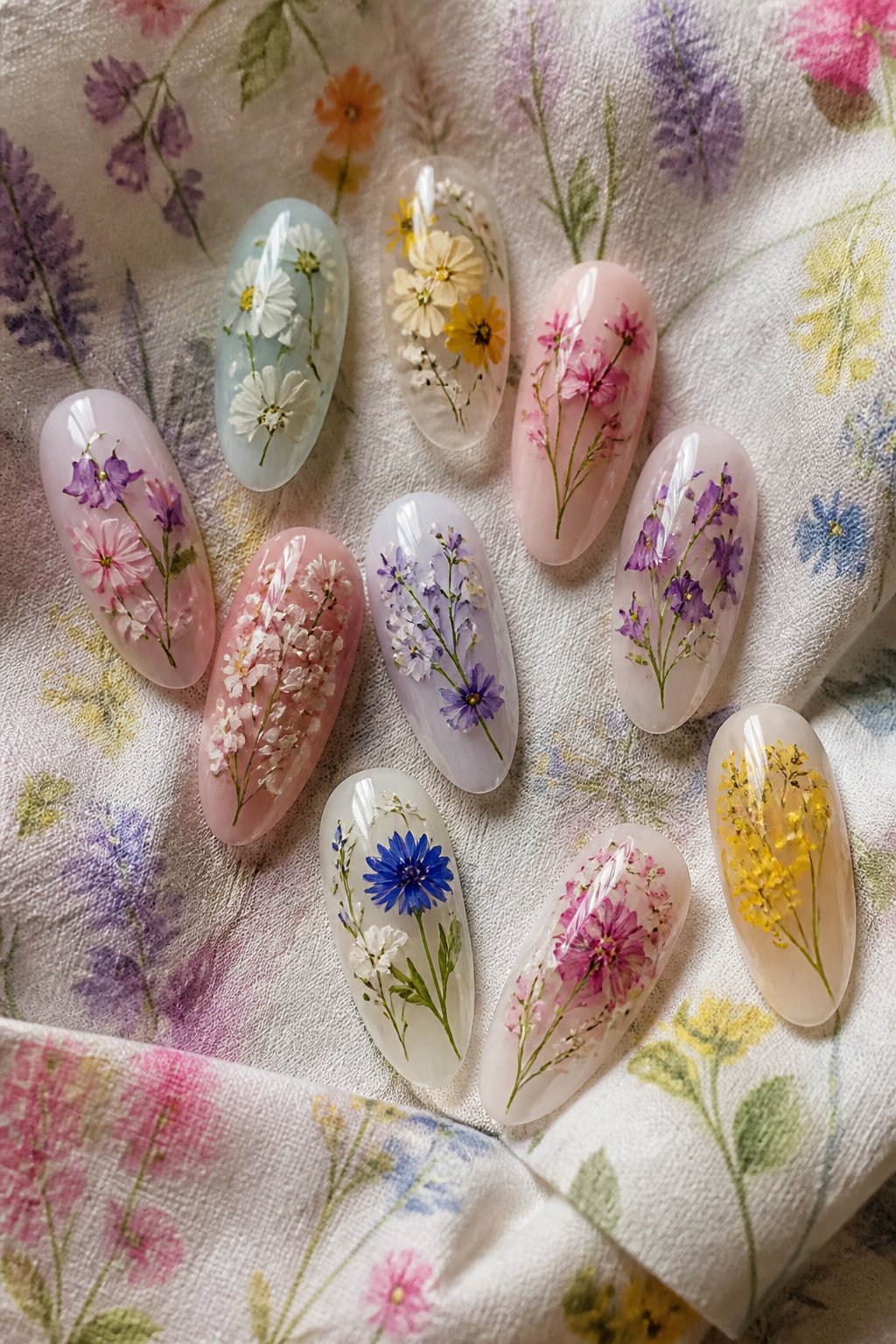
A skittle manicure assigns a different design to each nail, and wildflowers turn that variety into the whole point. One nail carries daisies, another lavender buds, a third some bright bloom you do not bother naming. The mix reads as a meadow rather than a mess if you keep the palette in pastels; the colors stay cousins even when the flowers are strangers.
Almond shapes suit this especially well because the curve echoes the organic lines of petals and stems. The finish matters too. A glossy top coat pulls the disparate designs together into something polished, so the eye reads variety plus intention rather than chaos. Short rounded nails work if you prefer them, though the flowers will read as sprinkled on rather than composed.
The real risk is overmatching. Pick your base tones first, two or three pastels at most, then let the floral designs vary within that range. The reader who came for wildflower nails probably wants the freedom of a field, not a grid.
Wildflower Outline Art
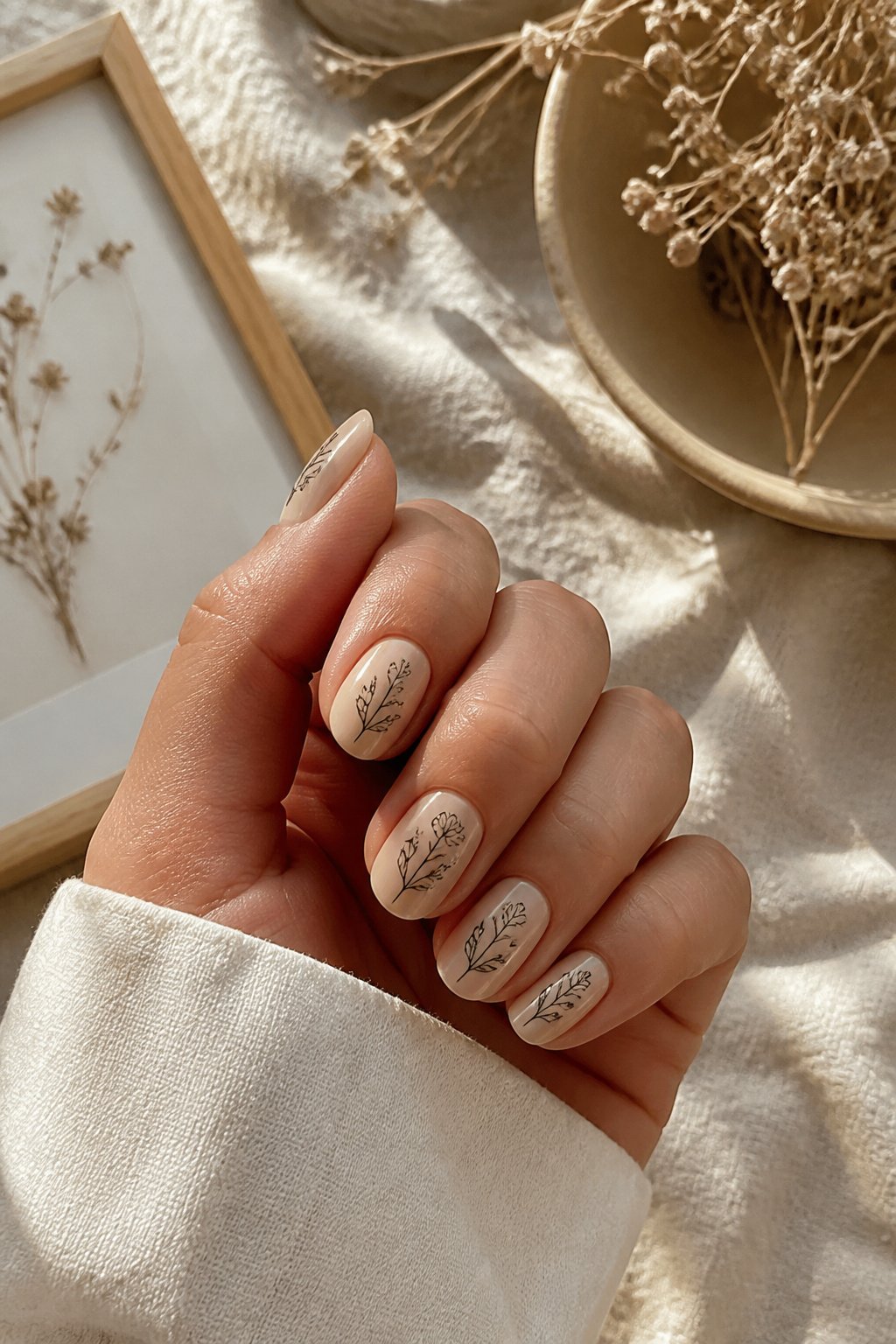
Fine black outlines of wildflowers create a manicure that reads as artistic without shouting for attention. The stems and blossoms stay as thin line drawings, never filled in with color, which keeps the whole thing feeling like a sketch rather than a sticker.
A creamy beige or milky nude base underneath does most of the work. Against that quiet background, the dark floral lines catch just enough light to register as detail, not clutter. The glossy finish is what keeps the lines from disappearing; without it, the outlines can look muddy instead of crisp.
This approach lands squarely in conservative settings where louder nail art would feel off. Shorter nails actually suit it better than long ones; there is less surface for the pattern to repeat, so one or two small blooms read as intentional rather than sparse. The overall effect stays refined, clean, and closer to jewelry than garden.
Sunflower & Wild Bloom Combo
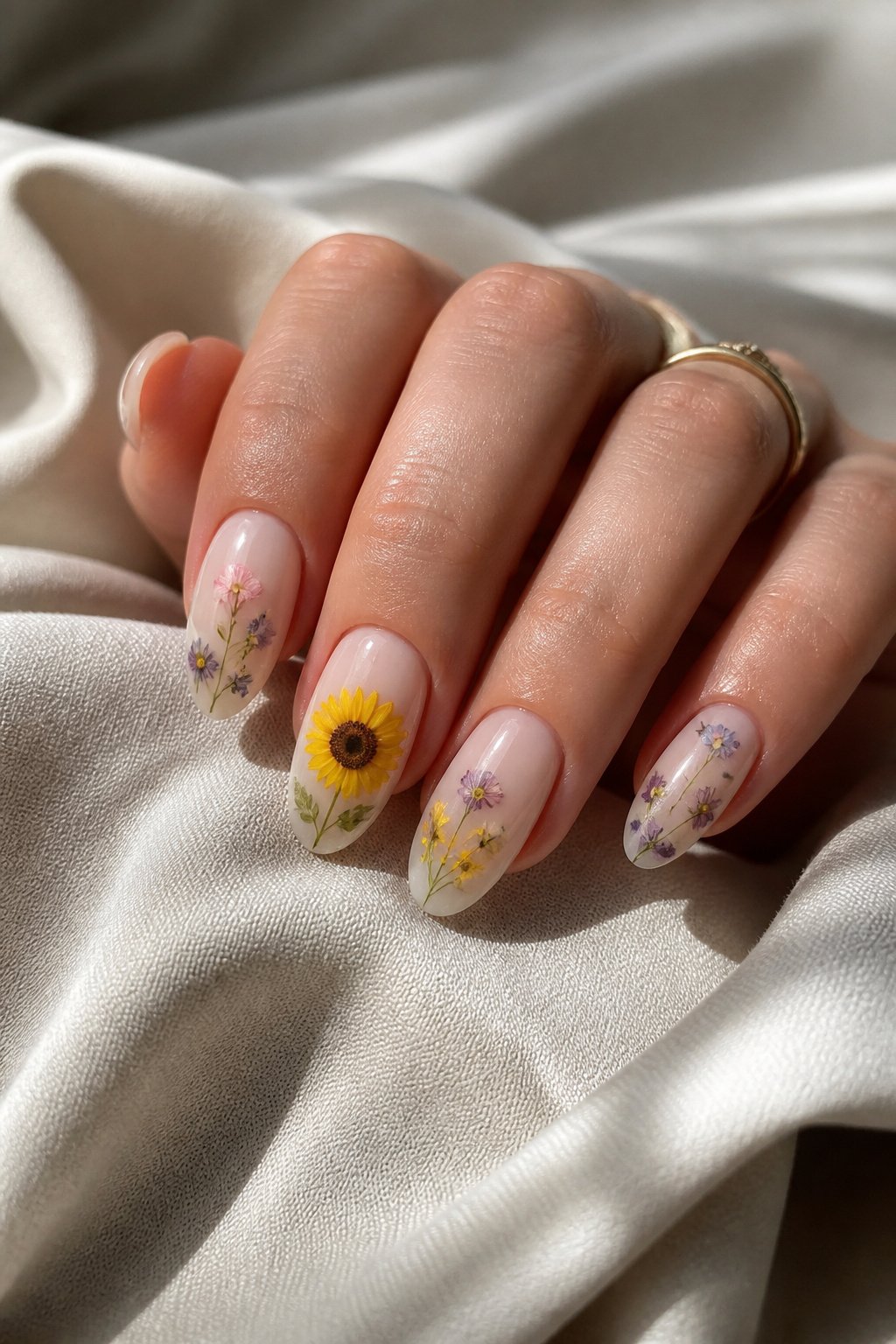
A sunflower on every nail fights itself for attention. The trick is one bold bloom per hand, placed off-center so the eye lands there first, with smaller wildflowers clustered at the opposite corner or trailing toward the cuticle. On my almond-shaped nails, that meant a single sunflower on my left ring finger, maybe two-thirds toward the tip, while tiny white and purple blooms scattered along the pinky and thumb on the same hand.
The scale gap matters. Sunflower petals need enough width to read as round; squeeze them onto a pinky and they flatten into yellow blobs. I keep the big flower to middle or ring fingers where the nail plate gives it room, then use the delicate blooms as filler on the narrower nails. A milky or neutral base keeps the golden yellow clean rather than muddy, and the contrast between thick, dark center dots and whisper-thin wildflower stems gives the whole manicure depth without crowding.
Glossy top coat is non-negotiable here. The shine separates the layers visually so the small flowers recede and the sunflower advances, which is the whole point of pairing them.
Pastel Wildflower Tips
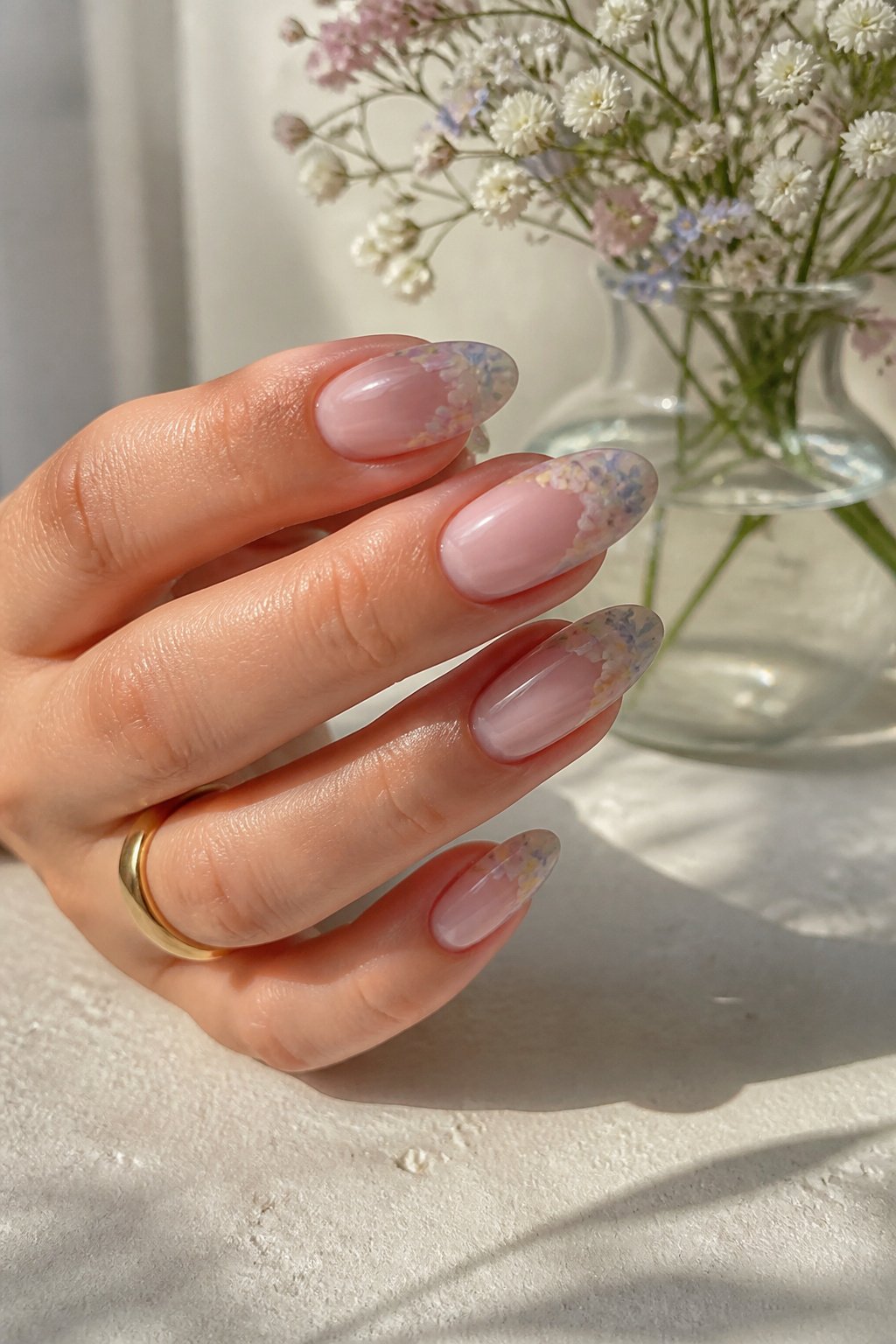
Pastel wildflower nails work best when the color stays low and the flowers stay high. A translucent pink base keeps the whole hand looking polished without stealing attention from the tips, where the actual design lives. Lavender, baby blue, and pale yellow cluster at the nail end, either as a soft gradient that melts into the base or as solid blocks of color with wildflowers painted directly on top.
The glossy finish matters more here than with bolder styles, since it adds the gentle glow that makes these muted shades feel intentional rather than washed out. Watercolor techniques can blur the petal edges for a faded, romantic effect, but the same pastel palette works either way. Almond-shaped nails give enough real estate for the flowers to breathe, though the design itself stays concentrated at the tip rather than drifting down the nail. Either approach reads as spring manicure, not summer statement, and that softness is exactly the point.
Matte Green Base with White Florals
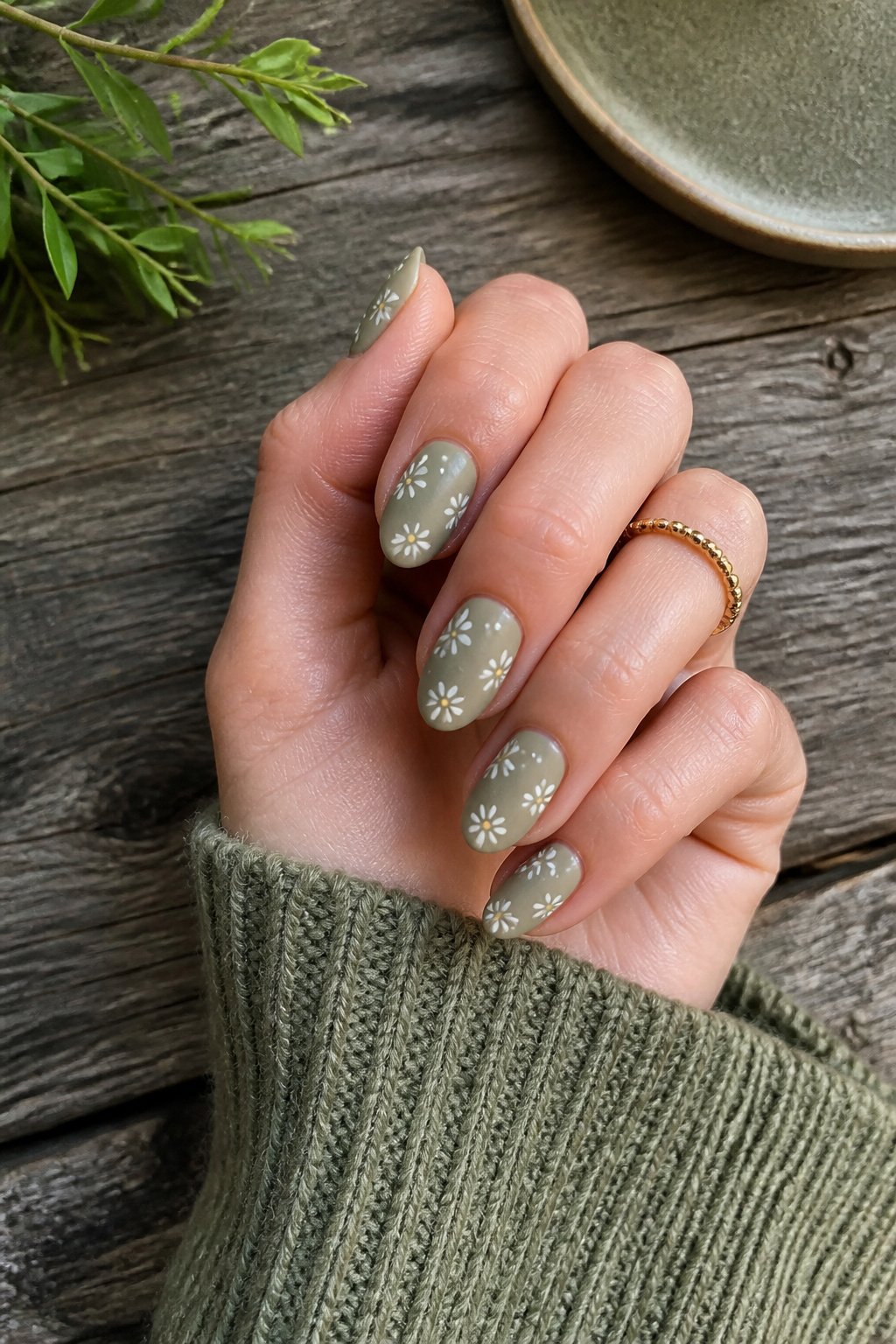
A matte sage green base shifts wildflower nails from a spring-only look to something that works year-round. The muted, earthy tone reads as botanical without shouting seasonal, and the flat finish keeps it modern rather than garden-party sweet.
Tiny white flowers scattered across that surface create the contrast that makes the design legible. Against matte green, the soft white florals look almost like blooms on mossy ground, delicate but not precious. Short or medium almond shapes suit this palette best; the organic curve of the nail echoes the natural, unfussy feel of the flowers themselves.
What sells the year-round claim is the restraint. Glossy brights read as summer. Sheer nudes read as neutral. But matte forest green with spare white detailing carries enough weight for October and enough freshness for April. The texture does the seasonal lifting, not the color alone.
Wildflower Bouquet Accent Nail
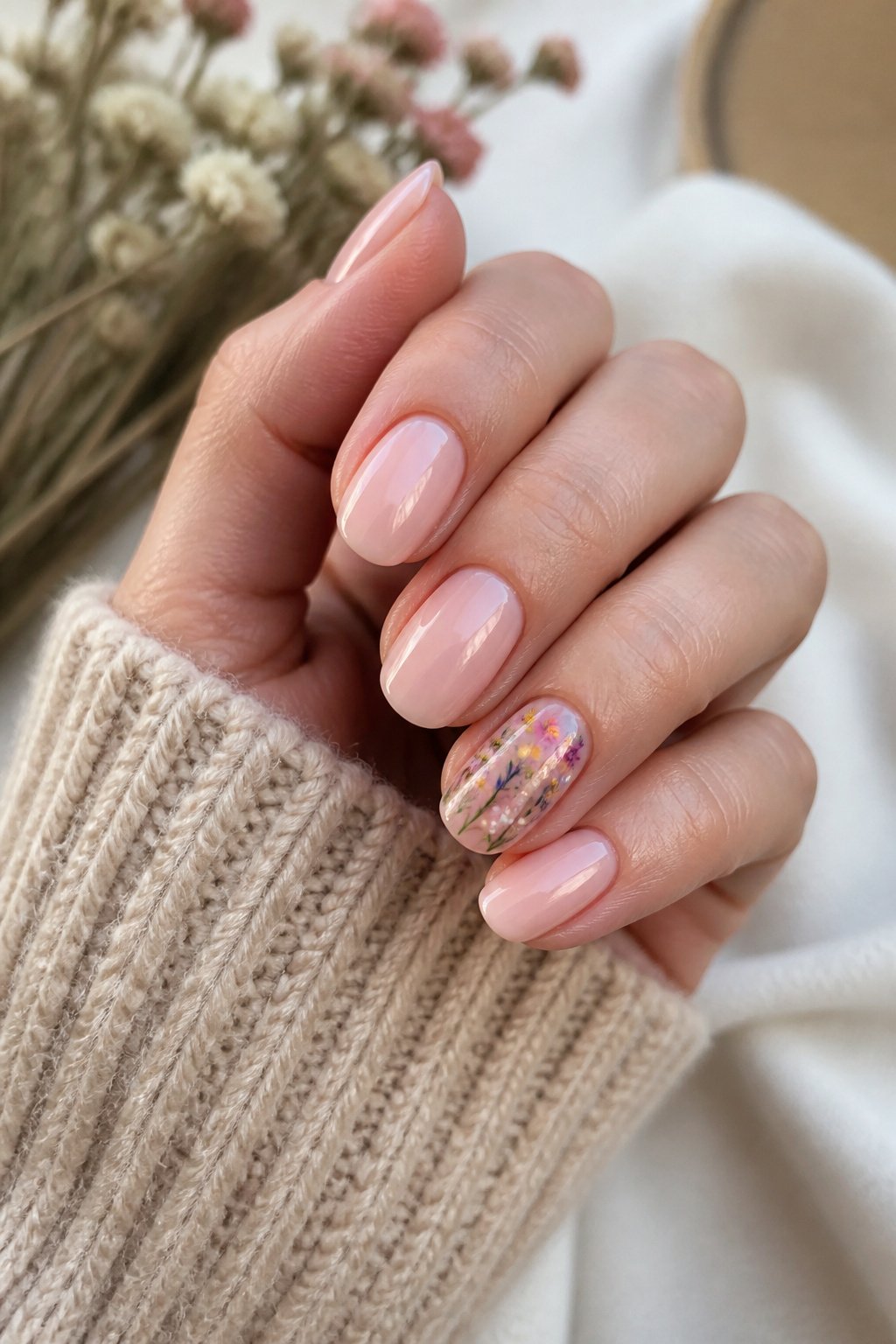
A full bouquet packed onto one nail keeps the rest of the hand from competing for attention. The ring finger usually carries the design, since it sits at the visual center of the hand and moves least during gestures, so the tiny petals and leaves stay intact longer. Blush pink or milky bases on the remaining nails keep the look elegant rather than busy.
The glossy top coat matters more here than on simpler designs. It catches light across the dimensional petals and separates them from the base color, which is why a matte finish tends to flatten the bouquet into a sticker-like blob. A silicone tool pressed over each sticker before the top coat eliminates the lifted edges that catch on hair and ruin the arrangement by day three.
This approach works best when you want floral art without the commitment of a full set. Ten minutes of placement on one nail beats an hour of freehand painting across ten, and the minimal nails still look intentional at a Monday meeting.
Tiny Gold Foil Wildflowers
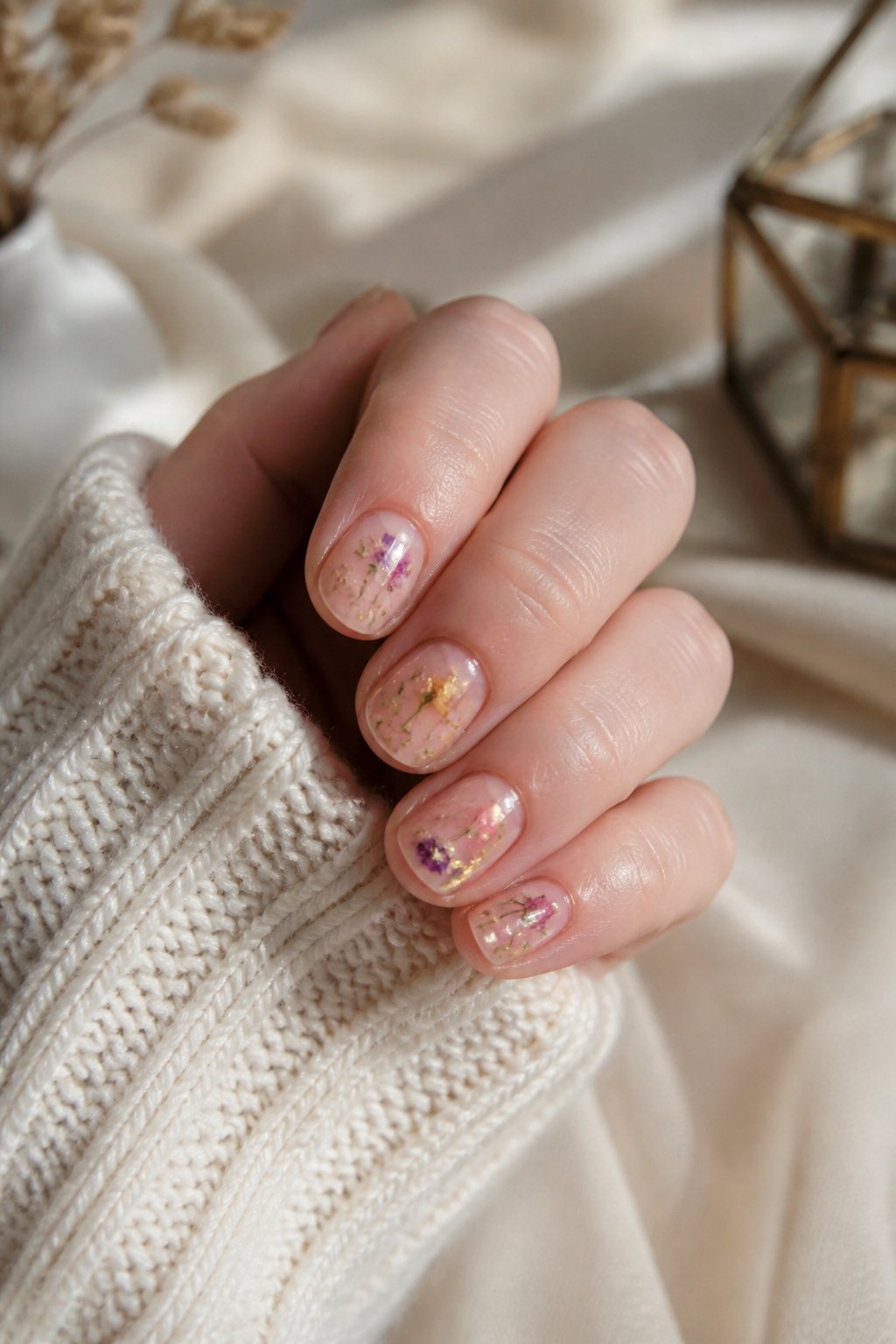
Gold foil catches light the way real meadow grass catches sun, so a whisper of it on wildflower nails makes sense. The trick is timing. Foil goes down after your base color and before your floral details, pressed onto tacky gel or a dedicated foil adhesive, then sealed so it sits below the top layer rather than on top. That buried placement keeps the shimmer from turning into jewelry.
A full nail of gold reads costume-y fast. One or two tiny irregular flakes near a stem, or a thin crescent at the cuticle edge behind a cluster of buds, gives the eye somewhere to land without competing with the flowers. On my own nails, anything larger than a sesame seed starts to feel like I chose the foil instead of the flora.
If the foil lifts, it is almost always because the layer underneath was too dry or too thick. Thin, even, and slightly sticky is the window. Skip foil entirely on accent nails where the wildflower itself is already busy; let the quieter nails carry the metallic load.
Faded Wildflower Nails
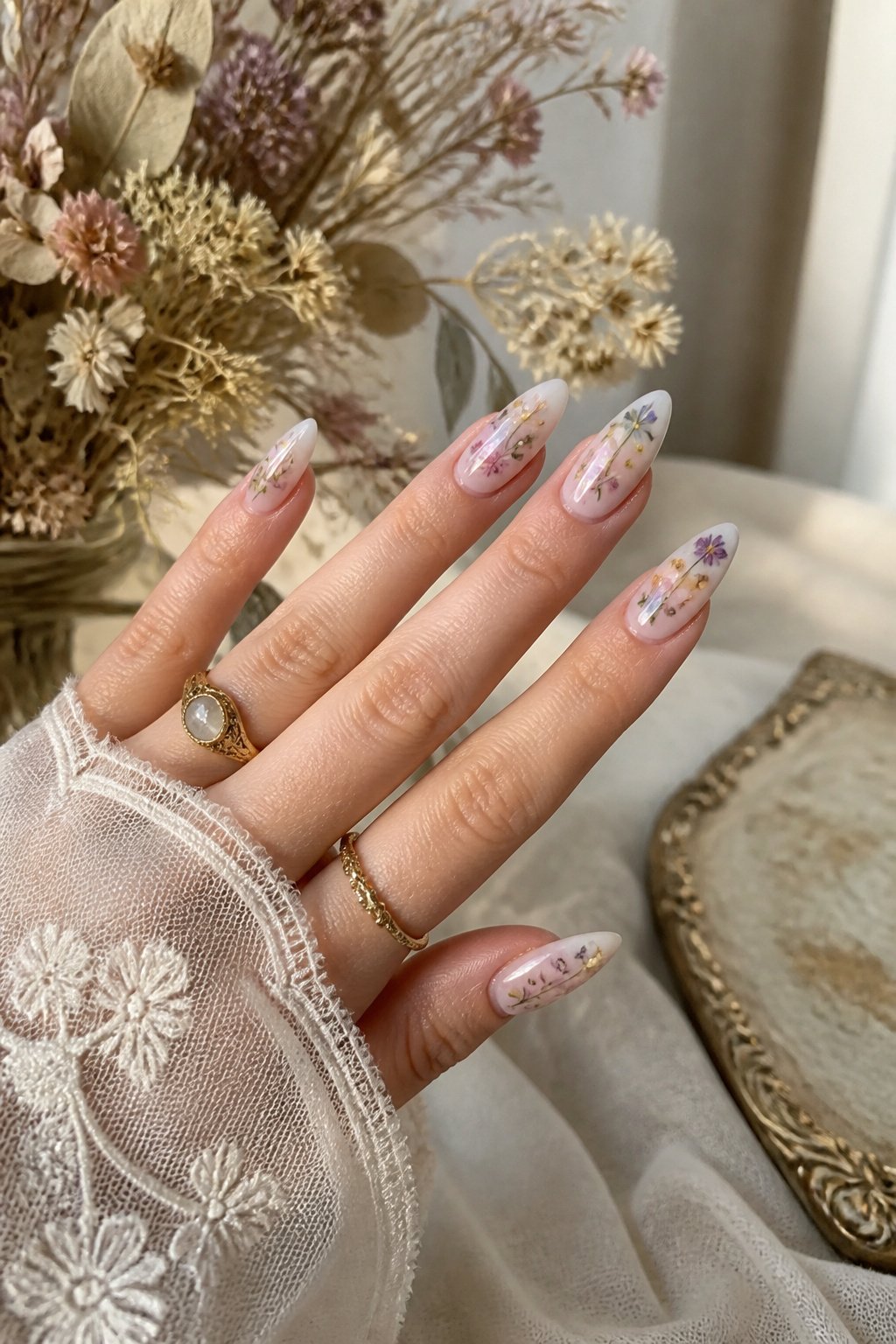
A watercolor approach gives wildflower nails that washed-out, vintage feel without looking like a mistake. Softly blended pastels blur at the edges so petals seem faded into the base color rather than sitting on top of it. The trick is working while the polish is still wet enough to feather, then letting the glossy top coat do the rest by adding depth that reads as aged silk, not new plastic.
Longer almond shapes carry the look best, simply because there is more room for the gradient to breathe. A matte top coat changes the whole mood, though; it flattens the watercolor into something more like dried pressed flowers, which is its own appeal if you want the manicure to feel calm rather than dreamy. I have seen both finishes work, but the glossy version is what keeps the soft romantic quality the watercolor technique is after.
Stickers can shortcut the ten-minute version of this, pressed over nude polish and sealed with matte top coat. The result is crisper, less painterly, but the muted palette still reads as faded wildflower if you choose the right set.
Wildflower-Inspired Dot Art
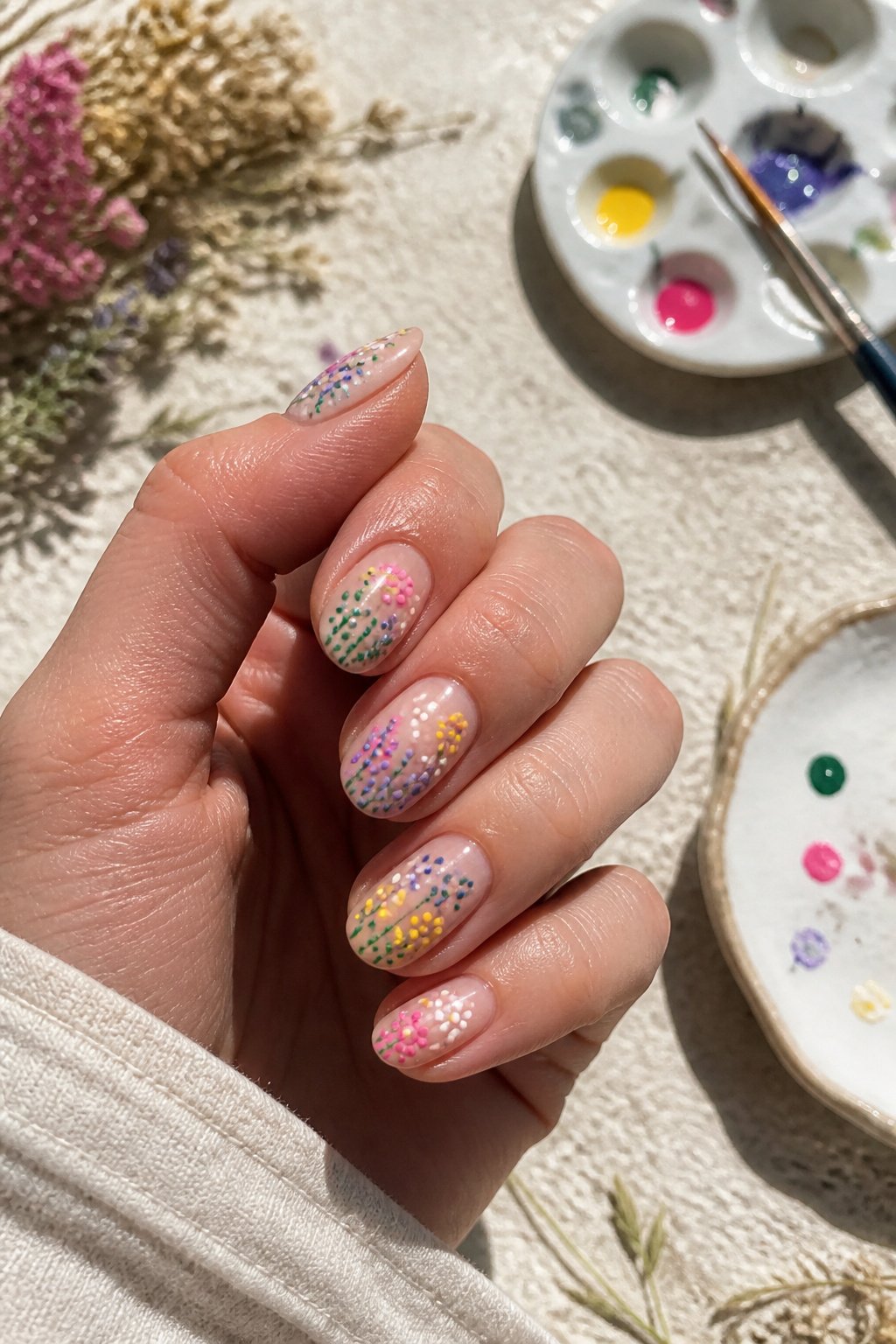
Dotting tools turn wildflower nails into something you can actually finish before the polish dries. A five-dot cluster, slightly off-center, reads as a daisy without any brushwork at all. The trick is varying the pressure so the dots aren’t identical; uniform circles look like confetti, not petals.
Daisies and black-eyed Susans suit this method best because their petals radiate from a center in simple geometry. For something looser, like Queen Anne’s lace, you layer smaller dots in a ragged halo and let the edges overlap. The tool does the shaping; your hand only has to place it.
I keep a set of four sizes and use the smallest for the flower center, then the next size up for petals. One dip per dot, lifted straight up, no dragging. The moment you slide the tool, you get an oval, and ovals read as mistakes in this particular style. If the base color is still slightly tacky, the dot settles in and looks painted from underneath, which is the soft effect most people want from wildflower nails.
Matte topcoat over dot art changes the whole look, turning glossy blobs into something closer to pressed flowers. Gloss keeps them graphic and pop-art. Either works, but the decision should be deliberate, not whatever bottle happens to be at hand.
Butterflies & Wildflowers Combo
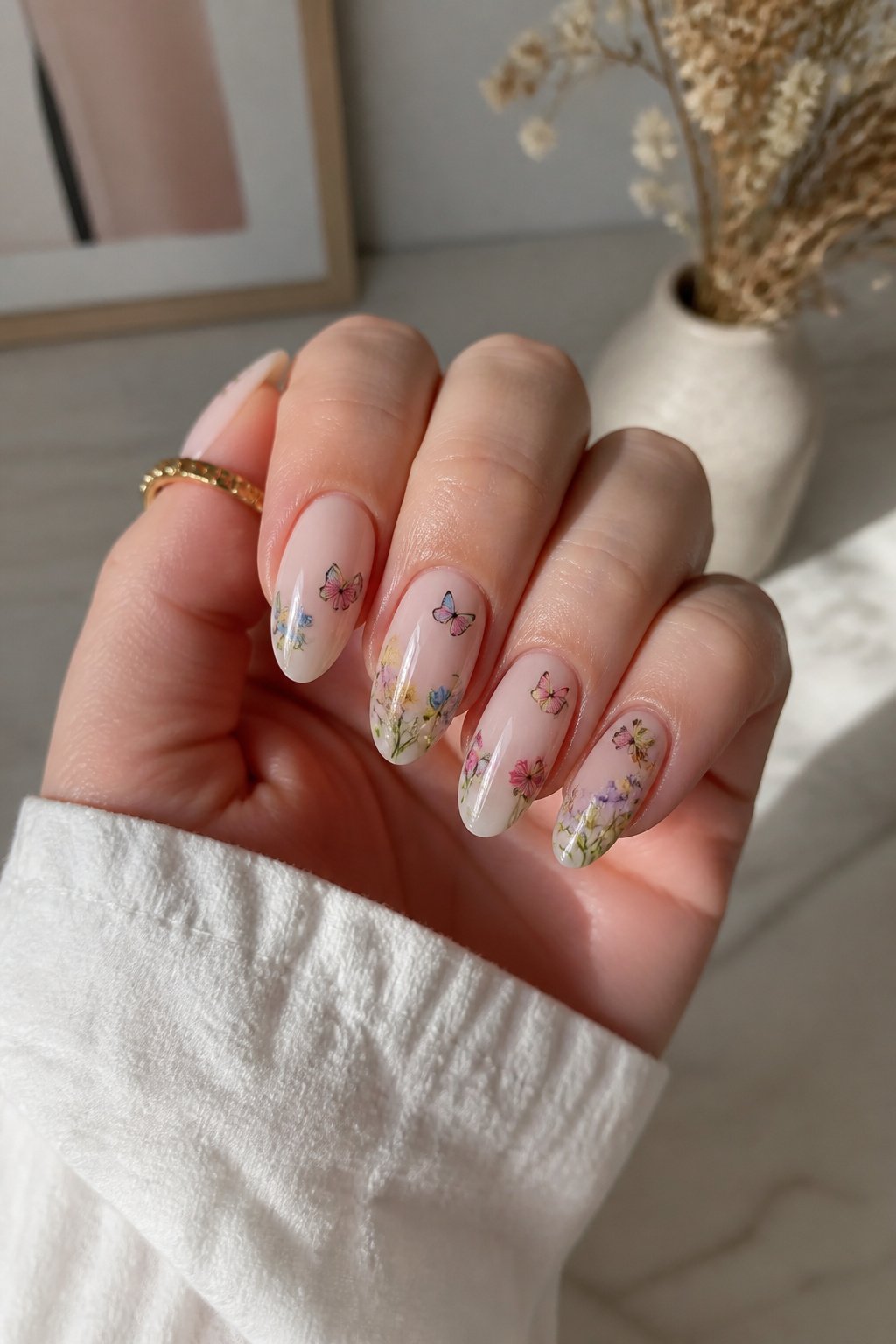
Butterflies and wildflowers share a manicure best when one plays lead and the other fills in around the edges. The most successful designs I have seen keep the butterflies small and scattered, three or four wings at most across a full hand, while the wildflowers cluster more densely near the cuticle or along one side of each nail. Reverse that ratio and the butterflies start to look like an insect invasion rather than a garden visit.
Almond shaped nails give both motifs enough vertical room to breathe without crowding. A soft pastel base, something like a washed-out lilac or pale butter yellow, keeps the overall effect light enough that the detail work does not turn muddy. Glossy finishes help here more than matte; the slight reflectivity lets the tiny wing veins and petal edges catch light differently as the hand moves, which creates the sense of a living scene rather than a static sticker job. The balance is fragile, though. Add too much glitter or a third accent color and the two main elements start competing for attention. Two motifs, one quiet base, and a clear top coat. That is the combination that actually reads as intentional.
Earthy Toned Wildflowers
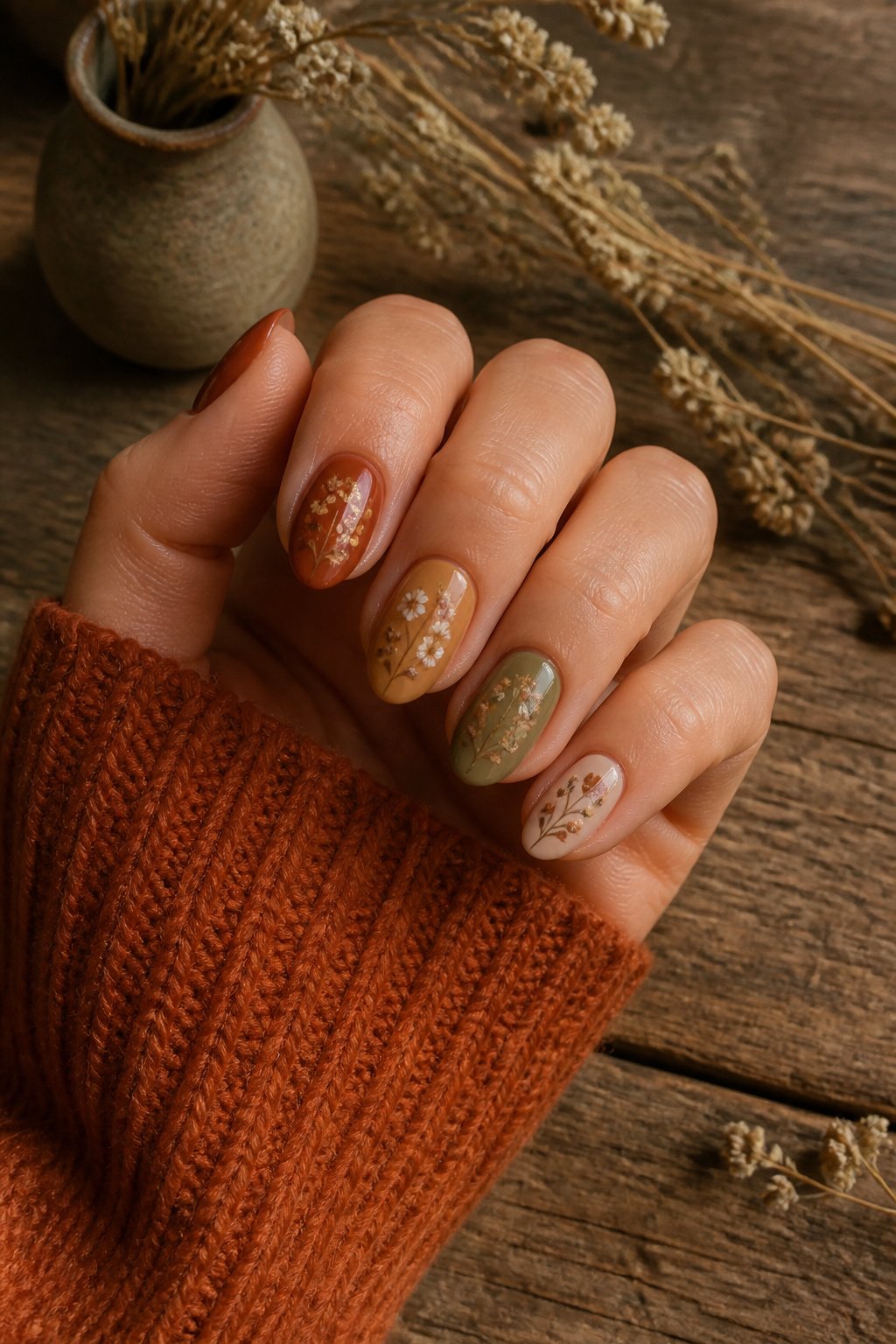
Terracotta, ochre, olive, and cream bases read as soil and sun rather than candy shop, which is exactly the point of this palette. The muted flowers painted over them, mustard yellow and deeper green stems, keep that same low saturation so nothing pops like a sticker. A glossy finish is what saves the look from going muddy; without the shine, the ochre can read as dull against olive in a way that feels accidental, not intentional.
Neutral nude bases underneath do the balancing work. They keep the deeper tones from climbing up the nail and making the whole hand look heavy, especially on shorter shapes where an all-over terracotta would pool at the free edge and shorten the finger visually. Pastel wildflowers fight for a completely different mood, airy and almost edible, and the two palettes do not mix well on the same hand. Choose the earthy route for September through March, when softer florals still need some weight to feel seasonally grounded.
Romantic Wild Rose Accent Nails
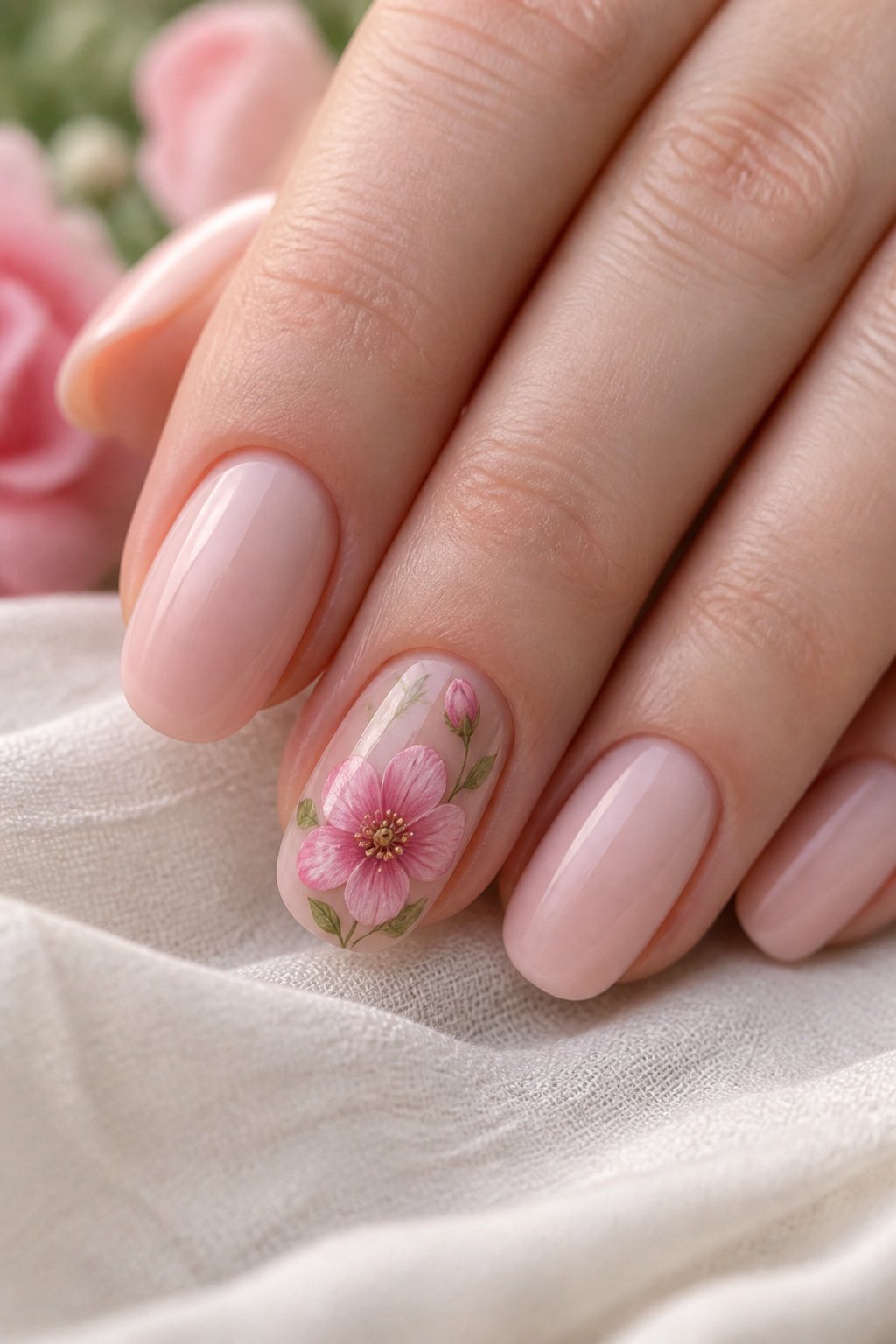
Romantic wild rose accent nails offer a more deliberate structure than the scattered, meadow-style florals that dominate most wildflower nail art. Layered petals painted in gentle pink tones give the rose a graceful, dimensional quality that loose field flowers rarely achieve, and the motif reads as intentional rather than happenstance.
Milky blush bases soften the overall effect without competing for attention. Almond nail shapes help the floral art flow naturally across the surface, and a glossy finish catches light on those layered petals in a way matte topcoats flatten out. The result is feminine and polished rather than rustic.
What separates this from true wildflower designs is the restraint. A single wild rose on one accent nail, or a pair flanking the ring fingers, carries more visual weight than a full field of tiny blooms. The classic floral elegance suits occasions where meadow-style art can feel too casual.
Wildflower Moon Phase Nails
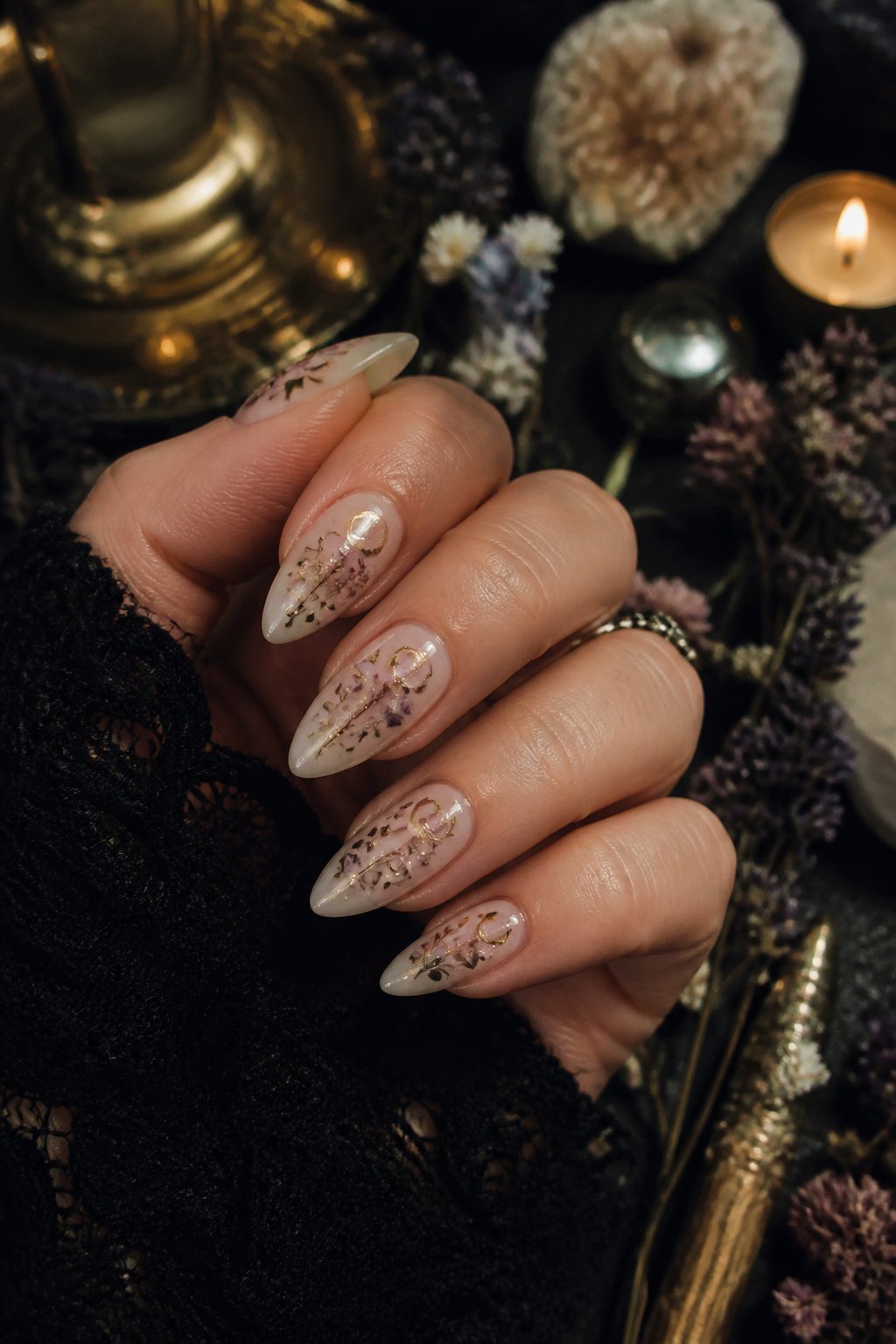
Tiny moon phase symbols paired with scattered wildflowers create a manicure that feels mystical without trying too hard. The celestial details blend with natural floral elements in a way that reads dreamy rather than cluttered, which is harder to pull off than it looks.
Soft neutral bases let both the flowers and moon shapes stand out clearly instead of competing for attention. Almond nails provide enough length to arrange the symbols and blooms without crowding, though the placement matters more than the shape itself. A glossy finish enhances the contrast and brings a subtle glow that makes the entire design feel intentional.
The usual approach puts the moon phases along one or two nails, typically the ring finger or thumb as a focal point, with wildflowers drifting across the remaining nails as if carried by the same night breeze. Reversing that, flowers clustered on a single nail and moons scattered, tends to look accidental rather than composed. What convinced me, looking through dozens of these, is that the lunar element works best as the anchor and the florals as the movement; the other way around loses the celestial quality entirely and you are left with just busy nails.
Gingham & Wildflower Combo
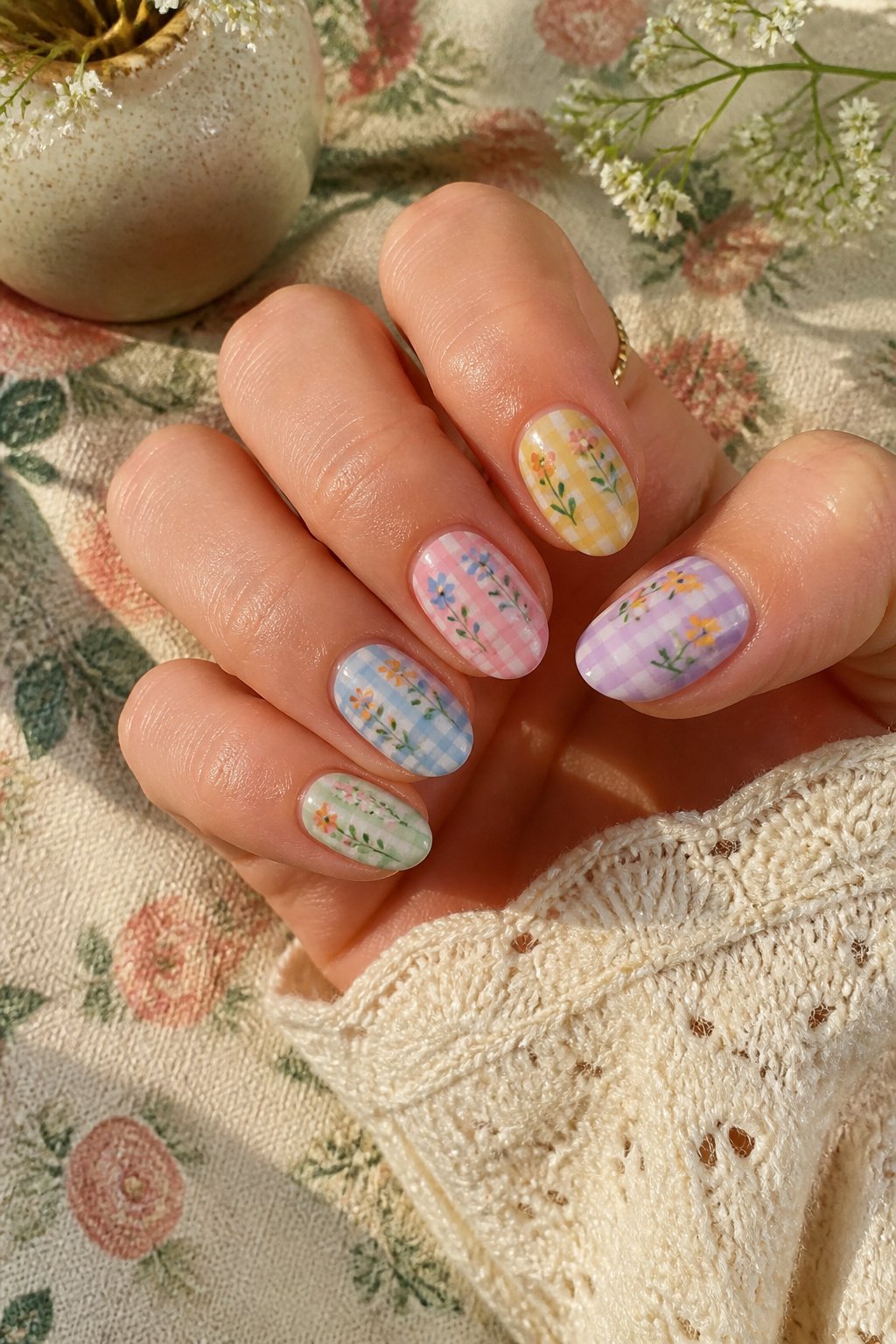
Gingham and wildflower overlays work best when one pattern clearly leads and the other follows. A soft gingham in baby blue, blush pink, or soft yellow gives the eye a regular grid to settle on, while tiny wildflower accents sit on top as the detail that moves. The check itself reads as texture from arm’s length; lean in close and the flowers appear.
Scale is where this pairing lives or dies. Keep the gingham checks small enough that a single flower covers two to four squares, not one. That ratio lets both patterns stay readable without fighting. A glossy finish helps here, it sharpens the clean lines of the base and gives the floral accents enough lift to register as separate elements.
The vintage-cozy mood this creates lands squarely in spring. A matte top coat would flatten the gingham into something murkier, so the gloss is worth keeping for this particular combination.
Nail Art Techniques
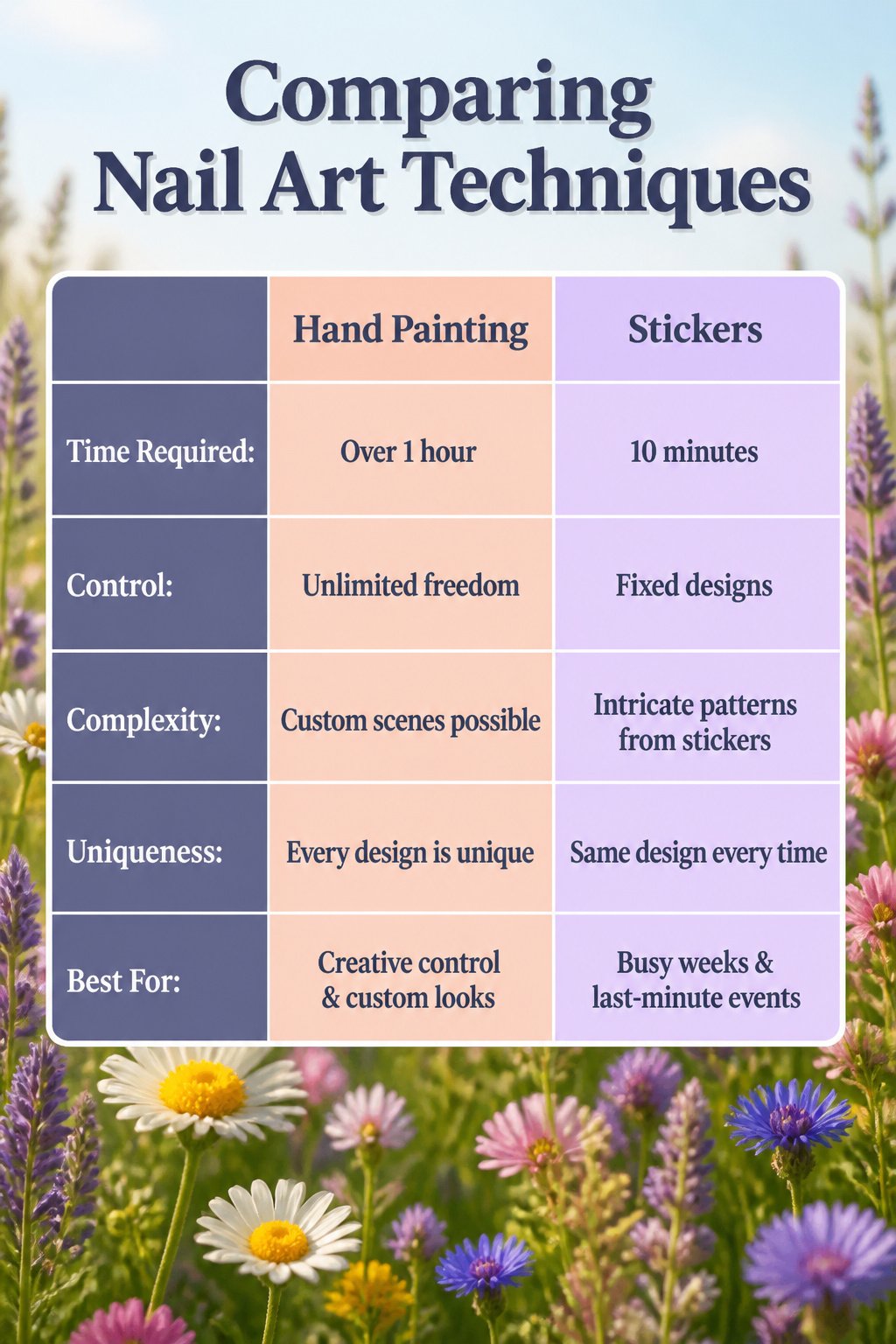
Three main paths exist for getting wildflower nails onto your hands, and the right one depends on how much time you have and how much control you want over the final image.
Hand-painting gives you unlimited freedom but demands steady hands and a good hour or more. Every petal and stem is yours to place, which means complex meadow scenes or custom color combinations are possible, though a single smudged line can undo twenty minutes of work. This route suits simple designs best: a few daisy silhouettes on nude polish, or a single lavender sprig where a mistake is easy to paint over.
Stickers sit at the opposite extreme. The Midsummer Wildflower biodegradable silicone stickers take about ten minutes from base coat to matte top coat, and a silicone tool presses them flat without bubbles or wrinkles. The pattern is already intricate, so you get detail that would take a practiced hand half an hour to replicate. The tradeoff is fixed imagery; you are working with someone else’s composition, not building your own. For busy weeks or last-minute events, this is the option that actually gets done.
Pressed flowers sealed in clear gel polish land somewhere between. Real petals suspended in glossy layers create a dimensional, almost glass-encased effect that stickers cannot match. Clear or milky bases keep the focus on the botanicals, and longer almond or coffin shapes show off the detail better than short squares. The process takes longer than stickers and requires gel equipment, but the result is genuinely unique; no two petals are identical. This is the choice when you want the manicure to feel like wearable art rather than nail art, and when you have the patience for multiple gel layers and careful placement.
Color Palettes That Work
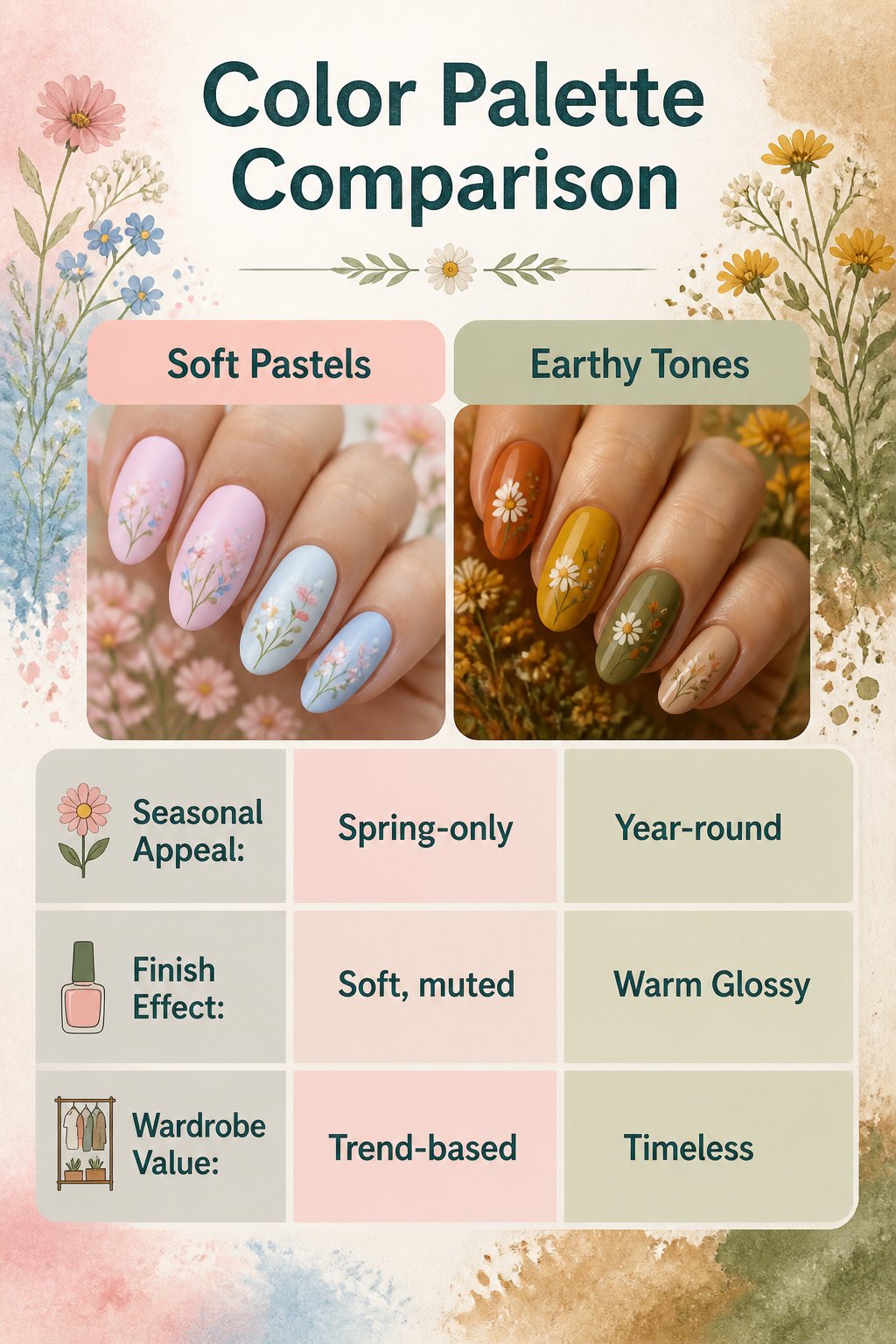
Soft pastels turn wildflower nails into something airy and spring-specific, while earthy tones make the same flower motif wearable through every season. A pale pink or baby blue base lets tiny florals read as delicate and almost translucent, like petals backlit by morning light. That same daisy or sprig painted in terracotta, mustard yellow, or olive green against a nude base suddenly looks rooted, as though the flowers were pressed from an actual roadside bouquet.
The finish matters almost as much as the pigment. Glossy topcoats deepen earthy colors and give them a warmth that holds up in autumn light, whereas pastels can look chalky under high shine and often suit a softer, more muted finish. Matte sage green with scattered white florals offers a middle path: the color stays grounded and botanical, but the matte texture keeps the overall effect calm rather than rustic. Short or medium almond shapes suit this particular balance best, since the organic, mossy quality of the design needs a nail shape that does not fight it.
For anyone building a wardrobe of nail looks rather than chasing one-off trends, the earthy palette wins on repeat value. The same flowers read fresh in March and still appropriate in October; pastels, pretty as they are, start to feel out of place once the light shifts.
Nail Shapes for Floral Art
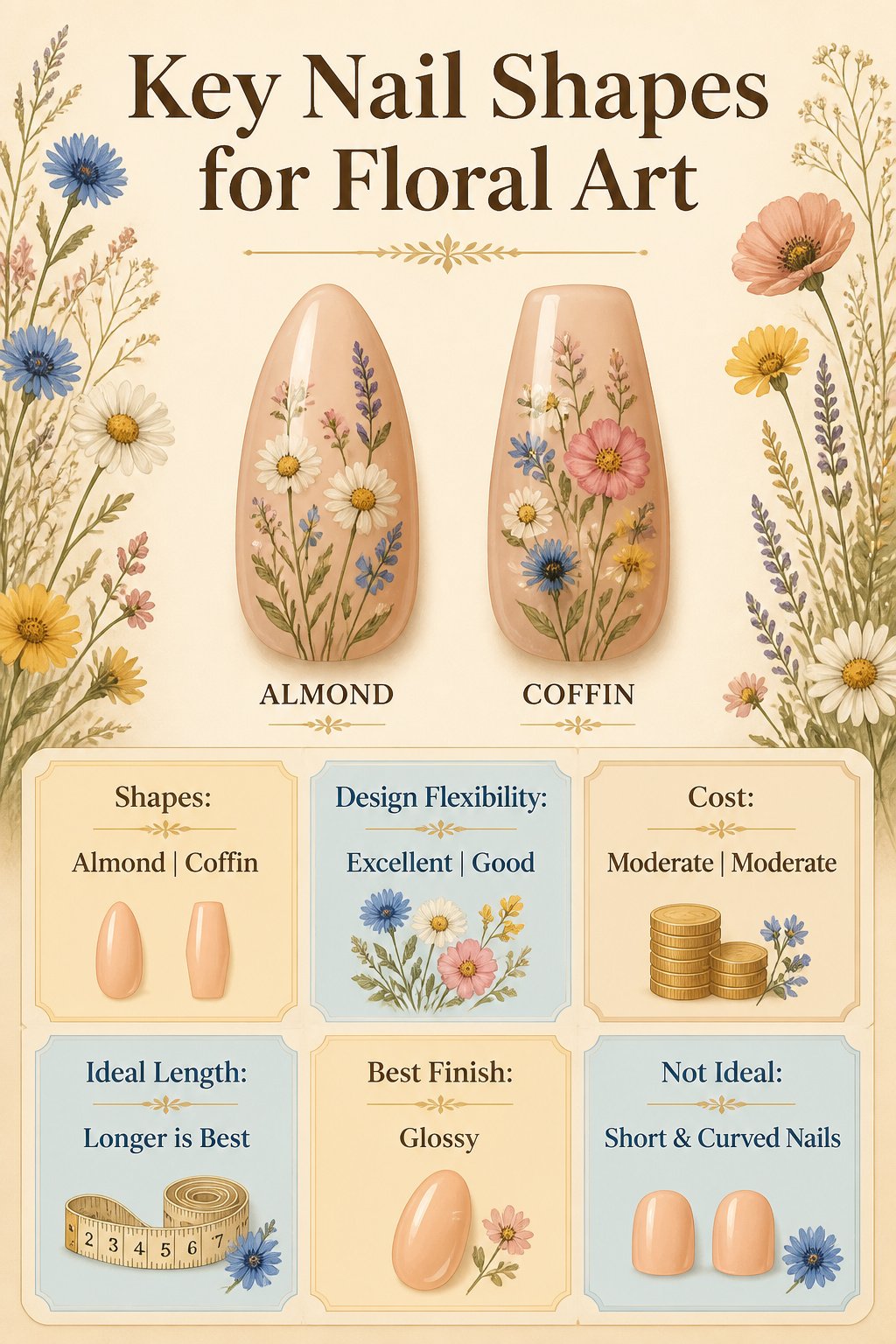
Almond and coffin shapes keep showing up as the go-to canvases for wildflower nails, and the reason is straightforward: both give you enough flat real estate to let tiny petals and stems read as actual flowers rather than blurs. Almond nails taper to a soft point that still leaves a usable center panel, while coffin shapes carry that width almost to the tip. Either way, the artist has room to cluster small blooms without cramming them against the sidewalls.
Shorter, more curved nails fight the design. The surface tightens, the curvature steepens, and detail work starts to distort when viewed from normal angles. A wild rose accent that looks graceful on an almond shape can turn illegible on a rounded short nail because the petals have nowhere to lay flat. The sources consistently pair longer nail shapes with dense floral detailing for exactly this reason: the manicure reads as a miniature garden only when each bloom has space to breathe. Glossy finishes help by adding dimension, but they cannot fix composition on a surface too small to hold one.
Frequently Asked Questions
What are some wildflower nail ideas?
Popular wildflower nail designs include dainty white daisies on a matte nude base, wildflower French tips with pastel blooms along the free edge, real pressed flowers sealed in clear gel, lavender sprig accents, tiny colorful buds scattered on a clear base, full wildflower field art across each nail, meadow skittle nails with a different flower per nail, fine black outline art, sunflower and wild bloom combos, pastel wildflower tips, matte sage green with white florals, wildflower bouquet accent nails, gold foil accents, faded watercolor wildflowers, dot art daisies, butterflies paired with wildflowers, earthy toned florals, romantic wild rose accents, moon phase and wildflower combos, and gingham with wildflower overlays. Each style varies in complexity, from ten-minute sticker applications to detailed hand-painted techniques.
How can I create wildflower nails quickly?
Nail stickers are the fastest route, taking about ten minutes from start to finish. SoNailicious Midsummer Wildflower stickers, for example, press over dried nude polish, get smoothed with a silicone tool, and seal with matte top coat. The result mimics hand-painted tiny blooms without the brushwork or drying time between layers.
What colors are best for wildflower nails?
Soft pastels like lavender, baby blue, pale yellow, and earthy pink dominate most wildflower designs, keeping the look airy and romantic. Earthy tones such as terracotta, ochre, olive, and cream shift the mood toward soil and sun for fall and winter. A glossy finish generally saves muted shades from reading washed out or muddy, while matte finishes suit specific styles like sage green bases or pressed flower looks.