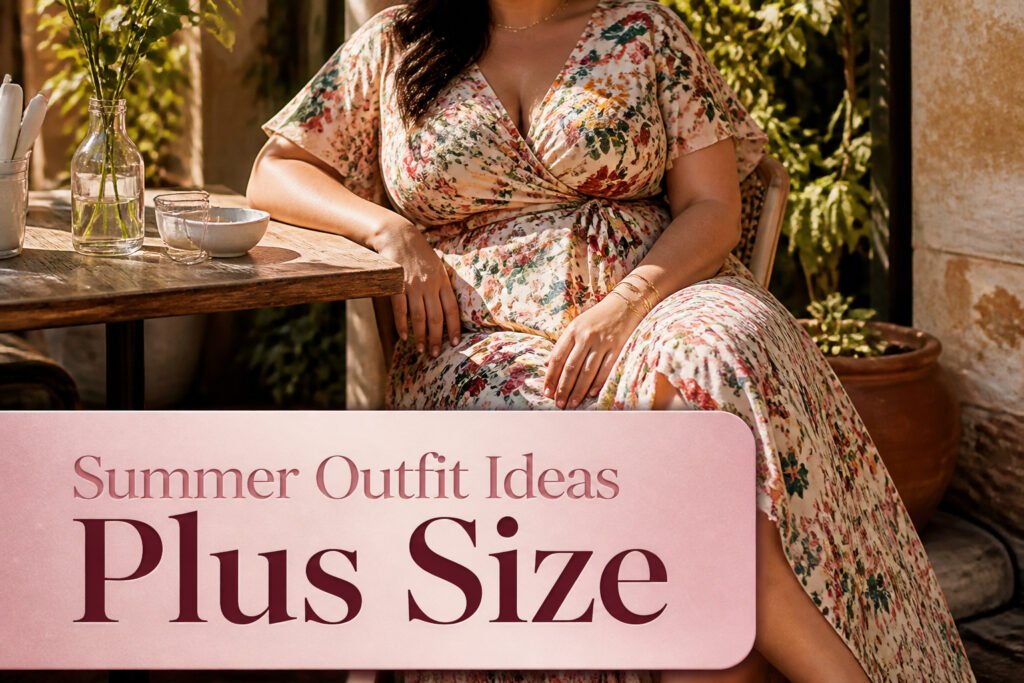
The right summer outfit plus size depends on one thing: whether the fabric breathes or just looks like it should. Linen wrinkles within the hour, but that creasing is the proof it is working. A 5-inch to 7-inch inseam on denim shorts keeps the leg band from cutting in, and a boat-neck sweater in open-weave cotton carries structure without pulling tight. The pieces below range from a $25 Pretty Little Thing sheath to a $650 Veronica Beard ruched sundress, and the single factor that decides which one is yours is what the day demands before the temperature climbs past eighty.
1. Boat Sweater and White Jeans
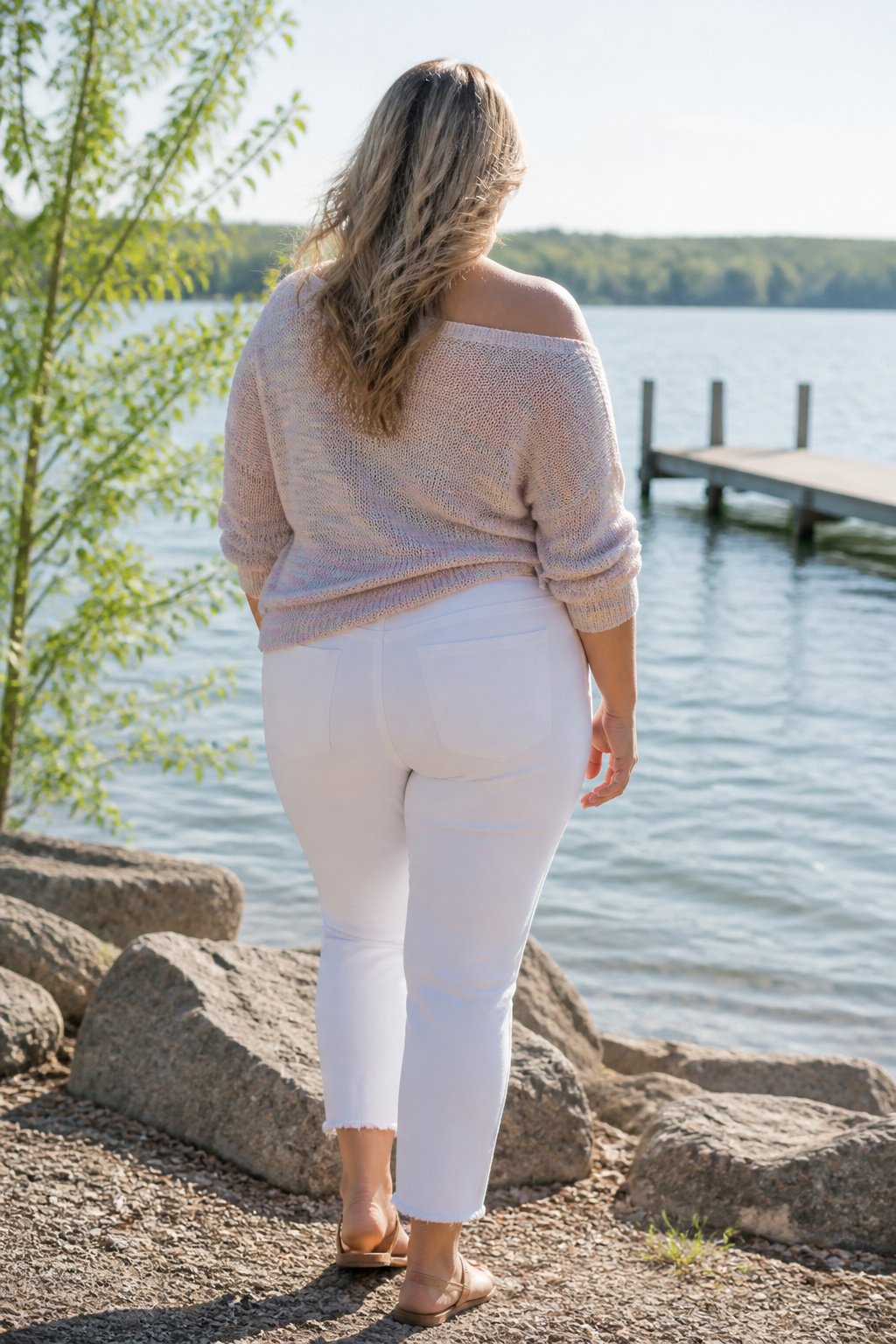
A boat-neck sweater and white jeans carries a specific balance that keeps it from looking like you grabbed the wrong season. The wide, horizontal neckline draws the eye across the shoulders, which gives the relaxed body of the sweater some structure without pulling it tight anywhere. Against crisp white denim, that looseness reads as intentional, not like you forgot to check the weather.
The sweater itself can go a few ways: a lightweight knit, an open-weave cotton, or even a terry quarter-zip if the evening is more dock than dinner. What matters is that the fabric has some texture, so the white underneath doesn’t flatten everything out into one blank plane. Sandals keep it current, white sneakers keep it practical, and Sperry boat shoes lean into the reference without costume territory.
This pairing lives in the cooler hours, lake air, over-air-conditioned restaurants. The jeans stay the same; the sweater changes weight. That swapability is what makes it a real summer outfit rather than a fall one worn early.
2. Linen Separates
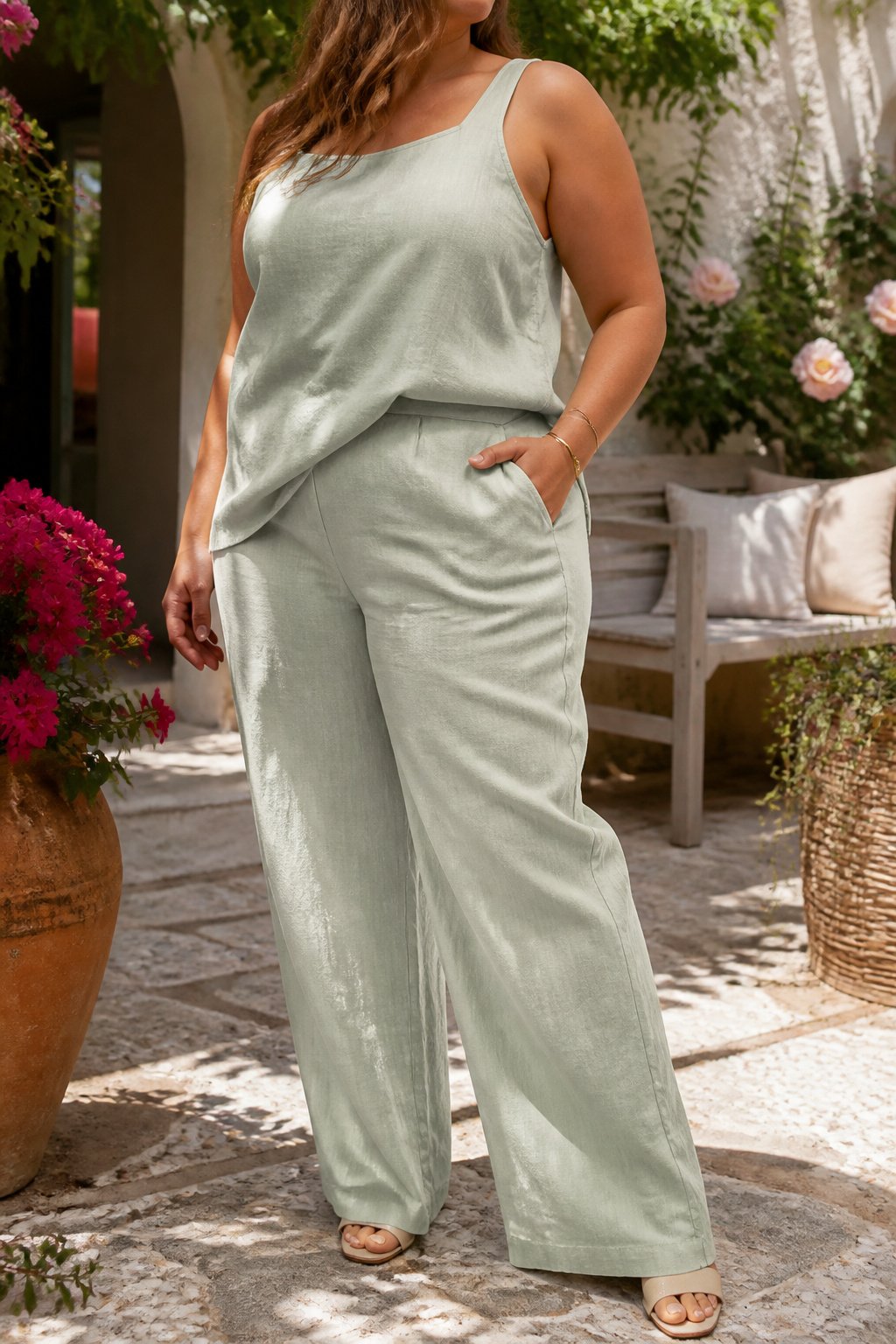
Linen pants paired with a matching top solve the summer problem in one move: the fabric lets air move against the skin instead of trapping it. For plus-size summer outfits, that breathability matters more than a crisp silhouette ever could. The pants hold enough structure through the hips and thigh that the overall shape stays intentional, not sloppy.
Yes, linen wrinkles. It wrinkles badly, and it does so within an hour of putting it on. After a few summers of fighting it with steamers and hotel irons, I stopped. The comfort payoff wins over the pressed look every time when the temperature climbs past eighty degrees. The wrinkling is the fabric doing what it is built to do, and anyone close enough to notice is already inside your personal space without invitation.
Color changes how the rumpling reads. White and cream linen looks expensive even creased; pale pink and soft sage do the same. Darker shades like navy or charcoal show every seat crease and knee fold, so they read as messy rather than relaxed. A matching set in a light tone also stretches the eye vertically, which is useful when you want the ease of separates without breaking the line of the body.
3. Tee, Button-Down Shirt, and Denim Shorts
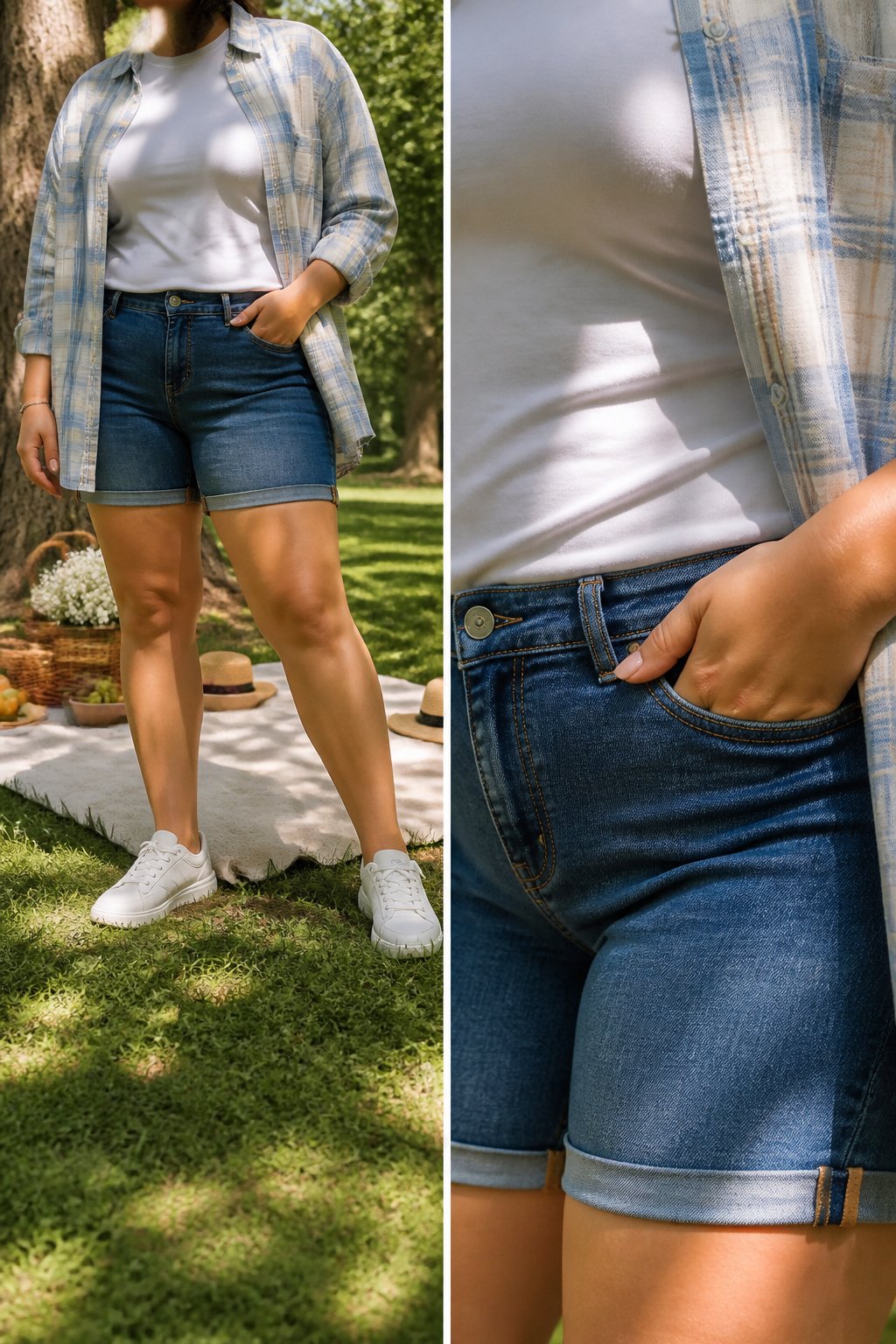
A solid tee plus denim shorts is the base most of us already own, but the outfit stays in errand territory without the third piece. The button-down shirt is what turns it into a look you could walk into a lunch meeting wearing. I keep mine unbuttoned and loose, sleeves rolled to the elbow so it reads as a layer rather than a shirt worn wrong. The extra fabric across the back and arms balances the fitted tee and shorts in a way that feels intentional, not like you grabbed a cover-up on the way out the door.
Shorts that ride up are what keep a lot of women away from this formula entirely. The right inseam for plus-size denim shorts sits between a 5-inch and 7-inch inseam: shorter than that and the leg band cuts in, longer and you lose the proportion that makes the layered top half work. A mid-rise or high-rise waist keeps the line clean where the tee tucks or half-tucks.
Pattern mixing is where this gets personal. A solid tee under a striped or checked button-down is the safer open, but a graphic tee under a solid linen or chambray shirt is just as valid if the colors talk to each other. The shirt does not need to stay on all day. If the temperature climbs, tying it at the waist still gives you the visual structure the three pieces created together.
4. Fitted Tank and Fitted Skirt
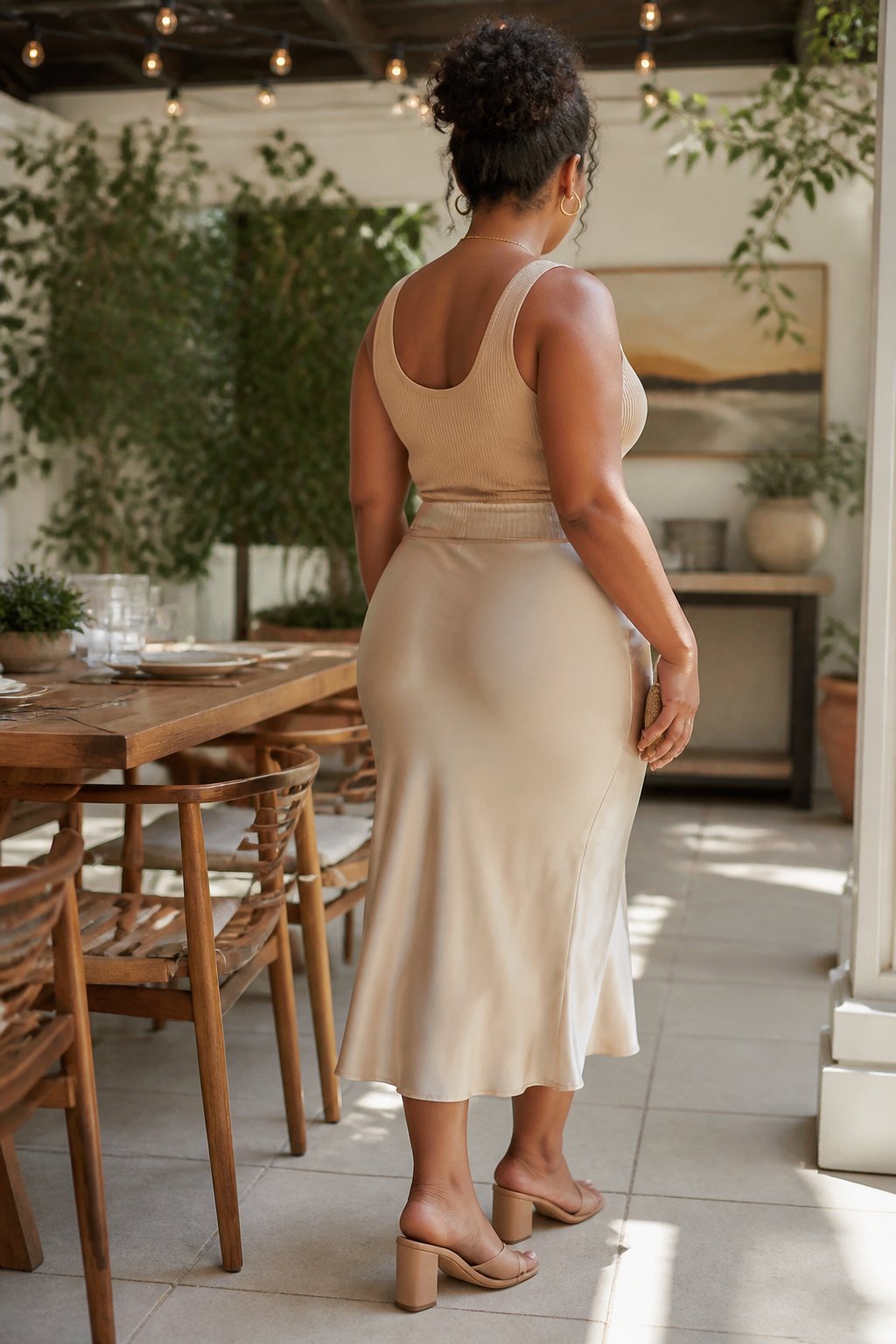
A fitted tank with a fitted skirt sounds like the last thing anyone wants when the temperature climbs, but skimming the body instead of hiding it is what actually reads as intentional in summer photos and in person. The slip skirt shape that Crystal Clement of crystal_alexis wears, body-skimming and airy, shows natural curves without clinging, and the narrow strapped tank above it keeps the line clean from shoulder to hem. Fabric weight matters more than cut: a ribbed tank in cotton or a thin bodysuit holds its shape without adding bulk, while satin or lightweight denim in the skirt moves without trapping heat. The waistband should sit at the natural waist or just below, not at the hip, so the two fitted pieces meet at the narrowest point rather than cutting the torso in half. I would typically pair a fitted bottom with something looser on top, but reversing that instinct, tight over tight, is what makes this silhouette feel current rather than like you gave up and grabbed what was clean.
5. Graphic Tee and Linen Pants
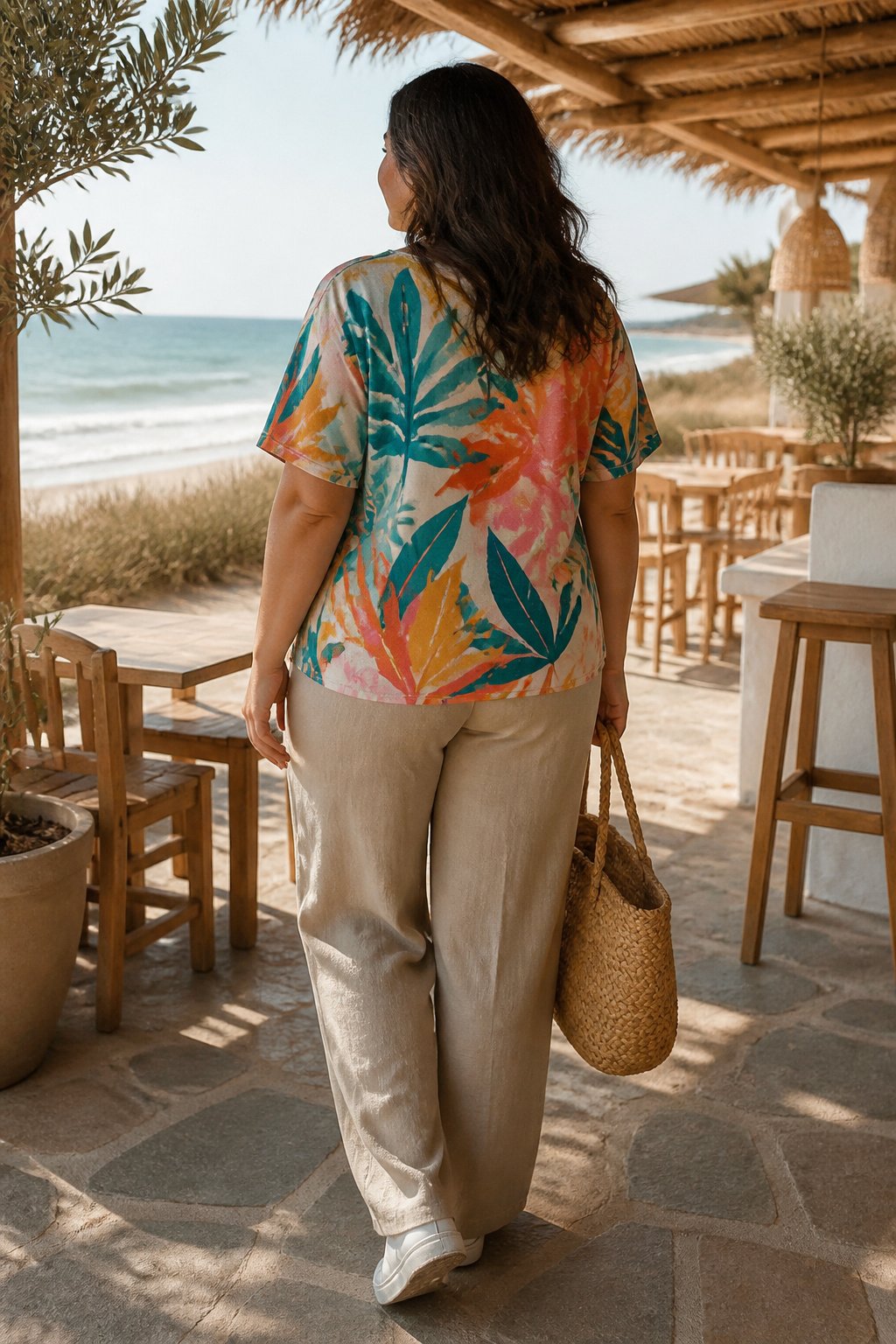
A graphic tee does the talking so the rest of the outfit does not have to. The print gives you personality, a band name, a vintage logo, whatever reads as you, while the linen underneath keeps the shape from collapsing into slouch. Linen pants with a proper waistband and a straight or slightly tapered leg hold the structure that denim shorts would surrender; they look intentional, not like you gave up and grabbed what was clean.
The shoe matters more than people admit. Teva sandals keep the beach-cool mood going without pretending the outfit is dressier than it is. Sunglasses, beaded earrings, and a crochet hobo bag finish it, though the bag is optional if you are just running to the grocery store. The whole thing works thrown over a swimsuit or worn straight through a Saturday, and that is the point of a summer uniform: no change of clothes required.
6. Boho Sundress
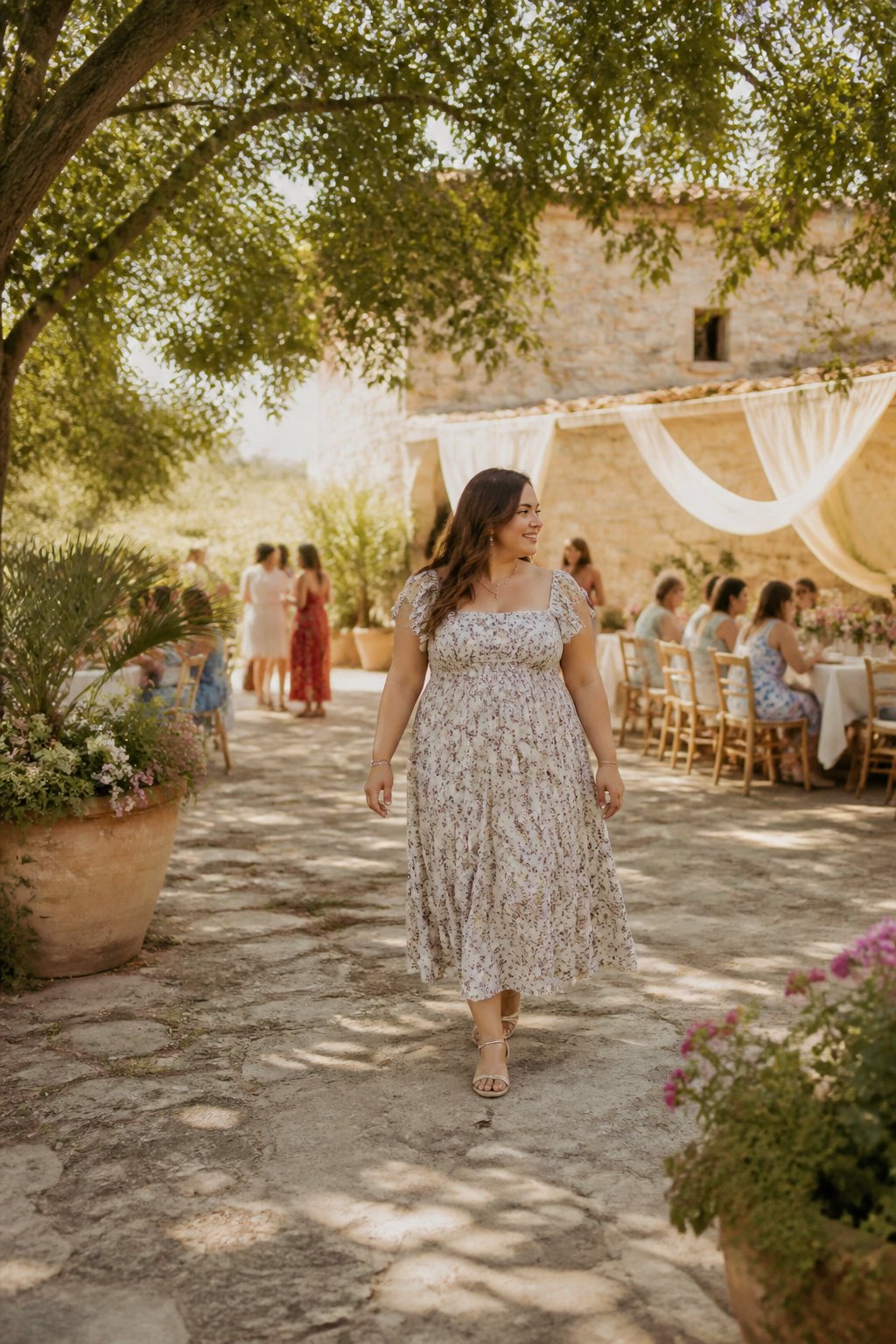
A boho sundress in the right print and cut does the work of an entire outfit without the summer layering that overheats fast. The ones that read as bohemian rather than baggy usually carry their volume in tiers or flutter sleeves while the bodice stays fitted through the bust and waist, so the silhouette moves without turning tent-like. Prints matter here: smaller, scattered florals or low-contrast geometric patterns tend to flatter plus-size frames more than oversized blocks that fight the eye for a single focal point. Length lands best at midi or maxi with a hem that skims rather than pools, since extra fabric at the ankle drags the whole shape down.
The ruched front on Veronica Beard’s expanded plus range, priced at $650, shows how adjustable construction solves the fit problem across heights and body shapes. Sarah Chiwaya of Curvily, who made the brand a personal target for her #plussizeplease movement, notes that this kind of detail lets the same cut work for a variety of frames without custom tailoring.
the fit is spot on and the ruched detail on the front is totally adjustable, so the cut works for a variety of heights and body shapes
For the reader, this means looking for drawstring waists, smocked backs, or front ruching rather than assuming a fixed silhouette will suit. Occasions stretch further than the obvious beach or brunch: add leather sandals and small gold hoops for a dinner that does not require heels, or throw a cropped denim jacket over for outdoor concerts where the temperature drops after sunset. The dress handles the heat; your job is choosing where it goes next.
7. Linen Jumpsuit
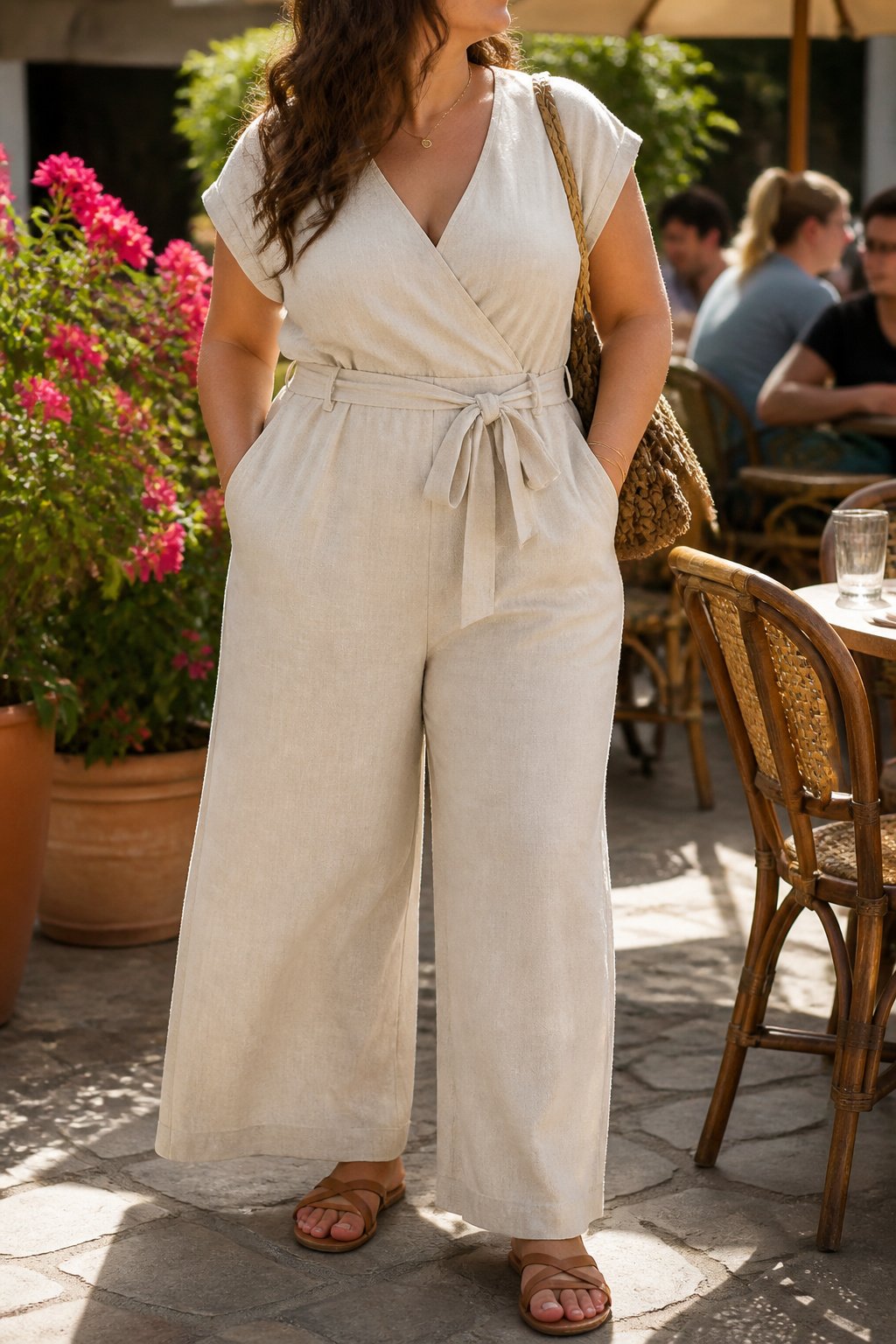
A linen jumpsuit removes the morning decision of what matches with what, which is half the battle of getting dressed in summer heat. The fabric breathes, but the cut determines whether the silhouette reads as shapeless or intentional. Waist definition matters most here: a tie belt, elastic channel, or seaming that sits at the natural waist keeps the volume from becoming a tent. Without it, the eye has nowhere to rest, and the wearer ends up looking like they’re hiding inside the garment rather than wearing it.
Bathroom practicality is the detail that separates a jumpsuit you reach for weekly from one that hangs in the closet. A full button front or a wrap-style top solves the problem; a back zipper with no stretch does not. The inconvenience of full undressing in a public restroom is real enough that it will kill the rotation even on a piece that fits perfectly.
Shoe choice keeps this from tipping into costume territory. Flat sandals or low-profile sneakers ground the look for daytime; a block heel can work for evening, but anything higher or more ornate starts to read as "outfit trying too hard." The jumpsuit is already the statement. The shoes should handle the walking.
8. Tank Top and Tiered Skirt
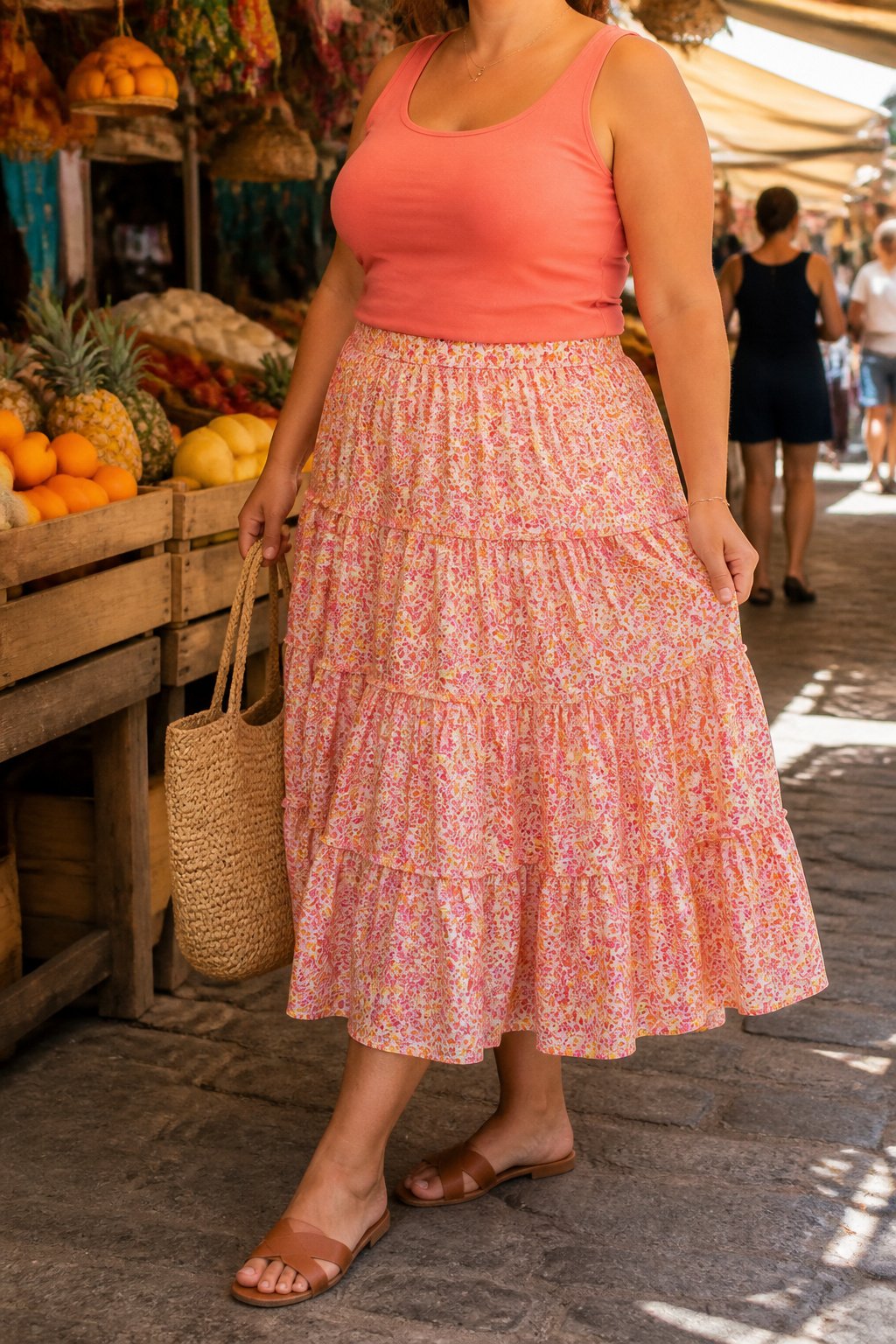
A tiered skirt brings volume exactly where you want it, but the eye needs somewhere quiet to land. That is why a plain tank, fitted close through the torso, keeps the whole thing from turning into costume. The tiers do the work of movement and airiness; the tank simply holds the frame still so the skirt can move against it.
Proportion is what keeps the volume from swallowing you. A tank with a higher neckline and straps wide enough to cover a bra band reads as intentional, not like an undershirt you forgot to finish. The skirt should sit at the natural waist, not dropped to the hips, so the tiers begin at your narrowest point and fall from there. Hem length matters too: midi, hitting mid-calf, keeps the tiers from pooling around the ankles where extra fabric turns heavy.
I have seen this pairing go wrong when the tank is too long and blouses over the waistband, or when the skirt tiers start so low that the hip area looks like a solid block. A tucked or cropped tank, even a front-tuck if the fabric is thick, restores the separation that makes the shape work. Cotton or linen tiers hold their shape in humidity better than synthetic chiffon, which can cling and collapse by noon.
9. Boho Blouse and Linen Pants
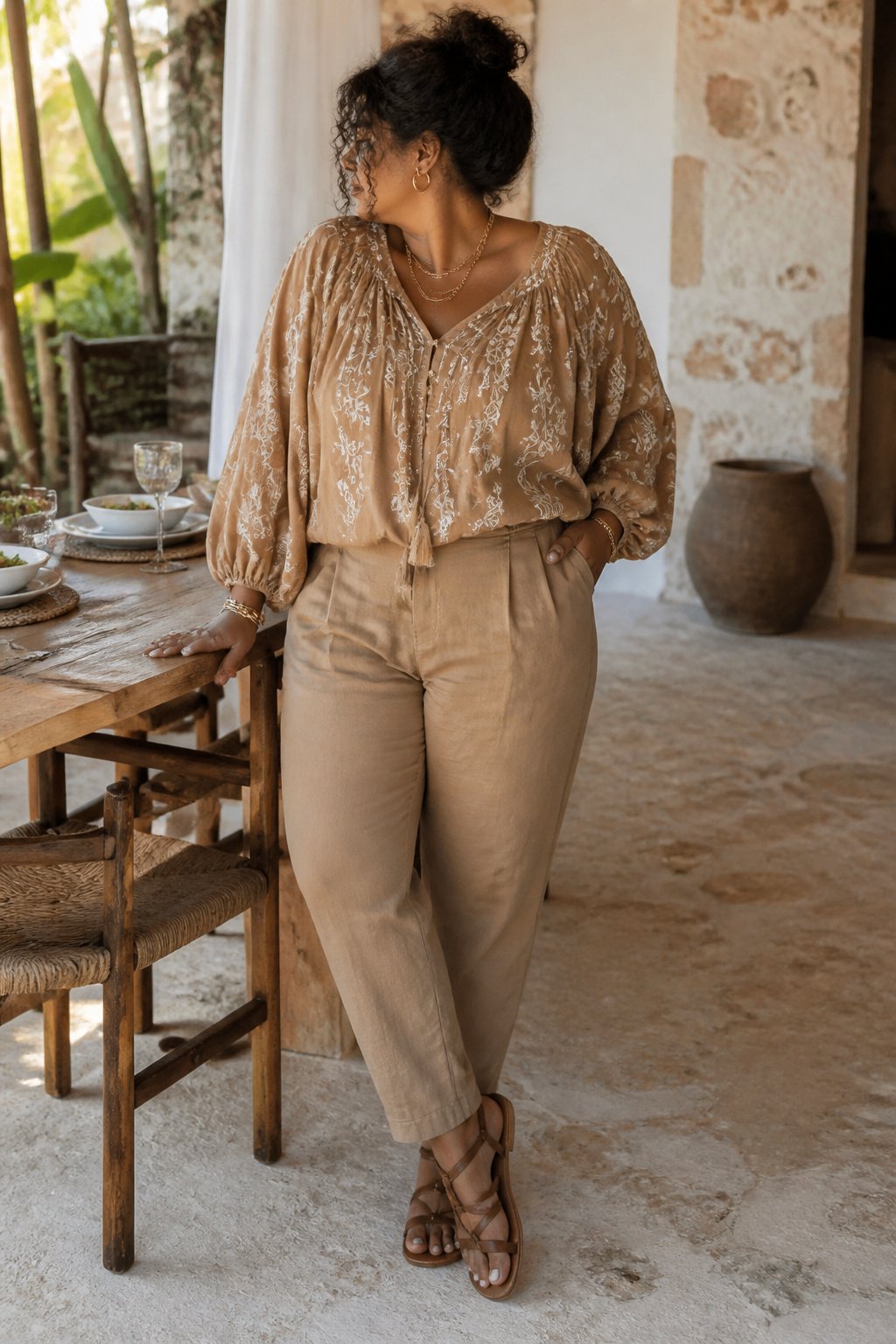
A boho blouse works best when the sleeve does the talking and the print stays simple. For plus sizes, a balloon or bishop sleeve that narrows at the wrist keeps the volume up high where it flatters, rather than adding width at the hip. I have learned to avoid raglan cuts in this style; they erase the shoulder line that the sleeve is meant to celebrate.
Linen pants finish the look because denim would fight the blouse for attention. The matte, slubbed texture of linen reads as intentional against embroidery or a small-scale floral, whereas the uniform surface of dark jeans would make the top feel like costume instead of outfit. A mid-rise, straight-leg linen pant in sand or olive grounds the volume without going heavy.
Jewelry here should be thin and warm-toned: a single chain, small hoops, maybe one ring. The blouse already carries the pattern, the texture, and the sleeve drama. Metal that is too large or too cool turns the whole thing into a pile of competing statements. I keep a small brass pendant on a short chain for exactly this combination; it sits in the open collar without shouting over it.
10. Oversized Prints
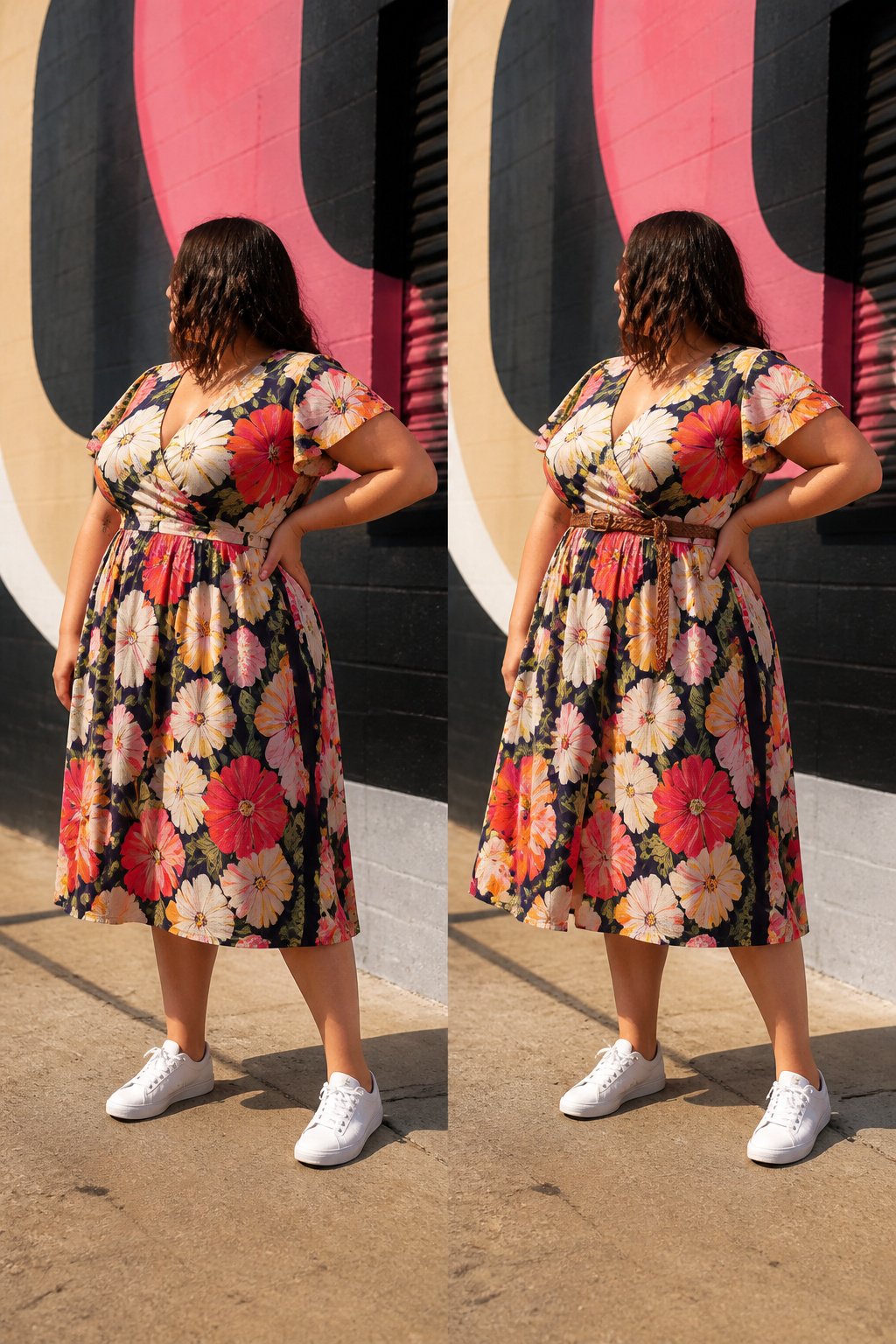
A print that is smaller than your palm tends to sit on the fabric like a static pattern, while a motif scaled closer to your hand span or larger moves with your body as you walk. The eye reads the big shapes first, so the print becomes part of your silhouette rather than a busy layer on top of it. For backgrounds, solid grounds in navy, cream, or soft olive let the motif do the work without competing. The largest shapes should land where you want the eye to travel: a single bold bloom at the shoulder draws attention upward, and vertical placement of oversized florals or geometrics elongates the torso. I learned this the hard way with a dress whose giant hibiscus clustered entirely at the hem; the weight pulled downward and shortened my line. Now I check that the biggest motif hits at or above the natural waist, with medium and smaller repeats filling in below to keep the movement going.
11. Cute Jumpsuits
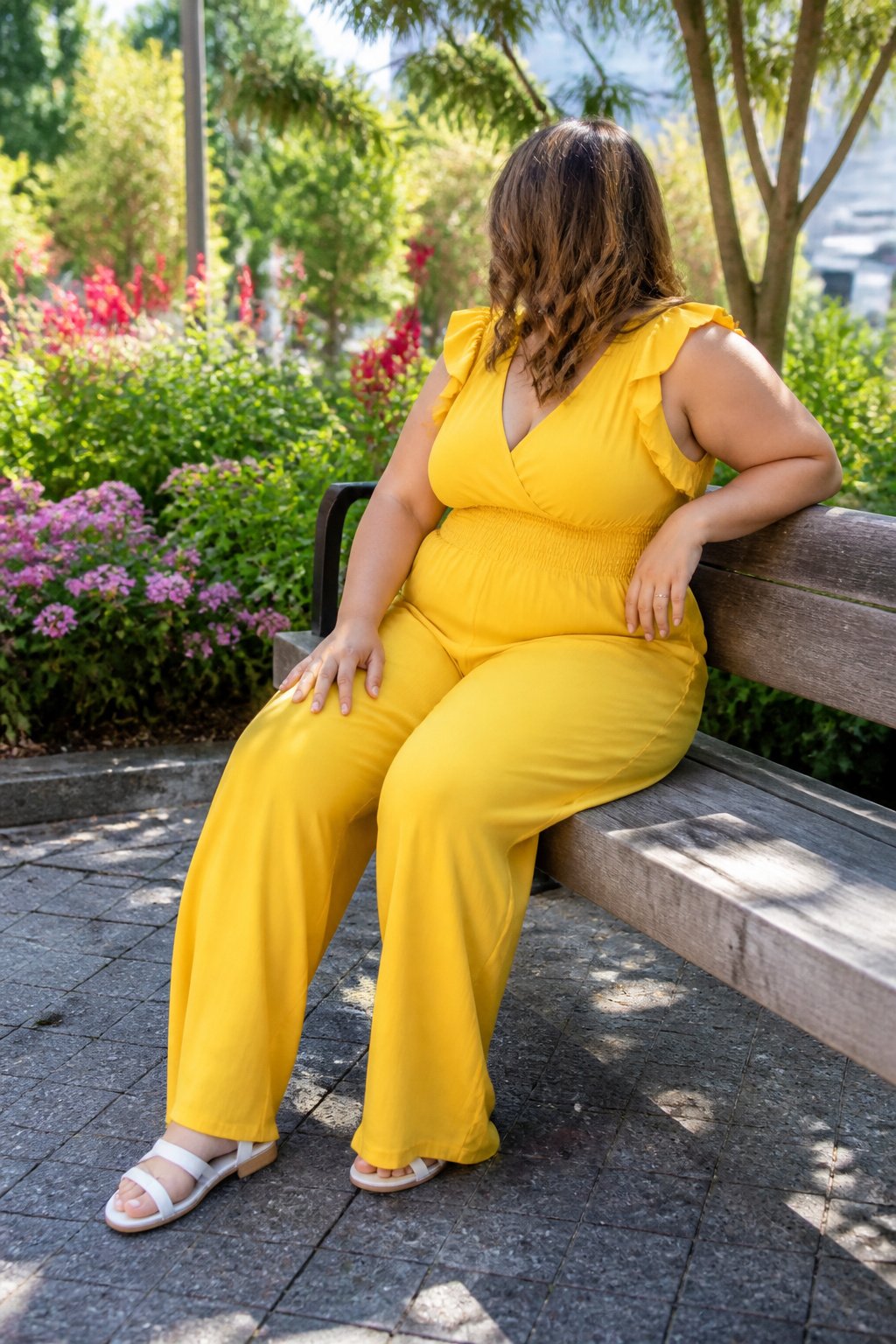
A jumpsuit earns the word "cute" when the waist sits at or just above the natural waistline, not dropped to the hips where workwear lives. That single placement changes the whole proportion: the leg lengthens, the torso compresses to something intentional, and the body reads as shaped rather than swallowed.
Fabric matters as much as cut here. Linen has its own section for a reason. A lightweight crepe or a soft rayon challis drapes closer to the body without clinging, and a cotton sateen with a bit of stretch holds a tailored leg that still breathes. I look for a defined waistband, a tie, or even subtle elastic at the back that keeps the front flat. Ruffles at the shoulder or a cropped wide leg tilt the piece toward playful; a straight leg and a zip front push it back to utility.
Pockets can wreck the line if they gap. I skip anything where the hip pocket sits under tension, and I check that the back rise is deep enough that bending down does not turn into a repair job. A cute jumpsuit should feel like a dress with the security of pants, not like coveralls you dressed up.
12. Floral Dress and Sneakers
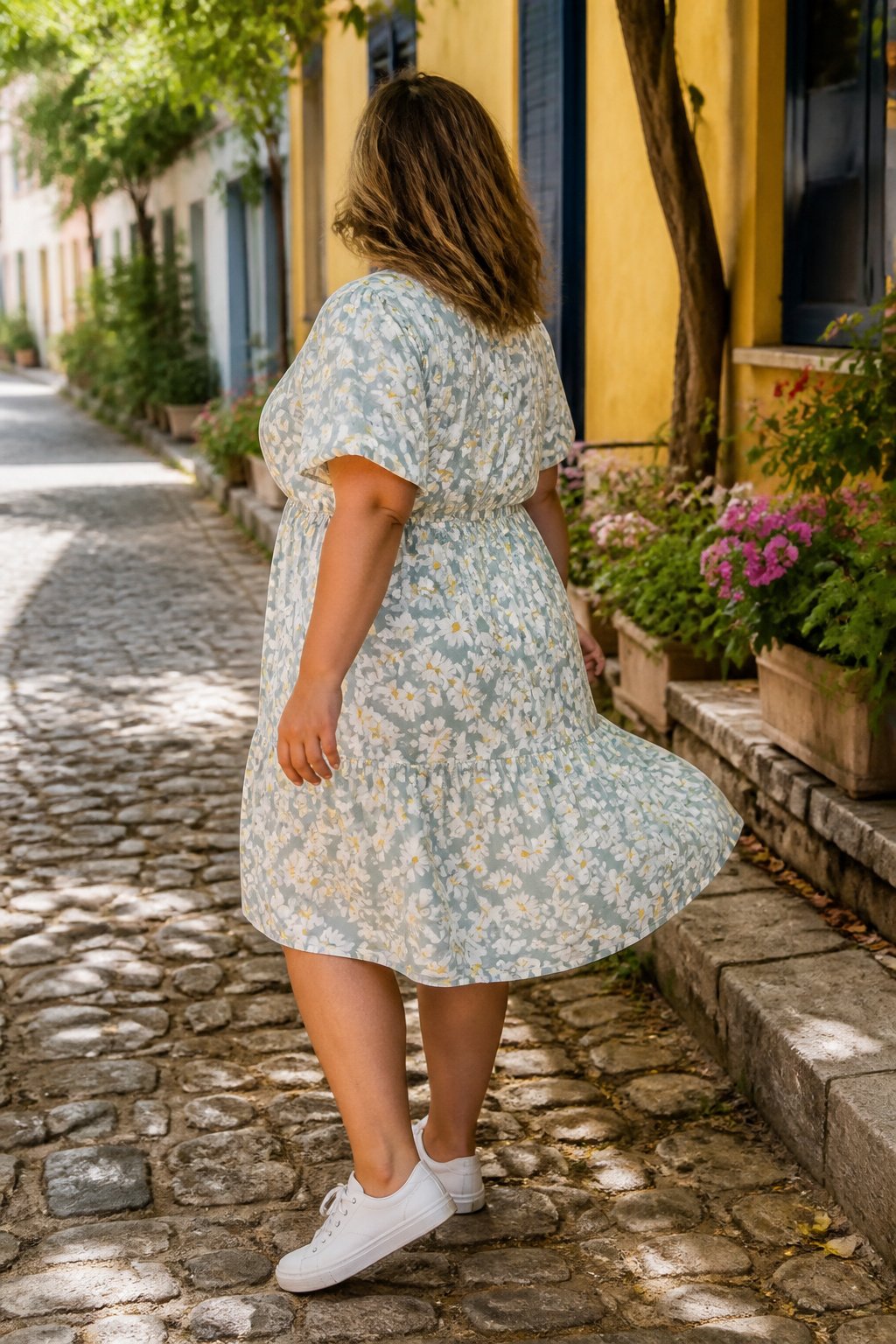
A floral dress with sneakers works because the pairing stretches a single piece across occasions that usually demand separate wardrobes. The dress reads feminine and intentional; the sneakers keep it from looking like you are trying too hard. For plus-size dressing specifically, this matters because the contrast draws the eye to the whole silhouette rather than settling on one body part. The sneakers signal "deliberate," which is the difference between an outfit that looks styled and one that looks like you gave up.
White, cream, or a muted gum sole bridge almost anything; they pick up the lighter tones in a summer print without fighting it. Black sneakers work too, but they drop the hemline visually, so the dress needs enough length to carry that weight. Knee-length or just above hits the sweet spot: long enough that the shoes feel like a choice, short enough that the proportions still feel airy. Midi lengths can work, though the sneaker bulk sometimes swallows the ankle and shortens the leg; a slight wedge or a lower-profile cup sole helps there. What breaks the look is a maxi hem that pools over the laces; the eye loses the shoe entirely, and the dress starts reading as accidental rather than styled.
13. Silky Fabrics
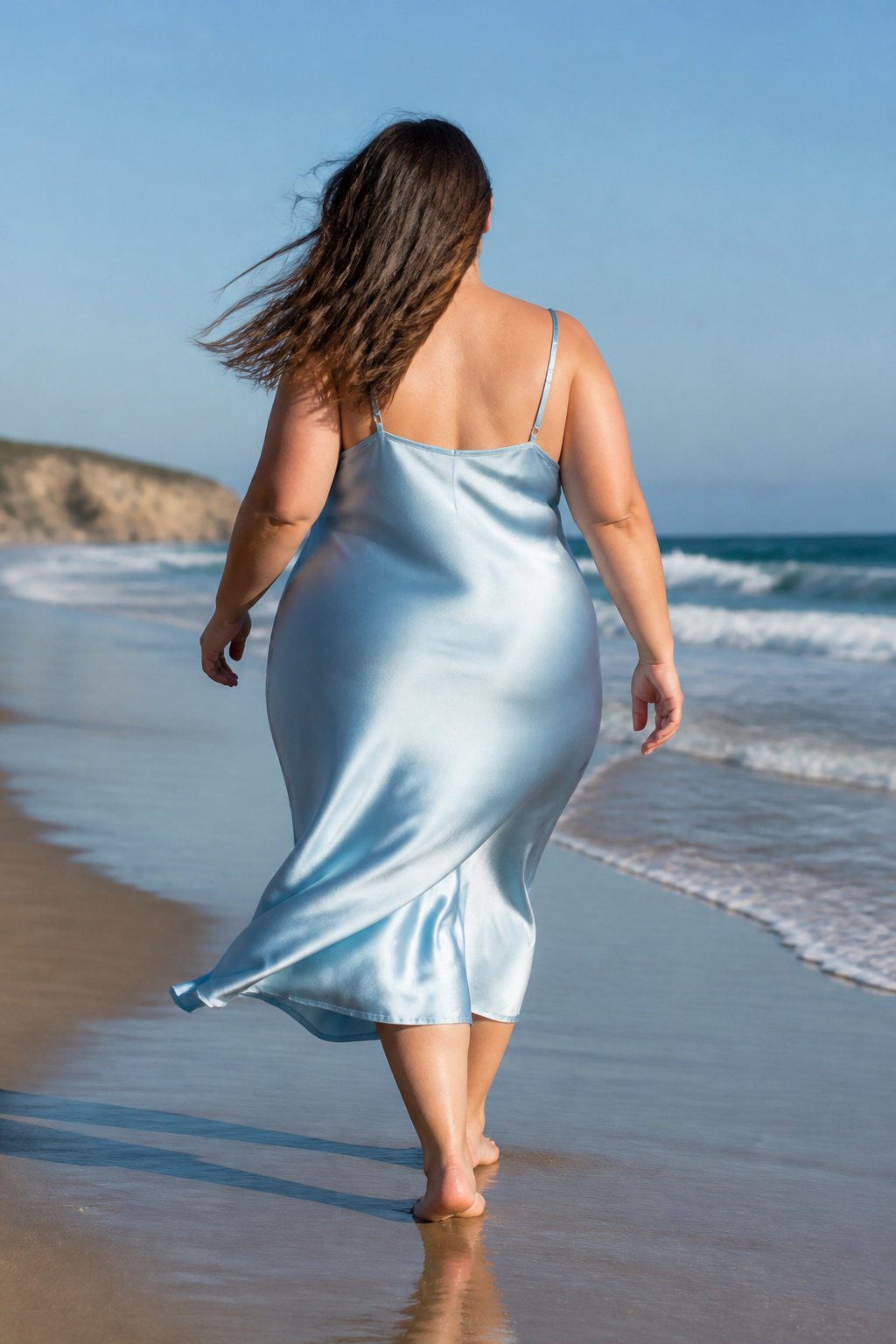
Matte cotton and linen dominate plus-size summer racks for a reason that has nothing to do with what actually works. A light silk charmeuse or a hammered satin in a loose cut will skim heat away from the body faster than any stiff, absorbent weave that clings once damp. The sheen catches air movement, and the drape keeps fabric from sealing against skin at the waist or thigh.
Natural silk and the better plant-based cellulosics breathe well enough for July if the garment is cut roomy. Polyester satins are trickier: some of the newer ones wick, but many trap sweat at the center back and under bust where lining meets shell. I check for a separate, breathable lining or none at all.
Structure fights plus-size summer dressing more than size itself. A tailored satin blazer in heat reads costume; the same fabric dropped into a bias-cut camisole or wide-leg pant moves like water and reads expensive. The default to matte is a habit worth breaking where the cut is fluid and the day is hot.
14. Printed Dresses
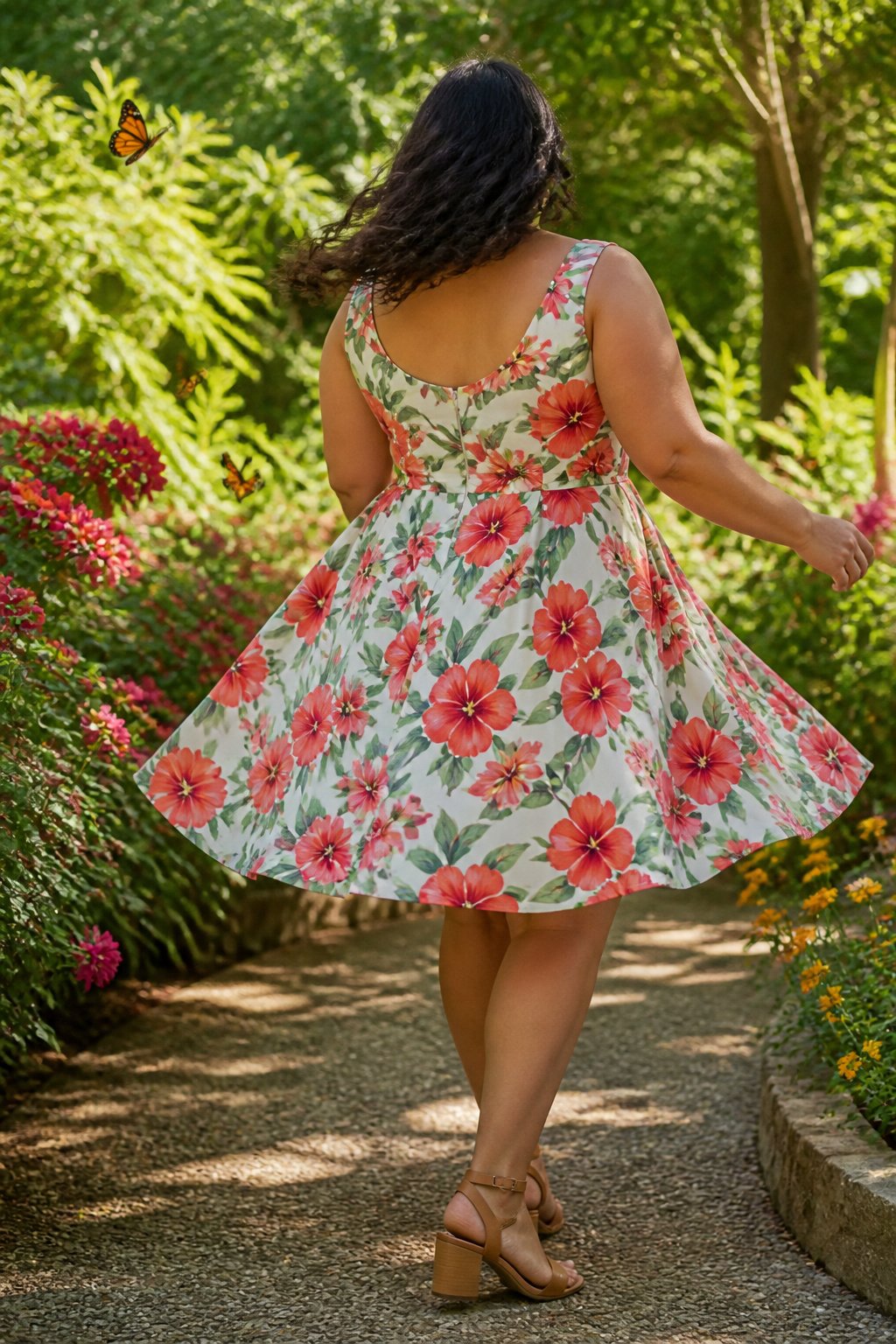
A printed dress is the one-piece statement that cuts morning decision fatigue in half by removing the need to match tops and bottoms at all. The print itself does the styling work.
Scale matters more than pattern name. A medium-sized repeat, roughly the size of a fist or slightly larger, photographs cleanly without turning into visual noise from a distance. Tiny florals can read as texture rather than pattern; oversized motifs on a plus-size frame need enough ground fabric between repeats so the eye rests. The dress cut and the print scale have to agree. A fit-and-flare or A-line silhouette with a defined waist keeps a busy print from overwhelming, because the shape gives the eye a clear structure to follow. Sheath styles work better with sparser prints; there is nowhere for dense pattern to hide on a straight column.
For summer occasions, this category outperforms separates more often than people expect. One garment means one set of seams to engineer for breathability, one hemline to judge for sitting comfort, and no gap between a tucked-in top and a waistband after lunch. A cotton poplin or lightweight viscose dress packs flat, shakes out reasonably well, and goes from a morning errand to an outdoor dinner with only a shoe change. That efficiency is why my own summer wardrobe has shifted toward prints and away from the separates I used to layer.
15. Accentuate With a Belt
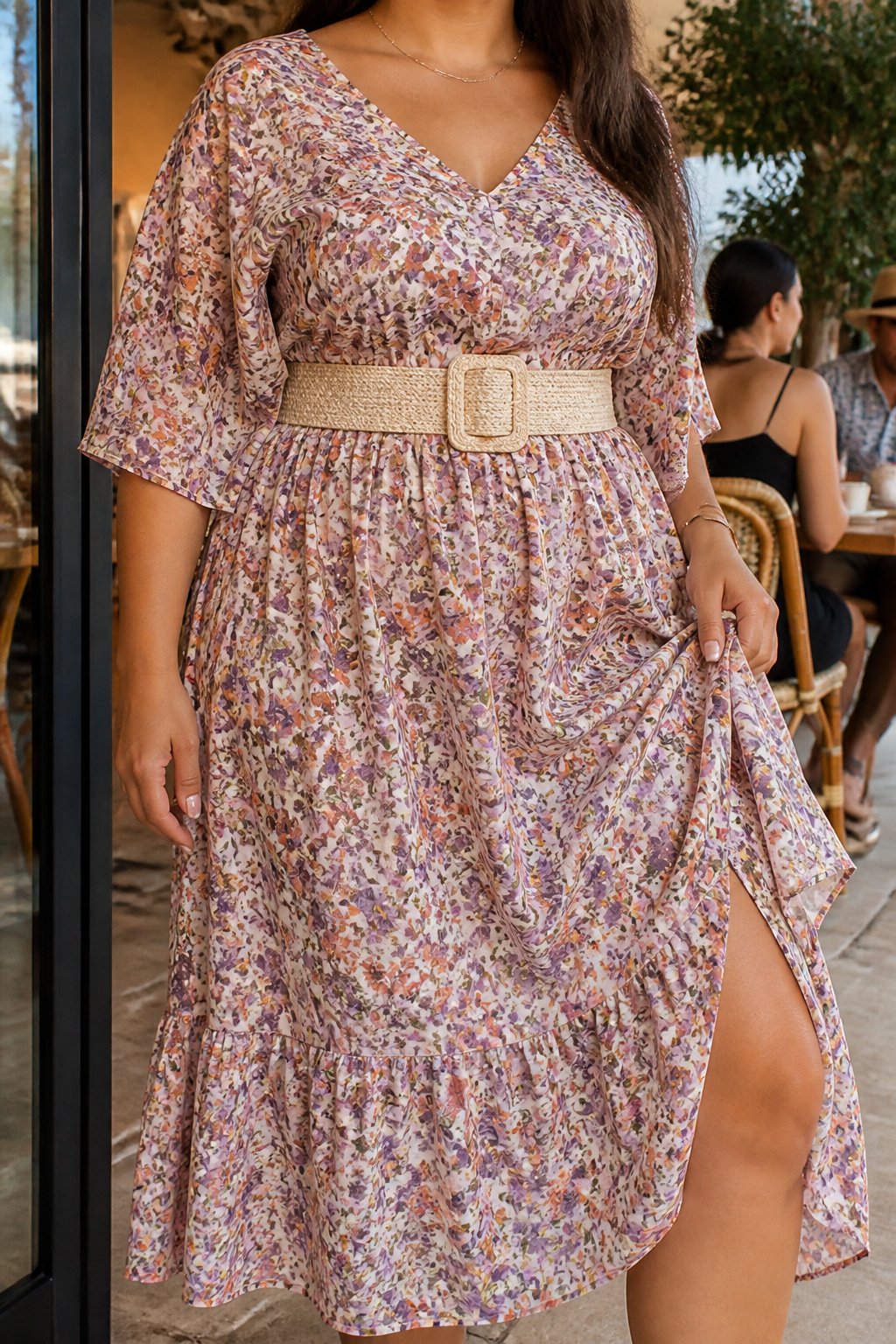
A belt turns a loose summer dress from a tent into architecture, but width matters more than most people admit. For a plus-size waist, a belt between 1.5 and 2.5 inches wide holds its ground without cutting the torso in half the way a skinny belt does, or adding bulk the way a corset-width one can. Placement is the other half of the trick: the natural waist sits higher on most plus-size bodies than where hips begin, and landing the belt there, about an inch above the navel, creates the longest possible leg line. I spent years wearing belts at my hipbones and wondering why nothing looked proportional.
Summer fabrics change what reads as intentional versus afterthought. Woven raffia, soft matte leather, or a slim patent in white or tan works with linen and cotton; anything too heavy or too shiny, like a studded western belt or thick metallic hardware, fights the season’s lightness. A simple rectangular buckle in brushed gold or horn finishes the look without becoming the whole outfit. The belt should answer the question the silhouette asked, not start a new conversation.
16. Classic With Confidence
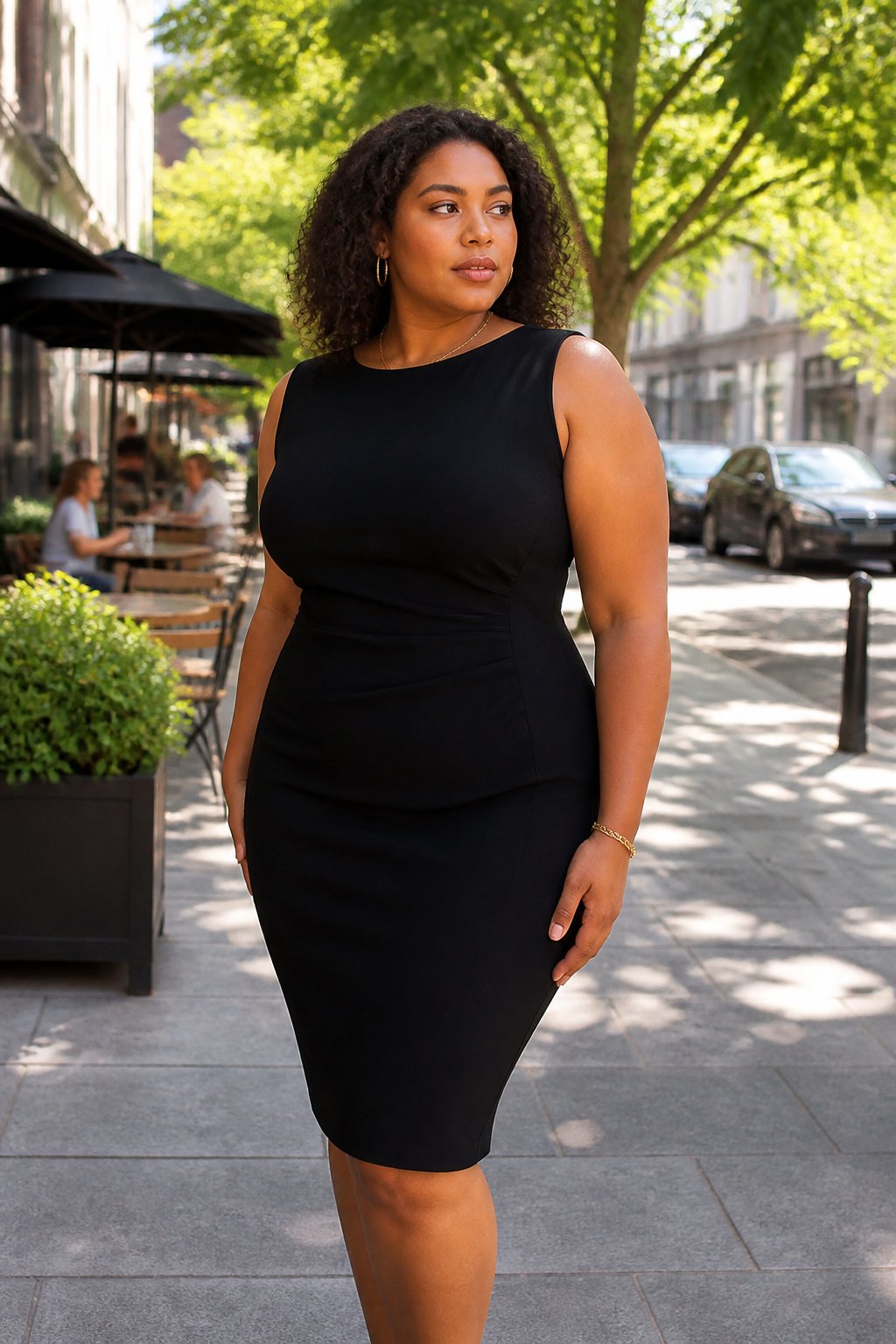
A classic summer outfit for plus size dressing starts with pieces that fit the body you have, not the one size charts pretend you should borrow from. The Pretty Little Thing dress at $25 proves the point: a clean black sheath with nothing to apologize for reads as money well spent because the seams sit where they belong. Confidence in this context is fit, not volume. Javiera Del Pozo’s formula, clean and neutral with a little sassy, works because the wearer carries herself like she owns the place, but the cut has to arrive first or the posture reads as compensation.
The tee and mom jeans pairing Josie Wass favors operates on the same rule. A Tanya Taylor knit top at $275 and dirty sneakers sounds like a spread in budget, yet both pieces share the same requirement: the shoulder hits the shoulder, the waistband circles the waist without negotiating. Classic turns invisible when fit goes generic, the garment hanging where it might belong on someone else. What distinguishes the look is specificity, the garment cut for your frame rather than your frame asked to vanish inside a trend.
17. Floral Maxis
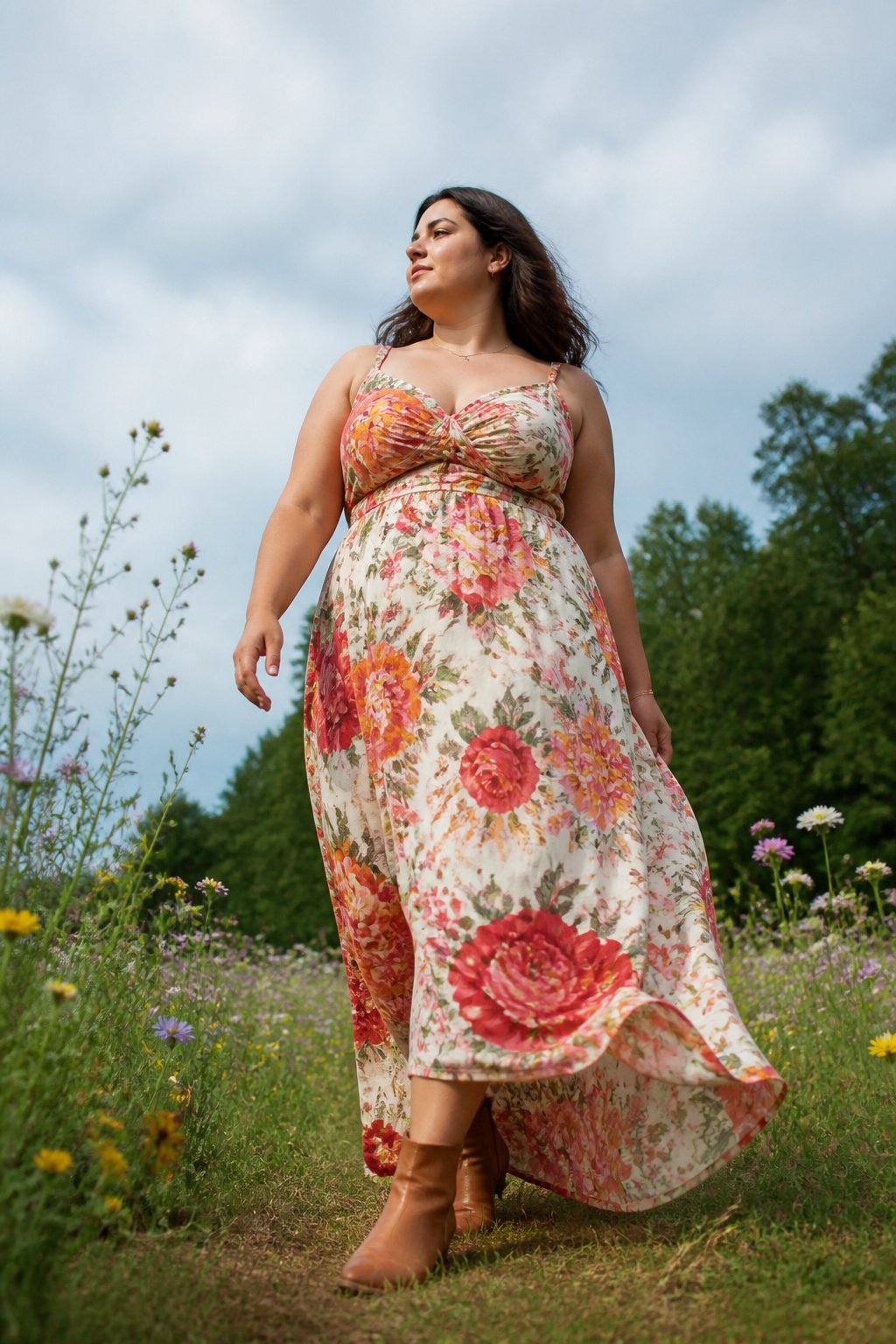
A maxi is the longest line you can wear without tripping, and that extra fabric buys you movement that shorter dresses never match. The hem should clear the ground by about a half-inch in flat shoes; any longer and you are holding the skirt up through every doorway, any shorter and the proportion starts to read as accidental rather than chosen. Petal and leaf scale matters more than color here. A larger frame needs larger motifs; tiny scattered florals tend to look like static from a distance, while a bold cabbage rose or oversized palm leaf holds its shape against your silhouette. Sister Jane cuts the kind of maxi that still lets you define a waist through all that volume, which is the difference between wearing the dress and letting it wear you. For shoes, a simple white sneaker keeps the look grounded for daytime errands, or you can switch to a low wedge if the evening calls for it. The key is keeping the heel height close to whatever you measured that half-inch clearance in; a dramatic switch from flats to three-inch pumps throws the whole hemline off.
18. Style With White Accessories
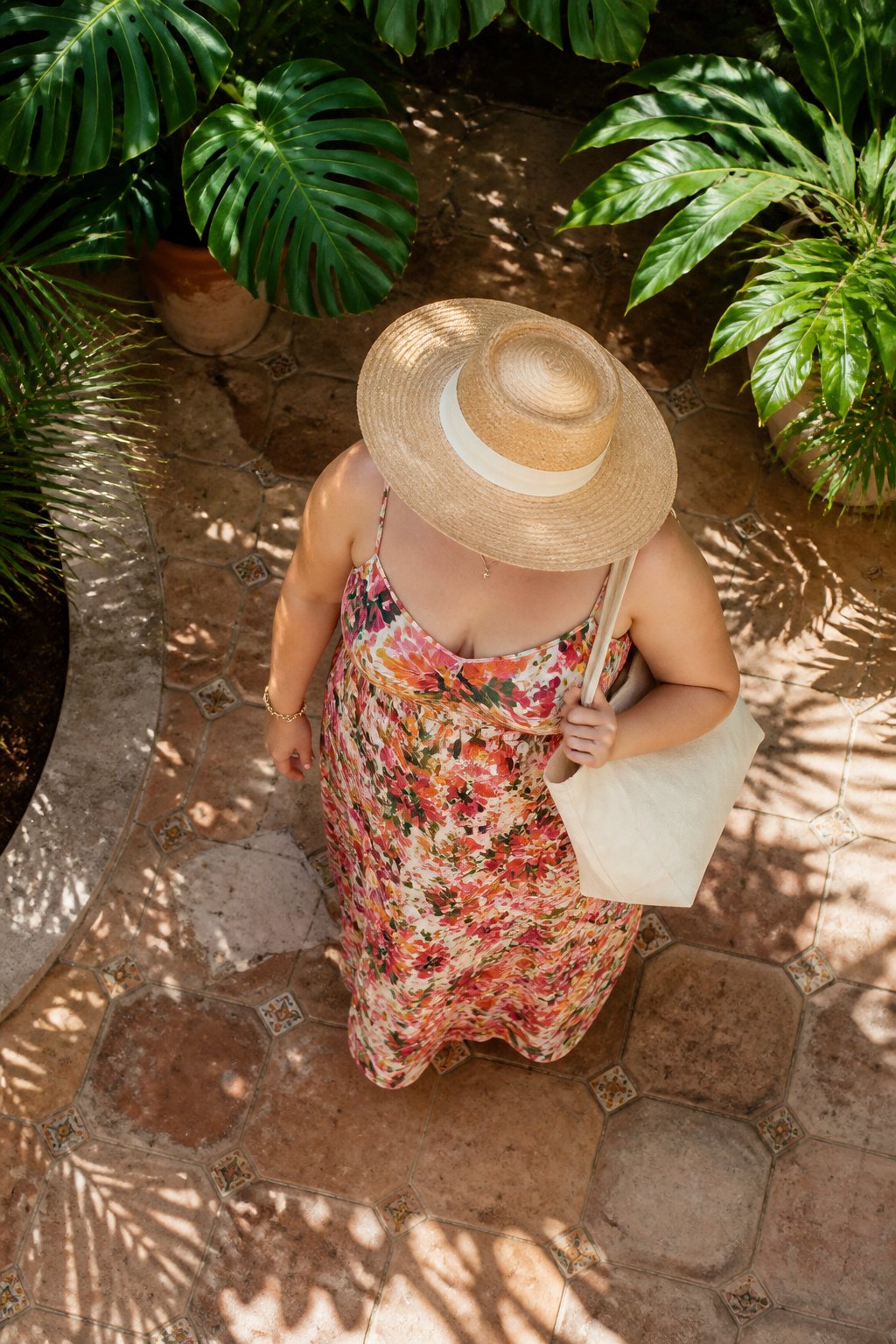
White accessories do the heavy lifting in summer by reflecting light back onto the face and creating a clean frame without adding visual weight. A straw hat with a cream band, bone-colored leather slides, a single ivory resin bangle, or an off-white canvas tote each count as that one white element that pulls a busy print back into focus.
The bridal worry is real, and it comes from piling on too many matching pieces. One crisp white item reads intentional; three identical shades start looking like you are waiting for a processional. On a plus-size frame, one white accessory plus one near-white (stone, ecru, natural straw) is the safer ceiling. A white belt over a navy shirtdress, for instance, draws the eye to the waist without the formality of a full white bag, shoes, and earrings set.
I learned this the hard way at an outdoor lunch two summers ago, where white sandals, a white crossbody, and white sunglasses tipped the whole thing into rehearsal-dinner territory. Swapping the bag for raffia fixed it instantly. The freshness comes from contrast against color or denim, not from building a monochrome shrine.
19. Pops of Neon
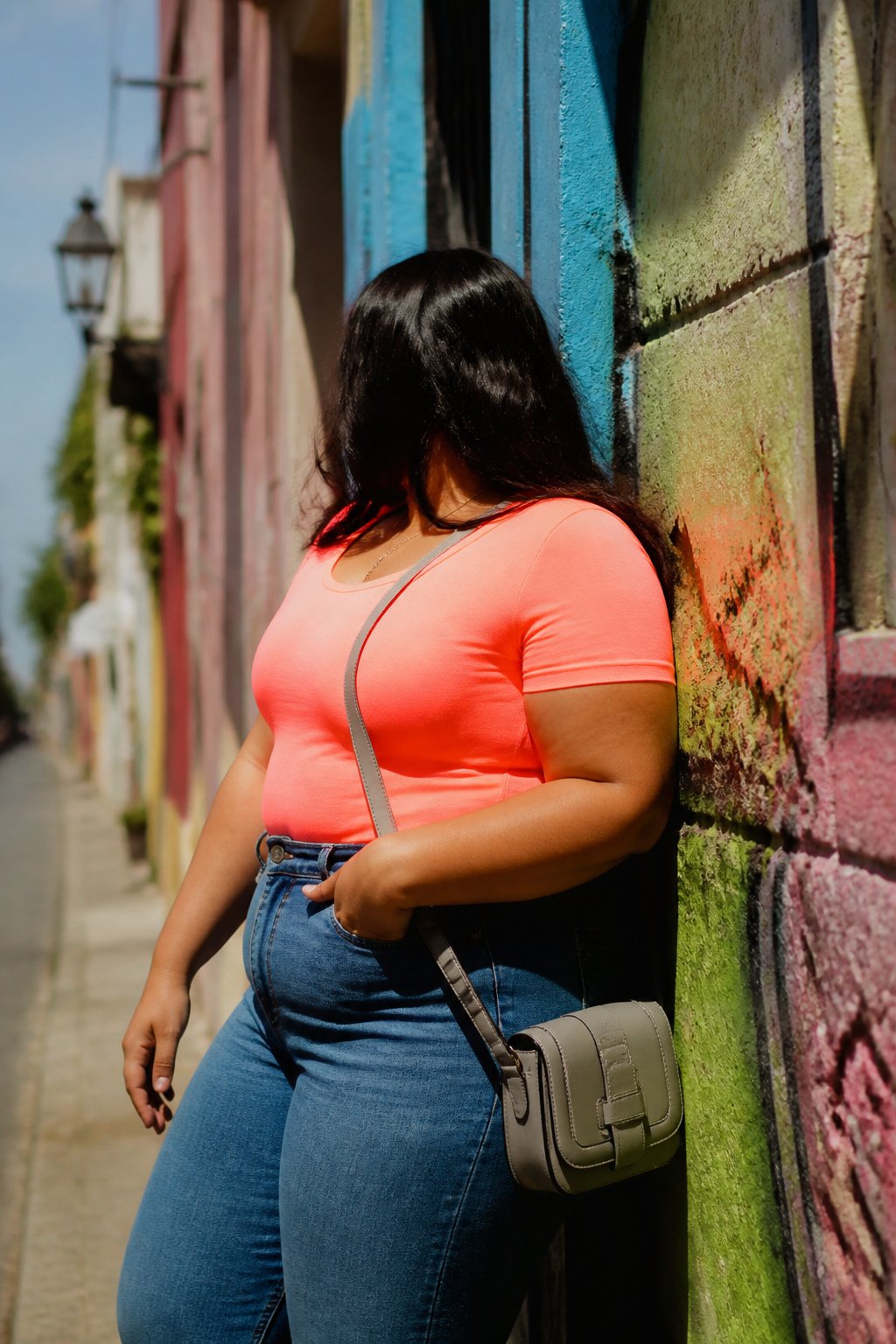
High-saturation color works on summer skin when you treat it as a signal, not a costume. A neon lime or hot coral against a tan reads as health and energy; against protected or lighter skin, the same shade can look chalky unless it carries enough warmth. I learned this the hard way with a electric yellow shell top that photographed fine in the store mirror but turned my indoor-complexion greenish by noon. One neon piece per outfit is the ceiling, and placement matters more than the shade itself. A neon bag, shoe, or narrow belt sits at the periphery of the body and draws the eye upward or downward without claiming territory across the midsection. A neon top, by contrast, becomes the entire statement and leaves nowhere else for attention to rest. If you want the color closer to your face, a thin neon trim inside a collar or a single stripe on a sleeve gives the same jolt with an exit strategy. Fabric texture changes the equation too: matte neon cotton absorbs light and looks cheaper than the same shade in a slightly glossy weave, which reflects enough to keep the color alive without turning garish. My practical limit is a neon item worn with two neutrals, never with a second bright or a competing print. The outfit should feel like you remembered the color at the last second, not like you planned a theme.
20. Dress With a T-Shirt
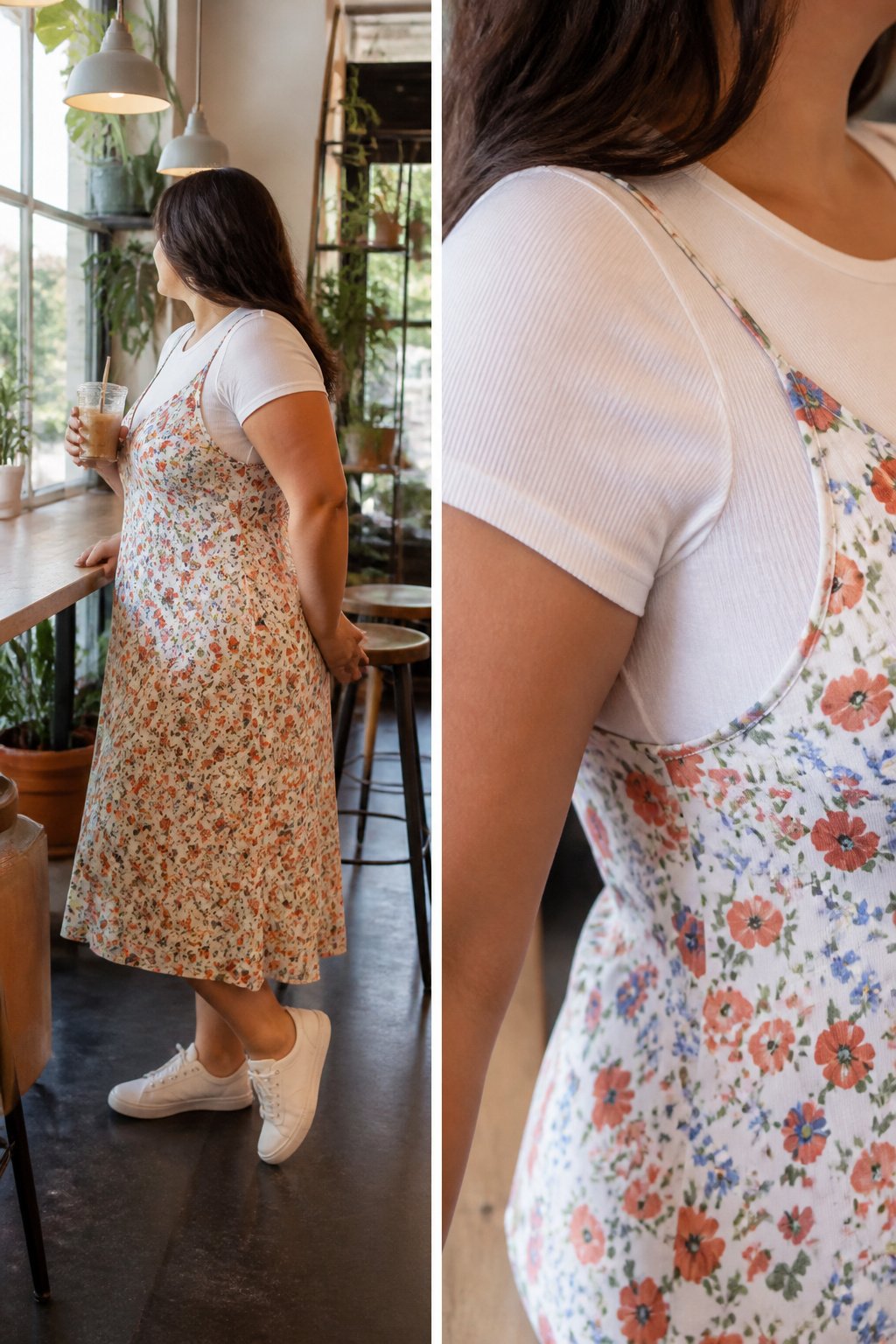
A fitted crew-neck tee under a sleeveless dress turns a single-season piece into something you reach for from May through September. The trick is choosing dresses with armholes cut high enough that the tee fabric doesn’t bunch or peek out awkwardly at the sides; sundresses with slightly raised armholes work better than plunging tank styles. Jersey or thin cotton tees lay flat without adding bulk, and the crew neck keeps the line clean where a V-neck would compete with the dress neckline.
This solves the arm coverage problem without dragging a cardigan around on 85-degree days. The tee gives you the same coverage at the shoulder, but you stay cooler since the fabric sits directly against skin rather than layering over it. For office-casual settings, a solid black or white tee under a printed dress reads intentional; for weekend errands, a striped Breton under a solid color gives the whole thing a French-laundry feel without trying hard. The best dresses for this have a defined waist or a belt point, because a boxy dress over a boxy tee is just shapeless fabric on fabric. If the dress skims rather than balloons, the tee underneath reads as part of the outfit, not a cover-up you settled for.
21. Flattering Neutrals
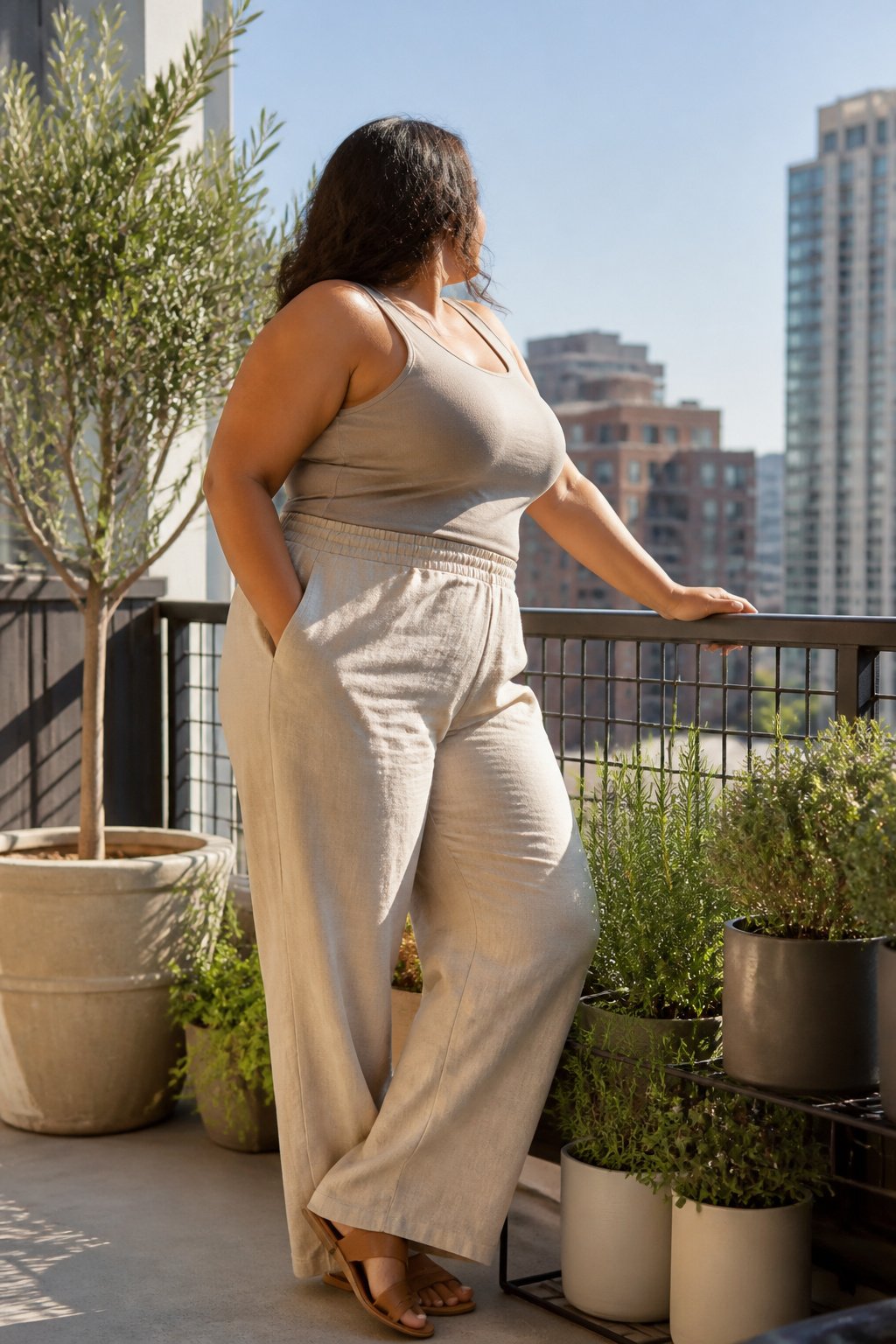
Beige, tan, and stone only read as intentional when you step away from the single-shade default. The move is combining at least two neutrals with different depths, like a camel linen pant against a lighter oatmeal top, so the eye registers contrast rather than a shapeless wash. Texture matters here: a ribbed cotton tank against a smoother twill short gives the same palette two jobs to do.
For plus-size dressing specifically, this range works because it keeps the silhouette clean without the harsh line that black sometimes draws across curves. A warm stone wide-leg pant with a fitted sand-colored tee lets the shape of the body read as shape, not shadow. The mistake is defaulting to head-to-toe beige in identical fabrics, which flattens dimension and turns intentional into invisible. I keep the darkest neutral at my personal widest point, which for me means a deeper tan short or skirt, and let the lighter shade sit closer to my face where it catches light.
22. All-Black Ensembles
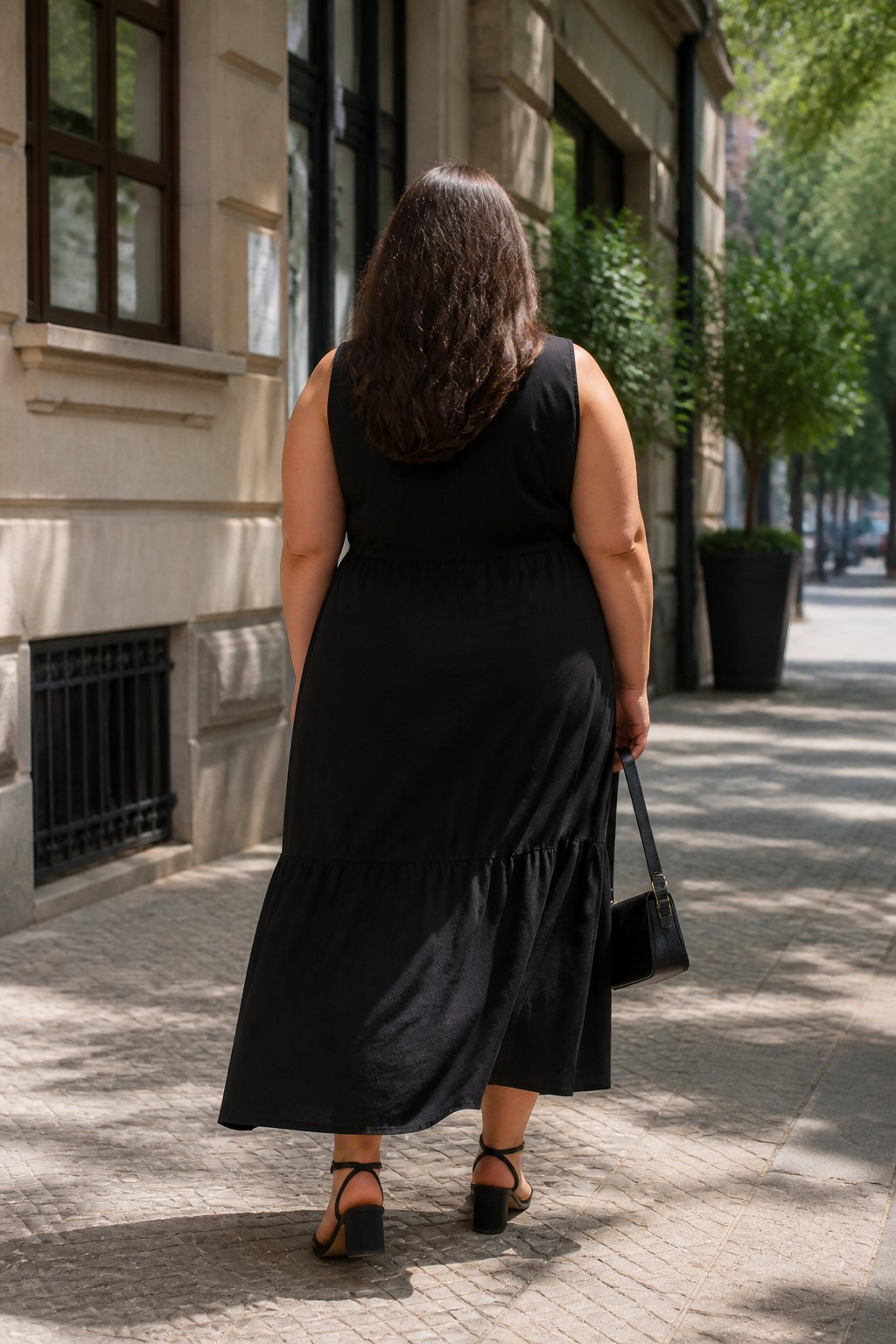
Black in July sounds like a contradiction until you feel the right fabric against your skin. Linen and featherweight cotton voile pull heat away from the body instead of trapping it, and the color itself becomes almost irrelevant when the weave is open enough to let air through. I learned this after years of avoiding dark shades in August, then finally trying a loose black linen dress on a ninety-degree afternoon and realizing I was no warmer than in pale synthetics.
The real payoff comes in photographs. Bright sun bleaches pastels into flatness and throws harsh shadows across light-colored seams, but black absorbs that same light and reads as solid shape. A camera sees the silhouette, not the season. Texture keeps the outfit from disappearing into a single dark blob: a matte crepe pant against a slightly slubbed knit top, or a satin ribbon belt catching the light at the waist, gives the eye somewhere to land.
All-black dressing in summer is less about defying rules and more about knowing which materials make the rules irrelevant.
23. Go Monochromatic
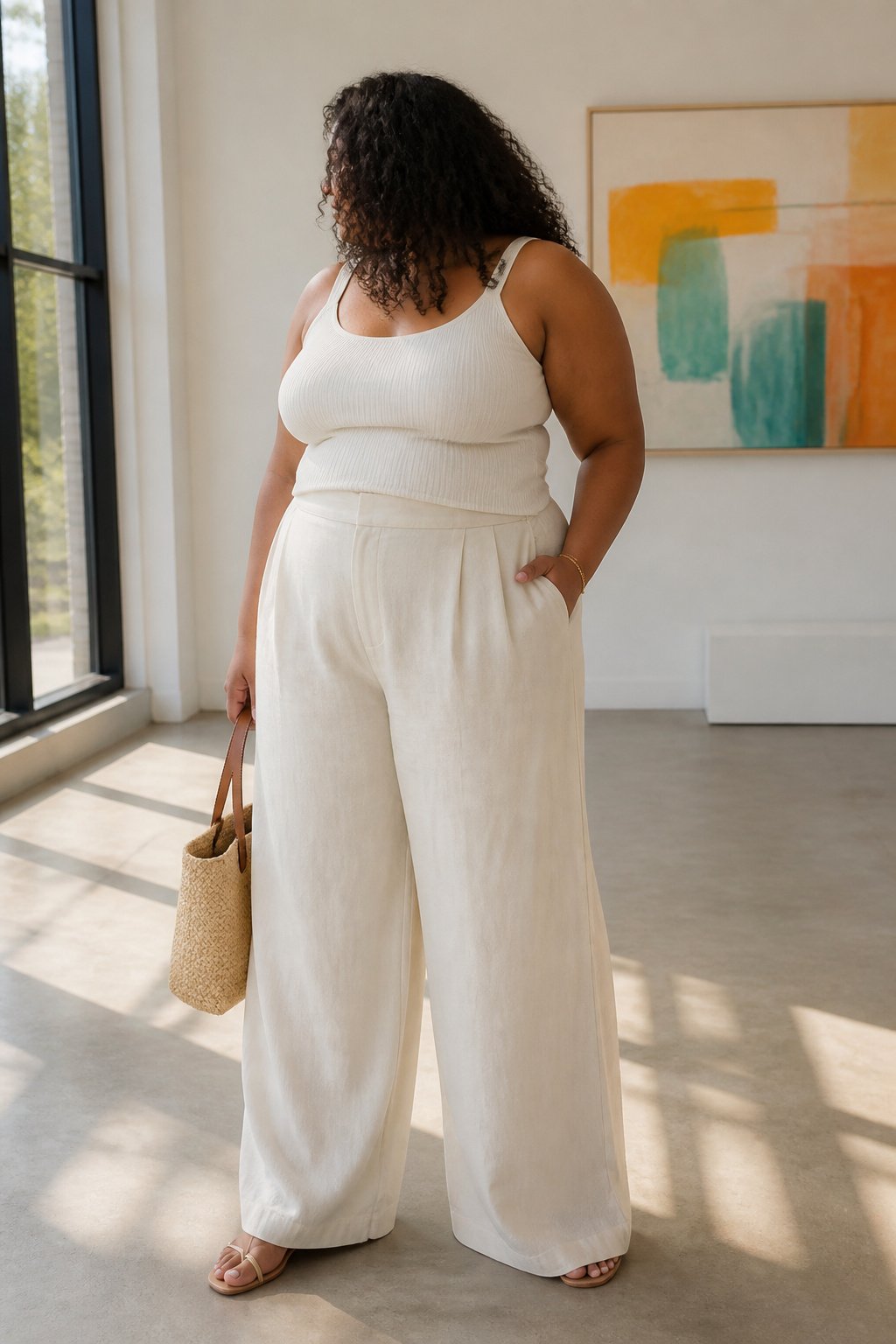
Wearing one color head to toe does more for a summer silhouette than any vertical stripe ever managed. The eye travels in one continuous line instead of stopping at waistbands or hemlines, which is why texture becomes the actual outfit when you strip away contrast.
White and cream feel freshest when the heat peaks, but the real work happens in how you mix them. A silk camisole against crisp linen pants, or a matte cotton tee with a subtle sheen on a satin skirt, gives the monochrome look enough dimension that it reads intentional rather than lazy. Structured pieces help here: a bodysuit with real shaping, paper-bag waist pants that hold their line through humidity, boots or sandals in the same tone that extend the column rather than break it.
Black has its place, but summer light makes softer neutrals and even saturated colors work the same way. The key is keeping the value consistent, nothing darker than two shades apart from throat to ankle. Lightweight fabrics in linen, cotton, or muslin keep the coverage breathable when you want sleeves or longer hemlines for sun protection.
24. Rock Band Tees
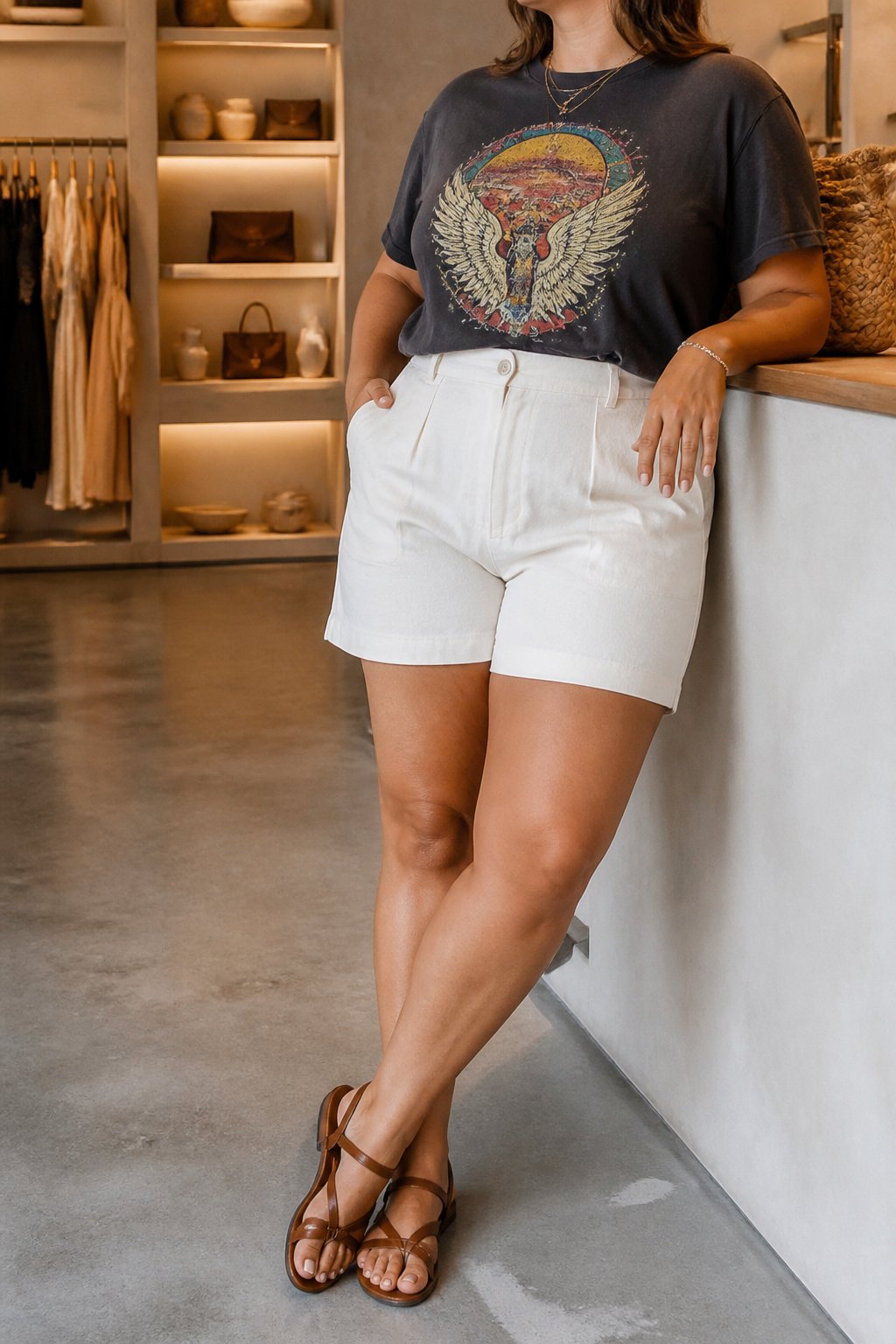
A vintage band tee carries more weight than a generic graphic because the logo signals taste and era, not just pattern. The risk is costume: wearing the shirt like a teenager heading to a concert rather than an adult running errands or meeting friends. What keeps it grounded is the bottom half. Pair it with structured shorts or a midi skirt in a clean fabric, something that reads deliberate rather than thrown on. Denim cutoffs tilt too young; a tailored linen short or A-line skirt in a solid color pulls the look back into grown-up territory. I usually tuck the front slightly to show waist definition, which matters more in plus sizing than the drapey oversized look the models wear. Footwear finishes the job. Sneakers work, but a leather sandal or low espadrille adds the polish that says you chose this shirt for its graphic appeal, not its nostalgia value. The tee itself should feel worn, not precious; a crackled print and soft cotton drape better than a stiff reissue. If the band means something to you, that shows in how you wear it, not in how you talk about it.
25. Leather Looks
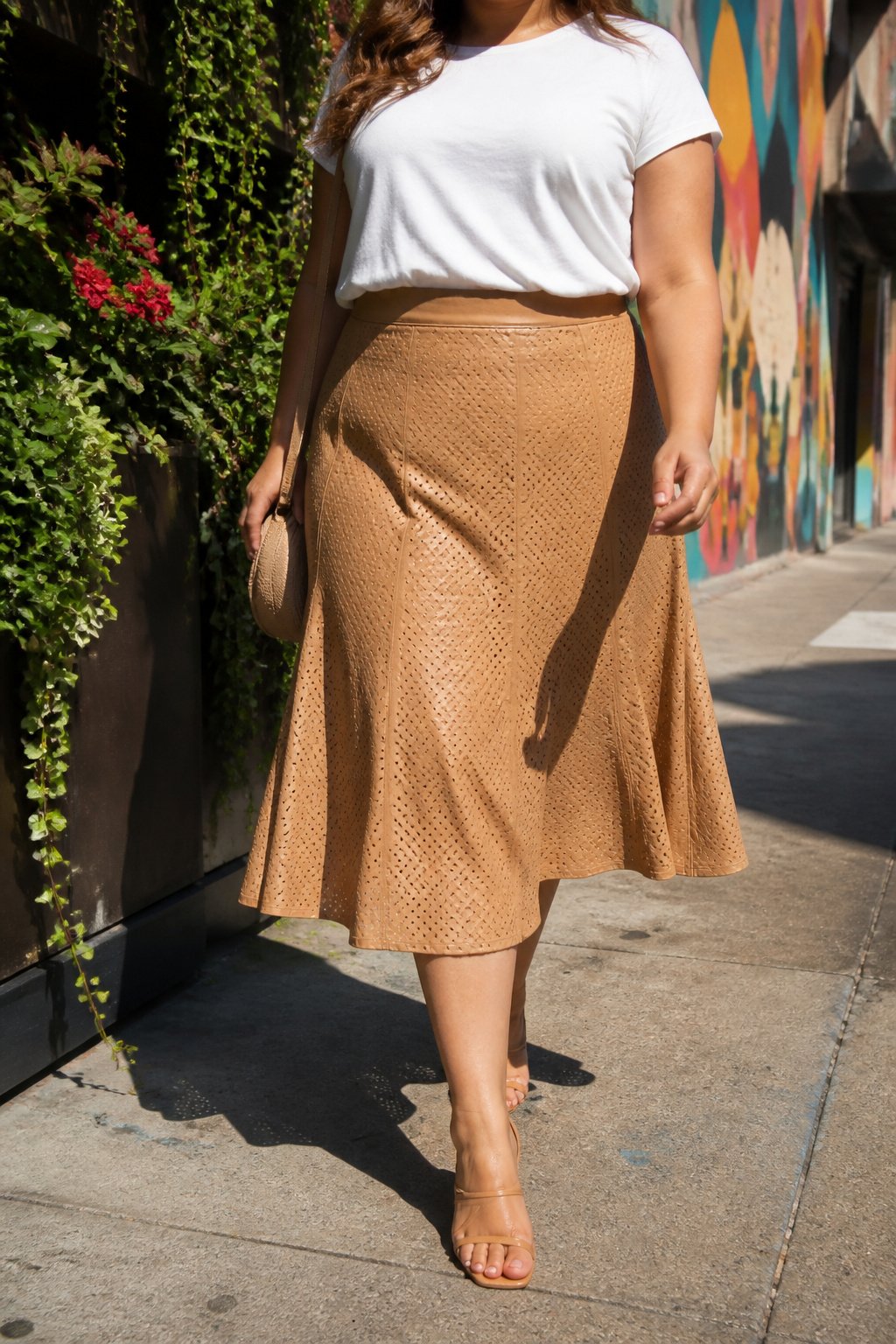
Leather in July sounds like a mistake until you handle the right weight. Paper-thin lambskin or a perforated faux leather lets air move in a way a stiff moto jacket never will, and that difference is what keeps the look from becoming a sauna. I learned to check the backing first; anything with a thick knit or fleece lining is autumn gear no matter what the tag says.
The shapes that work are the ones that do not fight the heat. A sleeveless shell dress in a dark chocolate or soft cognac reads polished without the coverage of a blazer, and a knee-length skirt with a clean waistband pairs back to a cotton tee the way denim would. Full trousers in leather, even the lightweight stuff, trap too much warmth between the legs for a humid afternoon; a cropped wide-leg or an A-line cut gives the fabric room to breathe.
What sells this in a season of linen and eyelet is the contrast. Everyone else looks breezy and a little washed out by August. A single leather piece, worn with bare arms or open sandals, carries structure and intention into an outfit that would otherwise disappear. The trick is keeping it to one item, one time, and letting the material do the talking without shouting.
26. Classic Tee and Jeans
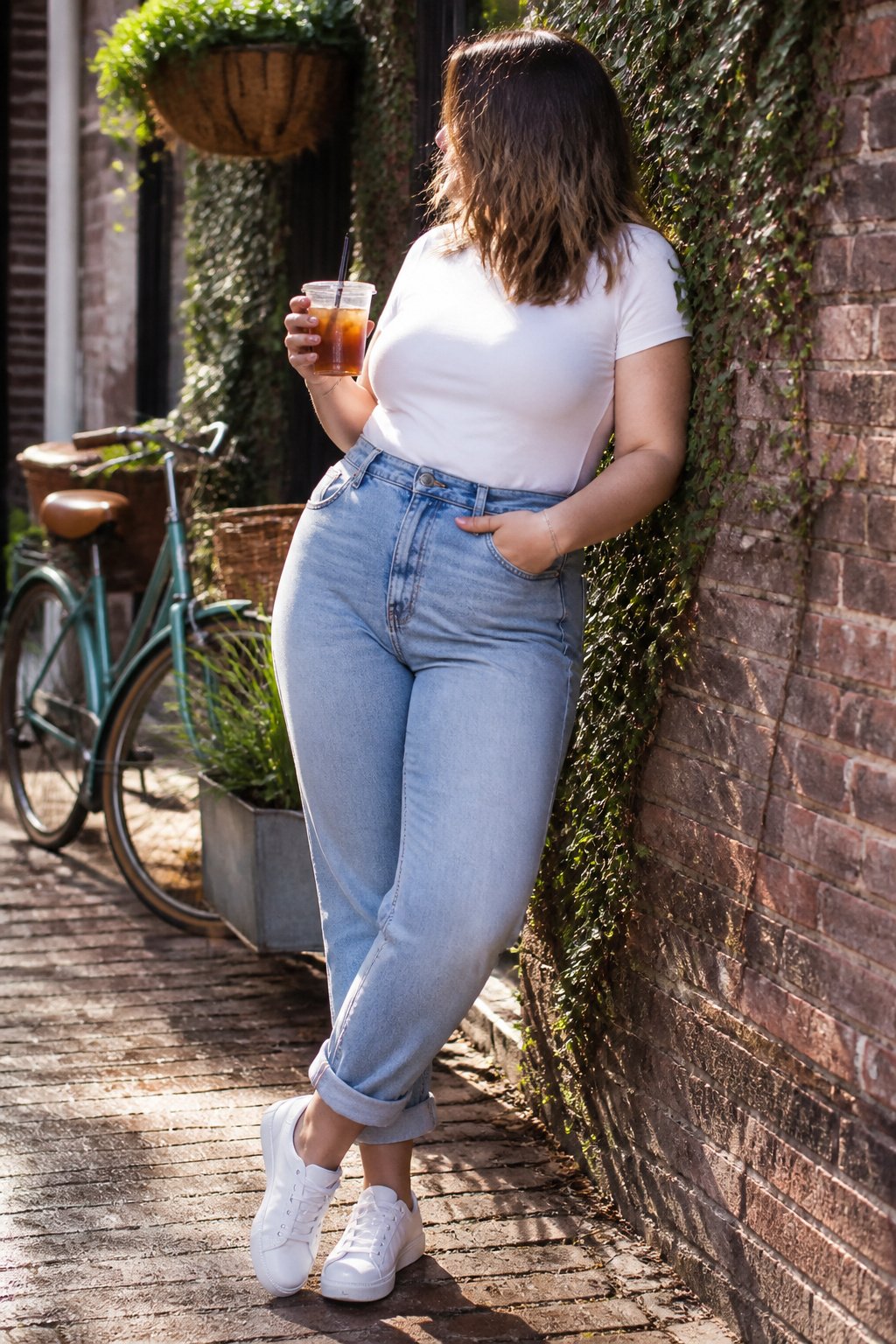
A white tee and blue jeans only looks like you gave up when the fit is wrong. For plus-size summer wear, a higher rise holds the waist without digging, and a leg that widens from the hip down keeps the silhouette intentional rather than apologetic. I reach for sleeves that hit mid-arm or just above the elbow; cap sleeves can cut the shoulder line awkwardly, and a crew or gentle V-neck keeps the eye moving upward.
The sources point two ways on how far to push this. One approach keeps the tee fitted and tucks it into high-waisted mom jeans, adding a hair scarf or favorite bag so the outfit registers as styled, not defaulted. Another pairs a more dramatic top, an off-the-shoulder cut or a cropped piece with a wide leg, trusting the waistband to anchor the look. Both rely on the same principle: the jeans do structural work while the tee or top supplies the personality. Dirty sneakers finish it without trying too hard; the $275 Tanya Taylor knit from one of the featured looks suggests where to invest if you want the fabric to carry more of the load.
27. Puffed Sleeves
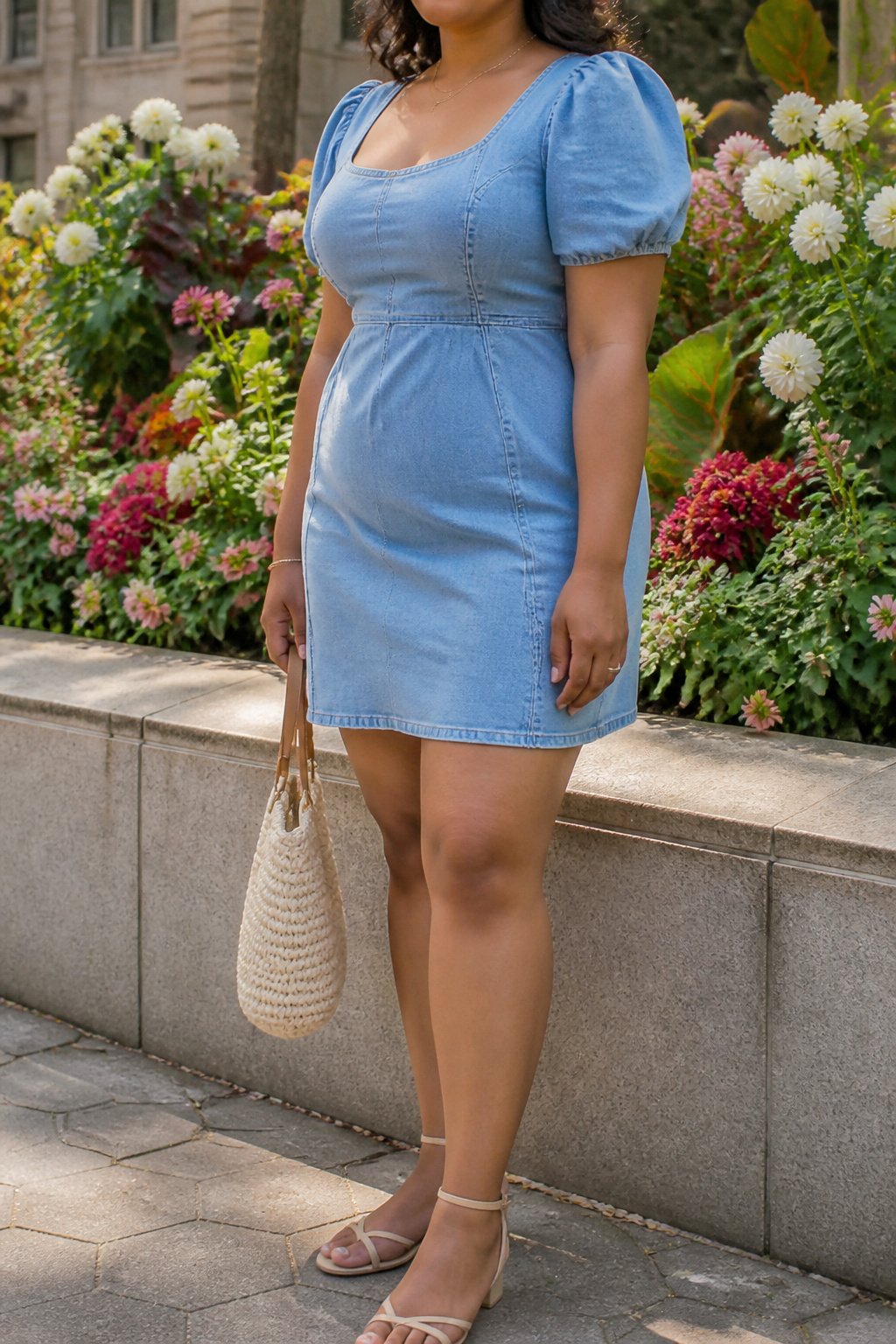
Puffed sleeves do something almost nothing else in a summer wardrobe can manage: they redraw the silhouette so the eye reads shoulder and hip as balanced partners instead of competing weights. The right puff sits at the cap of the shoulder, not the middle of the arm, and holds a volume that reads as structure rather than costume. A puff that starts at the shoulder seam and deflates by mid-bicep is the shape that works; one that balloons the full length of the sleeve turns a Tuesday lunch into a Renaissance fair.
The detail matters most on the simplest pieces. A plain cotton poplin dress with a modest puff becomes an outfit that needs no jewelry, no belt, no layering piece to feel finished. The sleeve does the work. In a solid color, the effect is architectural. In a stripe or small print, the shape keeps the pattern from reading as busy because the eye has a clear place to land first.
What breaks the look is scale that fights the frame. If the puff extends past the natural shoulder line by more than an inch or two, the proportions tip from deliberate to theatrical. The test is standing with arms relaxed at your sides: the sleeve should not jut beyond the hip’s widest point. When it does, the rebalancing reverses and the silhouette widens everywhere at once.
28. Bright Colors
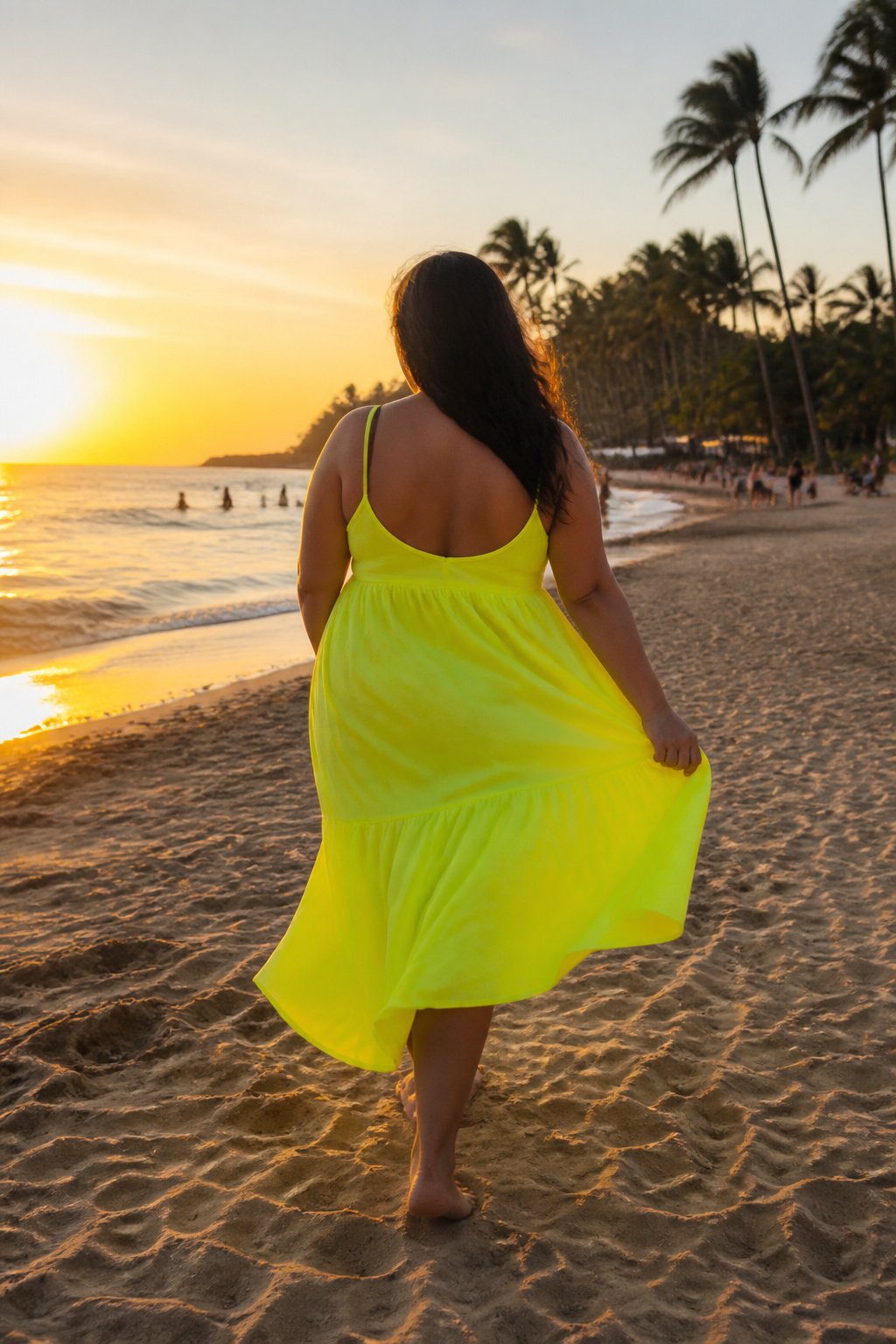
Bright color cycles in fashion tend to hit plus-size sections last, which is backwards. Saturated hues do more work on a summer afternoon than black ever could, reflecting heat rather than trapping it and reading as deliberate rather than hiding.
One bright at a time wins for most mornings. A Prologue cami in neon, around $18, anchors the look without competing against itself. Multiple brights need a shared undertone: warm neon with coral, cool with cobalt. The wrong pairing makes each color look cheaper.
Undertone matching matters more than the color itself. Gold-based skin carries orange-red and chartreuse; silver-based carries fuchsia and electric blue. If you are unsure, hold fabric near your face in daylight. The right shade wakes you up; the wrong one lands like a costume.
What convinced me, reading through a dozen of these summer outfits plus size roundups, was how often the sources showed neon and print together rather than neon alone. Victoria Monitzer’s full-saturation approach works because the prints break the neon into smaller fields, so the eye travels instead of stopping at one loud block.
Rochelle Johnson’s Ganni wrap top at $115 uses the same principle: bright color plus structure that accentuates the waist. The bright draws attention, the cut directs it. That is the job. Dark colors do not slim; they flatten, and in summer they show sweat faster than a saturated cotton that reads as intentional.
29. Off-the-Shoulder Top
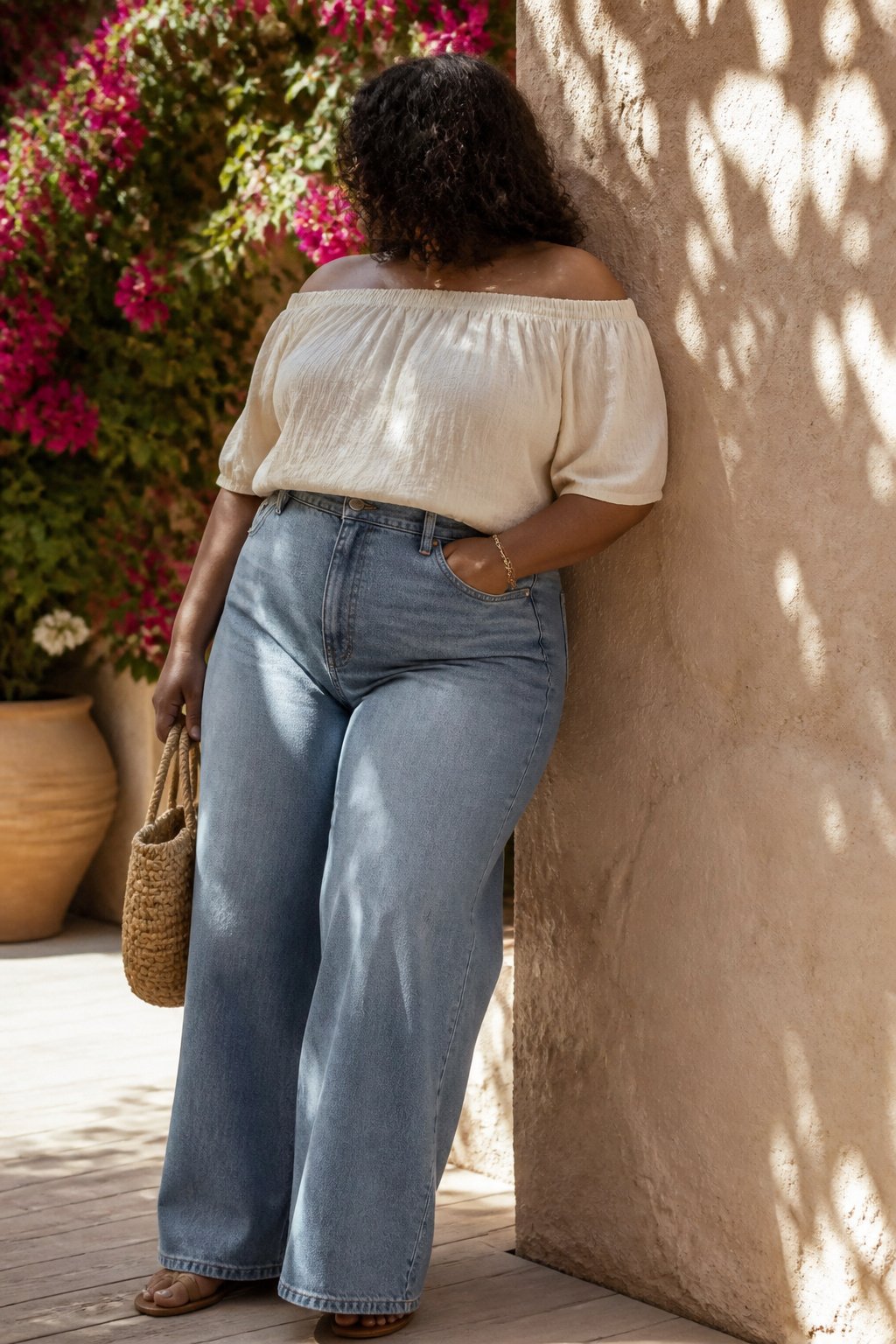
The neckline that frames the collarbone draws the eye upward, which is why off-the-shoulder construction works well for fuller bust lines. The horizontal band sits below the shoulders rather than across them, creating a clean frame that does not add bulk up top. What matters is the elastic or strap engineering inside that band. A wide elastic with silicone grip strips stays put through a full day; ribbon-thin elastic or a single cord will ride up and need tugging by noon.
For the bottom half, balance the exposed shoulder with structure below. High-waisted wide-leg jeans with stretch and pocket placement that sits slightly higher on the rear give proportion and keep the look grounded rather than top-heavy. A body-skimming slip skirt in a midi length does the same, letting the shoulder be the single focal point. The elastic band should be at least an inch wide, with grip strips, or you will fight it all afternoon.
A cropped off-the-shoulder length can work if the hem meets the waistband of a high-rise bottom; the hint of midriff becomes a narrow stripe, not a full reveal. That pairing reads as intentional rather than cautious, and the shoulder stays the star.
30. Dress With Sneakers
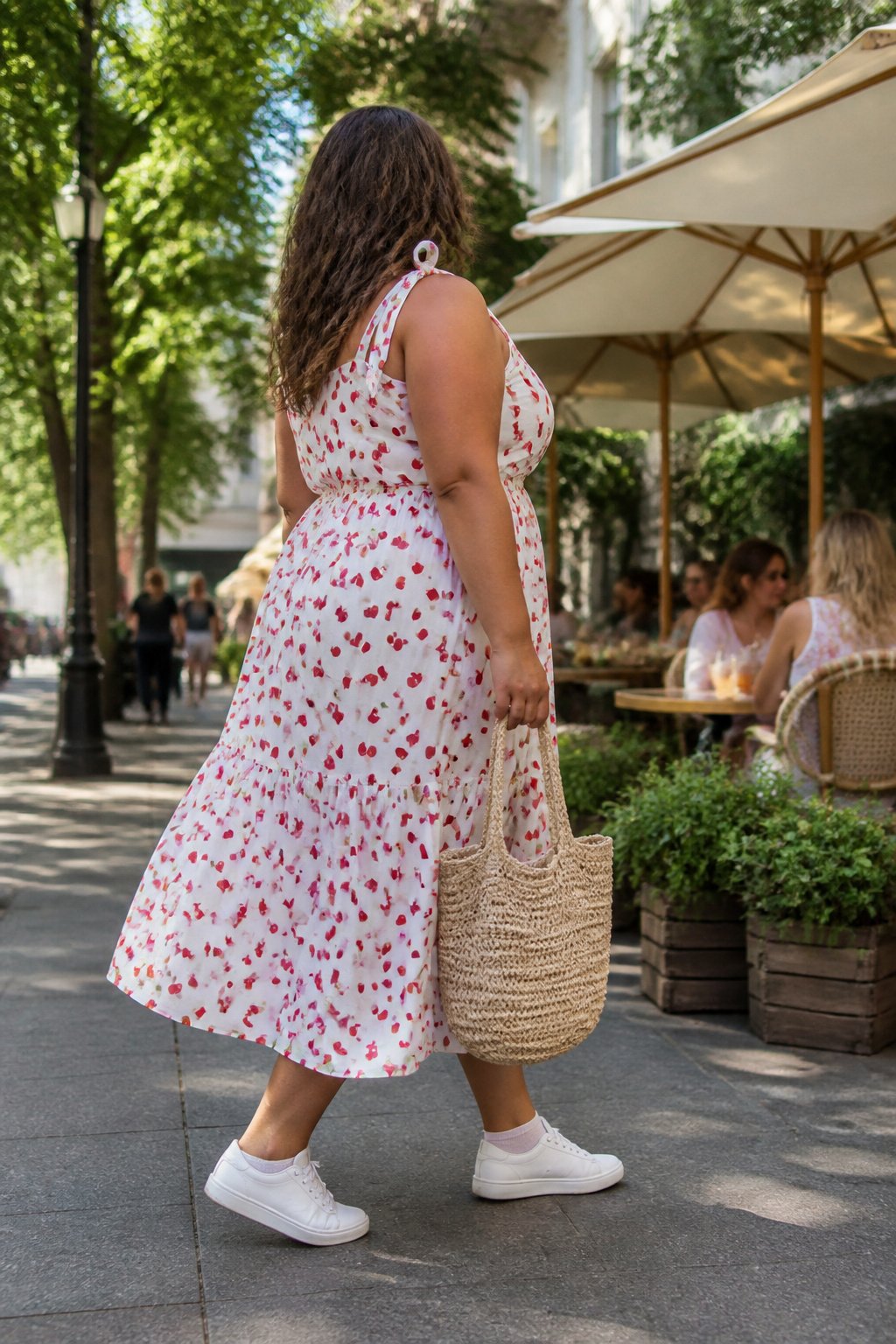
A midi-length dress with a full skirt and sneakers used to read as a deliberate contrast, but somewhere around 2023 it became the default way to wear either piece. The heel-to-toe drop on a running-style sneaker adds a slight forward lean that works best when the hem hits between mid-calf and the top of the ankle, so the eye reads a continuous line rather than a chopped silhouette. Anything shorter starts to look accidental; anything floor-length drags and collects grime from the sidewalk.
Sock choice matters more than the sneaker itself. No-show liners stay hidden in low-tops, but a crew sock in a color that matches the dress, not the shoe, turns the ankle into a deliberate band. The old rule about matching socks to pants died when dresses became the pants. I learned this the hard way after a morning of white socks with a navy floral and a pair of cream Nikes, the white band at my ankle drawing every eye straight to the widest point of my calf.
Sneakers with dresses now signal practical, not rebellious. The pairing travels from grocery run to casual office to dinner if the dress fabric has enough structure, the shoe stays clean, and you carry an actual bag rather than a gym tote.
31. Crop Top and Maxi Skirt
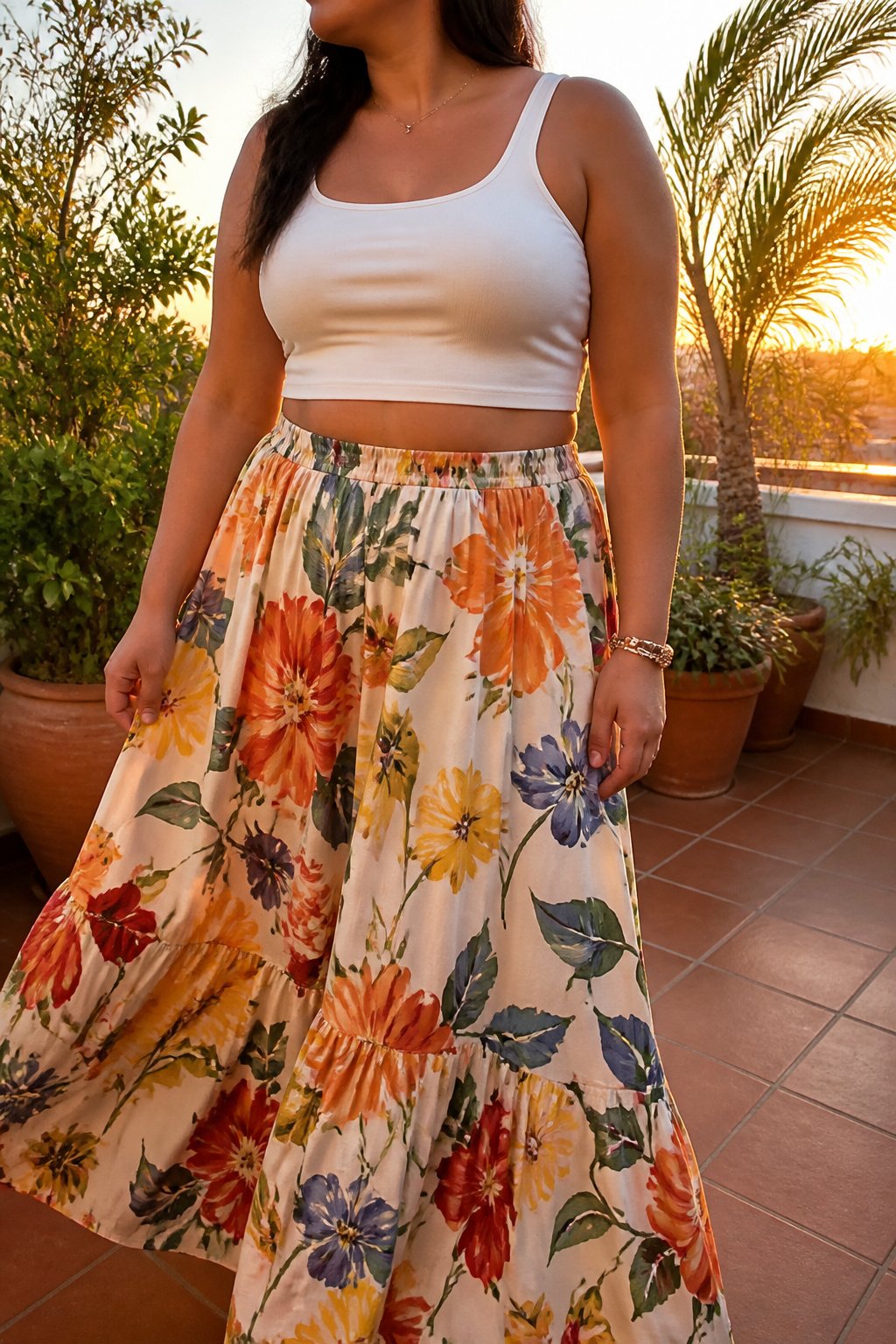
The crop top and maxi skirt pairing works because the skirt does the heavy lifting on coverage while the top handles proportion. On a plus-size frame, the crop should hit at the narrowest point of your torso, usually just above the belly button rather than at the natural waist or lower hip. Any higher and you are in bralette territory; any lower and the top fights the skirt waistband for the same visual space.
A true maxi skirt, one that skims the ankle or brushes the floor, creates an unbroken vertical line from that crop point downward. The eye reads the narrow band of skin as a deliberate gap in a long column, not as a midriff on display. Flat abs become irrelevant because the skirt’s volume and length redirect attention to overall silhouette rather than stomach flatness.
The fabric matters here. A maxi skirt with some weight, cotton poplin or a light denim, holds its shape against breeze and body heat without clinging. The crop top can then be softer, a ribbed knit or a woven that relaxes through the day. I look for skirts with a flat front waistband and elastic only at the sides or back; this keeps the line smooth where the two pieces meet and avoids the gathered-bubble effect that adds bulk at the center.
For someone still hesitant about the skin showing, a half-tuck of a slightly longer crop into the skirt waistband gives the same proportional logic with only a sliver of exposure. The outfit still reads as two distinct pieces rather than a dress, which is the whole point of the combination.
32. One-Shoulder Top and Satin Skirt
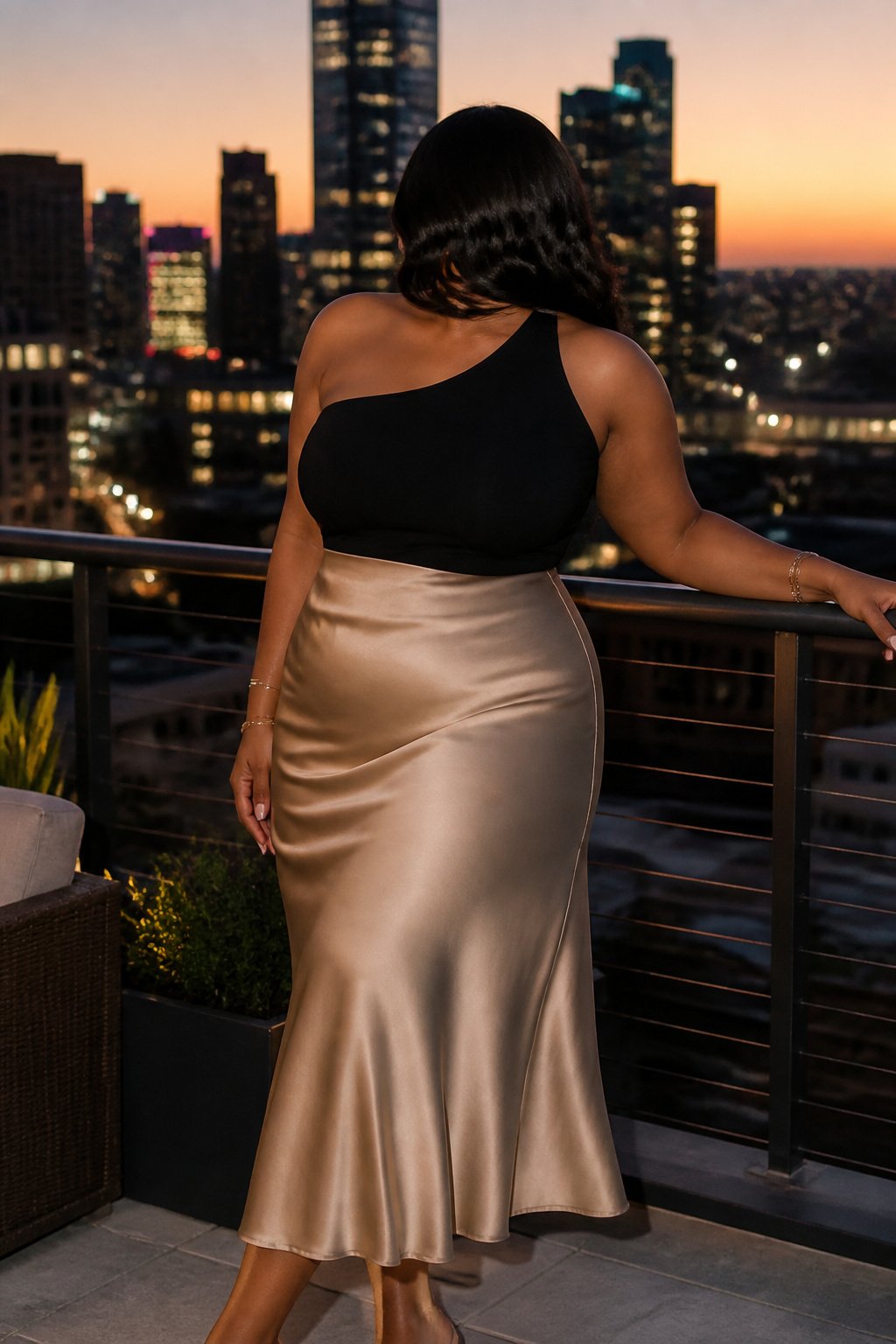
Asymmetry does more for a plus-size silhouette than symmetry ever could. A one-shoulder top draws the eye diagonally across the body, which breaks up width in a way that a standard neckline just flattens against. The single strap also gives real bust support if the shoulder seam sits on the bone, not sliding off toward the arm. What sold me on this combination was watching how the wrong satin turns the whole look into a costume. Mid-weight satin with a matte back, around 16–19 momme, drapes instead of clinging; anything lighter catches every current of air and every curve you did not plan to emphasize. That heavier fall reads evening because satin catches light, but the cut keeps it from reading prom. I would skip jewelry at the neckline and let the bare shoulder do the work. A skirt that hits at the low calf, not floor length, keeps you out of formal territory entirely; you could wear this to a rooftop dinner and not feel overdressed, or to a summer wedding and not feel underdressed.
33. A Matching Set
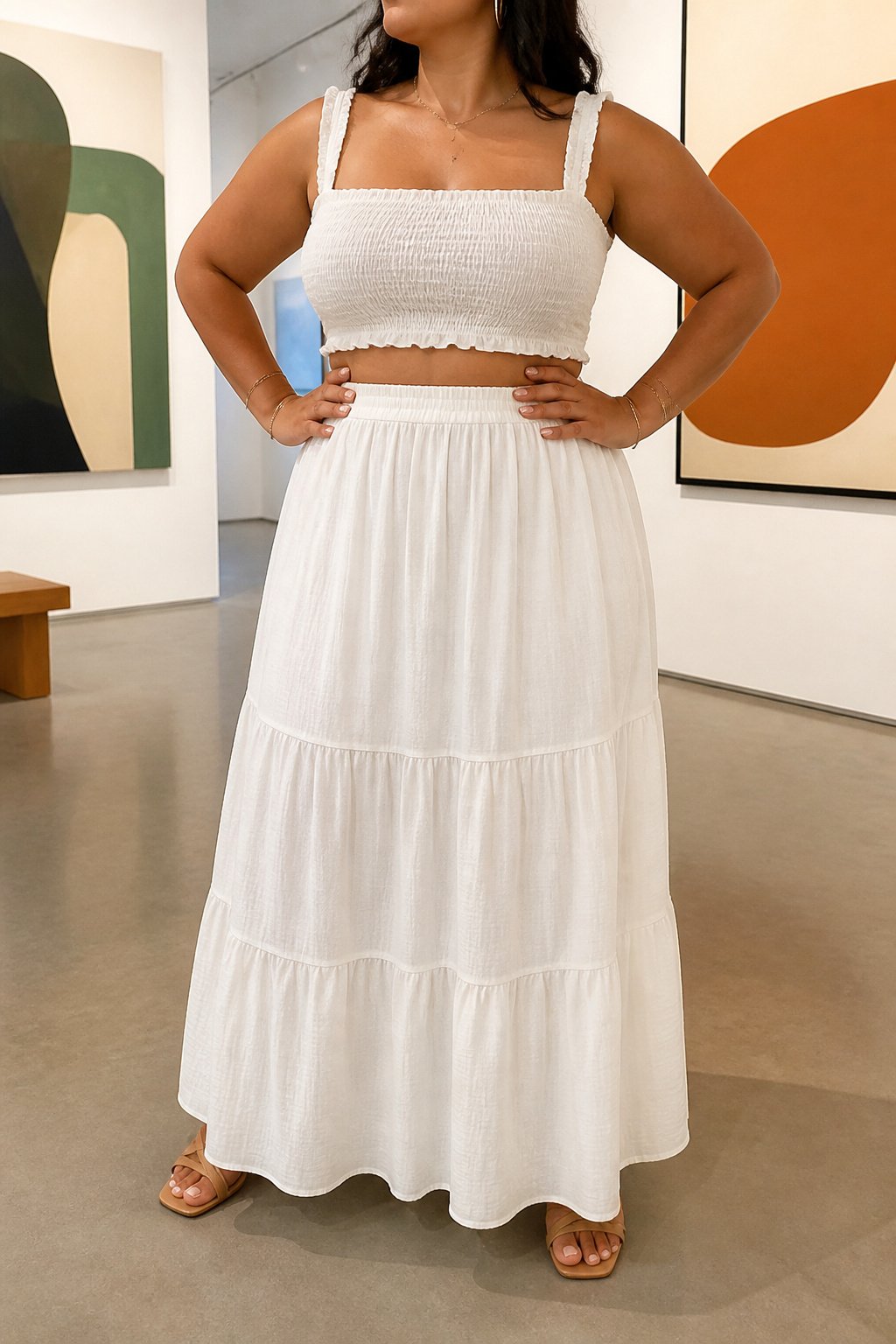
A matching set of separates reads as a single intentional look without the commitment of a dress. The trick is choosing pieces that share a fabric weight and finish so the eye travels smoothly from top to bottom. Abercrombie’s smocked crop top and matching skirt, sized XS to 4XL, runs $49 for the top and uses the same cotton poplin throughout, which is why it photographs like a $200 resort piece rather than a budget buy.
The fabric match matters more than the color match. Linen sets in particular walk a fine line: same-weave linen in shirt and pant looks pulled-together, but a linen-cotton blend mixed with pure linen reads as pajama-adjacent. Sarah Tripp’s smocked set works for curves because the elastic structure holds its shape rather than draping loosely. Wear the pieces together for the full effect, or split them; the skirt with a white tank, the top with high-waisted denim. Either piece earns its closet space alone, which is the test a matching set has to pass before you buy it.
34. A Dress and Booties
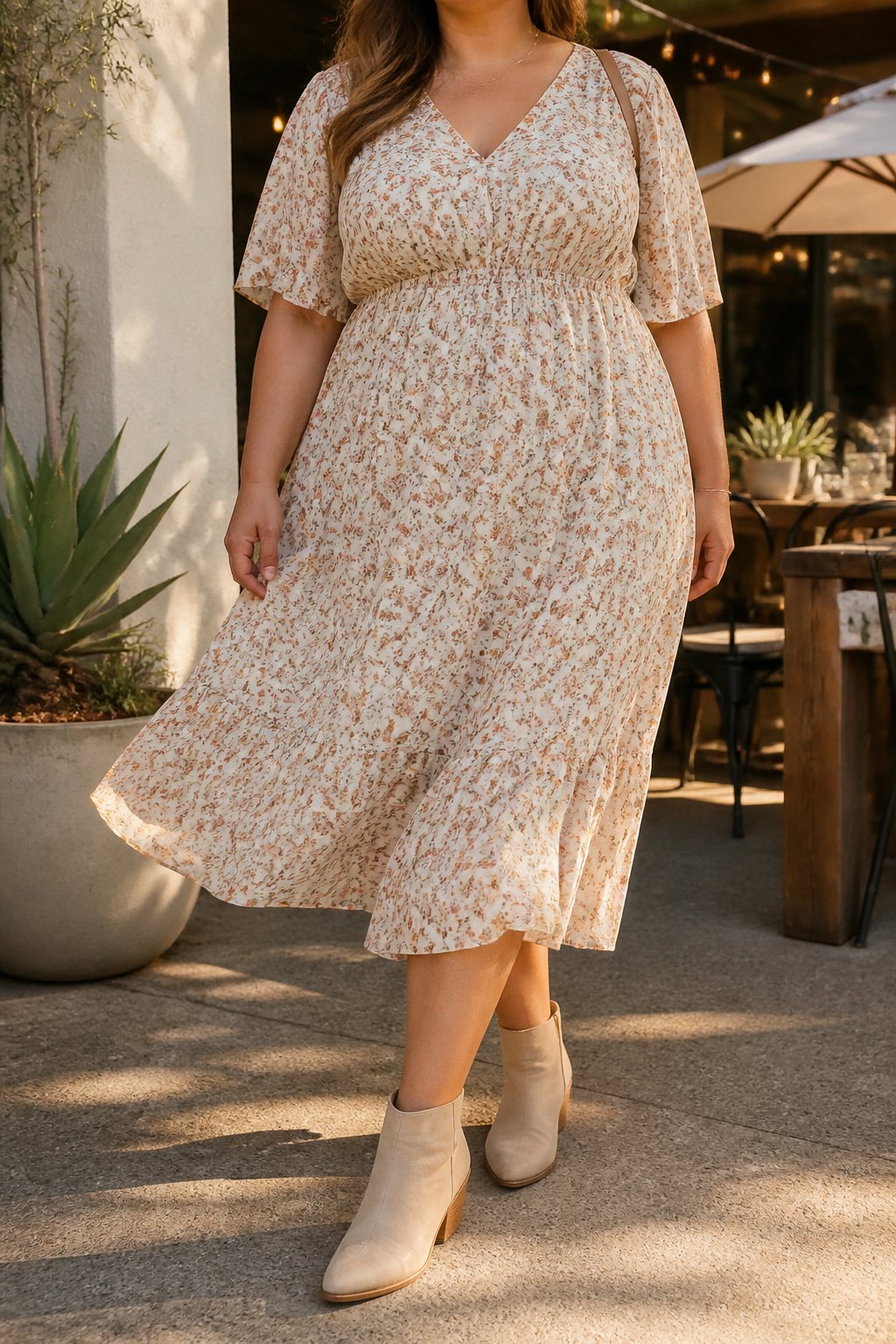
Ankle booties with a summer dress solve the exact moment when sandals feel too exposed for a breezy evening or an over-air-conditioned office. The trick is proportion: a midi dress needs a bootie shaft under five inches, anything taller visually chops the leg at the worst point. With a mini, a slightly higher shaft works because more skin still shows above the knee.
Materials matter more than height once you get the proportion right. Perforated suede, canvas, or a light-colored leather read as intentional summer choices rather than winter holdovers. Black leather in July looks like you forgot to shop; sand or cognac leather looks like you planned ahead.
The coverage itself is why this pairing earns its place in a summer rotation. A dress that felt breezy at noon can feel practically naked at an outdoor dinner when the temperature drops ten degrees. Booties give you that coverage without the formality of a closed shoe. I reach for this combination most often on days that start at a coffee shop and end somewhere with outdoor seating, the kind of day where sandals would have me shivering by dessert.
35. Trendy Animal Prints
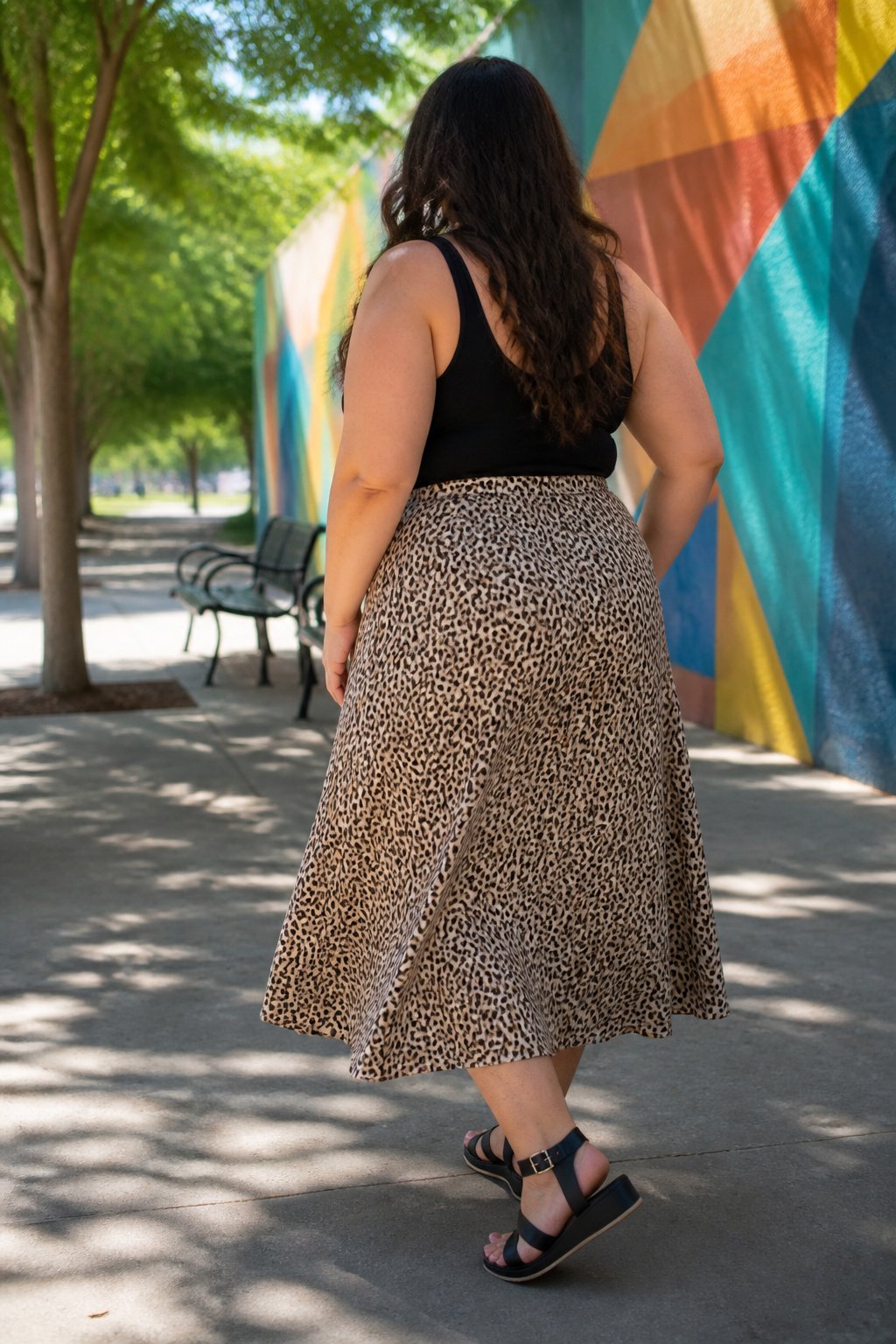
Animal prints function as neutrals in summer outfits plus size wardrobes once you treat them like one. A leopard or zebra pattern carries the same visual weight as navy or olive, which means it needs the same breathing room. The mistake is treating print as the whole outfit instead of the anchor piece.
One animal-print item per look is the practical limit in heat. A midi skirt in small-scale leopard pairs with a solid tank the same way a printed trouser would, but a matching top and bottom reads costume on most bodies. Scale matters more than species: prints under two inches across sit flatter on curves than oversized blotches that distort with movement.
Grounding colors should be quiet, not competing. Cream, camel, black, or a deep olive work harder than red or bright yellow, which fight the print for attention. A snakeskin belt with an ivory linen dress adds texture without shouting; the same belt against coral turns the whole thing into a statement you did not intend.
Cheetah and giraffe prints read cooler in June than leopard, which carries winter associations from years of coat-dominance. Zebra functions as a stripe that happens to move, so it pairs with solids more forgivingly than you would expect. The test is whether you would wear the solid version of the print’s base color head to toe. If that would bore you, the print replaces it. If it would already work, the print is one step further, and that is usually one step too far.
Outfit Formulas
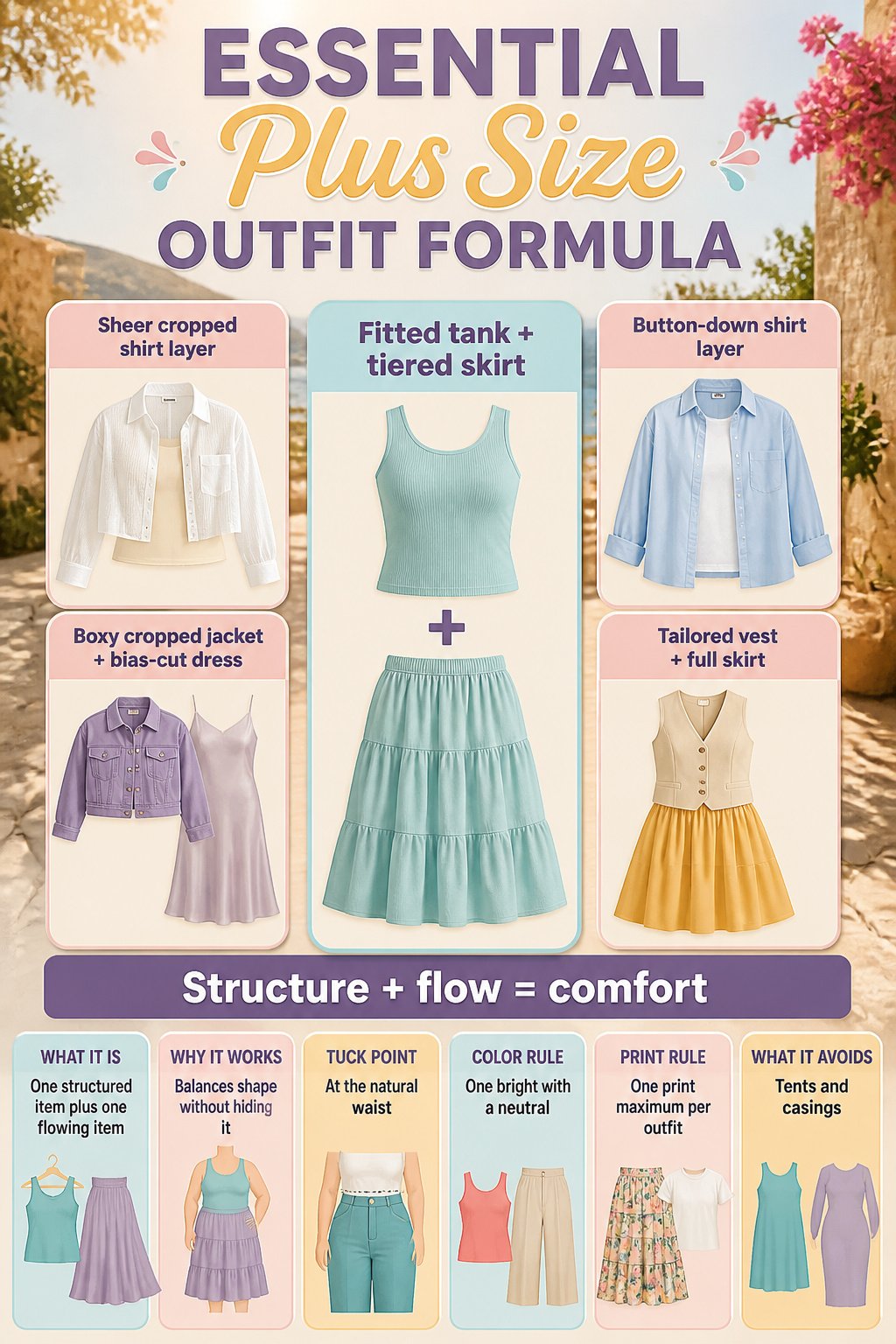
The best summer outfits plus size wardrobes rely on are the ones you can build without thinking. A fitted tank with a tiered midi skirt gives structure at the shoulder and movement below the waist, which balances a fuller midsection without hiding it. Swap the tank for a crisp button-down left open over a tee, and the same skirt works for a cooler morning or an over-air-conditioned office.
Layering in heat sounds wrong until you realize a sheer cropped shirt over a camisole does the same job as a cardigan but weighs nothing. The proportion matters more than the fabric count: one fitted piece against one looser piece keeps the eye moving instead of pooling anywhere. A wide-leg linen pant with a tucked-in fitted tee follows the same math, and the tuck point sits at the natural waist, which sits higher on most plus-size frames than where low-rise pants hit.
The formula that never fails is one structured item plus one flowing item. A boxy cropped jacket over a bias-cut slip dress, a tailored vest with a full cotton skirt. The structure provides the outfit’s skeleton; the flow provides the comfort. Without both, you get either a tent or a casing, and neither feels like summer.
Color works the same way. A single bright worn with a neutral reads intentional; two brights need a grounding third piece or they start to shout. My own rule is one print maximum per outfit, and the print goes on the piece with the simpler cut. A floral tiered skirt with a solid tee, not the reverse. The eye needs somewhere to rest.
Seasonal Staples
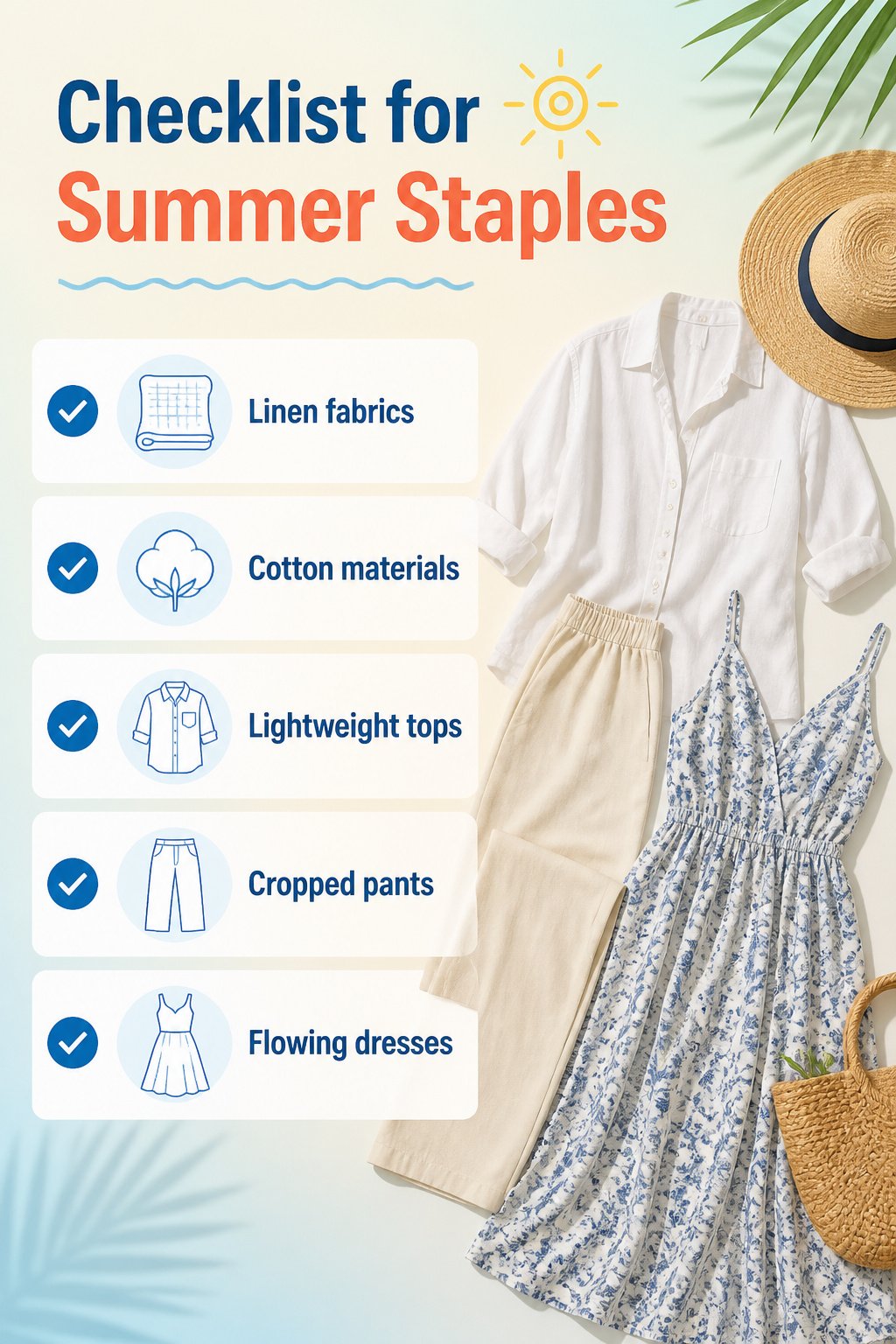
Summer dressing for plus-size bodies starts with the pieces that actually survive July heat. Linen, cotton, and muslin are the fabrics that keep showing up year after year because they do what heavier weaves cannot: they let air move against skin instead of trapping it.
A long-sleeved top in a lightweight linen or cotton weave still reads as summer-appropriate if the fabric is sheer enough to feel cool against your wrist. The same logic applies to cropped pants in these materials. Lighter colors matter here too; they reflect heat rather than pulling it in, which becomes noticeable when you are walking between errands at midday.
Dresses carry most of my warm-weather planning because one piece eliminates the layering problem entirely. A flowing dress in a breathable fabric works indoors and transitions to a walk outside without a complete change. The $190 price point for a quality piece from lines like Faithfull the Brand is not where I start, but it is where I look to understand what construction details I am actually paying for in cheaper alternatives: the weight of the linen, the depth of the armhole, whether the skirt lining is also cotton or some synthetic that defeats the point.
What separates a summer staple from a mistake is the fabric weight measured in ounces per square yard. Anything marketed as "summer linen" without that number attached is a guess. Hold it up to light; if you can read a headline through it, the weave is open enough to perform.
Accessories
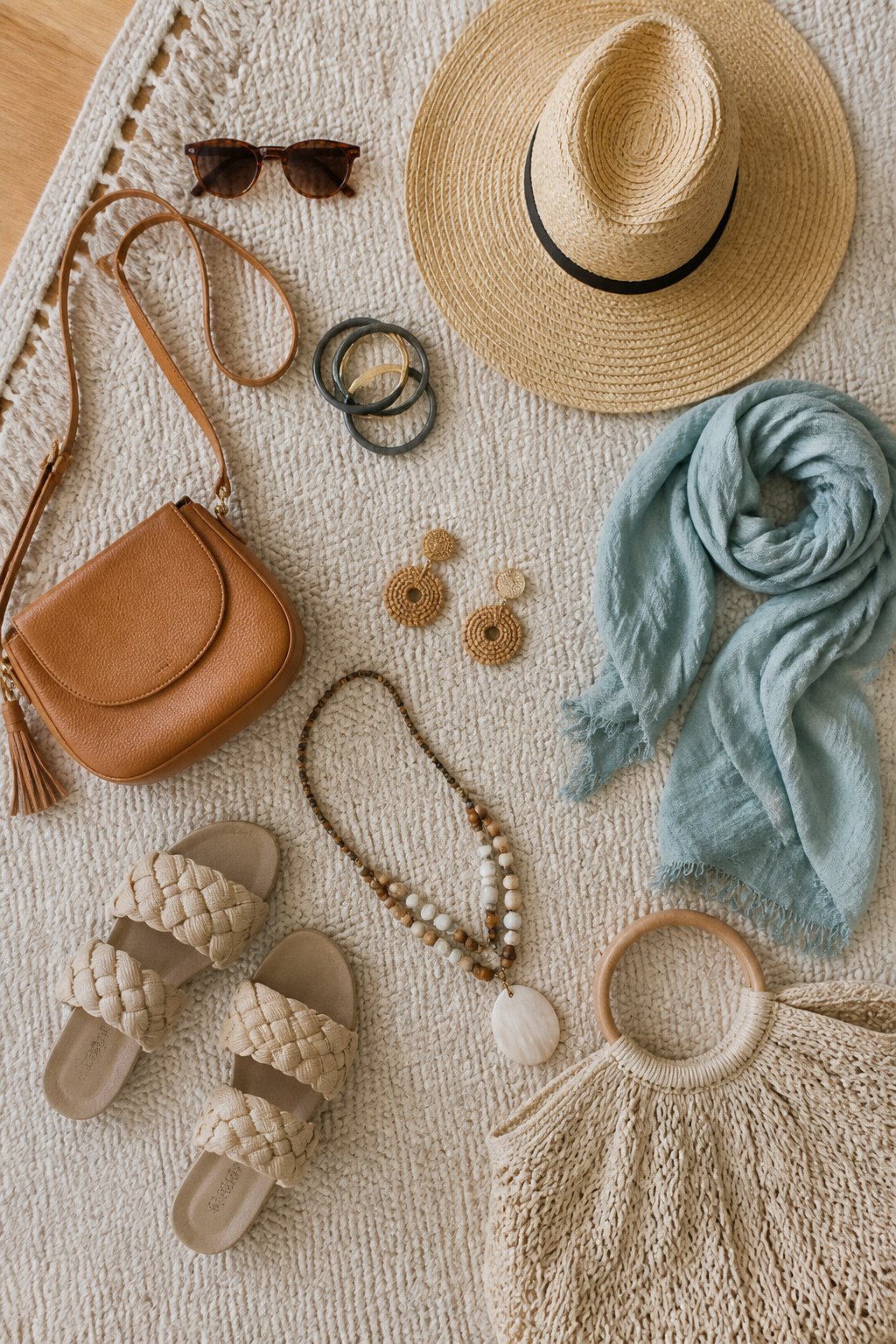
Sunglasses shape matters more than logo when you are plus size. Oversized frames with strong horizontal lines, like the Bottega Veneta pair at $440, balance fuller cheeks without sliding down the nose every ten minutes. I have learned to pass on tiny wire aviators; they disappear against broader bone structure and read as an afterthought.
Bag size should relate to body scale, not outfit drama. A micro-bag on a size 18 frame looks like a keychain, while something the width of your hip bone grounds the silhouette. The Prada padded headband at $235 works on the same principle: it adds volume at the crown where summer outfits, especially sleeveless ones, can leave the head looking small against shoulders.
Footwear for summer outfits plus size is where most people compete instead of complement. A chunky sole with a chunky sandal strap turns the foot into a second torso. Thin straps or a pointed toe, even in a flat, extend the leg line. The mistake I keep seeing, and have made myself, is matching statement shoes to statement earrings to statement bag until the person vanishes entirely. Pick one anchor, let the rest recede.
Frequently Asked Questions
What are some cute summer outfits for plus-size women?
Boat sweaters with white jeans, linen separates, fitted tanks with fitted skirts, and boho sundresses with smocked or ruched details all work well. Jumpsuits with waist definition and tiered skirts paired with plain tanks also make strong options. Each idea in the article is built around breathability and proportion rather than hiding the body.
How can I style plus-size summer outfits?
Layer with intention, like an unbuttoned shirt over a tee and shorts, and use belts between 1.5 and 2.5 inches wide to define the waist on dresses. White or cream accessories bridge lighter tones without competing. Sneakers with floral dresses signal deliberate styling rather than default dressing.
What are the best fabrics for summer outfits?
Linen and cotton breathe well and wrinkle acceptably in heat; light silk charmeuse or hammered satin in loose cuts actually skims heat away faster than stiff weaves that cling once damp. Avoid polyester satins that trap sweat at the back and under bust unless they have a separate breathable lining.