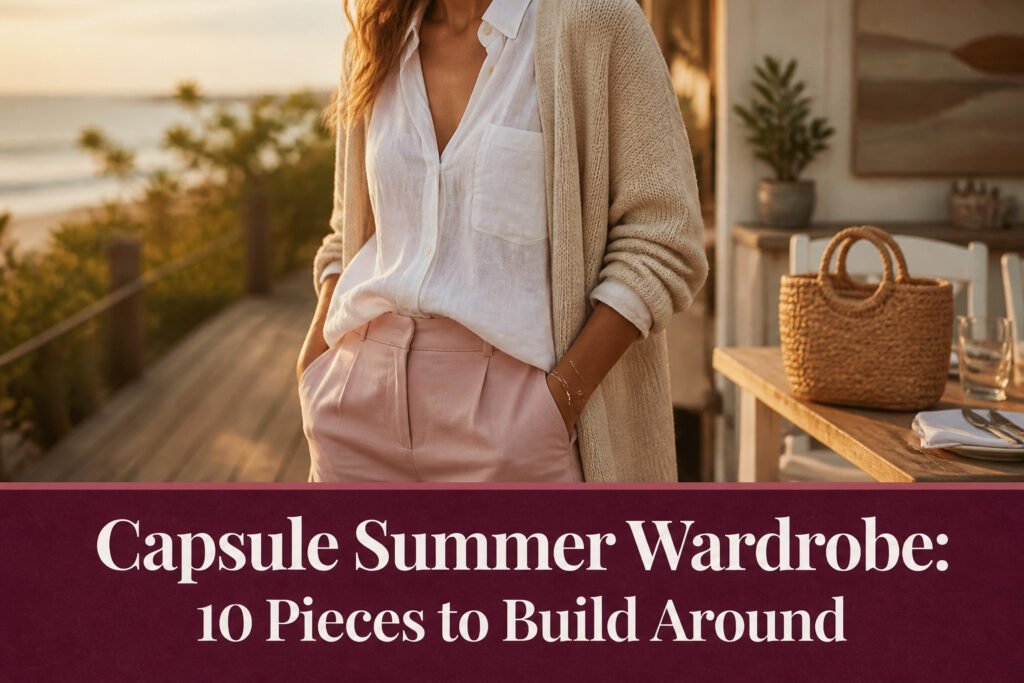
A capsule summer wardrobe is a ten-piece collection where every item must work across at least two separate outfits, or it costs more in closet space than it saves in decision time. The trap is buying three bold printed pieces that compete rather than coordinate; two is the practical limit if you want to mix freely without planning each morning like a puzzle. One quality basket bag, tight enough in weave that your keys won’t slip through, replaces three trendy ones you’d otherwise forget in a corner.
Simple Midi Dresses
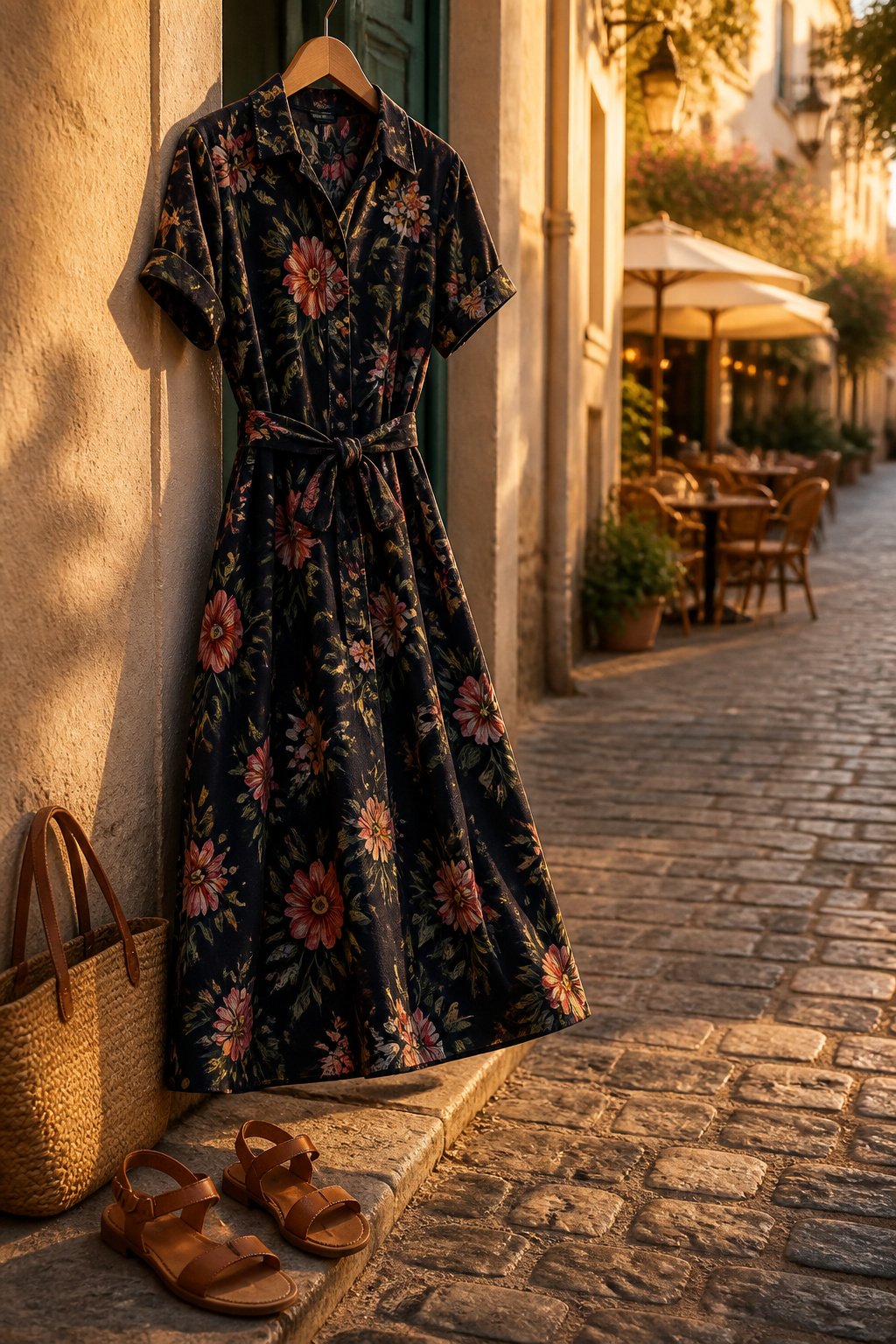
A simple midi dress is the one piece in a capsule summer wardrobe that never sits in the closet unworn. The length hits mid-calf, which means it works with flat sandals for grocery runs and still looks intentional at dinner when you swap in a heel or a strappy sandal.
The real versatility is in the styling. A cotton poplin midi with a belt and a basket bag reads daytime; the same dress without the belt, with a light sweater draped over the shoulders and a smaller clutch, shifts to evening without looking like you tried. Sleeves matter here: a cap sleeve or a short flutter sleeve covers what most women want covered for the office or a nicer restaurant, but the cut stays cool enough for July heat.
Color choice decides how far it stretches. Navy, black, or a small geometric print hides a quick change of shoes and jewelry; a bright solid limits you to daytime unless you are bolder than I tend to be. My preference runs to a dark floral or a stripe, something that does not show coffee spills and still photographs well after dark.
Fit is the part that trips people up. Too loose and the dress looks like a tent by 6 p.m.; too fitted and you are adjusting through dinner. The waist should sit at your actual waist, not an empire line unless you carry weight there intentionally, and the skirt needs enough flare to walk comfortably up subway stairs.
Flat Leather Sandals
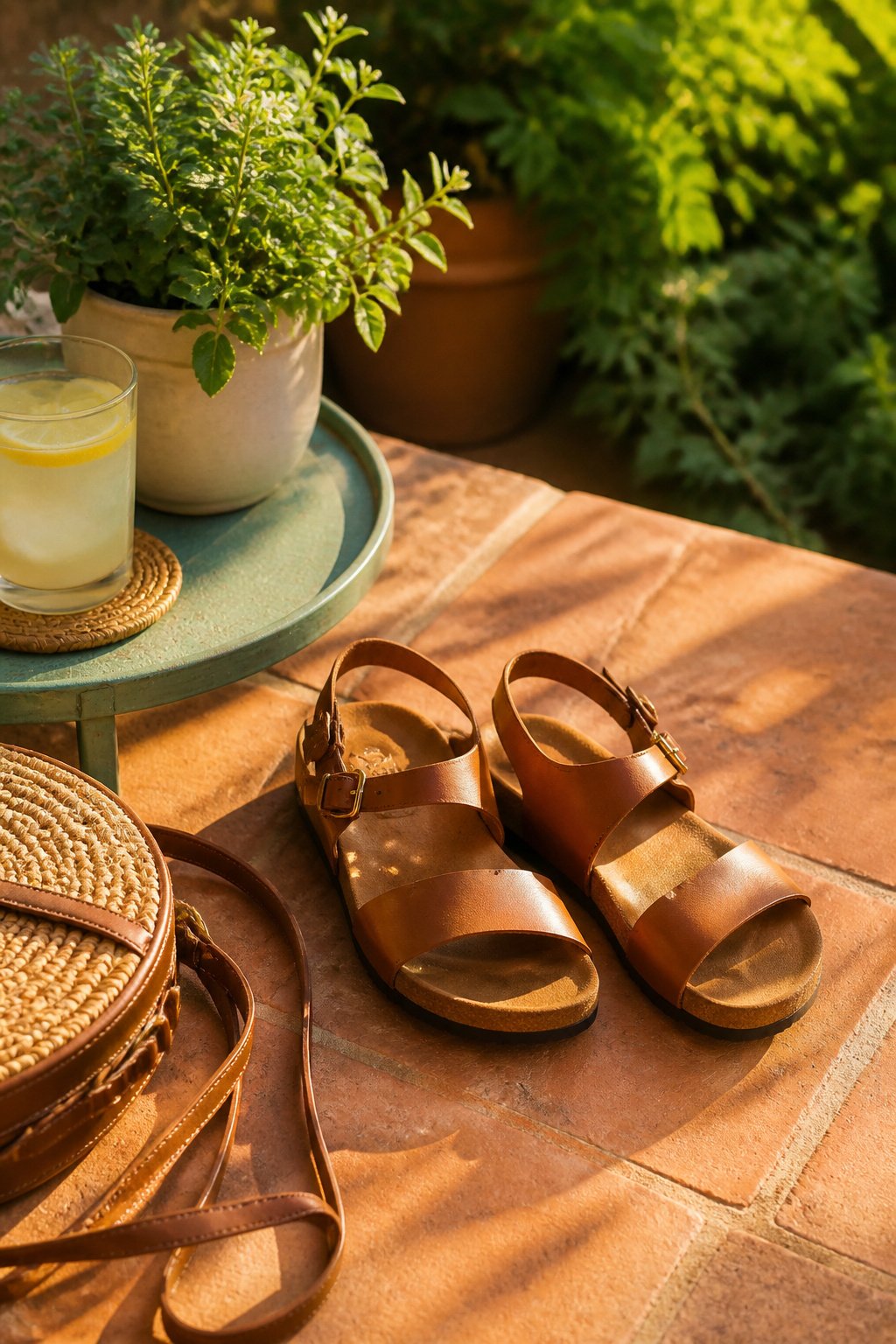
Flat leather sandals bridge the gap between the errands you have to run and the outfit you actually planned. Rubber flip-flops still earn their spot for poolside, but a pared-back leather pair handles city walking without looking like an afterthought. I have worn the same cognac leather slides through loose-leg trousers, midi skirts, and the linen shorts I reach for on 90-degree Saturdays, and the consistency is what makes them worth the shelf space. Five separate capsule guides flag this as core footwear, not accessory, which tracks with how often they end up being the only shoes I pack for a long weekend.
The most reliable footwear option for a summer capsule wardrobe is one you’ll happily wear with every item in it. Look for one that’s versatile, comfortable, neutral, or, better yet, all of the above.
— Vogue
That "all of the above" is the part to hold onto. A sandal that only works with your dresses but not your trousers is doing half a job, and a capsule does not have room for half-jobs. The comfort piece matters more than it used to for me: a flat that rubs by block three sits in the closet by July. A footbed that molds over the first ten wears beats anything stiff that looks polished straight out of the box. Invest once in good leather or suede and the pair stretches across years, not seasons.
Cotton Basics
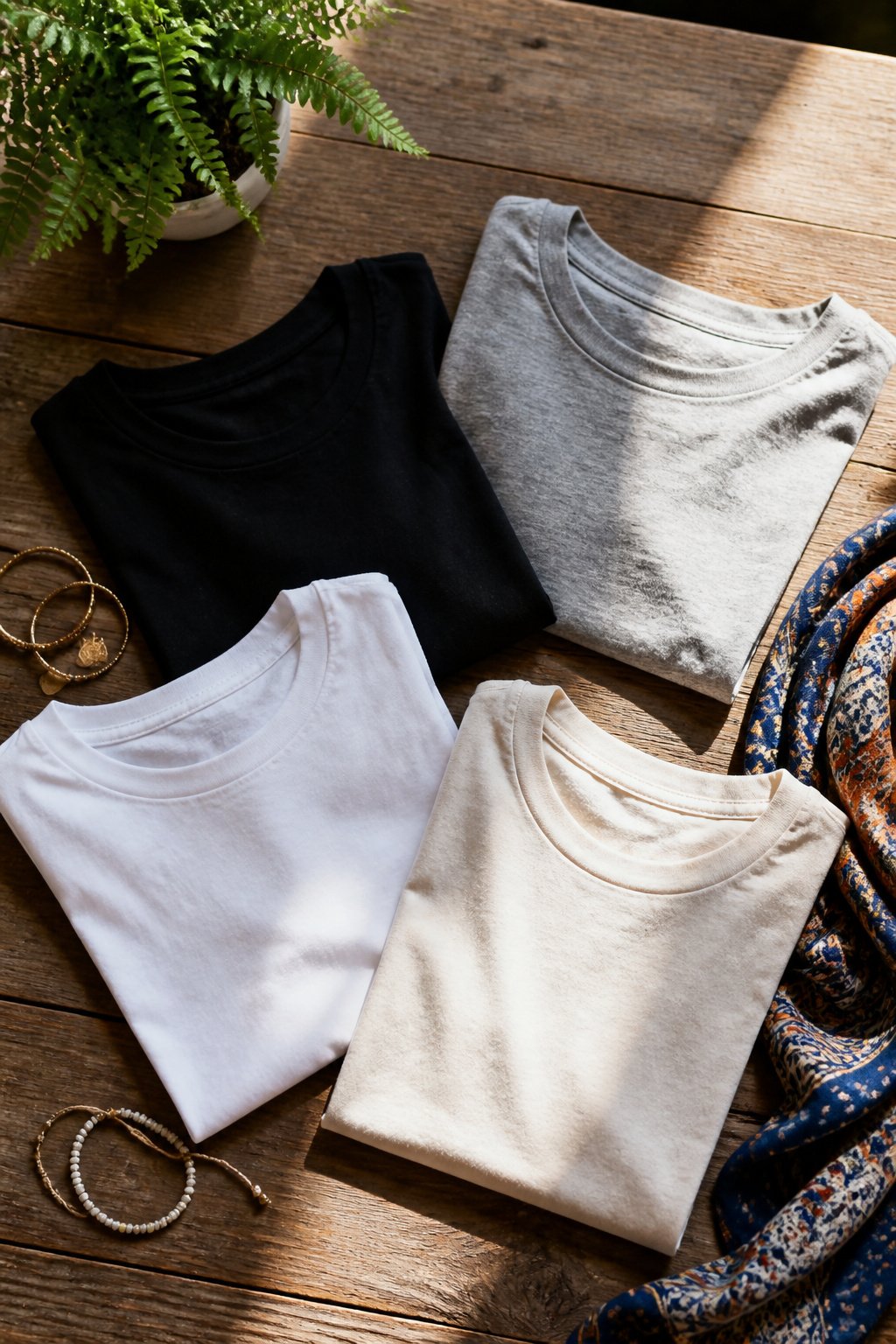
A cotton tee does not announce itself, but it is what lets everything else in a capsule summer wardrobe speak. White, black, heather gray, and soft oatmeal are the four neutrals that earn their rack space first, because each one grounds a printed skirt, balances loud trousers, or slips under a blazer without competing for attention. Crew necks read slightly more polished for morning meetings; a V-neck changes the line of the neckline in a way that works better with certain jewelry. The mistake most people make is buying the cheapest pack and watching the shoulder seams twist after two washes, or discovering in direct sun that the fabric has turned transparent. A quality tee makes expensive pieces look relaxed, not the other way around. The same shirts you reach for daily in July layer under knits straight through autumn, so the cost per wear drops fast enough to justify holding out for fabric that keeps its shape.
Basket Bags

A straw basket tote handles the work-to-drinks transition without looking like you planned it, which is half the point of a summer bag. Woven raffia carries that quintessentially summer energy, but the versions worth buying are the ones spacious enough for a laptop and keys Monday through Thursday, then towels and SPF by Saturday. Dragon Diffusion’s triple jump and Loewe’s classic basket have stayed in rotation year after year, proof that the woven look isn’t a one-season trend to chase. For a capsule summer wardrobe, one quality basket bag replaces three trendy ones you’d otherwise forget in a closet corner. Spend where the weave is tight enough that your keys won’t slip through, and the handles feel secure at the weight of an actual day out, not just the fantasy version with lipstick and nothing else.
Linen Separates
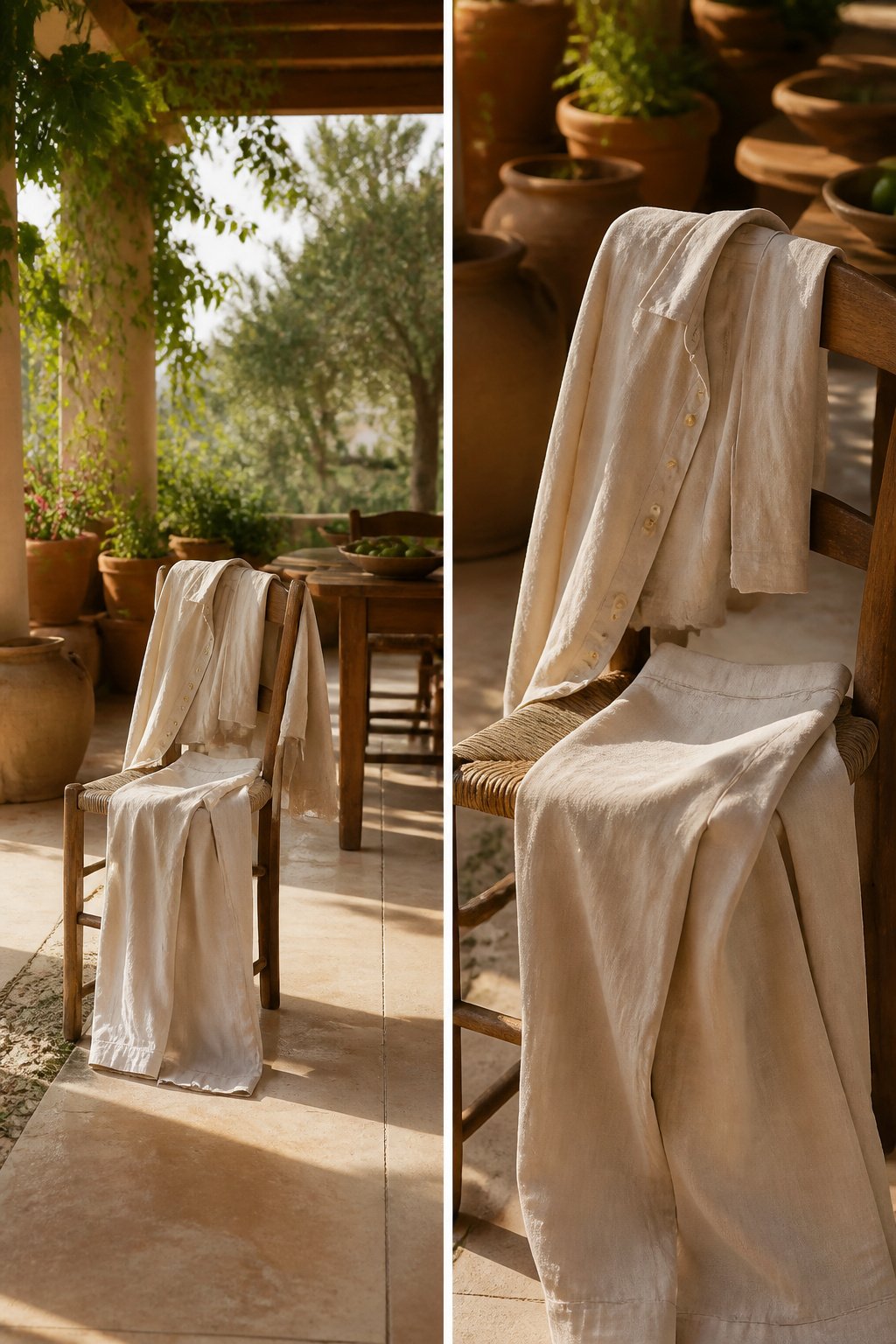
Linen trousers and a matching shirt are what I reach for on mornings when the air already feels thick before nine. The fabric breathes in a way cotton only approximates, pulling heat away from the body rather than trapping it against your skin. Wide-leg linen trousers in particular carry that same tailored confidence as a cropped pant or jean, but without the cling that turns a subway platform into a sauna. A crisp linen button-up layered over them reads intentional enough for a meeting; left open over a tank, the same shirt handles weekend errands without looking like you gave up. The wrinkling is part of the deal, and after a few wears you stop seeing it as a flaw and start reading it as the texture that makes linen look lived-in rather than sloppy. Natural fibers sit differently on the body than synthetics, and linen’s stiffness softens across a day of wear without losing its shape entirely. For a capsule built around pieces that survive the commute and the backyard dinner, linen separates earn their place through sheer hours of comfortable wear.
Classic Sunglasses
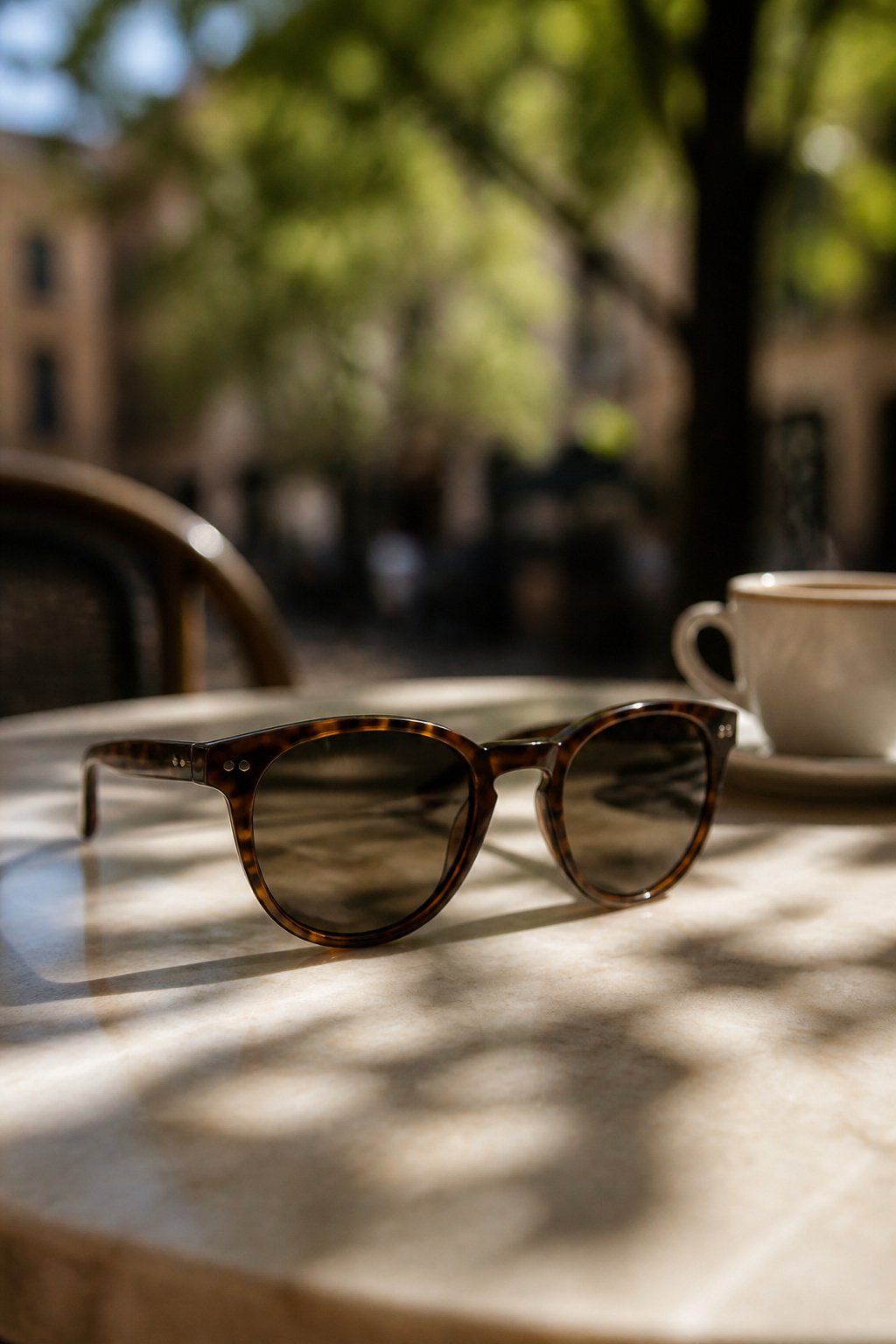
A pair of simple black or tortoiseshell frames will outlast every trend cycle the runway throws at summer. I scaled my own collection down to exactly two pairs, one brown and one black, and the simplicity is what earns their keep: oval, cat-eye, and rectangular shapes add enough character without fighting the rest of the outfit for attention. The 2026 crop of sunglasses trends has largely returned to this restraint, and the difference shows when you are dressing in a hurry. A good pair functions as the finishing touch to any daytime look, small in square inches but disproportionately useful across every other piece in the bag. The brands currently drawing attention run from Loewe to Bottega Veneta, though the shape matters more than the label. Skip the novelty frames that photograph well once and sit awkwardly with half your wardrobe.
Long Skirts
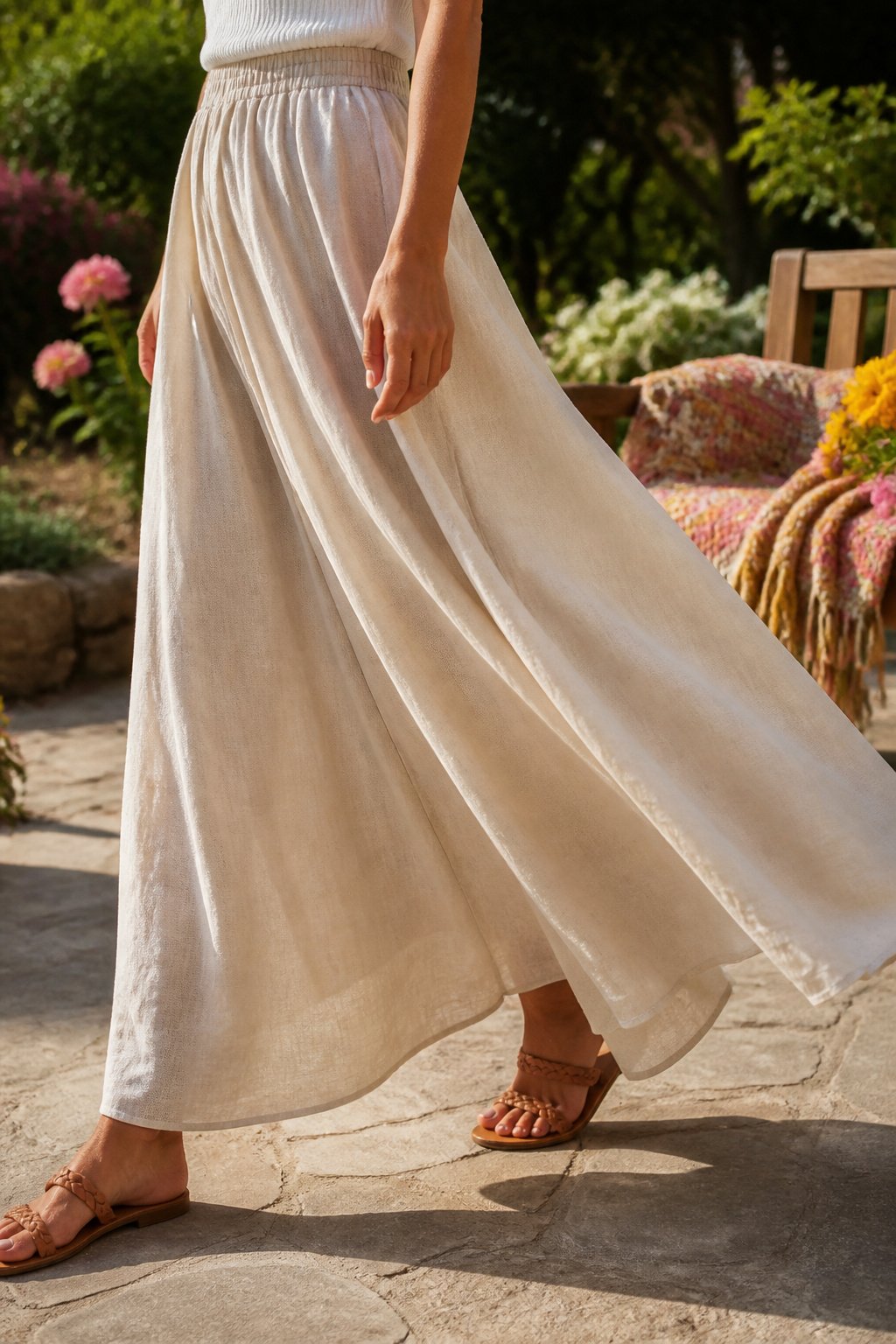
A billowing maxi skirt carries an ease that shorter cuts rarely match, enough fabric to keep the sun off while still letting air move. The shade a long skirt provides is functional, not just aesthetic; you can wear the same linen piece to a morning meeting with an Oxford shirt layered over a basic tank, then lose the shirt and swap in leather sandals for dinner. That rotation is where a capsule wardrobe earns its keep. Natalia Bryant’s Fashion Week styling made this point quietly: she kept returning to long, fluid silhouettes and changed the effect by shifting proportions and what sat next to them. The asymmetrical tiered midi read dressed-up with pointed pumps, but the same skirt foundation worn differently would have read casual. Three occasions, one skirt, no extra purchase. The basket bag you already own finishes it.
Lightweight Sweaters
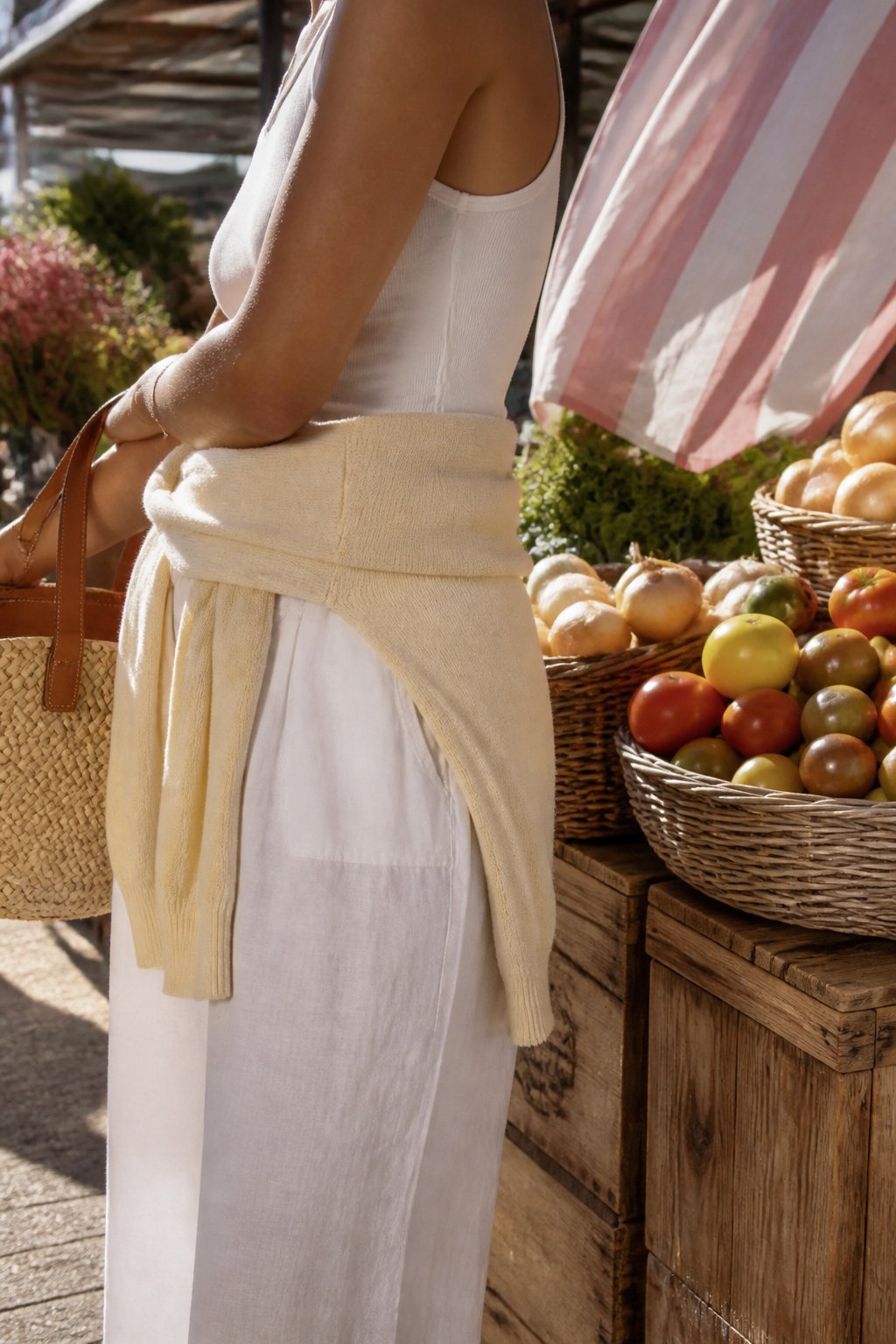
Lightweight sweaters are the most overlooked essential in a capsule summer wardrobe, mentioned almost nowhere in the usual lists. That gap matters because June evenings still drop into the 60s, and every restaurant and office seems to run its air conditioning at meat-locker levels. Coastal nights in particular have a way of reminding you that summer heat is not a 24-hour condition.
A lightweight cotton or cashmere sweater earns its keep in three distinct shapes. A classic crewneck handles the basics. A relaxed V-neck layers cleanly over a slip dress when temperatures fall. A cardigan gives you actual temperature control in those over-chilled spaces. The move most people miss is wearing one tied around your shoulders or looped around your waist during the day so it is already with you when the sun goes down. A sweater that feels like an old friend, reliable enough to keep in your bag or your car, saves more outfits than any single dress.
Button-Up Shirts
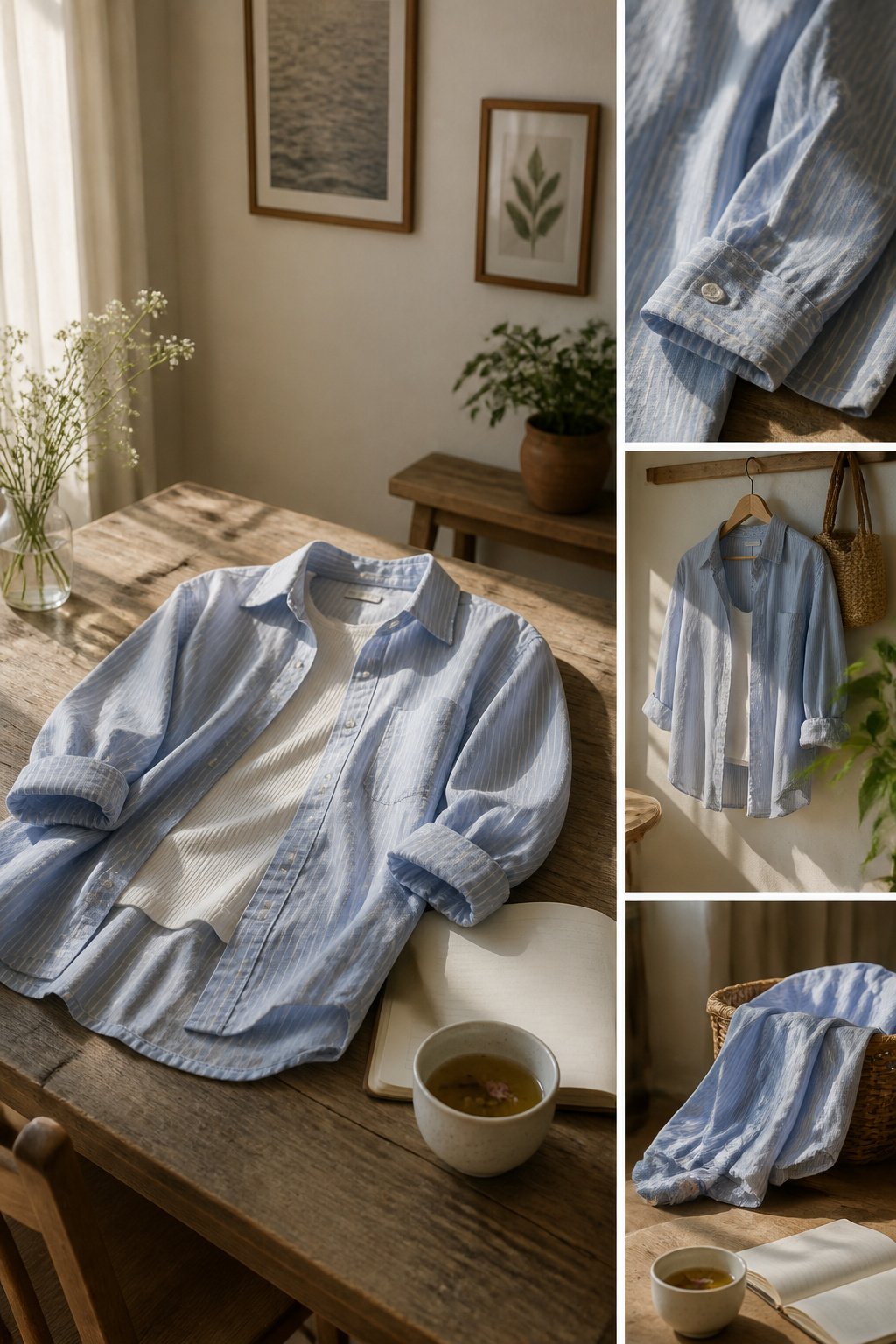
A button-up shirt earns its keep by the number of situations it can handle. Poplin or cotton-linen blends work best for breathability, and a slightly oversized cut lets you roll the sleeves and wear it open over a swimsuit or half-tucked into denim shorts. Striped versions read preppier, solid white reads cleaner, and both shift shape depending on what you pair them with. Natalia Bryant’s pink Tommy Hilfiger stripe with cropped jeans and loafers looked casual and youthful; the same striped shirt lengthened into a longer sleeve and paired with an asymmetrical midi skirt turned fluid and dressed-up. The proportion around the shirt matters as much as the shirt itself. Tighten the silhouette with a dark belt over loose denim, or layer a sweater over the shoulders for definition without structure. Worn under a blazer in cooler months or alone in July, the same piece carries through seasons, which is the whole argument for including it in a small summer wardrobe.
Statement Pieces
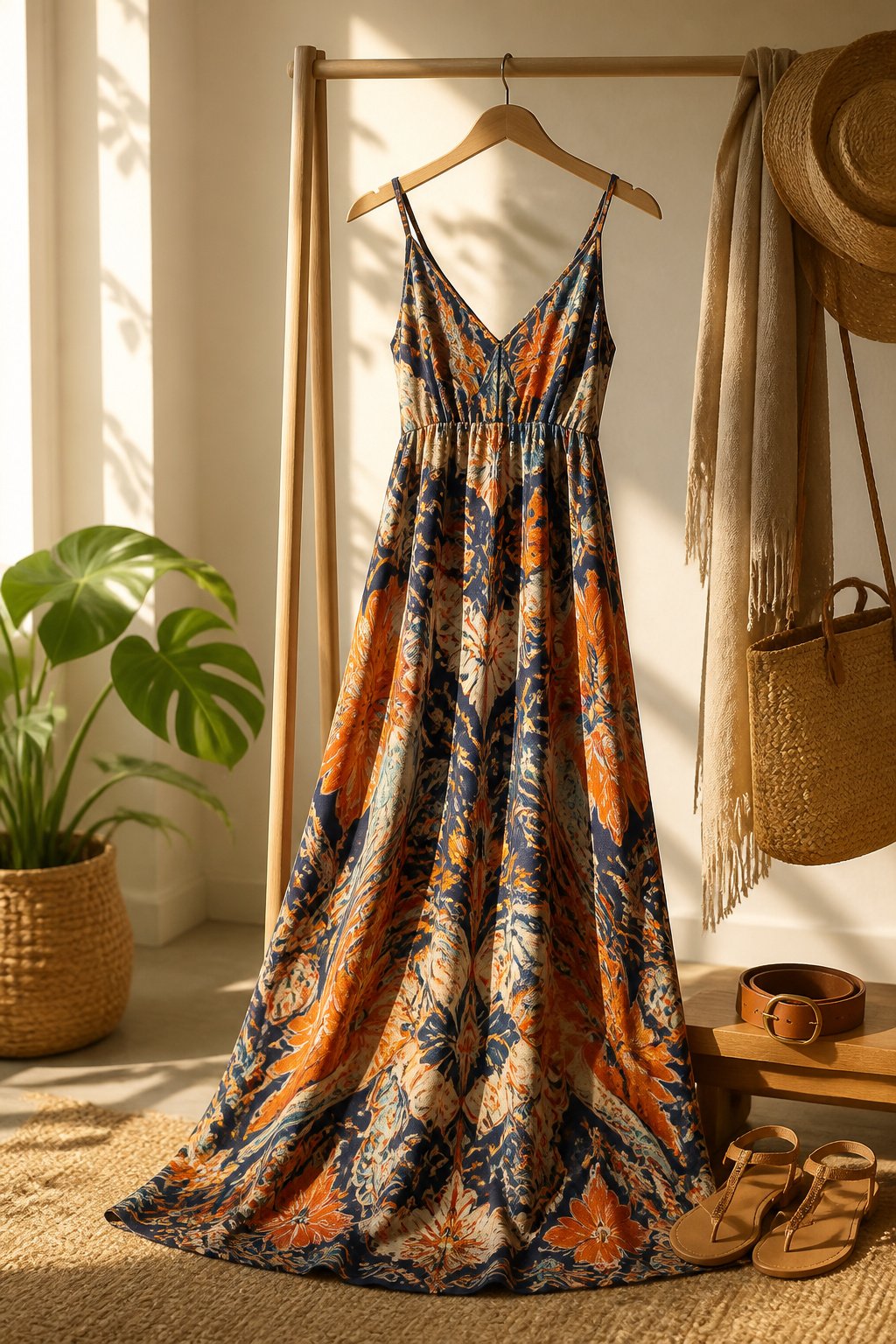
A capsule summer wardrobe built only on crisp whites, soft beiges, and classic blacks will look pulled together for about a week before the sameness starts to feel like a uniform. The fix is not to add more basics. It is to choose one or two printed dresses that can still talk to everything else you own.
Last spring I tried the opposite approach: three bold pieces in competing prints, plus a kimono on top. Getting dressed became a game of subtraction instead of addition. Two is the practical limit if you actually want to mix them with your neutral trousers and summer knits without planning each outfit like a puzzle. A bold printed maxi dress works because it carries the whole look alone; on quieter days, the same dress under a lightweight cardigan from your spring capsule quiets down without flattening out.
The rule I follow now: any statement piece must pair with at least two bottoms or toppers already in the rotation. A blouse that only speaks to one skirt forces you to repeat that exact pairing or let the blouse go unworn. The printed dress avoids this trap by being self-contained. One piece, full personality, no monotony.
Mix and Match
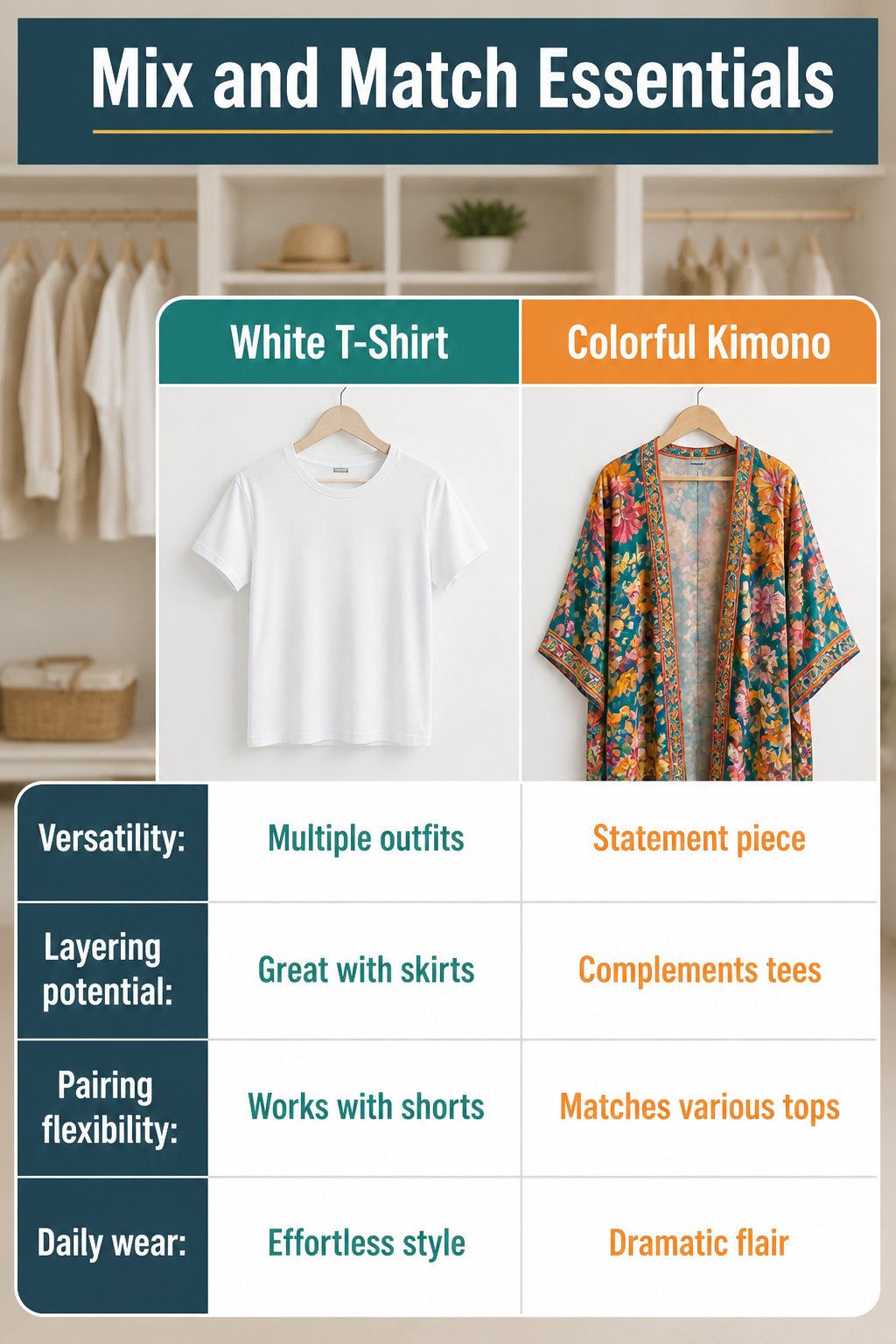
A white T-shirt in a capsule summer wardrobe earns its place only if it works harder than one job. The same shirt that looks effortless with denim shorts on Saturday holds up for a polished evening when tucked into a midi skirt and paired with a single piece of statement jewelry. That shift is the whole point of the ten-piece approach: every item needs at least two separate lives, or it costs you more in closet space than it saves in decision time.
The math only works when basics and statement pieces talk to each other. A bold printed maxi dress carries a full outfit on its own, but a colorful kimono layered over a plain tank and shorts creates something equally finished without adding another bottom to the pile. The mistake is buying a blouse that speaks to exactly one skirt and nothing else; that pairing becomes a uniform you did not choose, worn twice weekly by default.
Laying out combinations before anything gets folded into drawers exposes the gaps fast. A top that demands a specific bottom to look right is a top that failed the test. The goal is breadth without bloat: ten pieces that refuse to stay in single outfits, so your morning decision shrinks to which version of ready you want today.
Quality Over Quantity
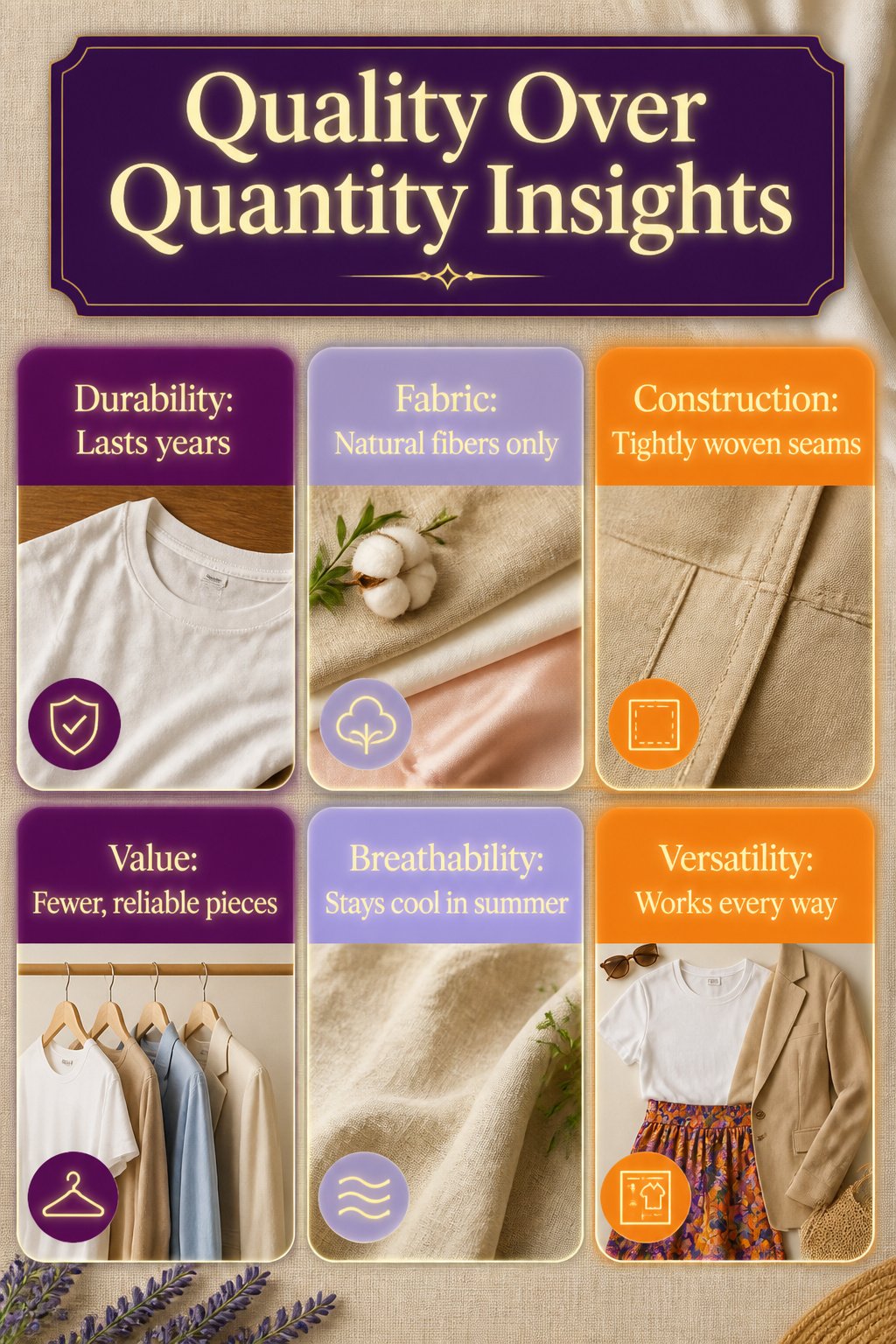
A cheap tee that twists after two washes or goes see-through in sunlight costs more per wear than one that holds its shape for years. The same math applies across a capsule summer wardrobe: natural fibers like cotton, linen, and silk breathe better and survive longer than synthetics that trap heat and pill by July.
Construction details reveal the difference. Seams should lie flat without pulling, and a button-down’s placket should stay crisp after multiple washes. I look for tightly woven linen that softens rather than weakens, and denim shorts with stitched pockets that don’t sag into a different silhouette by August.
The real test is whether a piece earns its place. One great white tee grounds a bold skirt, layers under a blazer, and makes expensive items look relaxed rather than fussy. Three mediocre ones compete for hanger space and still leave you with nothing reliable. A capsule built this way removes the morning guesswork: every item works harder, and getting dressed becomes the easy part.
Breathable Fabrics
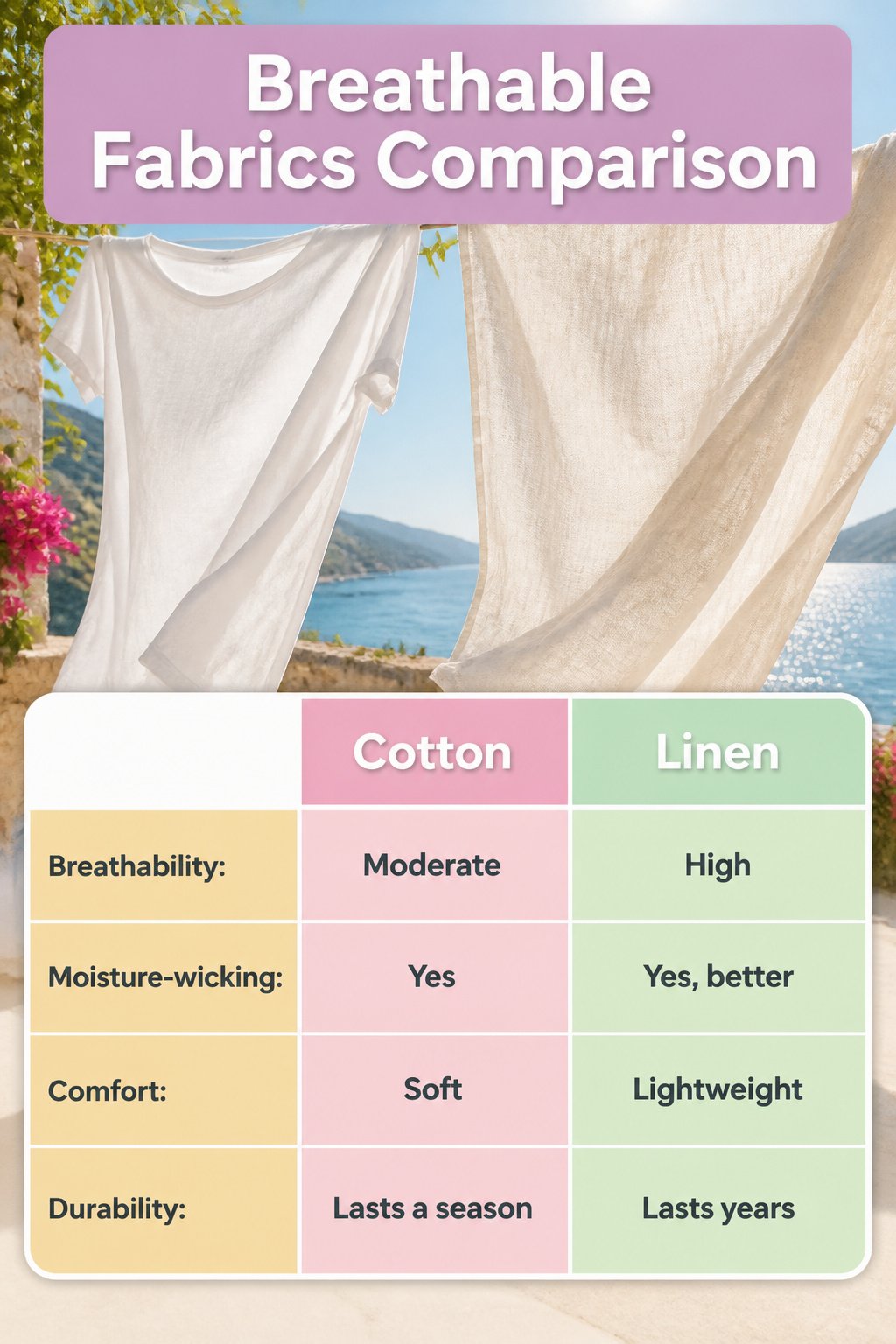
Cotton and linen earn their place in a capsule summer wardrobe for one reason: they let heat escape instead of trapping it against your skin. Natural fibers wick moisture and dry faster than synthetics, which is why a cotton tee stays comfortable at 90 degrees while polyester starts to feel like a plastic bag. Linen takes this further. Its loose weave creates tiny air pockets that keep the fabric from clinging, and the slight wrinkling that comes with it is part of the look, not a flaw to fight.
Heavy materials like wool have no business in summer rotation. They insulate, which is exactly what you do not want when the temperature climbs. Silk gets mentioned alongside cotton and linen sometimes, but it stains easily with sweat and often requires dry cleaning, making it a weaker workhorse for daily wear.
A pair of linen wide-leg pants has been my repeat purchase for years, and the reason is comfort that still looks intentional. The same fabric in a button-down or a simple dress gives you structure without the weight. For a capsule built on ten pieces, cotton covers your basics and linen handles the days when even cotton feels like too much.
Accessories That Complete
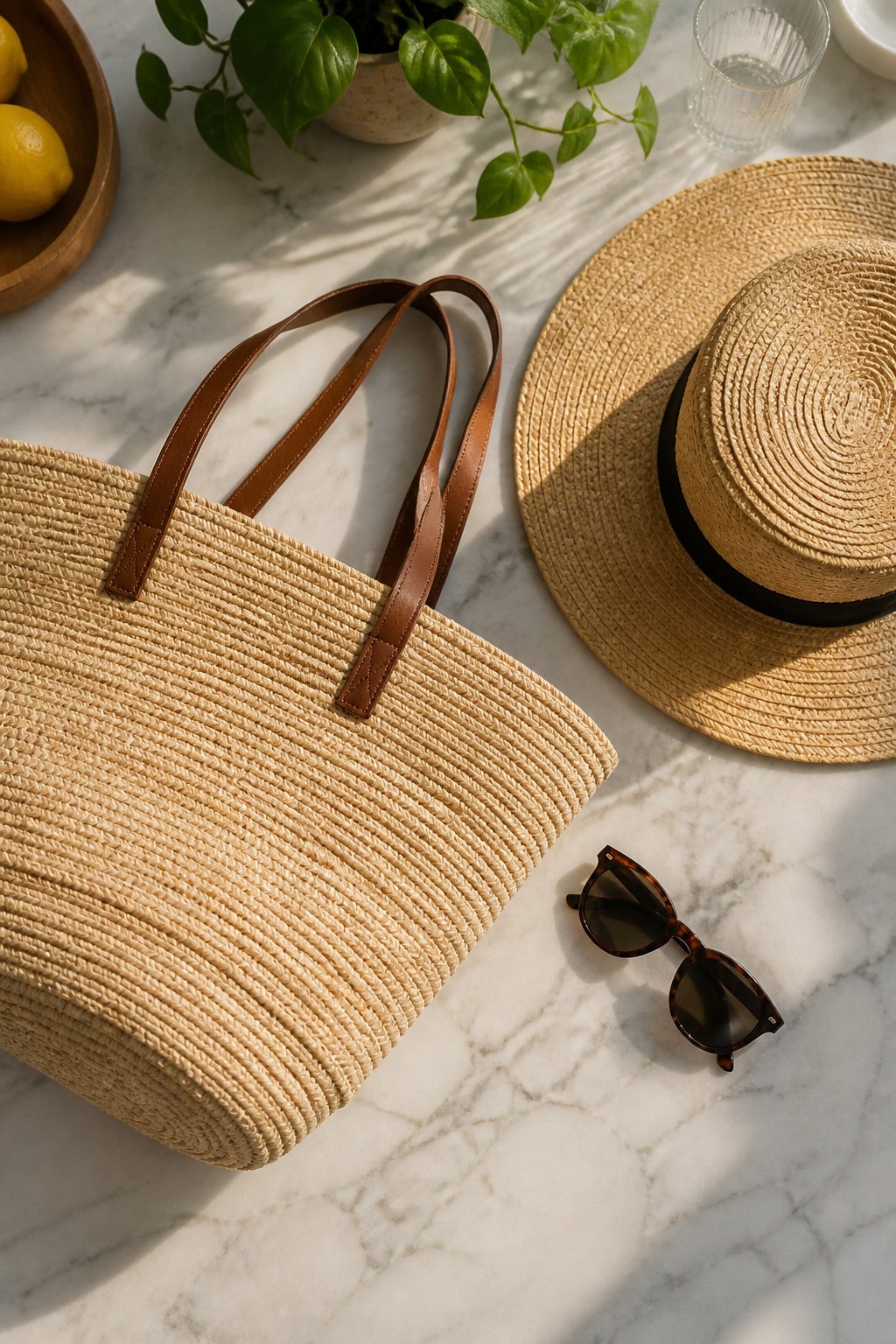
A straw tote and a pair of Ray-Ban Classic Wayfarers at $213 can carry more outfit weight than their size suggests. The trick is choosing accessories that read as personal rather than costume. I keep one structured bag and one slouchy option in rotation; the structured shape sharpens a sundress for evening, while the slouchy one keeps a button-up and shorts from looking like I tried too hard. Sunglasses work the same way. Wayfarers bridge casual and polished without the drama of trend frames, which means they survive multiple summers instead of dating themselves. The cost-per-wear math favors buying the one pair you’ll grab without thinking. Cult buys like Prada’s raffia bucket hat at $950 or Dragon Diffusion’s woven-leather basket at $295 make sense only if they become signatures you reach for weekly. Otherwise, a simpler version does the same structural job. My rule: the accessory should solve a problem the clothes create. A wide brim fixes harsh light and flat hair days. A medium-sized tote holds a real day’s worth of stuff without overwhelming a light summer silhouette. If it doesn’t earn its place across at least three outfits in the ten-piece core, it belongs to vacation packing, not the capsule.
Frequently Asked Questions
What are the essentials for a summer capsule wardrobe?
A capsule summer wardrobe builds around ten core pieces: a simple midi dress, flat leather sandals, cotton basics, a basket bag, linen separates, classic sunglasses, a long skirt, a lightweight sweater, a button-up shirt, and one or two printed statement pieces. Each item should work across multiple outfits, not just one fixed pairing.
How do I mix and match items in a capsule wardrobe?
Every piece needs at least two separate lives. A white tee works with denim shorts on Saturday and tucks into a midi skirt for evening. A bold maxi dress carries full personality alone, but quiets down under a cardigan. Test combinations before anything goes in your drawer; a top that demands one specific bottom fails the capsule test.
What fabrics are best for a summer wardrobe?
Cotton and linen are the workhorses. Cotton wicks moisture and keeps basics comfortable at 90 degrees. Linen breathes better still, with a loose weave that creates air pockets and keeps fabric from clinging. Skip wool entirely and treat silk as occasional, not daily, since it stains easily with sweat and usually needs dry cleaning.