
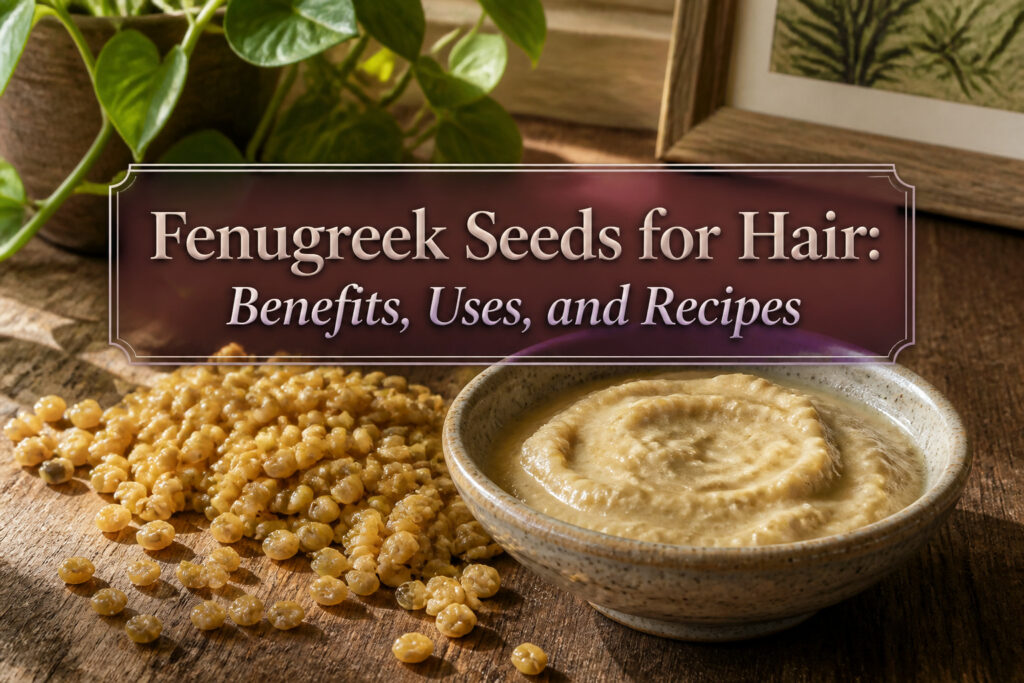
Fenugreek seeds are soaked, ground, or boiled into hair treatments that deliver plant protein, iron, and a gel-like mucilage to the scalp and strands. The catch is that none of it works as a one-time fix: you need three to four weeks of regular use before growth or density changes show in the mirror, and the scalp has to improve first before length follows. A simple overnight soak turns two tablespoons of hard seeds into soft, pale nuggets that smell faintly of maple, and that paste becomes the base for most recipes that follow.
What Fenugreek Seeds Contain for Hair
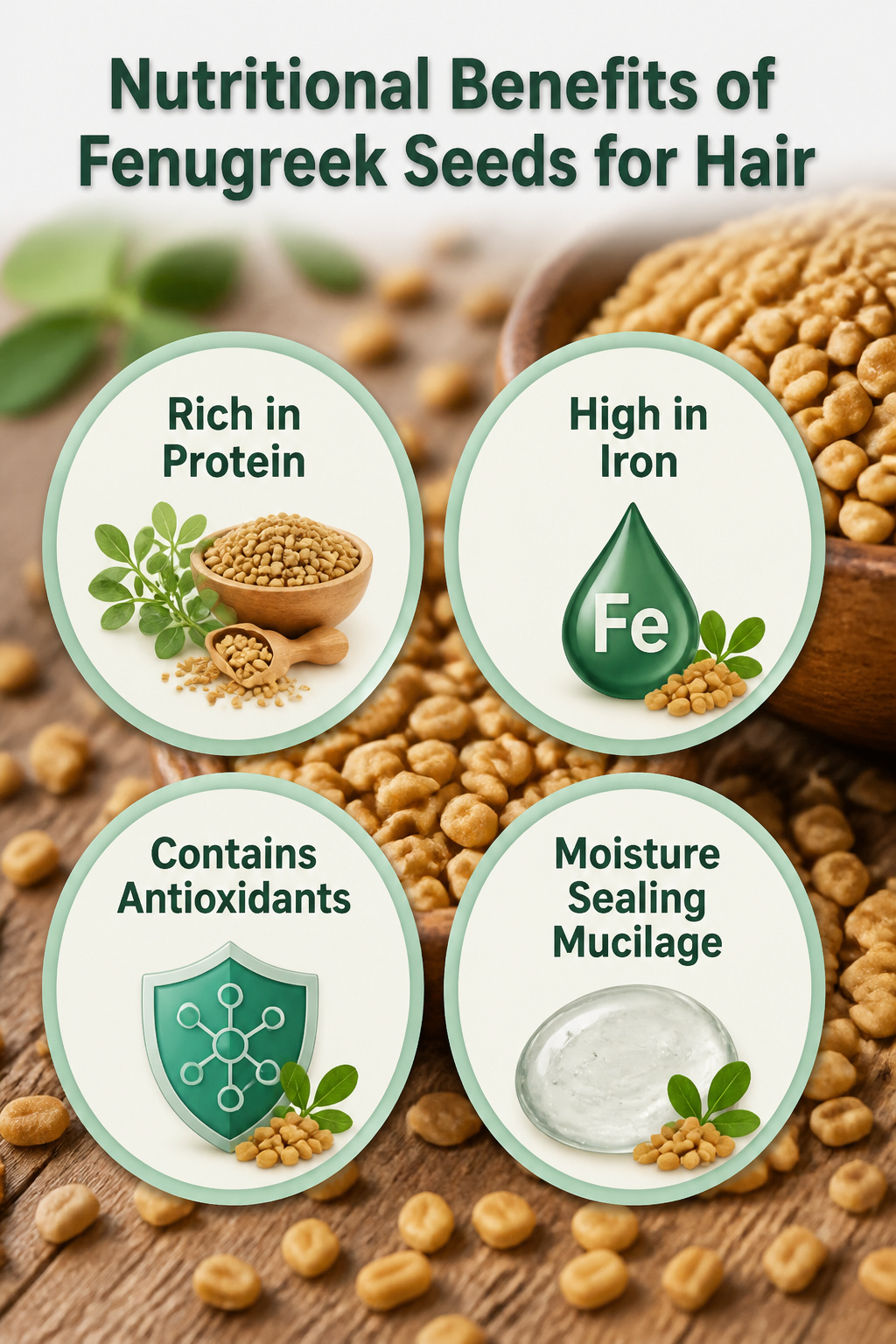
Fenugreek seeds carry a surprisingly dense nutritional load for something so small. The protein content stands out first: these seeds pack enough plant protein to help rebuild hair structure from the follicle up, which matters when growth stalls or strands start snapping mid-length. That same protein works with nicotinic acid to anchor hair more firmly in the scalp, reducing the kind of fallout that shows up in your brush.
Iron and potassium come next, and both feed the scalp directly. Iron supports the blood supply that keeps follicles active, while potassium helps regulate the environment where new hair forms. Sources that track premature greying point to these two minerals as the reason fenugreek seems to slow color loss before its time.
Then there are the antioxidants, flavonoids and saponins specifically, which protect against the oxidative stress that weakens growing hair. Lecithin adds another layer, nourishing roots so strands grow in stronger rather than finer. The mucilage, that slippery fiber that makes fenugreek paste feel almost gelatinous, seals moisture into the hair shaft itself, keeping texture smooth rather than brittle.
What convinced me, reading through the different ways people use this, was how each nutrient maps to a specific hair problem: protein for structure, iron and potassium for retention and color, antioxidants for protection, lecithin for root strength, and mucilage for the surface feel. You can target one or get the full stack depending on how you prepare the seeds.
How Fenugreek Works on Scalp and Strands
Fenugreek seeds carry two properties that matter most for scalp trouble: they fight fungus and they calm inflammation. That combination explains why the paste or rinse actually works on dandruff and the tight, itchy feeling that comes with dryness.
The antifungal action targets the yeast-like buildup that feeds flaking. The anti-inflammatory side soothes the redness and irritation that make you want to scratch. Together they handle the cause and the symptom, not just the visible flakes.
On the strands themselves, the same seeds bring protein and a mucilaginous fiber, a gel-like substance that coats the hair shaft. That coating is what keeps moisture locked in, which means the softness lasts past rinse-out day. Nicotinic acid in the seeds may also reduce shedding by strengthening the follicle anchoring point.
The scalp has to be healthy before length or thickness follows, and that is the sequence fenugreek seems to respect. You will not get one without the other, which is why most recipes that work are left on the scalp first, not just run through the ends. Lecithin in the seeds feeds the root directly, while iron and potassium content supports pigment retention over time. The mechanism is nourishing rather than medicating; it builds condition back rather than stripping problem away.
Fenugreek Hair Mask
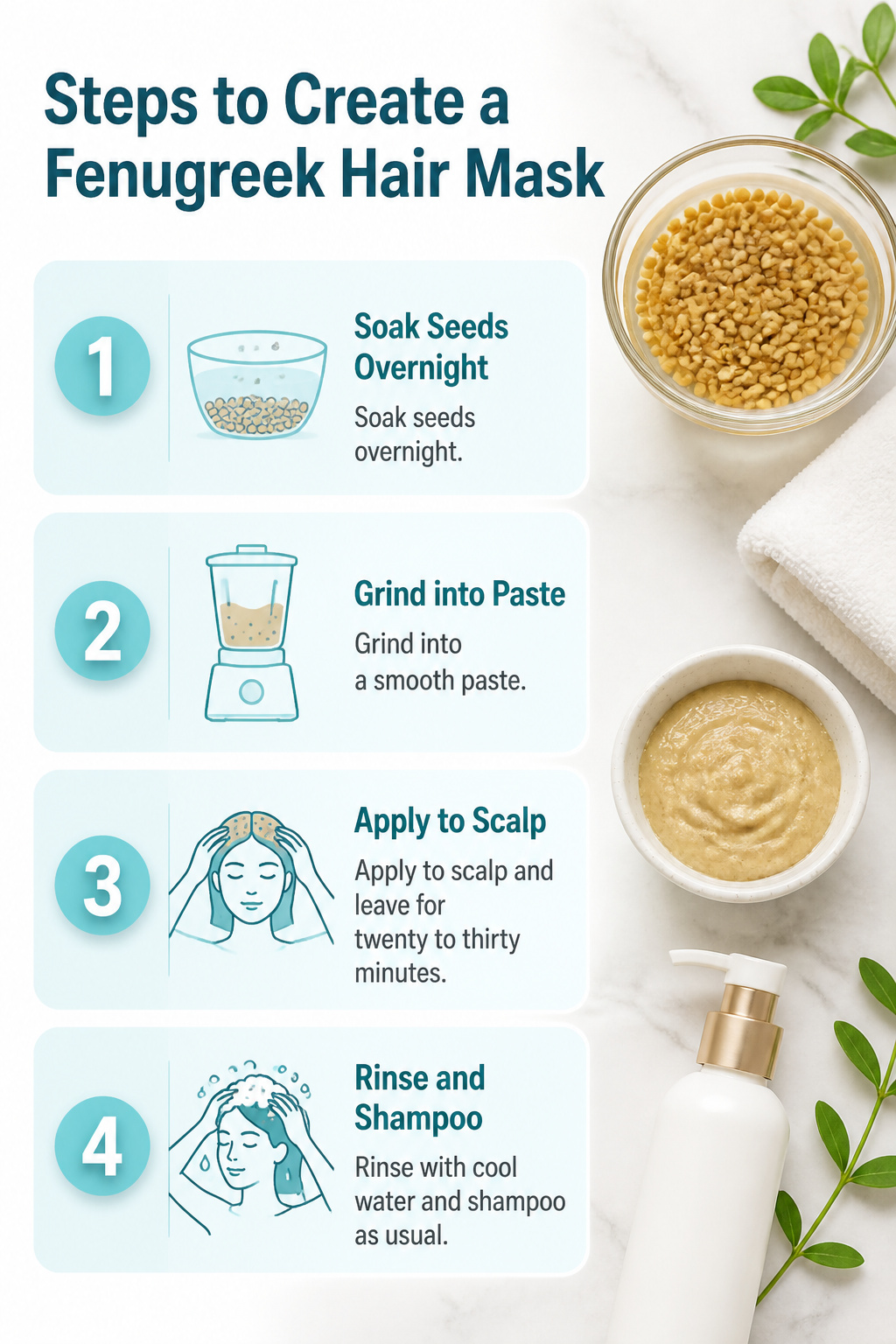
Fenugreek paste starts the night before. Two tablespoons of seeds go into a bowl with enough water to cover them by about an inch. By morning they will have swollen into soft, pale nuggets that smell faintly of maple.
- Drain the soaked seeds and grind them into a smooth paste. A small food processor works; so does a mortar if you are patient. The texture should be thick enough to stay where you put it, not run down your neck.
- Part your hair in sections and work the paste onto the scalp with your fingertips. The strands can take the leftovers, but the scalp is where the proteins, lecithin, and nicotinic acid actually need to reach. Twenty to thirty minutes is the window that keeps the mask active without letting it dry into a crust that tangles.
- Rinse with cool water and shampoo as usual. The mucilaginous fiber in the seeds leaves slip behind, so detangling afterward is easier than you might expect.
Patch test first if your skin tends to react. The paste is generally safe on skin, but whole seeds contain compounds that can irritate when dry; soaking is what neutralizes that risk.
Fenugreek Oil Infusion
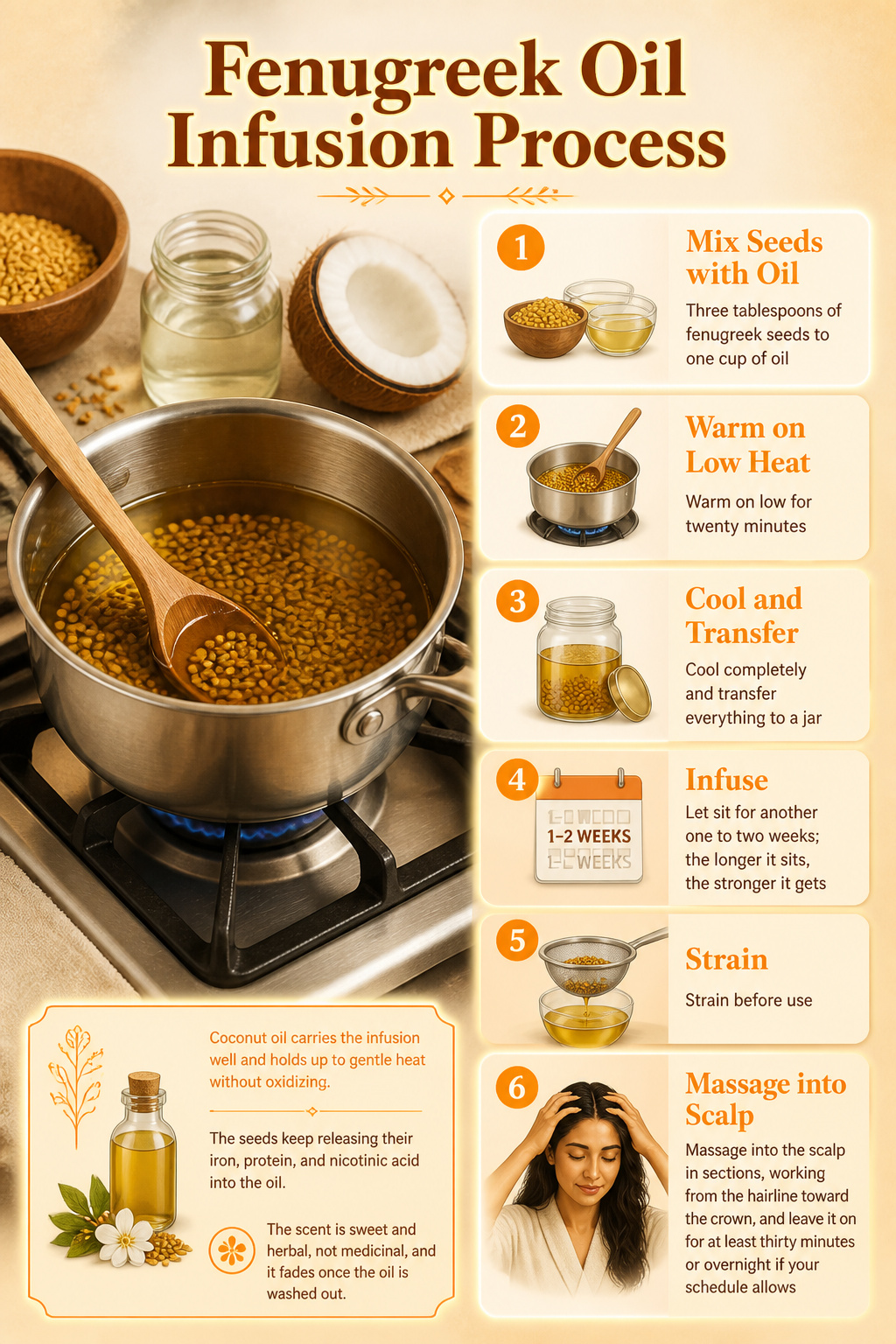
Coconut oil carries the infusion well and holds up to gentle heat without oxidizing. Three tablespoons of fenugreek seeds to one cup of oil is the ratio that keeps the mixture potent without turning grainy. I warm them together in a small saucepan on low for twenty minutes, stirring the seeds often so they do not scorch, then let the oil cool completely and transfer everything to a jar. The seeds keep releasing their iron, protein, and nicotinic acid into the oil for another one to two weeks; the longer it sits, the stronger it gets. Strain before use. Massage into the scalp in sections, working from the hairline toward the crown, and leave it on for at least thirty minutes or overnight if your schedule allows. The scent is sweet and herbal, not medicinal, and it fades once the oil is washed out.
Fenugreek Water Spray
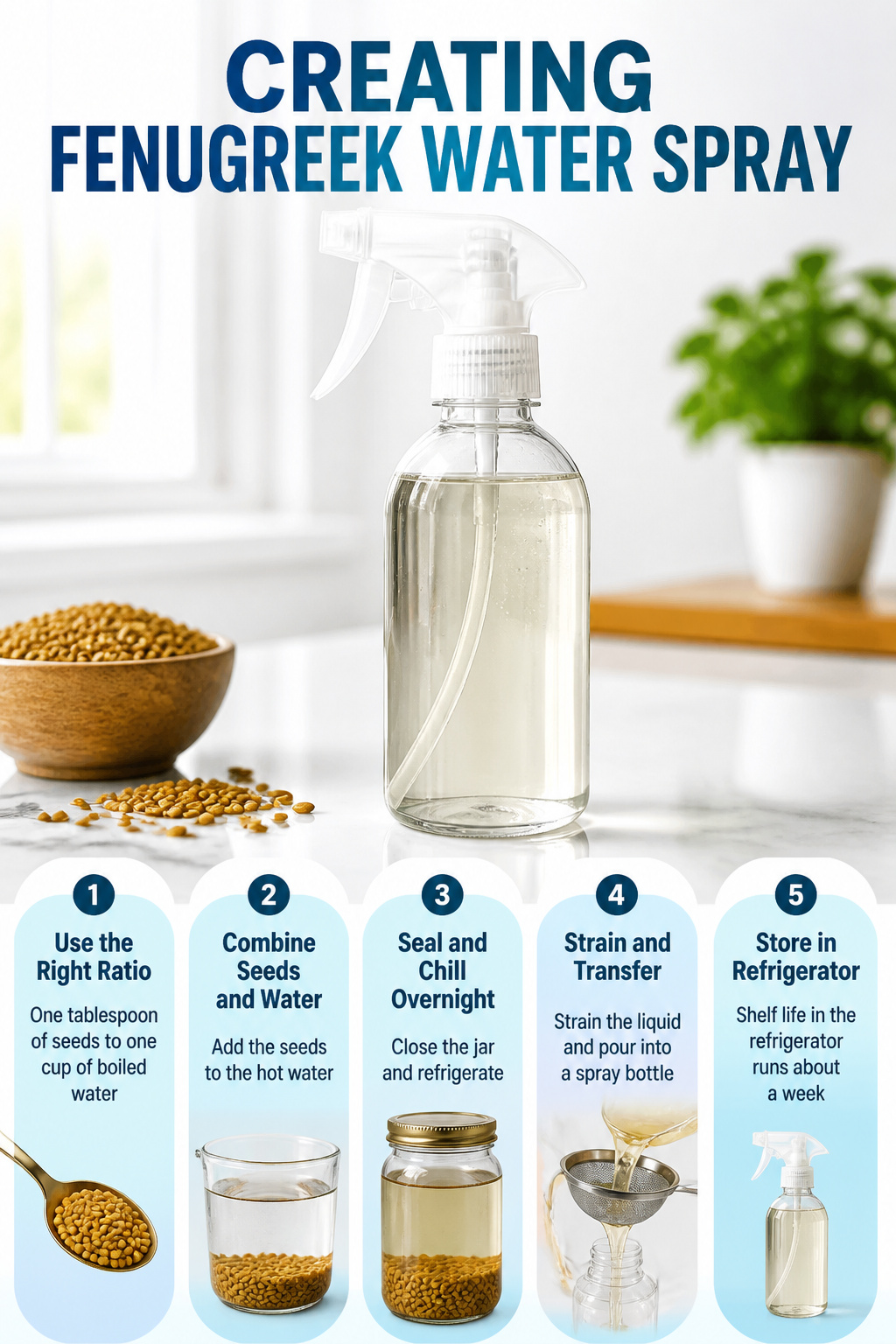
A fenugreek water spray is the lighter, everyday option for scalp hydration, and it sits a step below the richer spritz method that comes next. One tablespoon of seeds to one cup of boiled water is the ratio that keeps this thin enough to mist without clogging the nozzle. The seeds go into the hot water, the jar seals and chills overnight, and the morning strain leaves you with an infusion that stores clean in a spray bottle. Use it as a base layer under oil or butter, or alone for conditioning. Shelf life in the refrigerator runs about a week; beyond that, the mix ferments and smells off. Two sources back this method, which makes it the better-tested choice if you want proven guidance over experimentation.
Fenugreek and Flaxseed Hair Gel
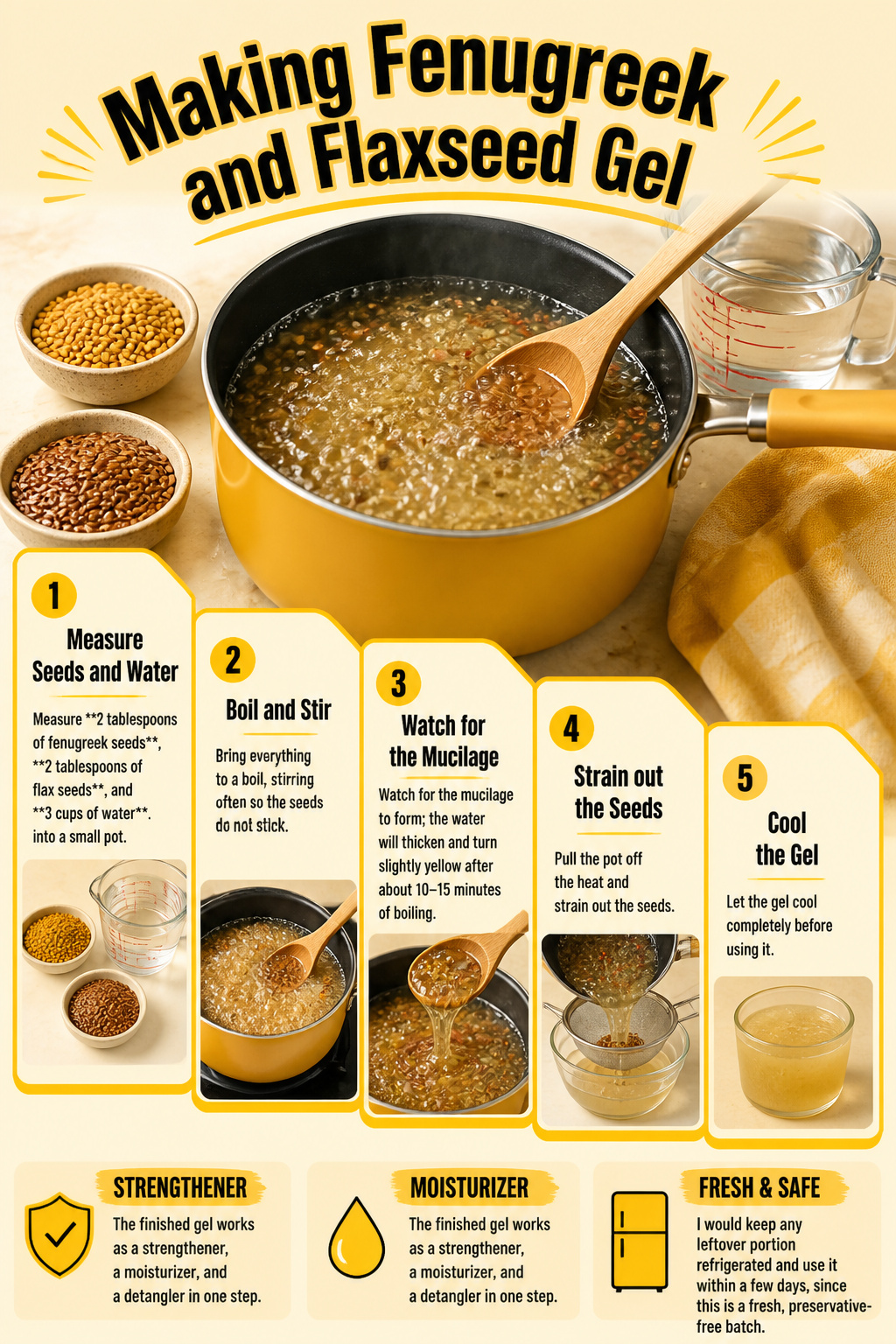
Boiling fenugreek and flax seeds together turns both into a workable gel that moisturizes while it styles. The mucilage from each seed thickens the water into something you can actually spread through curls or coils.
- Measure 2 tablespoons of fenugreek seeds, 2 tablespoons of flax seeds, and 3 cups of water into a small pot.
- Bring everything to a boil, stirring often so the seeds do not stick.
- Watch for the mucilage to form; the water will thicken and turn slightly yellow after about 10–15 minutes of boiling.
- Pull the pot off the heat and strain out the seeds.
- Let the gel cool completely before using it.
The finished gel works as a strengthener, a moisturizer, and a detangler in one step. I would keep any leftover portion refrigerated and use it within a few days, since this is a fresh, preservative-free batch.
Fenugreek Hair Cleanser
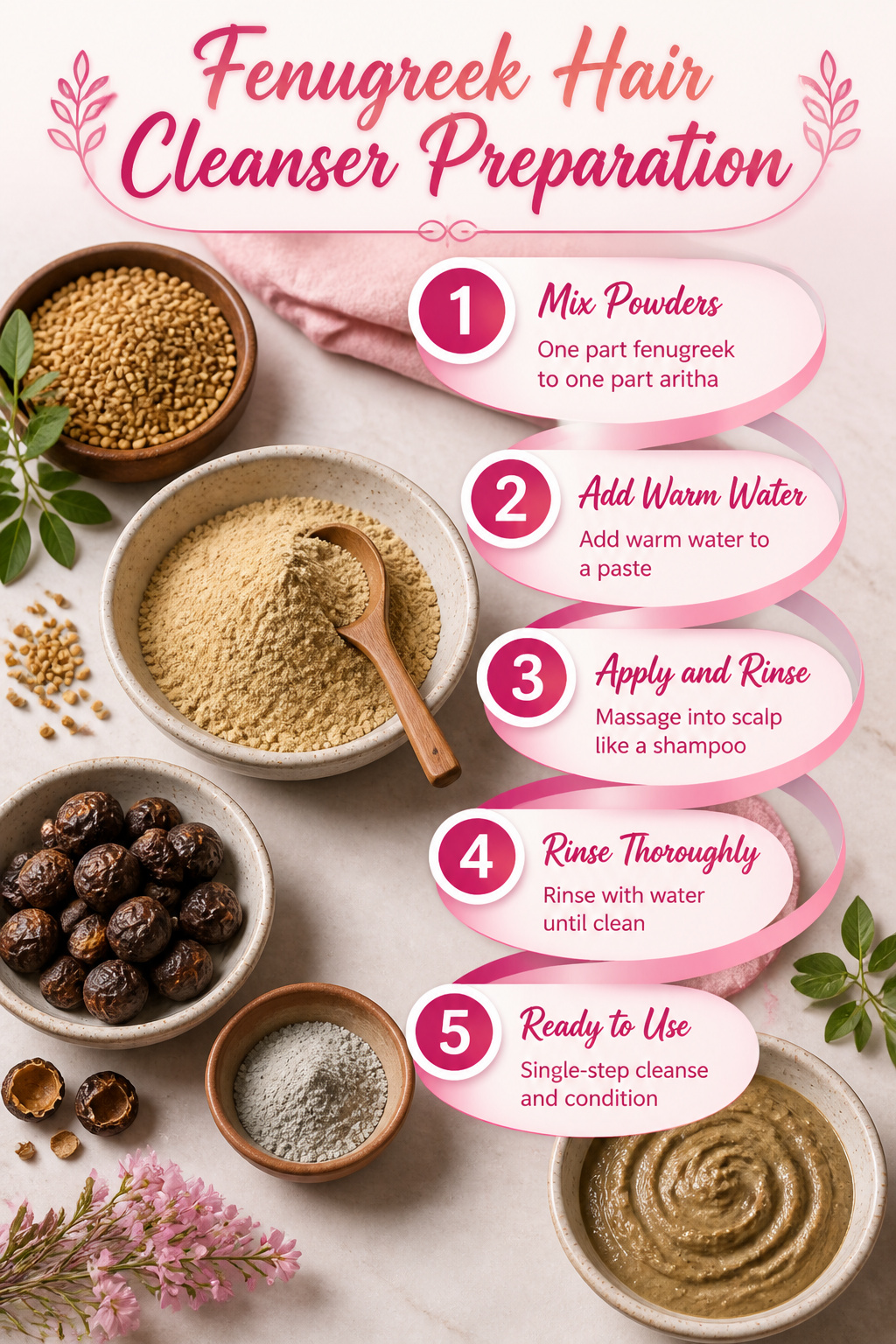
Fenugreek seed powder mixes well with a few specific herbs for a gentle, soap-free hair wash. Aritha powder and clays are the pairings that come up most often, and the ratio that seems to work is roughly one part fenugreek to one part aritha, with clay added to thicken if your hair runs oily. I would start with a tablespoon of each, add warm water to a paste, and massage it into the scalp the way you would a shampoo, then rinse thoroughly. The fenugreek supplies the protein and slip, while aritha does the actual lifting of oil and dirt. Clay is optional; skip it if your hair is dry or prone to tangles, since it can leave things feeling stripped. This method gets you a single-step cleanse and condition, which matters if you are trying to cut out sulfates or travel with something dry and lightweight. One part fenugreek to one part aritha is the baseline to test first; adjust from there based on whether your scalp still feels coated or too clean by day two.
Fenugreek Hair Spritz
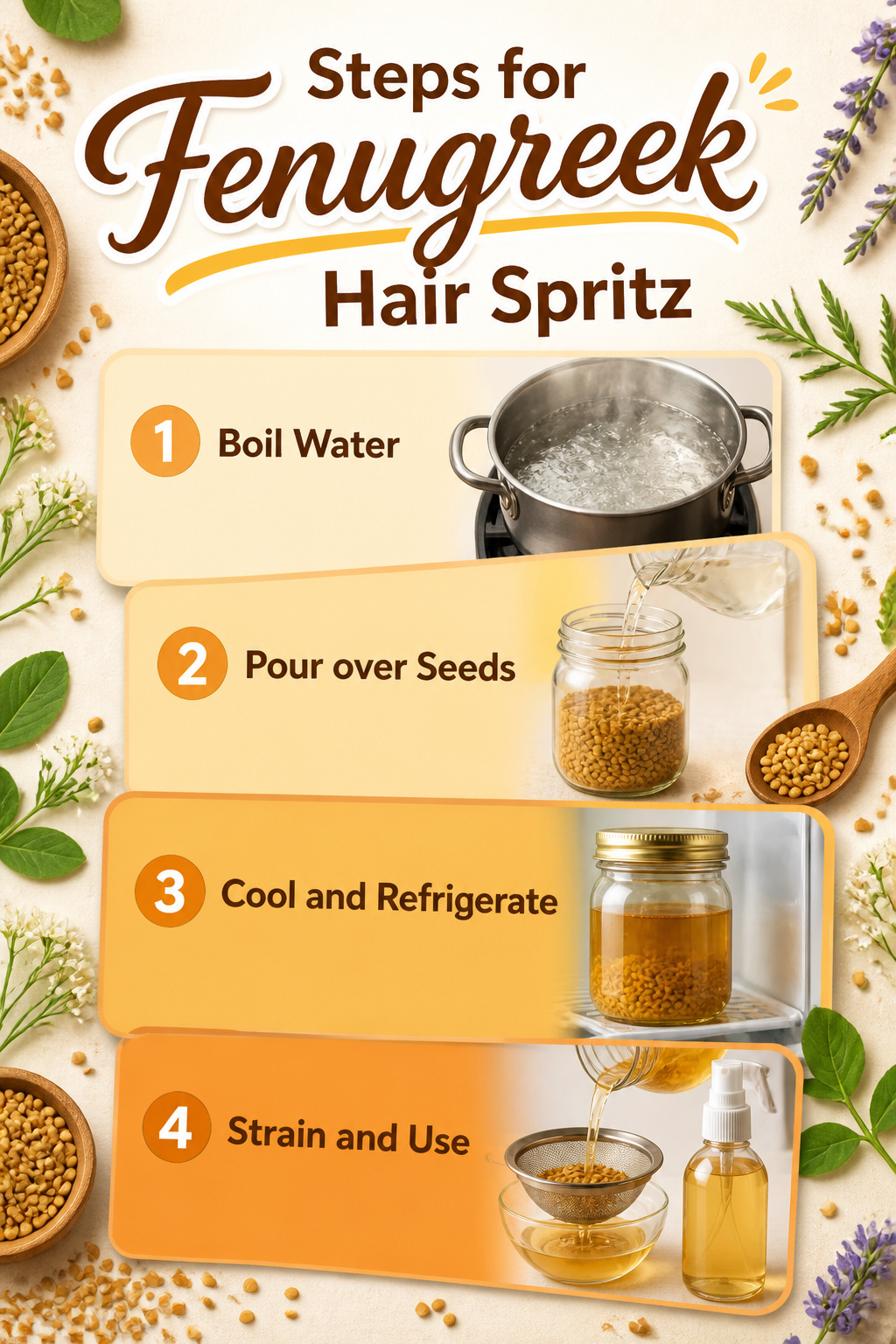
Boiled water draws out something different from fenugreek than cold water does. The heat pulls more of the seed’s mucilage into the liquid, so the spray ends up slightly thicker and more coating on the hair.
- Bring one cup of water to a full boil, then pour it over one tablespoon of fenugreek seeds in a sealed jar.
- Let the jar cool to room temperature, then move it to the refrigerator overnight so the seeds continue to release their properties into the liquid.
- Strain the infusion through a fine mesh in the morning and transfer it to a clean spray bottle.
The finished spritz works as a base layer under oil or butter to seal moisture in, or on its own as a light conditioning and strengthening treatment between washes.
Fenugreek with Onion Juice
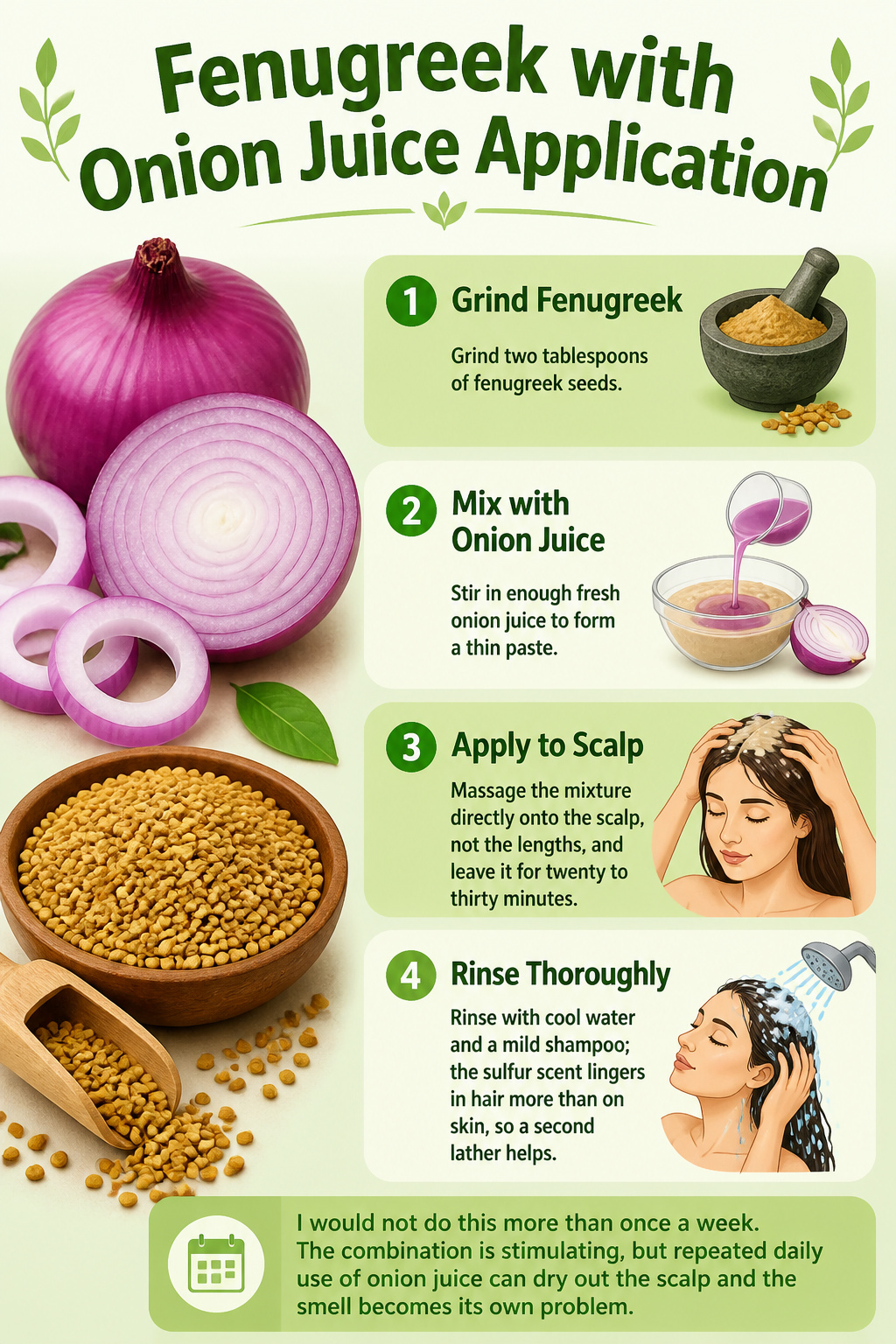
Onion juice brings sulfur compounds to the mix that can wake up sluggish scalp circulation, which pairs well with fenugreek’s conditioning side. The smell is aggressive, so this one is best saved for a weekend morning when you do not have to leave the house.
- Grind two tablespoons of fenugreek seeds into a coarse powder, then stir in enough fresh onion juice to form a thin paste, roughly one to two tablespoons.
- Massage the mixture directly onto the scalp, not the lengths, and leave it for twenty to thirty minutes.
- Rinse with cool water and a mild shampoo; the sulfur scent lingers in hair more than on skin, so a second lather helps.
I would not do this more than once a week. The combination is stimulating, but repeated daily use of onion juice can dry out the scalp and the smell becomes its own problem.
How Soon to Expect Results
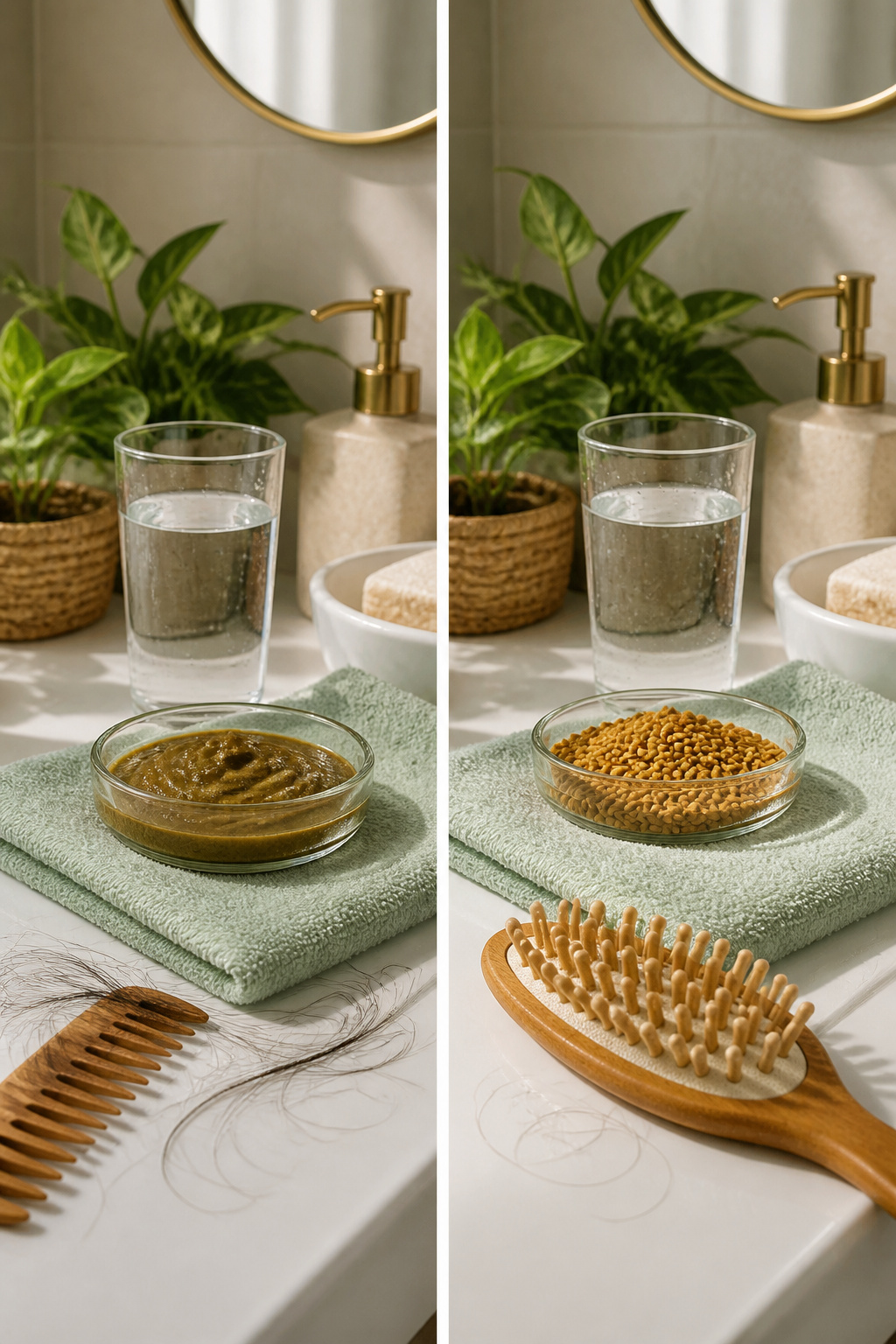
Hair grows slowly enough that three weeks of fenugreek paste or oil can pass before the mirror shows anything definite. Noticeable improvements in hair growth typically appear within three to four weeks of consistent use, and that consistency is what separates the people who stick with it from the ones who decide it failed after a single weekend mask.
The scalp starts responding faster than the eye can track. Less itch, less flaking, a softer texture when you run your fingers through at the roots, those show up sooner. But length and density need the full cycle to register. Skipping weeks or treating it like a monthly reset instead of a routine means resetting the clock each time.
Every method in this guide, masks, oils, rinses, asks the same thing: regular application over that first month before you judge what it is doing for your hair.
Pairing Fenugreek with Other Ingredients
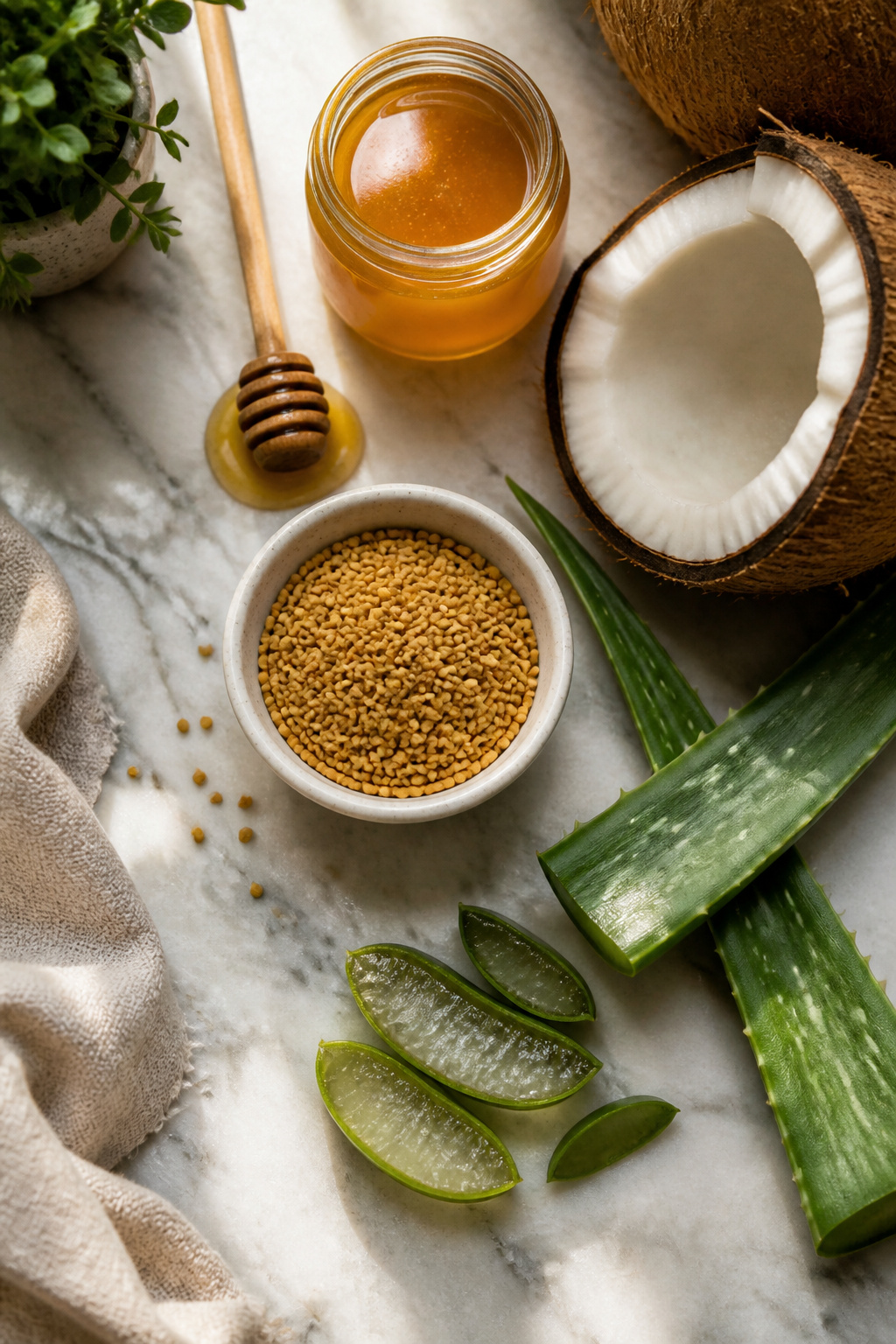
Fenugreek pairs well with several kitchen staples that most people already keep around. Aloe vera thickens the mix and cools an irritated scalp without adding weight, which matters if your hair runs oily. Yogurt brings protein and a little lactic acid to lift dead skin, though I would not leave it on longer than twenty minutes or the smell lingers. Honey draws moisture in, but use it sparingly; too much and the mask turns sticky and hard to rinse. Coconut oil is the obvious choice for dry ends, yet it can overwhelm fine hair and requires a second shampoo to remove. Egg works for protein, yet the risk of cooking it with warm water makes me skip it unless I am very patient that day. Black seed oil comes up in some older recipes, though the sharp scent divides people and I have never found it necessary when fenugreek alone already carries so much of the load. My rule is to pick one partner, not three: the more ingredients you stack, the harder it becomes to tell what your scalp actually responded to.
Safety and Long-Term Use
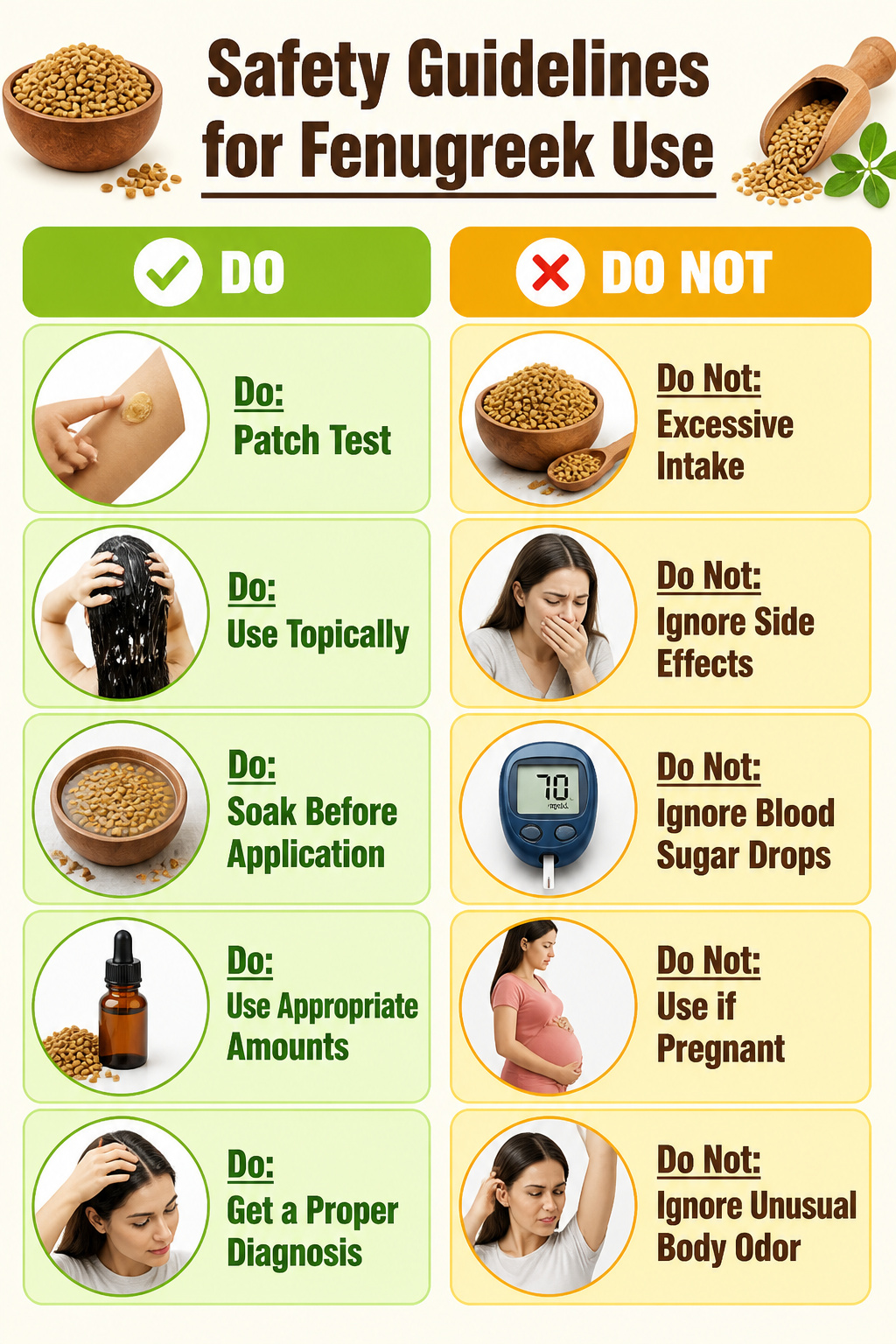
Most people who start using fenugreek seeds for hair stick with it for months, not weeks, so the safety question matters. Fenugreek is generally safe and beneficial for long-term use when you keep the amounts appropriate, especially in a regular hair care routine rather than as an intensive treatment you pile on.
Topical use carries the risks worth watching. The paste or oil should go on skin that has already been soaked in water first, and a patch test on the area where you plan to apply it is non-negotiable. Allergic reactions do happen. Some people also report wheezing or asthma symptoms from exposure, so the airways matter too, not just the scalp.
Eating fenugreek for hair benefits is where the side effects stack up. Nausea and headaches are the milder ones. Excessive intake pushes into diarrhea, bloating, and broader digestive trouble. It can drop blood sugar sharply, and at extreme amounts there have been cases of loss of consciousness. Pregnant or nursing women should skip the internal route entirely. Even the topical route can leave you with unusual body odor, which is a strange price to pay for hair care.
The real split is this: external use for hair keeps most people out of trouble, while internal use demands more caution than the beauty blogs usually admit. If you are losing hair and do not know why, get a proper diagnosis before betting on fenugreek as the fix.
Frequently Asked Questions
How quickly do fenugreek seeds regrow your hair?
Noticeable improvements in hair growth typically appear within three to four weeks of consistent use. The scalp responds faster than visible length; less itch, reduced flaking, and softer root texture show up sooner. Skipping weeks or treating it as an occasional reset rather than a routine resets the clock each time.
Are fenugreek seeds good for long-term use?
Fenugreek is generally safe and beneficial for long-term use when you keep the amounts appropriate, especially in a regular hair care routine. Topical use carries the lowest risk; internal consumption brings side effects like nausea, blood sugar drops, and digestive trouble. Pregnant or nursing women should avoid eating it entirely.
Does fenugreek help with dandruff and scalp issues?
Yes, fenugreek fights fungus and calms inflammation, which together handle both the cause and symptom of dandruff. The antifungal action targets yeast-like buildup that feeds flaking, while the anti-inflammatory side soothes redness and itch. Most recipes that work are left on the scalp first, not just run through the ends.
Can I use fenugreek spray on my hair every day?
Yes, fenugreek spray can be used daily on the hair and scalp. The lighter water spray works as a base layer under oil or butter, or alone for conditioning between washes. Keep it refrigerated and use within about a week, since the mix ferments and smells off beyond that point.
Is fenugreek safe for all hair types?
Fenugreek is generally suitable for all hair types and textures, though those with sensitive scalps should start with diluted applications. The mucilaginous fiber in the seeds adds slip that helps detangle, and the coating locks in moisture without weighing hair down. A patch test on the area where you plan to apply it is non-negotiable for anyone prone to reactions.