
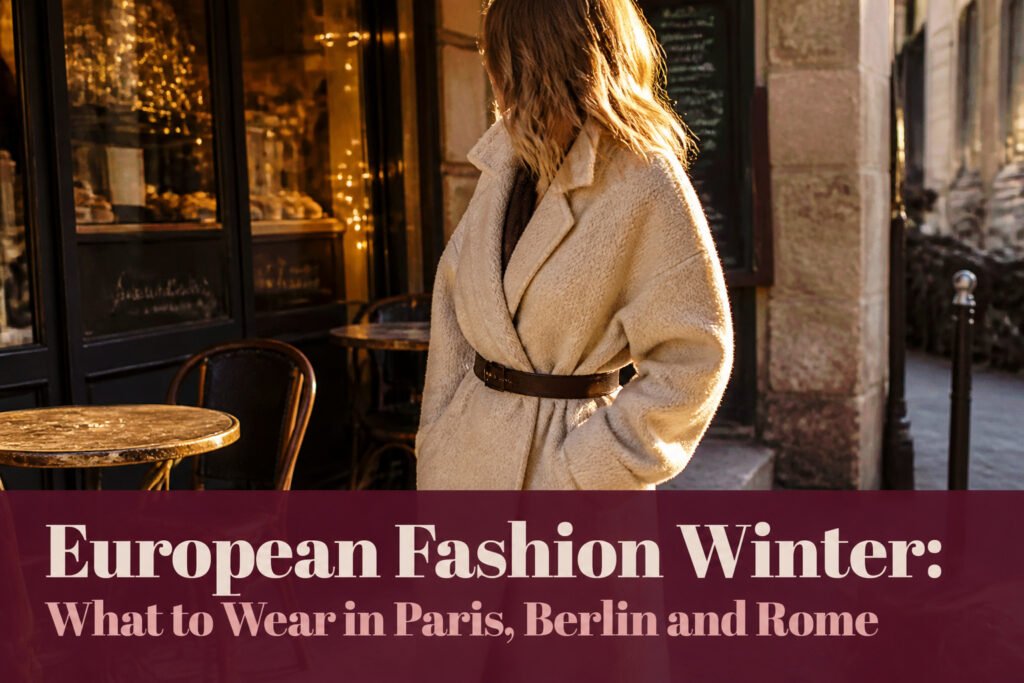
European fashion winter is a system of layering, proportion, and fabric choice that keeps you warm without the bulk that swallows a smaller frame. The catch is that the coat does almost all the social work; what shows beneath it matters only at doorways and tables. A belted fluffy coat cinched with leather at the natural waist, or a wool coat worn deliberately one size too large with the shoulder seam dropped past your natural line, reads as intentional from the Paris metro to a Berlin gallery queue.
Fluffy Coat and Leather Belt
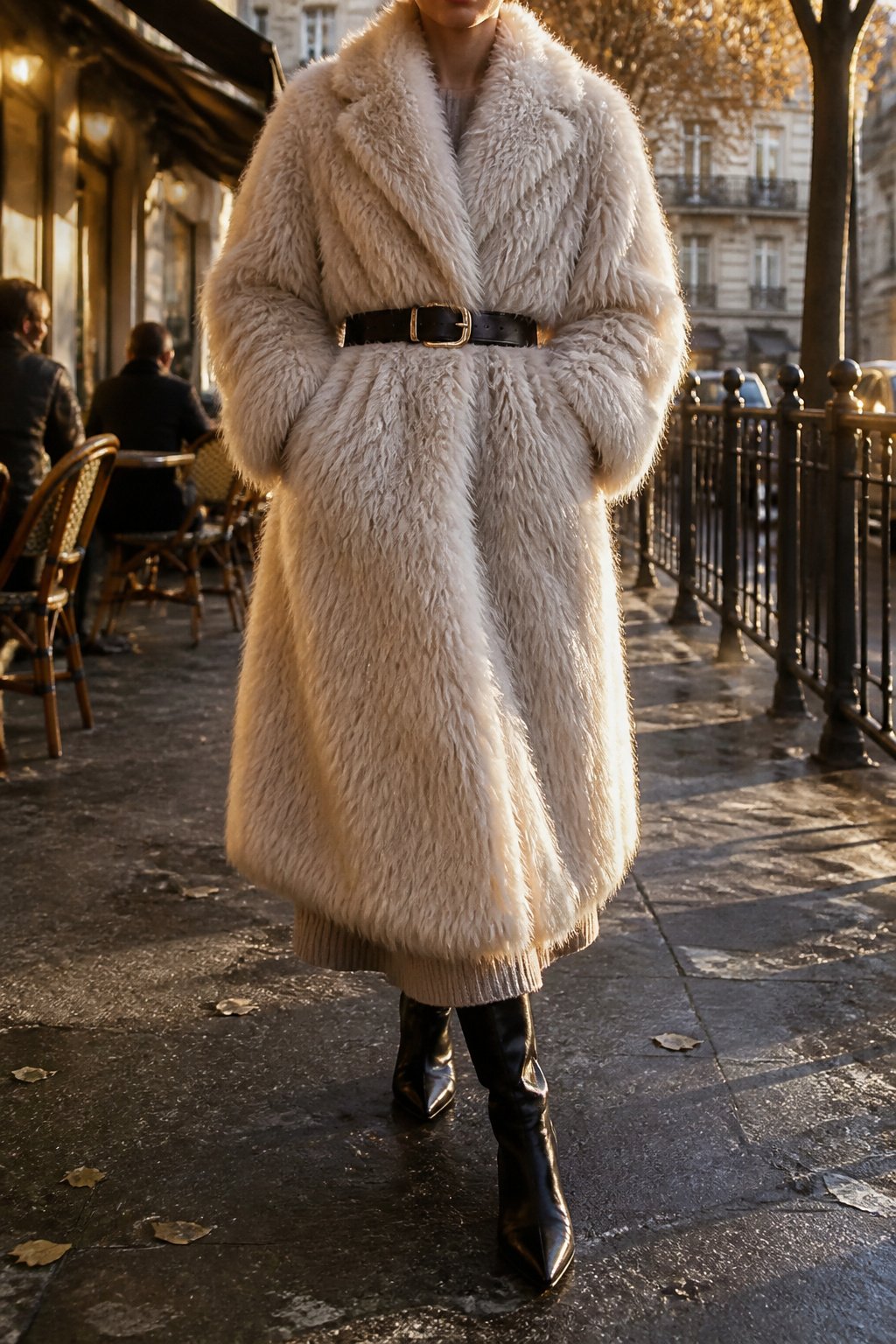
A voluminous fluffy coat can swallow a smaller frame whole if left to hang on its own. The fix is simpler than sizing down: a leather belt cinched at the natural waist redraws the silhouette so the coat’s volume becomes intentional rather than accidental. Soft faux fur or shearling against the hard line of a leather buckle creates the contrast that makes this pairing feel considered, not like an afterthought.
At 37–46°F, the kind of winter morning Paris specializes in, this combination works because the belt traps body heat where the coat gaps open. Wear it over a warm knit with pointed-toe boots, and the whole look stays neat enough for café seating without sacrificing the coat’s cozy appeal. The belted wrap shape reads as feminine without tipping into costume, which is why it keeps showing up in European street style rather than just editorial spreads.
V-Neck Knit and Bubble Skirt
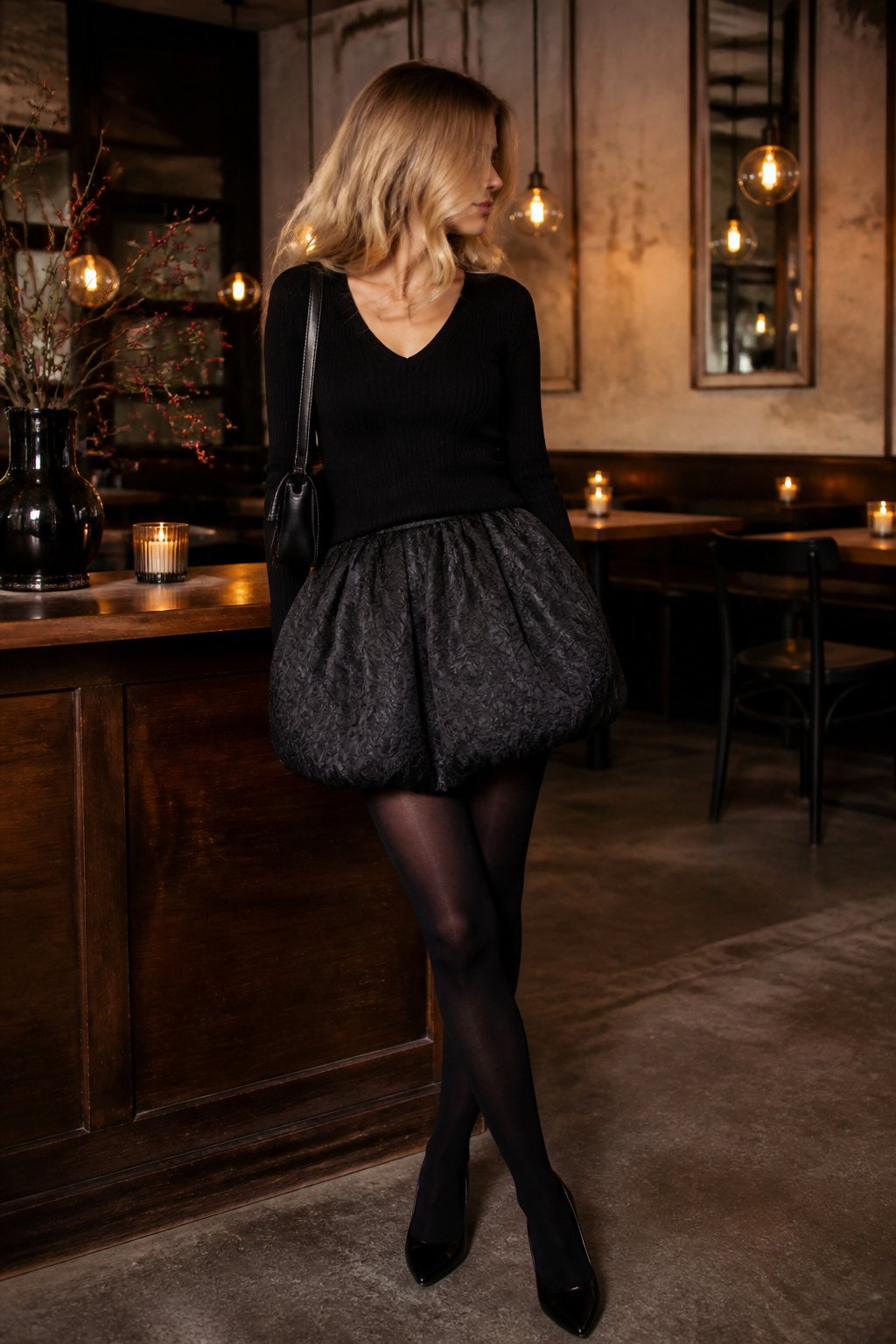
A fitted V-neck sweater does the quiet work of balancing a bubble skirt’s volume without fighting it. The neckline pulls the eye upward toward the collarbone and face, which matters when the lower half carries that much structure. The skirt’s built-in shape holds through tights, so you do not get the collapse that happens with flimsier cuts once winter layers compress them. I would reach for this pairing when the evening calls for dinner out somewhere with actual chairs and a short walk from the taxi, not for a day of museum floors and metro stairs. The proportions read polished in candlelight and feel less clever after three hours of upright walking. Heavier knit weights keep the top half from disappearing against the skirt’s drama; a thin jersey would look like an afterthought.
Wool Blazer, Turtleneck and Turned-Up Jeans
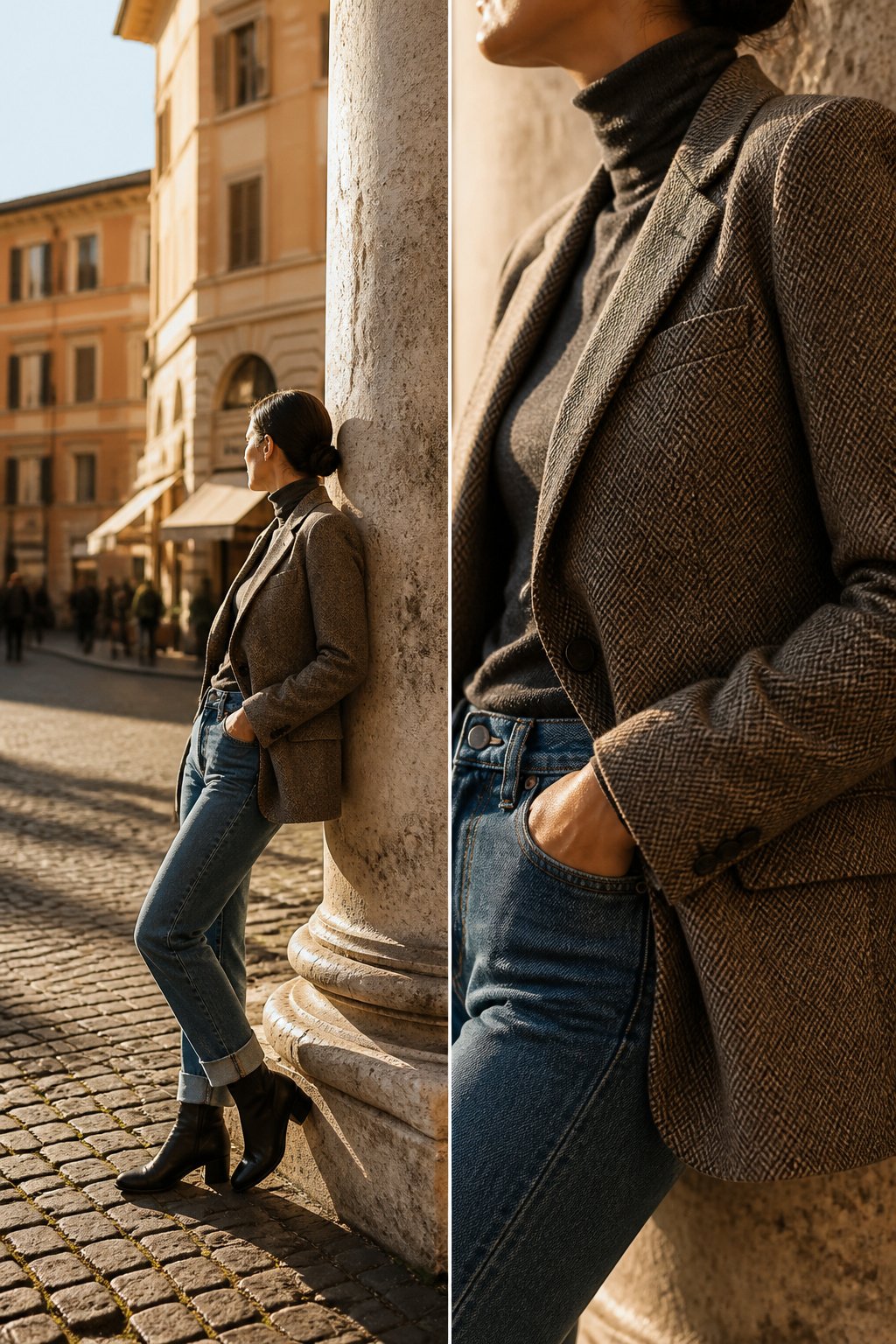
A wool blazer over a thin turtleneck with turned-up jeans solves the winter layering problem without the bulk that swallows a smaller frame. The blazer gives structure, the turtleneck sits close enough to stay warm under a coat, and the cuff at the ankle does the actual work of making this wearable for petites.
That turned-up hem breaks the vertical line exactly where it should. Ankle boots sit visible, not buried, and the eye reads the leg as proportioned rather than shortened. Without the roll, the same jeans pool at the boot and flatten the silhouette.
The turtleneck needs to be thin. A chunky knit fights the blazer lapel and adds width through the shoulders that the jacket is meant to control. Merino or a fine silk blend keeps the neckline clean.
This reads as workday in a neutral blazer with small studs or a simple hoop. For evening, the swap is only the earring: a longer drop or a bolder shape, and the same three pieces go to dinner without looking like you came straight from a desk. The blazer does the heavy lifting either way; the jewelry just signals which room you’re in.
Leopard Coat and Pinstripe Trousers
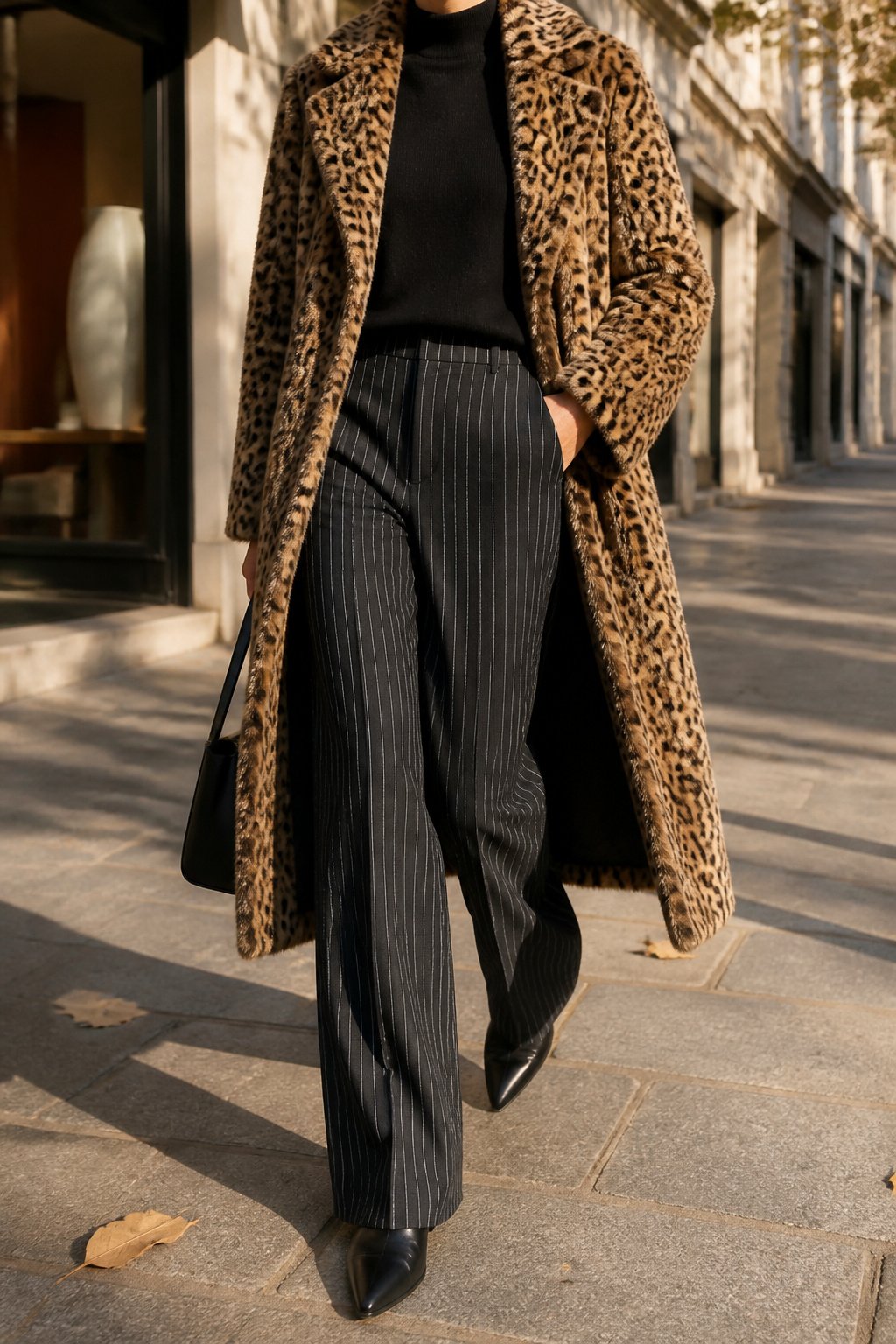
A leopard-print coat reads as a neutral on European streets in winter, where the pattern is common enough to feel like texture rather than a shout. Pinstripe trousers underneath keep the look grounded in something office-adjacent; the vertical lines pull the eye downward and balance the coat’s visual weight. Leave the coat open so a plain black or ivory top sits between the two patterns, creating a quiet band that keeps them from fighting. I learned this the hard way in Berlin, buttoning mine against the wind and catching my reflection in a shop window: the print swallowed the stripes entirely and the whole outfit flattened into noise. The top does not need to be interesting; its job is to separate. Thin merino or a matte silk work better than anything with sheen, which would read as a third competitor. In Rome, where the light is warmer and lower even at noon, this pairing feels correct for a gallery morning that turns into a late lunch; in Paris, it passes at a café table without looking like you dressed for an audience. The trousers should be cut slim, not wide, or the silhouette becomes too much volume in too many directions.
Cosy Knit and Tailored Trousers
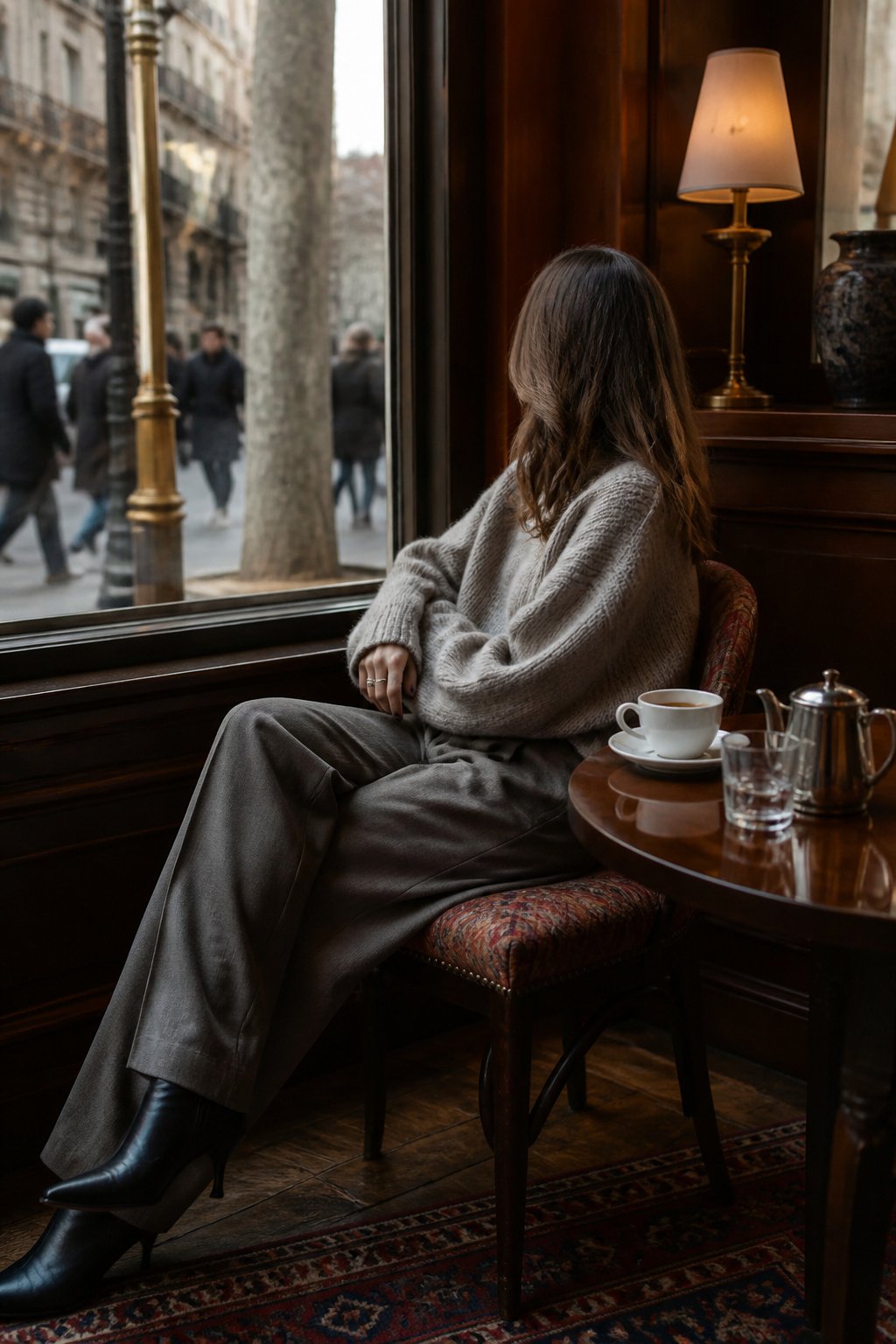
An oversized sweater with precisely cut trousers looks effortless on a Paris street, but the proportions collapse the moment the pants shrink above the ankle or lose their press. Full-length and freshly pressed is the only way the pairing reads as intentional rather than lazy.
This combination fooled me most often into thinking I looked polished when the sweater was pilling. The camera catches what the hotel mirror does not: a fuzzy, balled surface cheapens even expensive wool, and the contrast with sharp tailoring only highlights the damage. Cashmere or alpaca blends hold their surface longer, though no knit survives a winter of daily wear without some wear showing.
For the trousers, high-waisted cuts keep the sweater from swallowing the figure entirely. Suede bags, soft against the knit, finish the look without competing with it. The balance is between the volume on top and the clean line below; get that wrong and the outfit becomes a shapeless compromise rather than a deliberate choice.
Trench Coat and Miniskirt
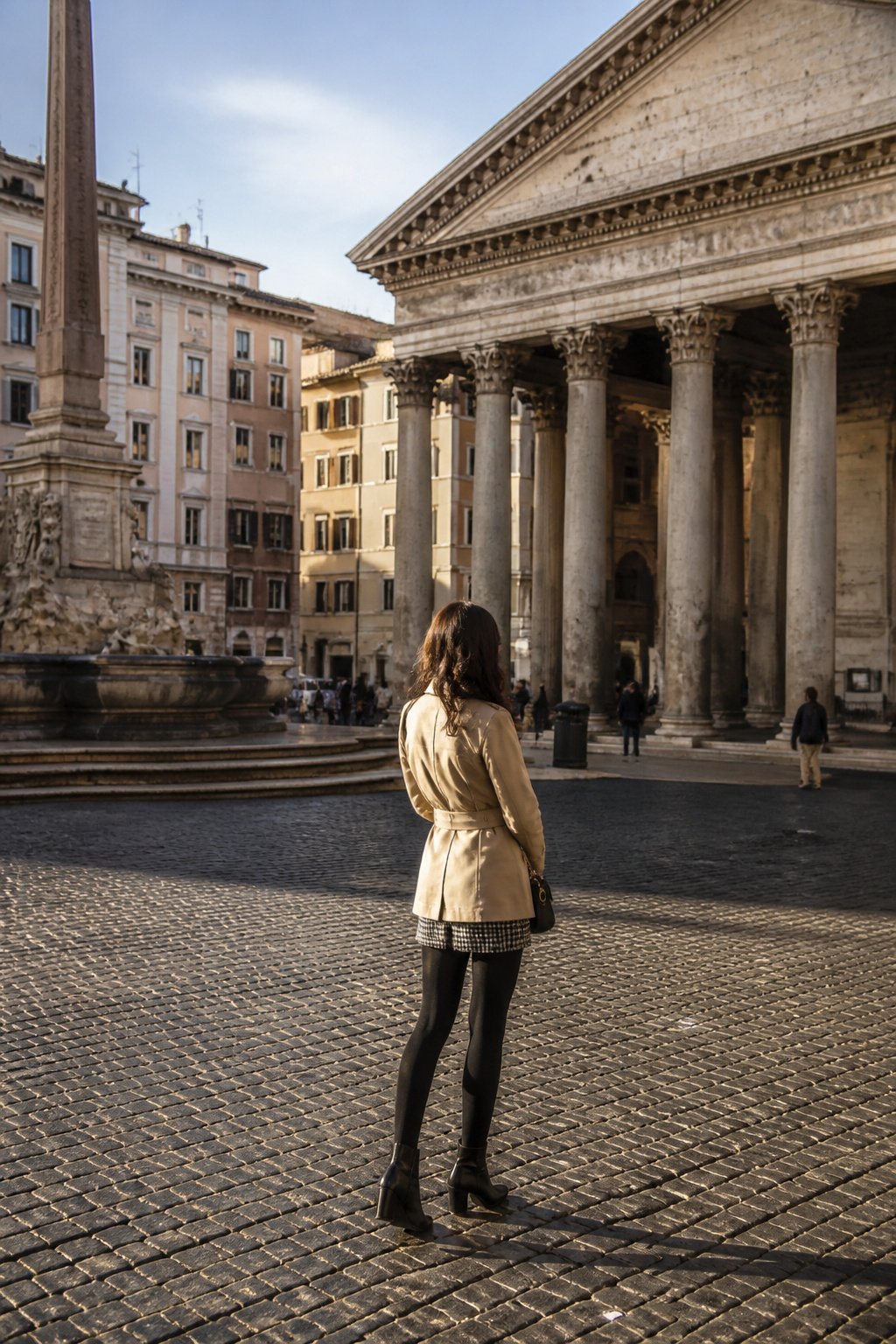
A classic trench over a short skirt is the kind of proportion play French editors have been doing forever, and it works because the coat carries all the warmth weight while the legs stay the visual focus. The catch is the gap: bare skin or a whisper of nylon will read as costume, not style. Substantial tights, the opaque 100-denier kind, or over-the-knee boots that actually meet the hem are what make it wearable rather than aspirational.
This is a 40°F and above outfit for me, which is why it lives in my Rome and late-November Paris rotation but stays home for Berlin Januarys, where the average sits closer to 34–41°F and the wind cuts through that slit in ways the trench simply cannot fix. The trench itself should be lined, ideally with a removable quilted layer, since the skirt offers no insulation below the waist. I have tried this with a wool mini and with a heavier cotton twill; the wool held its shape better under the belted coat and did not bunch at the hips.
Cape Jacket, Straight-Leg Jeans and Knee-High Boots
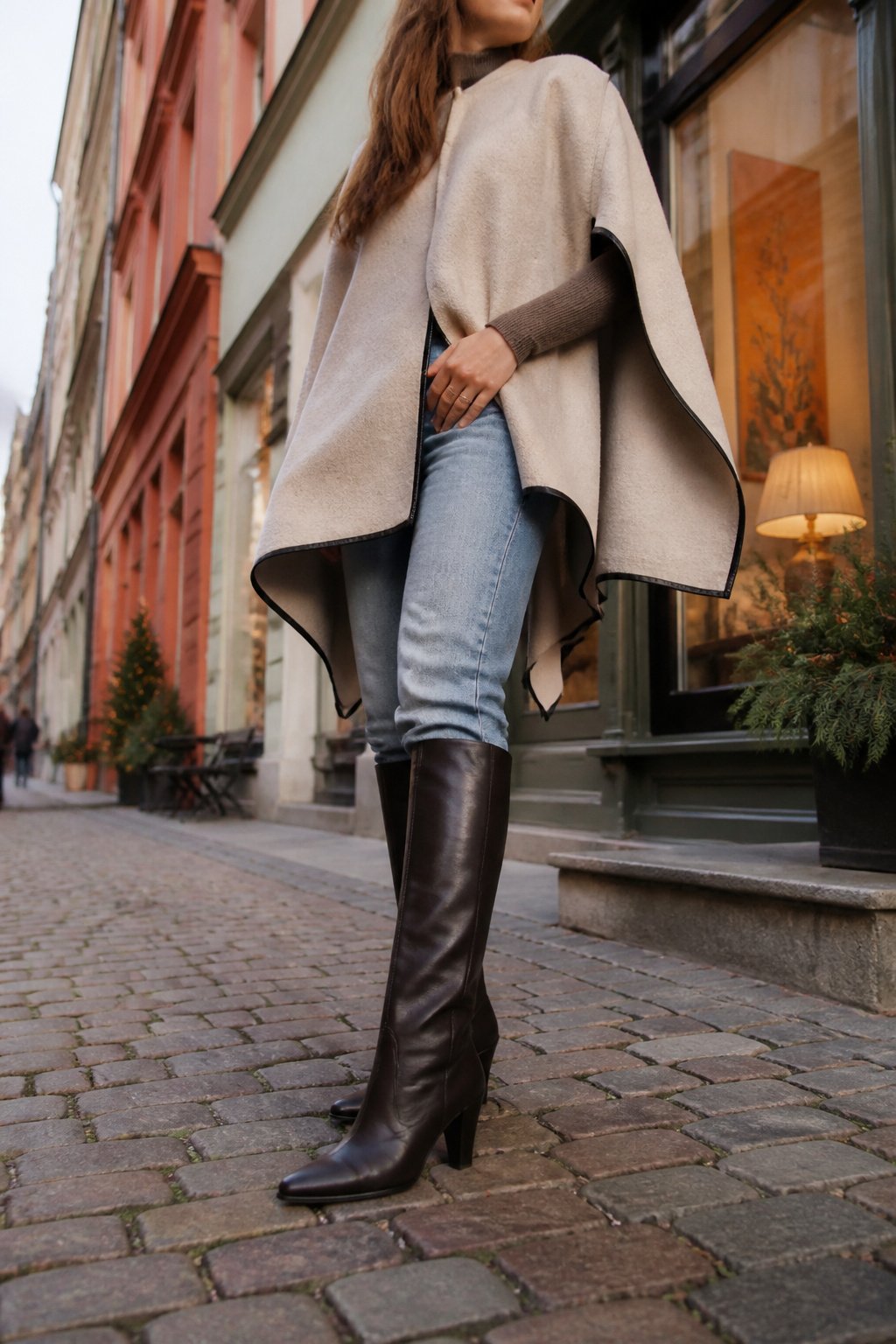
A cape jacket demands a stable base, and straight-leg jeans with knee-high boots deliver exactly that. The drama of the swinging hem only works when everything below it stays tidy and vertical.
The boot needs to fit close through the calf. Any gap between leather and denim, and the cape hem will catch and bunch with every step. I learned this the hard way in a Rome downpour, tugging at wool every third stride while trying to cross Piazza Navona. A fitted shaft keeps the line clean from hip to toe.
The jeans matter just as much. A slight crop or exact length to the boot top prevents the fabric from pooling or riding up. Skinny jeans work here, but a true straight leg gives the same neat tuck without looking like leggings.
Shoulder bags are essentially unusable. The cape’s volume sits right where a strap needs to cross, so the bag slides to your elbow or traps fabric underneath. A handheld tote or cross-body worn under the cape solves this, though fishing for a phone becomes a two-handed operation. For a full day of Berlin gallery hopping, I would plan pockets or accept the inconvenience.
Oversized Wool Coats
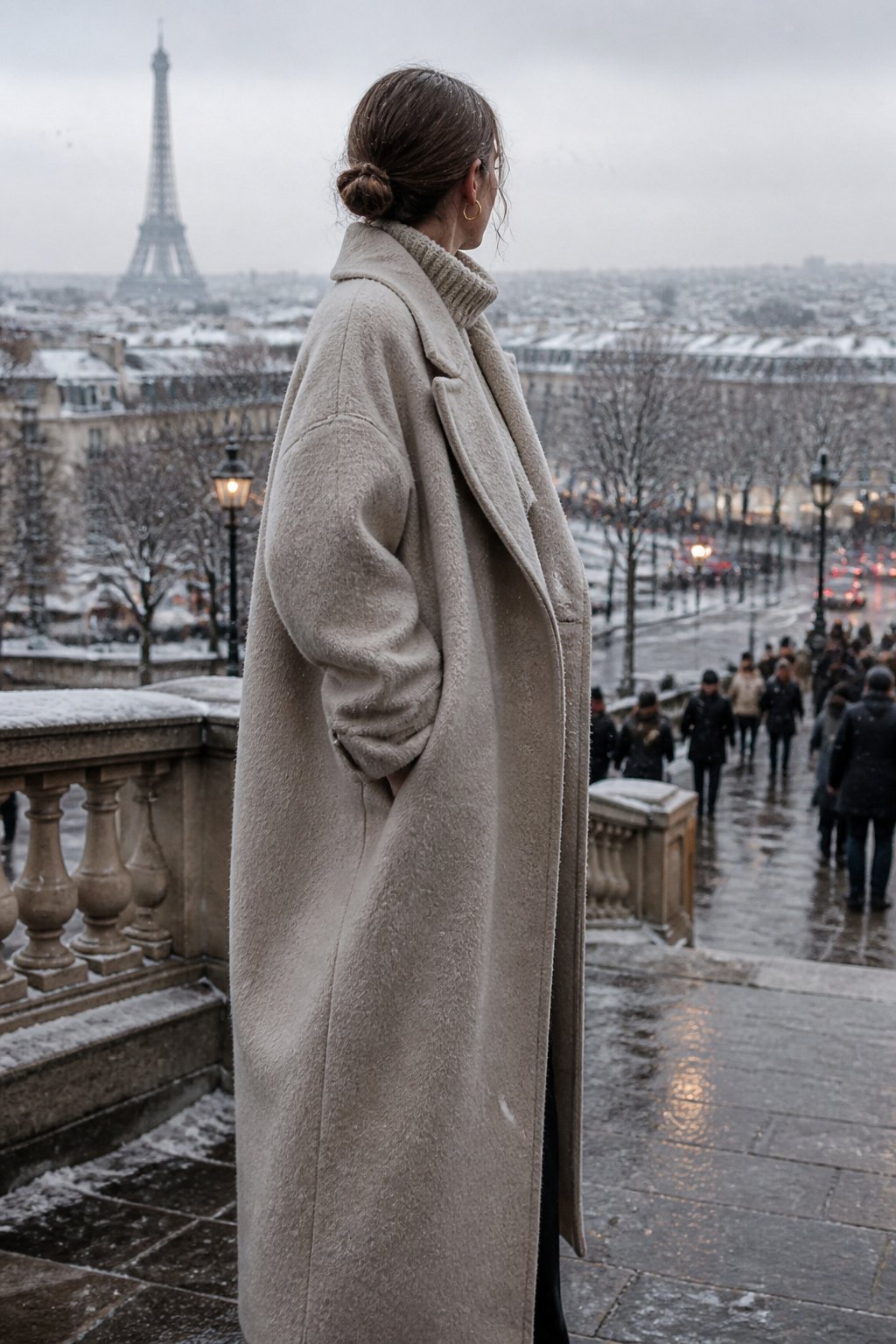
The single most photographed European winter item is a wool coat worn deliberately one size too large. The shoulder seam dropping past your natural shoulder is the tell, and that extra room is what lets you pile on a chunky knit or a thin down layer underneath without the coat pulling across your back.
Neutral colors, camel, black, gray, cream, dark brown, are the practical choice for a trip that hits multiple cities. They read as local in Paris, Berlin, and Rome without shifting. A burgundy-red or baby pink version works if you want the coat itself to be the statement, though the sources lean toward keeping the coat quiet and adding personality through a patterned scarf or leather gloves instead.
A belted wrap cut, borrowed from the same logic, adds shape back into all that volume and keeps the silhouette from reading as borrowed.
Chunky Knit Sweaters
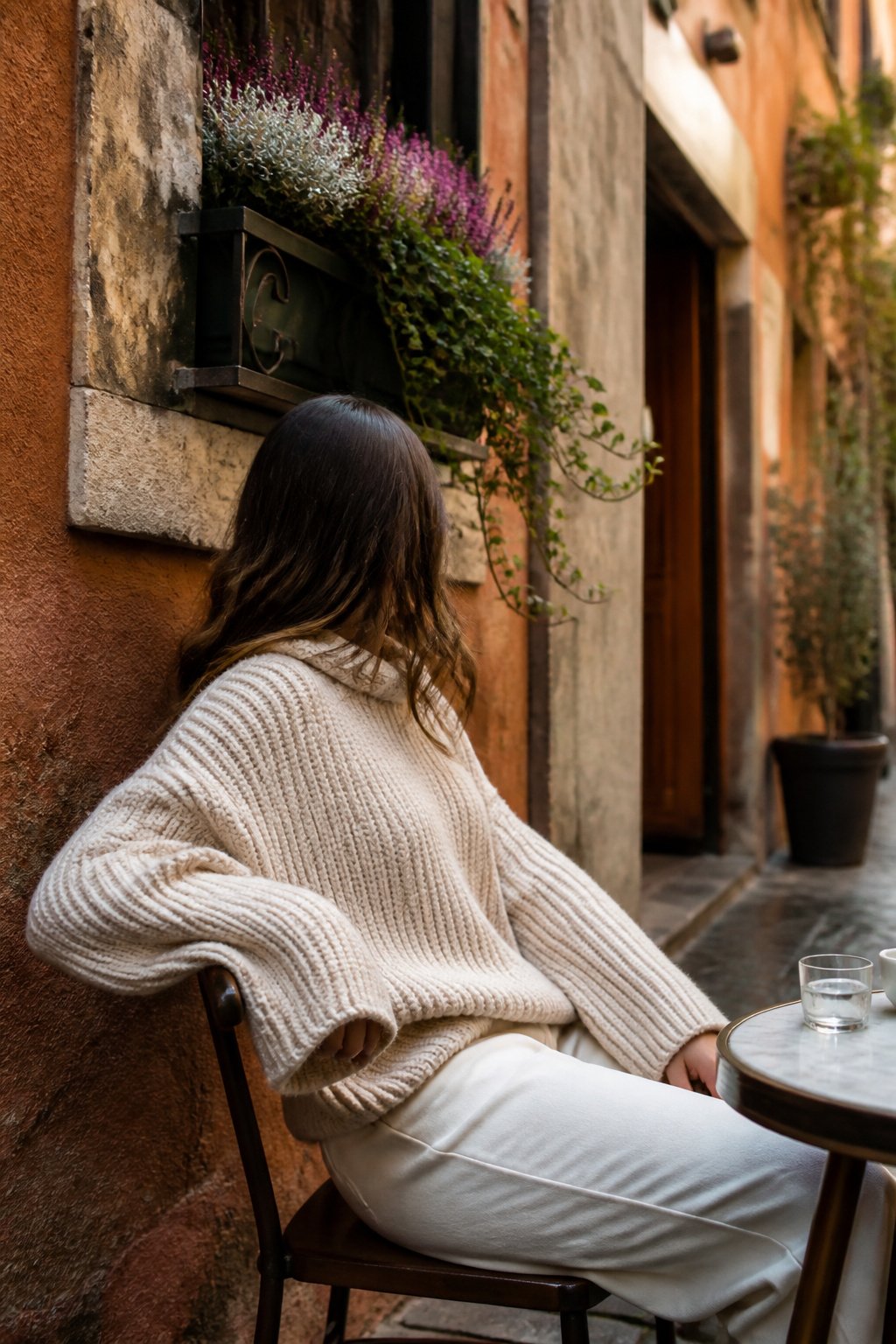
A chunky knit sweater works as outerwear on a mild Roman afternoon or as the mid-layer you live in once Berlin drops below freezing. The texture is what reads as intentional in European cities, where a flat fine-gauge knit can look like you forgot a coat.
The neckline scale has to match your own frame, not the mannequin’s. A wide boat neck will swallow a narrow shoulder line whole, and a deep V in true cold needs something beneath it, or you are just wearing a window to your base layer. I learned that the hard way in a drafty Paris apartment where the radiator worked when it felt like it.
For a winter packing list, five sweaters is the working number: enough rotation to let one dry if you get caught in rain, few enough that each one has to earn its place in the bag.
Leather Jackets
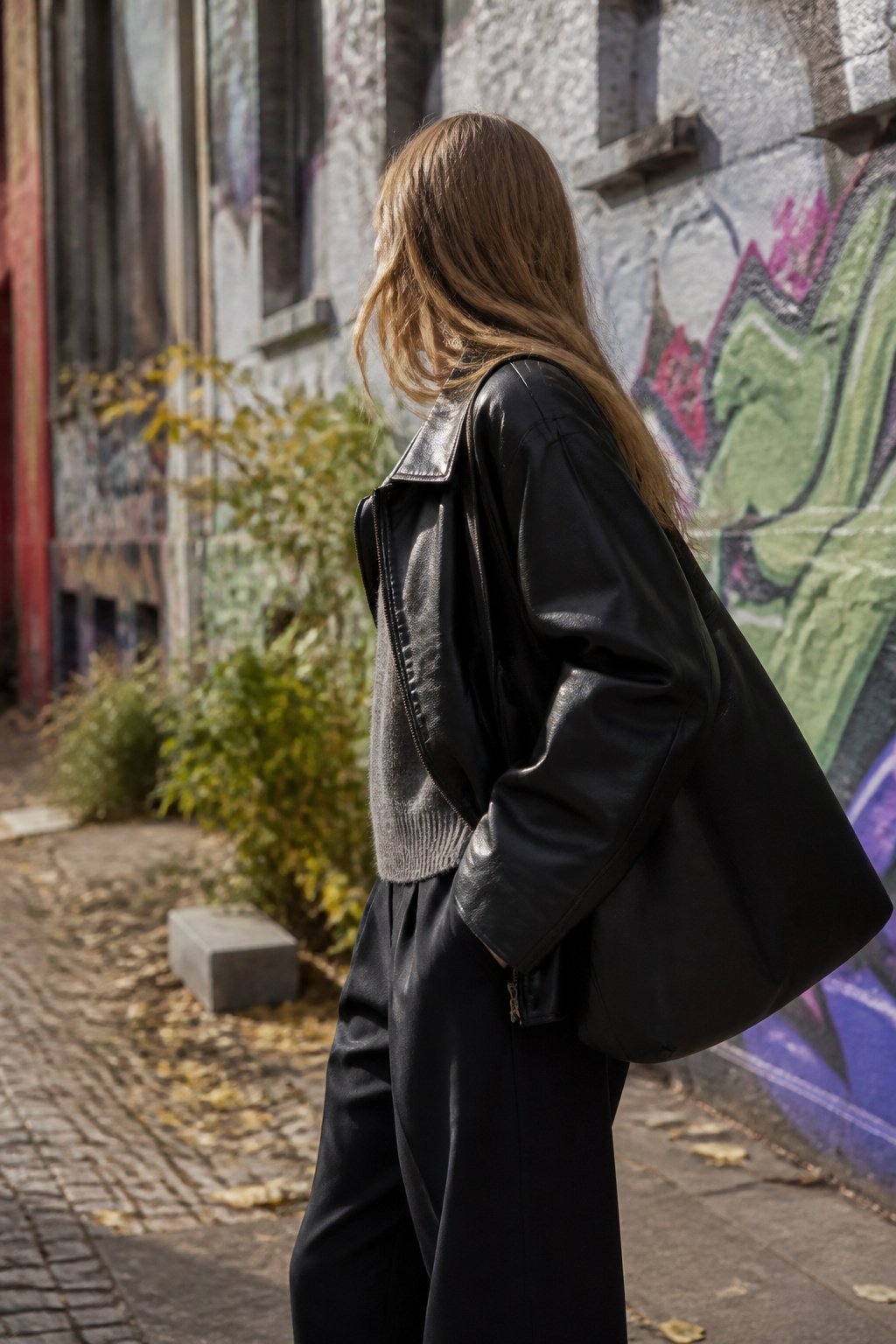
A leather jacket in a European winter is a wind-blocking layer, not the whole outfit. The material seals out the gusts that cut through wool alone, so the coat on top does the insulating while the leather underneath stops the chill from reaching your sweater. This only works if the jacket is cut with enough room for a thin knit beneath without pulling the seams at the shoulder or armpit. A leather jacket that strains over a sweater is a layer you will leave in the hotel.
The moto style with its diagonal zip reads more casual than a blazer-cut version. The asymmetrical hardware gives off a weekend energy that works under a relaxed coat but can feel off pressed against tailoring. The cleaner, jacket-style cut slips under a structured wool topcoat without the visual fight. Both versions need that same interior space: buy for the layered fit, not the silhouette you see on the hanger. I learned this the hard way in Berlin, where a too-snug moto left me choosing between a warm torso and arms I could actually move.
Knee-High Boots
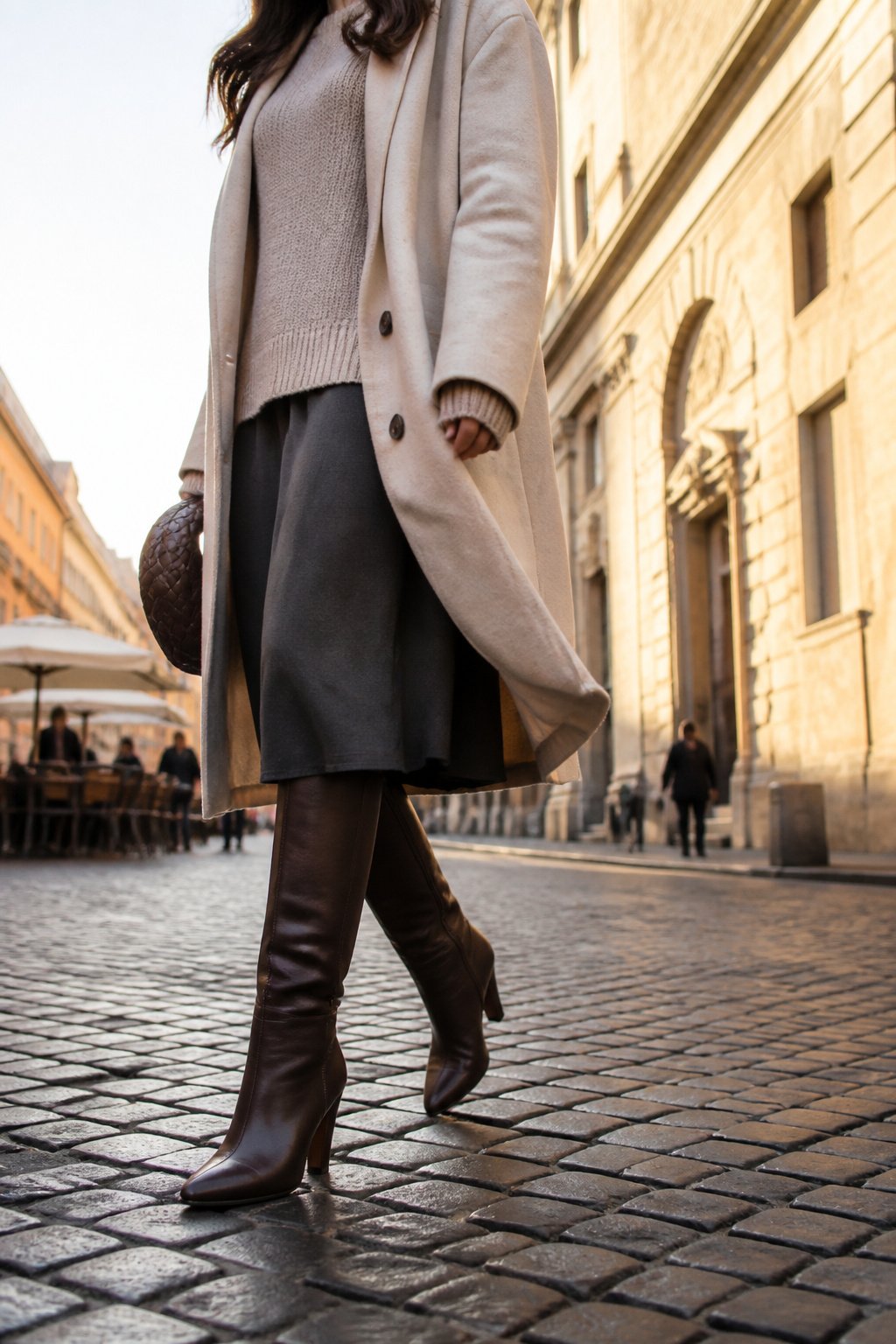
A boot that hits right at or just below the kneecap does more work than anything else in a winter suitcase. The height is the reason: it keeps the hem of a cropped pant dry, bridges the gap under a midi skirt, and reads as finished with tights in a way ankle boots never quite manage.
Waterproofing is non-negotiable once you have walked twenty minutes through Berlin slush to reach a restaurant with no coat check. Leather or suede both work, but only if treated; sprays exist for this, and reapplying every few wears is cheaper than ruining one pair.
The shaft circumference matters more than most people check. A slim shaft tucks under skinny jeans but fights with anything heavier. A wider opening swallows straight-leg trousers yet gaps around bare legs. Trying the boot on with the actual pants you plan to bring, not the leggings you wore to the store, saves one common packing mistake.
For a two-week trip, three pairs of shoes is the practical limit. One should be these knee-high boots, one should be a waterproof ankle boot for the wettest days, and the third is your call depending on itinerary. Two boots and one dressier option, or two boots and one trainer if your days run long on foot. The knee-high pair earns its spot by doing double duty at dinner and on cobblestones.
Tailored Trousers
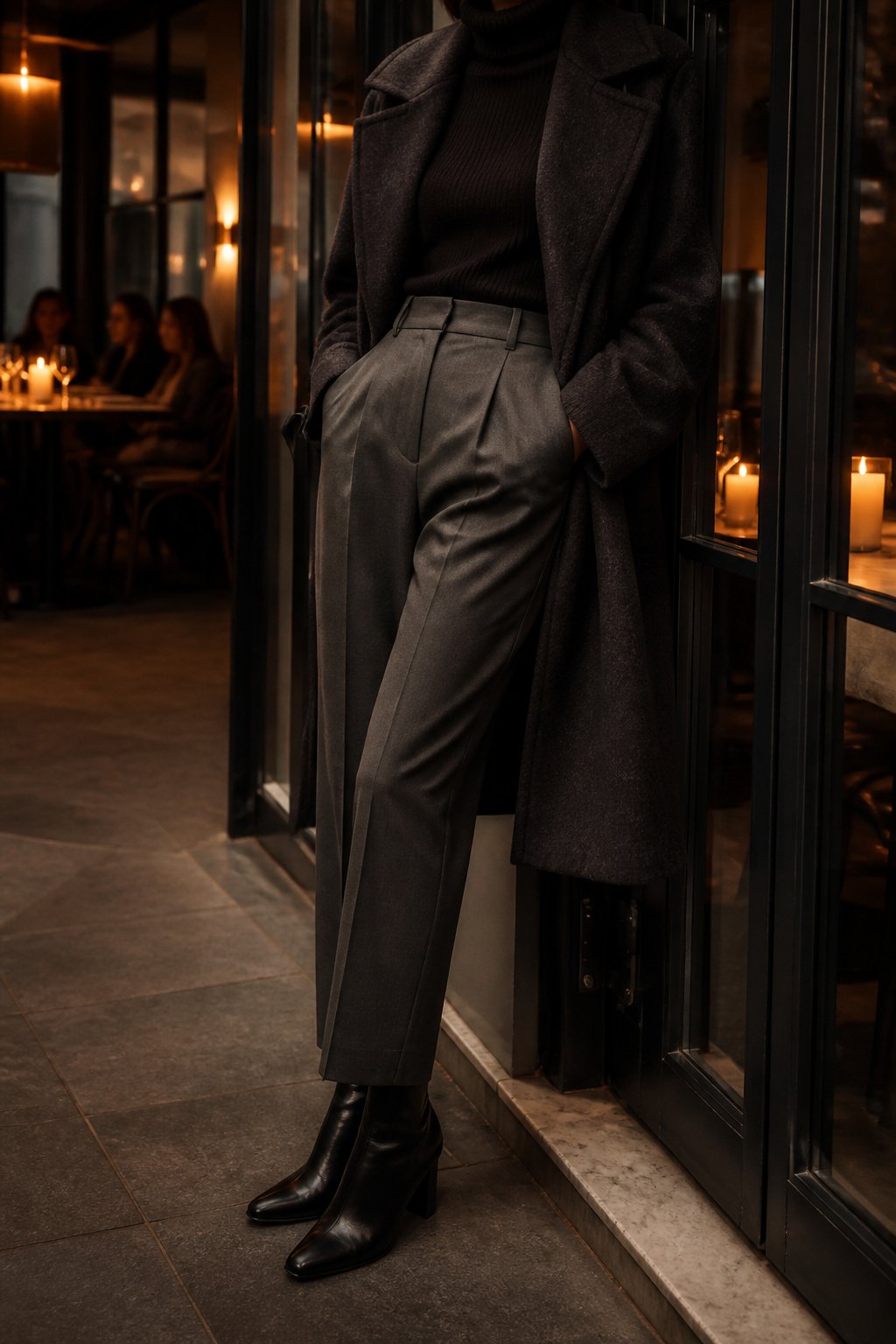
Wool trousers with a proper cut do the heavy lifting that jeans cannot when dinner reservations or gallery openings are on the itinerary. The fabric reads as weight and intention; in winter, that density matters. The break at the ankle should kiss the top of the boot or hover just above it, nothing pooling, nothing catching. A center crease becomes non-negotiable once the cloth thickens, since the eye needs that sharp line to read refinement rather than bulk.
I think of these as one of three pant options worth suitcase space: turned-up denim for daytime, something fluid for evening, and these for every elevated moment in between. The crease resets with a steam in most hotel bathrooms, though a travel steamer saves the guesswork.
Statement Outerwear
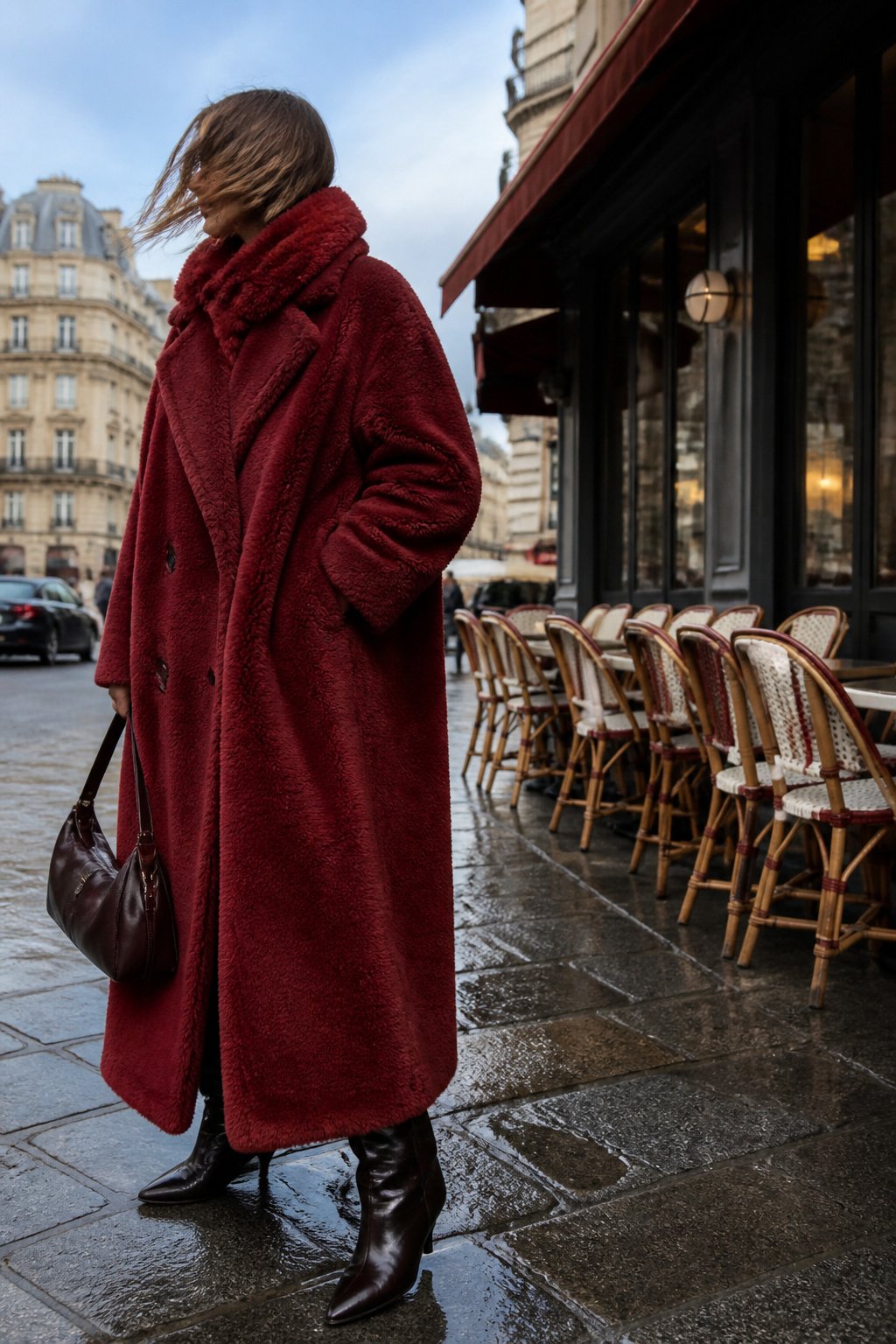
A single statement coat carries the whole outfit in European winter dressing. In Paris, Berlin, or Rome, the coat is what the world sees on the street, on the metro, at the café door, so that is where the budget and attention go. Bold colors, quilted textures, faux fur accents, and dramatic silhouettes do the work that layers of jewelry or patterned separates would do indoors. The practical balance is three coats total: one statement piece in an unusual color or texture, plus two quieter options that trade drama for versatility. A belted wrap coat adds shape without requiring much beneath it, and a fluffy coat cinched with a sleek leather belt reads as intentional rather than simply warm. Nothing else in the outfit needs to compete.
Layered Accessories
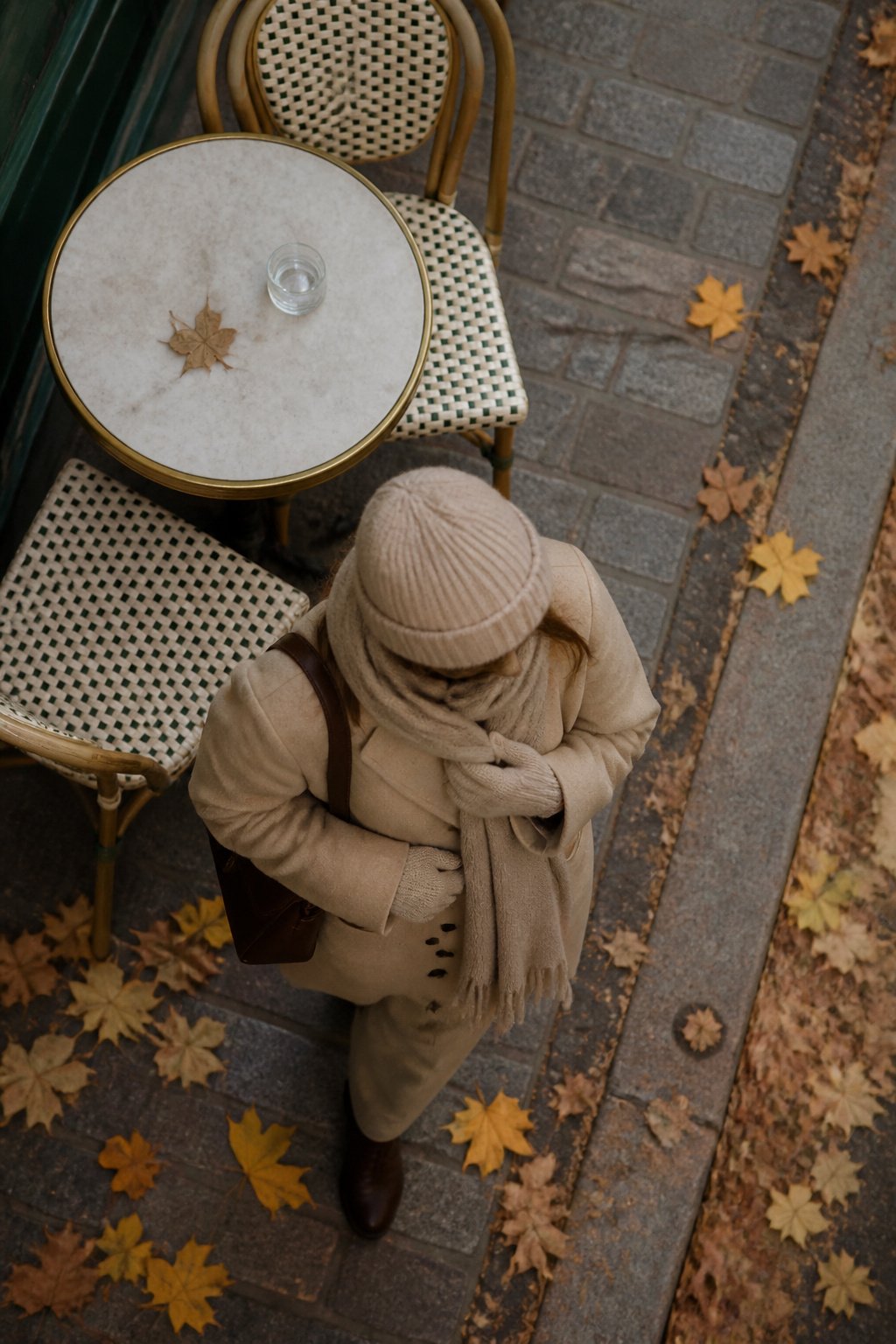
A single cashmere scarf in oatmeal draped twice around the neck gives more warmth than you’d expect, but the look stays flat without something else competing for attention. The move I keep seeing in street shots from all three cities is the monochrome stack: scarf, hat, and gloves drawn from the same family of color, not the same dye lot. Charcoal wool gloves with a charcoal ribbed beanie and a charcoal bouclé scarf read intentional because the textures vary while the tone holds steady. Material matching without tone coordination looks like you grabbed what was clean, which is exactly what happens when you pair that cashmere scarf with butter-soft leather gloves in a color that doesn’t speak to it. The leather pulls warm, the cashmere reads cool, and the eye catches the clash before it registers the pieces themselves. Better to keep the leather gloves in the same tonal lane as the scarf, or to step deliberately into contrast with a cognac against a stone gray, something you chose rather than inherited from your glove drawer. The hat is where most people play it safe with black, which breaks the monochrome set and flattens the whole silhouette back into generic winter gear. A camel beanie with camel gloves and a camel scarf, or even an all-olive stack, gives the coat something to work against.
Puffer Jackets
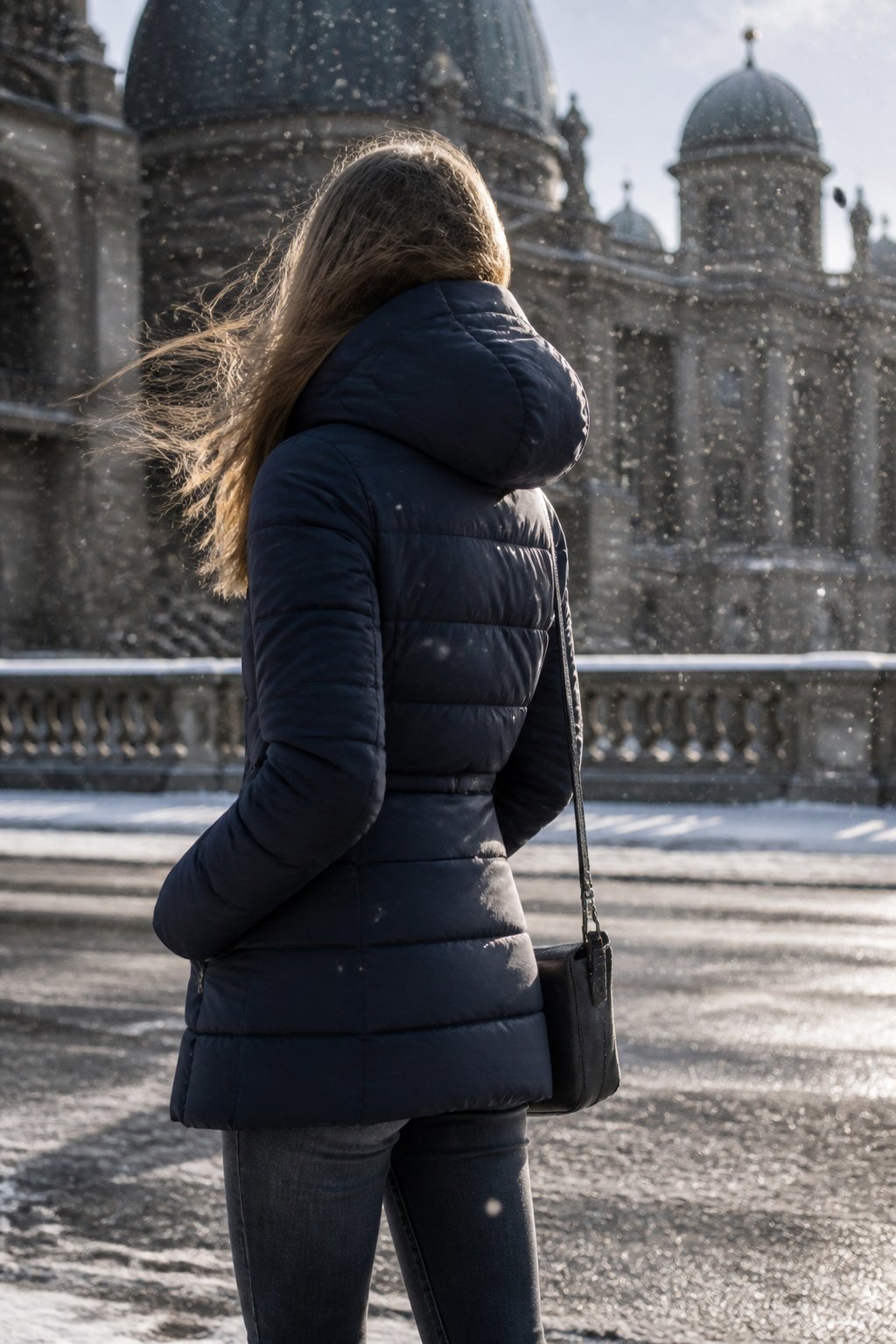
Quilted, down-filled jackets give the most warmth for the least weight when the temperature drops in Paris, Berlin, or Rome. The trick is choosing the cut that reads city rather than campsite. Slim, long-line puffer jackets hit mid-thigh and move easily through metro turnstiles and narrow café aisles; cropped, oversized outdoor styles, no matter how warm, tend to look like you are headed for a ski lift instead of dinner in the Marais.
A belt or a defined seam at the waist keeps the silhouette from collapsing into a sleeping-bag effect. I have seen this detail make the difference between a coat that stays on all day and one that comes off the moment you reach your destination, which defeats the point in a European winter where indoor heating is often minimal.
Most coverage of these jackets treats them as purely practical gear rather than aspirational fashion. That is fair, but it also means the bar for looking intentional is low. A matte shell in navy, olive, or black, with clean hardware and no visible logos, passes in any of the three cities without comment. A belted, long-line puffer in a dark color is the one warm layer you can wear straight from a morning museum queue to a late bistro table.
Textured Tights
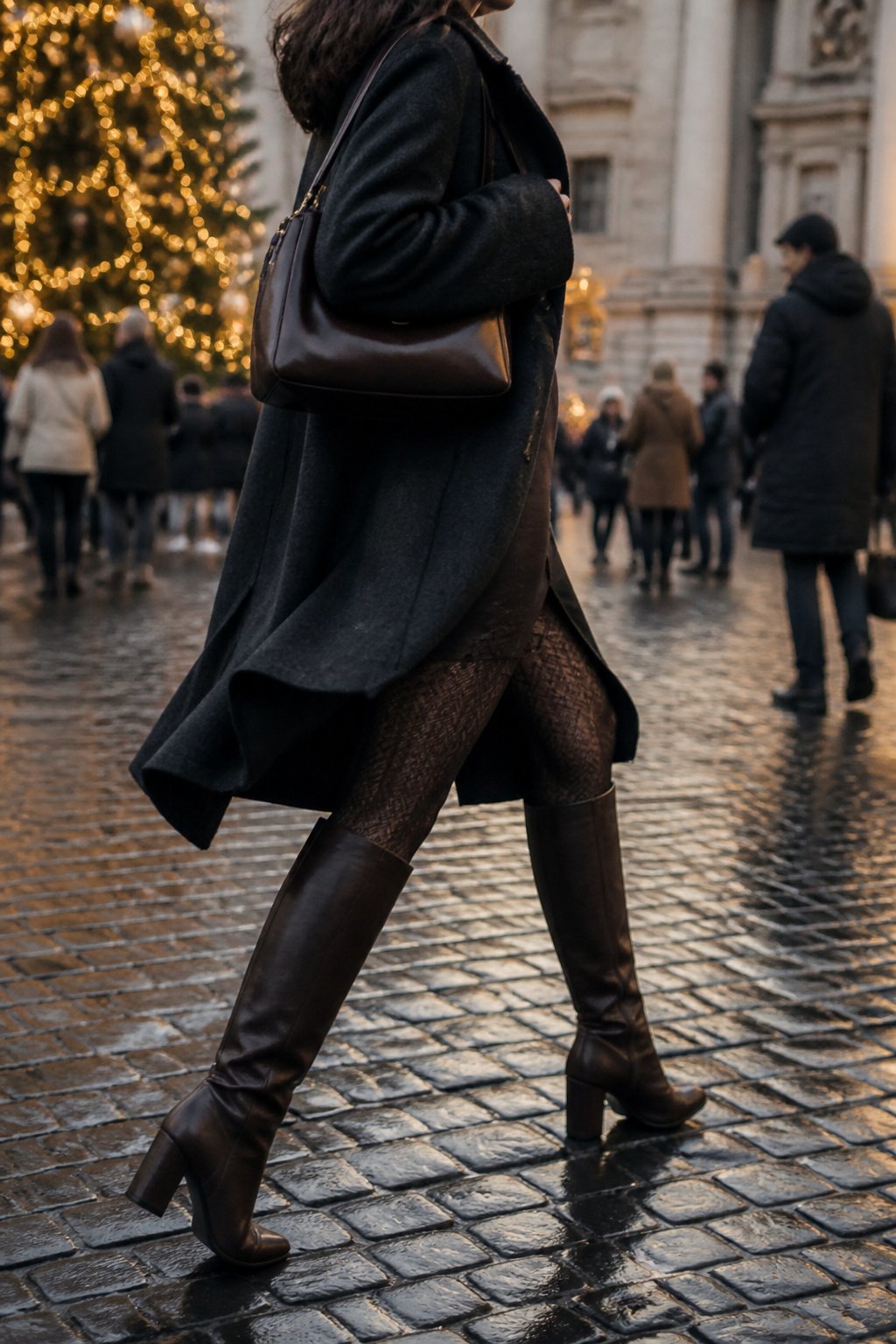
Patterned or ribbed hosiery gives a winter outfit something to look at when a skirt or cropped pant leaves the leg exposed. The scale of the texture should match the scale of the rest of the look: fine ribs sit cleanly with delicate heels or slim loafers, while heavier cable knits hold their own against chunky boots. A floral or geometric print reads modern when the shoe is simple, romantic when it is strappy. Opacity matters in winter: 60 to 100 denier blocks the cold without the chalky look of a full opaque. Below 60, the leg shows through and the warmth disappears. Above 100, the tights start to read as leggings and the outfit loses its lightness. For a vintage touch, white lace tights work against a dark hemline; for something bolder, a red tight under a neutral coat does the standing out for you. Knee-high boots let the pattern peek only at the thigh, which is enough to keep the look intentional rather than apologetic.
Classic Trench Coats
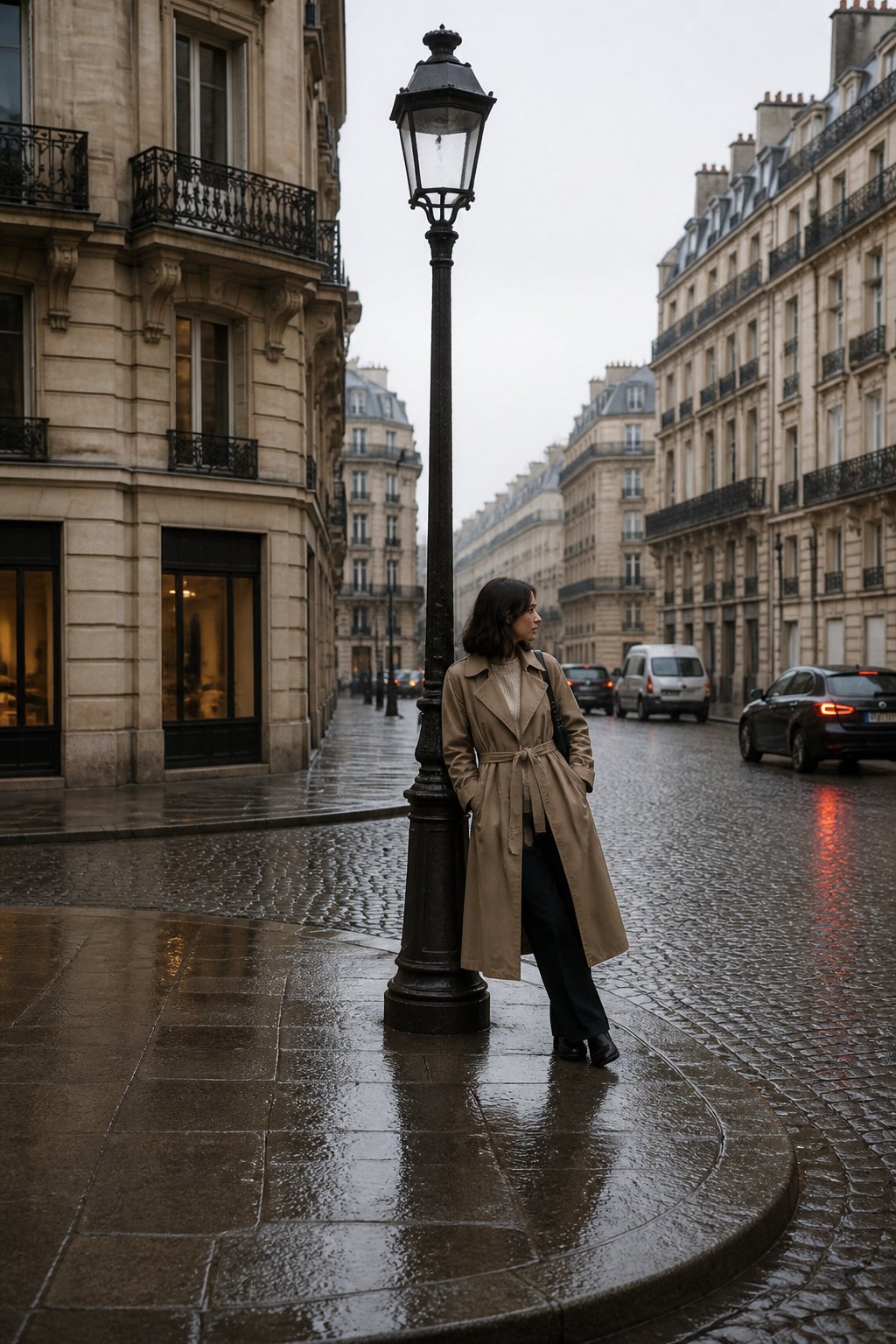
A belted cotton or cotton-blend trench coat functions in European winter only with substantial layering beneath. The traditional khaki reads more Paris than Berlin in January; the color carries that Left Bank polish, but the January temperatures in Berlin sit lower, and the coat on its own will not carry you through a morning of walking in either city without a wool sweater and thermal top underneath. A wool-lined version extends the temperature range enough to make the piece workable across more of the trip, though it still ranks as the third of three recommended coats rather than the sole choice. Paris in December averages 39–46°F, dropping to 37–45°F in January and February, with rain regular and snow occasional; Rome and Barcelona run milder, which is where the trench earns its keep as a layering piece over lighter jackets. Wool lining is the detail that separates a travel trench from a spring costume. Without it, the coat is a shell, elegant but not a winter solution, and the reader who packs only this will be buying a puffer on day two.
How I Layer for Warmth Without Bulk
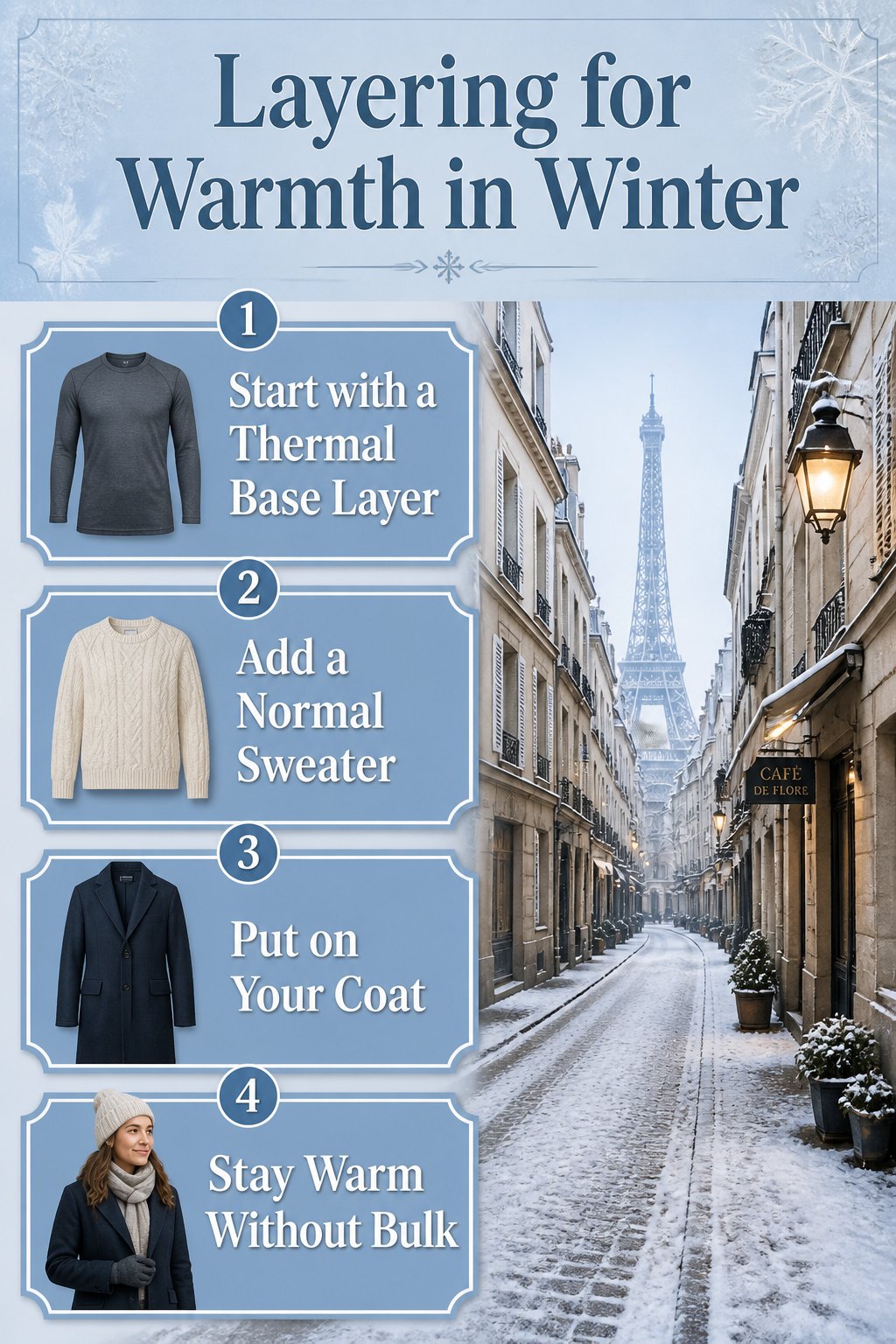
A thin, long-sleeve merino or synthetic thermal top worn under your regular clothes does more to keep you warm than any chunky knit you could pull over it. The three-tier system is simple: that thermal base layer as invisible foundation, your normal sweater or blouse as the visible middle, and your coat on top. Together they trap heat in stages without turning you into a walking bundle.
I learned this the hard way in Prague one January when I skipped the base layer and tried to compensate with a thick cable-knit I had packed. The sweater alone could not seal warmth against my skin, and the coat over it left me bulky, awkward, and still cold at -4°C. Merino wool regulates temperature and resists odor between washes, which means one or two of those thin tops keeps you covered for a full trip with almost no luggage space lost. The rest of the wardrobe stays leaner than most travelers expect: lighter sweaters, a cleaner silhouette, and the ability to actually move through those cobblestone streets without fighting your own clothes.
What I Pack for Two Weeks in Winter Europe
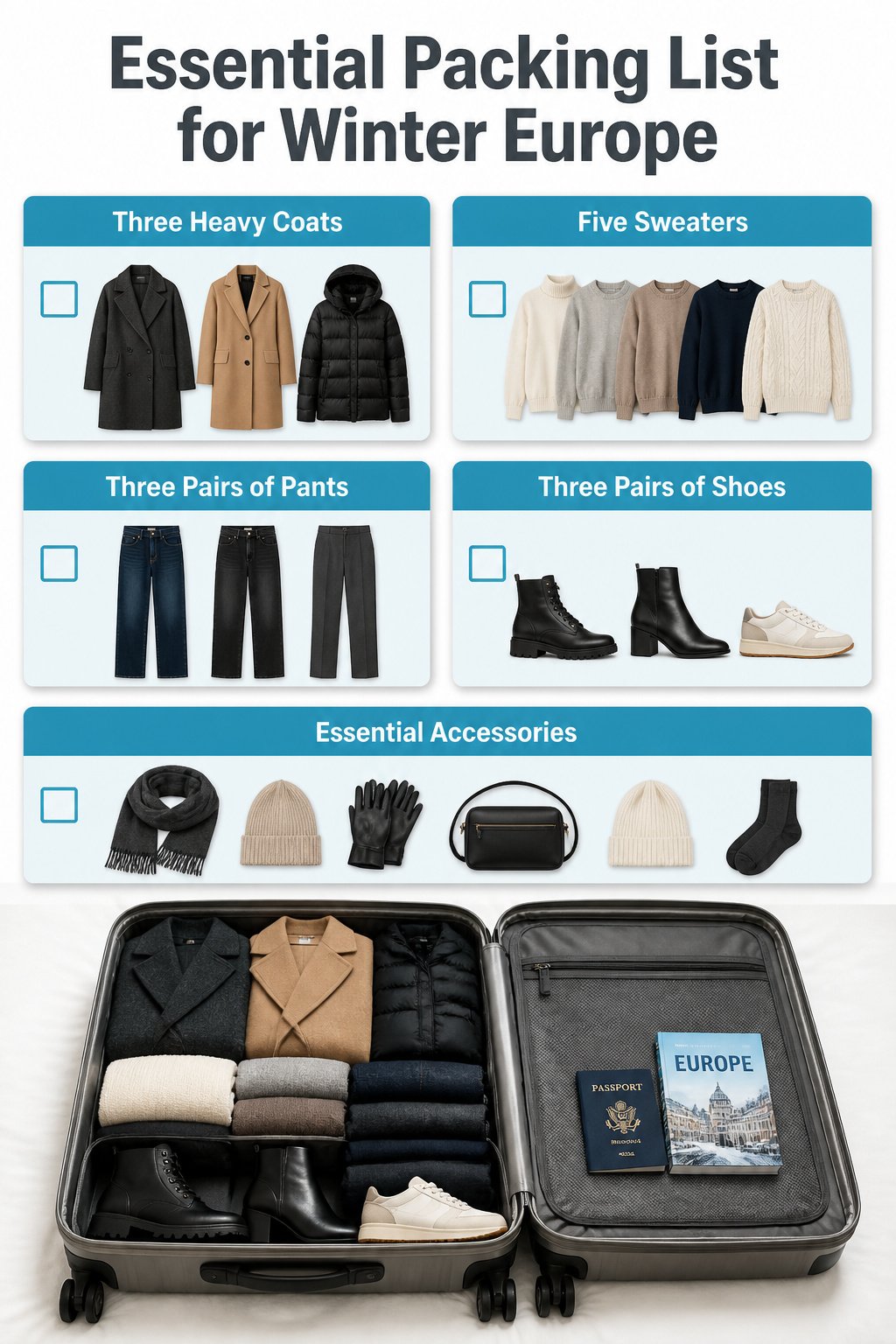
Three heavy coats, five sweaters, three pairs of pants, and three pairs of shoes fit into a single checked bag and a carry-on if you choose the right weights. The math works because almost every top talks to almost every bottom, and the coats layer over the full set rather than competing with it. A charcoal wool cocoon coat, a camel single-breasted style, and one practical puffer give you Paris polish, Berlin survival, and something that handles wet Roman evenings without ruining the line of your trousers.
I learned the hard way that two statement coats and zero puffer is a mistake I will not repeat. A German December in a belted plaid wool coat and a cropped faux-fur number left me wearing both at once, neither warm enough, while everyone else looked comfortably dull in matte black nylon. The third coat needs to be the one you do not want to photograph but cannot do without. Two sweaters should be thin enough to layer, two substantial enough to stand alone, and one somewhere in between for the days when the forecast shifts by noon. Pants are straightforward: two in dark denim with different rises, one in wool or a wool blend that works with boots and with loafers. Shoes need to include one waterproof pair with real tread, one sleeker boot for dry city days, and the third slot is where you decide whether you need a heel or a trainer more.
The real economy is in the sweaters. Five sounds spare until you realize each one cycles through three bottoms and three coats, and the thin ones stack under the thick ones when the temperature drops below twenty.
Paris, Berlin or Rome: What Changes
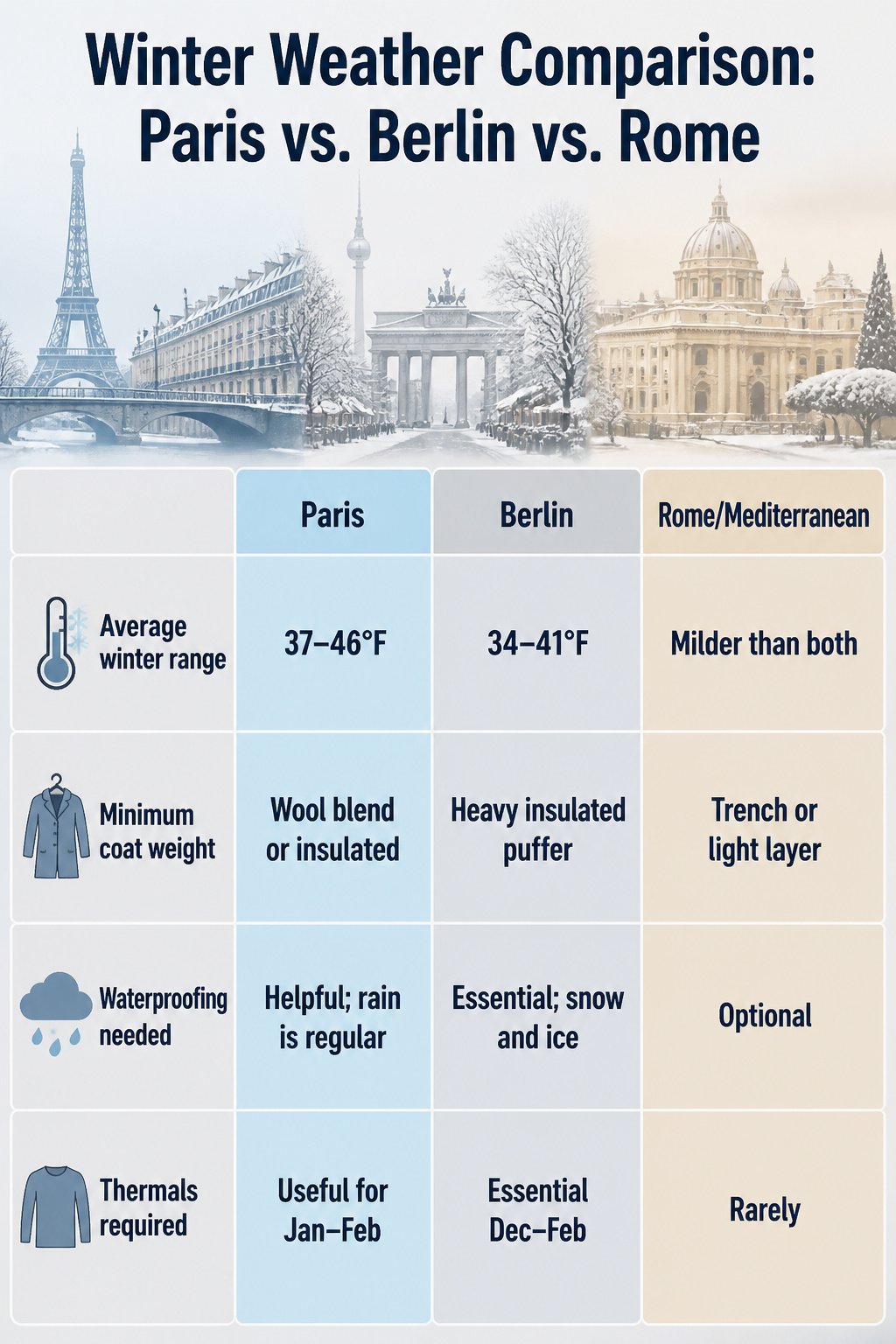
Paris runs 37–46°F in winter, Berlin sits colder at 34–41°F, and Mediterranean cities like Rome land milder still. That spread changes what coat earns its luggage space. Berlin in January needs a heavy insulated waterproof coat and thermals underneath; Paris in December gets by with a wool blend that handles sustained cold and light rain. Rome or Barcelona, a trench over a sweater is often enough. Waterproofing is non-negotiable in Berlin, where ice and slush meet Christmas market crowds, while Paris cobblestones in winter rain punish boots without grip.
| Paris | Berlin | Rome/Mediterranean | |
|---|---|---|---|
| Average winter range | 37–46°F | 34–41°F | Milder than both |
| Minimum coat weight | Wool blend or insulated | Heavy insulated puffer | Trench or light layer |
| Waterproofing needed | Helpful; rain is regular | Essential; snow and ice | Optional |
| Thermals required | Useful for Jan–Feb | Essential Dec–Feb | Rarely |
I have misjudged this myself, wearing suede boots meant for drizzling Paris in a Berlin January. They were soaked through in an hour, with no grip for the icy patches between U-Bahn stops. The mistake cost me a morning thawing in a café I had not planned to visit.
Frequently Asked Questions
What to pack for winter in Europe?
Pack three heavy coats, five sweaters, three pairs of pants, and three pairs of shoes. A charcoal wool cocoon coat, a camel single-breasted style, and one practical puffer cover every city and weather condition. Two sweaters should be thin enough to layer, two substantial enough to stand alone, and one somewhere in between.
How to layer for winter in Europe?
Wear a thin, long-sleeve merino or synthetic thermal top as your invisible foundation, your normal sweater or blouse as the visible middle, and your coat on top. This three-tier system traps heat in stages without adding bulk. Merino wool regulates temperature and resists odor between washes, so one or two thin tops covers a full trip with almost no luggage space lost.
What are the best winter shoes for Europe?
Knee-high boots are the most versatile choice, bridging gaps under midi skirts and keeping cropped pant hems dry. Waterproofing is non-negotiable for walking through slush. A second waterproof ankle boot with real tread handles the wettest days, and a third slot goes to either a dressier option or trainers depending on your itinerary.